Week 4 - CHT Analysis on Exhaust port
AIM:- To simulate Conjugate Heat Transfer Analysis on exhaust port using Ansys Fluent.
objective:-
- Give a brief description of why and where a CHT analysis is used.
- Maintain the y+ value according to the turbulence model and justify the results.
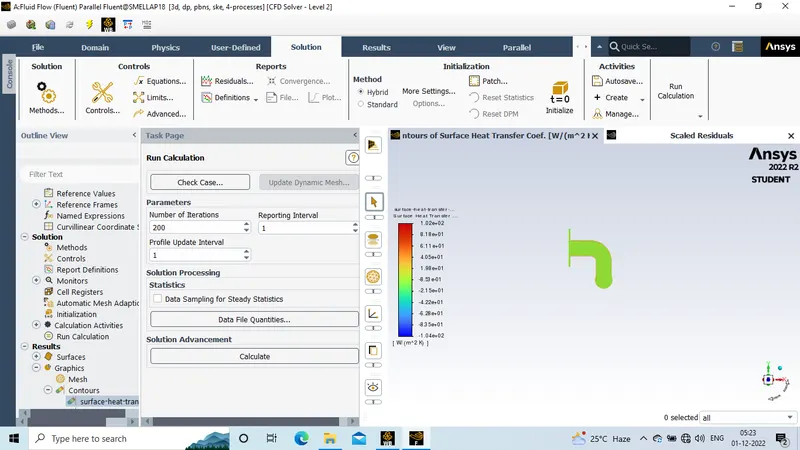
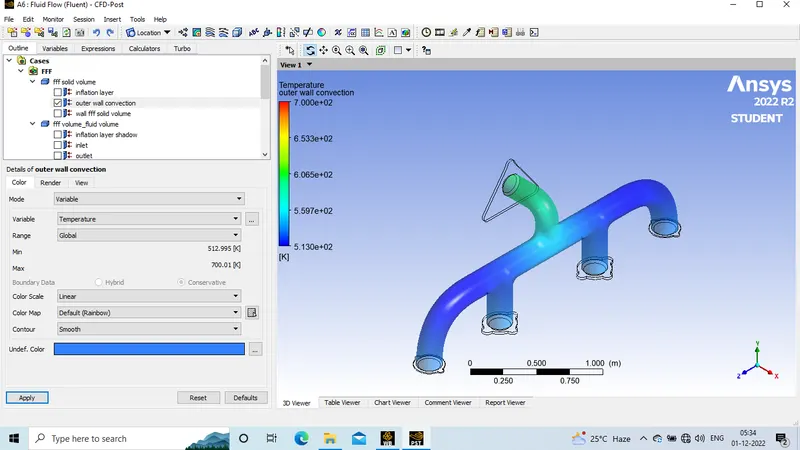
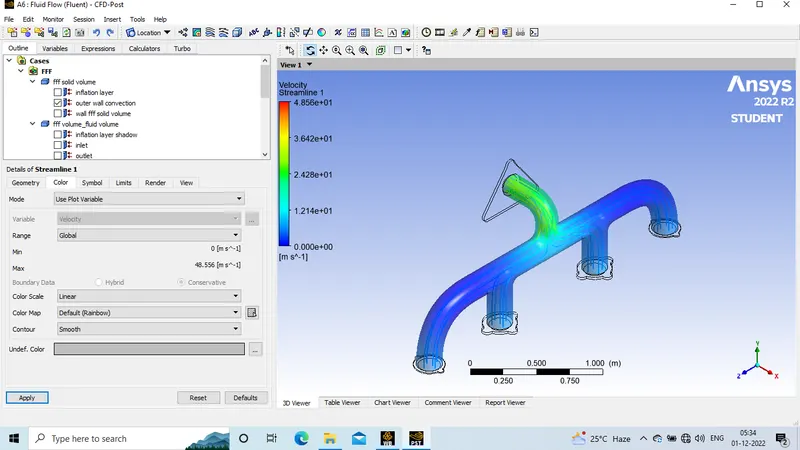
- Calculate the wall/surface heat transfer coefficient on the internal solid surface & show the velocity & temperature contours in appropriate areas.
- How would you verify if the HTC predictions from the simulations are right? On what factors does the accuracy of the prediction depend on?
1. Brief description of cht analysis:-
CFD and more specifically conjugate heat transfer (CHT) analysis can accurately predict heat transfer by simultaneous solving all the relevant solid and flow field heat transfer processes, for example: conduction through solids, free and forced convection in the gases/fluids and thermal radiation.
The CHT approach has an advantage over FEA thermal anlaysis in that wall heat transfer coefficients and their local variations on surfaces are directly calculated within the model rather than based on simplified empirical calculations. The CHT approach therefore has benefits for those applications where heat transfer is either non-uniform or difficult to calculate empirically.
2. Maintain the y+ value according to the turbulence model and justify the results.
wall HTC is quantity calculated by the first cell layer. we can create the inflation later and seperate the solid and volumes.
3. The HTC predictions are depend up on the geometry, mesh, setup, solution and results.
GENERAL CASE:-
GEOMETRY:-
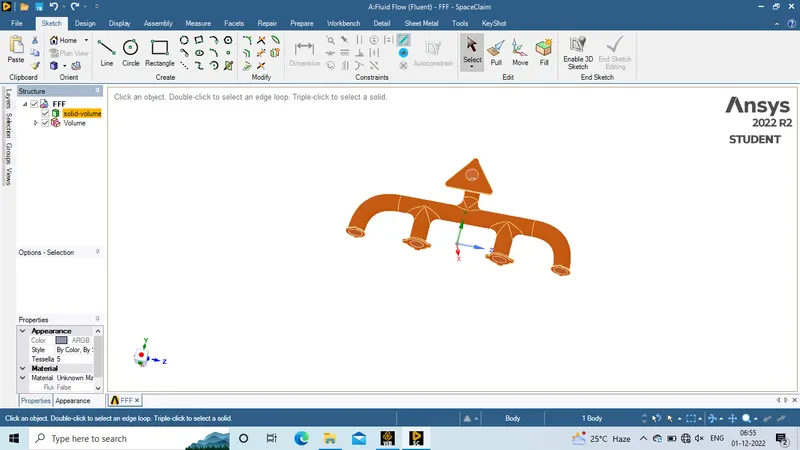
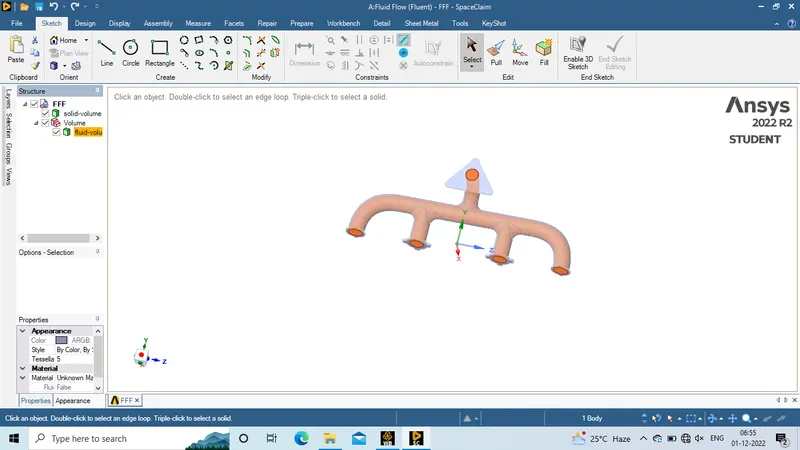
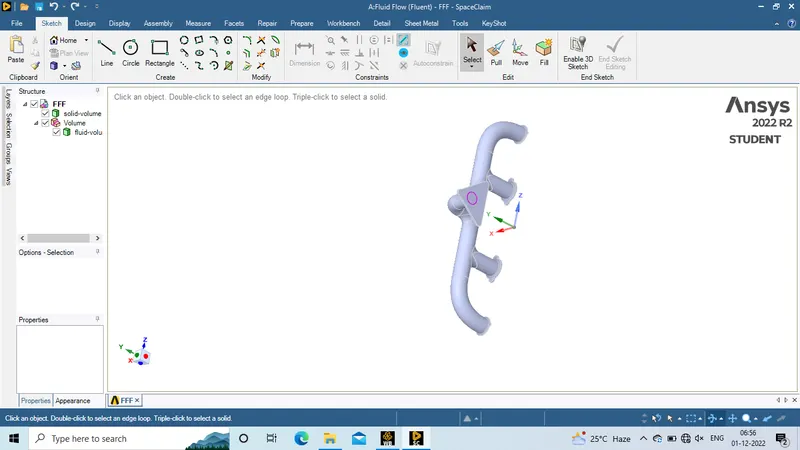
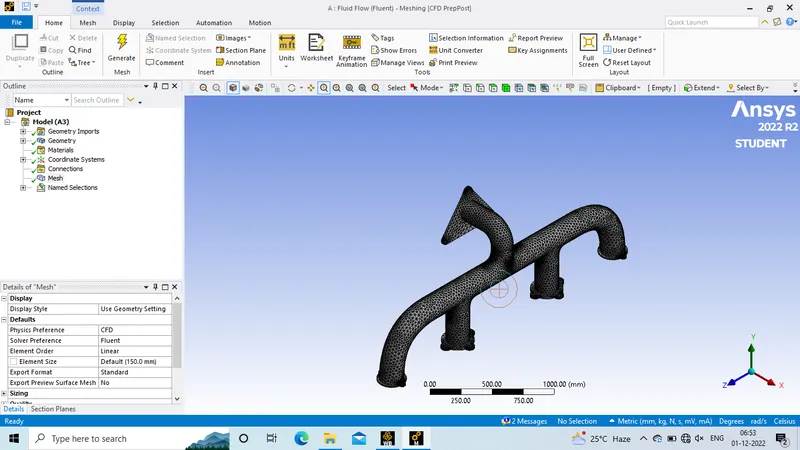
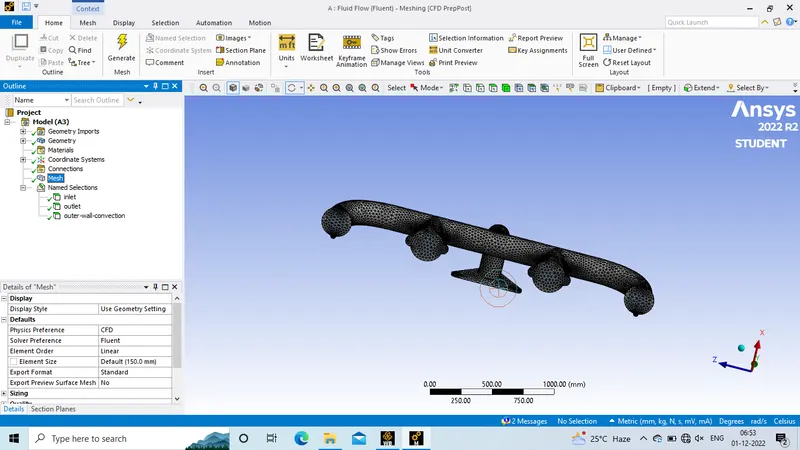
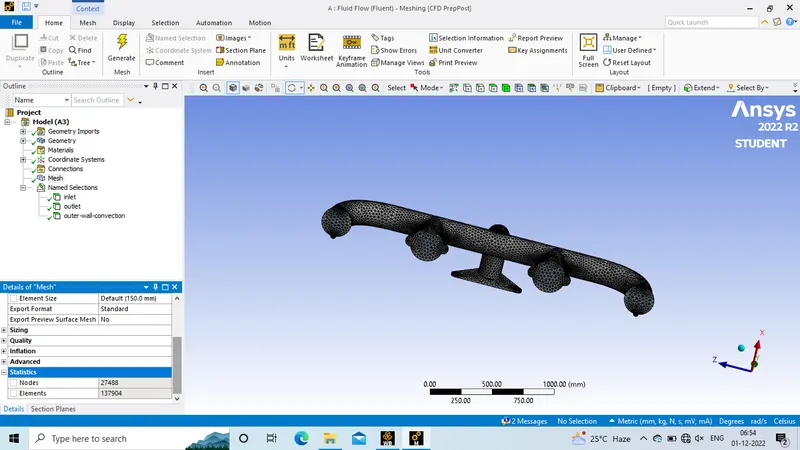
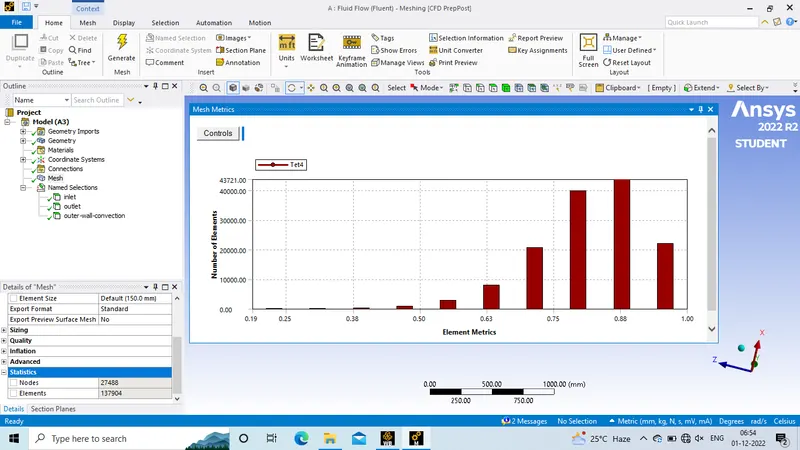
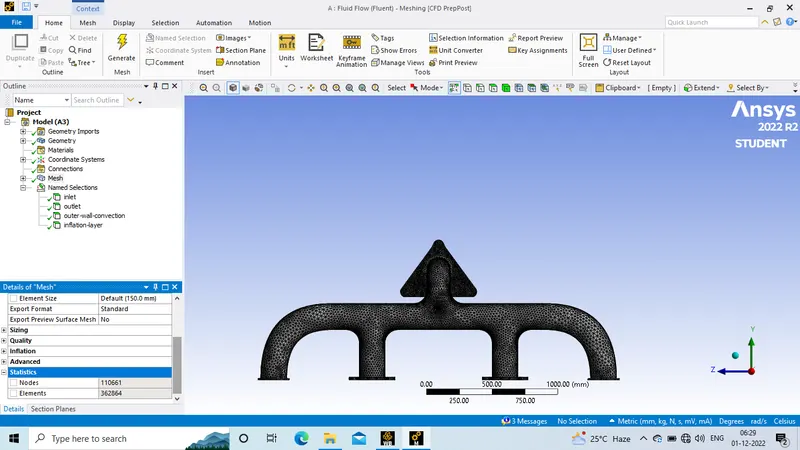
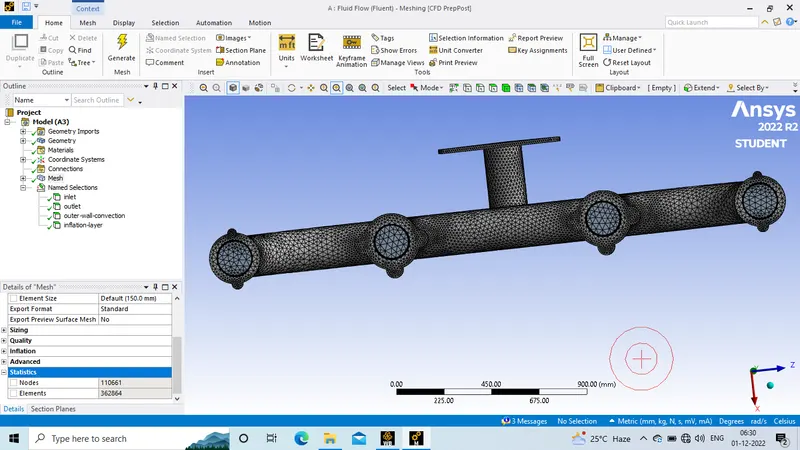
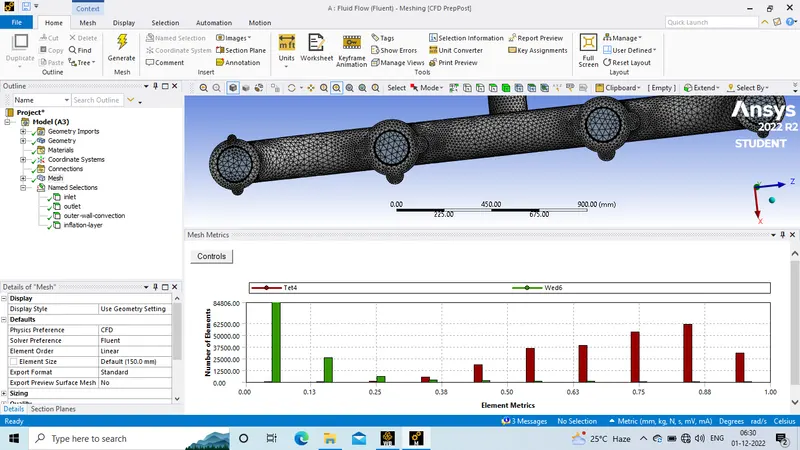
MESHING:-
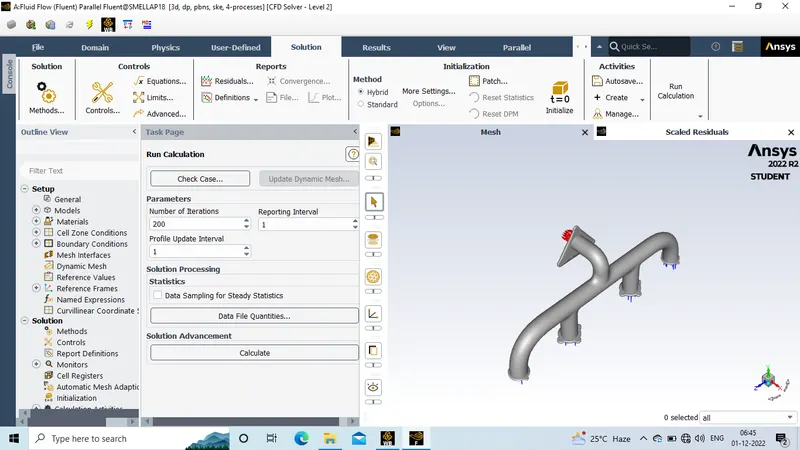
SET-UP:-
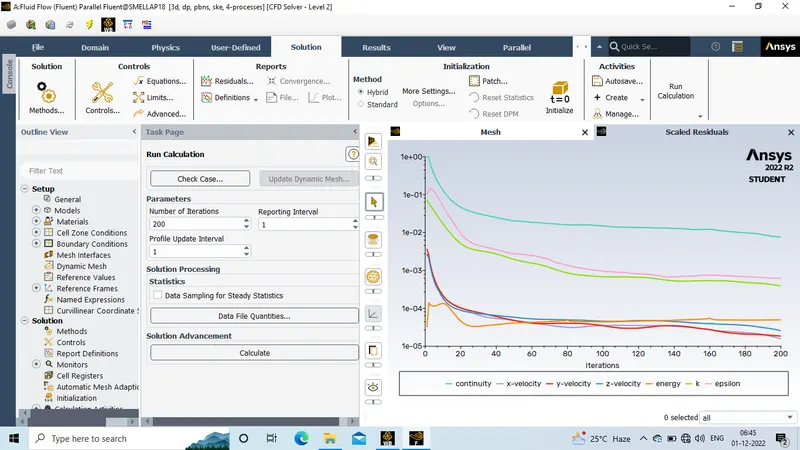
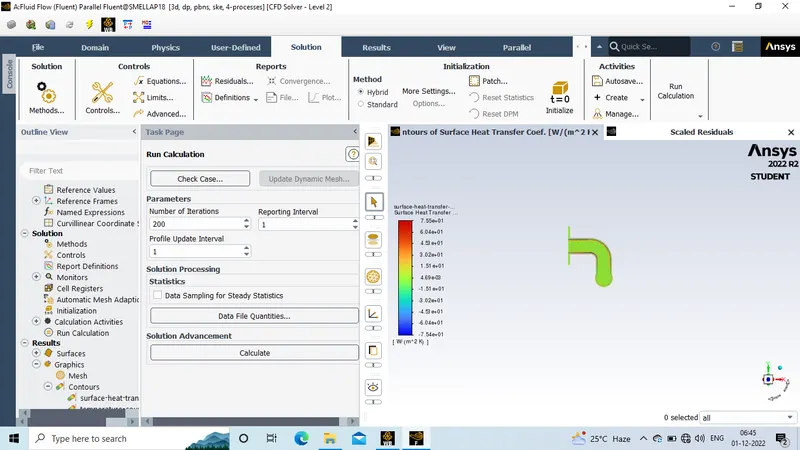
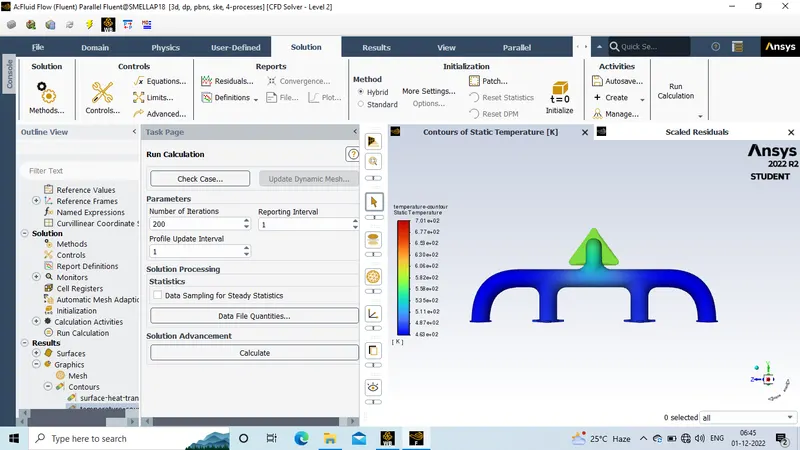
TEMPERATURE CONTOUR AND VELOCITY CONTOUR:-
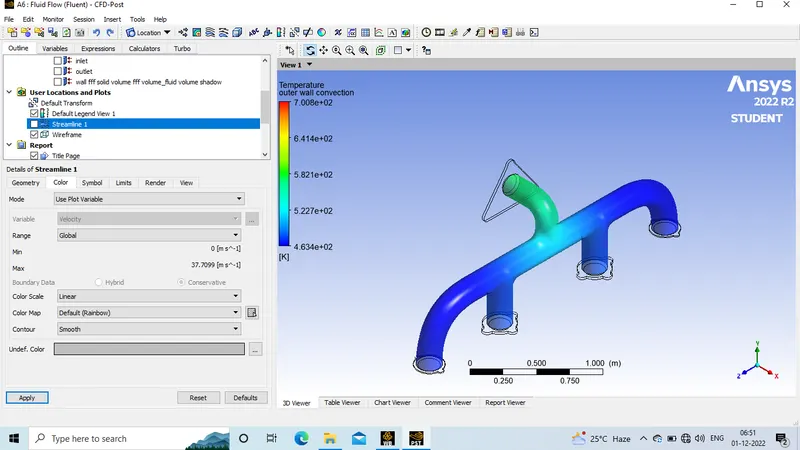
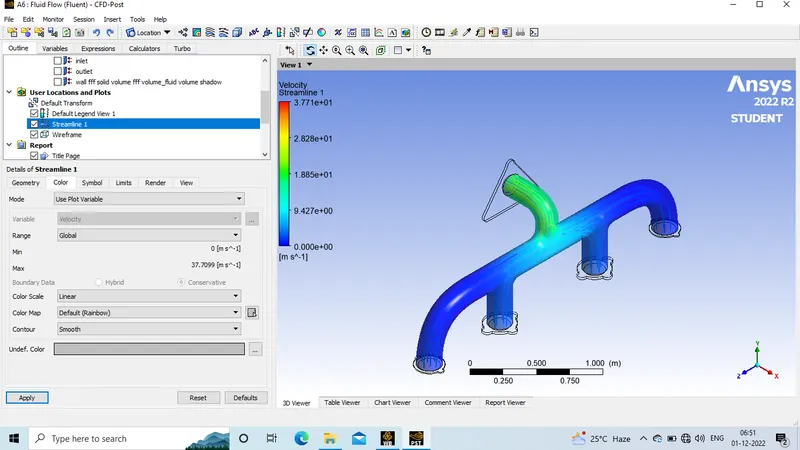
CASE-1 WITH INFLATION LAYER MESHING VELOCITY MAGNITUDE 5M/S.
SETUP:-
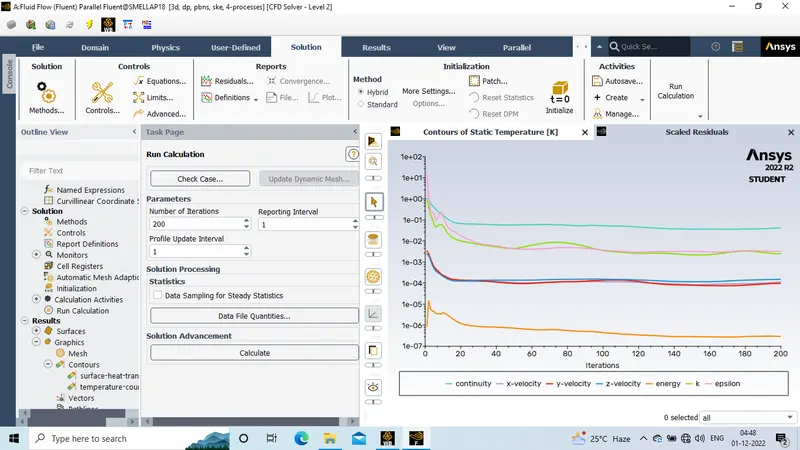
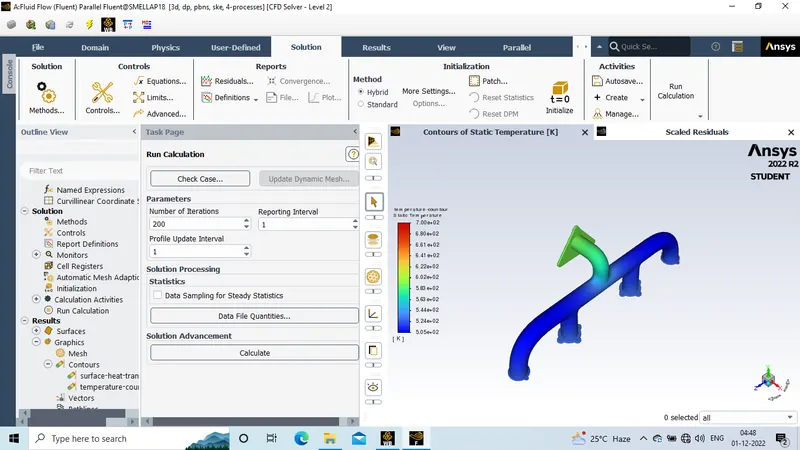
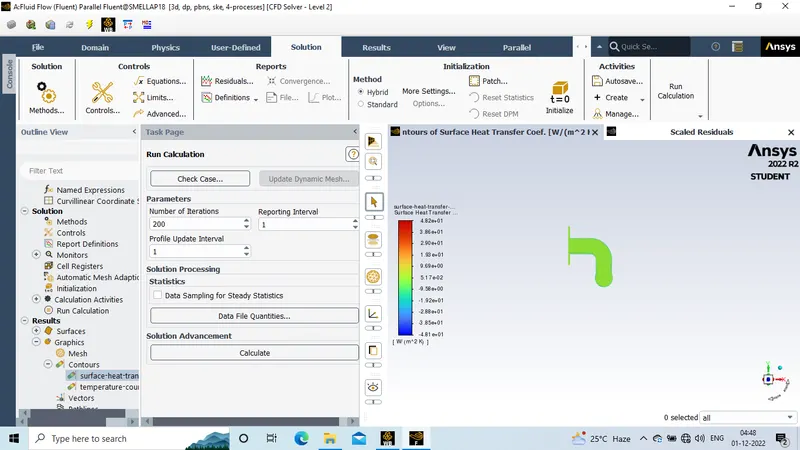
RESULTS:-
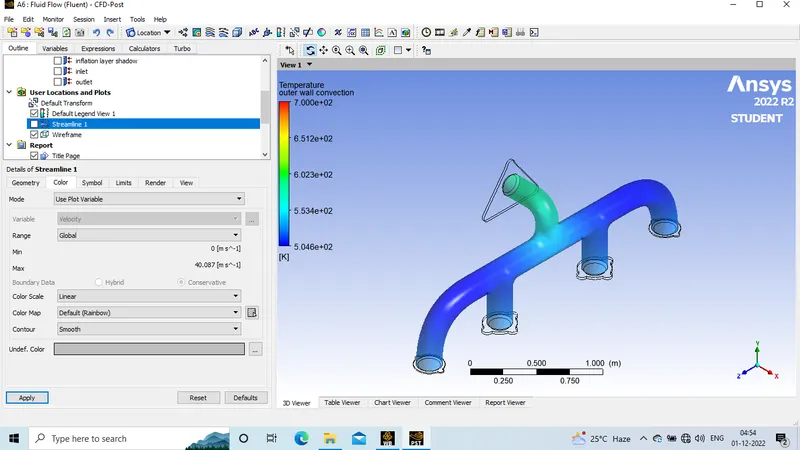
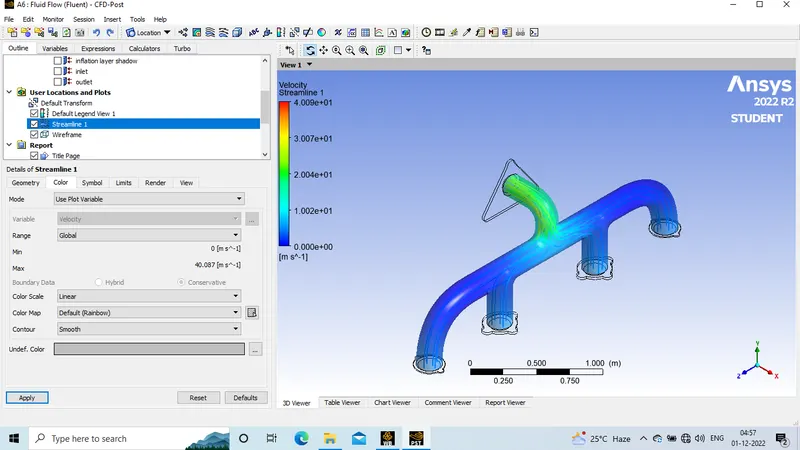
CASE-2 VELOCITY MAGNITUDE 3M/S:-
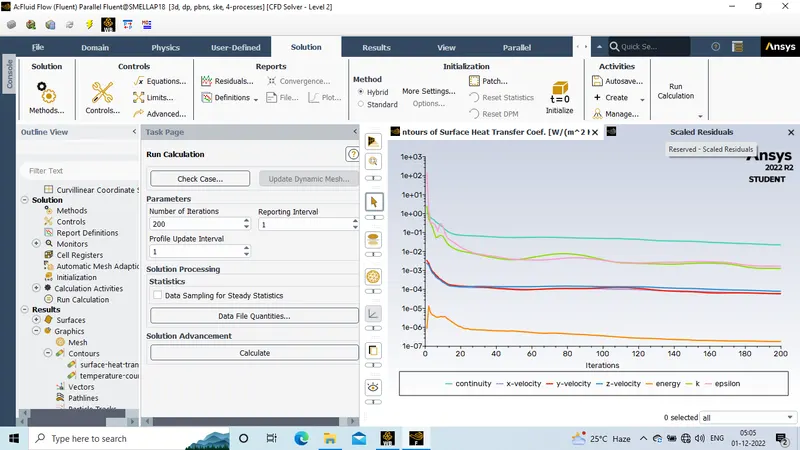
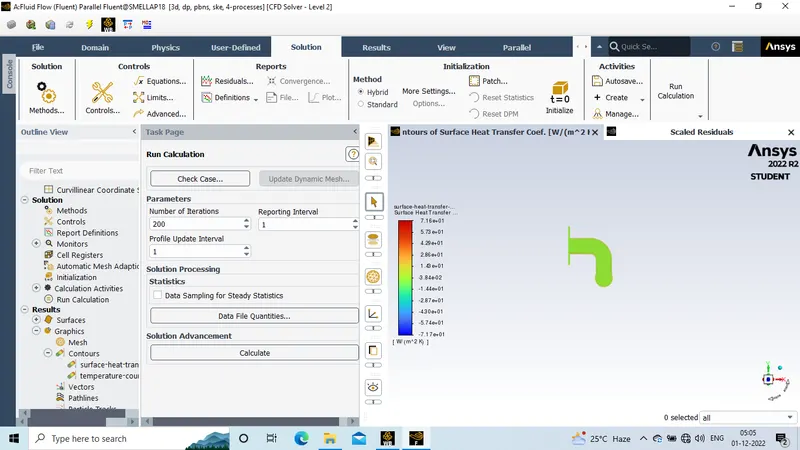
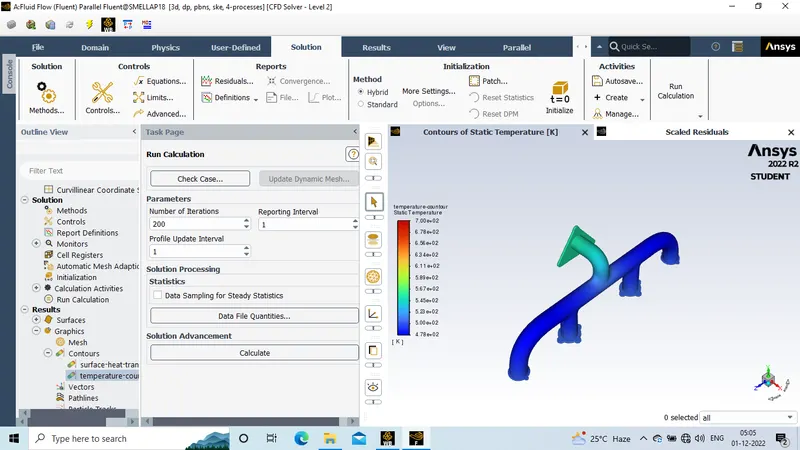
RESULTS:-
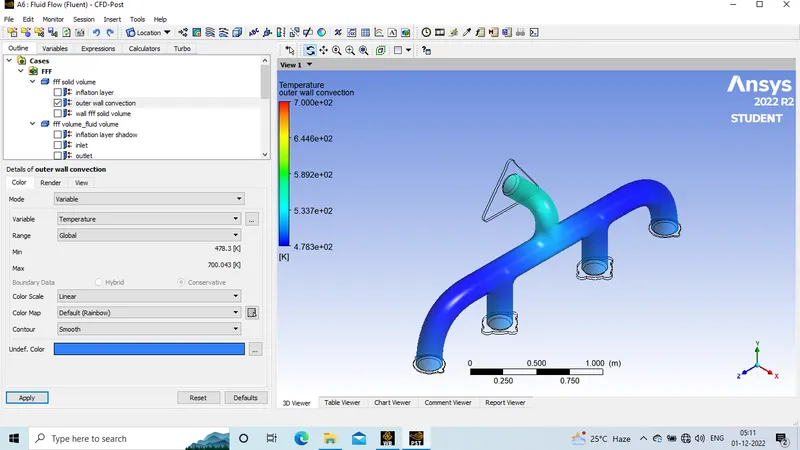
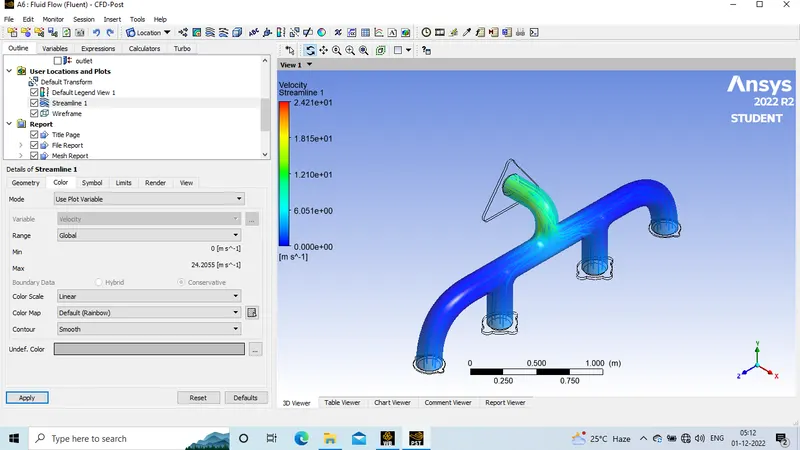
CASE-3 VELOCITY MAGNITUDE 6M/S:-
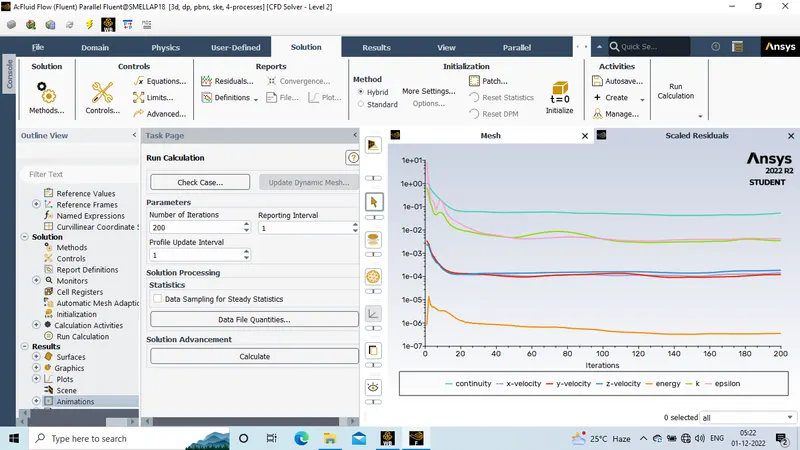
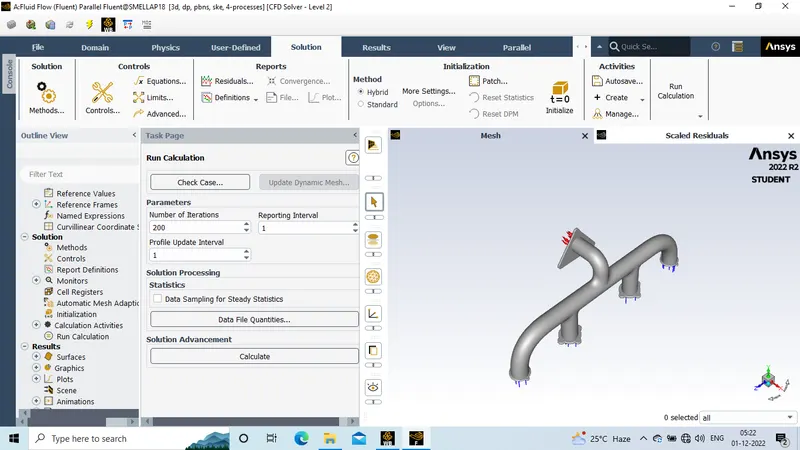
CONCULSIONS:-
1. In this project we have done two type of meshes with inflation layer and with out inflation layer.
2. Meshing is the import part of the simulation.
3. we have calculate the nodes and elements for both mesh zones.
4. inflation layer is the most important to calculate the first layer thickness.
5. we have plots the temperature outer wall convection and velocity steam line.
6. k-epsilon is the important
7. to plot the surface heat transfer co-efficient.
8. finally we have plot the temperature outer wall convection and velocity steam lines surface heat transfer co-efficient.
9. As shown in the plots, the exhaust gases passing through the manifold transfers some of the heat via convection. The amount of heat transfer can be related directly with the velocity of exhaust.
10. The temperature is lower where flow stagnates or is moving at the velocity. As the velocity increases, so does the Reynold’s number and the amount of heat transferred.