Week 4 - CHT Analysis on Exhaust port
Aim -->
To Simulate a Conjugate Heat Transfer analysis (CHT Analysis) of the Exhaust Port used in IC Engine.
Theory -->
Conjugate Heat transfer -->
It refers to a heat transfer process involving the interaction of conduction within a solid body and convection from the solid surface to the fluid moving over the solid surface. There are multiple modes of heat transfer. Conduction, Convection, Radiation, Boiling, condensation etc. In the CHT problem, multiple modes of Heat transfer exists. In this project, hot fluid (air) is flowing inside an exhaust port. The metallic body is made of aluminium. Convective heat transfer takes place in the fluid volume and in the solid volume heat is transferred by Conduction Heat transfer.
The flow of heat or thermal energy from one body to another is called Heat transfer. Temperature gradient drives the rate of heat transfer. As two (or more) phases are involved in CHT, there must be an interface. At the interface, convective heat transfer must be equal to conductive heat transfer. CHT analysis is required in all multiphase heat transfer, Exhaust manifolds in IC Engine, Heat Exchangers etc. The essence of CHT analysis is to find out -->
- Temperature profiles (min/max temp.) in multiple phase component (solid/liquid) of the system. As temperature gradient near the wall in the fluid is important to calculate wall heat transfer and also temperature profiles in solids help to calculate thermal stress.
- It helps us to predict the heat transfer coefficient for a particular case setup.
- Transient thermal analysis for heating/cooling problem.
Heat transfer in solids
In general Fourier's law of heat conduction talks about the conductive heat flux (heat transfer per unit area) "q", it is proportional to temperature gradient:

For transient heat conduction in solids with a rate of heat generation (source term) terms, a general differential equation is as follows:
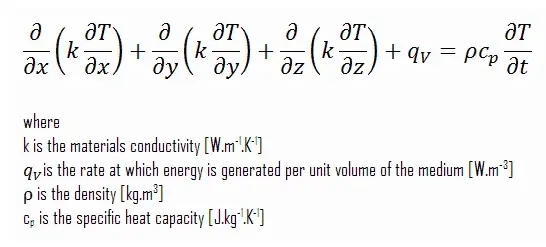
 Where α is Thermal diffusivity
Heat transfer in Fluids
In fluids very close to a wall or solid surface heat is transferred by conduction mode, as we move a little away from solid boundary Advection starts to dominate. Away from wall Advection and Conduction both modes of heat transfer are present. This is also known as Convective heat transfer. A Conduction heat transfer influenced by Advection is called Convection Heat transfer.
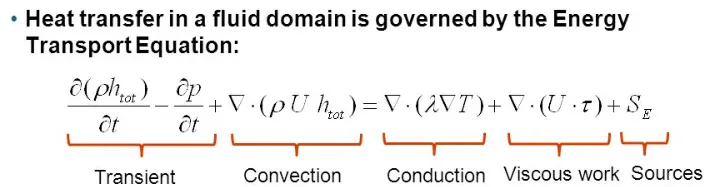
Newton's law of cooling can be used to calculate the heat transfer coefficient in the case of convection. Calculation of heat transfer coefficient is very important. Heat transfer coefficient (h) is defined by heat flux (q) divided by some reference temperature difference (Tref).
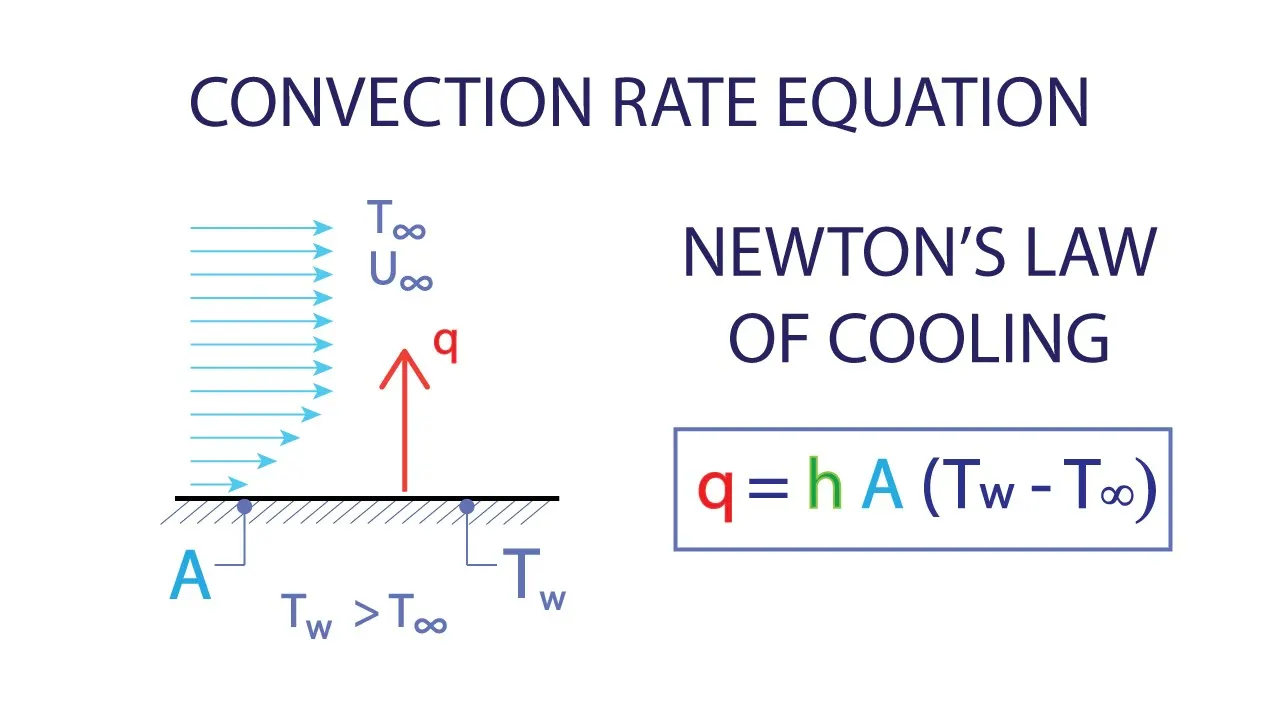

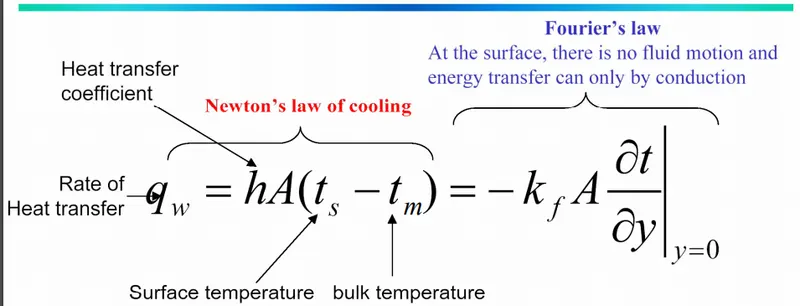
At the interface considering the fluid region, we can calculate the heat transfer through the interface by Fourier's law and Newton's law of cooling. Equating the heat transfer will give us a value of "h".
CAD Model of Exhaust Port
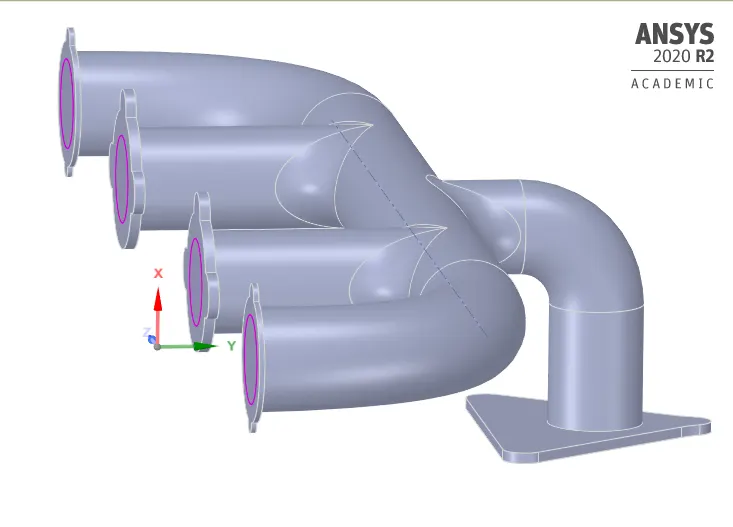
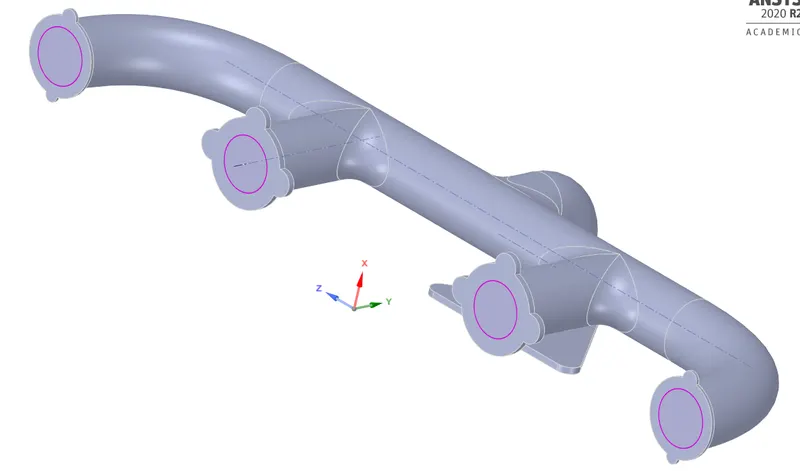
The exhaust port has 4 inlets and a single outlet. The final cad model is shown below-->
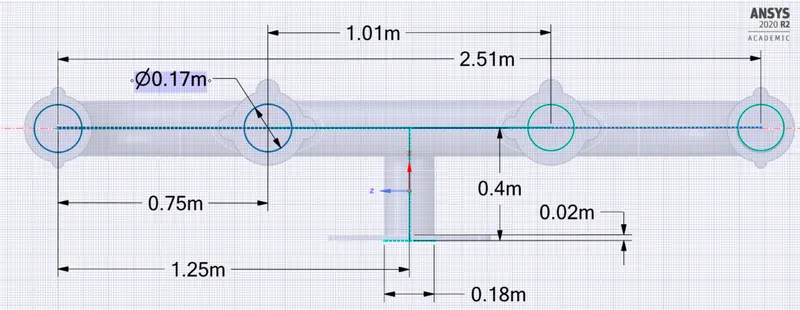
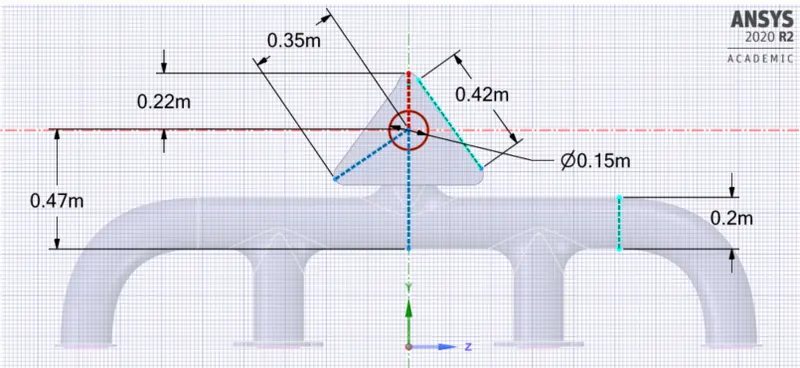
Geometric Dimensions of the model
Fluid Volume Extract from the CAD model
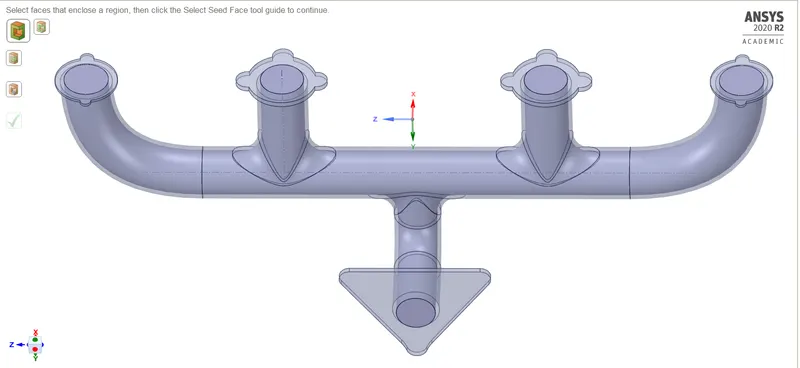
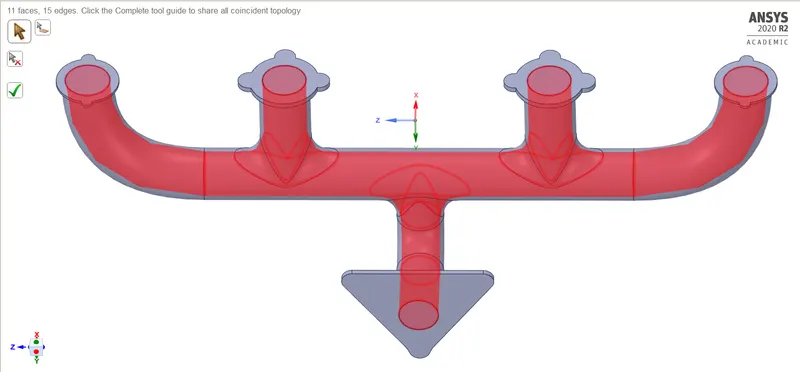
Share Topology--> It is important to set share topology to share between two volumes of solid and fluid, after that, we need to workbench and share interface between solid and fluid. Only then our mesh at the interface will share the nodes and faces.
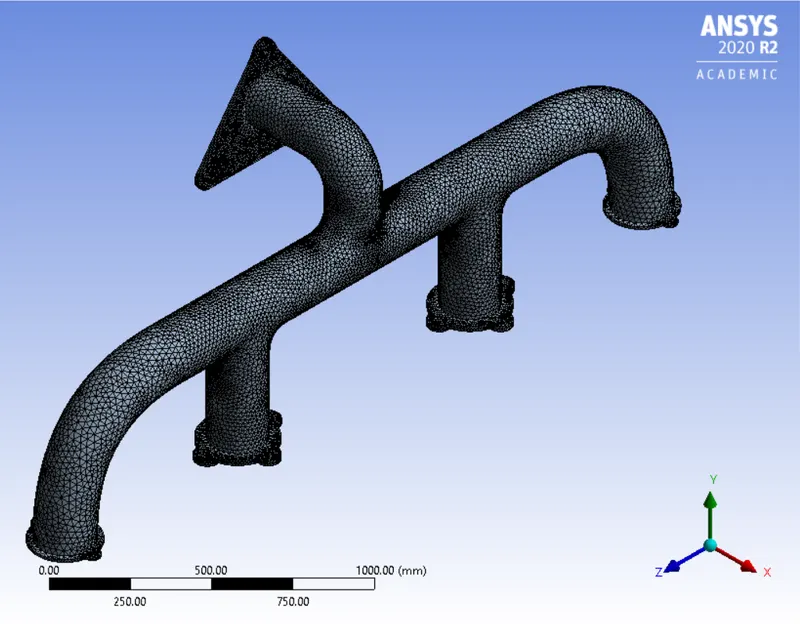
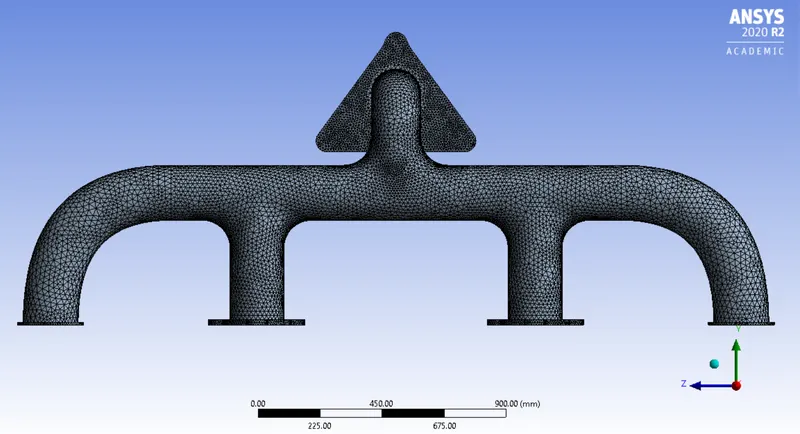
Mesh
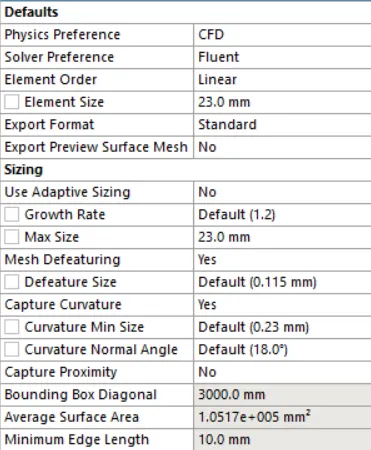
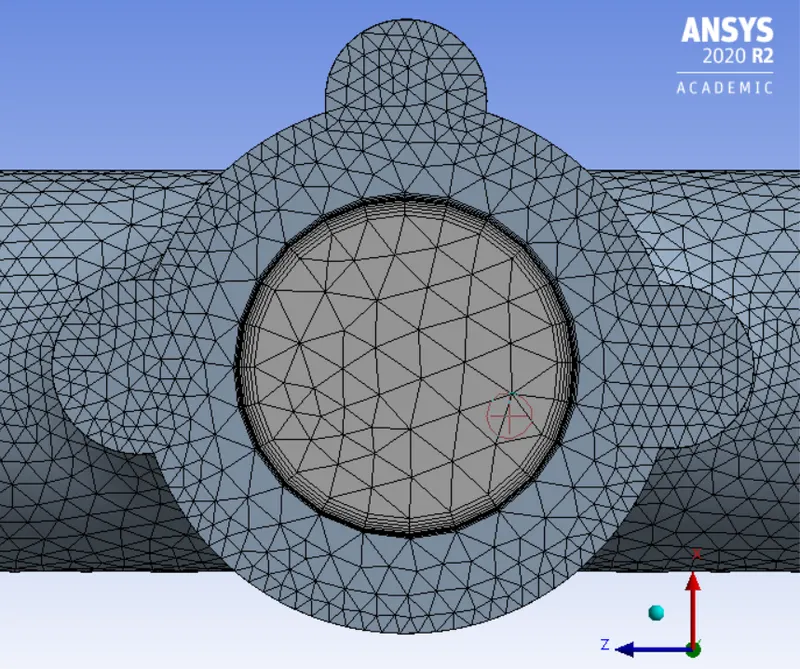
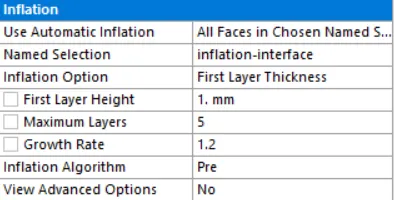
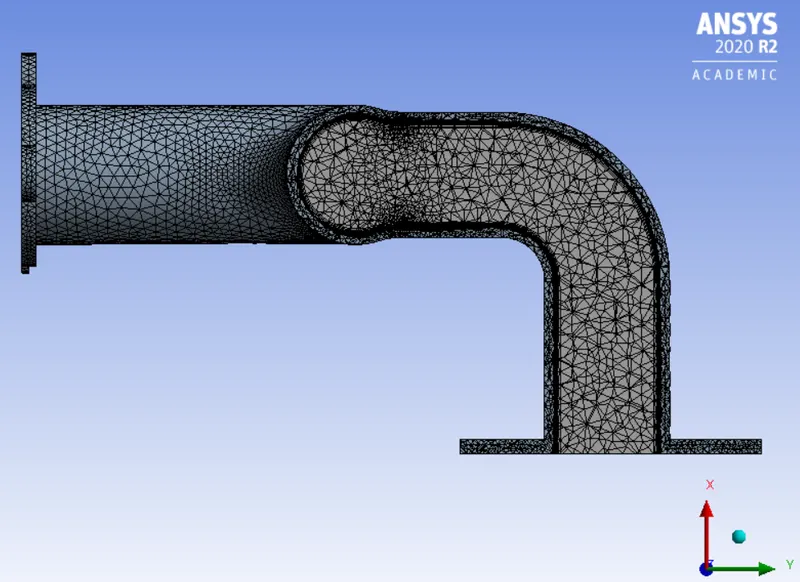
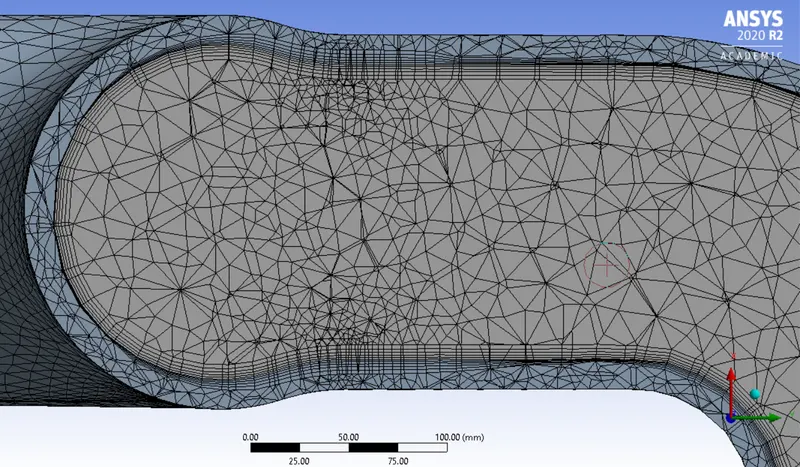
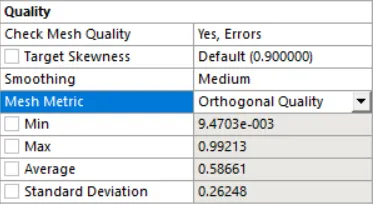
Following are the detailed images showing the refined mesh. We use a mesh size of 20 mm.
Inflation Layers
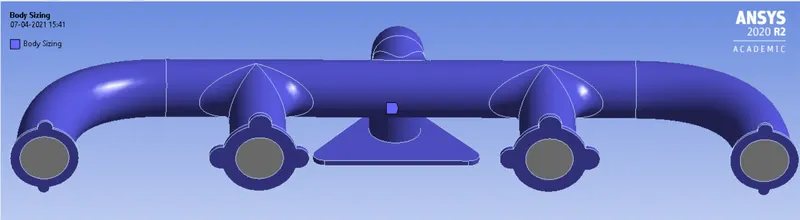
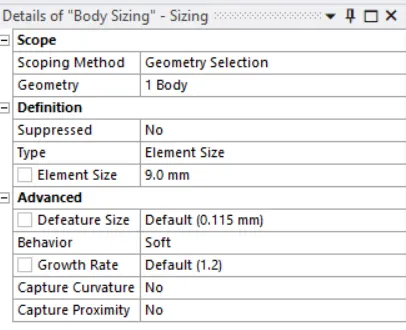
Body sizing
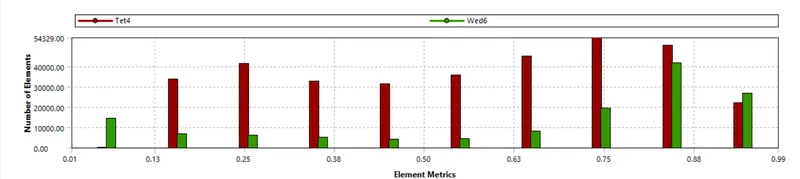
Orthogonal Quality
Fluent Case-Setup
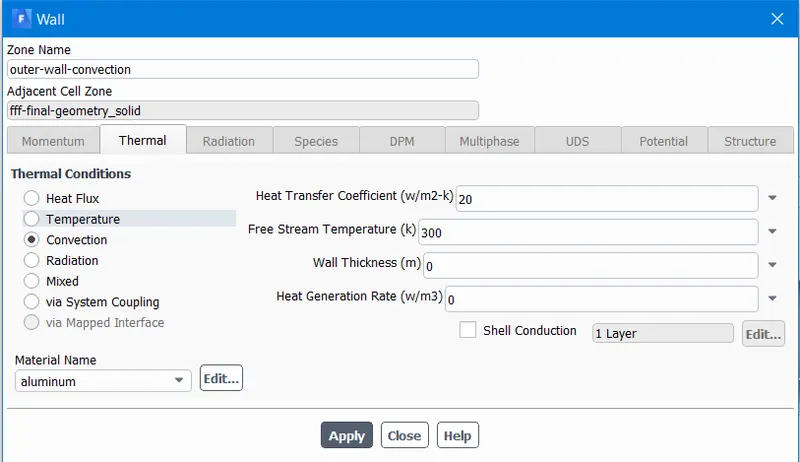
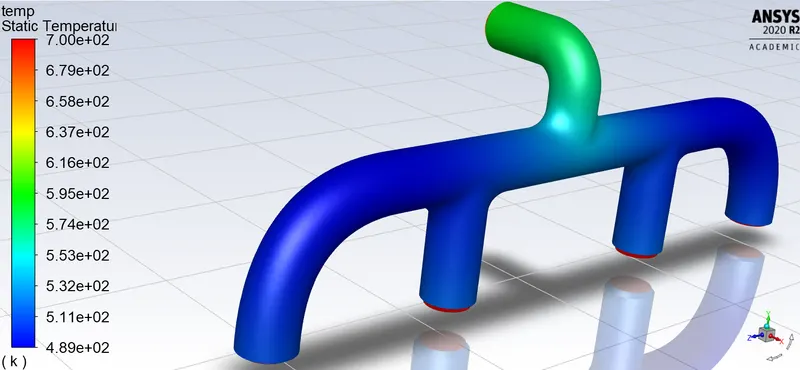
Initial conditions --> Initially the fluid (air) has a velocity of 5 m/s and a temperature of 700 k. At the outer part of the solid wall, we have a constant convection heat transfer coefficient equal to 20 w/m2k.
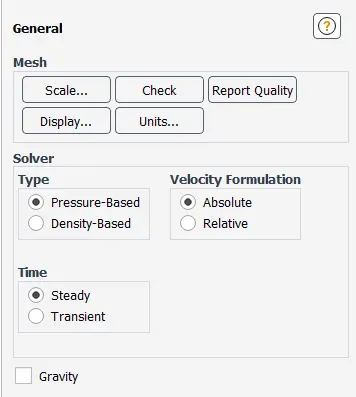
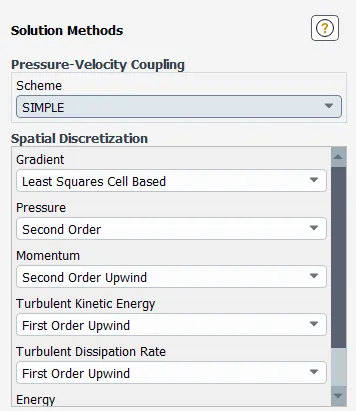
Solution Method and Hybrid Initialization
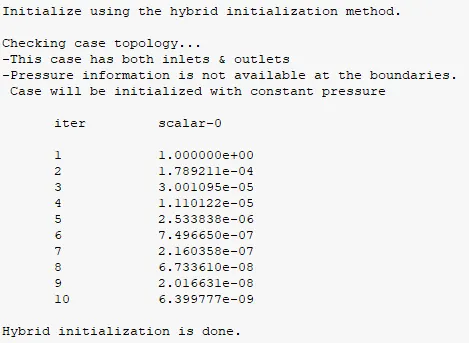
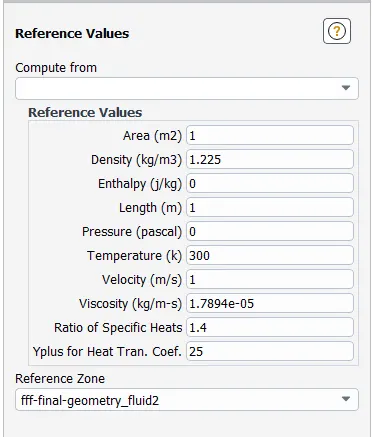
Reference values
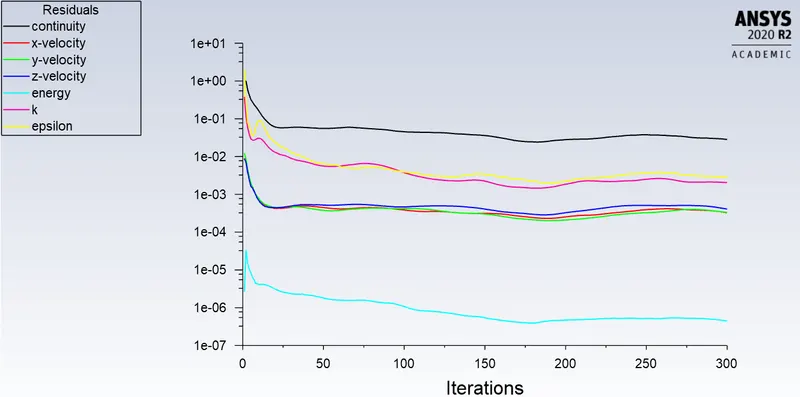
CASE I --> K-epsilon Turbulence Model
Residual Plots
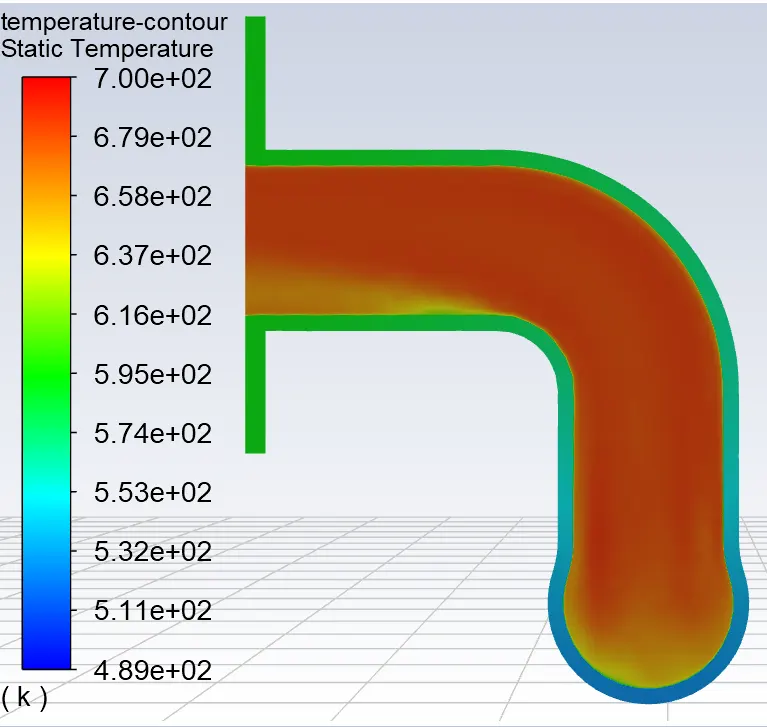
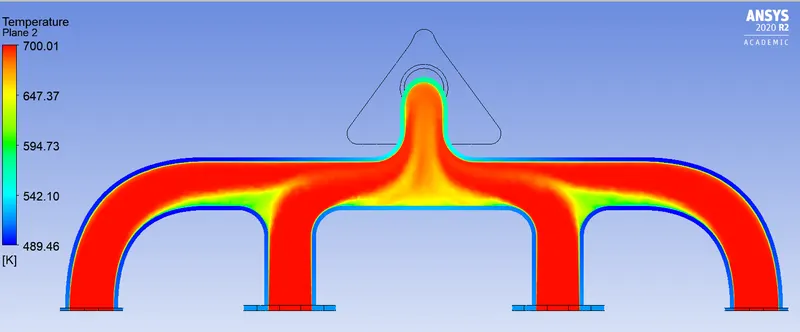
Temperature contours
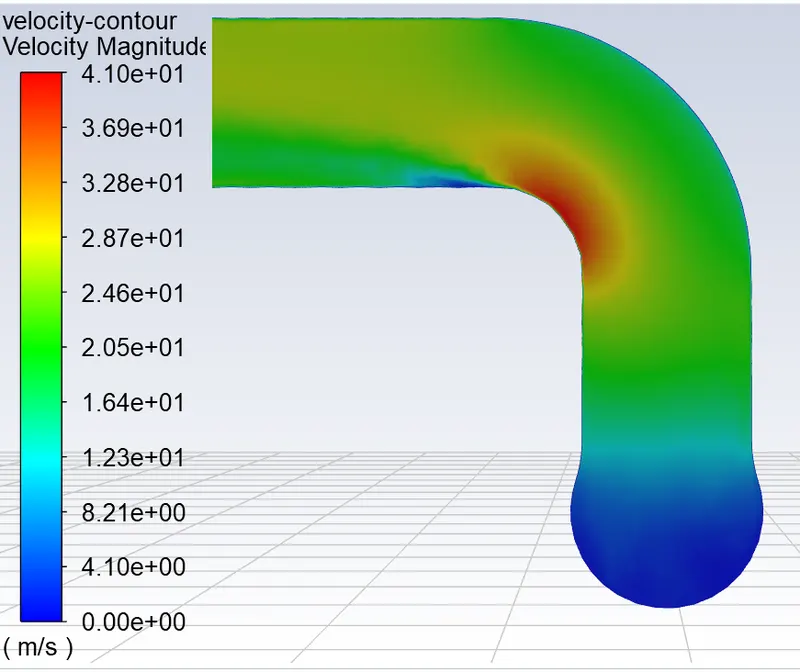
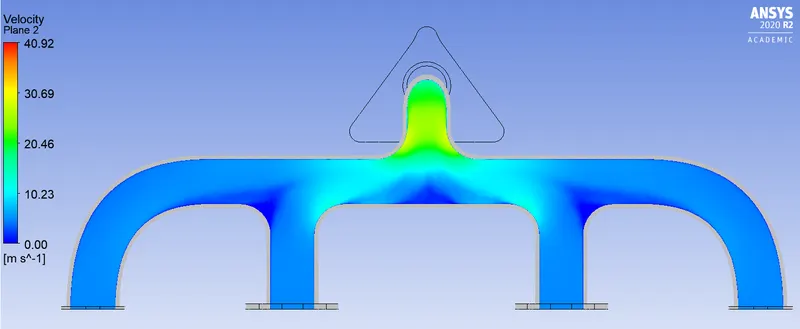
Velocity plots
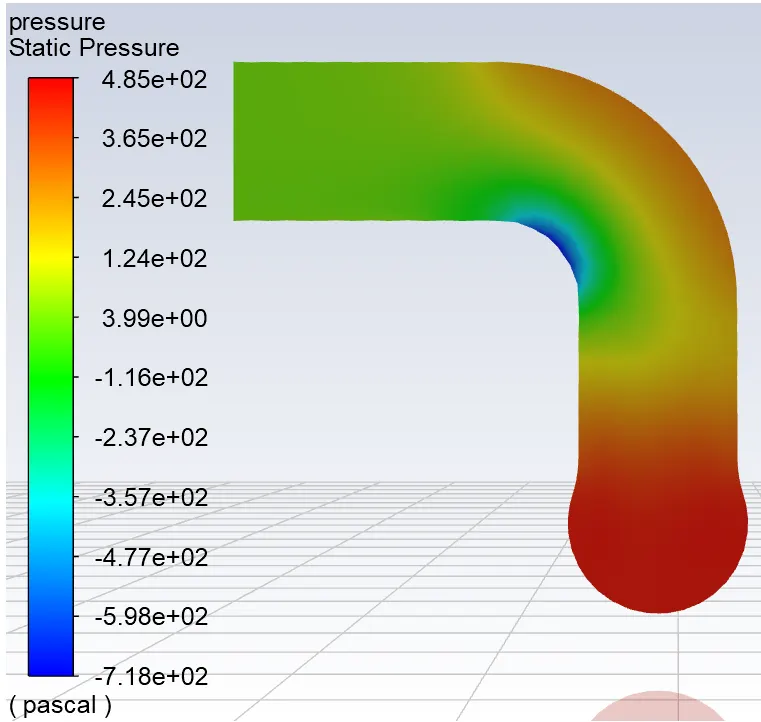
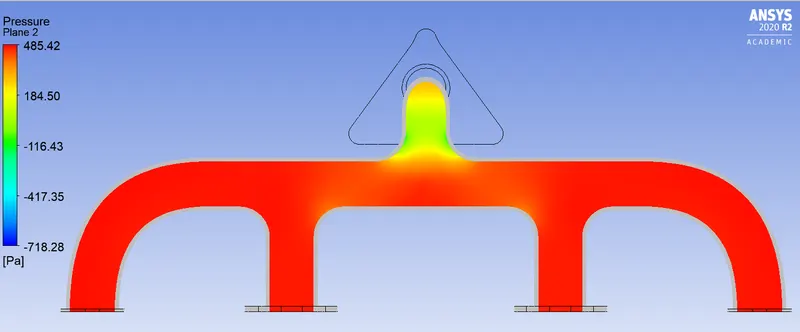
pressure contours
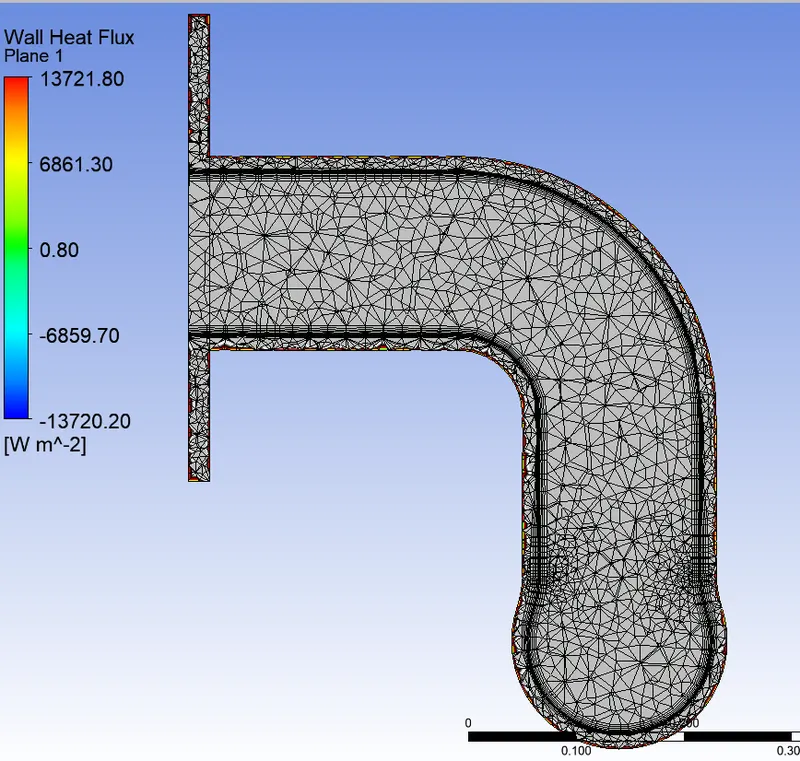
heat flux contours
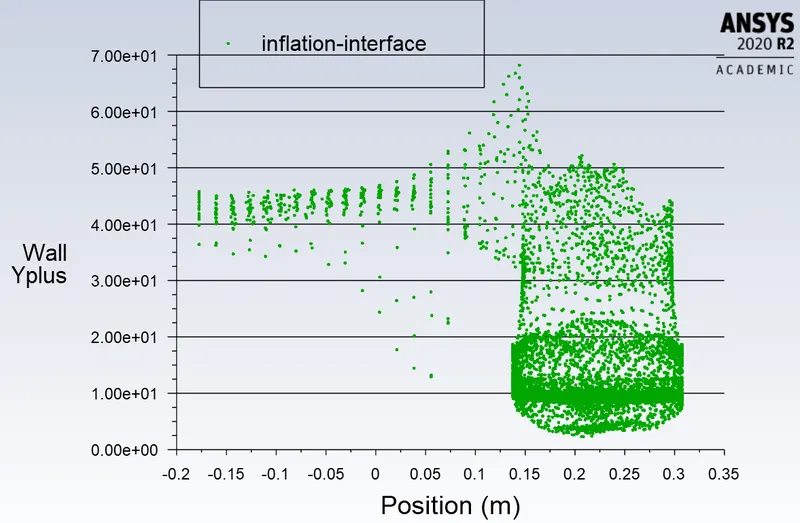
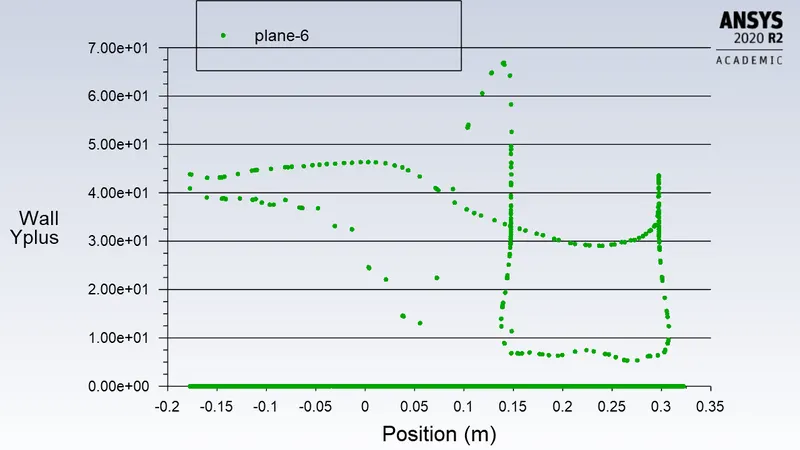
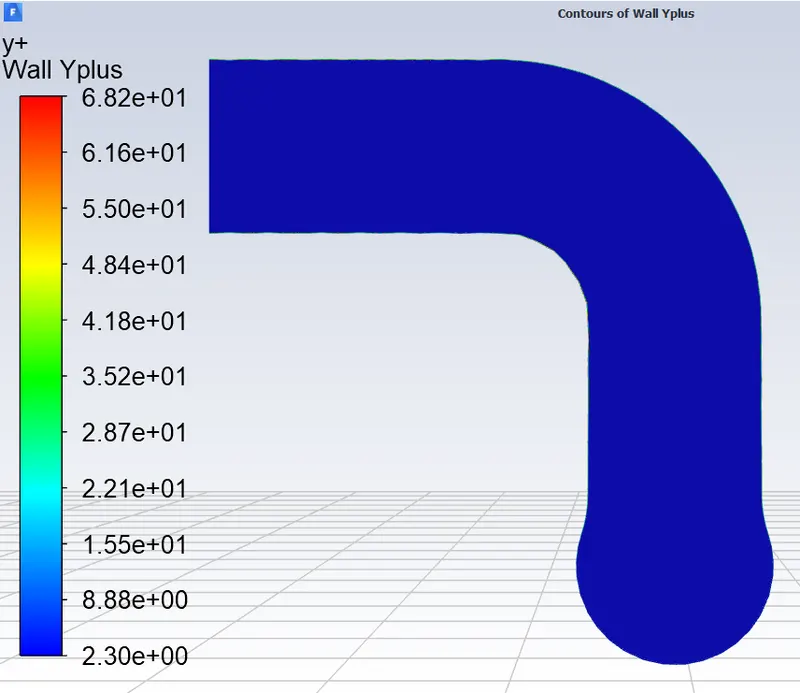
Wall y+ over the interface
Wall y+ value at the x-y plane
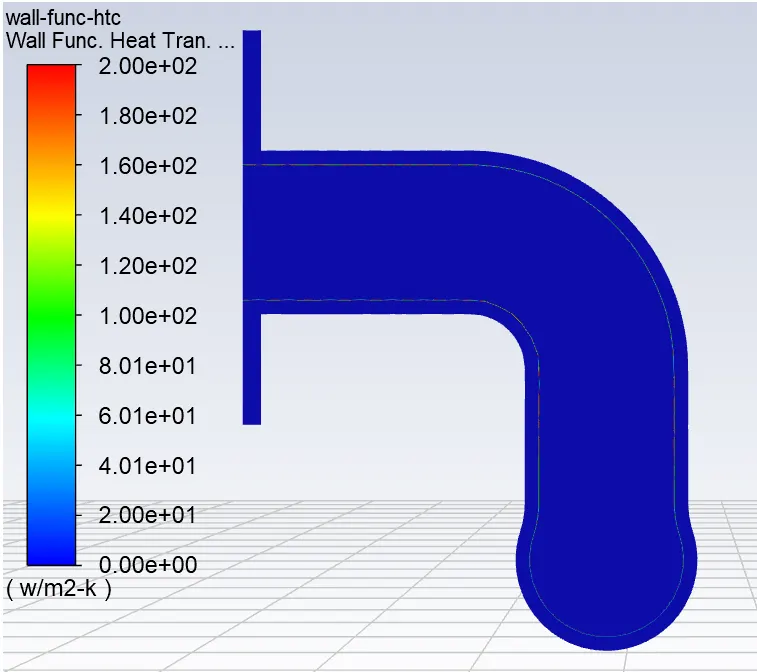
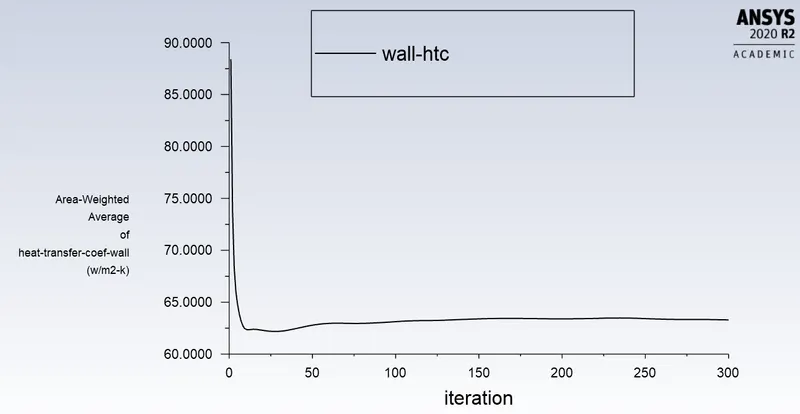
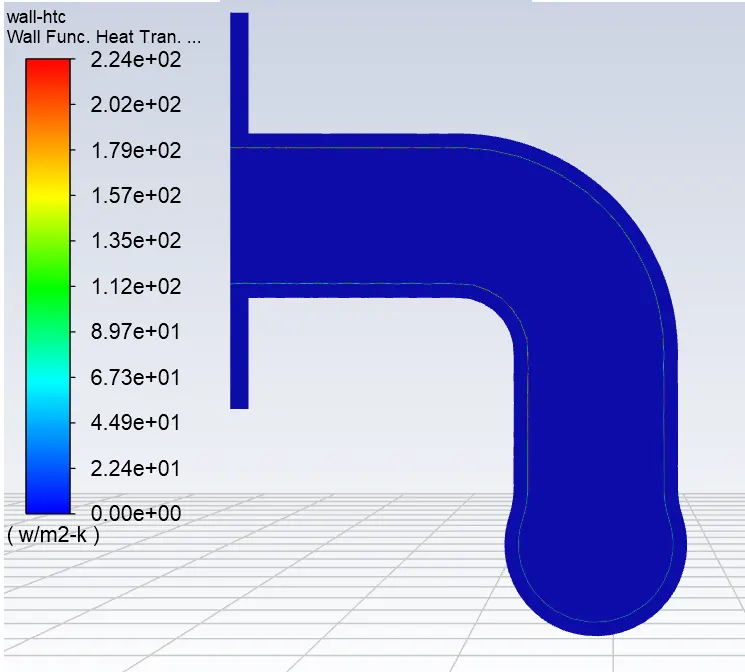
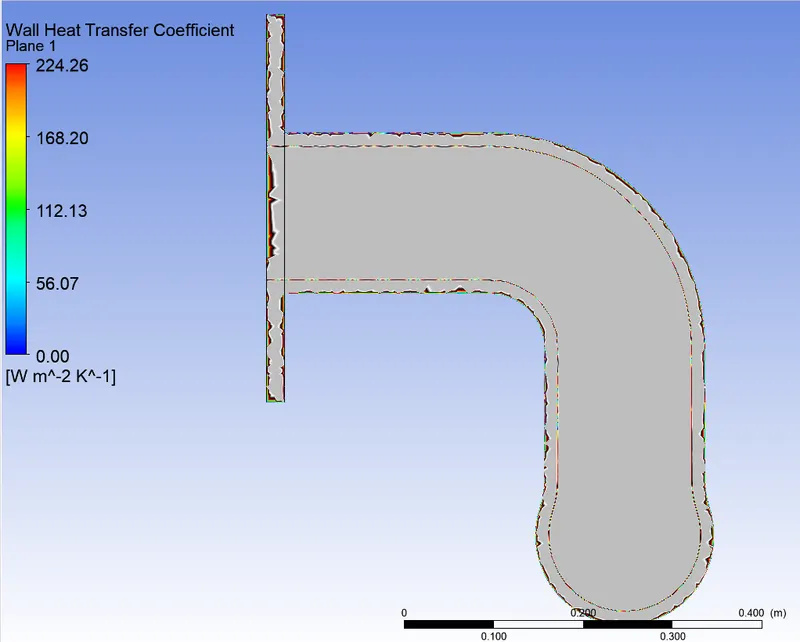
Wall-function HTC
This HTC is calculated by taking 1st cell temperature adjacent to the wall as reference Temperature.
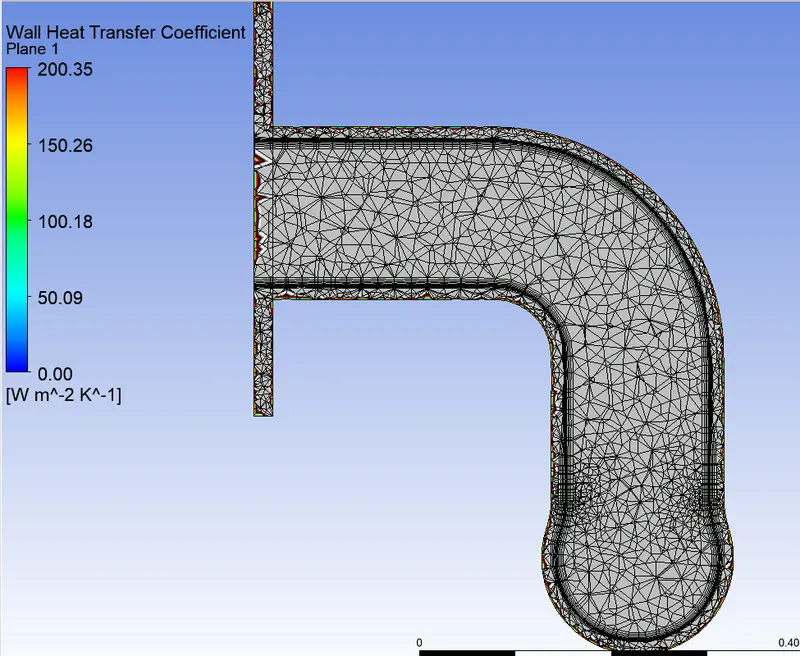
Area weighted average of wall function HTC over the interface
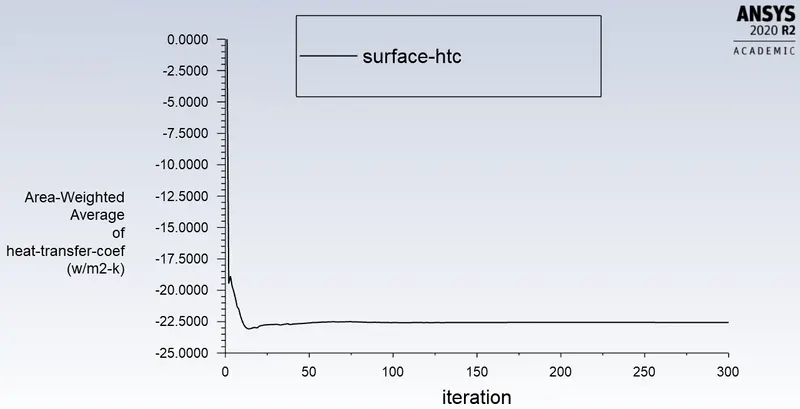
Surface HTC
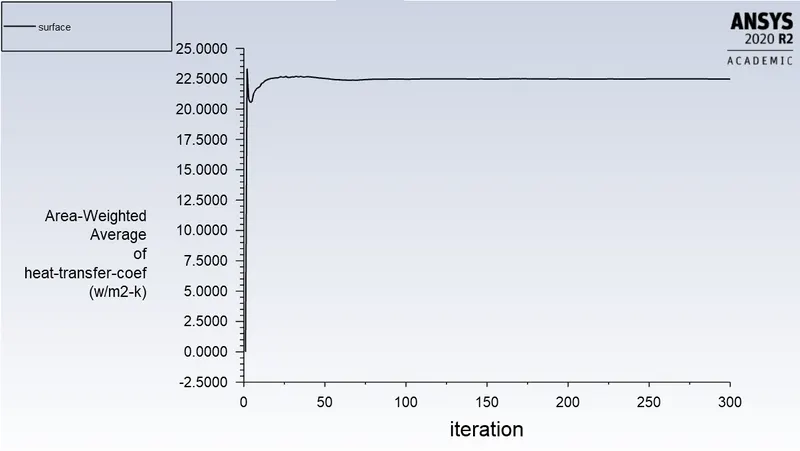
This HTC is calculated by taking the Reference temperature provided in reference values. (300 k)
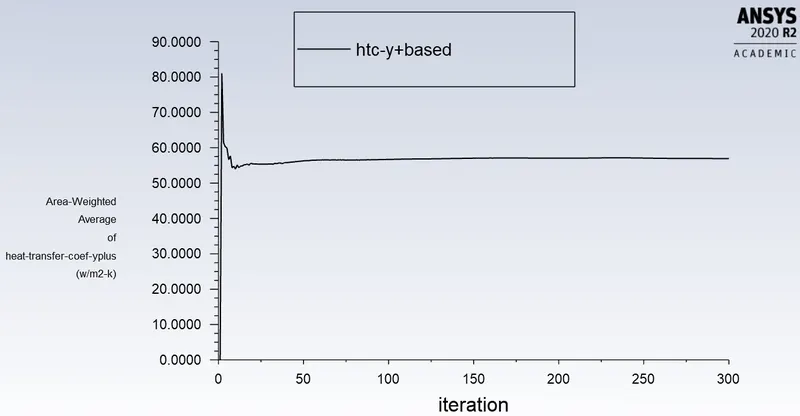
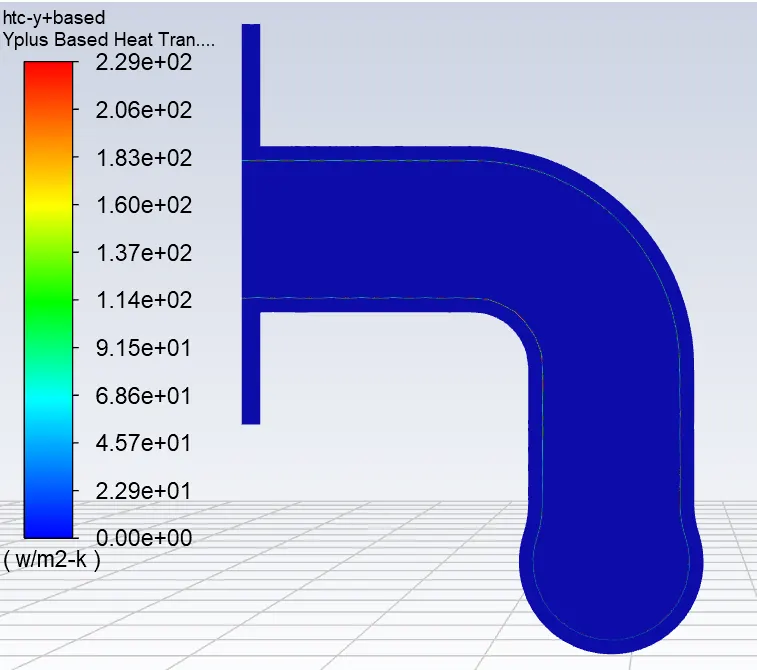
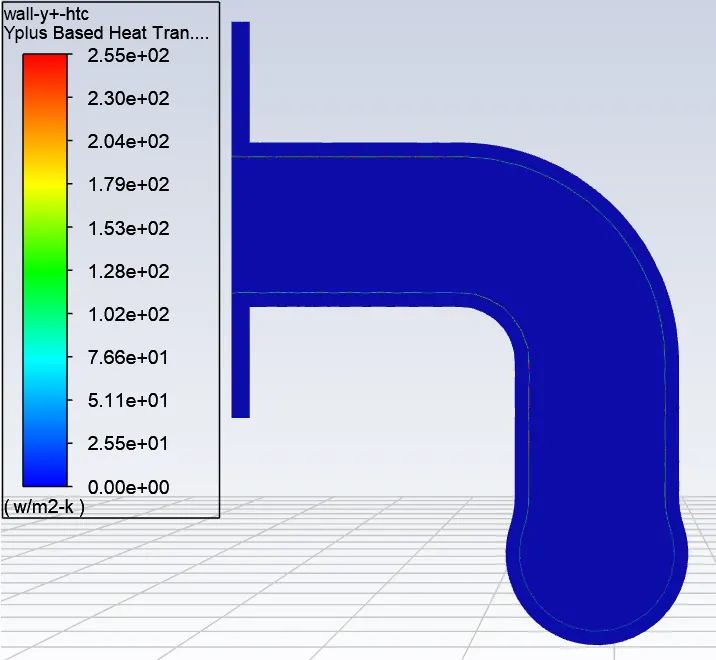
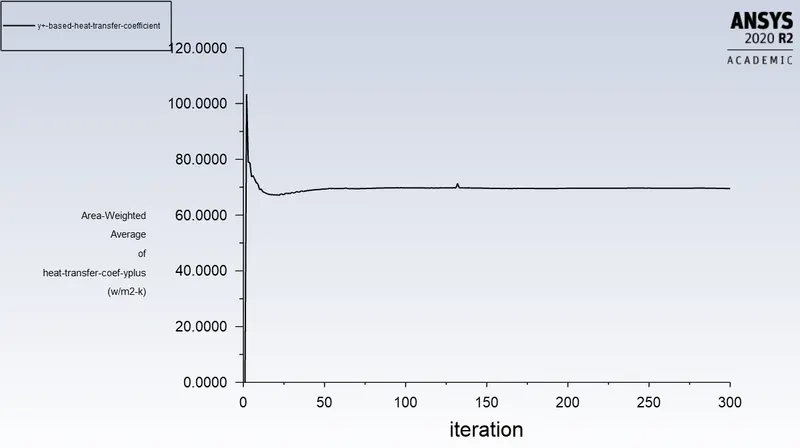
y+ based HTC (y+ reference = 30)
CASE II --> K-omega Turbulence model
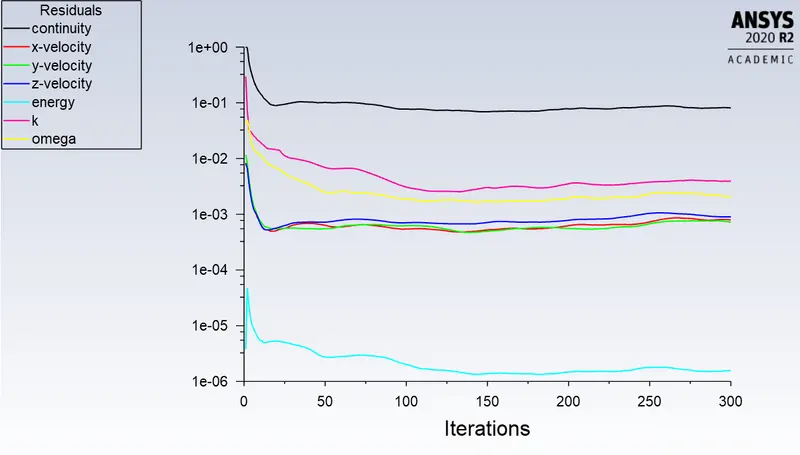
Residual Plots
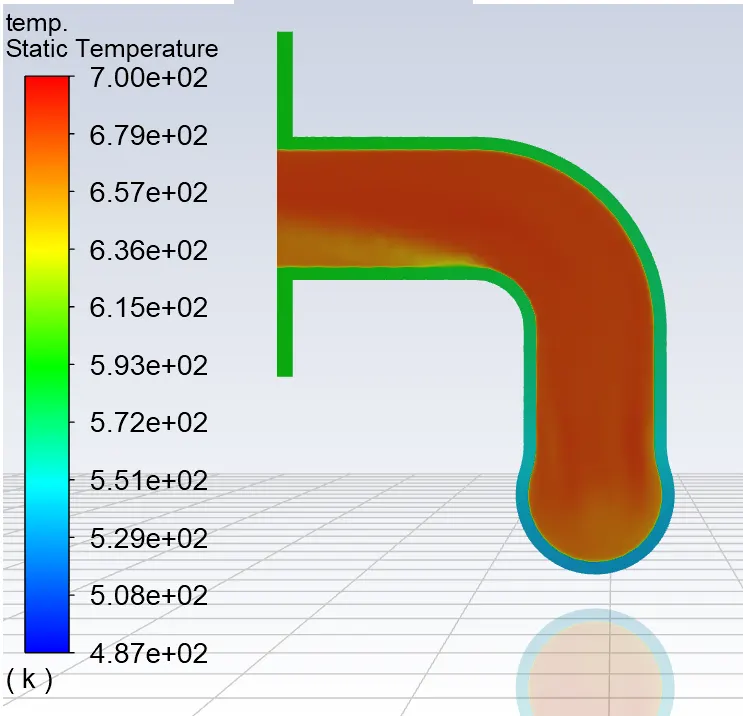
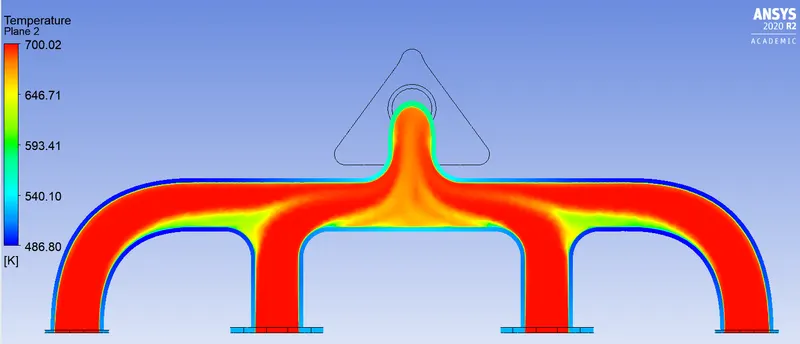
Temperature contours
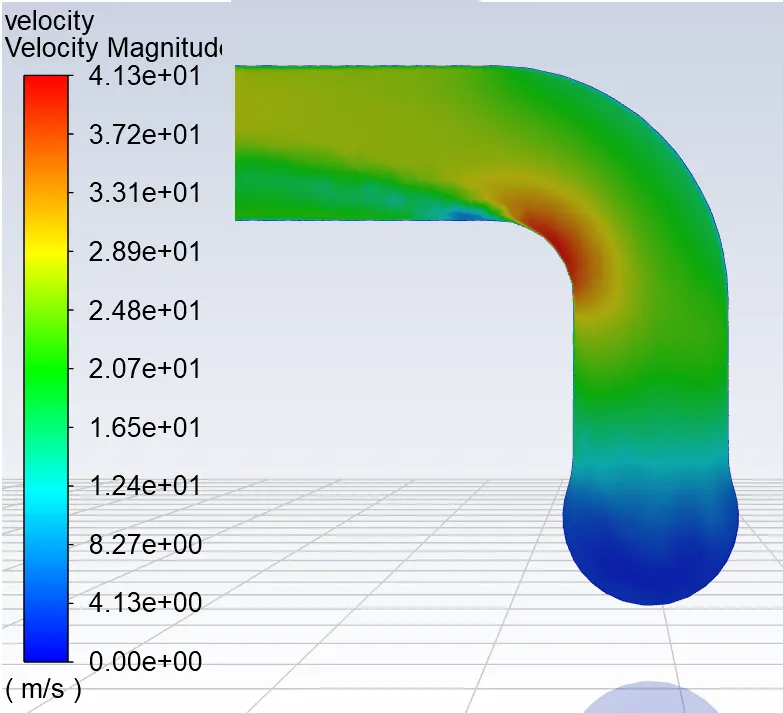
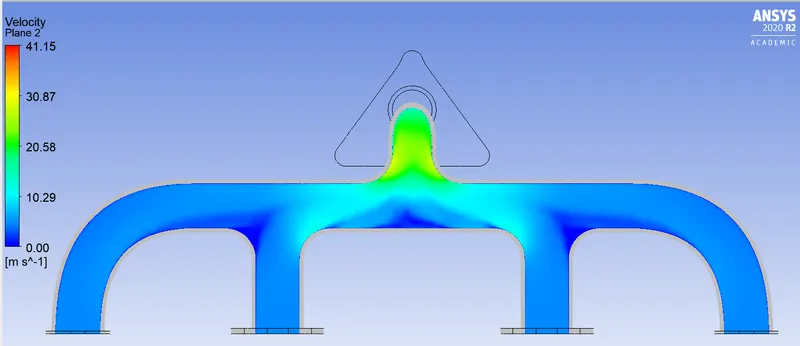
Velocity contours
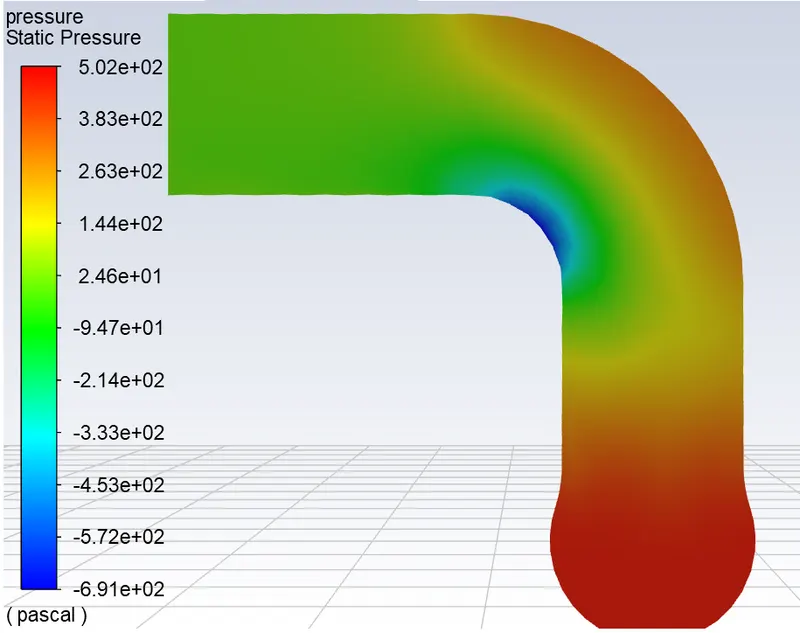
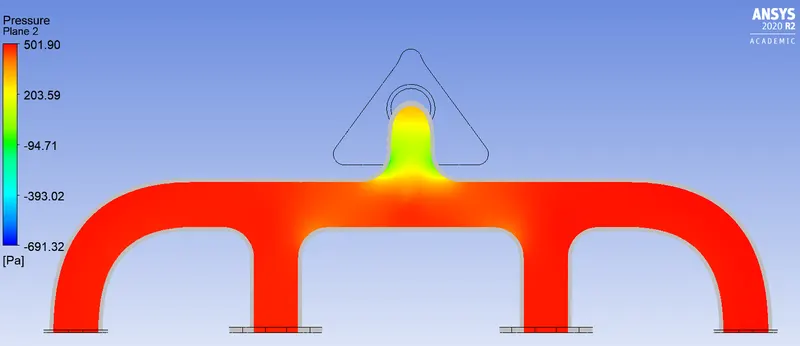
pressure contours
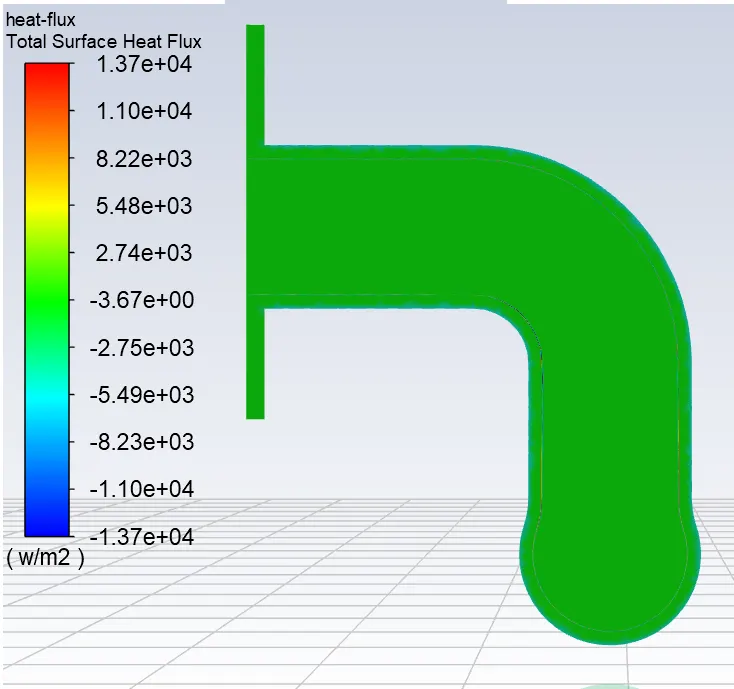
heat flux contours
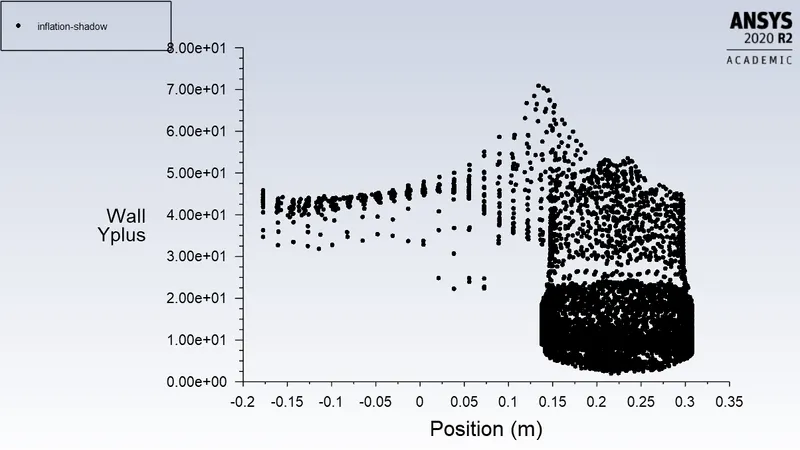
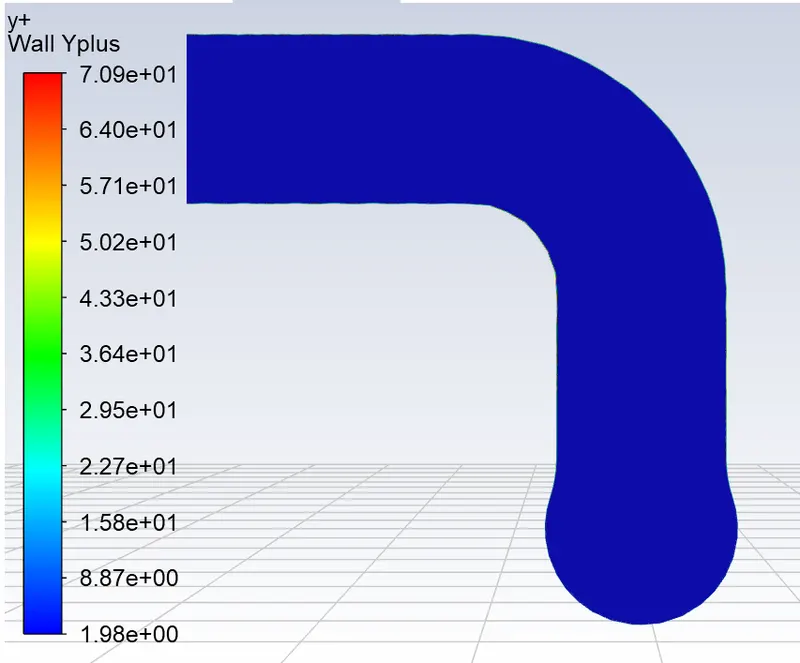
Wall y+
Wall-function HTC
Area weighted average of wall function HTC over the interface
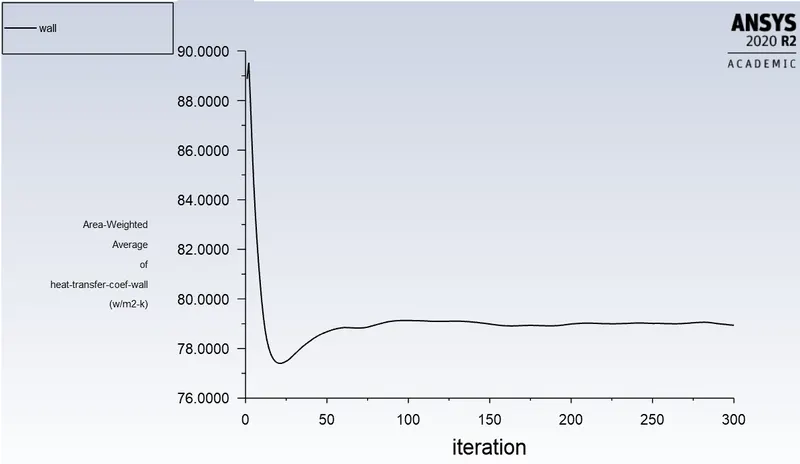
Surface HTC
y+ based HTC (y+ reference = 30)
Validation of Heat transfer coefficient (HTC Validation)
One way of validating HTC is by calculating a dimensionless number known as Nusselt's Number. In fluid dynamics, the Nusselt number (Nu) is the ratio of convective to conductive heat transfer at a boundary in a fluid. Convection includes both advection (fluid motion) and diffusion (conduction).

Nusselt Number is also defined as the gradient of dimensionless reference temperature difference with dimensionless wall-normal distance. A lot of Empirical co-relations for the calculation of the Nusselt number exists. For Forced convection heat-transfer flows, the Nusselt number is a function of Reynold's Number and Prandtl's Number. These are of the following form -->
1. For Forced Convection(general)

(a) Convection with uniform temperature for circular tubes ---> Nu(D) = 3.66
(b) Convection with uniform heat flux for circular tubes ---> Nu(D) = 4.36
2. Forced convection in turbulent pipe flow (Gnielinski correlation)
 where f is Darcy friction factor and can be obtained from the Moody chart.
This correlation is valid for -->


3. Dittus-Boelter equation (smooth tubes)-->
It is easy to solve but is less accurate when there is a large temperature difference across the fluid. The Dittus-Boelter equation is a good approximation where temperature differences between bulk fluid and heat transfer surface are minimal, avoiding equation complexity and iterative solving.
 where n=0.4 for heating fluid and n=0.3 for cooling fluid.
This equation is valid for -->


4. Sieder-Tate correlation
The Sieder-Tate correlation for turbulent flow is an implicit function, as it analyzes the system as a nonlinear boundary value problem. The Sieder-Tate result can be more accurate as it takes into account the change in viscosity "mu" and "mus" due to temperature change between the bulk fluid average temperature and the heat transfer surface temperature, respectively. The Sieder-Tate correlation is normally solved by an iterative process, as the viscosity factor will change as the Nusselt number changes.

where:
 is the fluid viscosity at the bulk fluid temperature
 is the fluid viscosity at the heat-transfer boundary surface temperature
The Sieder-Tate correlation is valid for -->


--> Our case geometry of the exhaust port is very complex and any of these correlations will not yield a result for validation of HTC. Nusselt number (Nu) is a function of Re and Pr, but to find out the constants for the empirical formulation one needs to conduct real-time experimentations on the complex geometry. If one gets those empirical constants from experiments then Nu can be expressed as a function of Re and Pr. Once we have found out the Nusselt number we can find out HTC from the first equation for validation. The accuracy of the prediction of HTC depends upon the experiments and the constants obtained from the experiments.