Week 4 - CHT Analysis on Exhaust port
CHT Analysis on Exhaust port:
CHT analysis:
Theory: The Conjugate Heat Transfer (CHT) analysis type allows for the simulation of heat transfer between solid to solid and solid to fluid domains by exchanging thermal energy at the interfaces between them.
Ansys setup for CHT:
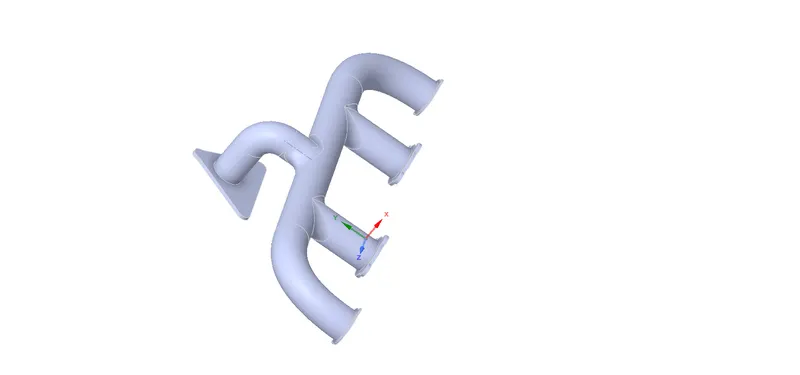
Import the solid file and examine the part to be removed unwanted duplicate entities and make tropology share to ensure connections between mesh grids and ensure the part is final to make CFD simulations.
Meshing
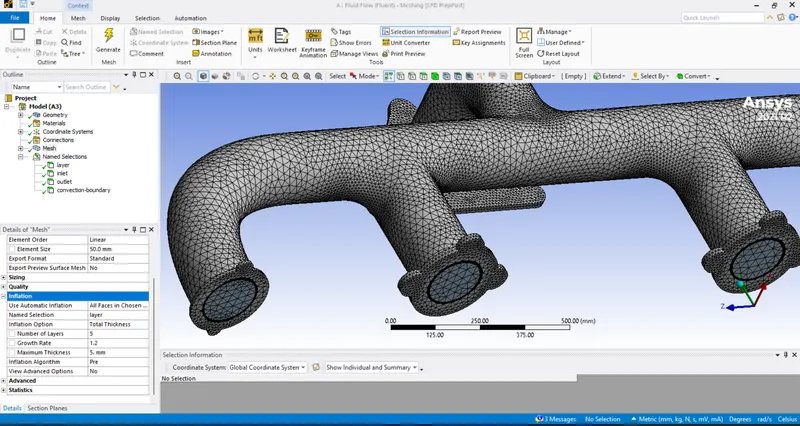
Mesh ths file according to the required element size and give inflation layes to capture the viscous effects in fluid flow
fluent setup
Mention all parameters according to problem statement
solver type : pressure based;
material: fluid as air, solid as alluminium ;
physical model : turbulence model as K-epsilon;
consider energy equation;
boundary conditions:
inlet : velocity inlet and temp of fluid is 700K
outlet : pressure outlet;
soild geometry as convective wall is given input as 20W/M^2K,
solution method : simple and all are second order formulation;
and run the simulations
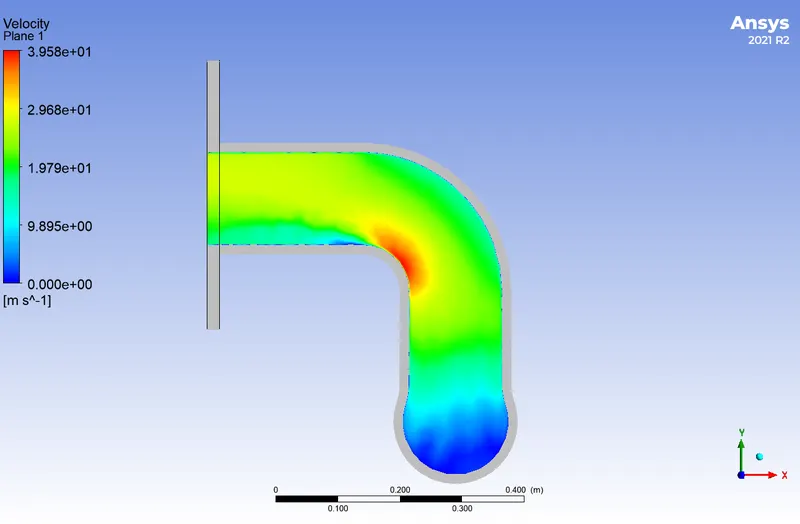
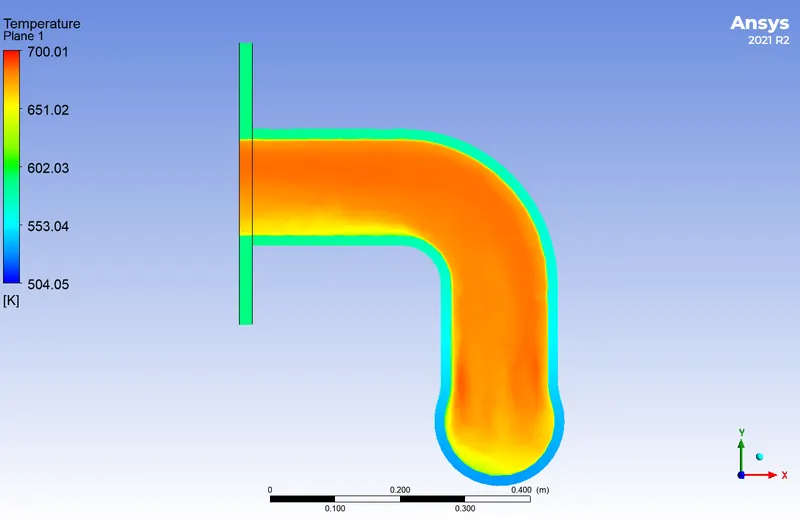
Mesh refinement :
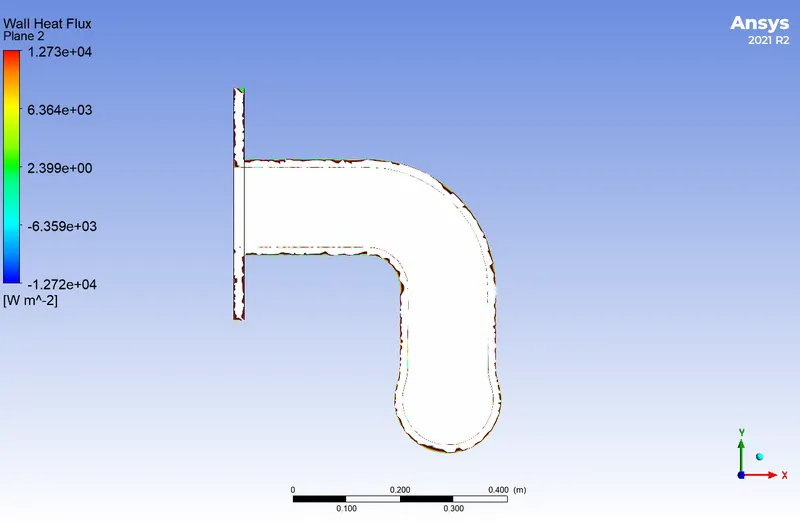
Note : If the inflation layers are increased at the edges or wall of the surface we may get finer results and get smooth contours which may see exactly at edges.
How would you verify if the HTC predictions from the simulations are right? On what factors does the accuracy of the prediction depend on?
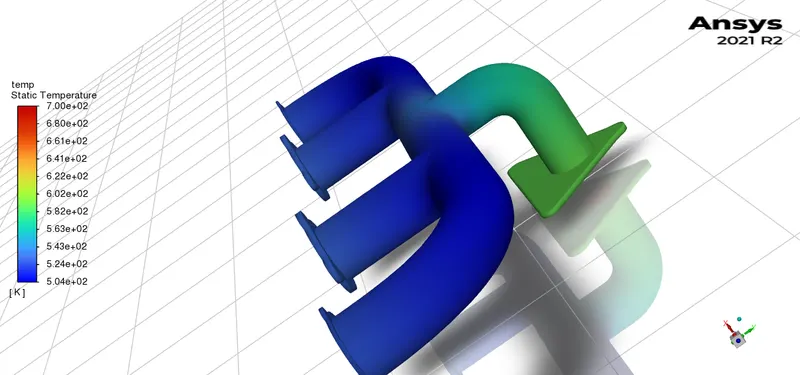
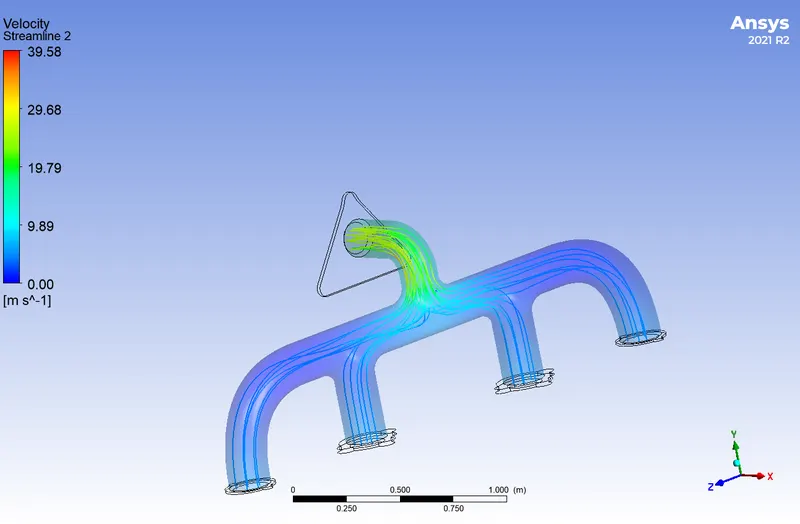
we can see the temperature and velocity are maximum at near the wall so we can say HTC predictions are correct because as velocity is increased temperature is raised according to Nusselt and Renault's number