Week 1- Mixing Tee
Mixing Tee
Objective:
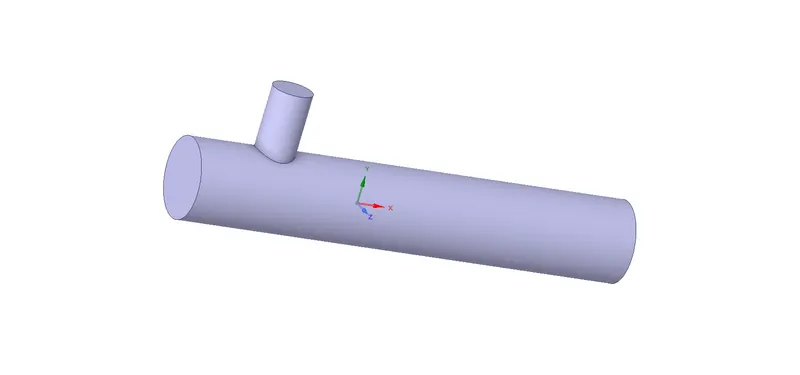
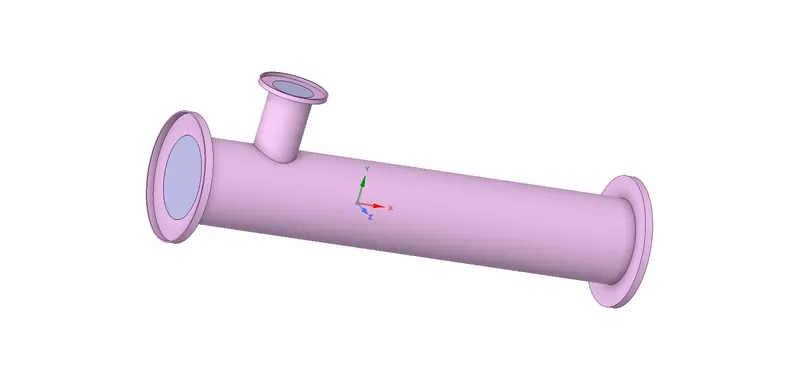
For this challenge, we have created two versions of the mixing tee. One of them is longer than the other.
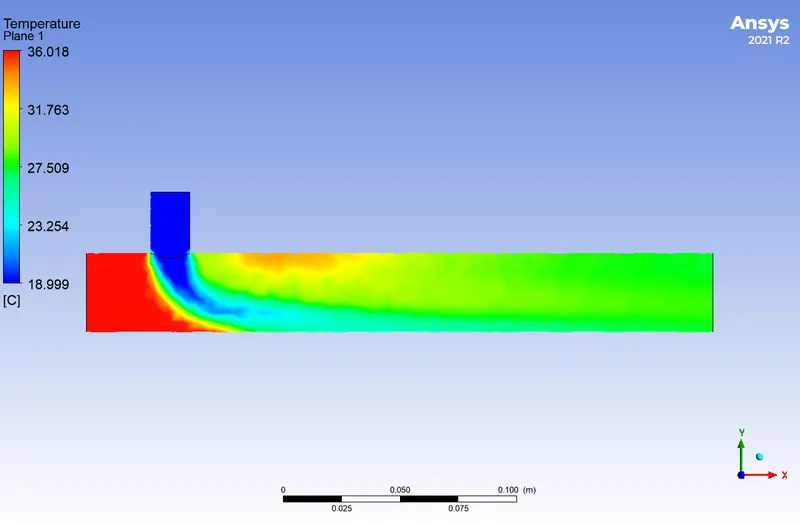
The job is to set up steady-state simulations to compare the mixing effectiveness when hot inlet temperature is 360C & the Cold inlet is at 190C.
Using the k-epsilon and k-omega SST model for the first case
Later choose the right model among both for second case
Ansys set up:
Import the Geometry and clean for requirements like creating volume extraction to be simulated
Meshing :
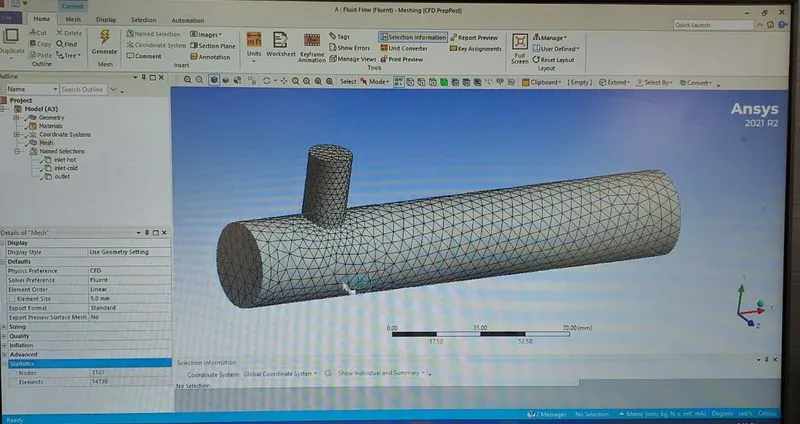
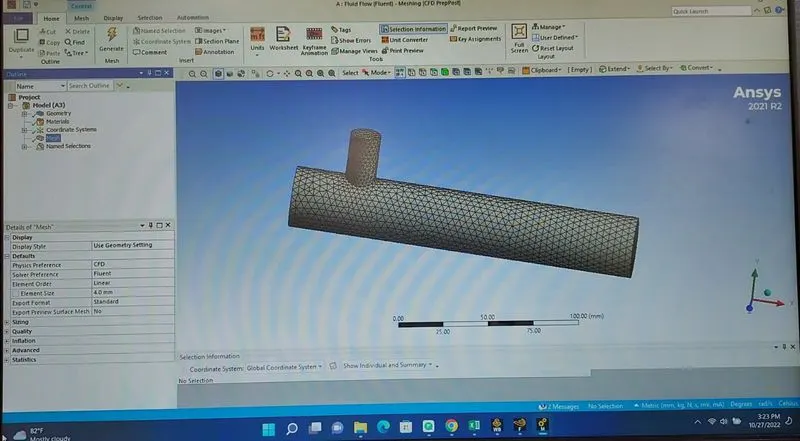
Mesh the required geometry with appropriate element size and finally naming them for boundary conditions
Fluent set up:
solver type- pressure based,
time - steady state,
velocity - Absolute
Viscous model - K-epsilon and k-omega choosen for case 1
Mterial type - air
boubary canditions - inlet velocity hot side 3m/s
inlet velocity cold side 6m/s and 12m/s
cell zone - fluid zone.
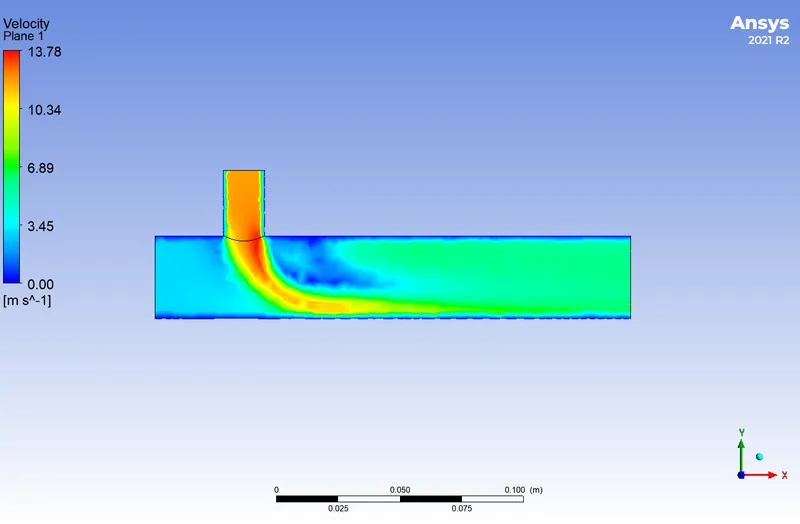
- Case 1
- Short mixing tee with a hot inlet velocity of 3m/s.
- Momentum ratio of 2, 4.
K-epsilon model.
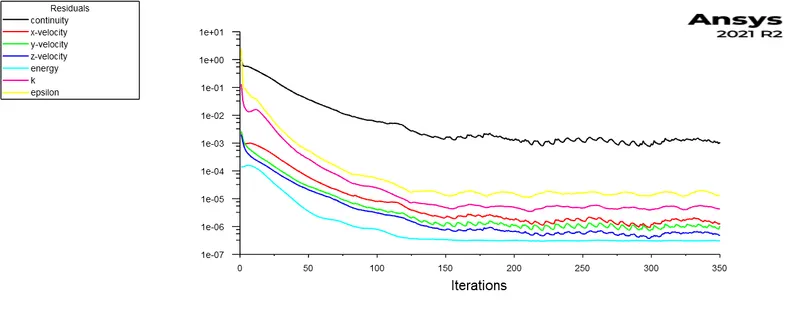
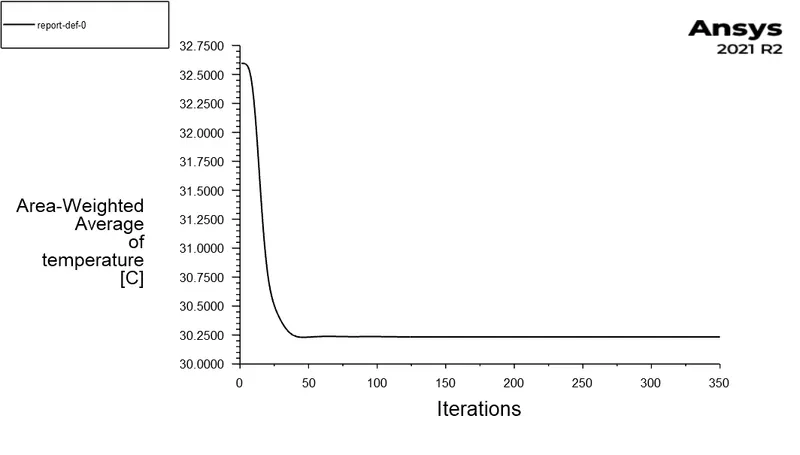
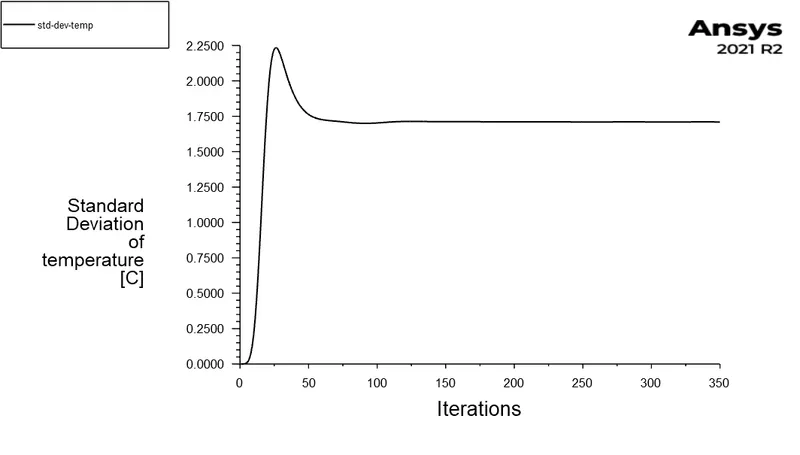
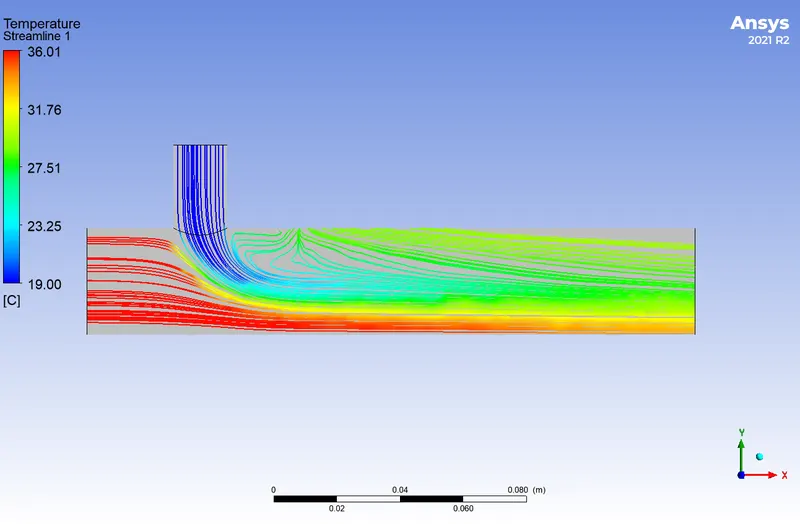
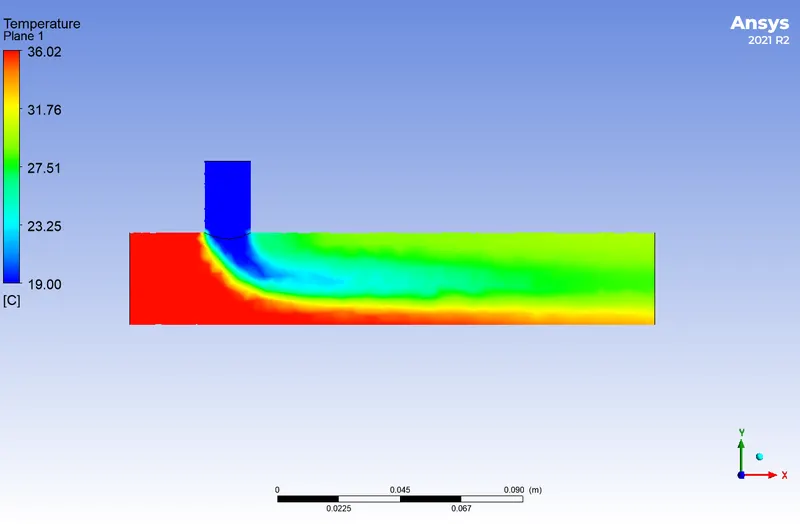
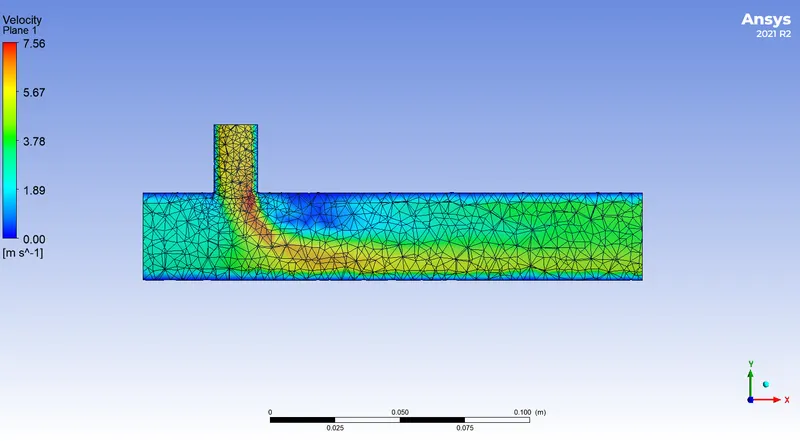
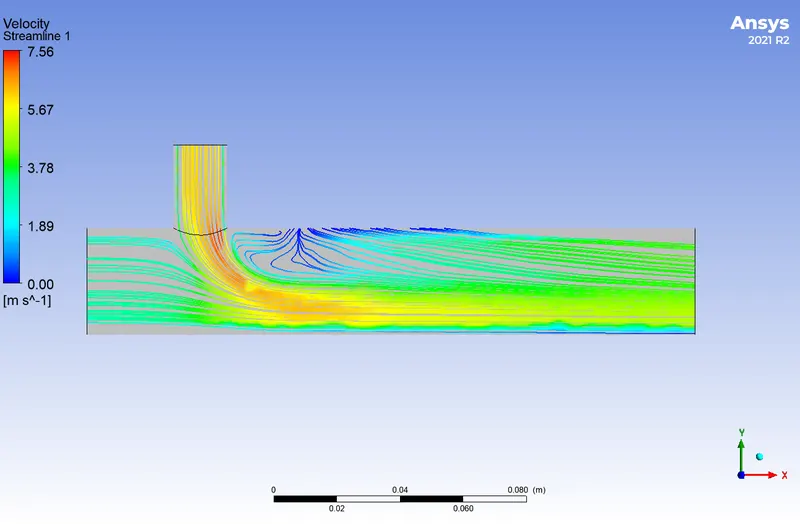
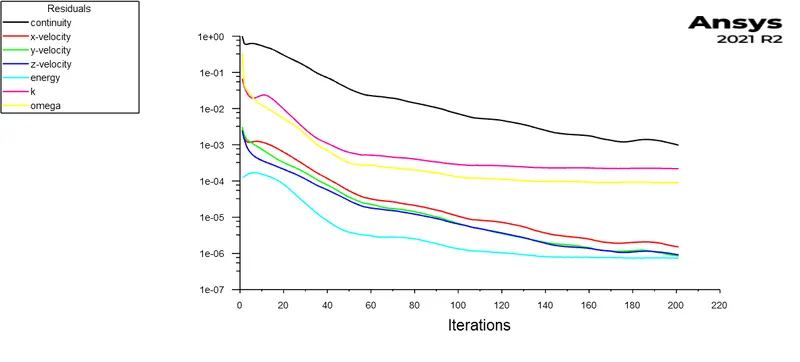
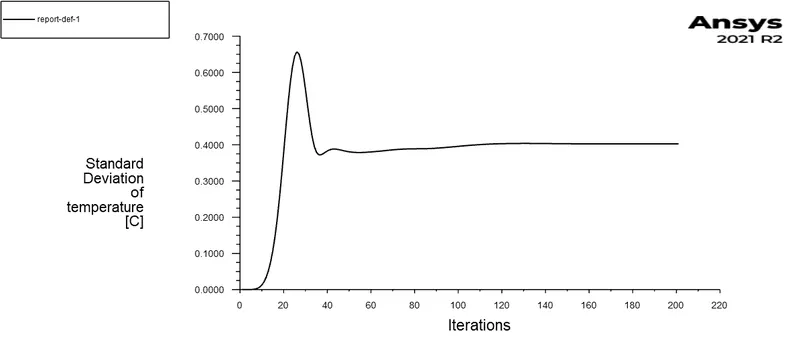
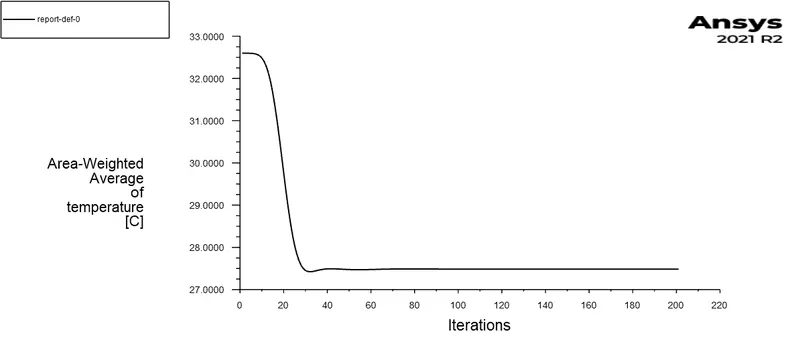
Mom at 4
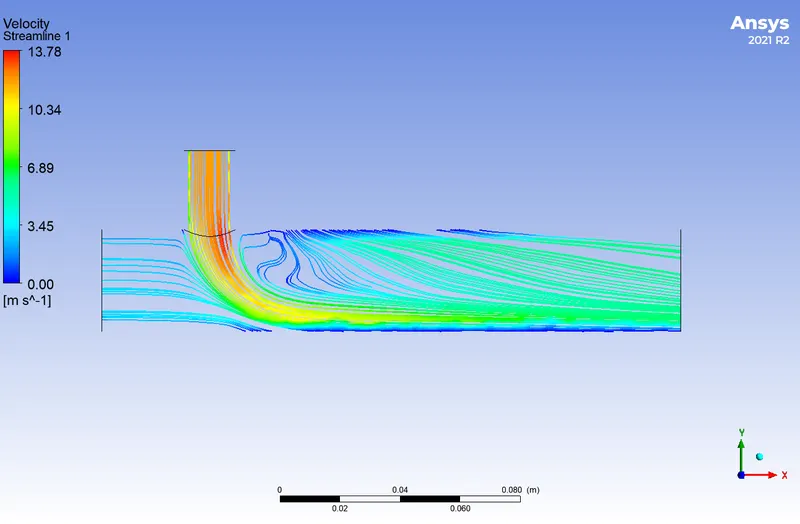
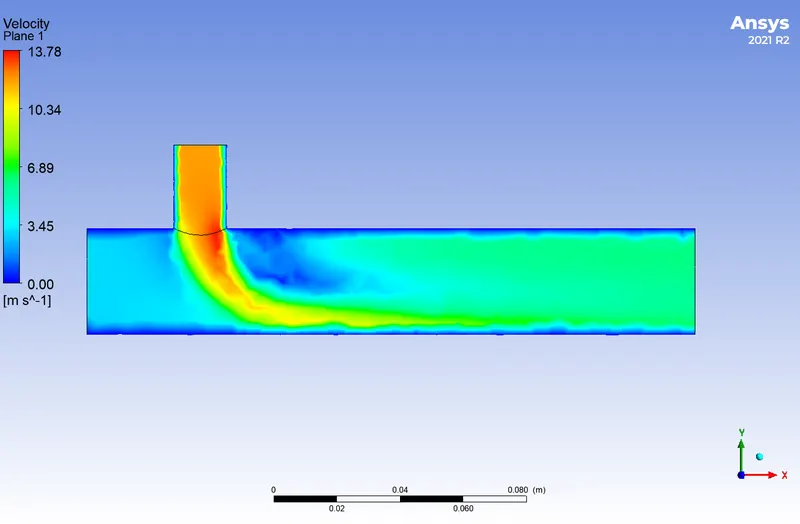
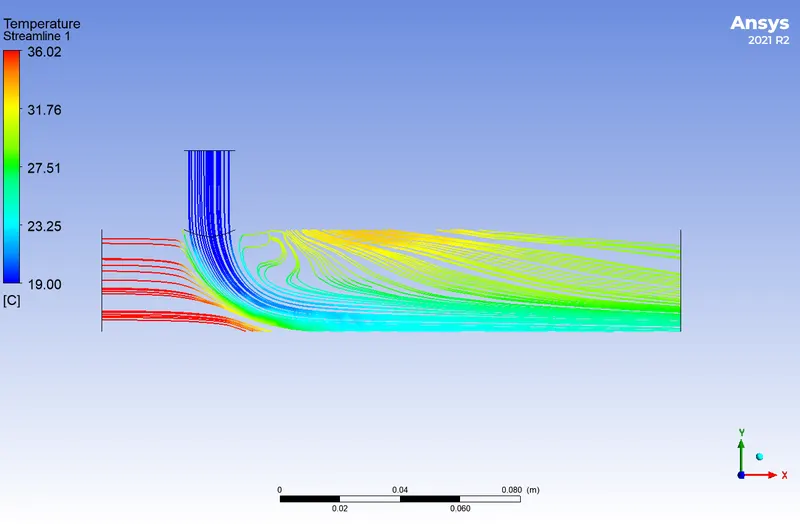
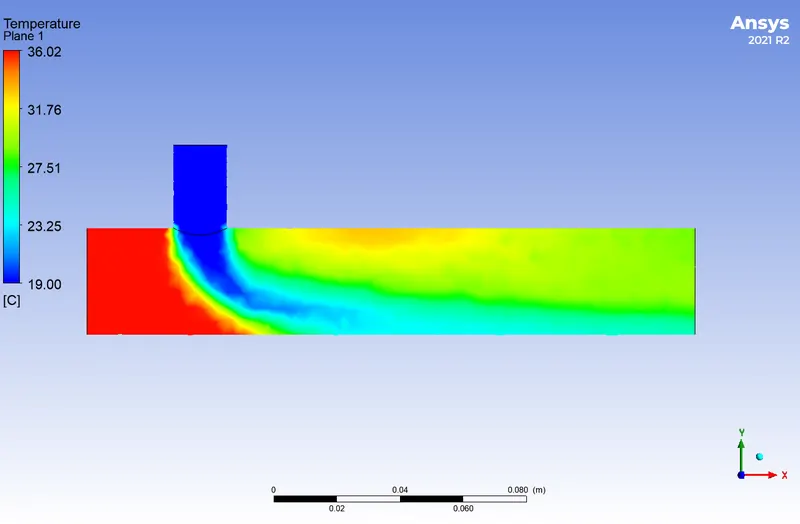
K-omega model
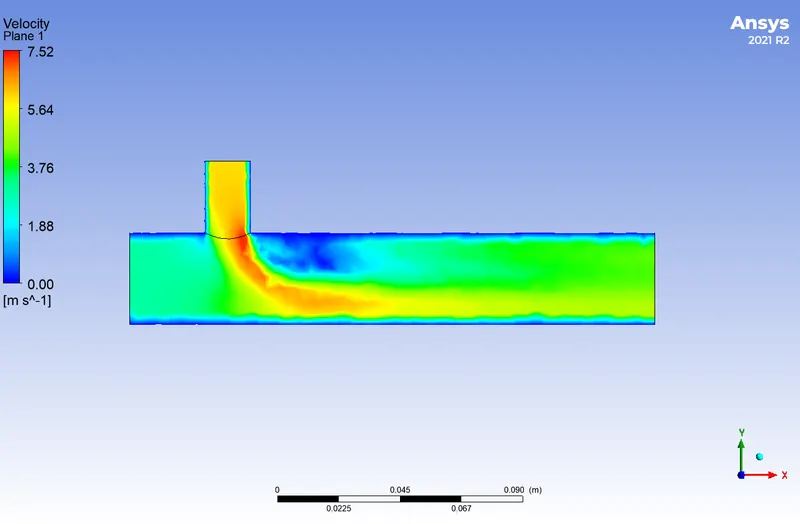
Case 1 Table:
| cell count | STD DEVTEMP | average outlet temp | no of ietration | STD DEVTEMP | average outlet temp | no of ietration | |||||
| short tee | K-epsilon | case 1 | mom2 | 14139 | 1.7099899 | 30.234035 | 212 | k-omega | 1.5128709 | 30.274801 | 193 |
| mom4 | 14139 | 1.3357867 | 27.54858 | 146 | 1.1339424 | 27.520073 | 206 |
Case 2
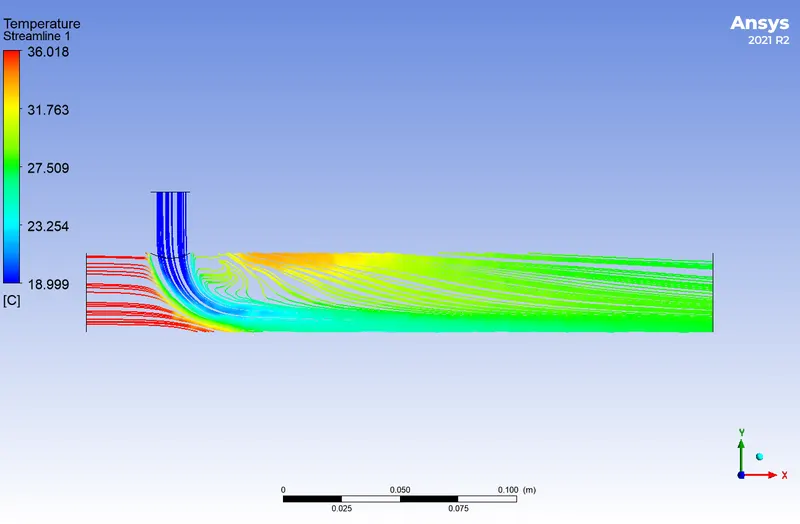
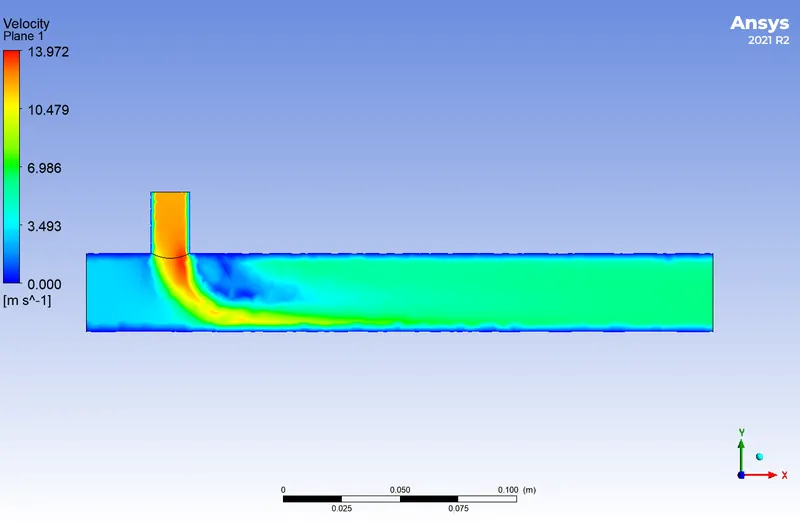
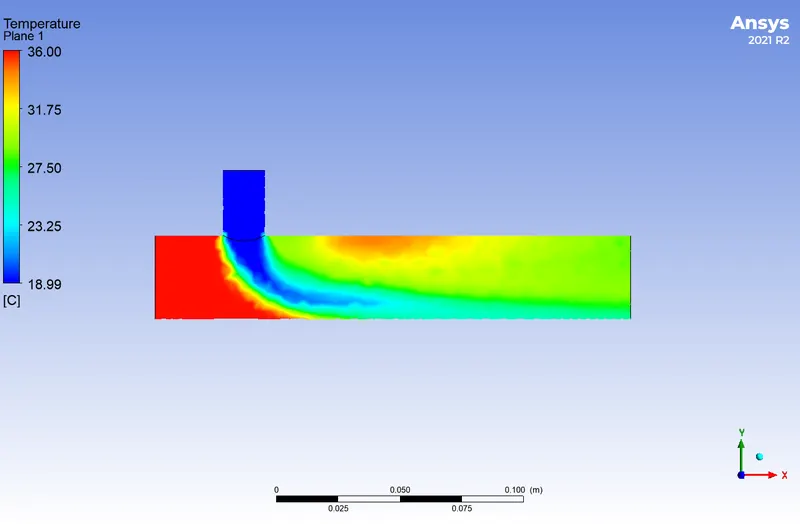
K - epsilon is taken for second case simulations come with less no of ieteration compared to k-omega
At mom 2
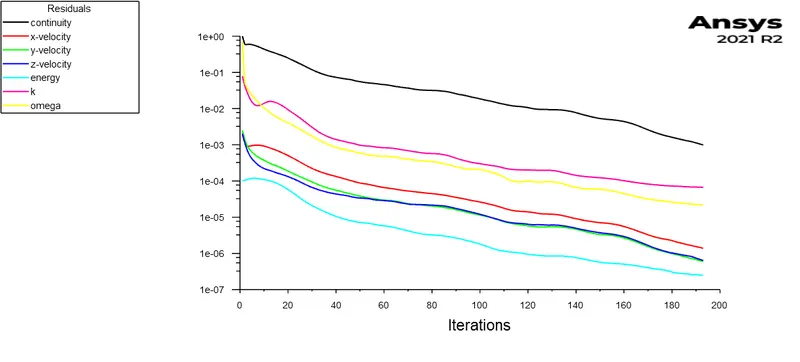
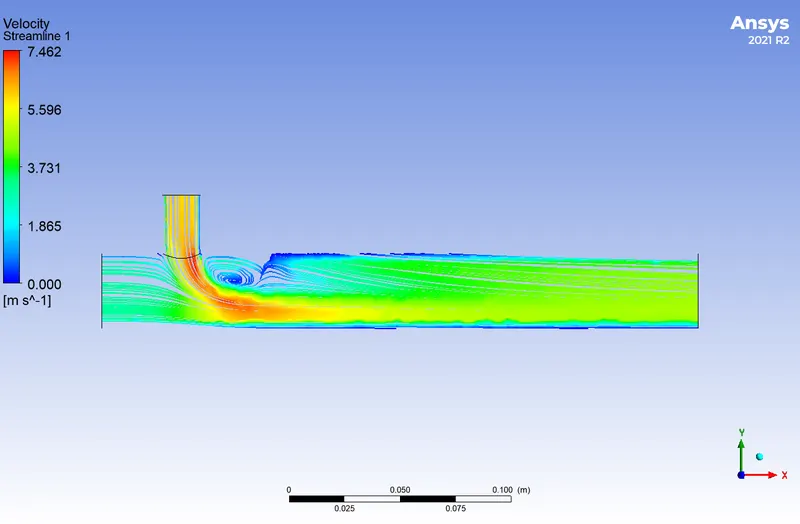
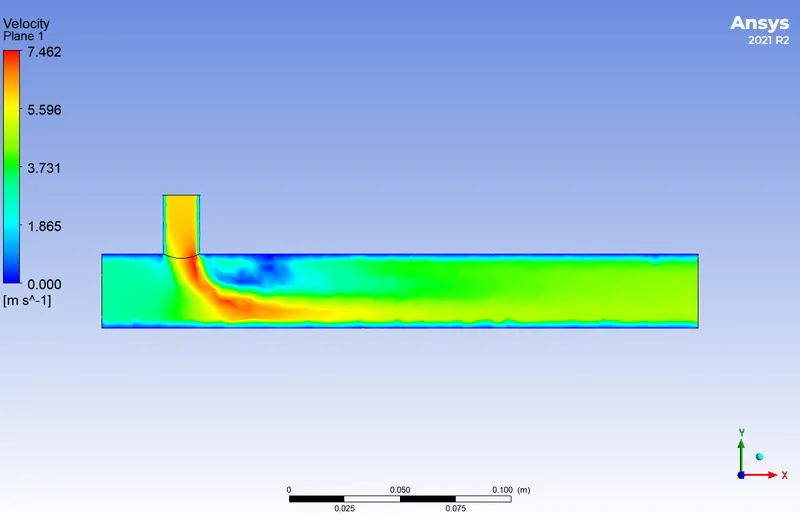
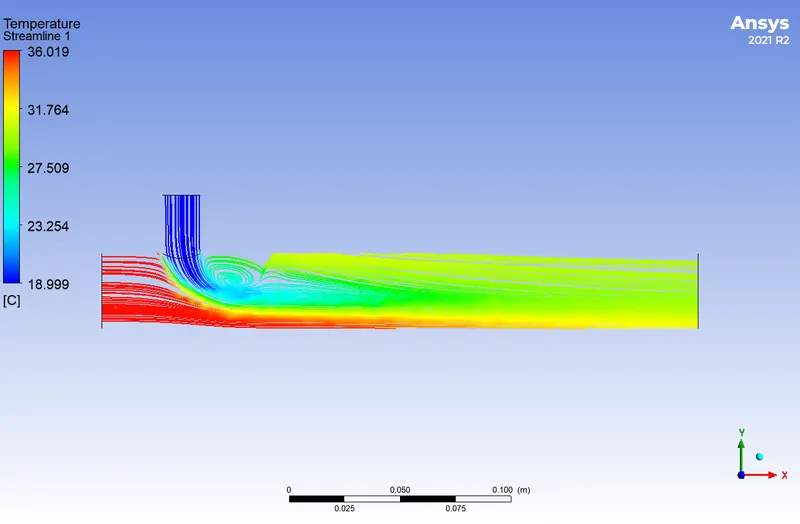
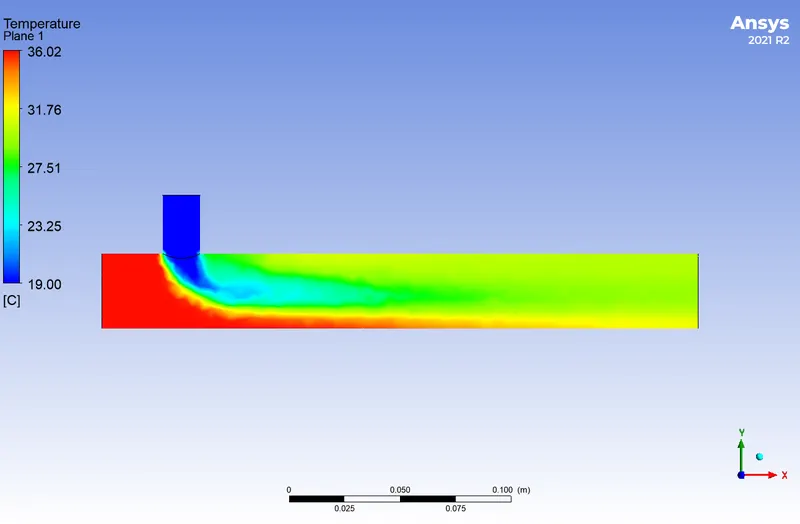
At mom 4
| long tee | K-epsilon | case 2 | mom2 | 17901 | 0.91904567 | 30.302184 | 472 |
| mom4 | 17901 | 0.53807975 | 27.492689 | 127 |
Grid Test
Grid size is 5mm
| 14139 |
Grid size 4mm
cell count
| 21776 |
conclusion
When no of cells are incresed results will get accurete and simulations come very appropriate and can expect required physics behind the flow