Week 4 - CHT Analysis on Exhaust port
AIM
Steady-state conjugate heat transfer analysis on the exhaust port.
EXPLANATION
CHT Analysis
The conjugate heat transfer (CHT) analysis allows the simulation of heat transfer between solid and fluid domains by exchanging thermal energy at the interfaces between them. In solids, conduction often dominates whereas, in fluids, convection usually dominates.
Typical applications of this analysis type exist as, but are not limited to, the simulation of heat exchangers, cooling of electronic equipment, and general-purpose cooling and heating systems. CHT analysis can accurately predict heat transfer by simultaneously solving all the relevant solid and flow field heat transfer processes, for example, conduction through solids, free and forced convection in the gasses/fluids and thermal radiation.
The CHT approach has an advantage over others such as FE thermal analysis in the wall heat transfer coefficients and their local variations on surfaces are directly calculated within the model rather than based on simplified empirical calculations. The CHT approach, therefore, has benefits for those applications where a transfer is either non-uniform or difficult to calculate empirically.
CASE
CHT analysis on the model of the exhaust port
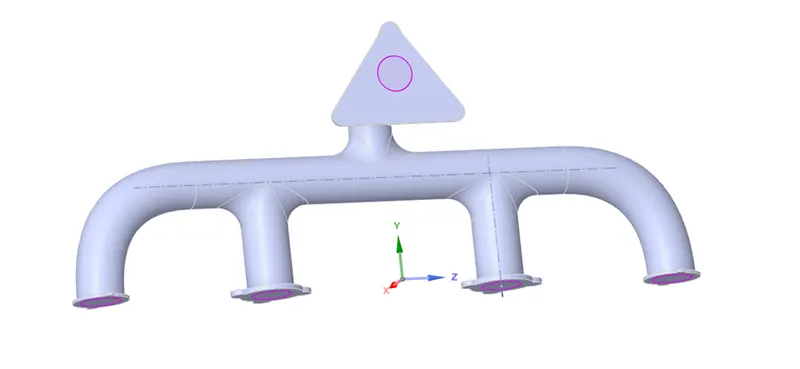
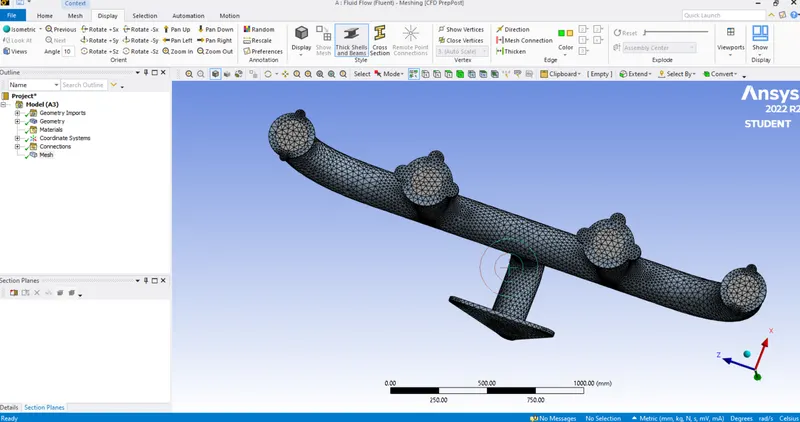
Here an inline four-cylinder engine exhaust manifold is considered, where the conjugate heat transfer is analyzed to find the optimum heat transfer coefficient. Fluid volume is extracted from the port and considered the fluid domain where the air (fluid) enters.
PROCEDURE TO SET UP THE CASE
SpaceClaim
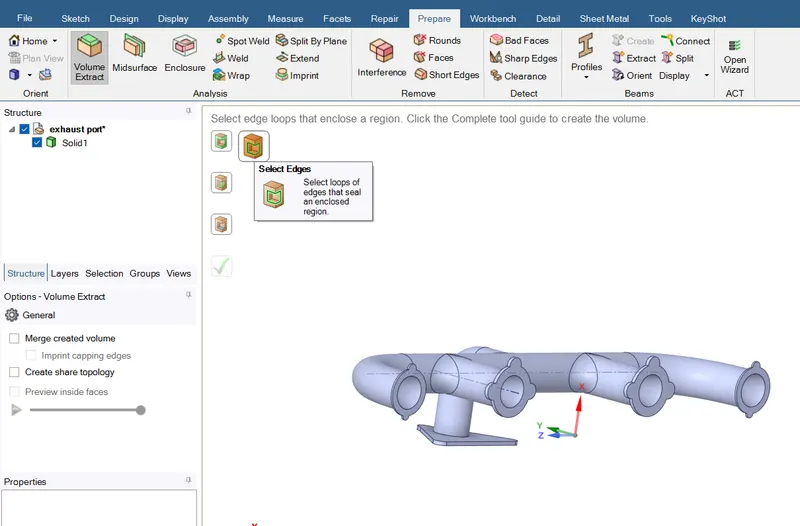
- Geometry preparation in SpaceClaim.
- Removal of extra edges.
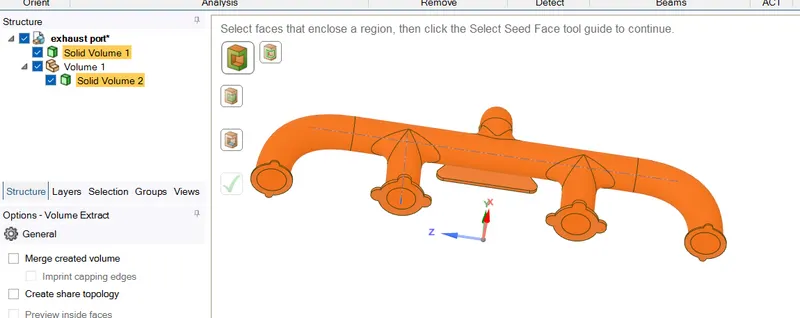
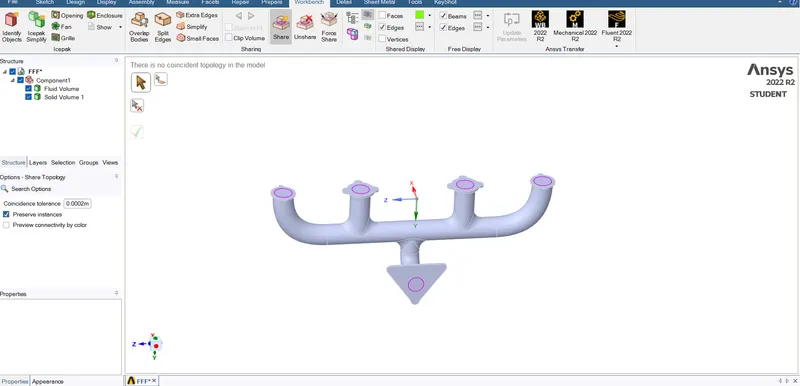
- Fluid volume is extracted.
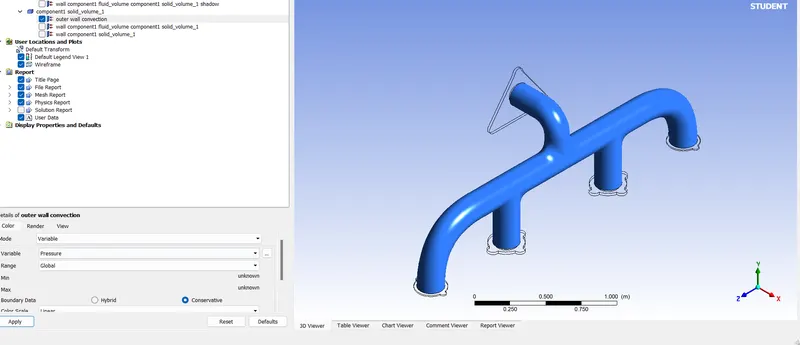
- Final geometry containing both the fluid volume and solid volume generated.
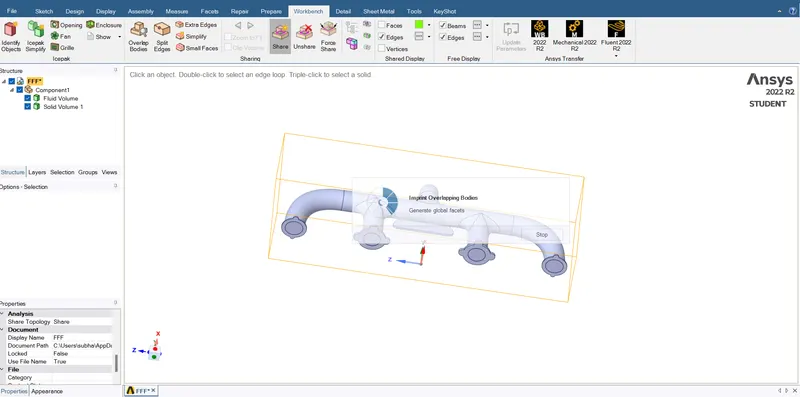
- Enable share topology to ensure the smooth flow of heat from the fluid to the solid.
SpaceClaim can share topology (face, edge, and vertex connections) between touching or intersecting bodies and surfaces in designs that are transferred to ANSYS. Shared topology is the only way to achieve a conformal mesh where bodies meet and is the only way to be certain that the intersection of bodies has meshed perfectly. Shared topology also applies to volume and surface bodies that are completely inside of the other volume or surface bodies. This situation is common in analyses involving fluid flow.
CONCLUSION
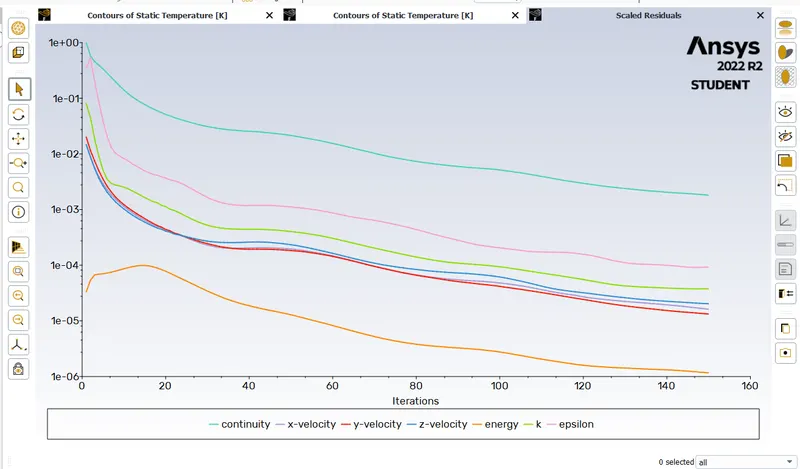
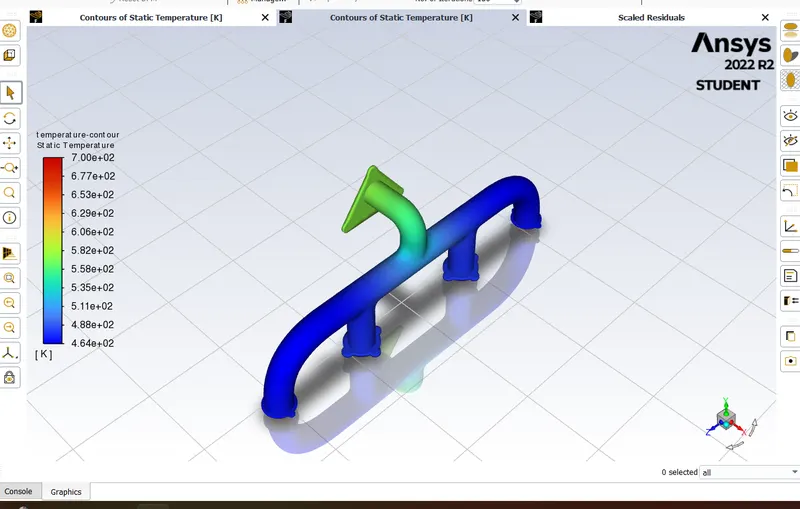
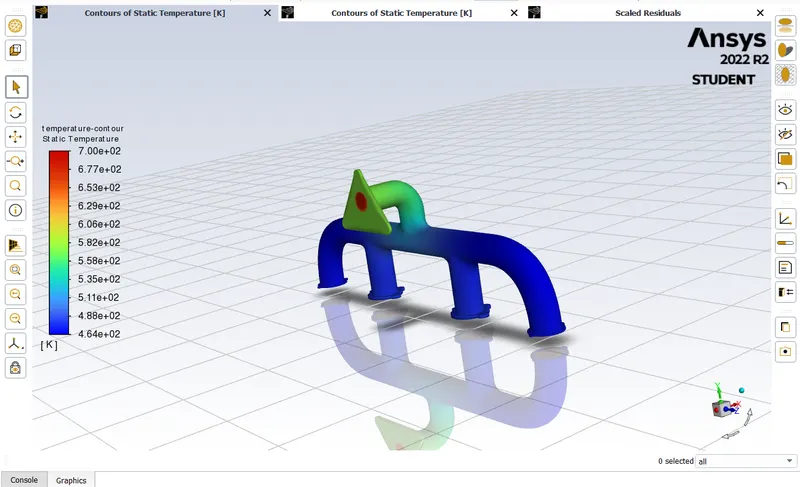
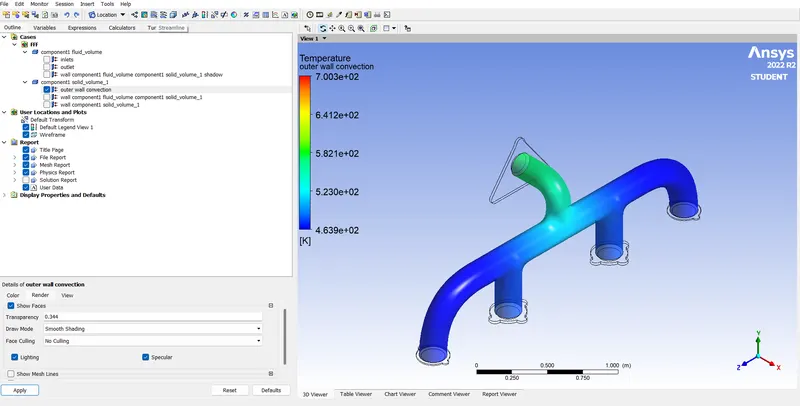
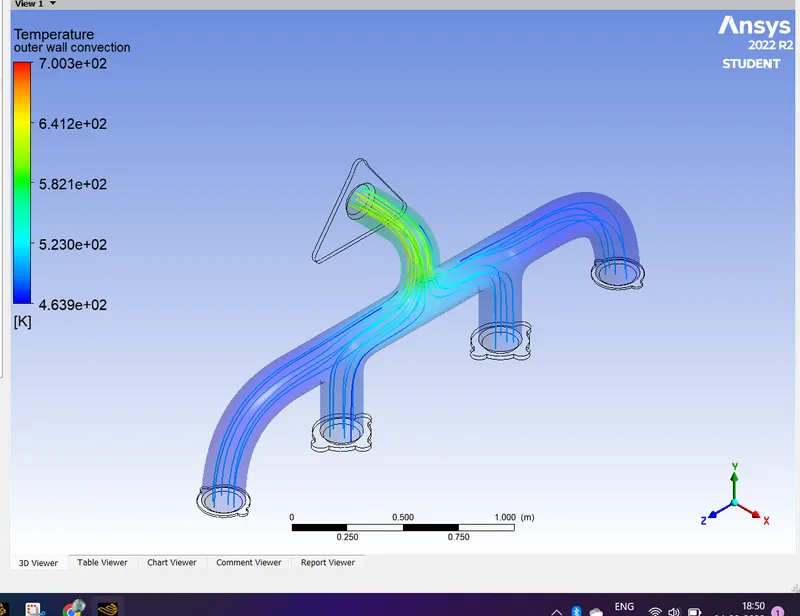
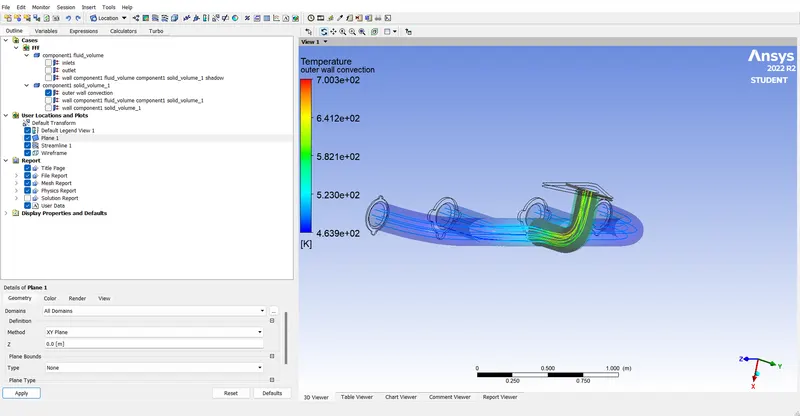
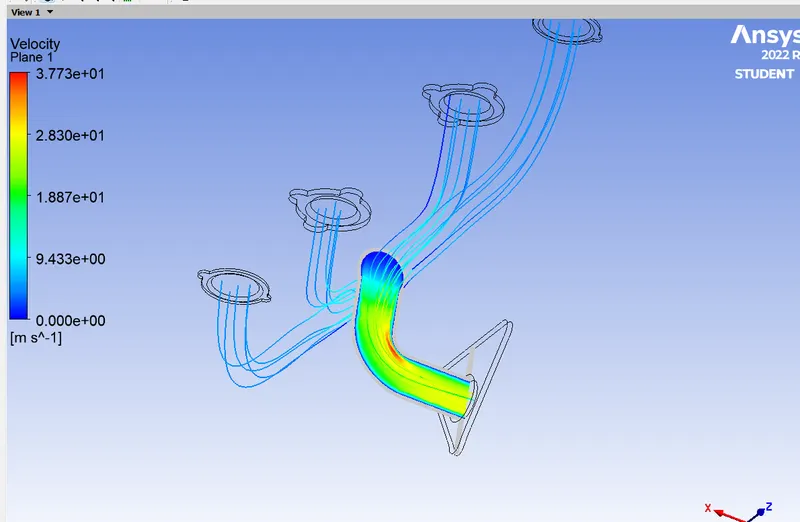
- The CHT analysis on the exhaust port was simulated successfully on Ansys-fluent.
- The pressure-based, coupled scheme solver is used to discretize the whole geometry.
- The velocity at the outlet is higher than the velocity at the inlet shows the conservation of mass. There are four inlets against one outlet.
- The accuracy of the heat transfer coefficient depends on selecting the suitable value of y+ and turbulence model K-omega SST model. The HTC values predicted by CFD were validated against the numerical solution depicted the deviation in the range of 5% to 10% which is in compliance with industrial standards. However, the accuracy itself depends on the accuracy of the analytical solution, flow properties, and geometry. The values predicted by the baseline mesh and the refined mesh were close to each other this can be attributed to the fact that the boundary keeps on growing and declining from the inlet to the outlet owing to change in velocity, thus the value is predominant at the outlet section of the exhaust port.