Week 4 - CHT Analysis on Exhaust port
AIM
To simulate and analyse the exhaust port temperature and velocity
Theory
The contemporary conjugate convective heat transfer model was developed after computers came into wide use in order to substitute the empirical relation of proportionality of heat flux to temperature difference with heat transfer coefficient which was the only tool in theoretical heat convection since the times of Newton. This model, based on a strictly mathematically stated problem, describes the heat transfer between a body and a fluid flowing over or inside it as a result of the interaction of two objects. The physical processes and solutions of the governing equations are considered separately for each object in two subdomains. Matching conditions for these solutions at the interface provide the distributions of temperature and heat flux along the body–flow interface, eliminating the need for a heat transfer coefficient.
The Conjugate Heat Transfer (CHT) analysis type allows for the simulation of heat transfer between solid and fluid domains by exchanging thermal energy at the interfaces between them. Typical applications of this analysis type exist as, but are not limited to, the simulation of heat exchangers, cooling of electronic equipment, and general-purpose cooling and heating systems.
Procedure
Pre-processor
The solid geometry is imported into ansys spaceclaim and the fluid volume is checked for extra edges and then prepared using the volume extract option . Then the new solid and fluid volumes are moved to a new component to share their topology.
Then in the workbench menu share topology is selected to enforce the sharing of topology.
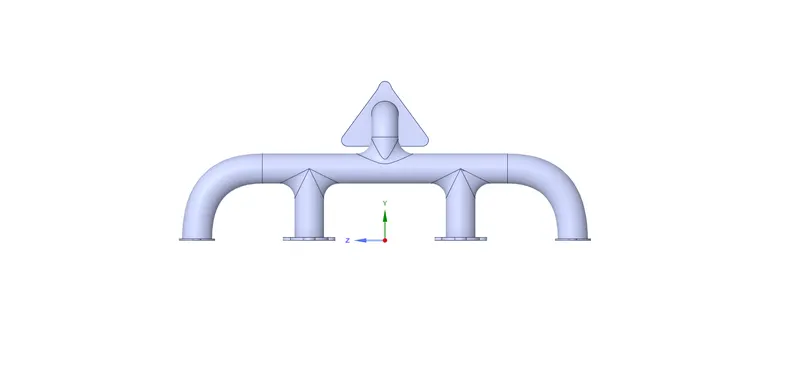
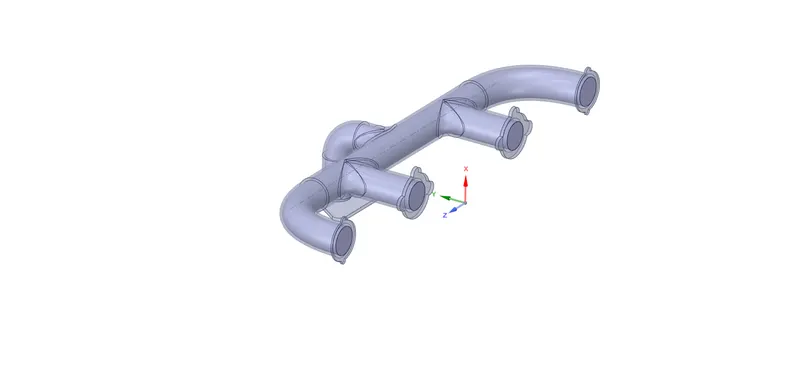
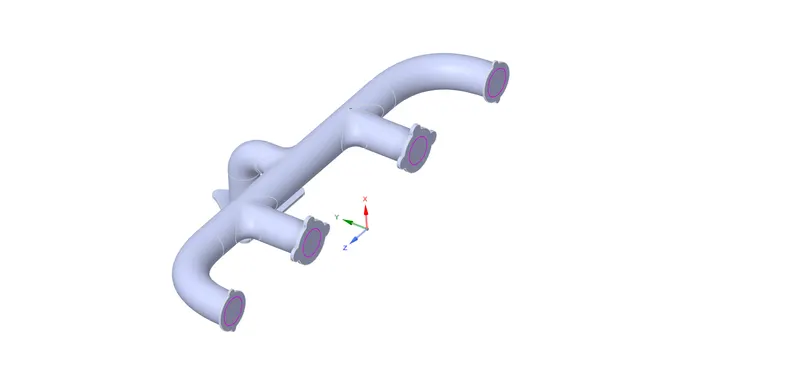
Then in the meshing process the inlet, outlet, outer wall and the inflation layer names are given to the respective faces along with it the inflation layer is also created for the inlet and outlet by selceted
Inflation layer
All faces in the geometry and then selecting the inflation layer and followed by providing the number of layers and the total thickness layer of 12.5 in this case(Since the `K-epsi`is choosen the desired Y+ should range between 30 and 300.
Therefore for the inlet velocity of 5m/s and the y+ value of 30, we get the first layer thickness of 1.91
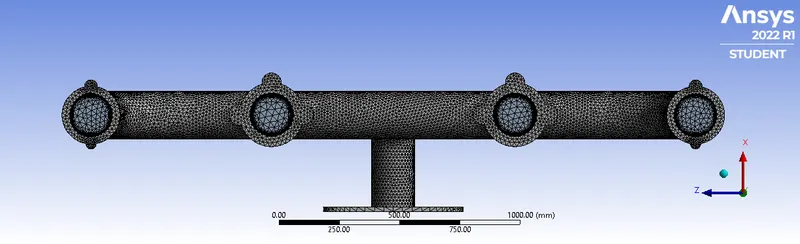
Sizing
Then for the body sizing, insert sizing is chose and the outer faces are selected and the element size of 18 is given and the curvature capture is turned on.
Finally for the above created mesh size we get 427757 No of elements.
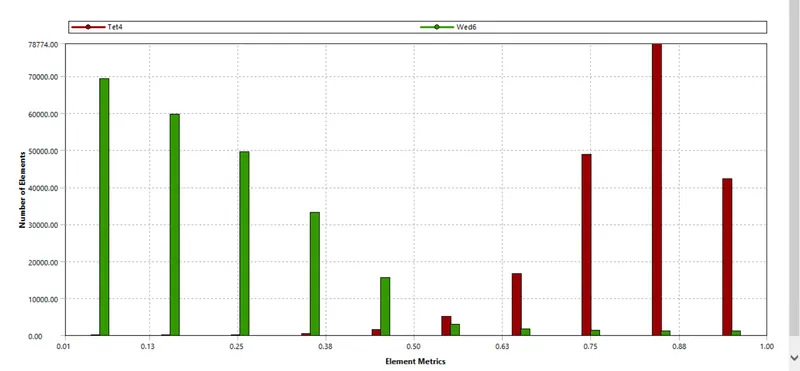
Solver
Set-up
The input velocity is set to 5m/s and the temperature is set to 700k and the outer wall convection is set to `w/(m^2k)` and all the other values are to their default value
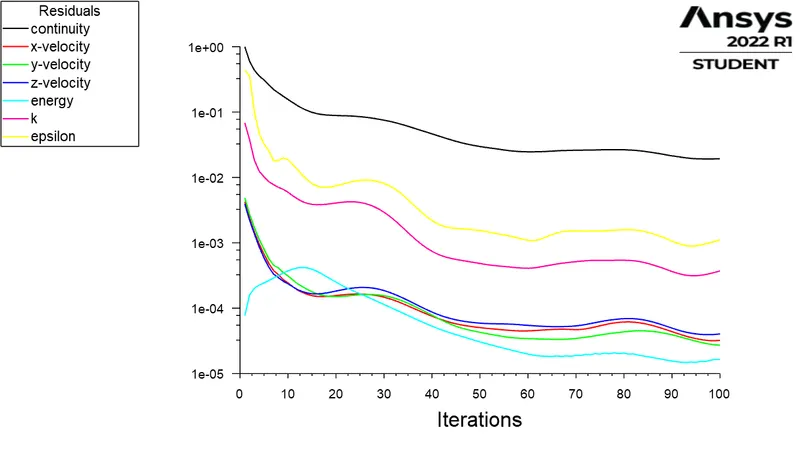
Animation
Post-processor
The streamline option is used and the wall transparency is reduced to view the streams
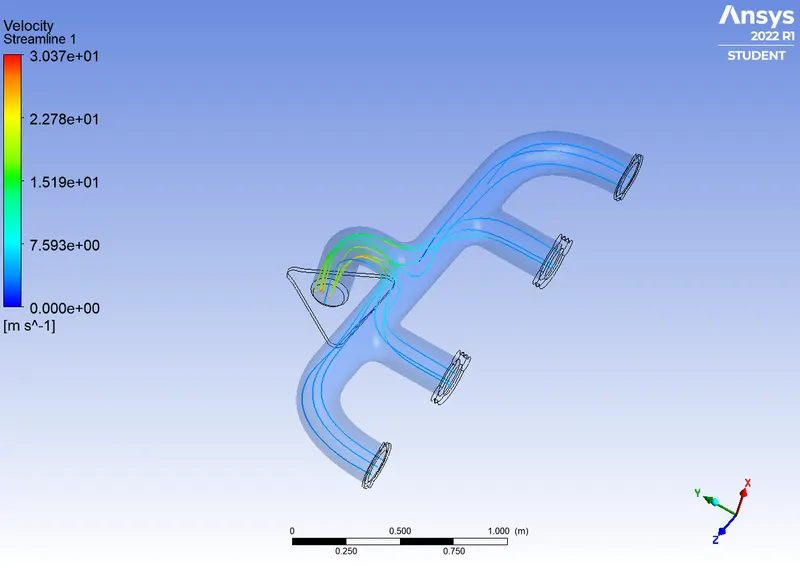
A new plane is created in the XY direction and the variable is to set to the desired parameter.
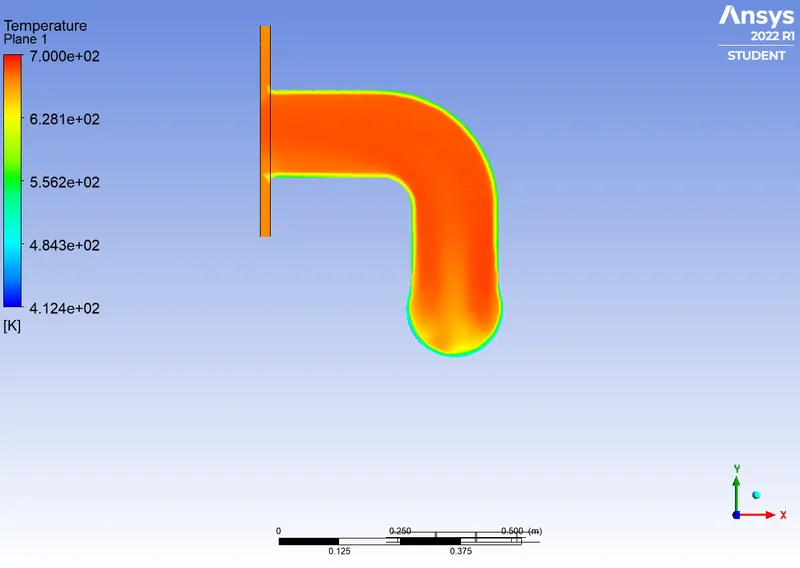
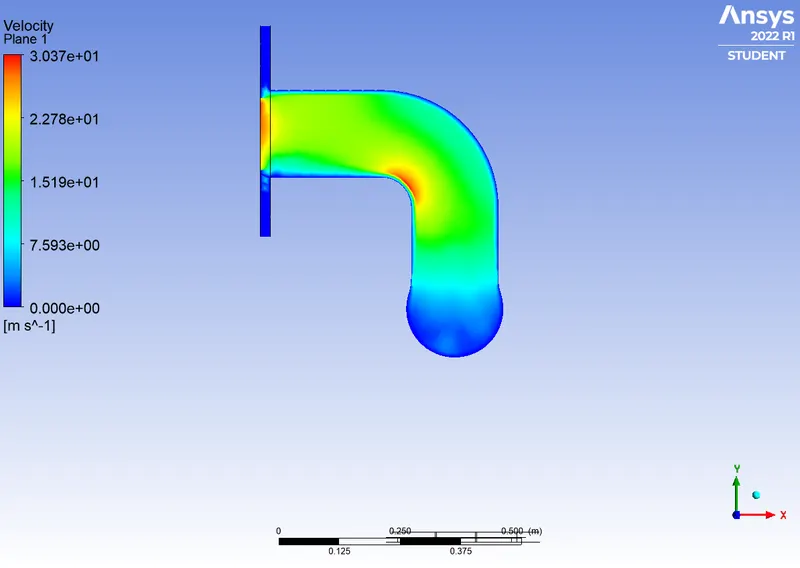 \
\
The cdat file is imported from the fluent and used to get the wall surface and wall heat transfer coefficient
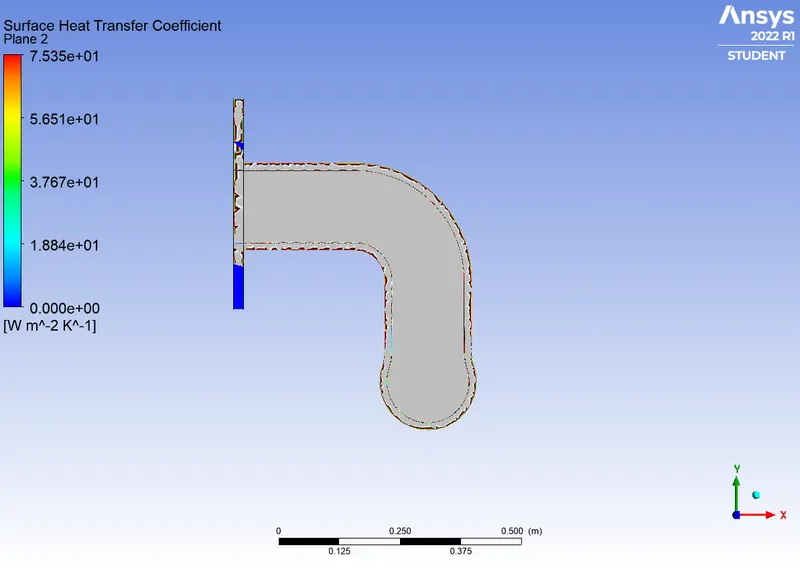
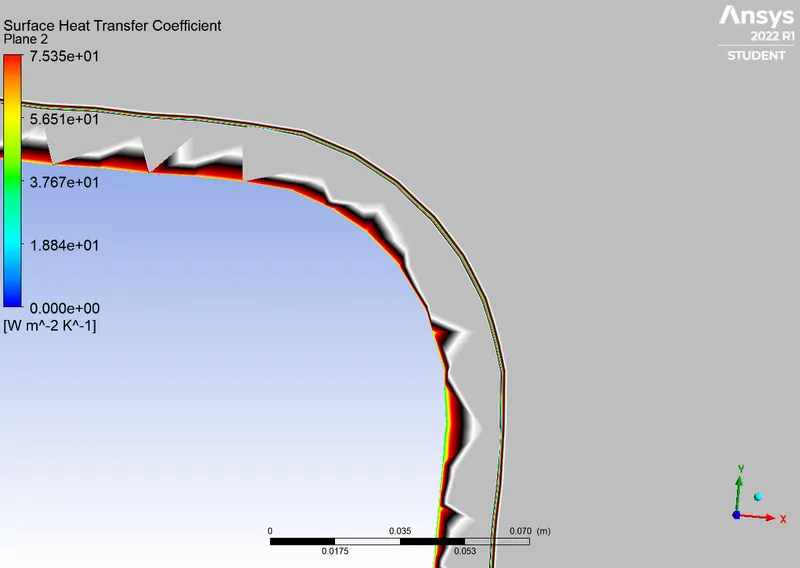
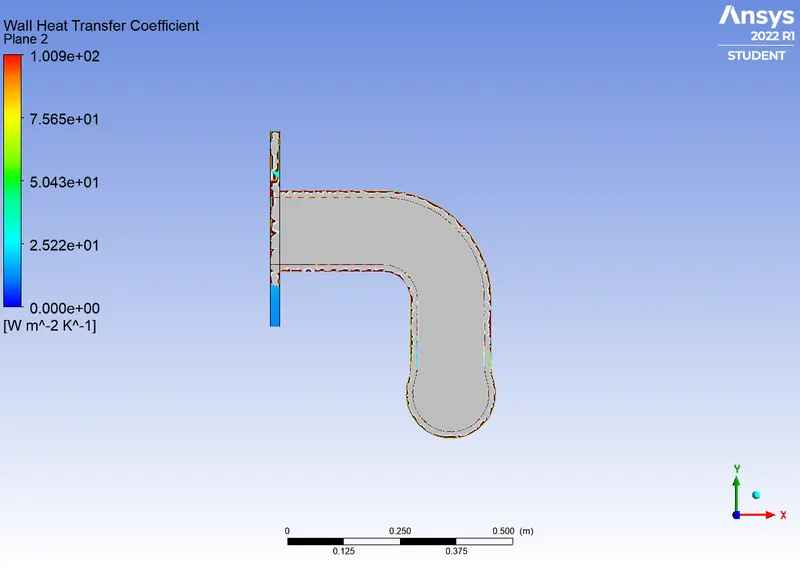
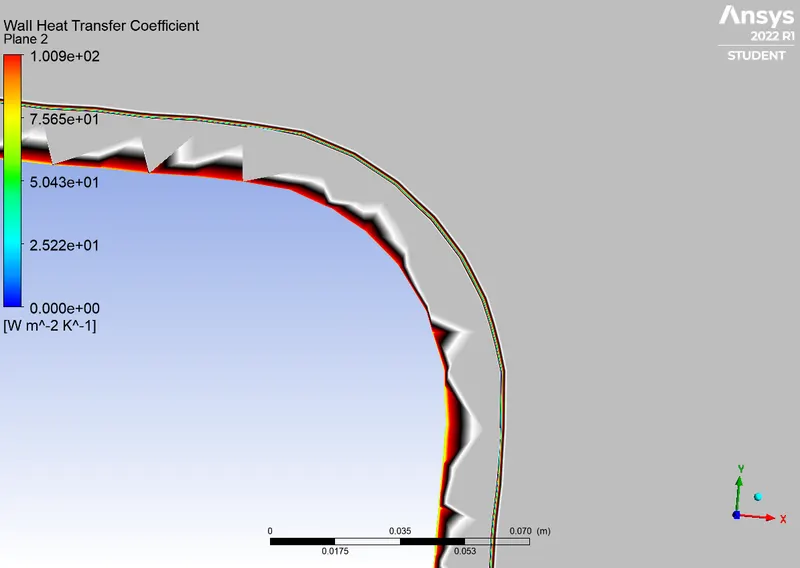
Results
Verification if the HTC predictions from the simulations are right
The heat transfer coefficient can be predicted using the Nusselt no which is the ratio between conductive to convective heat transfer at the fluid boundary layer
Nu=`0.037Re^(4/5)Pr^(1/3`
Where Reynolds no Re cam be got by `(rhoUL)/(mu)`
and Prandtl no Pr = `(c_p.mu)/k`Therefore we can get the theoritical value and compare it with our experimental value.
The factors does the accuracy of the prediction depend on are
The solid and liquid topology should be shared to get the conformal mesh and the shareprep should be used definitely.
The mesh at the intersection between the solid and fluid should be refined and to get the desired inflation layer, we need to use the stated Y+ values according to the flow model. Therefore Y+ value is crucial for the whole process.
Conclusion
Thus the simulation and analysis of the exhaust port has been done