Week 1- Mixing Tee
AIM
To set up steady-state simulations to compare the mixing effectiveness when hot inlet temperature is 360C & the Cold inlet is at 190C.
- Case 1
- Short mixing tee with a hot inlet velocity of 3m/s.
- Momentum ratio of 2, 4.
- Case 2
- Long mixing tee with a hot inlet velocity of 3m/s.
- Momentum ratio of 2, 4.
Introduction
Mixing Tees utilizes a specifically engineered internal geometry to efficiently mix two fluid or gase streams into one combined stream and obtain the desired result.
Applications
Air conditioners
Nuclear Power plants
Waste water treatment
Procedure
Pre-processing
Geometry is imported into the space claim
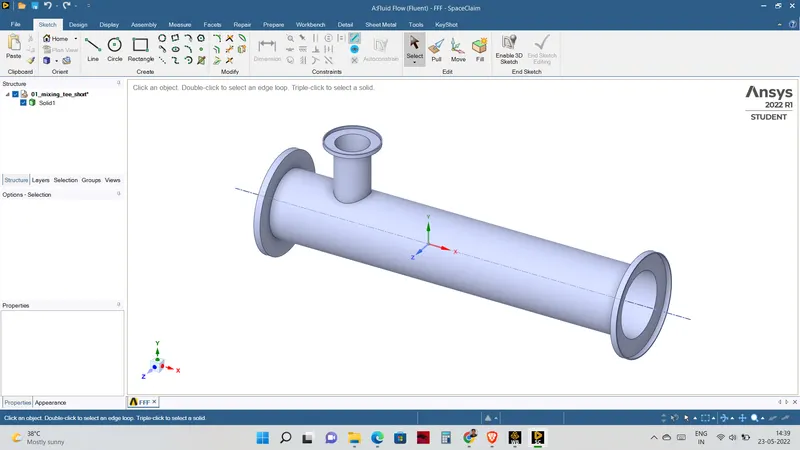
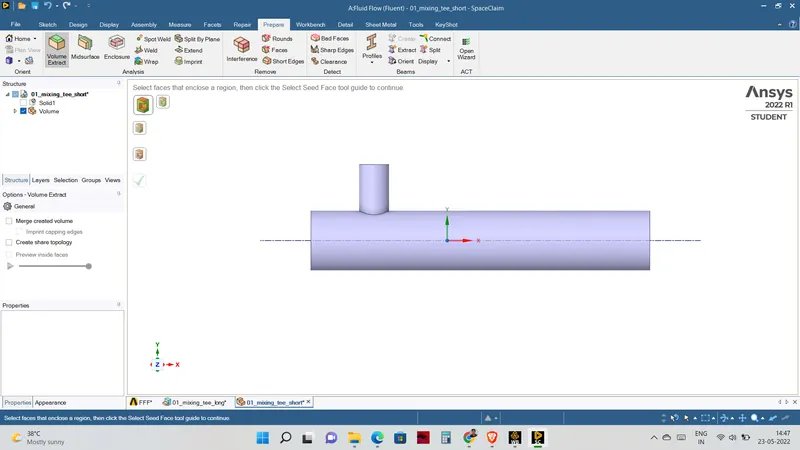
Firstly the geometry is updated from the solid model using volume extract to fluid path
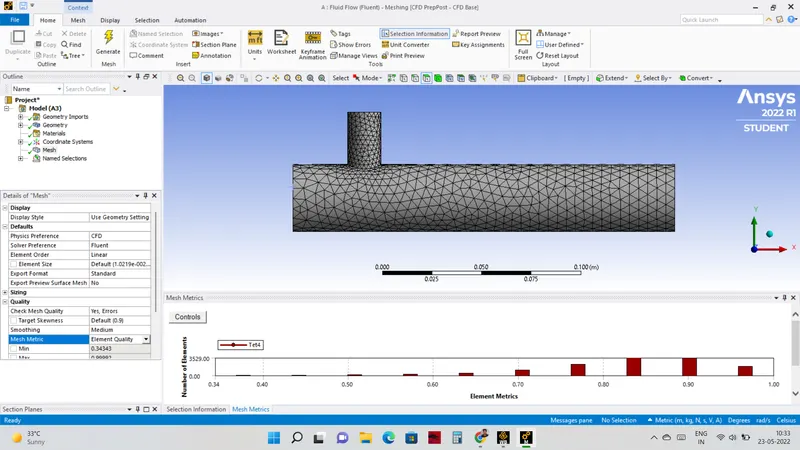
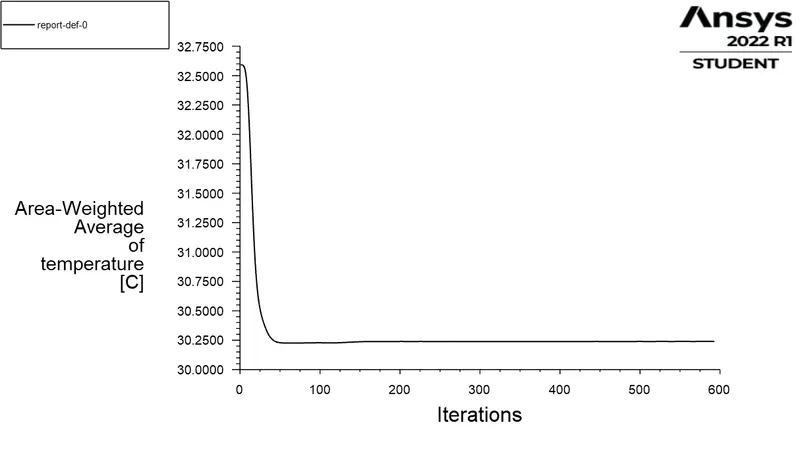
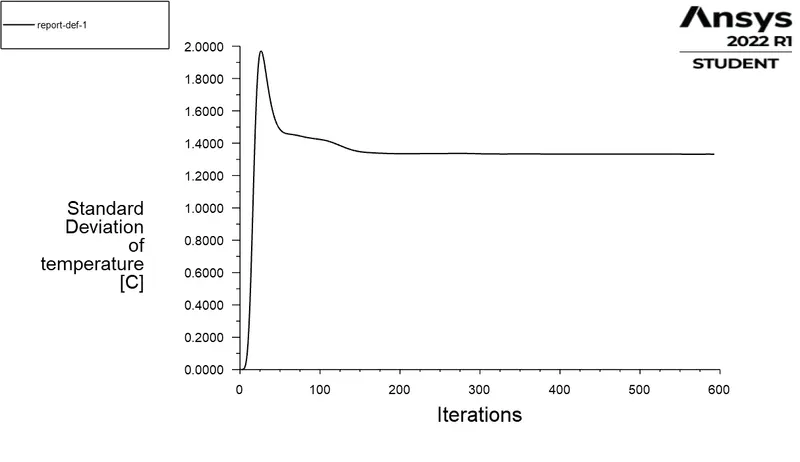
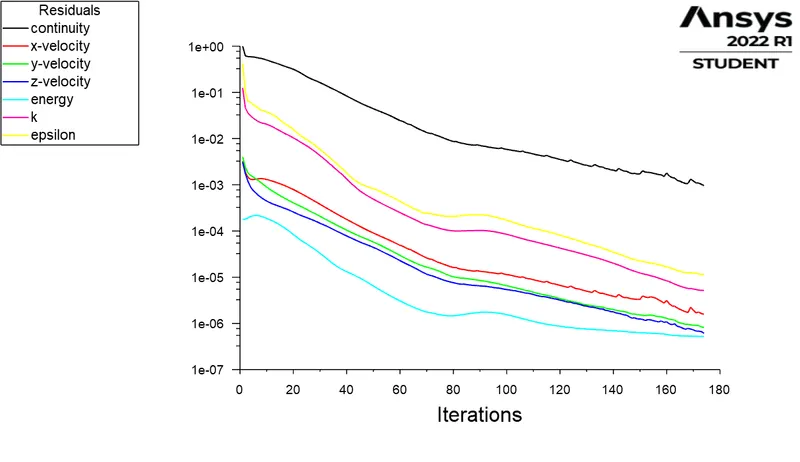
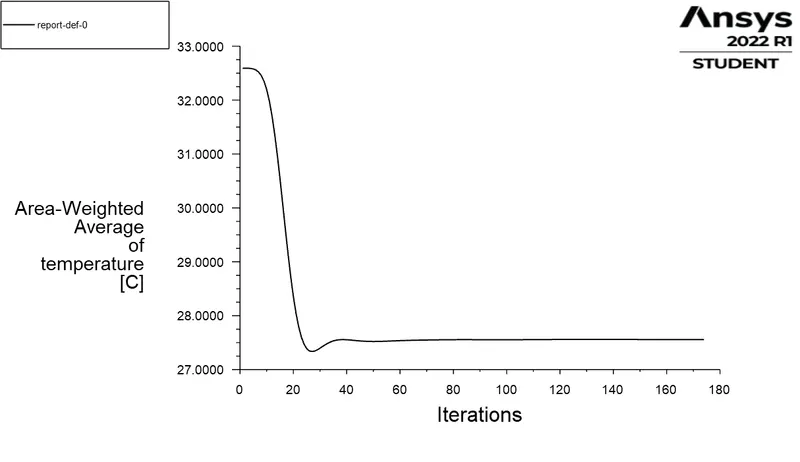
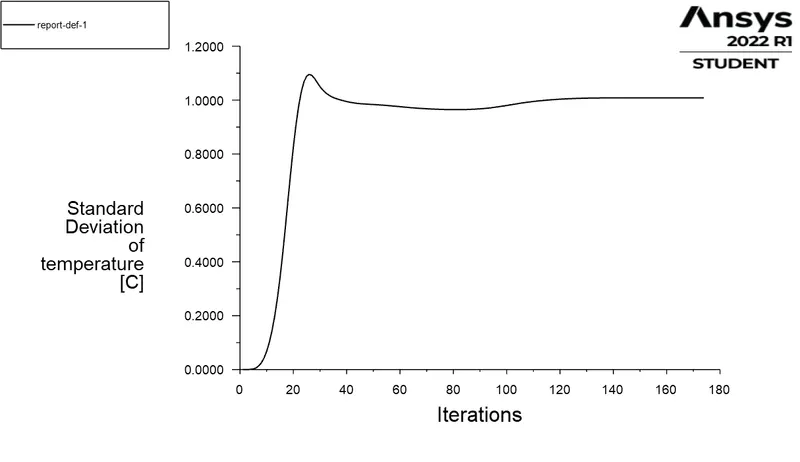
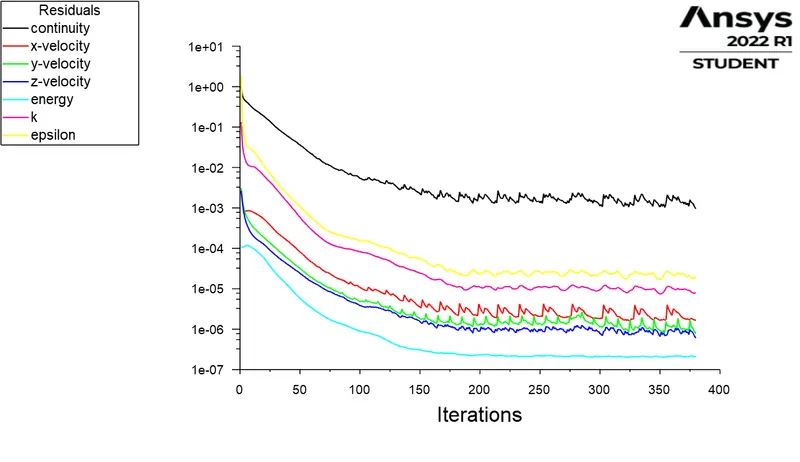
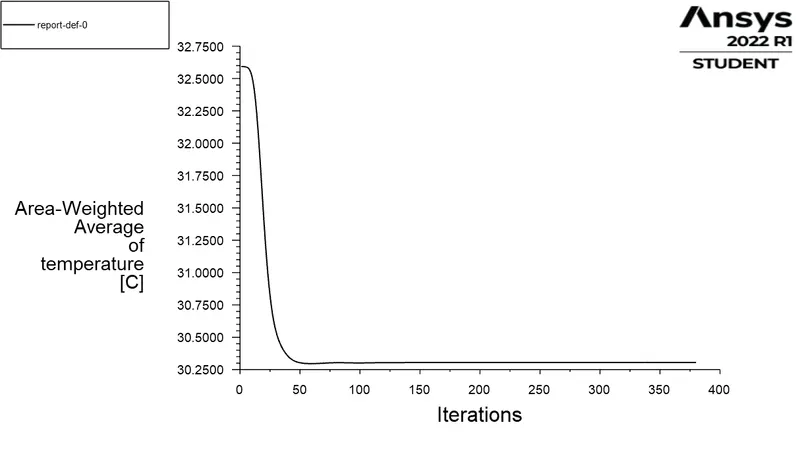
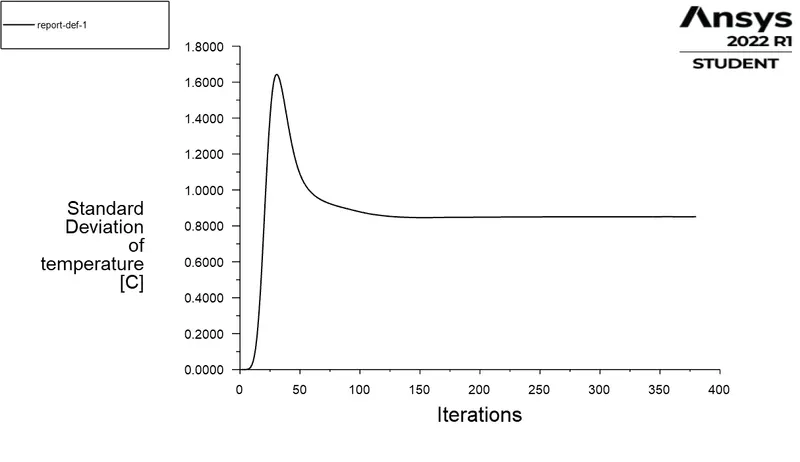
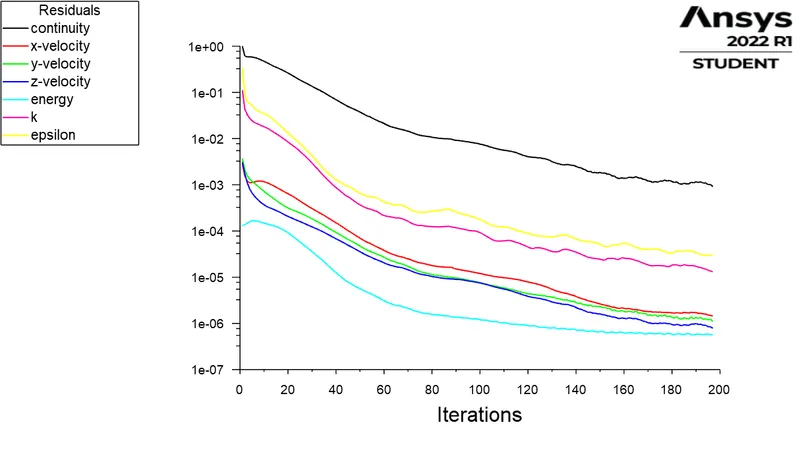
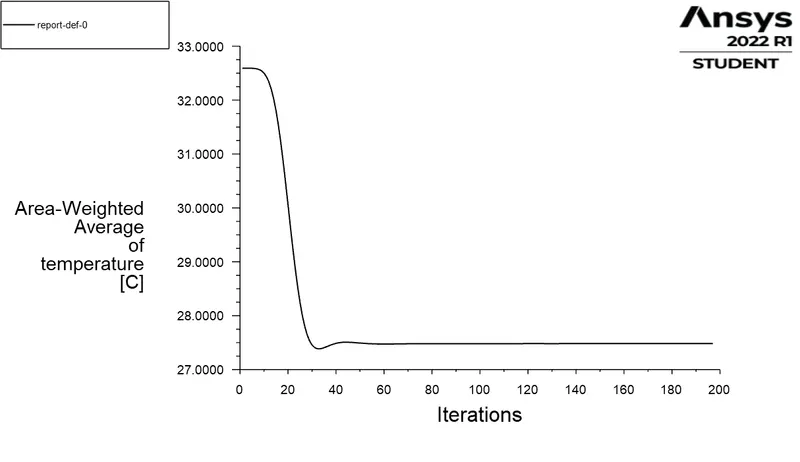
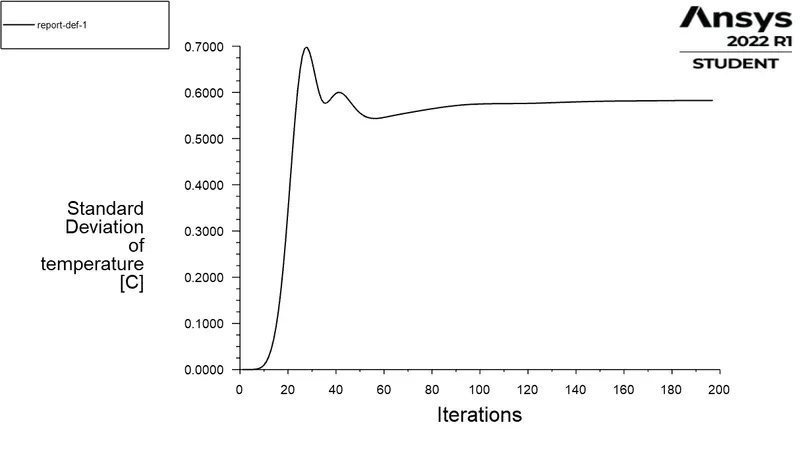
Then the initial conditions and conditions are provided in the fluent where standard deviation and area weighted average of temperature is found usind iterative convergence.
Solving
Case:1(default mesh =1.0219e-002m)
Short tee (k `epsilon`)
Cold inlet Velocity - 6m/s
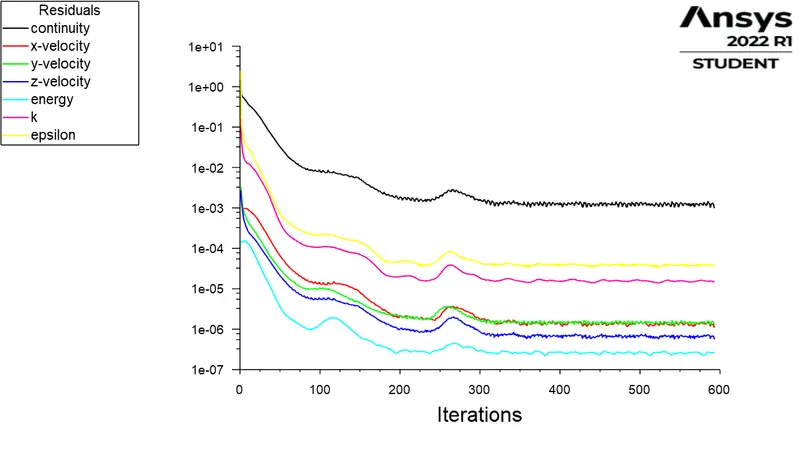
Post processing
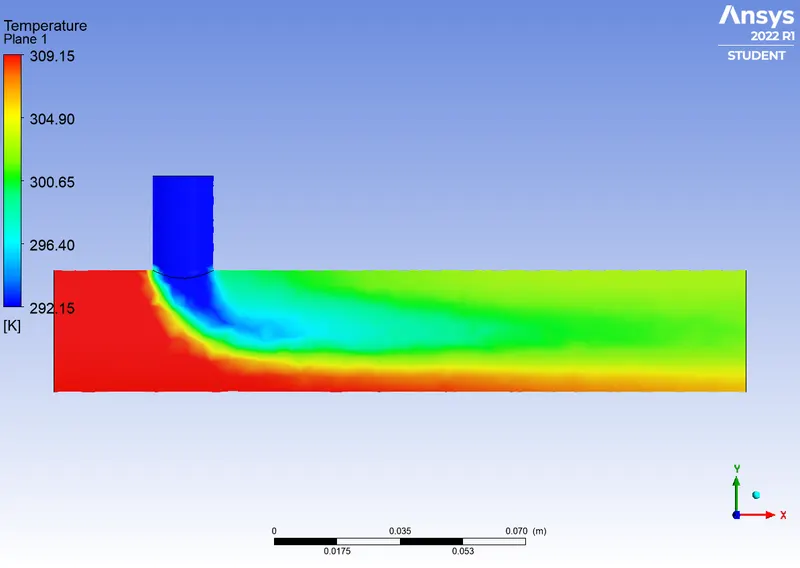
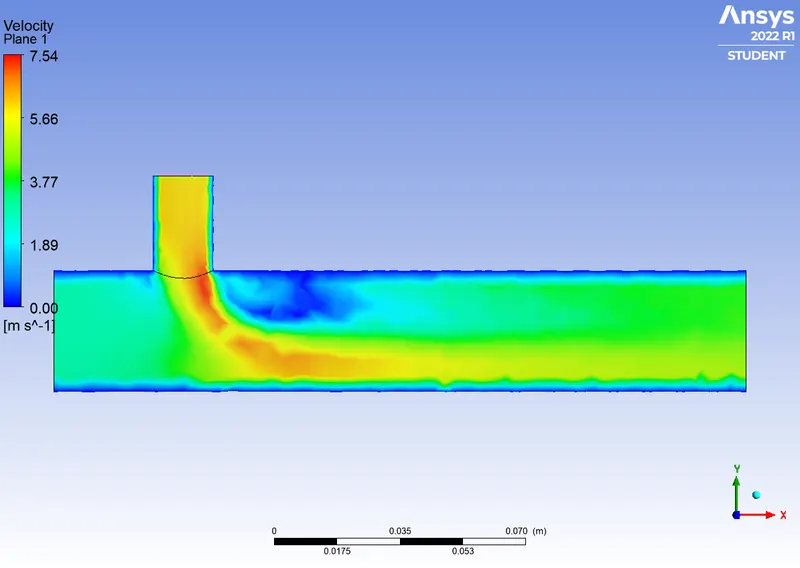
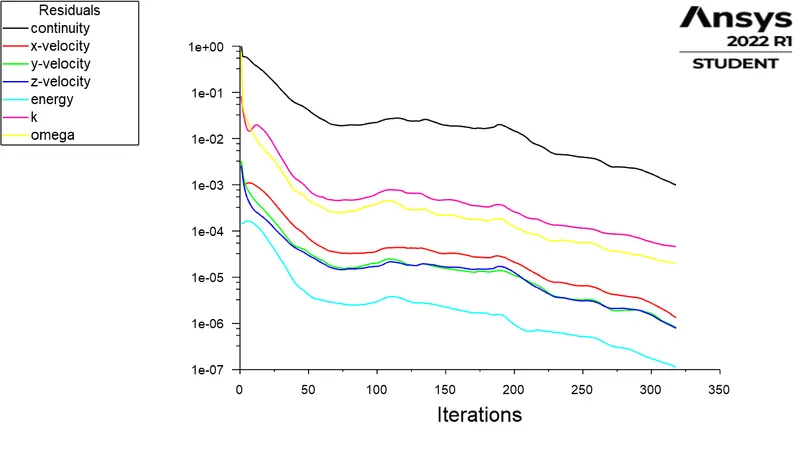
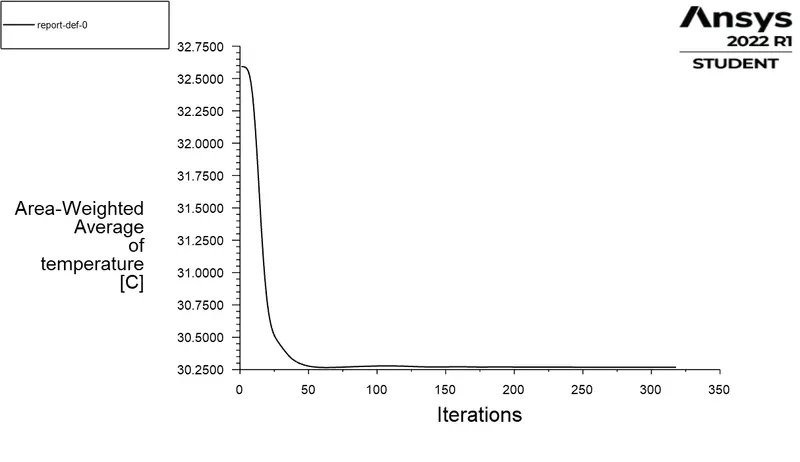
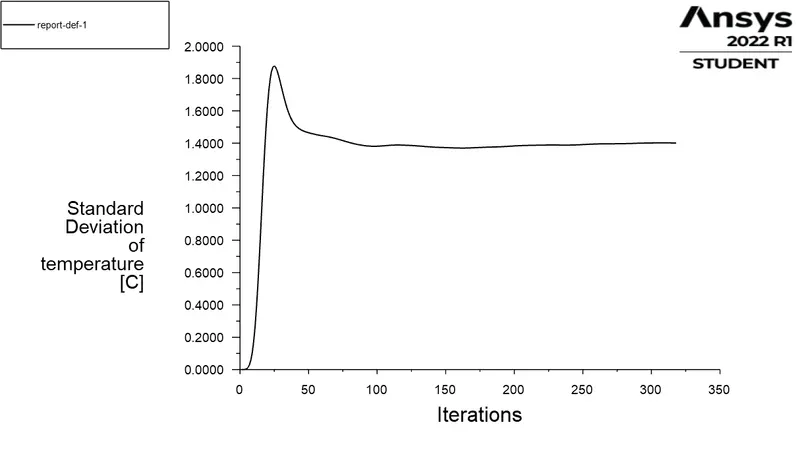
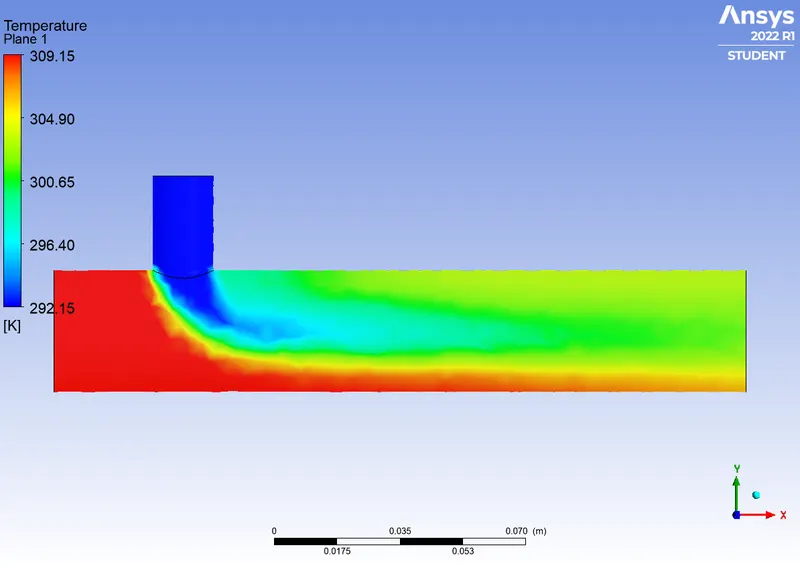
Short Mixing tee(k`omega`)
Cold inlet velocity at 6m/s
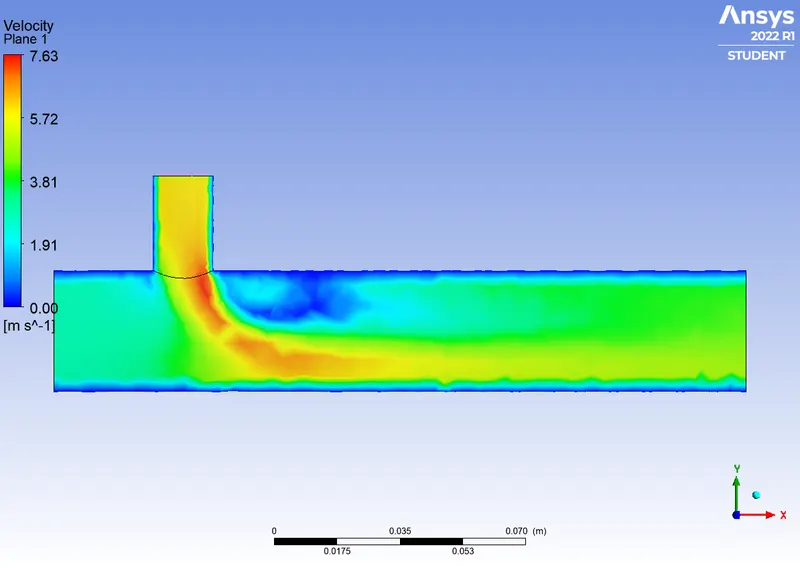
Short Mixing tee(k`epsi`)
Cold inlet velocity at 12m/s
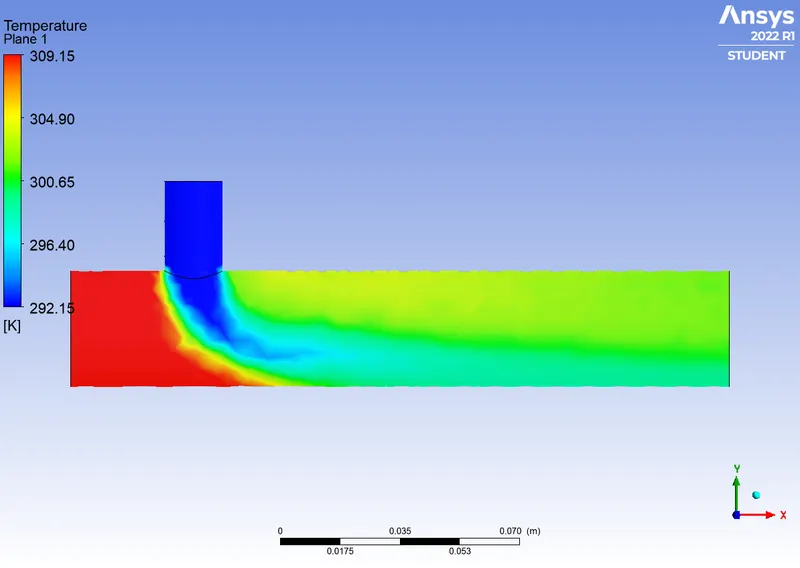
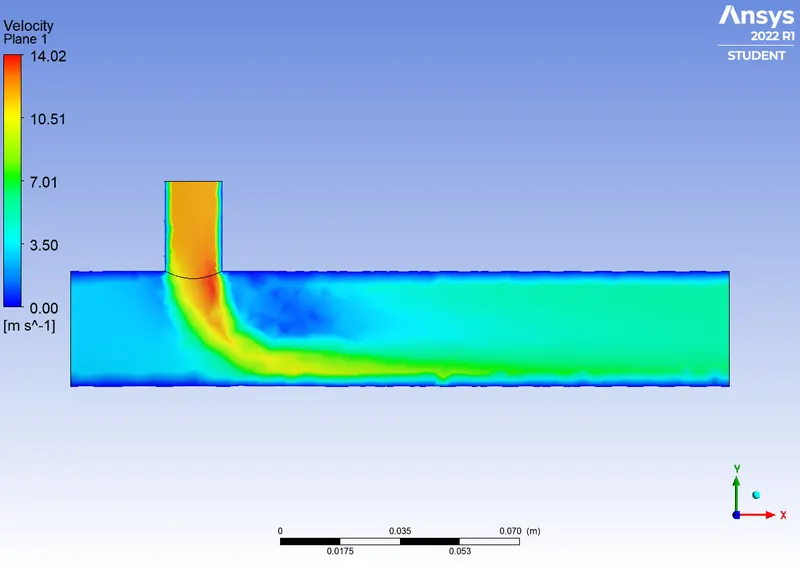
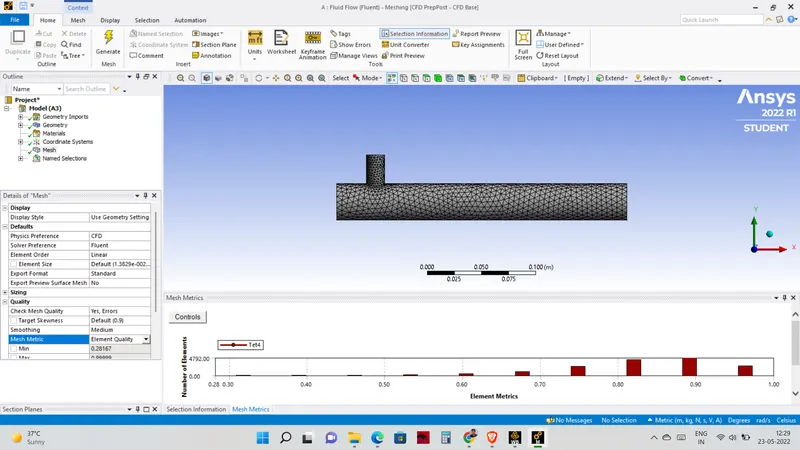
Case:2(default mesh = 1.3853e-002m)
Geometry
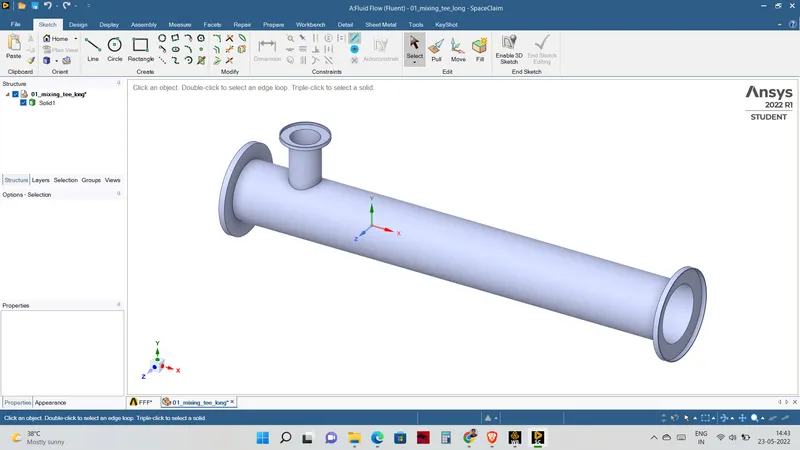
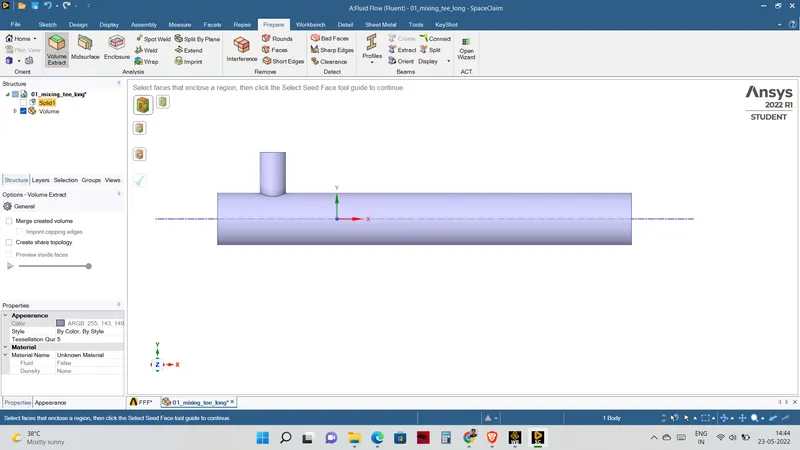
mesh
Long mixing tee(k`epsi`)
Cold Inlet velocity at 6m/s
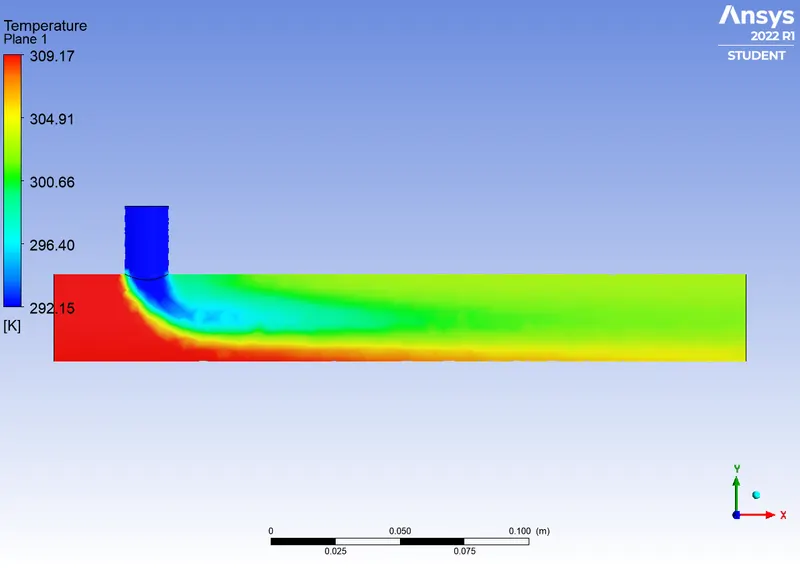
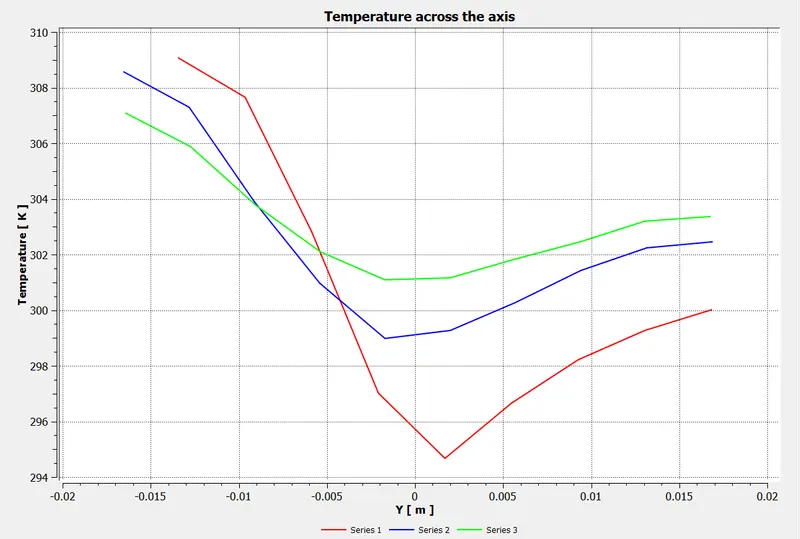
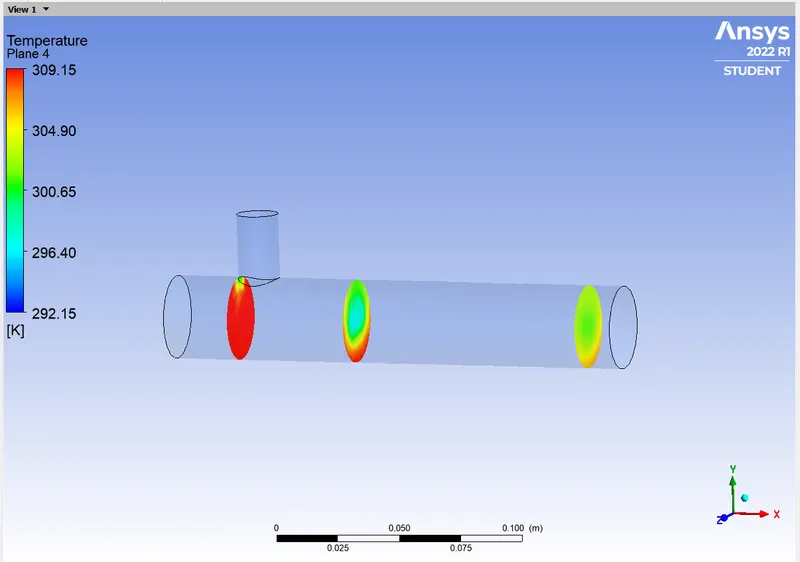
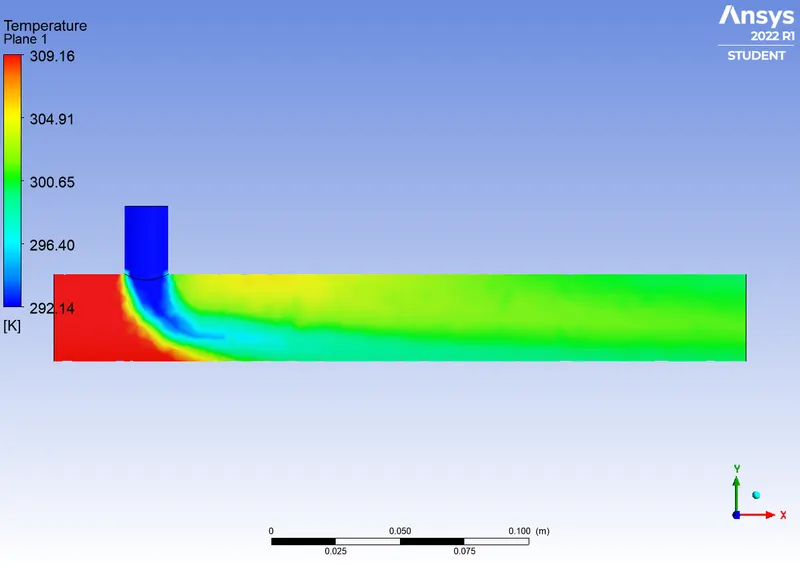
Temperature across the plane
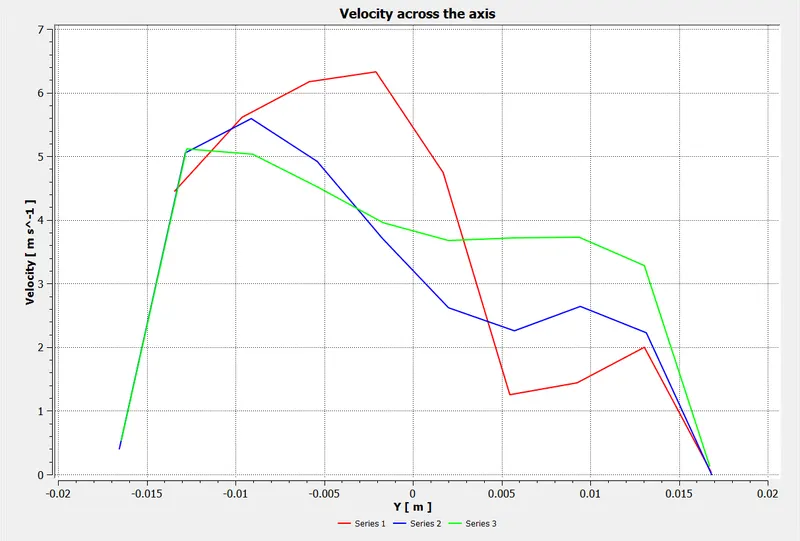
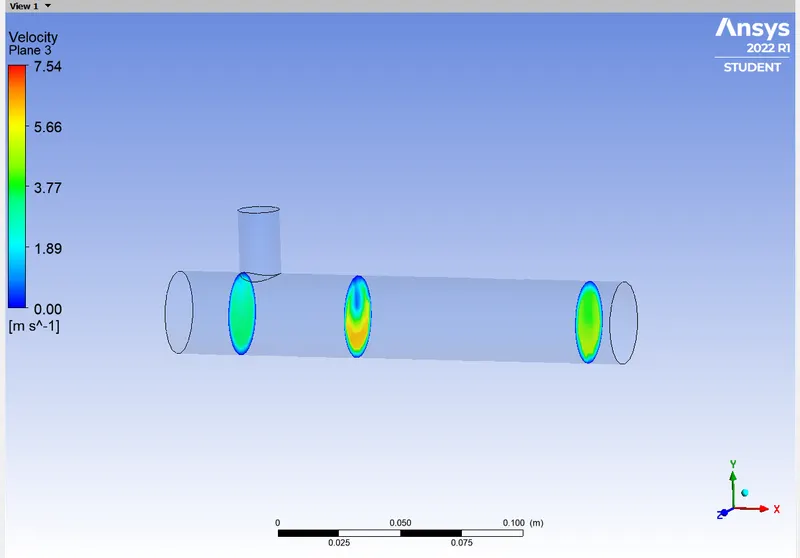
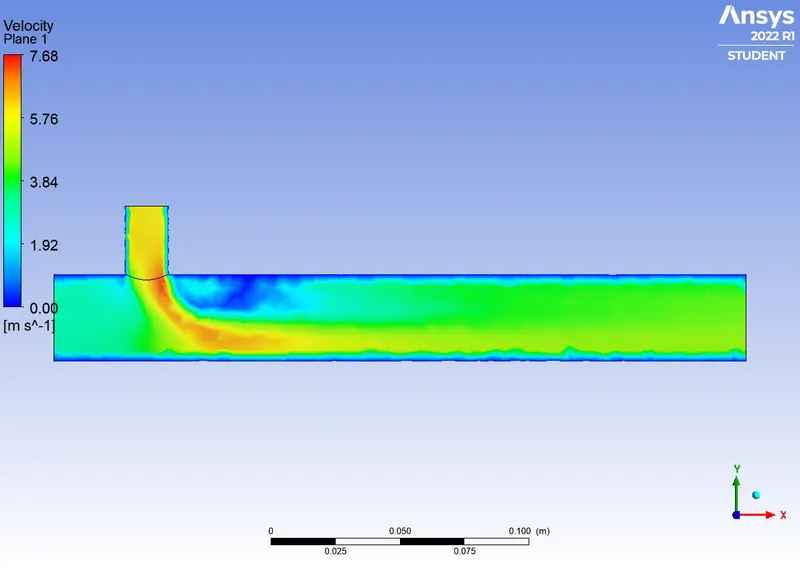
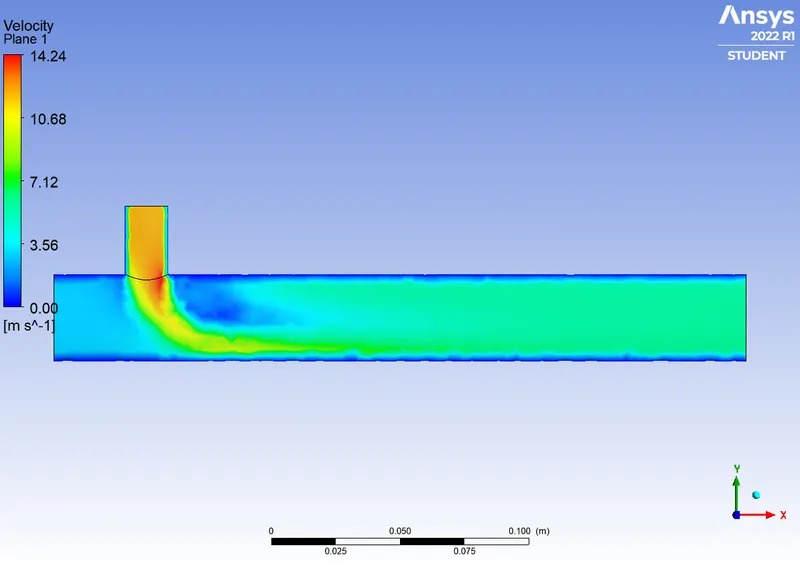
Velocity across the plane
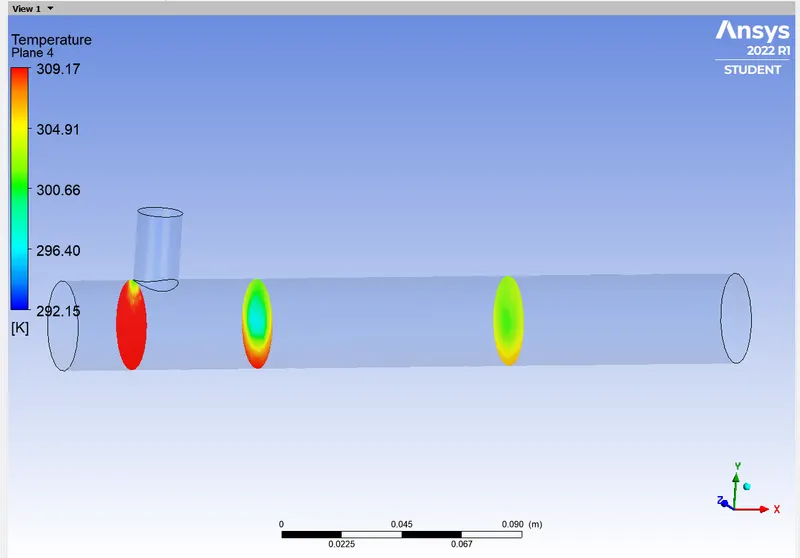
Temperature across the axis
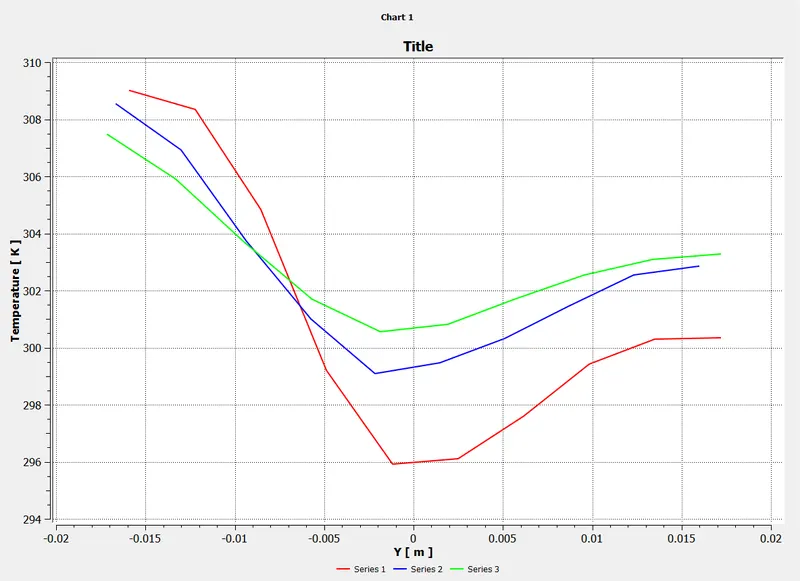
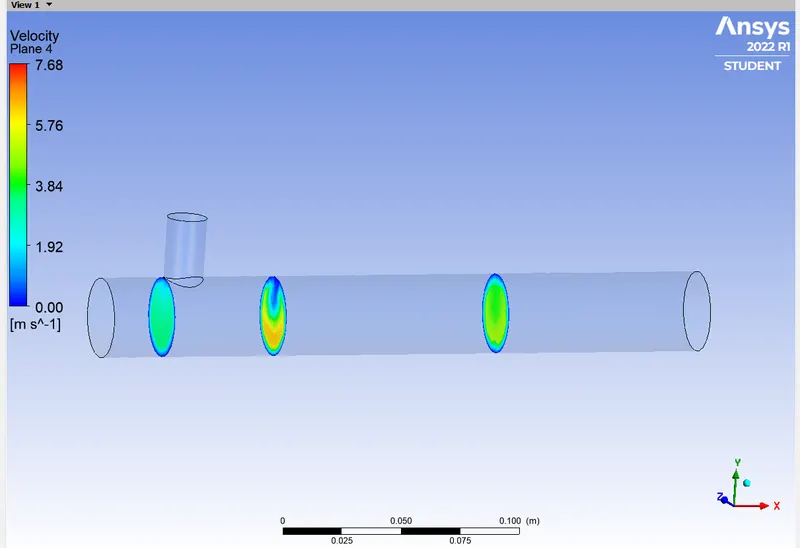
Velocity across the axis
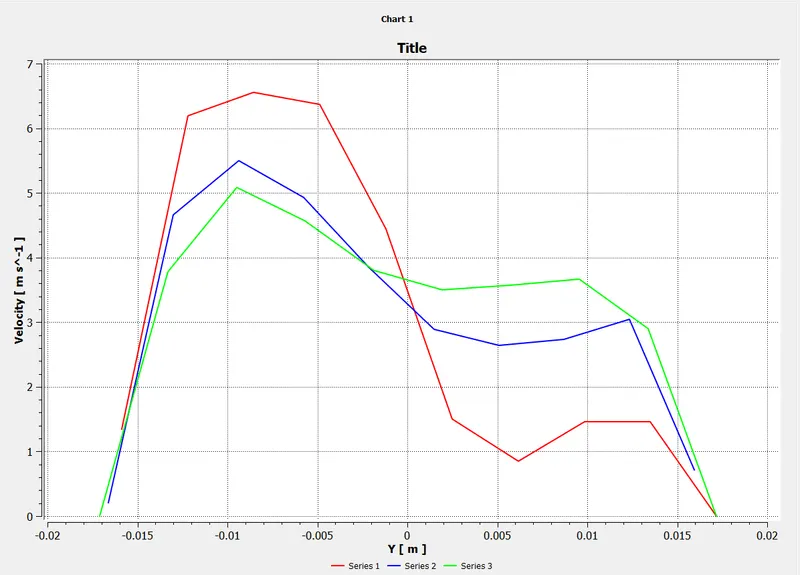
Long mixing tee(k`epsi`)
Cold Inlet velocity at 12m/s
| Momentum ratio | Elements | Iterations to converge(approx) | Average Outlet temperature(approx) | |
| Short tee | 2 | 12613 | 325 | 30.25 |
| 4 | 12613 | 173 | 27.5 | |
| Long tee | 2 | 15549 | 373 | 30.3 |
| 4 | 15549 | 190 | 27.5 |
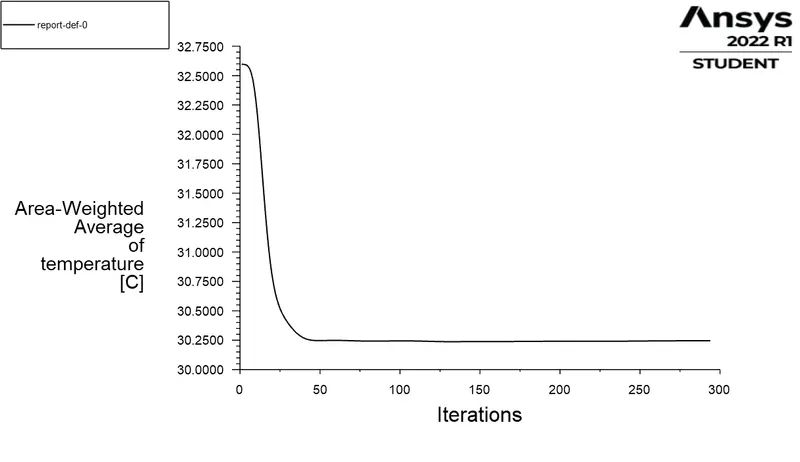
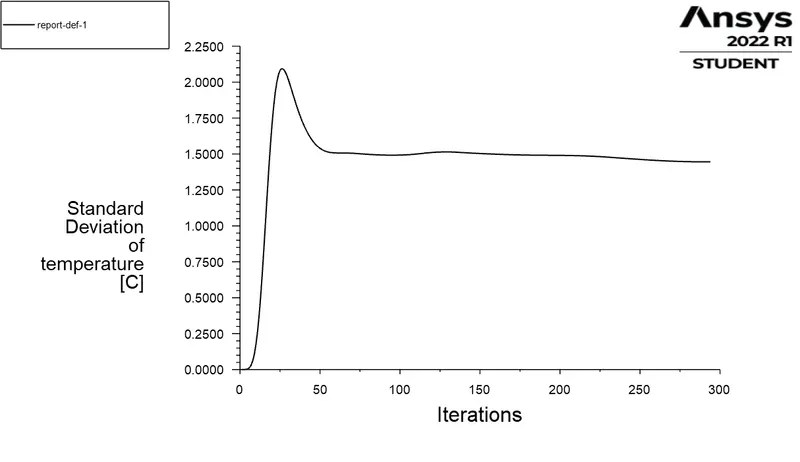
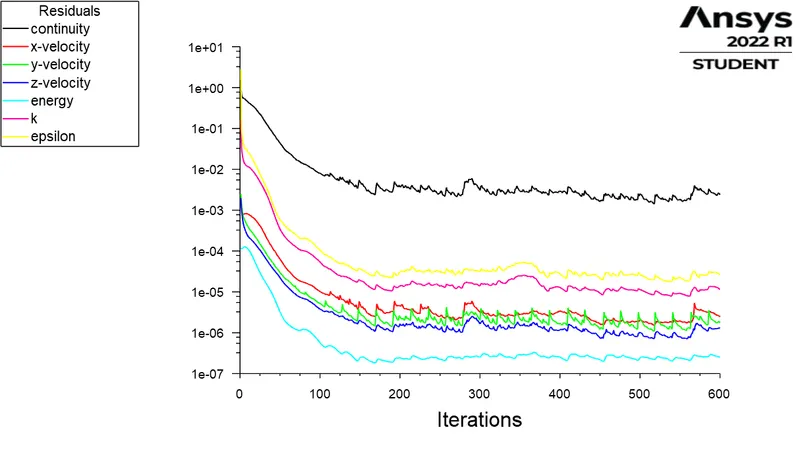
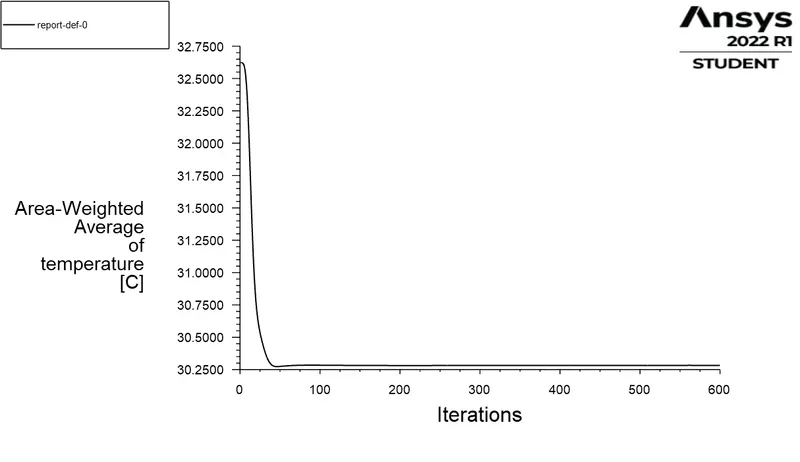
Grid Independence test
Grid size=0.005
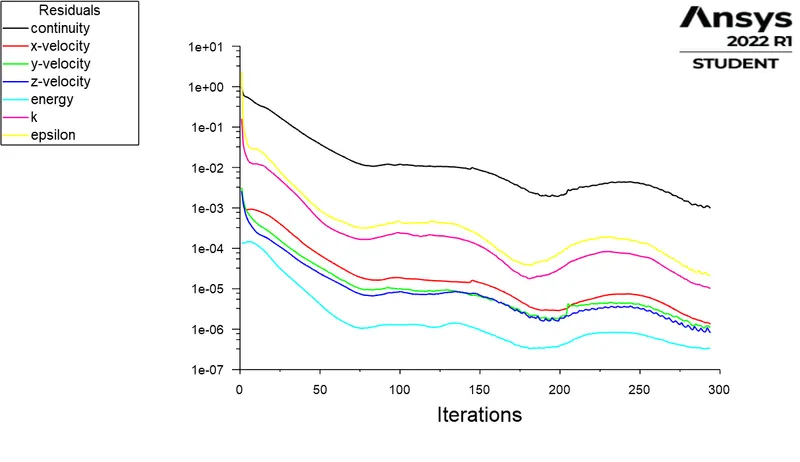
Grid size=0.004
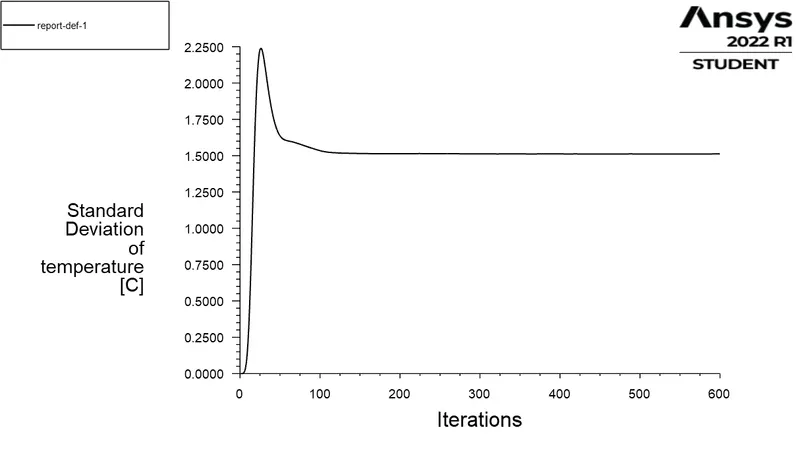
Grid size=0.003
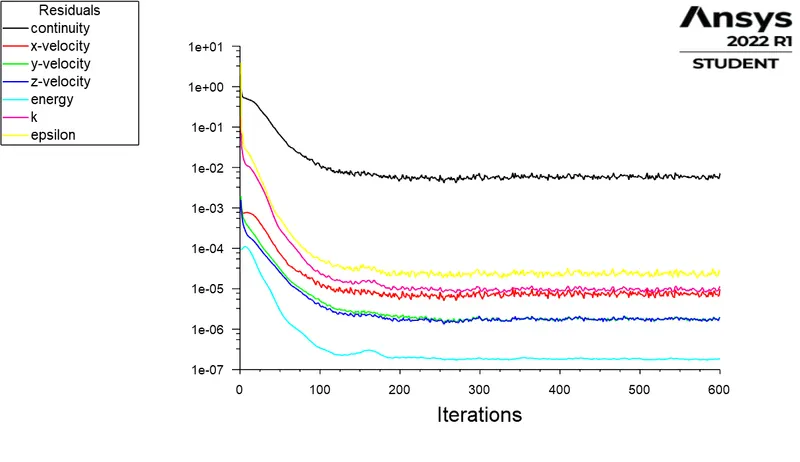
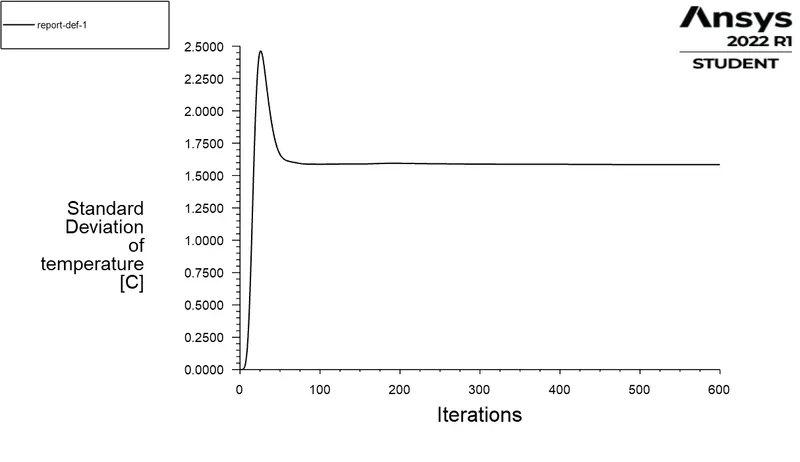
Grid independence table
| Mesh size(m) | Area weighted Average temperature (c) | Standard deviation of temperature |
| 5e-3 | 30.250 | 1.6286124 |
| 4e-3 | 30.353 | 1.615835 |
| 3e-3 | 30.351 | 1.628464 |
Inference
Since the standard deviation of K`epsi`is lower than k`omega` I proceeded the further cases using Kepsilon for better results and convergence.
The length of the mixing tee didn't affect the outlet as can be seen from the different momentum ratios.
As the velocity of the cold inlet increased the outlet temperature decreased significantly, therefore the momentum had a crucial role in effective temperature reduction.
Conclusion
Thus the set up steady-state simulations to compare the mixing effectiveness when hot inlet temperature is 360C & the Cold inlet is at 190C has simulated and proved.