Week-4 Challenge WOT Condition Part-2
1. Difference between mapped model and dynamic model
A] Mapped model
Mapped Model usses a set of Steady state Look up table for simulation and it's operation. the lookup table is present then the simulation becomes easier and it gives results based on the data interpreted. This is also called Global Based Model,The motor specifications such as RPM,Voltage,Power, efficiency,tempertaure,etc are to be entered for simulation.The drawback is more data has to be collected and we need to make some assumptions.
B] Dynamic model
Dynamic model decomposes the engine behaviour into engine characteristics that are seperated into lower level blocks. Combining these blocks together to form a dynamic model, It operates dynamically depending on the situation of operation detailed data and specifications are not required and the simulation gives the detailed analysis of the components simulated. This is called Real time Based Model. The actual details would be same as the results obtained .
Steps to change model type
Open a EV refrence application as shown in below image
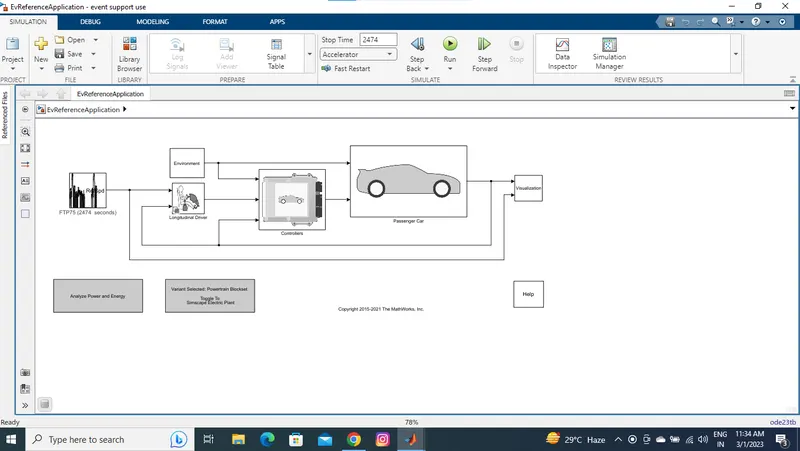
Open Passenger Car block. Sub blocks seen below
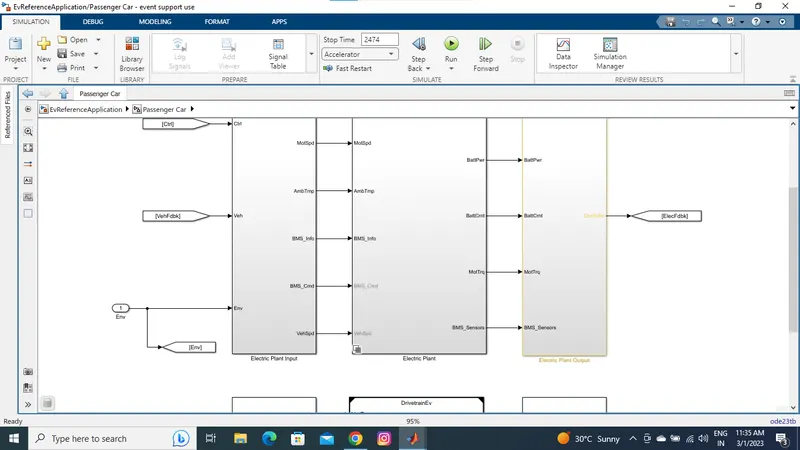
Open Electric Plant block and sub blocks as seen below
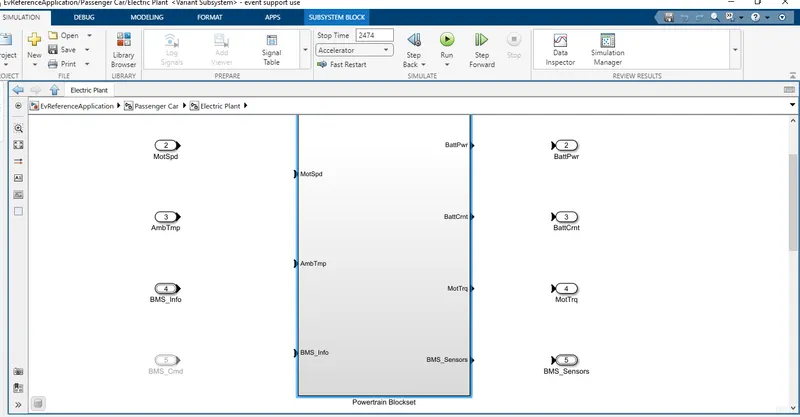
Open power train block and sub blocks as seen below
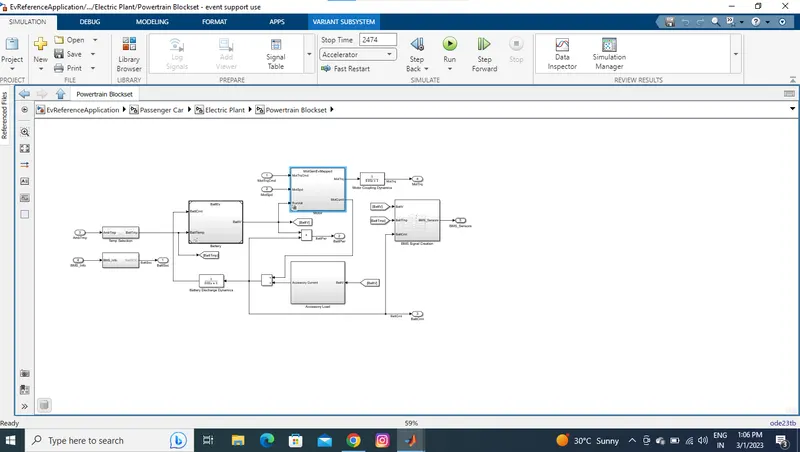
Open motor block and sub blocks as seen below
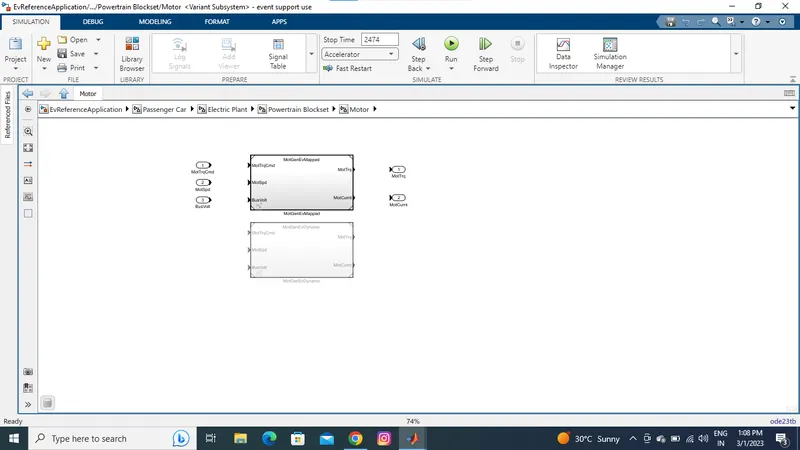
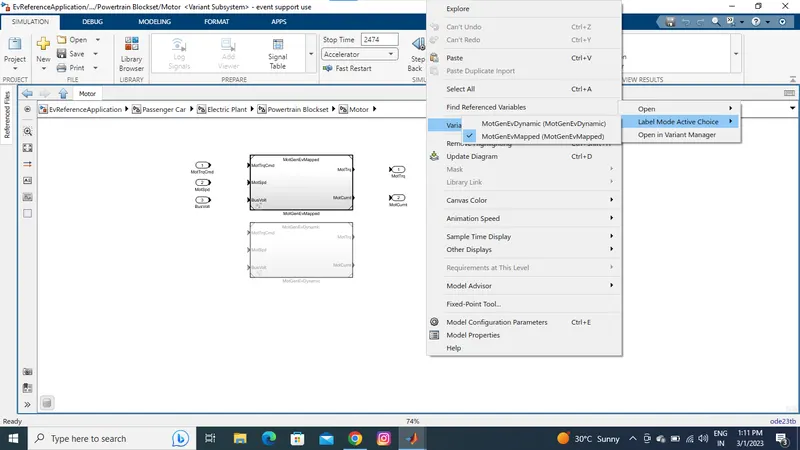
Right click on screen and select following options to change the model
% Variant
% Label Mode Active Choice
% GenDynamic(GeDynamic)
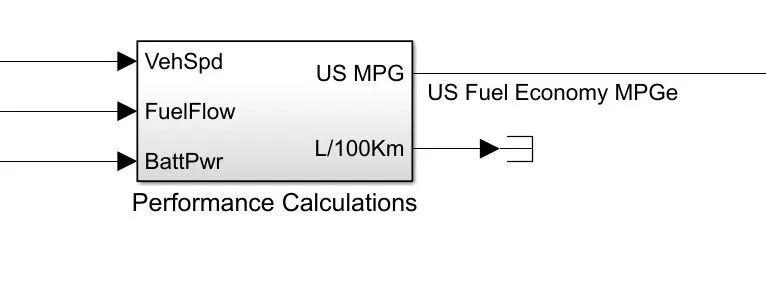
2.Factors affecting the fuel efficiency are
1) Vehicle Speed
2) Battery Power
3) Fuel Flow
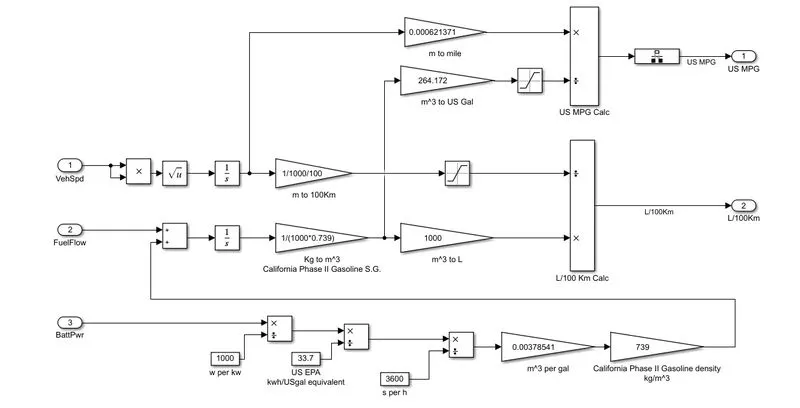
Conversion from Cubic Meter to gallon (m^3 to gallon),
As we know 264.172 US Gallons is 1000L
The reference model taken here for consideration is HEV and as it operates on both the Battery and the Fuel Injection Engine.
The final output/Fuel Efficiency is calculated by keeping in consideration of the Battery Output, Fuel Output and the Vehicle Speed/Kilometres Driven. Therefore the fuel efficiency is calculated and it is converted after the saturation thus the FE is calculated.
3.Run the HEV ReferenceApplication with WOT drive cycle
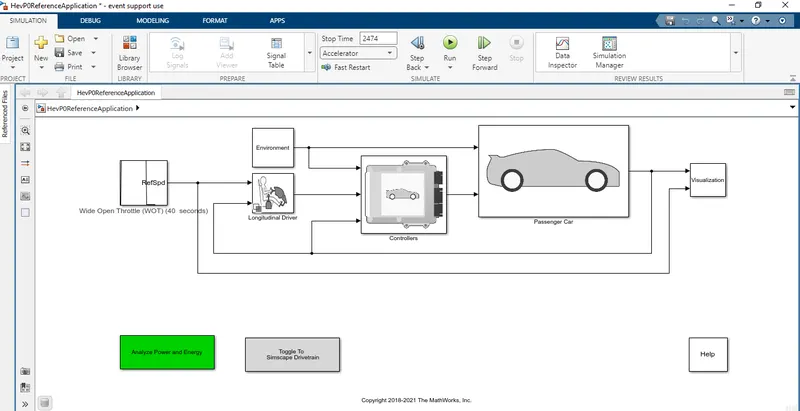
Then I select the wide open throttle drive cycle
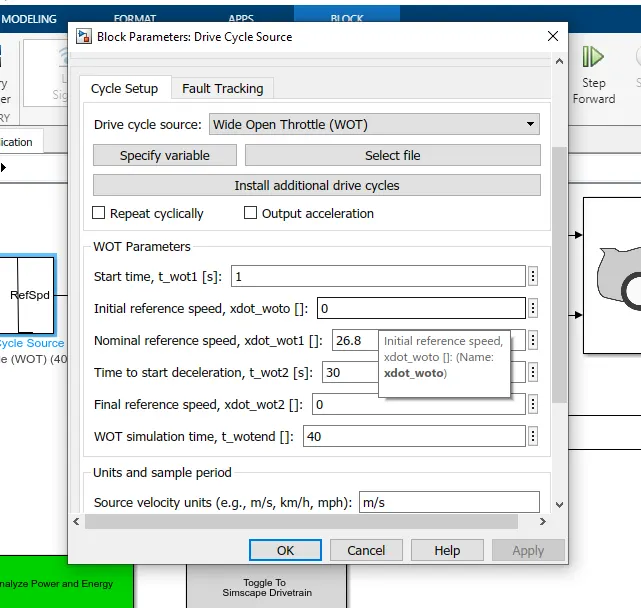
After running the simulink followings are the results'
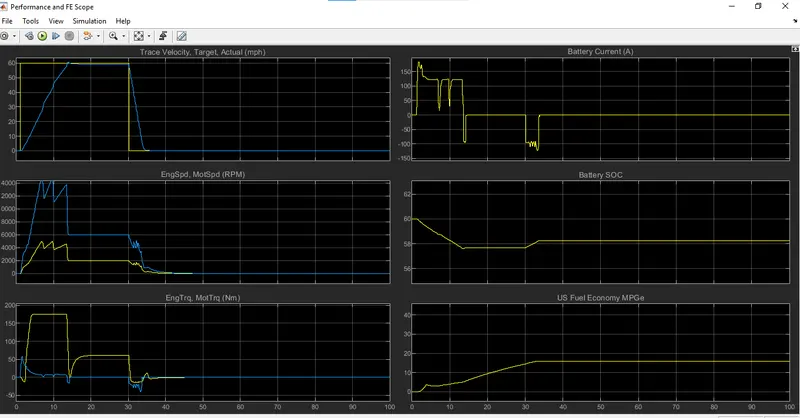
Results :
1. Trace velocity is 60 mph vehicle trys to obtain it.
2. Current goes upto 175 A
3. Peak RPM is 14000
Now wind velocity and grade is changed in enviorment blocks firstly both are 0 now I set both to 5.
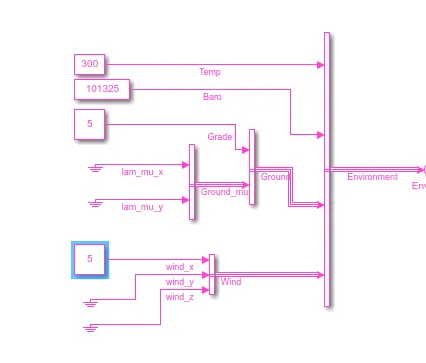
The results as follow
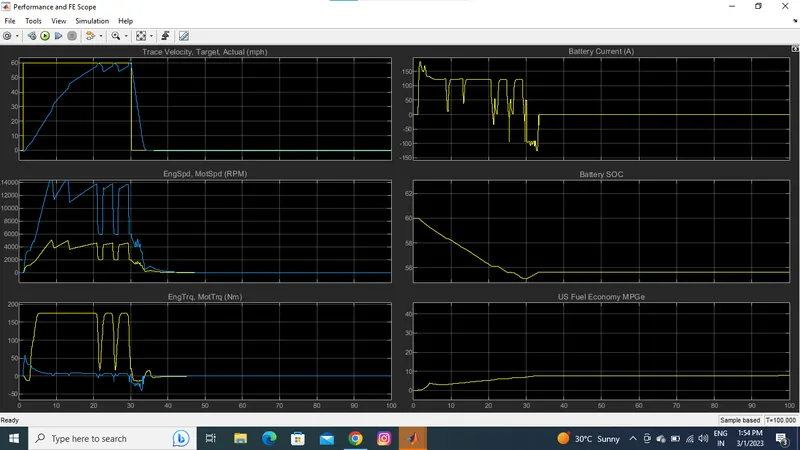
Both the results are looking similar but for second operation Battery SOC is decreses.
4.Keeping all other parameters same, compare the simulated results of hybrid and pure electric powertrains
A] HEV
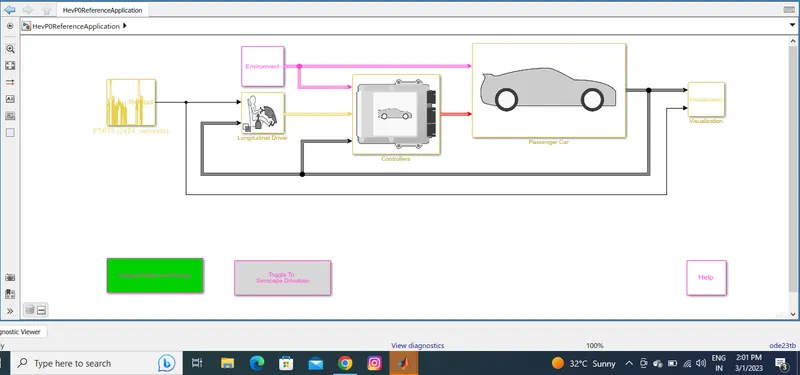
The results are as below
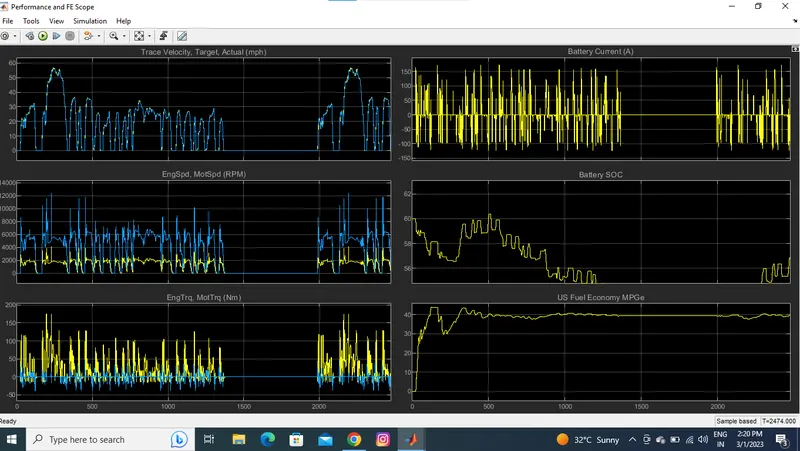
B] EV
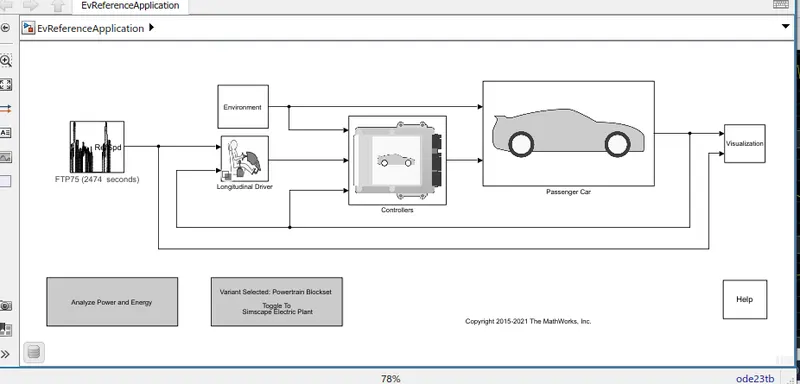
The results are as below
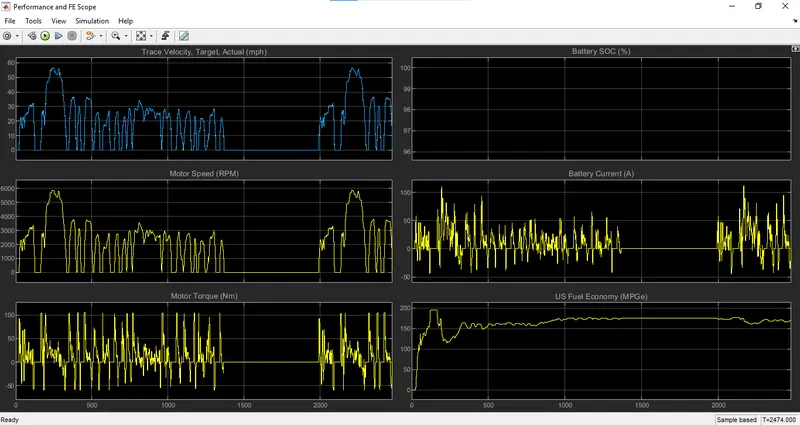
Following image shows the results of HEV and EV simulation
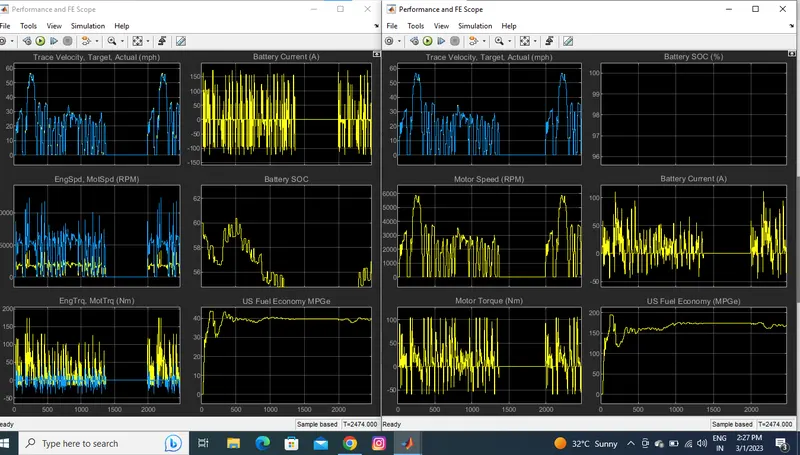
As seen in the both the results the Both vehicles works efficently howwhere the velocity of the both vehicles are identical. Also battery current is more EV than HEV also in HEV when battery current goes below 55 A then the engine will started and battery starts charging.
The peak torque produced in the HEV is near to 175 NM while in the EV is near to 100 NM