Week-4 Challenge WOT Condition Part-2
Solution:
Q.No. 1 :
Difference between mapped and dynamic model
*Mapped Model:
Mapped model or static model runs based on the data given in the look up table of engine, motor or generator. The required engine or motor torque is sensed and the motor or engine block generates the required torque without analysing the real time motor/engine parameters. As this model does not use real time parameters, the accuracy of result from this model is low, but the simulation time is much less.
*Dynamic Model:
Dynamic model represents the actual components of the vehicle. It decomposes engine behavior into individual component models that account for engine dynamics, most notably intake airflow and turbocharger dynamics.The simulation of a dynamic model is run by considering the parameter change in real time. Hence the results obtained from this model is high, but the simulation time is much more compared to mapped model.
Changing the Model type:
- Double click on the Passenger car block in HEV reference applicatin.
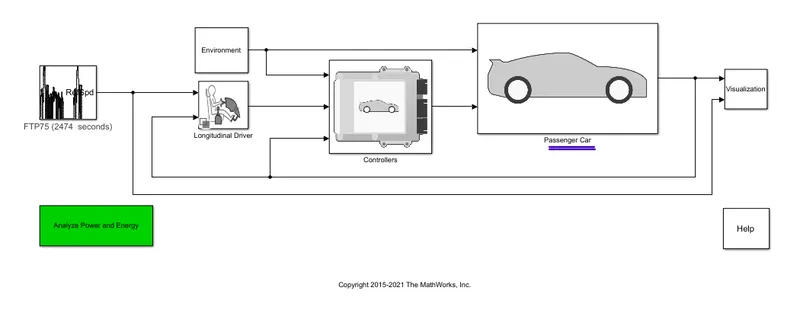
- Double click on Electric Plant block to open it

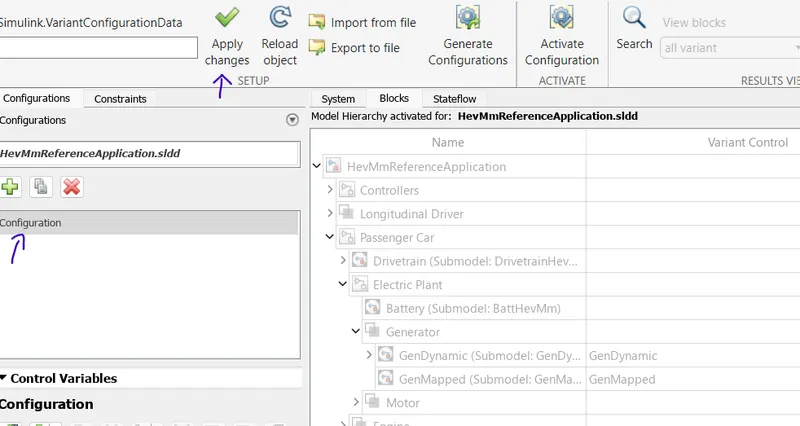
- By default mapped model will be selected for motor and generator block of the HEV reference application. Double click on motor/generator block to open it.
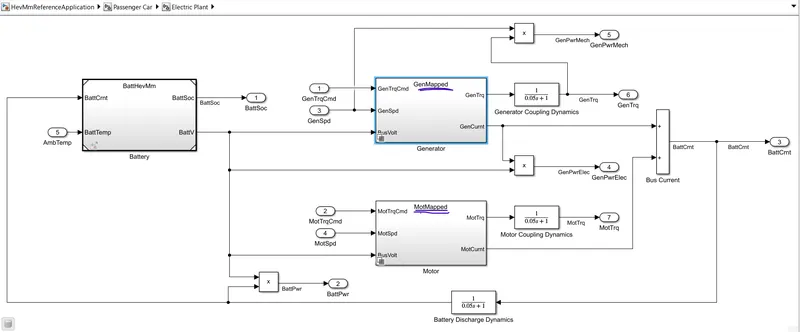
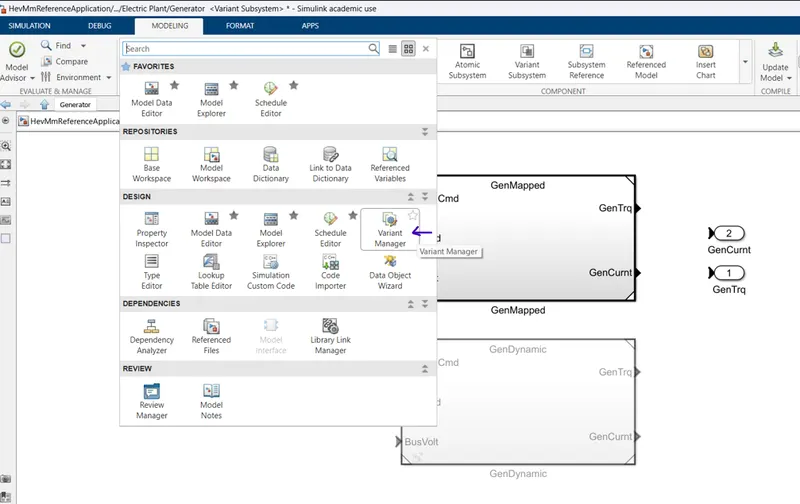
- click on Varient manager under modeling menu
- Select the dynamic model for Generator/motor and click on activate
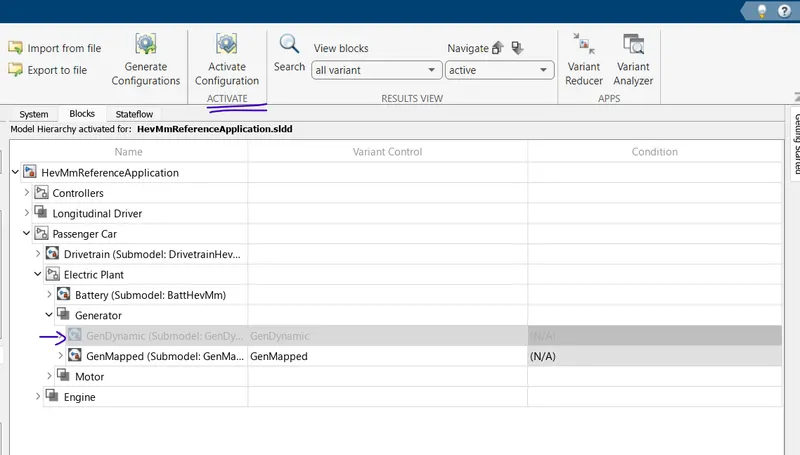
- The model will be activated as selected

- Click on add configuration and apply changes
Q.No. 2 :
Calculation of miles per gallon:
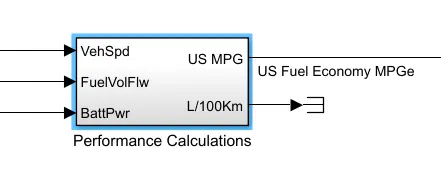
- The performance and FE scope gives the equivalent of the miles per gallons used by the EV.
- The performsnce caluctaion block which is inside visualisation block calculates the miles per gallon for a EV
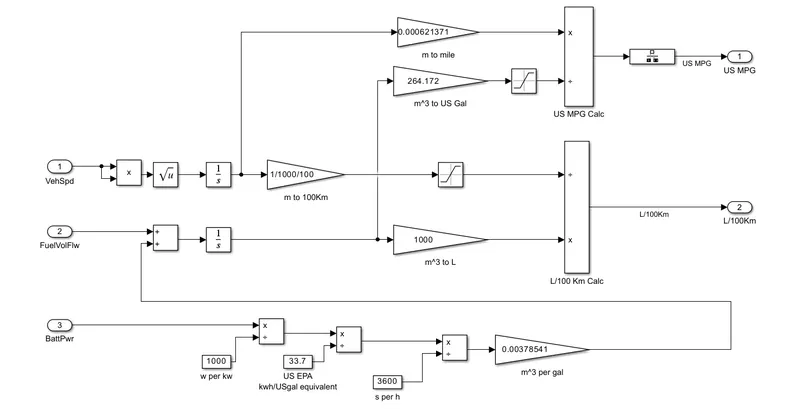
- The vehicle speed is integarted to get the distance and it is multiplied with 0.00062 to converted from meters to miles
- the battery power is divided by 1000 to convert into kW and then divided by 33.7 to get the US gal equivalent
- it is converted into kW per h by dividing by 3600 and then multiplied by 0.003785 to get the equvalent battery power in m3 per gal.
- This value is added to the fuel volume flow and then integrated and multiplied by 264.172 to convert into US gal.
- the distance in miles is divided by the US gal equvalent to obtain the US mile per gallon in the model
Factors considered to model the fuel flow:
- Vehicle speed
- Battery Power
- Fuel vloume flow
Q.No. 3 :
- Open the HEV reference application in simulink
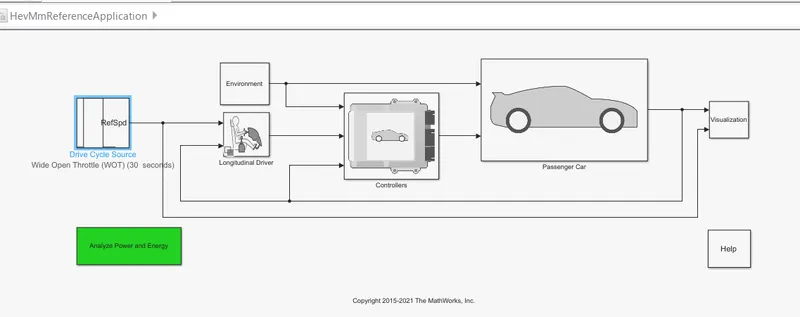
- Double click on Drive cycle source and set it to Wide Open Throttle (WOT), click OK
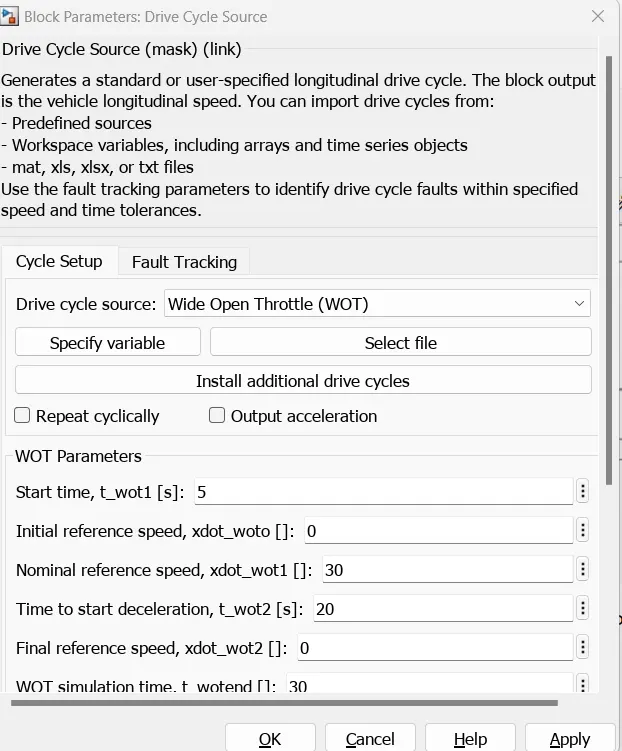
- Set the simulation time as 1000s
- Run the simulation with WOT drive cycle for default values of grade and wind velocity
- Change the value of garde and wind velocity in environment block and run the simulation
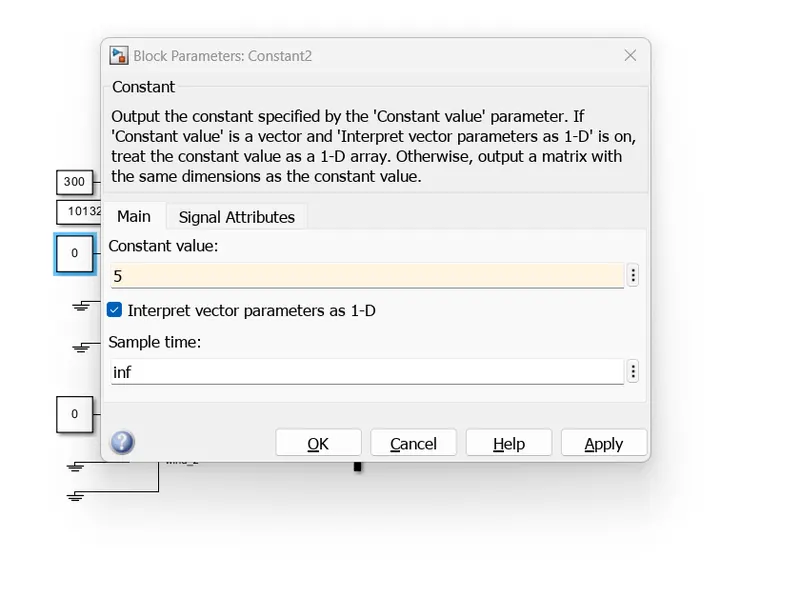
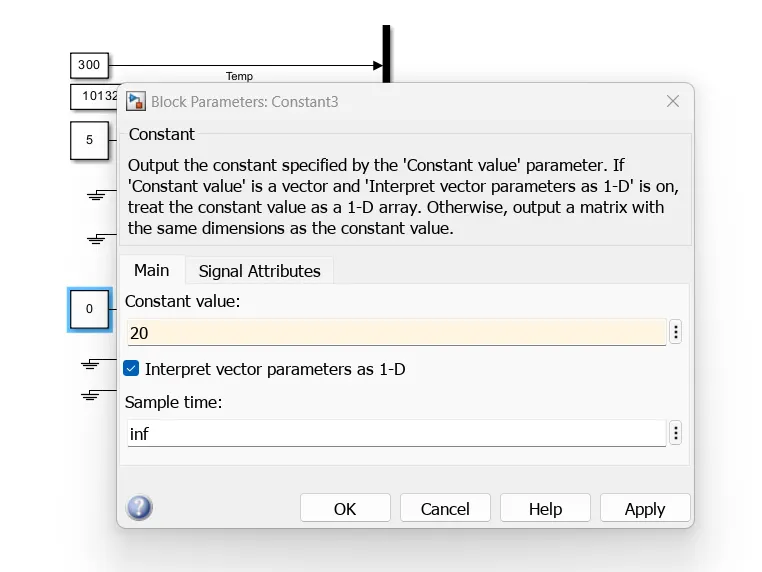
- Compare the results for various values of garde and wind velocity
Result Screenshot:
For default values of grade and wind velocity:
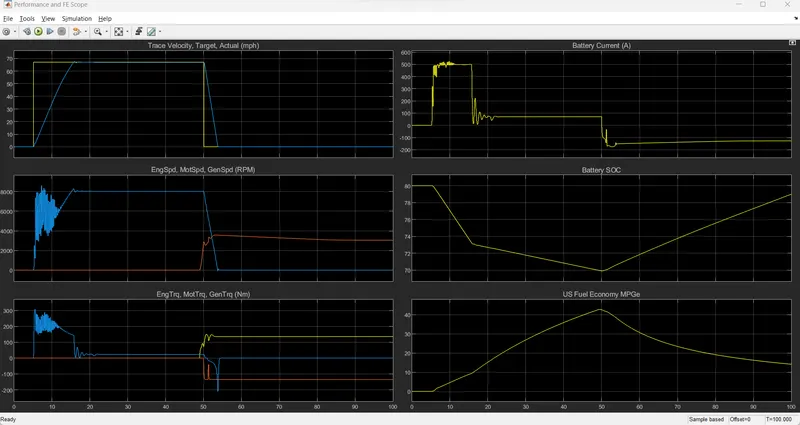
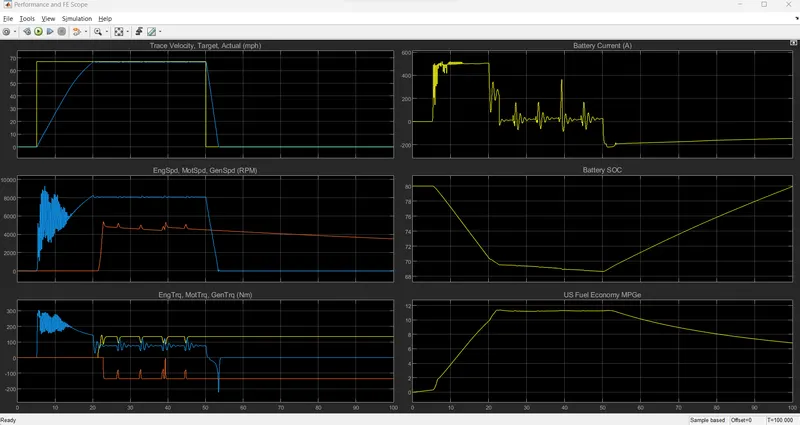
For Grade =5 ; Wind velocity =0 :
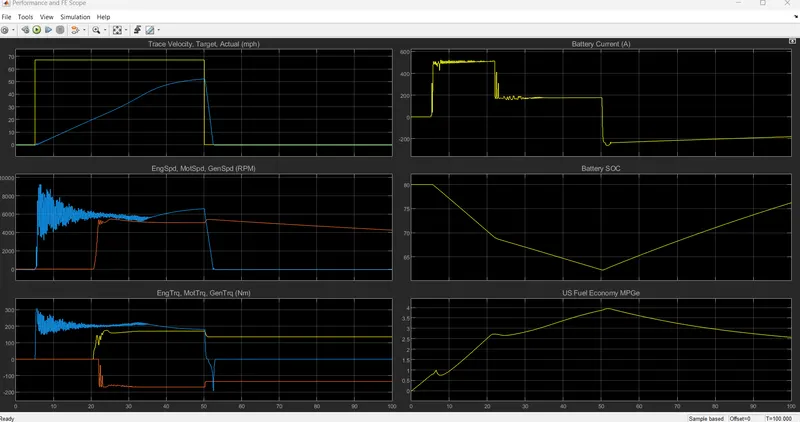
For Grade =15 ; Wind velocity =0 :
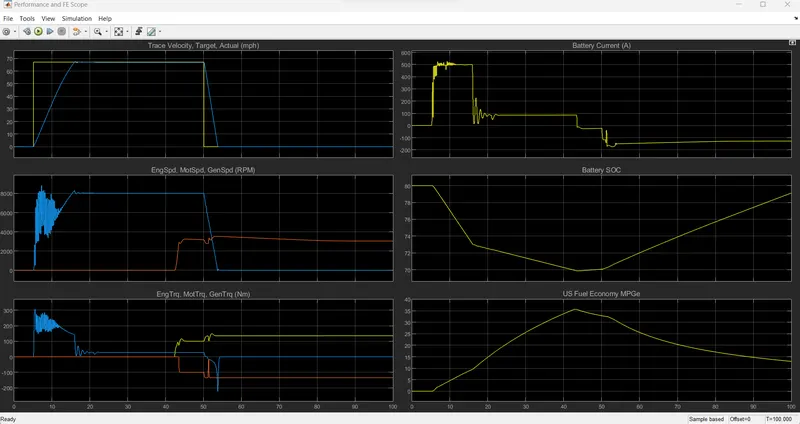
For Grade =0 ; Wind velocity =5 :
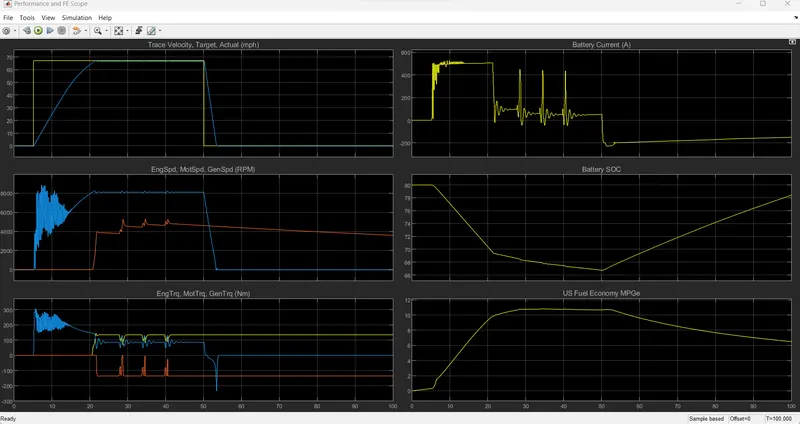
For Grade =5; Wind velocity =10 :
For Grade =5 ; Wind velocity =15 :
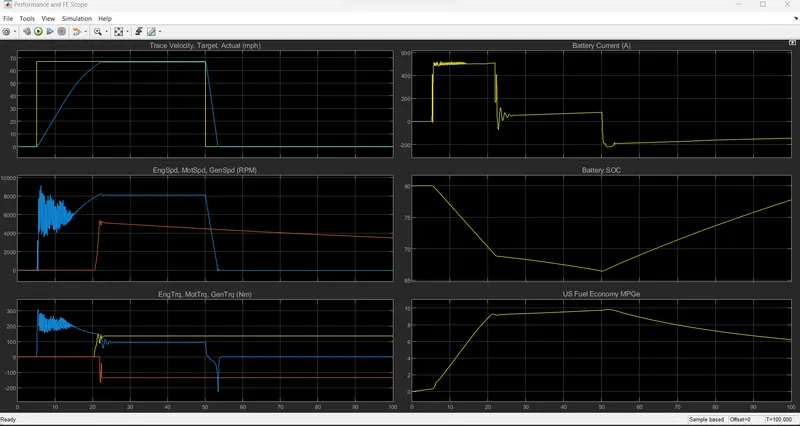
For Grade =15 ; Wind velocity =15 :
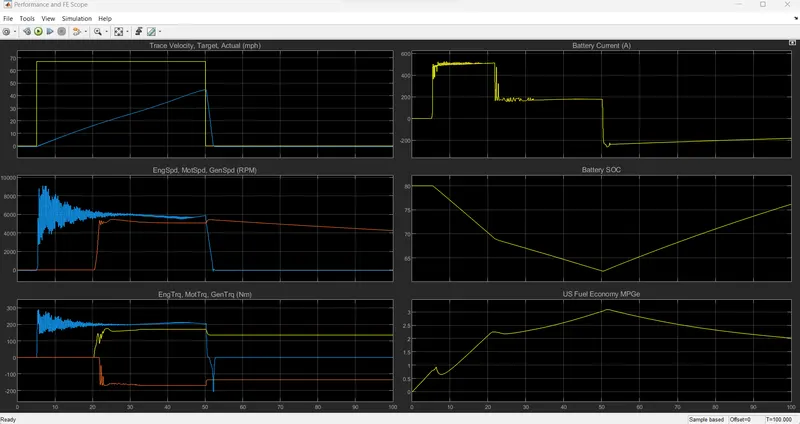
Inference:
- With the increase in grade angle the time required for acceleration increases and deceleration time decrases
- there will be fluctiaons in the battery current, torque and speed values with th eincrease in the garde angle and the wind velocity
- Fule economy also deceases with the increse in garde angle and wind velocity
Q.No. 4 :
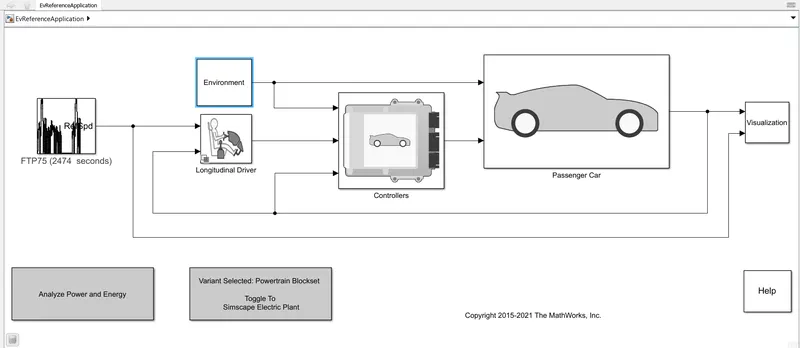
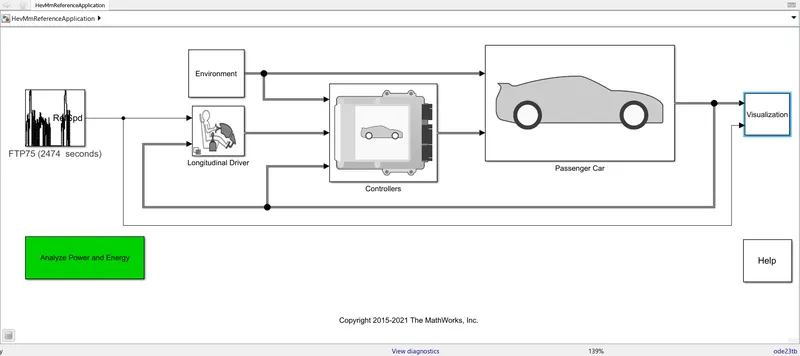
- Pure electric vehicle block and HEV block is opened from the power train block set
- Keeping all the parameters same, the simulation is rum for Hybrid and Pure Electric Power Train for FTP 75 drive cycle (2474s)
Pure Electric power train
Hybrid Electric Vehicle Power train
Result Screenshot:
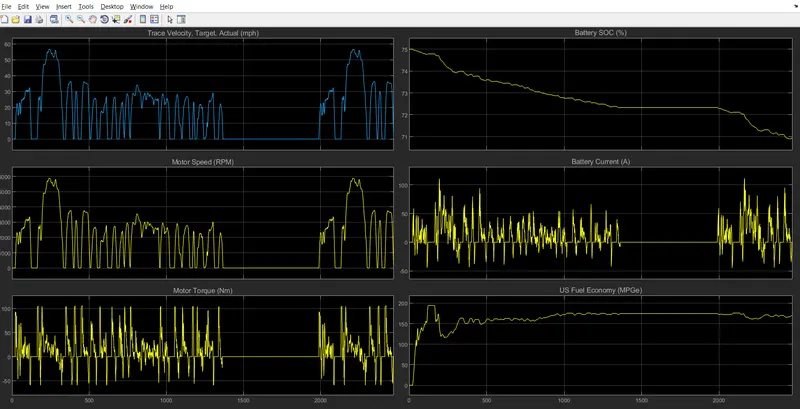
Pure EV:
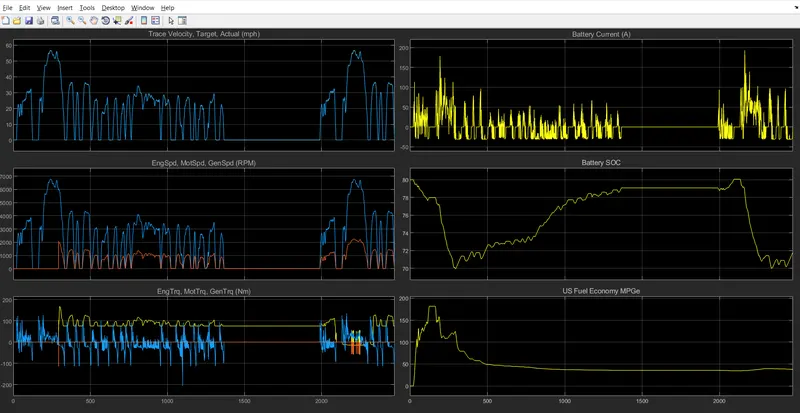
HEV
Inference:
- The battery current required for the Hybrid electric vehicle is higher compared to the Pure EV
- During the regenerative braking the battery cuurent produced for Pure EV is higher than HEV
- In case of pure EV the battery SOC gradually deceases during the acceleration and the increase in SOC during deceleration is minimal, but in case of HEV the battery turns into charging mode when the battery power reaches the minimum threshold
- Fuel economy is better in Pure EV than HEV