Week-4 Challenge WOT Condition Part-2
Q1.ANS:-
The difference between Mapped(i.e Static) model and Dynamic Model of engine, motor and generator are as follows;
A)Mapped Model:-It is based on data flow and Backward facing model.
It uses a set of steady state look up table based of experiment performed on lab. for simulation and its operation.
As the Model is based on Steady state look up table data the simulation time is less as compared dynamic Model.
This model is also based on Global Optimization based power management System(or control strategie).
"Vehicle learn about it best efficiency operating point and capture & remember those point to run the vehicle to that operating point for maximum optimization.''
More data are required for this model and we need to make some assumption as well.
The Motor specification such as RPM, voltage, power, efficiency, temperature and other specification such as torque, current, Battery related specification has to be entered my the user for simulation.
B)Dynamic Model:-It is based on Energy flow and Forward looking(i.e facing) model.
It is based on real time system set up and preferred where control development and HIL will be employed.
This model is based on Real-time optimization based power management System.
It is based on powertrain system variables at the current time and optimize power distribution between the system component instantaneously.
This type of model required high ended microproceccor, microcontroller and DSP for this implementation.
It operates dynamically depending on the situation of operation detailed data and specifications are not required.
The simulation tale more time but gives the detailed analysis of the components simulated. this is called real time based model.
Steps to change the Model type are as follows:-
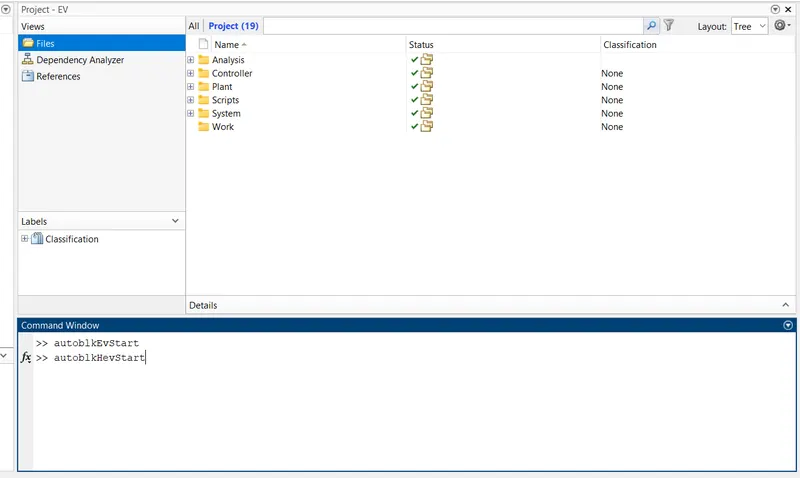
step1:- Go to the Matalb window and open the any one model(i.e EV or HEV) by typing
a.autoblkEvStart ------------for EV
b.autoblkHevStart ------------for HEV,
in command window and press the enter botton.
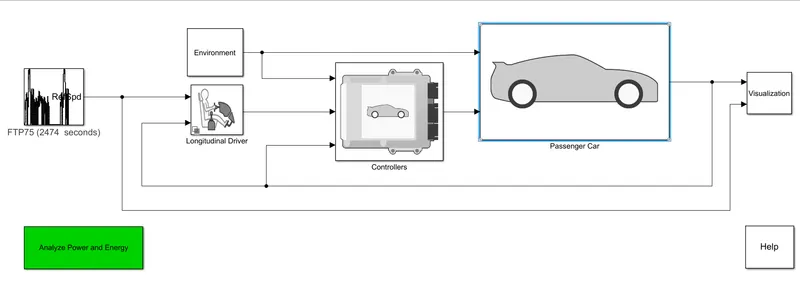
Step2:- a.Open the Passencer car block, Note:- This step is for pure EV same is applicable for HEV on at last c. we have to open Generator block.
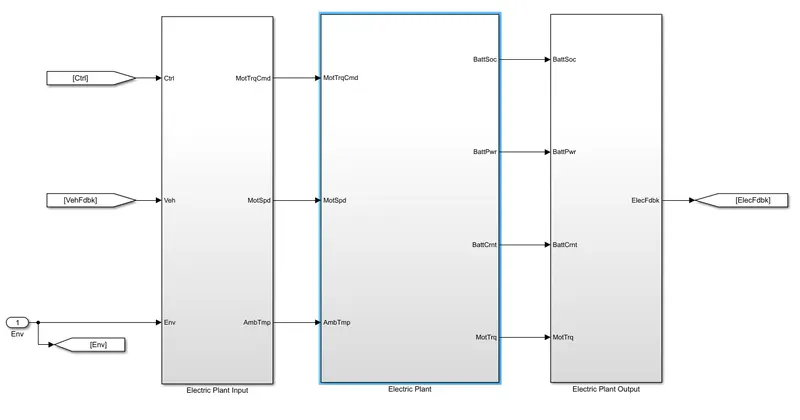
b.Open the Electric plant block,
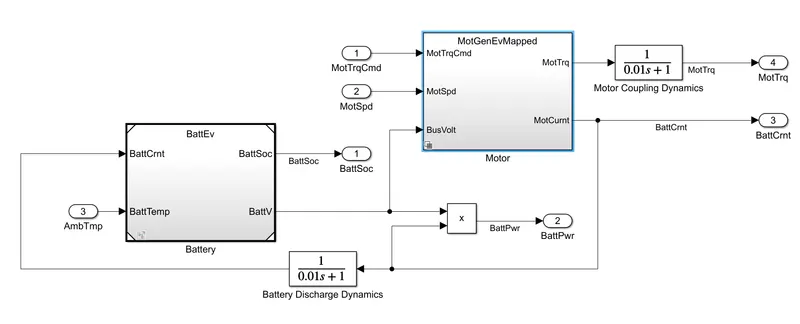
c.Open the Motor block,
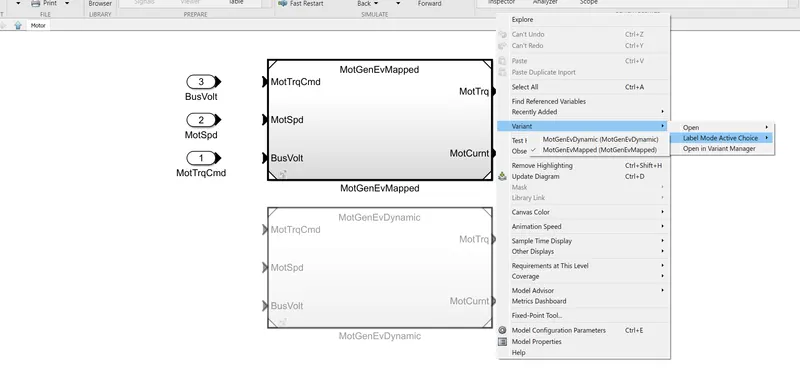
After openeing Motor block Right click in free space and then go to Varient then select Label Model Active Choice and hence select model whichever we like.
The step wise figure are shown below;
1
2
3
4
5
Q2.ANS:-
The mathematical equation implementation to carryout MPG(mile per gallon) in simulink is as shown below:-
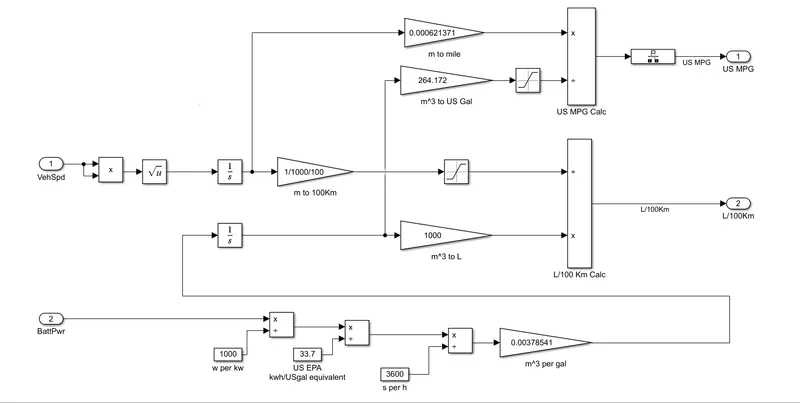
Here, The Battey power is converted into KW than it is divided by 33.7 to convert it into the US gasoline-equivalent using EPA(Environmental Protection Agency)
According to EPA, 1 gallon of gasoine = 33.7KW
The obtained gallon of gasoline is again converted into meter^3 per gallon.
m^3 per gallon is convetred into m^3 US gallon.
And US MPG is obtained as the ratio of distace travelled by vehicle in miles to m^3 US gallon.
>>The Factors to be consider to module fule flow are:-
i.Vehicle Speed.
ii.Battery Power.
iii.Fuel Flow.
Q3.ANS:
>The HEV Reference model is as shown below:
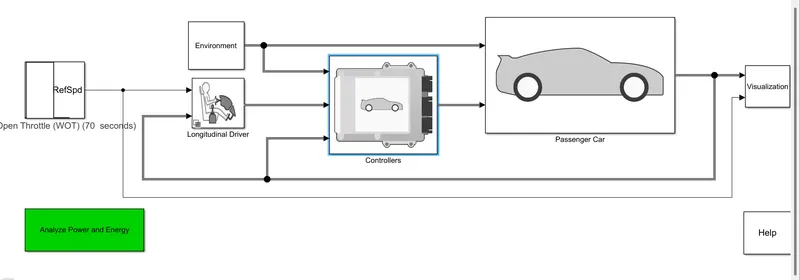
The model is run with below configuration.
I.without gradeability and zero wind velocity
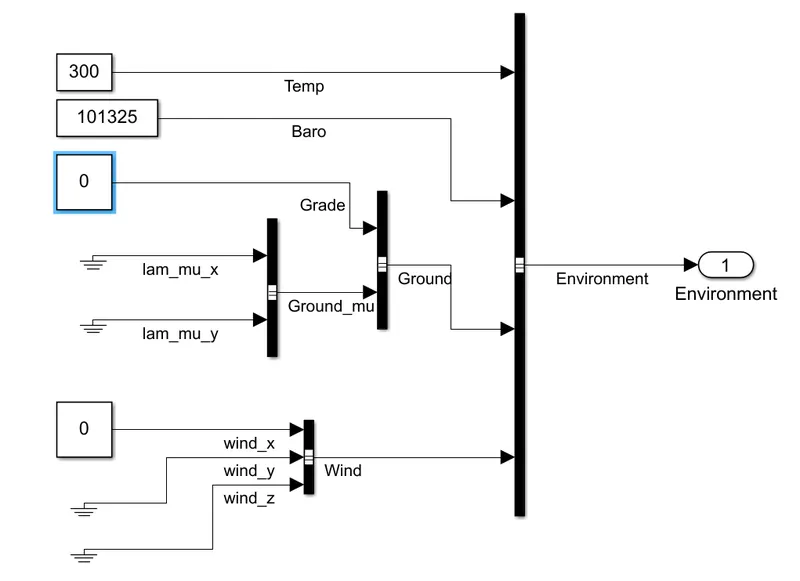
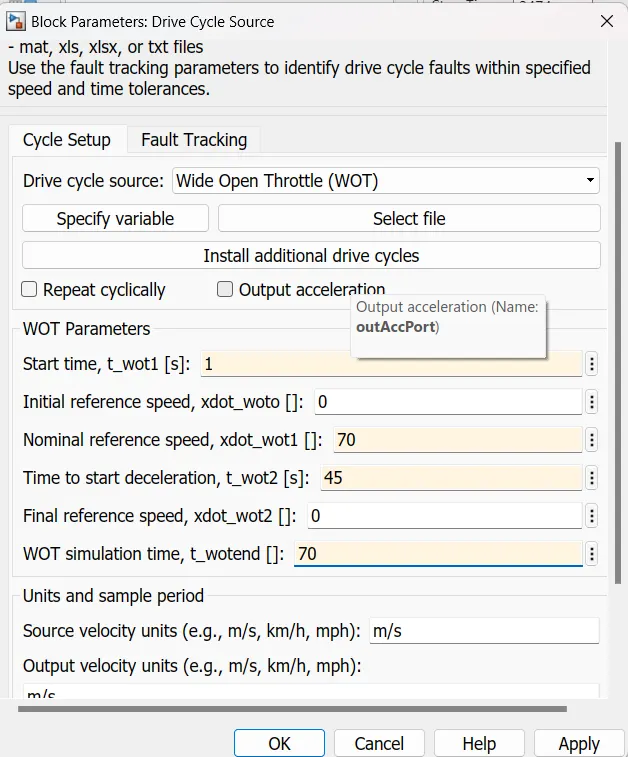
The output is as shown below:
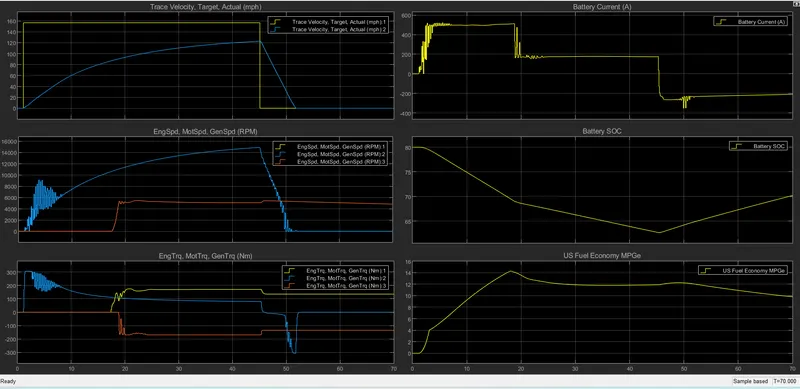
since, The spped in WTO is m/s
1 m/s = 2.237 mph
therefore, 70 m/s = 156.5855 mph
which is shown by the top left plot.(Trace velocity, Target actual mph)
From the plot we can observe that the max speed attained by the vehicle is nearly 120 mph this is due to the limit imposed by battery raated current, friction forces, rolling resistances etc.
>From the plot we also observe that at starting the current supplied by the battery is 500A rated one but once the battery SOC reduced to below 70% the IC engine start to shared run the vehicle and also to charge the battery. Once the battey SOC becomes more than 80% its again start supplying a power to motor.
>Here note that the vehicle wheel is not directly driven by IC engine. The IC engine is mounted with generator and the generator run the motor.
>>Now, with Gradeability and Wind velocity the output is as shown below:
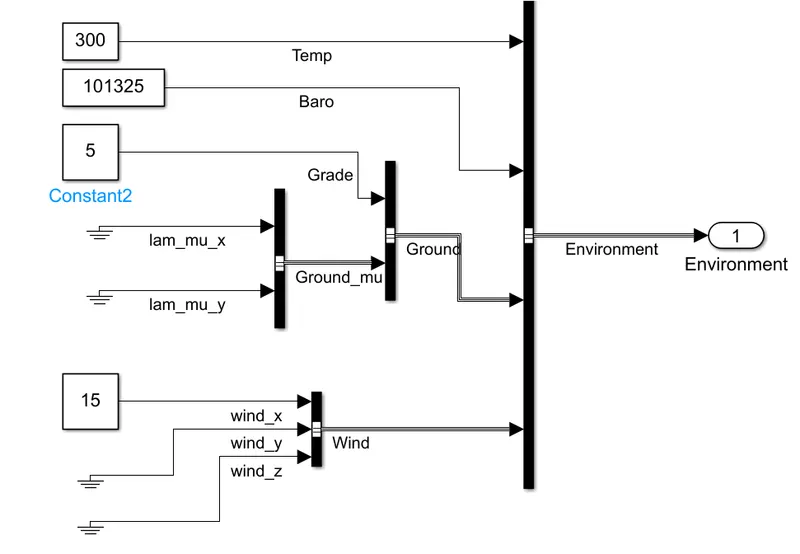
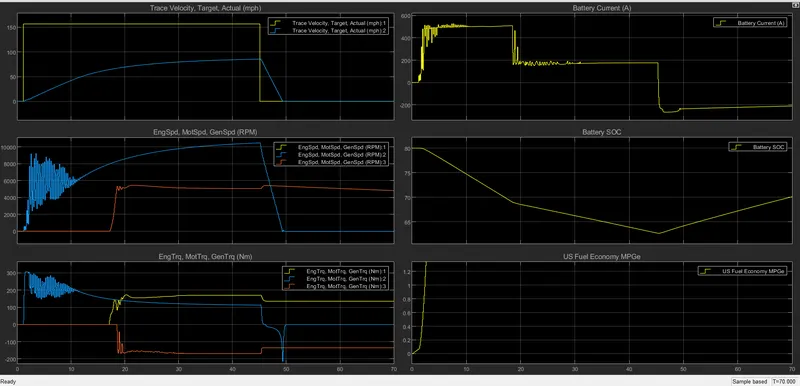
>>When the wind velocity and grade is applied to the vehicle the max speed attained by the vehicle is reduced due the influences of gradient force and aerodynamic force in addition with rolling resistance, friction etc.
>>IF we keep on increasing the the wind velocity and grade the velocity of vehicle keep on decreasing.
>>The total distance travel by vehicle is going to reduced with increased in thise parameters.
>>The deceleration time is reduced with increase in wind velocity and gradeability.
Q4.ANS;
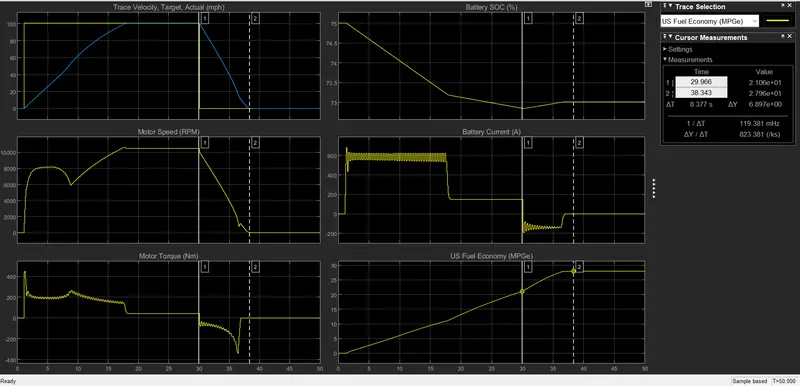
Keeping all the parameters same the the output obtained from pure EV and HEV are as shown below;
i.Pure EV.
ii.HEV
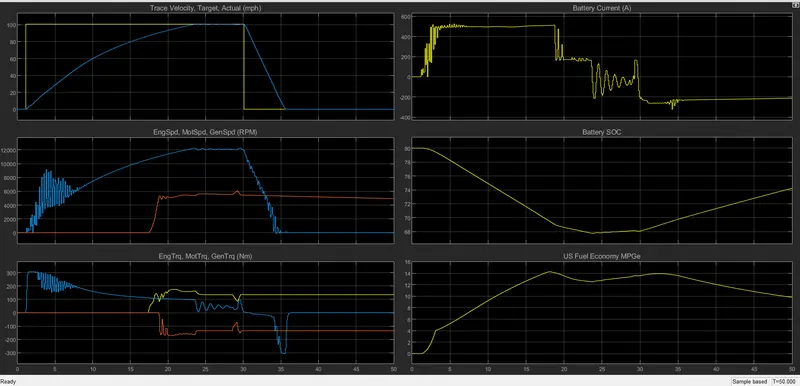
>The time taken to achieve the desired speed by the motor is less in case of pure EV, The current supplied by the battery of pure EV is aslo more than that of HEV.
>The deceleration time for pure EV is more than HEV.
>The fuel economy MPGe is more in HEV than the EV.