Week-4 Challenge WOT Condition Part-2
Question 1:
What is the difference between mapped and dynamic model of engine, motor and generator? How can you change model type?
Solution:
Mapping Model:
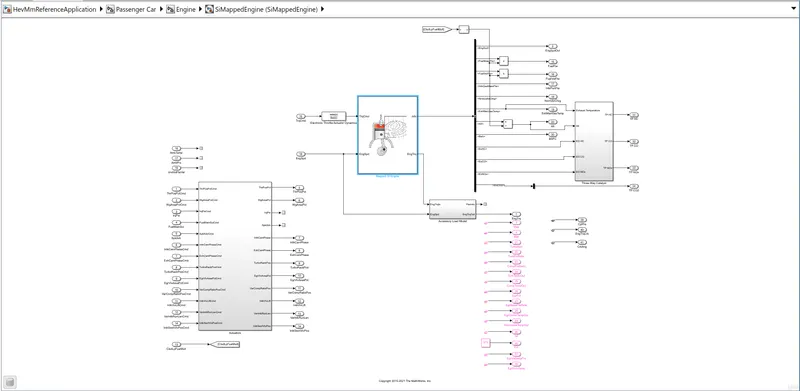
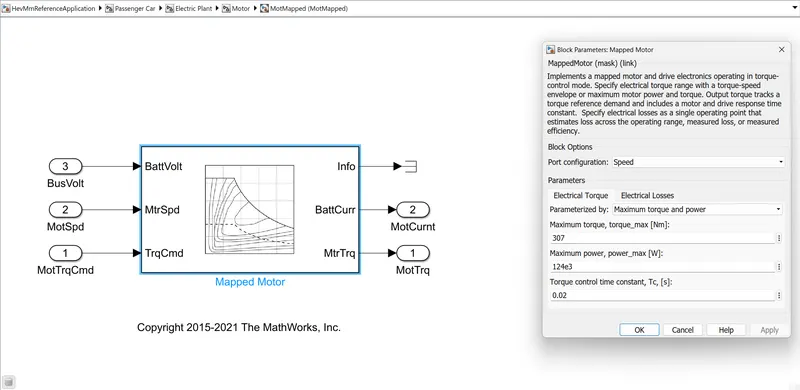
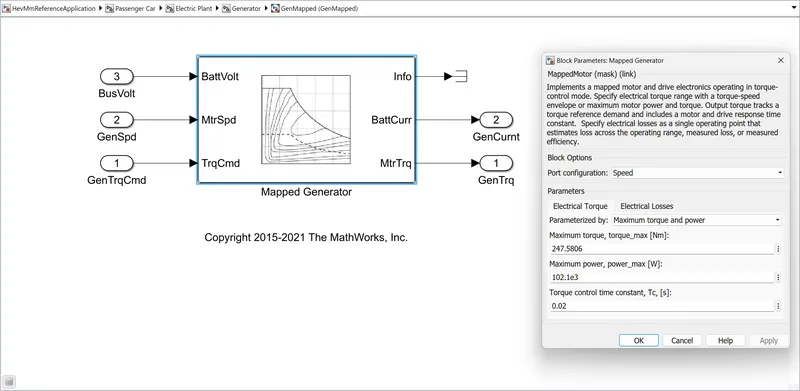
- This model is the mathematical representation of the system like engine,motor,generator etc.
- This model is faster when compare to dynamic.
- If you need to used a motor,generator or engine in your project you can directly access the motor model,generator model or engine model by the uses of look-up table.
Mapping model of engine:
Mapping model of motor:
Mapping Model of Generator:
Dynamic Model:
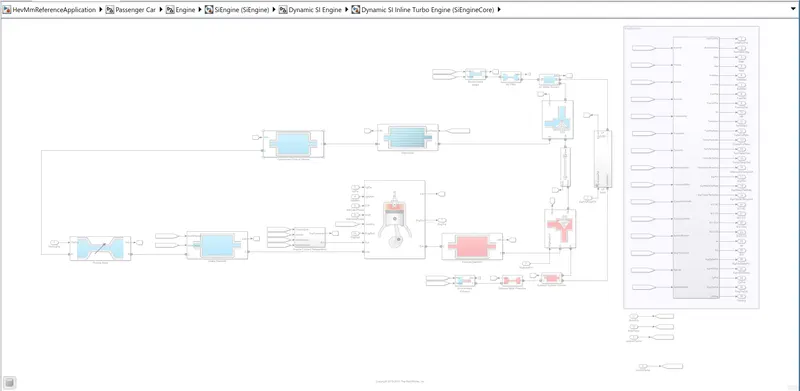
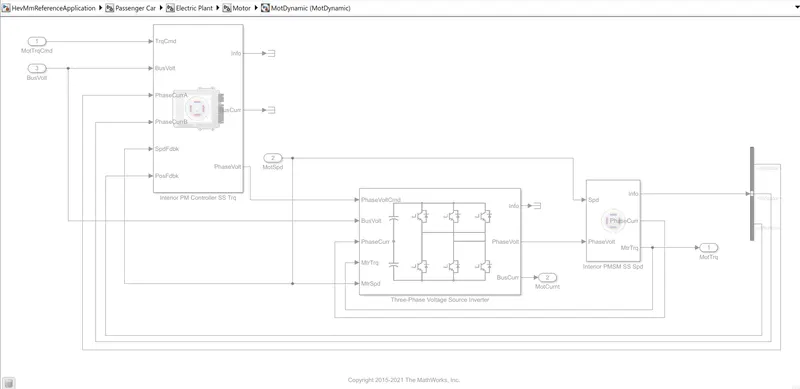
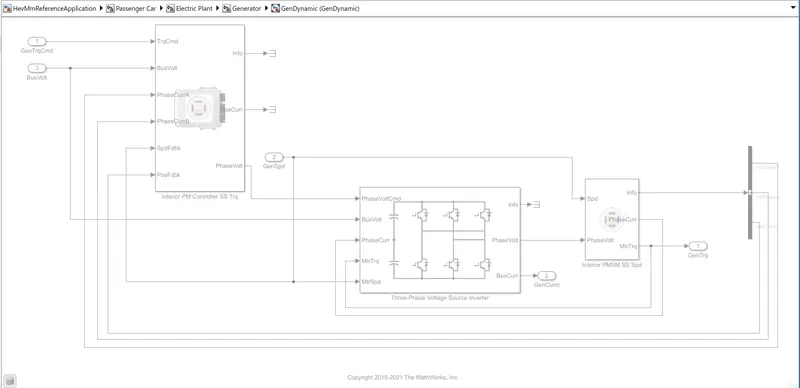
- This model is the circuit or block representation of the system like motor, motor controller and source.
- This model give detailed description of the output.
- If you need to develop the motor model you need to add motor block, motor controller block, source block and convert the default value to required value.
Dynamic model of engine:
Dynamic model of motor:
Dynamic model of generator:
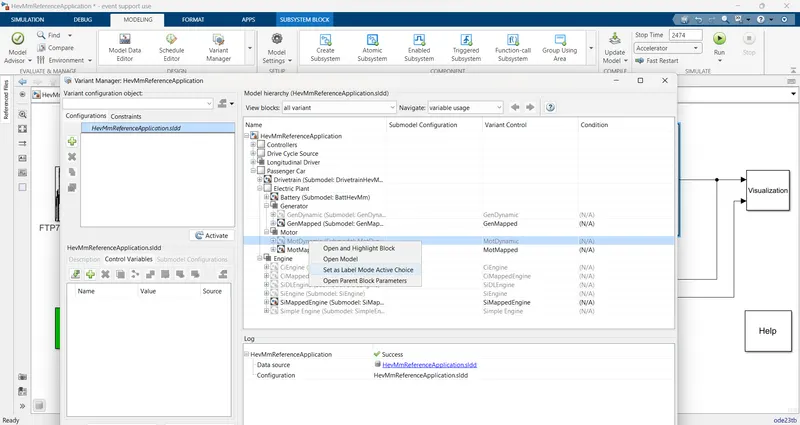
Change Model type in MATLAB:
- Click on the modelling tab on upside.
- And click on the variant manager.
- then Select the required block to run.
- And right click and select 'Set as lable Mode Active Choice'.
******************************************************************************************
Question 2:
How does the model calculate miles per gallon? Which factors are considered to model fuel flow?
Solution:
In this model they created Performance calculator by the uses of look-up table.
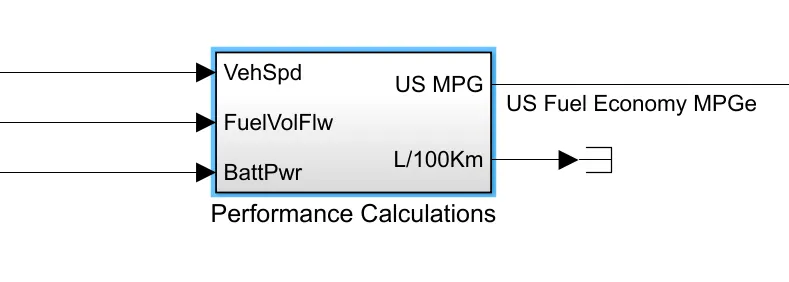
In this model, they take the Speed of the vehicle and intergate the speed, After that they convert the unit meter to Kilometer and they use saturation block to get non zero value for division.
Next they take fuel flow volume and battery power by the convert of battery units from KWh to m^3/galon and sum both input and intergate the sum output and they convert m^3 to liter by simple calculation using gain block.
And finally they divide fuel and battery power to the vehicle speed to calculate mile per gallon.
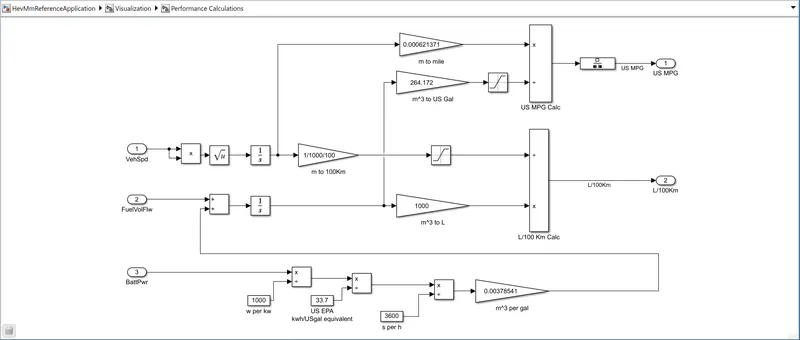
Factor that consisder to model fuel flow:
- Vehicle Speed.
- Fuel Flow Volume.
- Battery Power.
******************************************************************************************
Question 3:
Run the HEV ReferenceApplication with WOT drive cycle. Change the grade and wind velocity in the environment block. Comment on the results.
Solution:
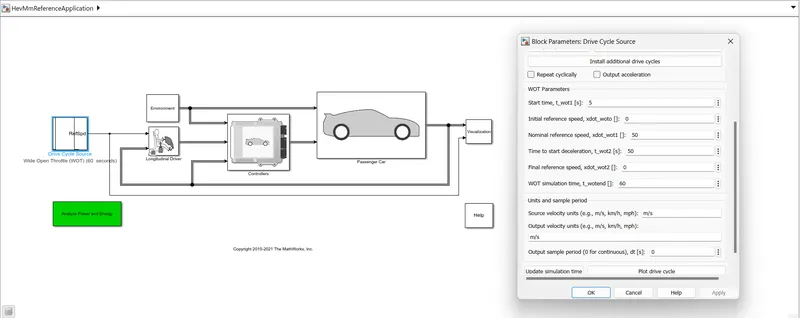
Here is the model with an WOT drive cycle as reference input.
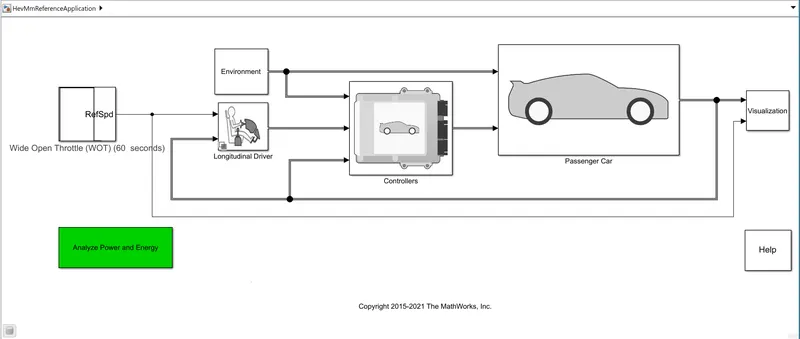
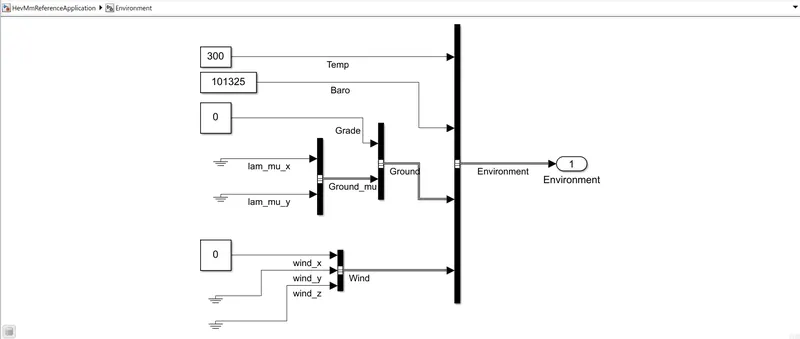
In an environment block, the grade and wind velocity both has set as 0 and run the model to observe the simulation.
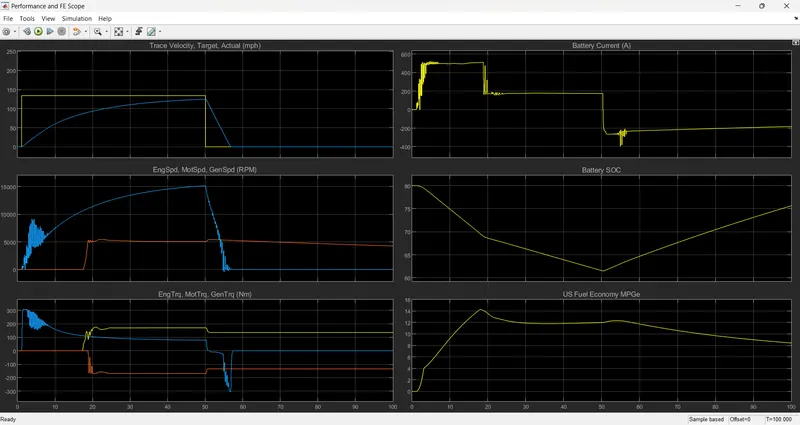
The output shows that vehicle start to reach the maximum speed, first with the help of battery and motor, After that the speed of motor not compromise with the require speed, so the engine start and give the power to the vehicle to compromise the required speed shown in the graph 3.
The battery state of charge is design to drain only 60%, if the SOC is 60 then the motor is turn off and the engine give power to the vehicle and charge the battery shown graph 4.
In an environment block, the grade and wind velocity has set as 8 and 10 then run the model to observe the simulation.
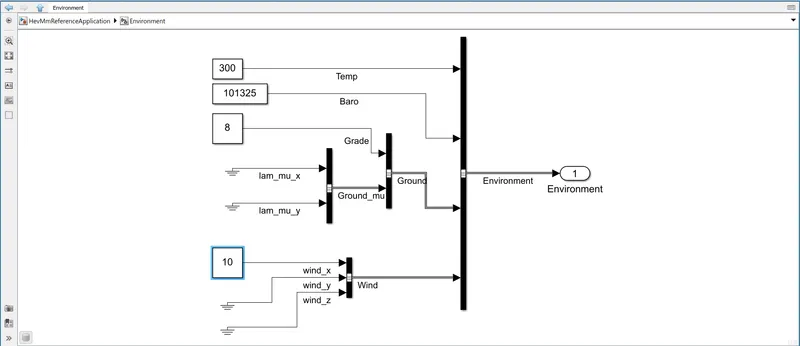
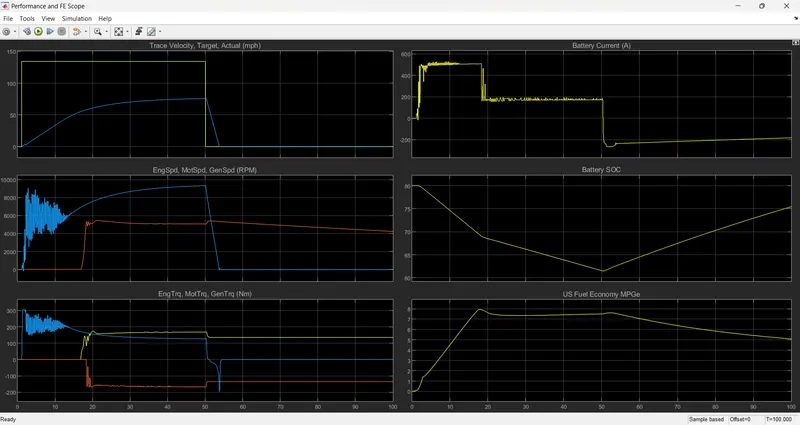
The output shows that vehicle start to reach the maximum speed, first with the help of battery and motor, After that the speed of motor not compromise with the require speed, so the engine start and give the power to the vehicle to compromise the required speed shown in the graph 3.
The battery state of charge is design to drain only 60%, if the SOC is 60 then the motor is turn off and the engine give power to the vehicle and charge the battery shown graph 4.
Here due to wind resistance and gradeability force act on vehicle ,It required more power to compromise the speed of vehicle,but the motor maximum current rating is 500Ampere, so the engine deliver the more power to compromise the vehicle speed shown in graph 3.
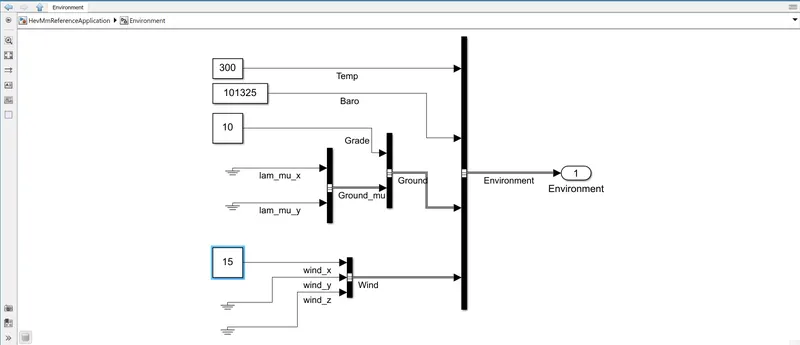
In an environment block, the grade and wind velocity has set as 10 and 15 then run the model to observe the simulation.
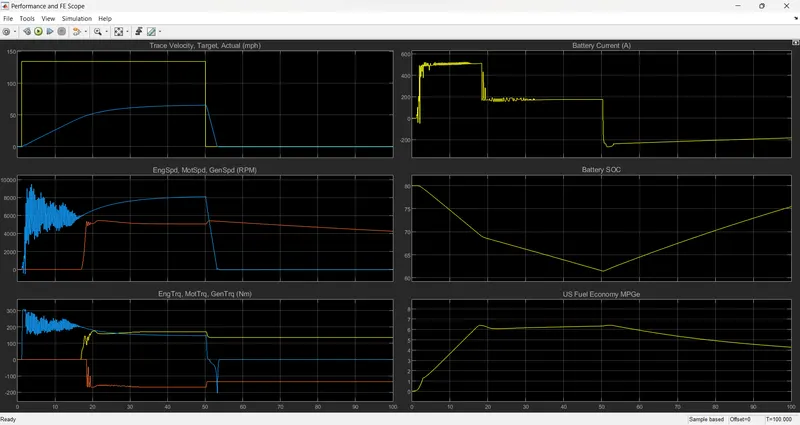
The output shows that vehicle start to reach the maximum speed, first with the help of battery and motor, After that the speed of motor not compromise with the require speed, so the engine start and give the power to the vehicle to compromise the required speed shown in the graph 3.
The battery state of charge is design to drain only 60%, if the SOC is 60 then the motor is turn off and the engine give power to the vehicle and charge the battery shown graph 4.
Here due to wind resistance and gradeability force act on vehicle ,It required more power to compromise the speed of vehicle,but the motor maximum current rating is 500Ampere, so the engine deliver the more power to compromise the vehicle speed shown in graph 3.
Here we observe that resistance of the vehicle increases with increases in the engine power.
******************************************************************************************
Question 4:
Keeping all other parameters same, compare the simulated results of hybrid and pure electric powertrains.
Solution:
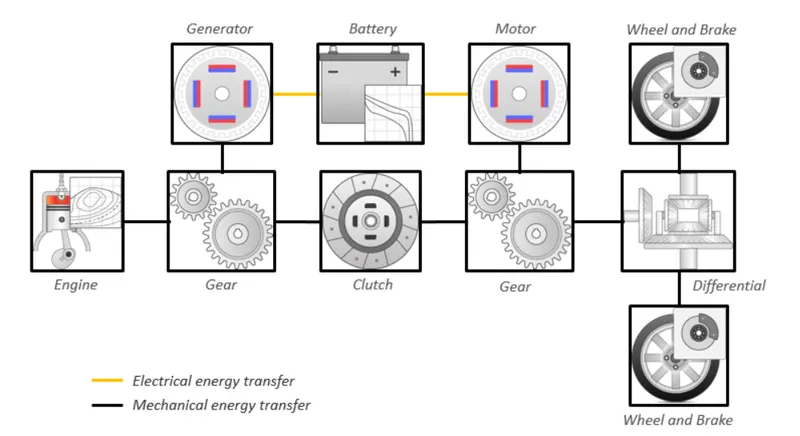
Basic model of Series-Parallel Hybrid Electric Vehicle:
- In an series parallel Hybrid vehicle Engine and Motor are used to deliver the power to the vehicle.
- Here Generator is used to charge the battery, if the batery state of charge is reach 60% then motor will turn off and the engine deliver more power to the vehicle as well as generator to charge the battery.
Simulink model of Series-Parallel Hybrid Electric Vehicle:
Output Graph of Series-Parallel Hybrid Electric Vehicle:
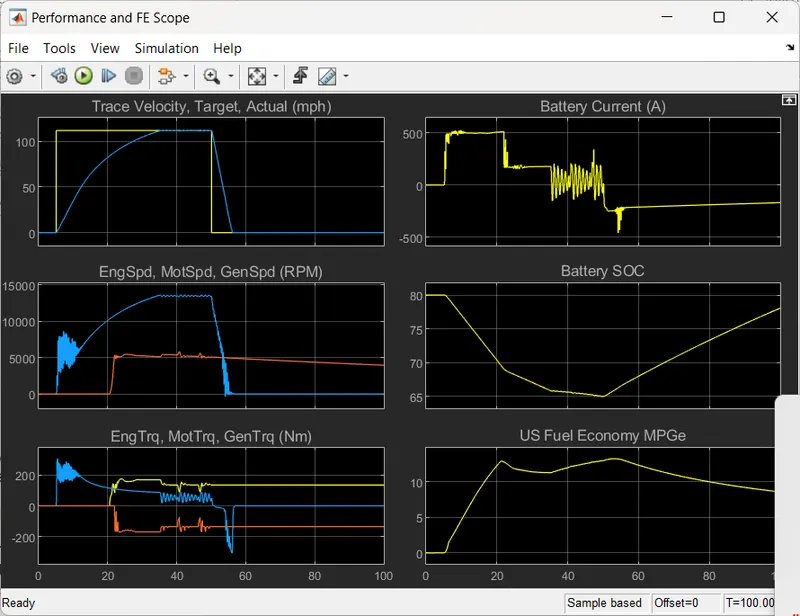
This output graph shows that combination of motor deliver power to the vehicle for reach the required required speed and engine rotate the generator to charge the battery shown in graph 3 and graph 4.
Basic model of Electric Vehicle:
- In an Electric vehicle Motor is used to deliver the power to the vehicle.
- Here motor is act as the generator to charge the battery by the regeneration brake, if the vehicle is deaccelarate at the time motor act as generator and it generate small amount of power and store in battery.
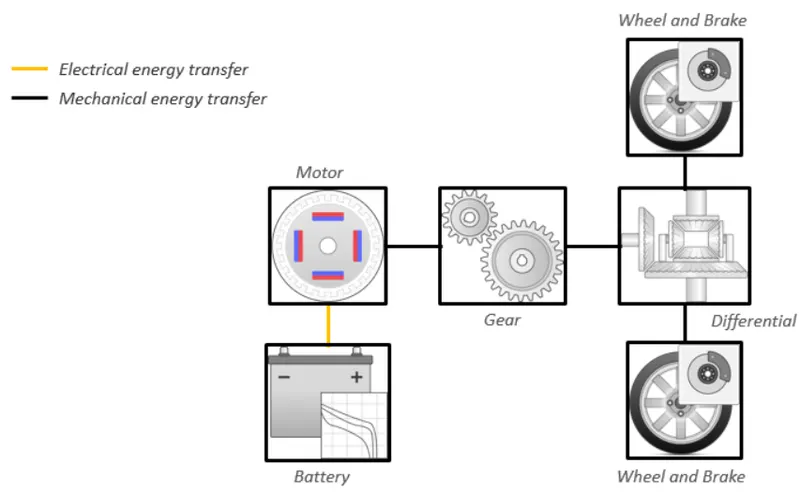
Simulink model of Electric Vehicle:
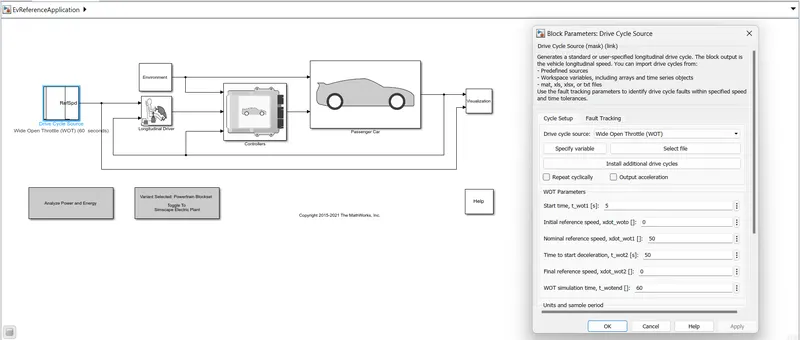
Output Graph of Electric Vehicle:
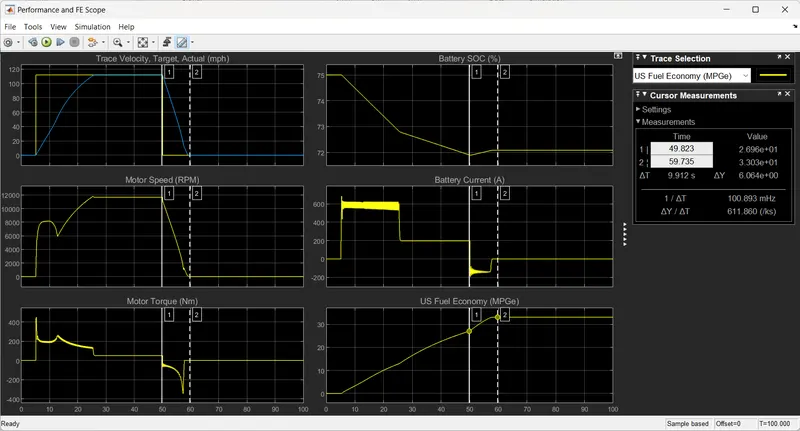
The output graph shows that the state of charge of battery drain continuously but at the point 1 to 2 the vehicle start deaccelaration and generate small amount of power to charge the battery shown in graph 2
Comparation of Hybride and Pure Electric Vehicle:
- In an hybrid model the engine deliver power to the generator to charge the battery continuously to avoid battery drain,But in Pure Electric vehicle there is no component deliver power to the battery for charging.
- The fuel economy of the Hybrid electric vehicle is low because engine and motor run continuously,but in the electric vehicle the fuel economy is stable after particular point because it has less gear mechanism.
- In hybrid electric vehicle generator is used to recharge the battery, but in pure electric vehicle motor is act as generator during regeneration brake and store small amount of power in battery.
- The Accelaration rate is faster in Electric vehicle and slower in hybrid Electric vehicle at the same time deaccelaration is fater in hybrid Electric vehicle and slower in Electric vehicle.
******************************************************************************************