Week-4 Challenge WOT Condition Part-2
Q: What is the difference between mapped and dynamic model of engine, motor and generator?
| Mapped engine | Dynamic engine |
| Less accurate | More accurate |
| Default parameters | Real time data |
| It uses steady state look-up tables to characterize engine performance. | It is used when the data of subsystems of a vehicle is required. |
| It provide overall engine characteristics, including actual torque, fuel flow rate, BSFC, and engine-out exhaust emissions. | Model decomposes the engine behavior into engine characteristics that are separated into lower-level components. By combining components in this way, the models capture the dynamic effects |
| Mapped motor | Dynamic motor |
| It works in torque control mode. | It uses three phase interior permanent magnet synchronous motor (PMSM) |
| It is used when user requires faster simulation. | It is used when user knows the parameter for that particular simulation. |
| Mapped generator | Dynamic generator |
| The data required is taken from lookup tables corresponding to given parameters. | It involves entering parameters manually for particular simulation. |
| Simulation time is less | Simualtion takes more time and more accurate |
How can you change model type?
- Open Matlab and in documentation search for Powertrain blockset.
- After clicking the link the model will open default
- Select the electric plant block from passenger car block
- Then select MotGenEVMapped block
- To change to dynamic blockset from mapped click on the screen and select the variant
Q: How does the model calculate miles per gallon? Which factors are considered to model fuel flow?
Miles per gallon is a fuel economy rating determined by how far a car can travel on a gallon of gasoline or diesel.
Steps to calculate milles per gallon in EV
- Open the reference EV model and open the perforamnce calculation
- 1 gallon = 33.7KWH of energy in EV
- The electric vehicel is multiplied and square rooted. The value is integrated and converted into meters. The meter is converted into miles and is divided by US Gal to get US MPG.
- To get US Gallon need to divide battery power by 1000 and then divide by 33.7.
- The value is converted into gallon.
Factors considered to model fuel flow
- CI engine or SI engine
- Engine feedback out
- Fuel flow
- Fuel mass flow rate
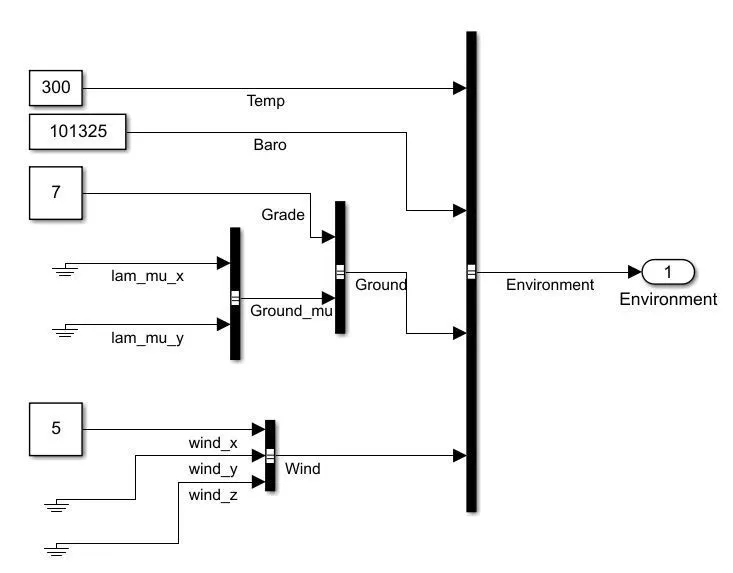
Q: Run the HEV ReferenceApplication with WOT drive cycle. Change the grade and wind velocity in the environment block. Comment on the results.
Hybrid electric vehicle multimode refernce application is taken with WOT drive cycle as shown below
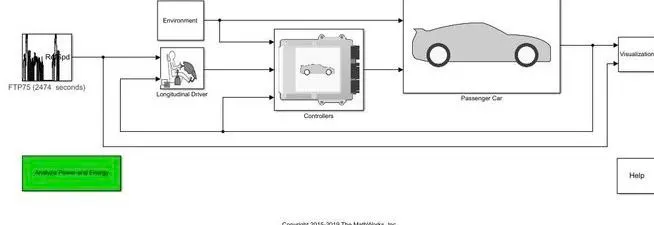
Case 1: grade=0 and wind velocity =0
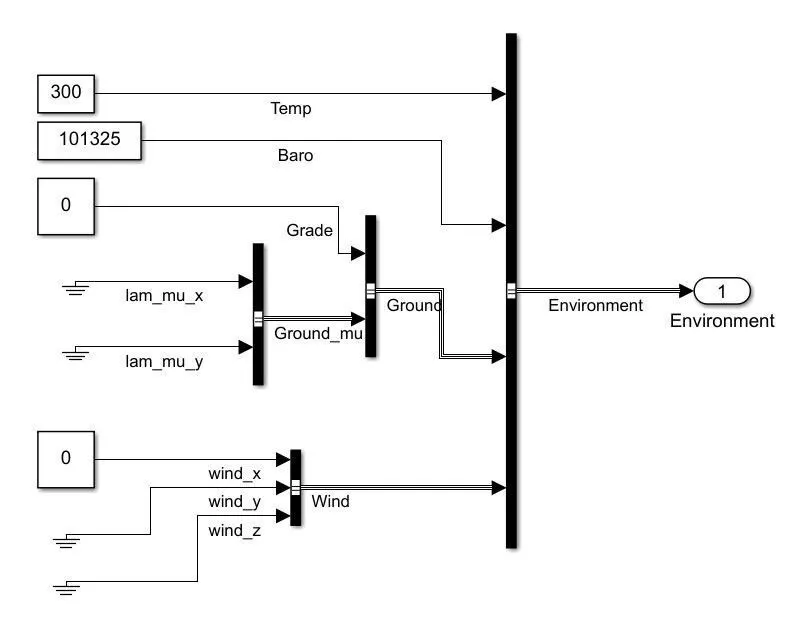
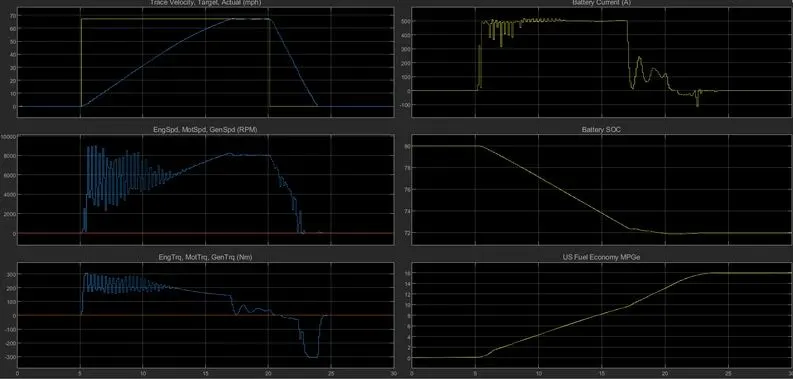
Result: since no grade and wind velocity is present, vehicle is able to achieve maximum speed with battery power.
Case 2: grade=8 and wind velocity=4
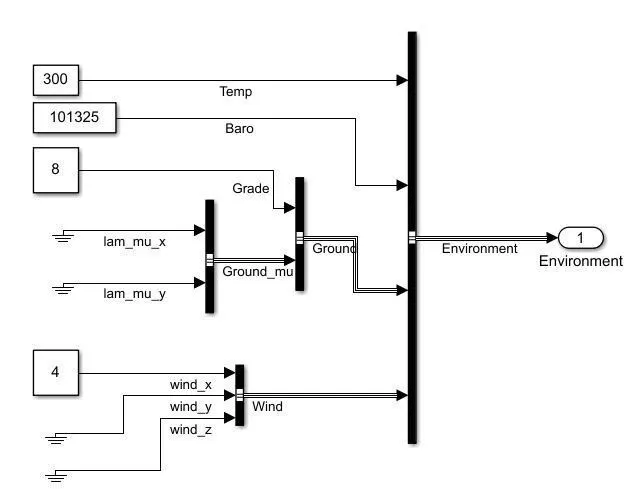
Result: engine speed was able to achieve 8000 RPM for a small duration and target velocity for 50.4 mph. Engine torque increases initially and goes to negative. The fuel economy is increased from 0 to 8.7 and then becomes constant.
Q: Keeping all other parameters same, compare the simulated results of hybrid and pure electric powertrains
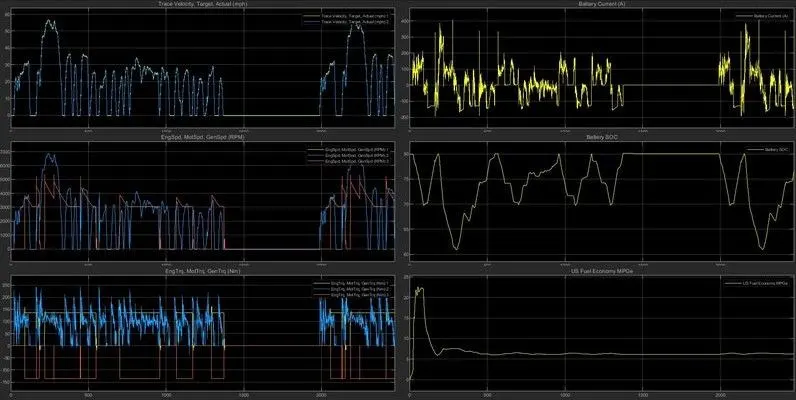
Keeping grade=7 and wind velocity= 4 in both hybrid and pure electric powertrains. We can compare hybrid EV and pure electric from the graphs below.
HEV
Pure EV
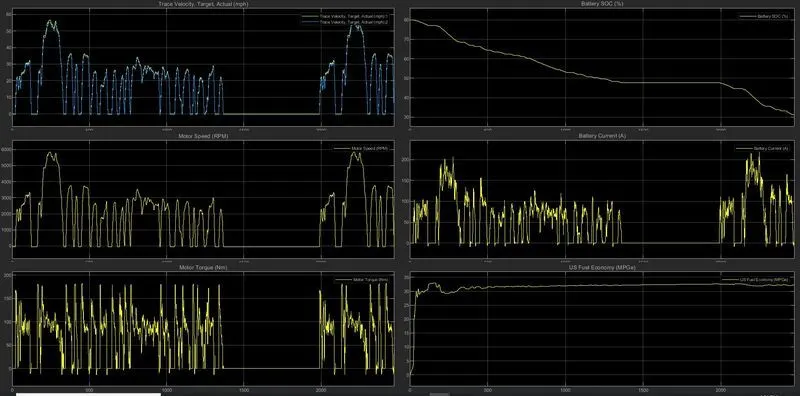
From the above graphs we can conclude that fuel economy is more in pure electric vehicle compared to hybrid electric vehicle. Due to charging and discharging in HEV battery current is continously changing whereas is pure EV it is dropping. The motor speed is high in HEV compared to pure EV.