Project
Aim: To study and analyse BAJA All-Terrain Vehicle (ATV) Model, and to carry out system- level simulation.
Objectives:
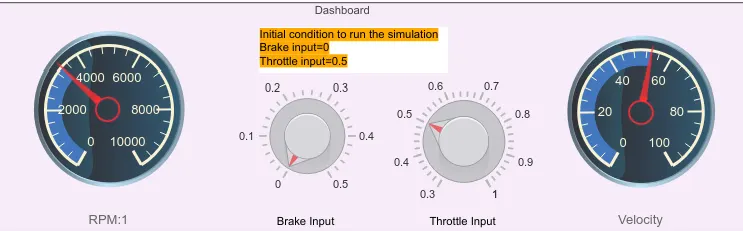
- When we are changing the throttle or brake input of the vehicle velocity and the RPM of the engine is changing.
- To prepare technical report and analyse all components.
BAJA ATV Model:
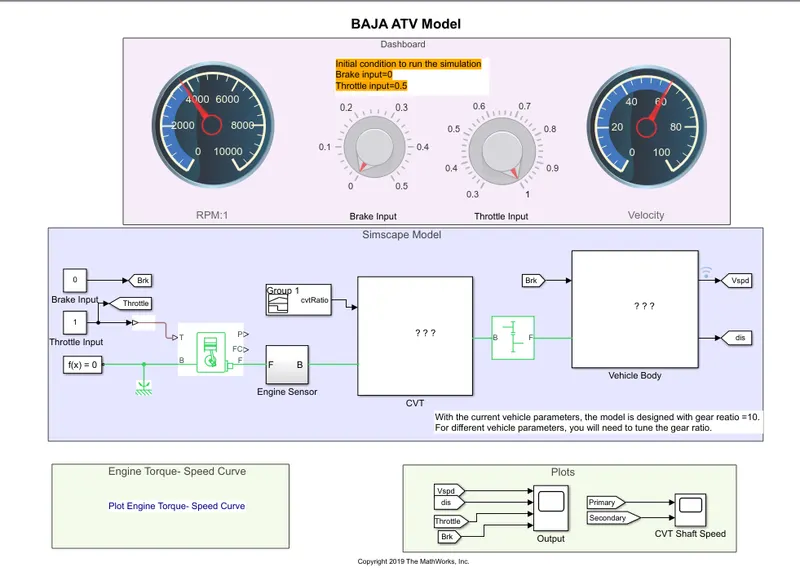
Theory: ATV is a small motor vehicle with three or four low- pressure tires designed for use on various types of terrain. It is designed to handle a wider variety of terrain than any other vehicles.
The BAJA ATV is to design, fabricate and validate a single seater four- wheeled off road vehicle. The agility of the vehicle in terms of gradeability, speed, acceleration and manoeuvrability characteristics and its ability to endure breaking durability test.
Components:
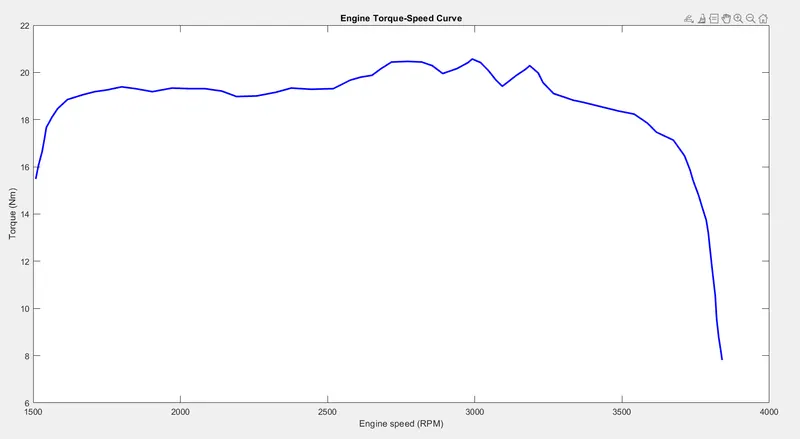
- Generic engine: the generic engine uses a programmed relationship between speed and torque which is modulated by the throttle signal. The simple gear between engine and CVT gear gear box is to slow down the engine RPM.

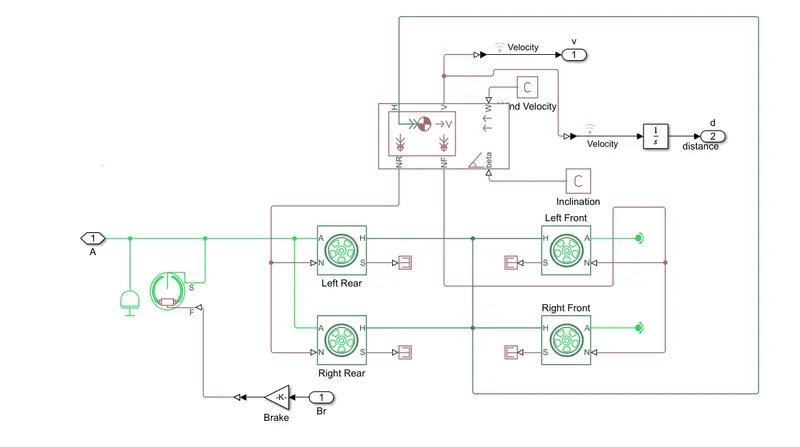
- Vehicle body: it accounts for body mass, aerodynamic drag, road incline and weight distribution between axles due to acceleration and road profile. The vehicle can have the same or a different number of wheels on each axle. The vehicle optionally include pitch and suspension dynamics or variable mass and inertia. The vehicle does not move vertically relative to the ground.
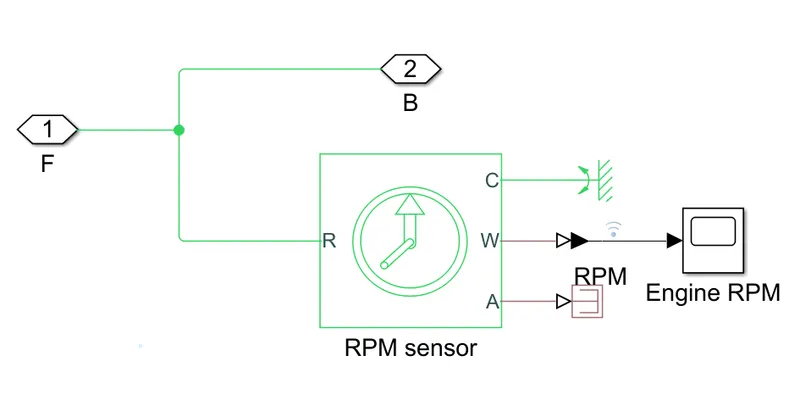
- Engine sensor: it represents an ideal mechanical rotational motion sensor that is a device that converts across variable measured between two mechanical rotational nodes into control signal propotional to angular velocity or angle. The sensor is ideal since it does not account for inertia, friction, delays and energy consumption.
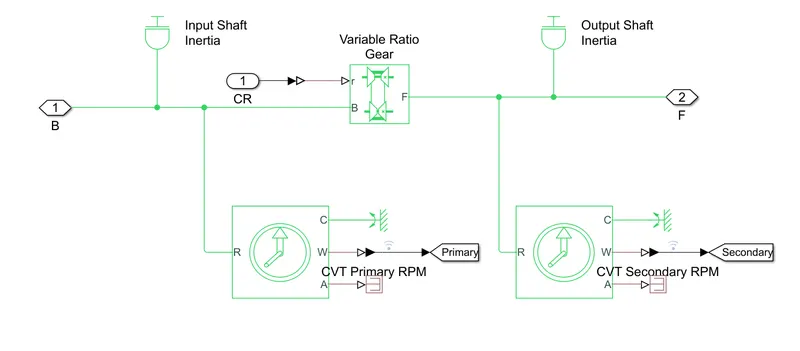
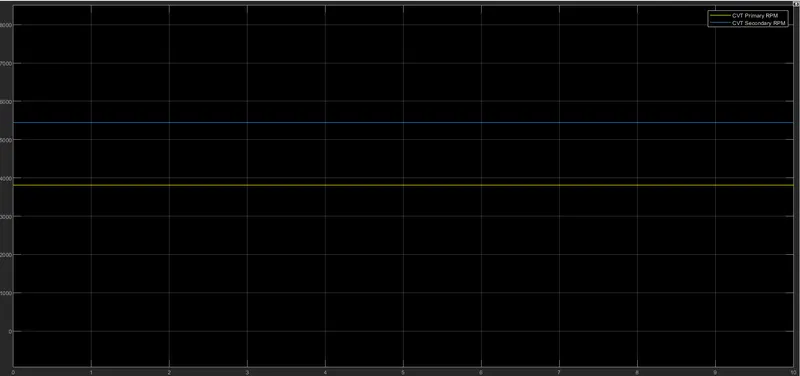
- Continously Variable Transmission (CVT): the variable diameter pulley plays a important role in transmission. Variable diameter pulley must always come in pairs. The driver pulley is connected to crankshaft of the engine. The input pulley is also called as driving pulley is where the engine enters the transmission. The second pulley is called as the driven pulley since the first oulley is turning it. The driven pulley transfers energy to the drivershaft.
The distance between the center of the pulleys to where the belt makes contact in the groove is known as pitch radius. The ratio of the pitch radius on the driving pulley to the pitch radius on the driven pulley determines the gear when the pitch radius is small on the driving pulley, then the roational speed of thr driven pulley decreases resulating in lower gear.
- Simple gear: it is a combination of a driver and driven gear where the speed is reduced by the gear ratio.

Output:
Engine Torque- speed curve
CVT shaft speed
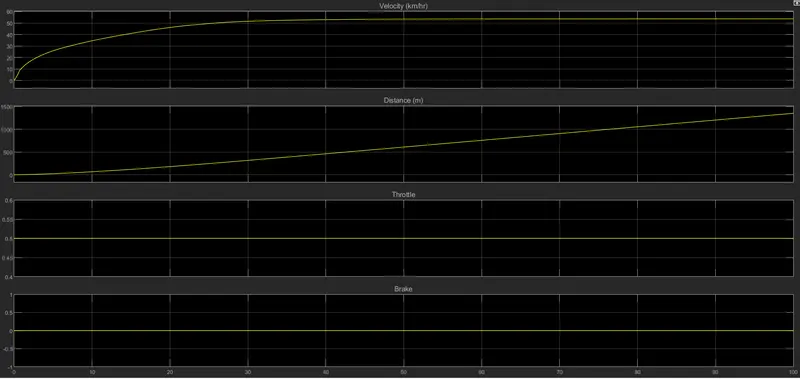
Case 1: When brake input is 0 and throttle is 0.5
Case 2: When brake input is greater than throttle
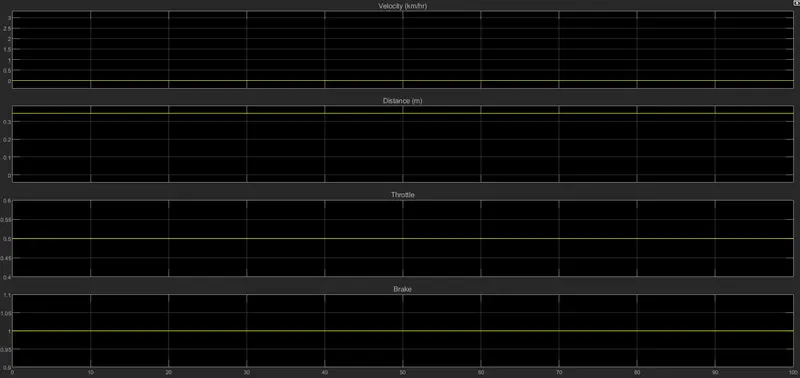
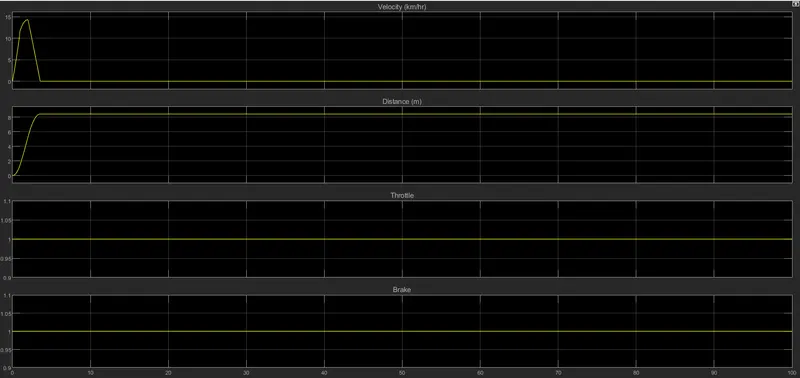
Case 3: When brake input and throttle is equal
Conclusion:
- Velocity, CVT shaft speed and engine speed is directly propotional to throttle and inversely proportional to brake.
- CVT ratio is directly proportional to torque and inversely propotional to throttle.
- The speed gets null at particular braking resistance.