Week-4 Challenge WOT Condition Part-2
- What is the difference between mapped and dynamic model of engine, motor and generator? How can you change model type?
Answer:-
Dynamic Model:- Dynamic model represents the actual components. It represents the temporal aspects of a system, capturing the control elements through which the behavior of objects can be understood over time.
Mapped Model:- A mapped model is a model where the mathmatical calculations mapped with a lookup table, or we can mapped our own data in particular block.
Mapped Engine Model:- Model uses a set of steady-state lookup tables to characterize engine performance.
Dynamic Engine Model:- Model decomposes the engine behavior into engine characteristics that are separated into lower-level components. By combining components in this way, the models capture the dynamic effects.
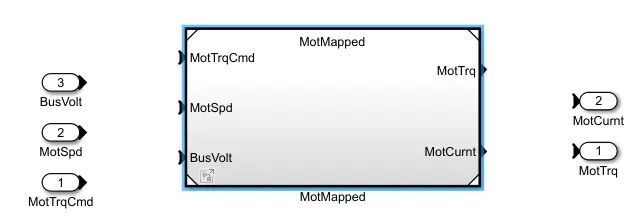
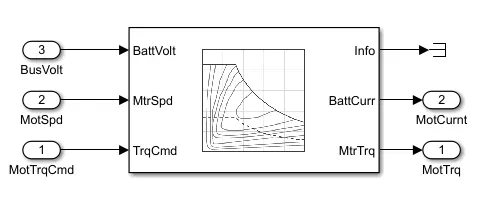
Motor mapped block:- Here is lookup table mapped with block Motor mapped model.
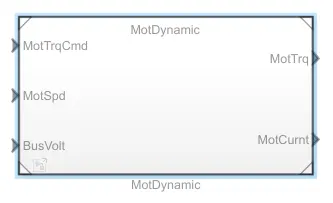
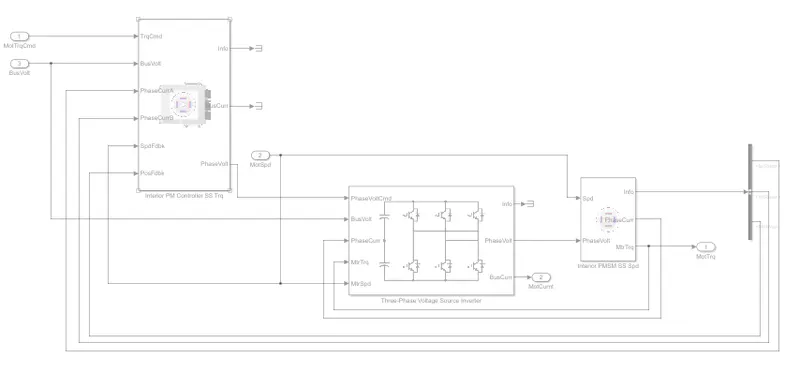
Motor Dynamic Block:- Here is input source required to perform to this block set. no lookup table implemented here.
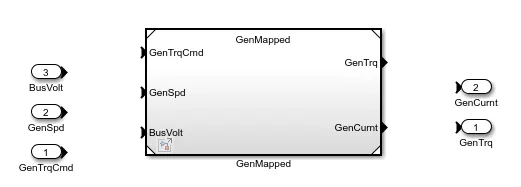
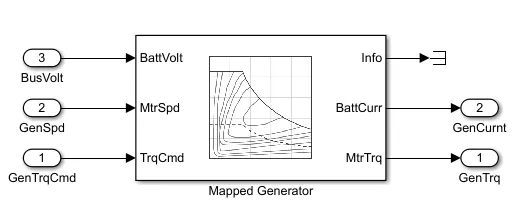
Generator Mapped block:- Here is lookup table mapped with block generator mapped model.
Generator Dynamic block:- Here is input source required to perform to this block set. no lookup table implemented here.
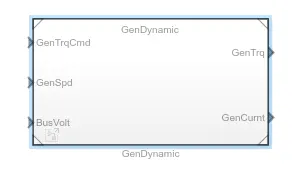
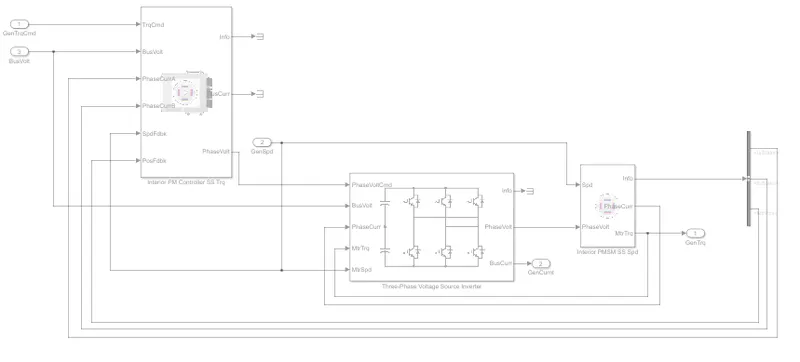
We can change the both motor and generator model by mapped or Dynamic by selecting inside the sub system and selecting the block set mapped and dynamic available in the block set.
2. How does the model calculate miles per gallon? Which factors are considered to model fuel flow?
Answer:- The model calculate the miles per gallon according to the distance travelled by the vehicle and how much fuel has consumed to travel particular distance, dividing the value of total distance travelled by total consumed fuel in litre and convert it unit in gallon.
3. Run the HEV ReferenceApplication with WOT drive cycle. Change the grade and wind velocity in the environment block. Comment on the results.
Solution:-
HEV Model:-
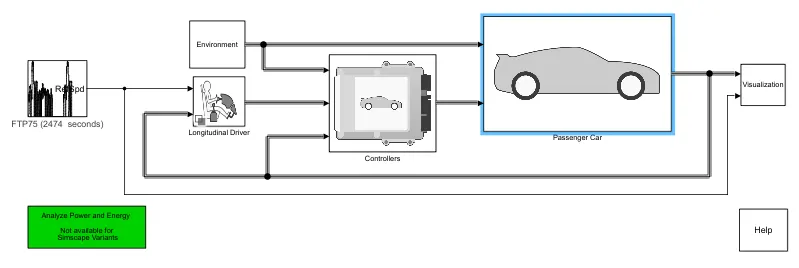
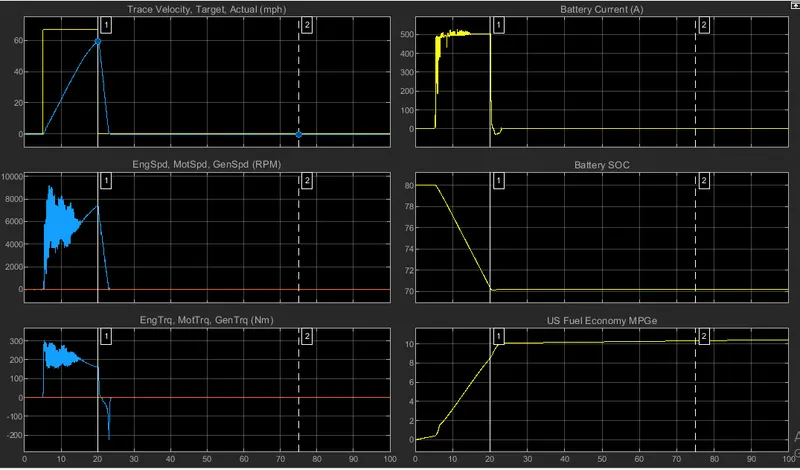
After open model we changed the drive cycle to WOT to run the model in WOT drive cycle.
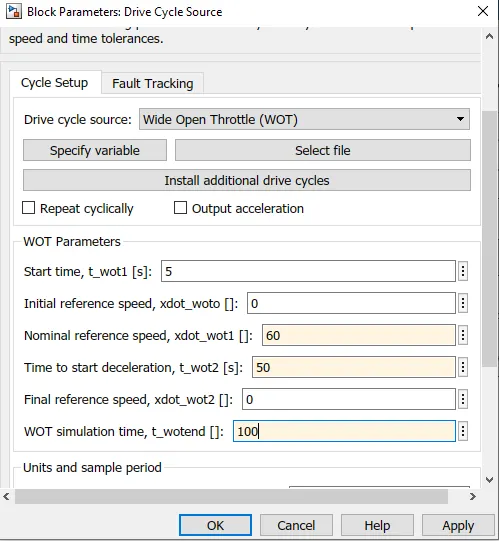
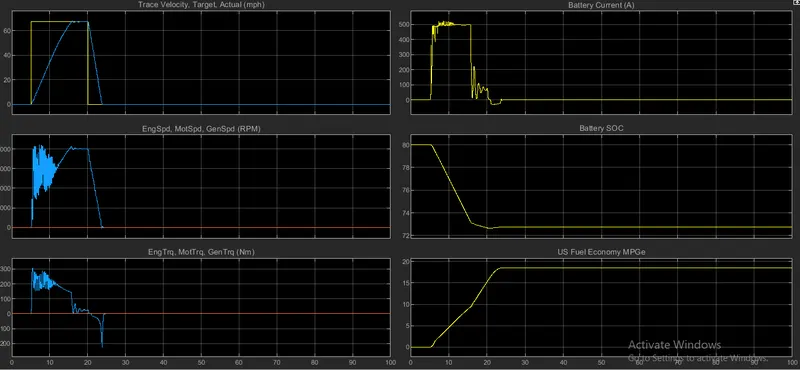
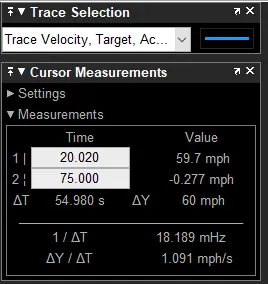
We run the simulation for 100 sec with select speed and deceleration time without adding Grade.
Results:-
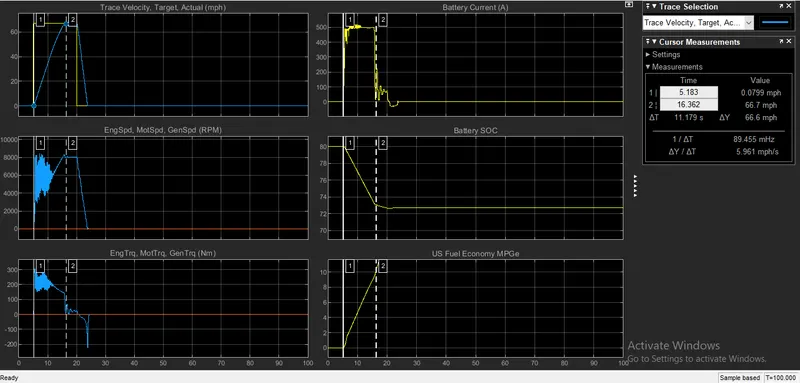
We add the grade as 7 and check the results.
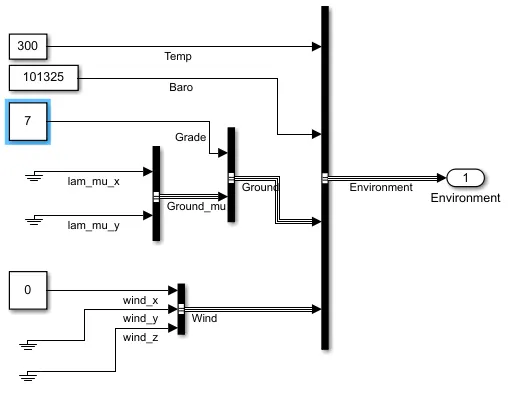
Results:-
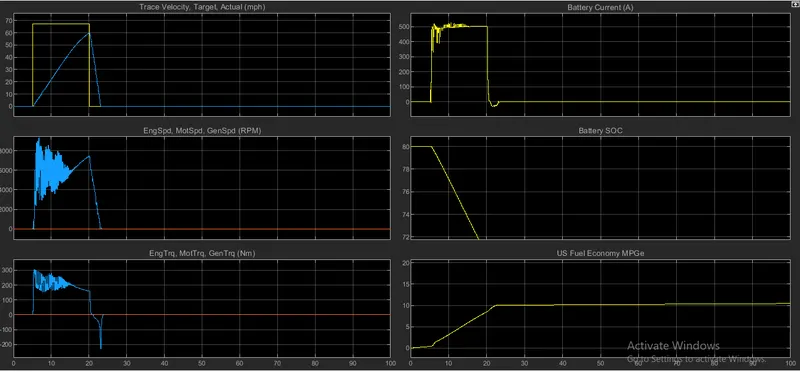
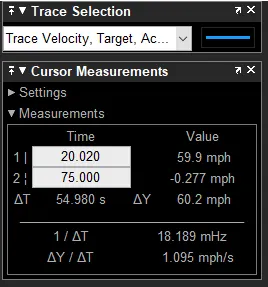
We add the wind velocity and check the results.
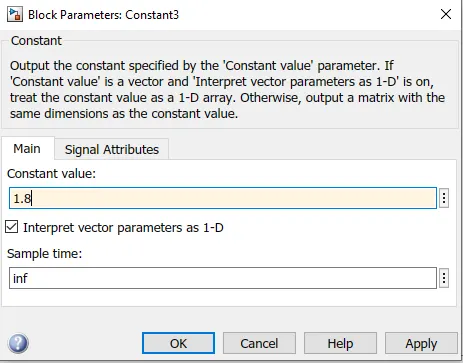
Results:-
Conclusion:-
- Without adding grade and wind velocity vehicle achived full velocity.
- After adding only grade vehicle unable to achive top speed and time also increased.
- After adding wind velocity with grade very small effect seems on speed and time.
- Fuel effiency also reduced.
4. Keeping all other parameters same, compare the simulated results of hybrid and pure electric powertrains.
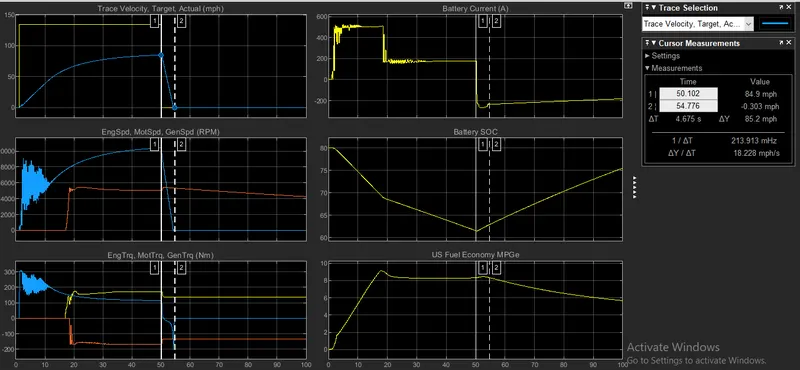
Answer:- Simulation Results of HEV
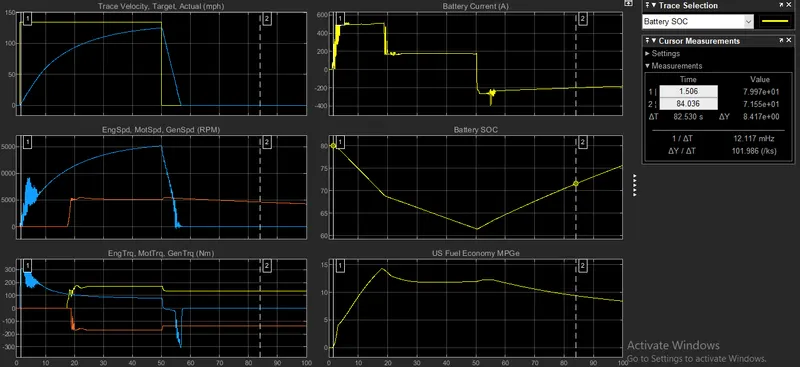
With grade 7 value
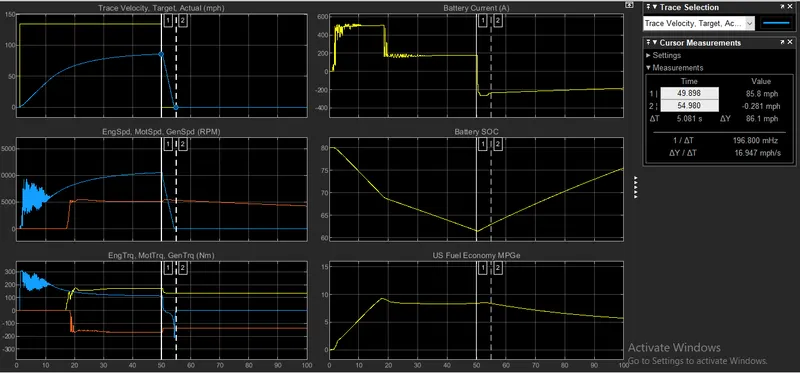
With grade 7 and wind velocity 1.8
Simulation Results of pure EV
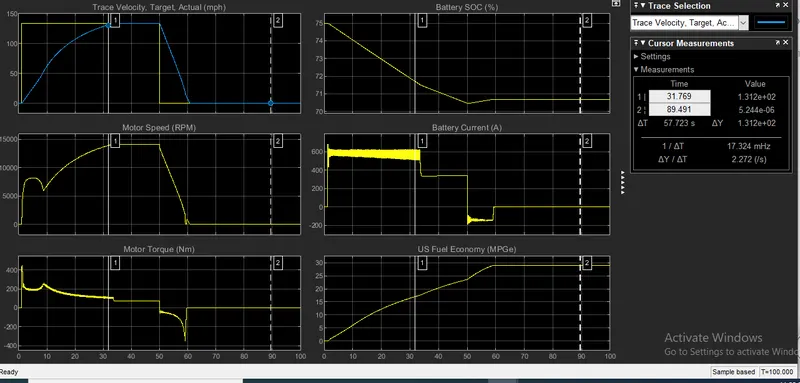
With Grade of 7 value
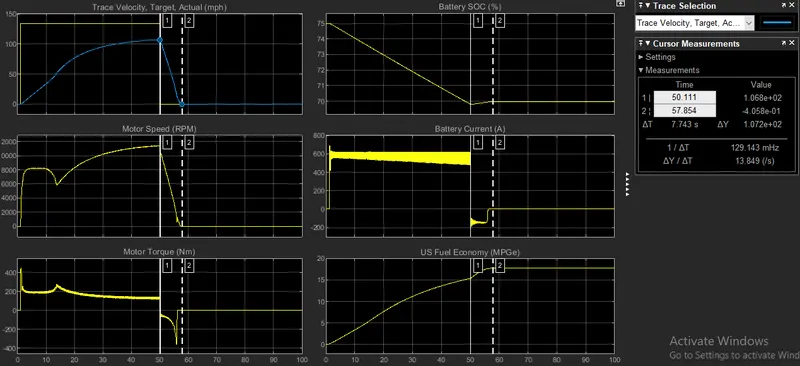
With Grade 7 and wind velocity 1.8
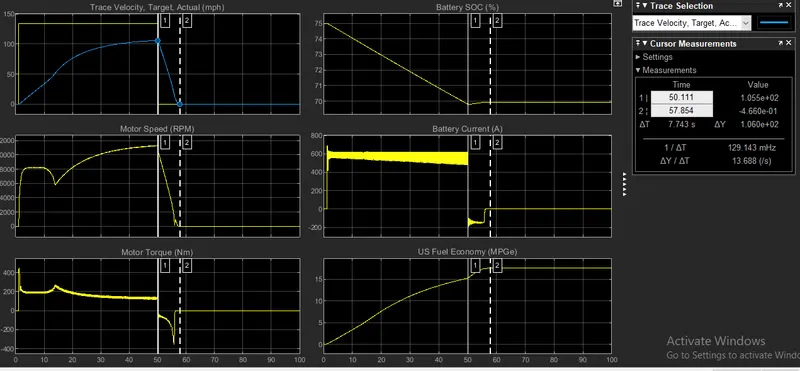
After comparison of both HEV and EV results and conclusion are:-
- EV have fast acceleration compared to HEV due to less moving parts.
- EV achieved high speed compared to HEV.
- HEV have less deceleration time respect to EV.
- EV performance has good on grade with high wind velocity.