Week-4 Challenge WOT Condition Part-2
difference between the mapped and dynamic types of motor, engine or generator-
mapped dynamic
1 It uses a lookup table to relate output Its uses all components in place of a lookup table
and input
2 Its being used when we are having data It will give all components dynamic behaviour so we will use
relating to the actual system and maximum it studies engine, motor or generator individual performance
we will use it when we need a bigger system so that it will show the effect of each component in the
analysis where don't need a component-level system
performance
3 It will give this machine effect on overall It will give components effect on the performance of this system individual machine
4 We need a different lookup table for different- We don't need any data all components only utilize in this
different machine system
5) It increases the speed of the simulation It is rarely used on bigger systems and where we need actual
and also makes it easy to understand the performance of the system we will not use a dynamic type of
a total system so maximum we will use this machine
for bigger system
Procedure to change model type-
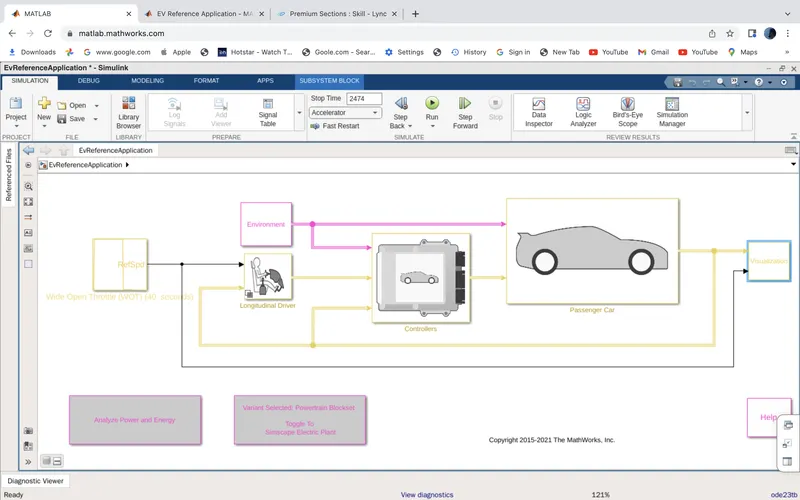
1 open EV reference application Simulink model from the help section
2 double click on passenger car
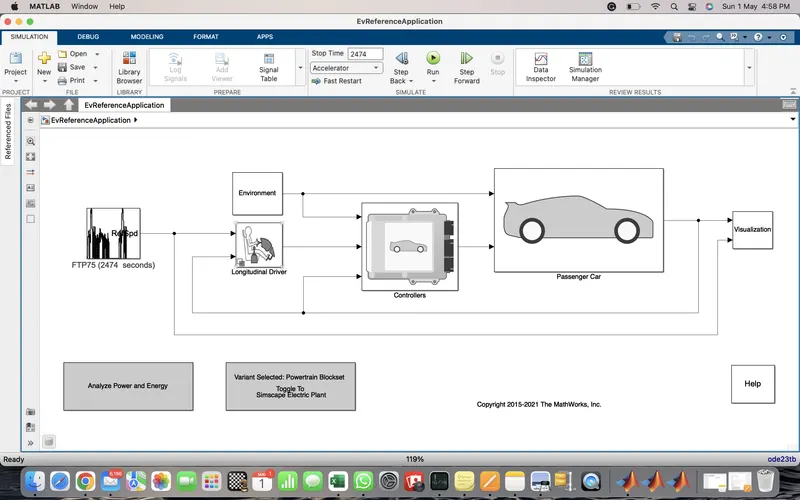
4 double click and open the electric plant block
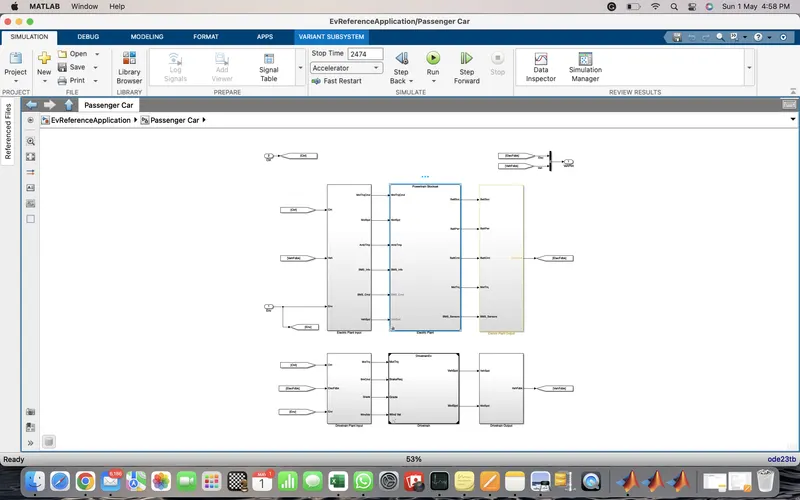
5 double click on power train block set
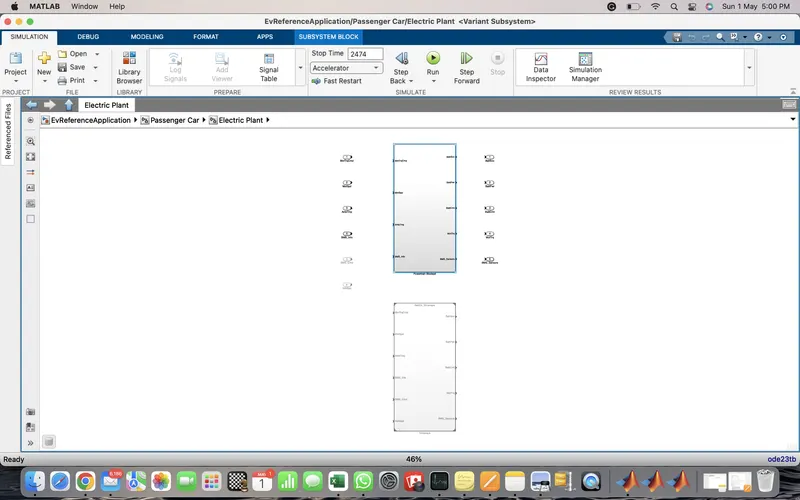
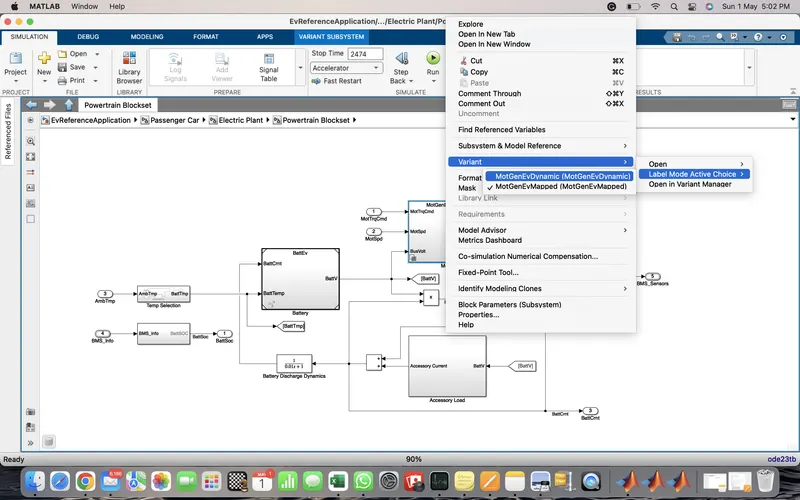
6 Right-click on motor and from here I can see variant from variant we can change the type of the system
from dynamic to mapped from mapped to dynamic as shown below
Ans-
How does the model calculate miles per gallon? Which factors are considered to model fuel flow?
The way model calculates miles per gallon-
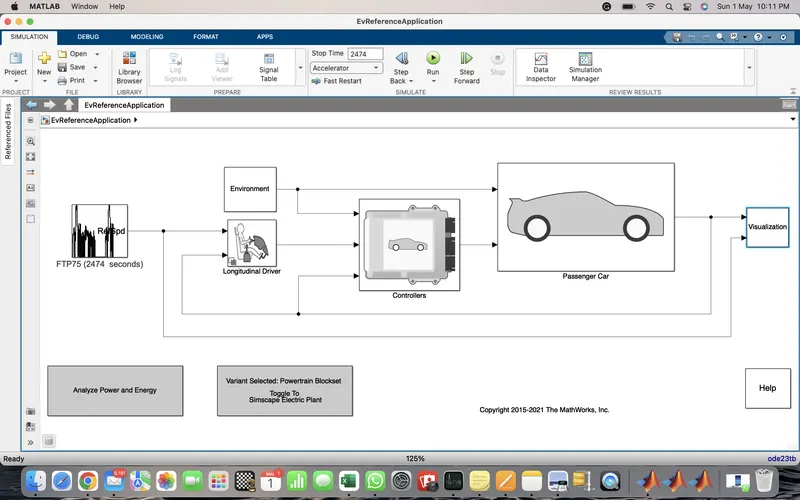
1 double click on the visualization block
mpg means the number of miles it will go in one gallon of gas
2 double click on the performance calculator
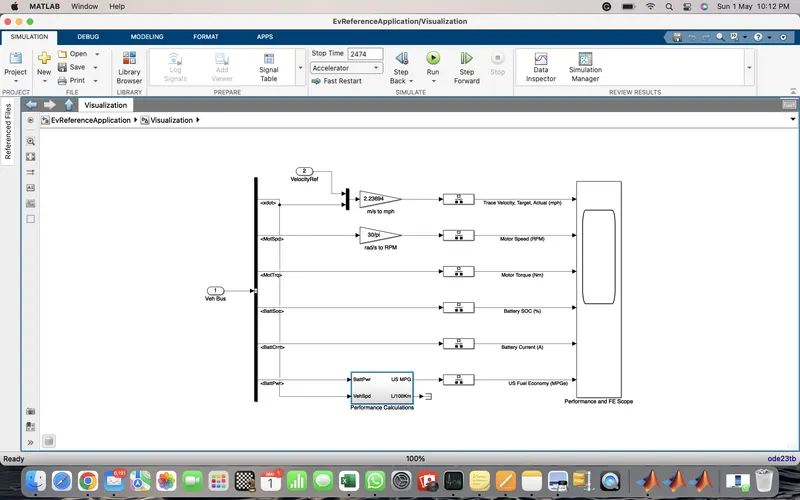
Below are the logic blocks by which we can calculate mpg and litre/100km
we are taking velocity as an input that has been squared and after that, we are taking the root of that,
after that we are integrating that signal after integration we are getting the travel distance because this is in m
then we have divided it by 100000 so that it should be in miles
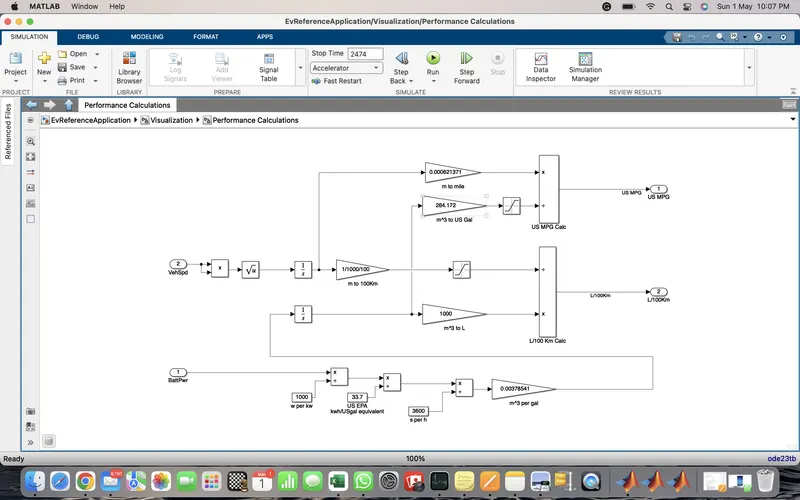 here power is there in watts per hour because it is a hybrid electric vehicle so if we need it in a gallon so first, we need to convert it
1 convert watt/hour to kilowatt/hour by dividing 1000
2 now we are dividing it by 33.7 to convert it battery equivalent fuel consumption
3 by multiplying the gain block of 0.00378641 we converted it into a meter cube per gallon
4 now we have used integrator block which will integrate and we will use one gain block to convert it into us gallon
after that, we divide it by the distance (miles) so that we should get output in the form of miles per gallon which means the number of gallons used by the vehicle to cover one mile
Ans3
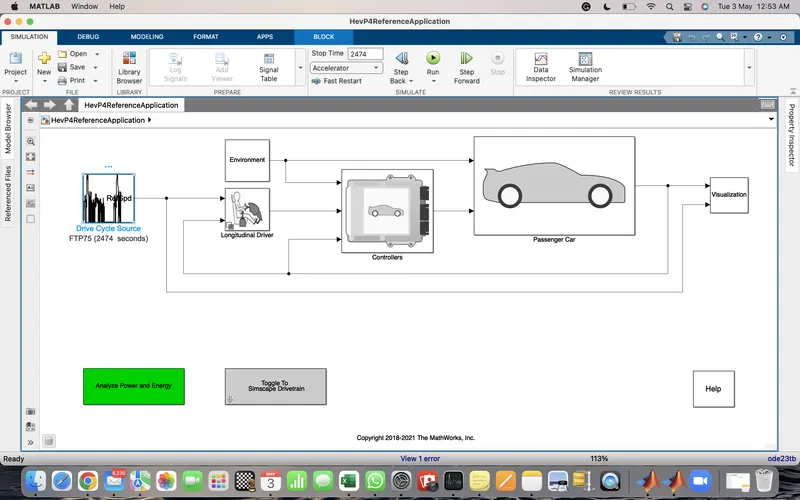
HEV ReferenceApplication with WOT drive cycle-
1 We have to open it from the help section by searching HEV reference otherwise paste this command and enter
cd(setupExample('autoblks/HEVMultimodeReferenceApplicationExample'));helpersetuphevmm
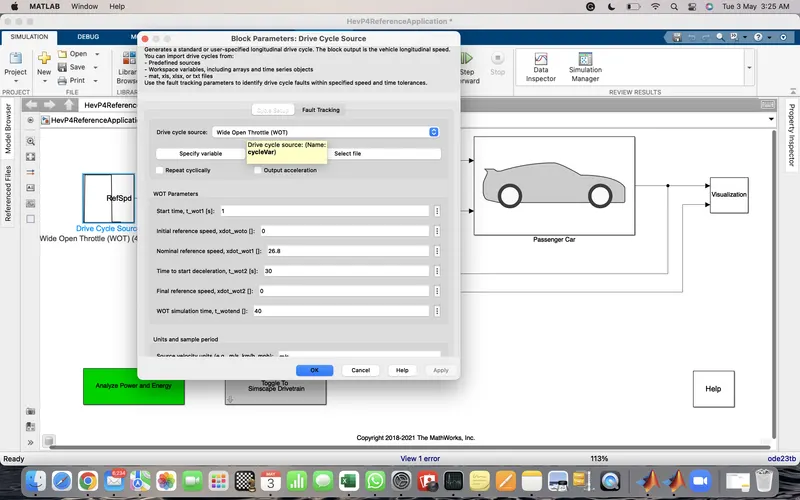
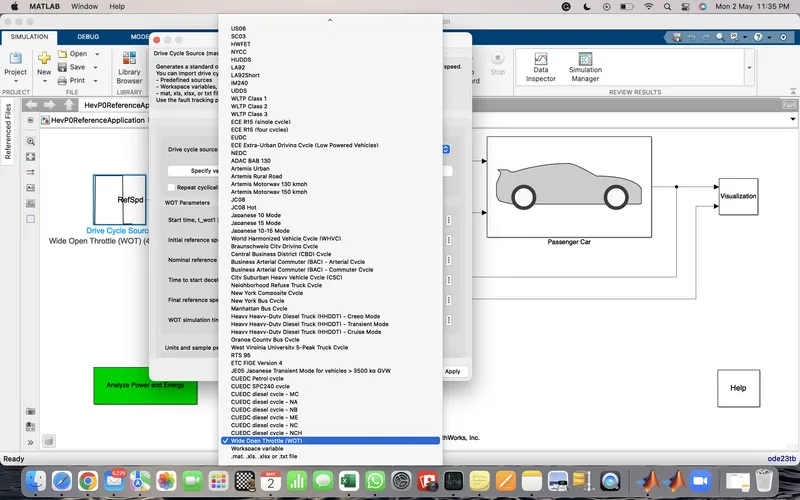
2 Now double click on drive cycle and change it to WOT drive cycle(wide open throttle)
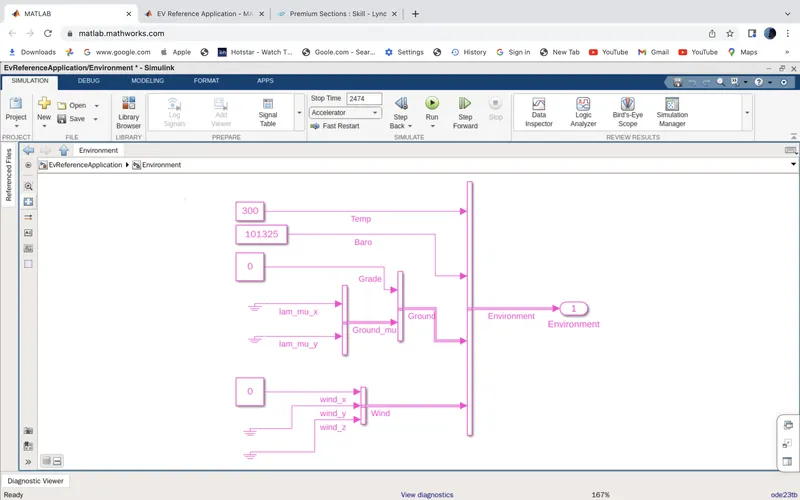
4 Keep all the environment condition unchanged
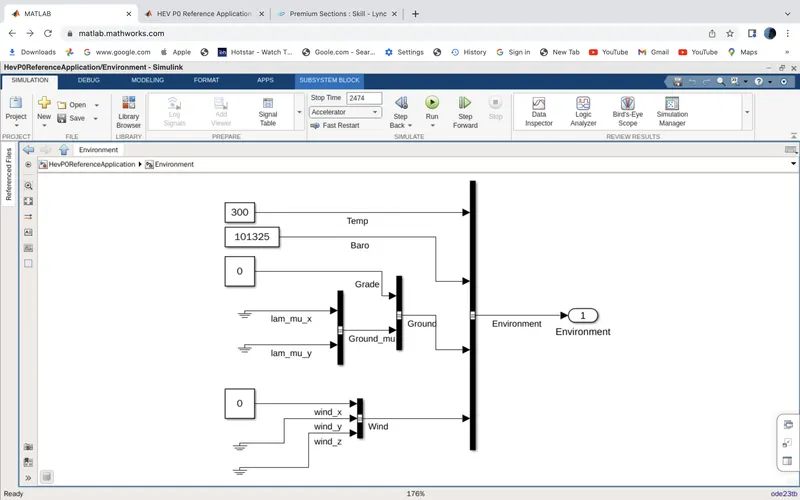
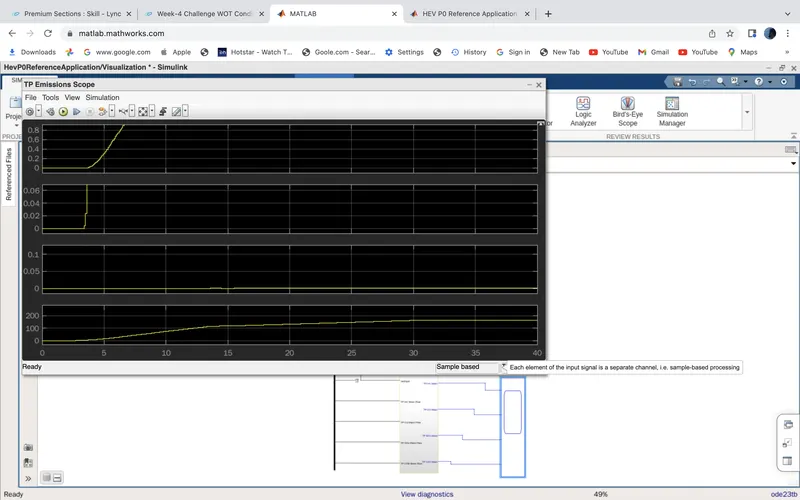
5 Now start the simulation and we have got the output as shown below
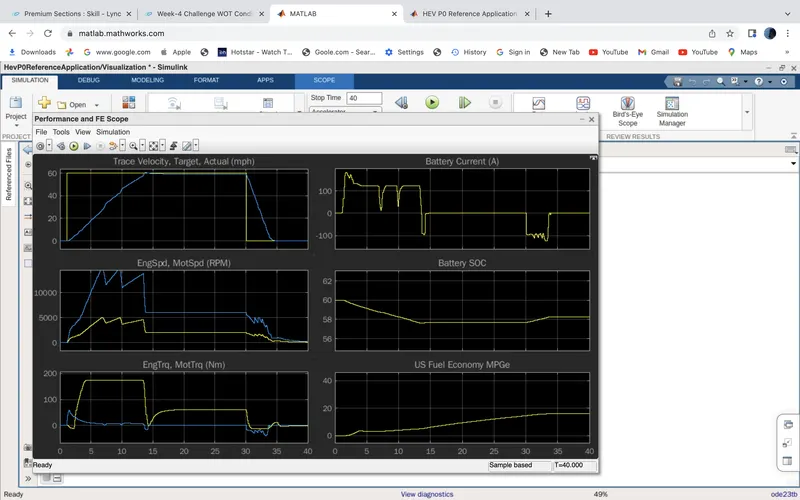
In the above waveform as we can see at the starting battery was charged (state of charge=60) so here motor is taking
power from the battery and its start providing torque to the vehicle but so here current is positive but after some time
when the engine starts supplying the torque then the current became negative which means here the battery starts getting charged we can observe from the graph that the battery state of charge starts gaining. but here torque is positive as shown velocity is also positive when the motor is getting less current then the speed also is getting affected in the same manner as we can see
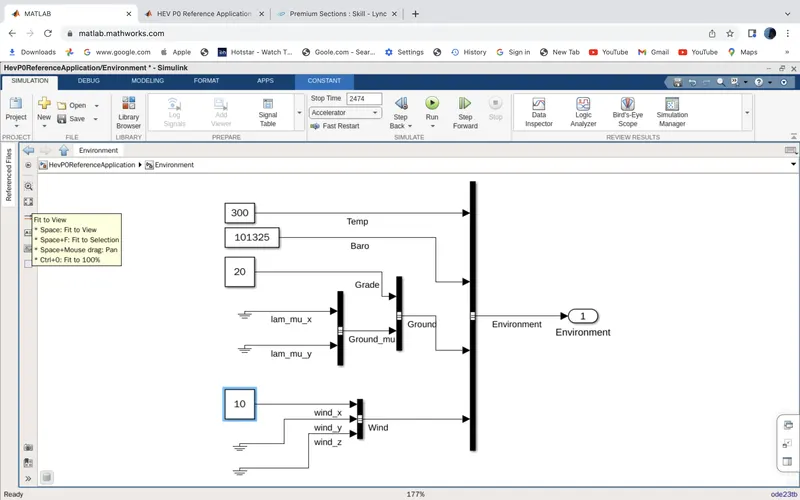
6 now change the the wind speed as 10 and grade value as 20 and start the simulation
7 We have got the output as shown below
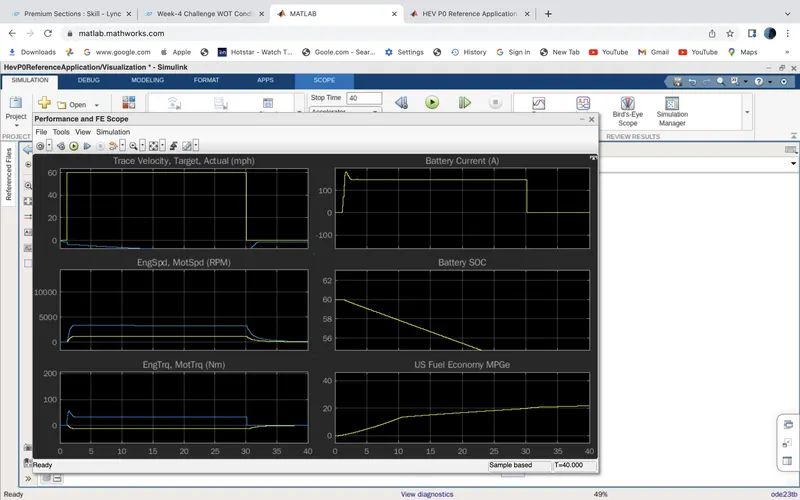
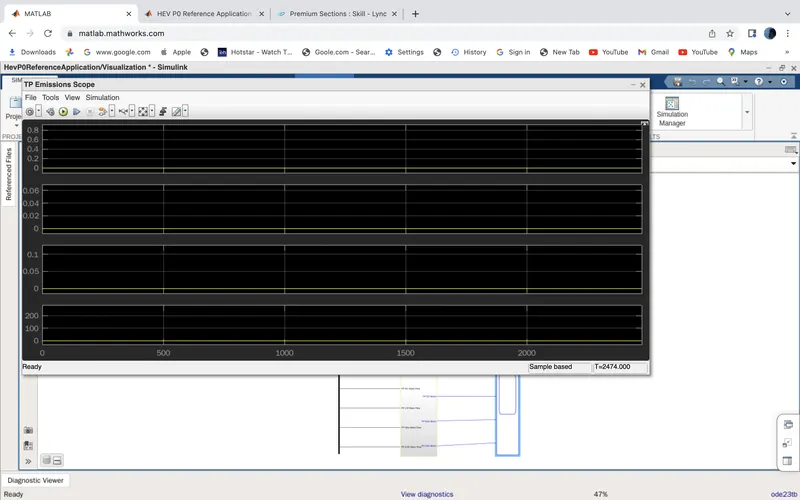
In the above figure, we can observe that at the start when the battery was charged then it starts providing to power to the motor but due to air dragging force and slop vehicle is utilizing a high amount of power so the battery is discharging very fast and engine also start supplying the power with the motor but after some time when the battery is discharged then engine only provides torque but it does not provide any power to the generator to charge the battery due to heavy load at the starting speed increases slowly but after some time it became constant as shown and torque also became constant
Ans3-
comparison of the result of hybrid electric vehicle to the electrical vehicle keeping all the parameters constant
electrical vehicle
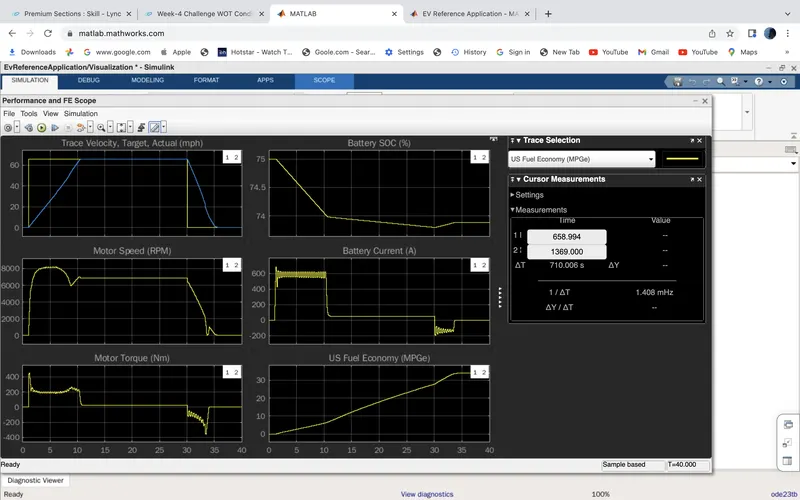
hybrid electrical vehicle
hybrid electrical vehicle electrical vehicle
1 It can run with a motor or engine It can run only with motor
and also with motor and engine
2 It can charge the battery while running It can not chargeable while running we can see
and also utilize that power in the graph
3 Torque experienced by the vehicle is more than This vehicle is not so good for the heavy load which
the electrical vehicle can observe in the graph
4 We can use an electrical braking mechanism here also we can use electrical braking
5 It is costly than hev. Its running cost is less than hev