Week-4 Challenge WOT Condition Part-2
INTRODUCTION ABOUT POWERTRAIN BLOCKSET:
Powertrain Blockset provides fully assembled reference application models of automotive powertrains, including gasoline, diesel, hybrid, and electric systems.
It includes a component library for simulating engine subsystems, transmission assemblies, traction motors, battery packs, and controller models.
Powertrain Blockset also includes a dynamometer model for virtual testing.
MDF file support provides a standards-based interface to calibration tools for data import.
Powertrain Blockset provides a standard model architecture that can be reused throughout the development process.
You can use it for design tradeoff analysis and component sizing, control parameter optimization, and hardware-in-the-loop testing.
You can customize models by parameterizing components in a reference application with your own data or by replacing a subsystem with your own model.
AIM: What is the difference between mapped and dynamic model of engine, motor and generator? How can you change model type?
MAPPED:
- Model uses a set of steady-state lookup tables to characterize engine perfomance.
- The tables provide overall engine characteristics, including actual torque, fuel flow rate,BSFC, and engine-out exhaust emissions.
- If you have engine data from a dynamometer or a design tool like GT-power.
- For quasi steady-state engine simulations.
DYNAMIC:
- Model decomposes the engine behavior into engine characteristies that are separated into lower-level components.
- By combining components in this way the models capture the dynamic effects.
- If you need a more detailed dynamic model and have component level data.
- To analyze the impact of individual engine componets on the overall performance.
How can you change model type:
- The type of powertrain blockset is selected (ie.pure EV,hybrid vehicle etc)
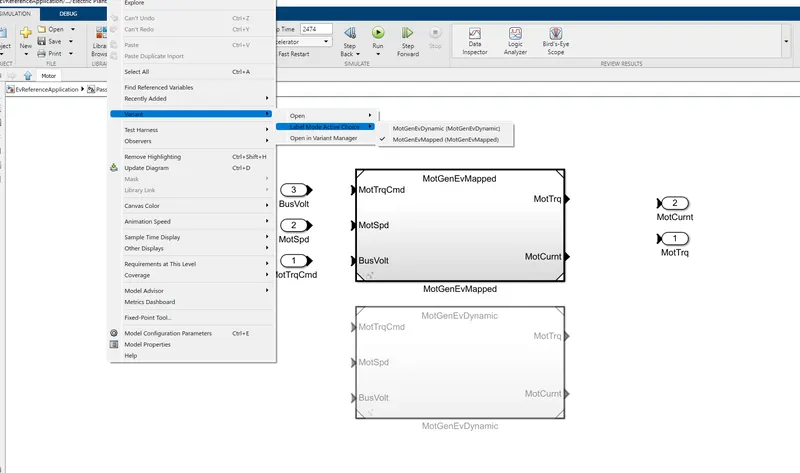
- Here i have selected the pure EV type. The passenger block is selected.Followed by electri plant,then the EV plant /generator block is selected.
- Right click on the white space of the
simulink platform
Variant
label mode active choice
Motorgen EV mapped or dynamic.
The Change model steps:
step1:
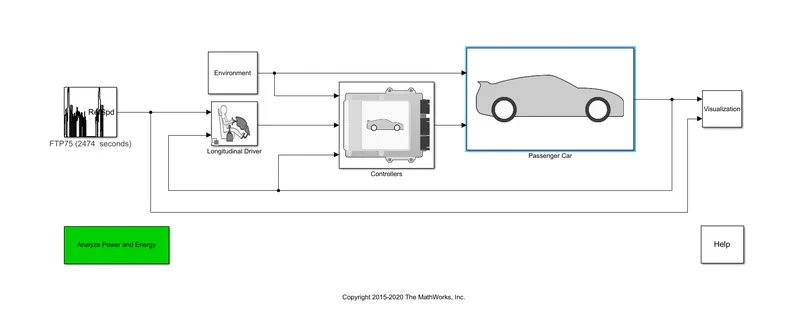
step2:
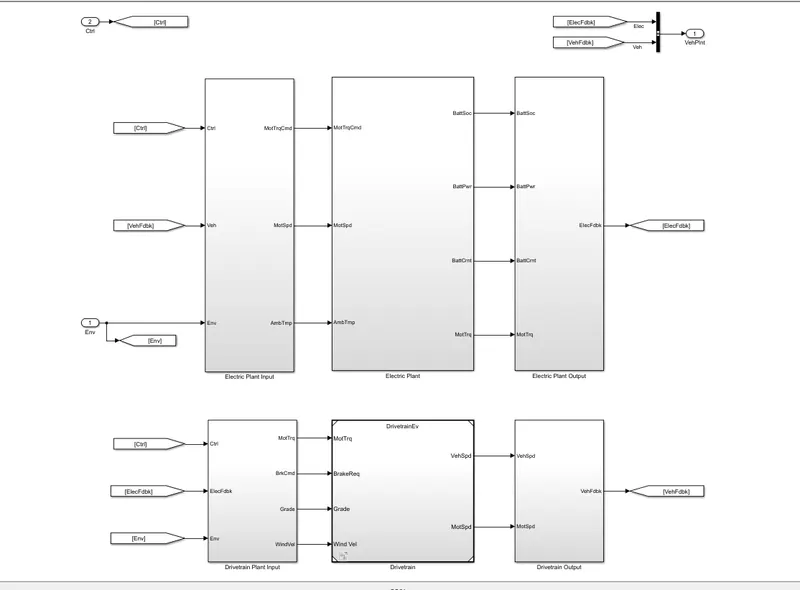
step3:
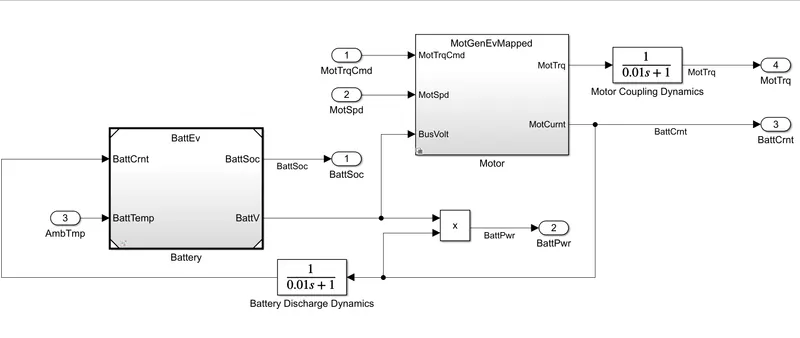
step4:
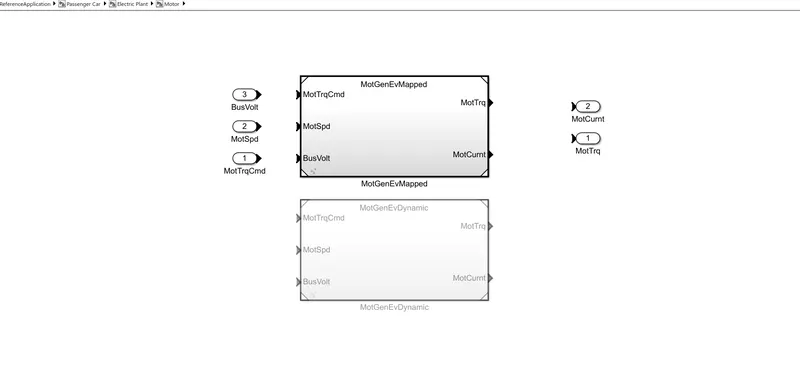
step5:
AIM: How does the model calculate miles per gallon? Which factors are considered to model fuel flow
calculation:
Take the number of miles that elapsed b/w tank fills,and divide that by the number of gallons it took to refill your tank.
The nimber you get is how many miles per gallon you are yielding to simplify the formula is
miles driven/gallons used=mpg.
For example: if you drive 200 miles and needed 10 gallons of gas to refule, you would be averaging 20 miles per gollon
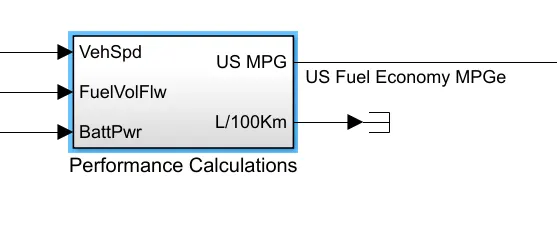
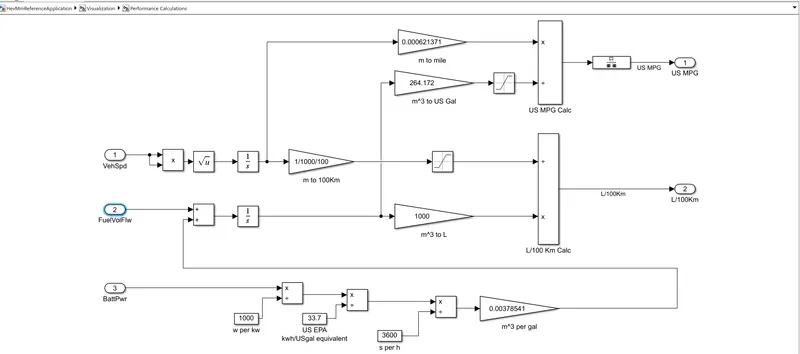
The in side of the performance calculation is
three main inputs
- Vehicle speed
- Fuel flow
- Battery Power
3AIM: Run the HEV ReferenceApplication with WOT drive cycle. Change the grade and wind velocity in the environment block. Comment on the results.
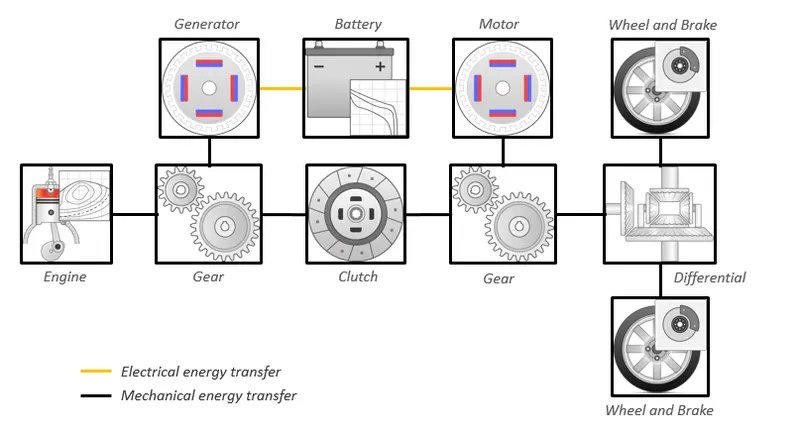
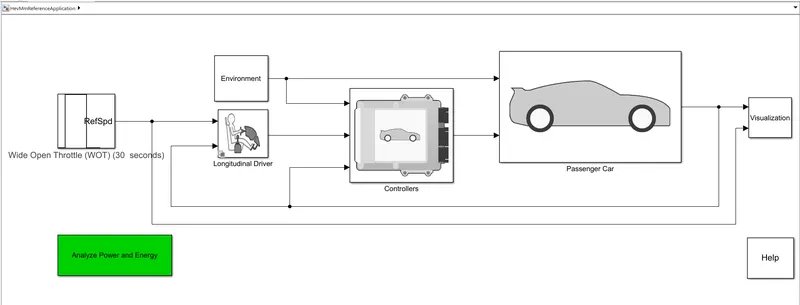
This diagram shows the powertrain configuration:
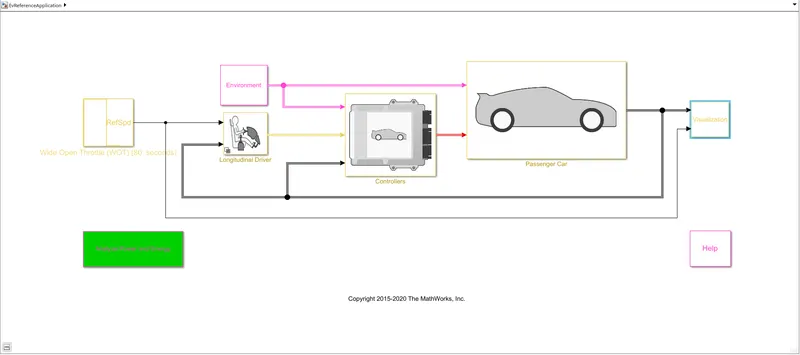
This is the HVE referenceApplication with WOT drive cycle.
The input drive cycle is select the WOT drive cycle.
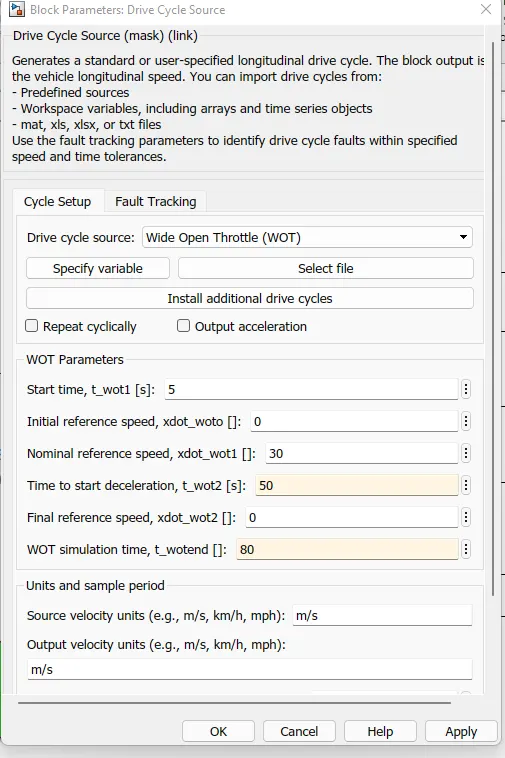
The WOT drive cycle source are change can be
nominal reference speed is=30
Time to startdeceleration is=50
WOT simulation time is =80
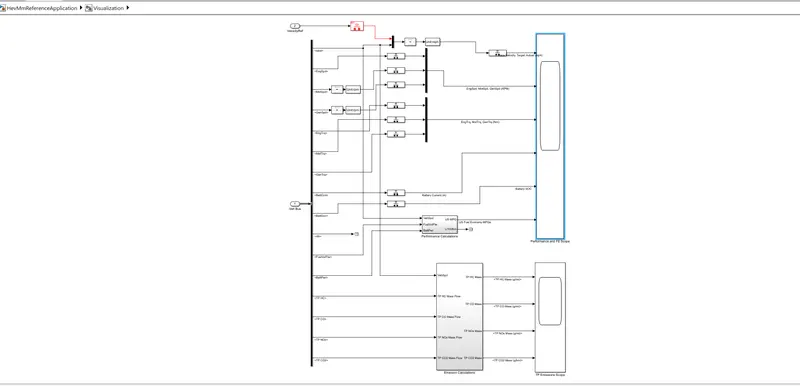
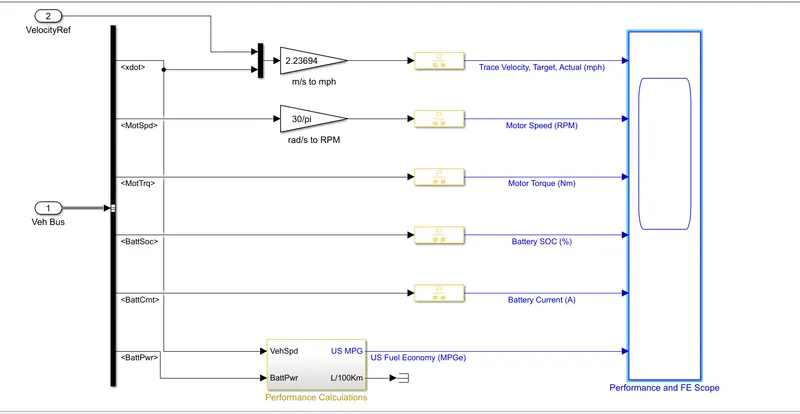
The open visualization block and see the results in Trace velocity Target Actual (mph),
Motor speed(RPM),Motor Torque(Nm),Battery SOC(%)
Battery current(A) and us fuel Economy visualization the scope.
OUTPUT RESULT:
AIM: Keeping all other parameters same, compare the simulated results of hybrid and pure electric powertrains
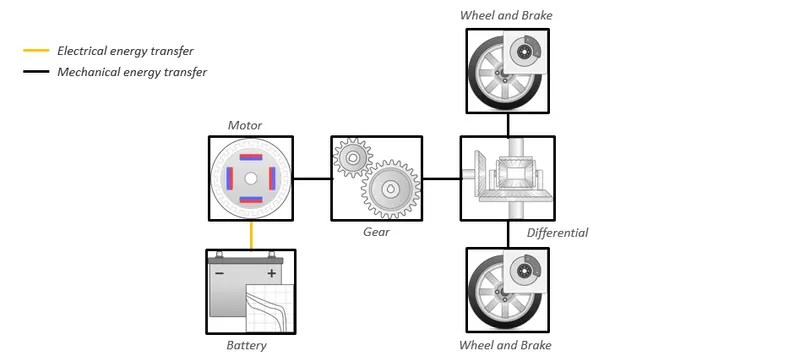
This diagram shows the powertrain configuration:
The open visualization block and see the results in Trace velocity Target Actual (mph),
Motor speed(RPM),Motor Torque(Nm),Battery SOC(%)
Battery current(A) and us fuel Economy visualization the scope.
OUTPUT RESULT:
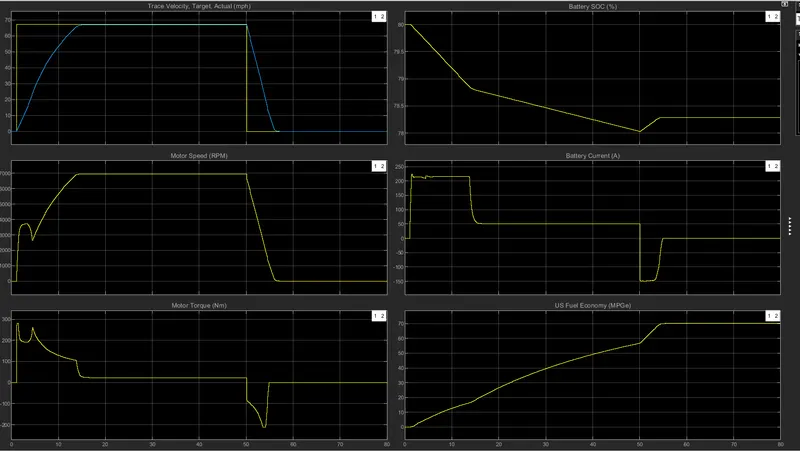
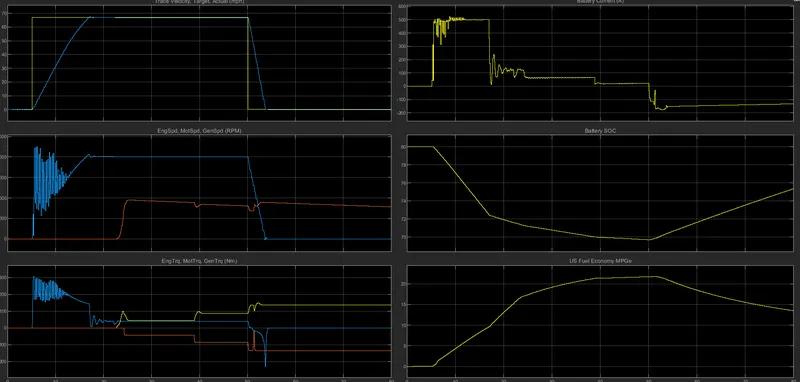
The Trace velocity is 68 mph after that braks are applied it will be decreasing the trace velocity.
Motor speed is 7000(RPM) the motor speed will be increase the motor Torque is decreasing after that the motor speed is decreasing the torque will be increase.
Battery current (A) the trace velocity is 68 mph the battery current 220A the braks are applied battery current will be decreasing the battery will be charging condition will be -150A
compare the simulated results of hybrid and pure electric powertrains