Week-4 Challenge WOT Condition Part-2
Probelm Statement 1: What is the difference between mapped and dynamic model of engine, motor and generator? How can you change model type?
solution:
There are two typres of models available to simulate hybrid electric vehicle in matlab. They are
- Mapped model
- Dynamic model
- Mapped model consist of lookup table in which the input and output values of Model are predefined and stored.
- The model may be a motor , engine or a generator.
- In Dynamic model the engine, motor or generator are directly connected in simulation block network.
- Mapped model simulation gives fast response or results compared to Dynamic model simulation.
- The below image shows the Dynamic model(left) and Mapped model(right).

To switch between Mapped model and Dynamic model follow the below steps:
- Right click on Mapped model Subsystem Block and select 'varient subsystem' as shown in below image.
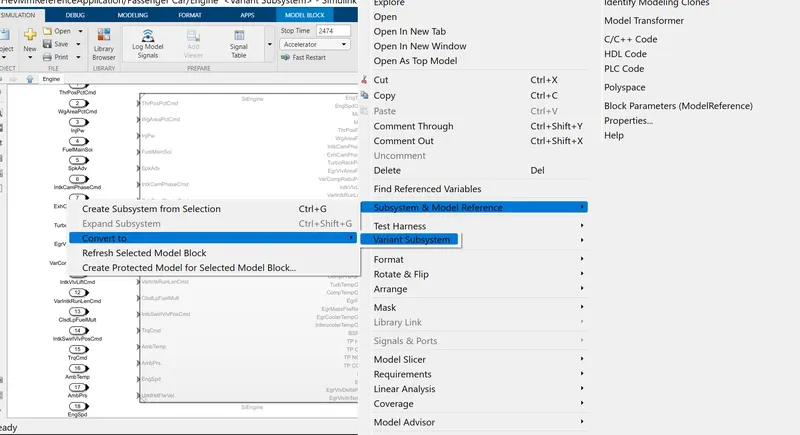
2 . After converting onto varient system.
3. Open varient manager as shown in below image.
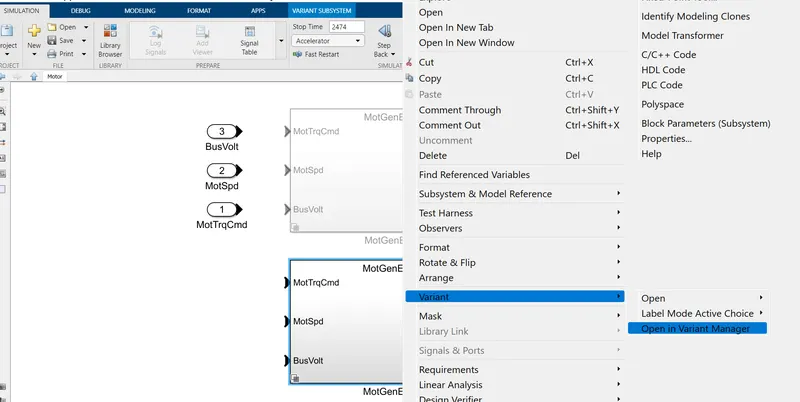
4. Varient manager window is shown below then select required model 'Mapped' or 'Dynamic' Model as shown below.
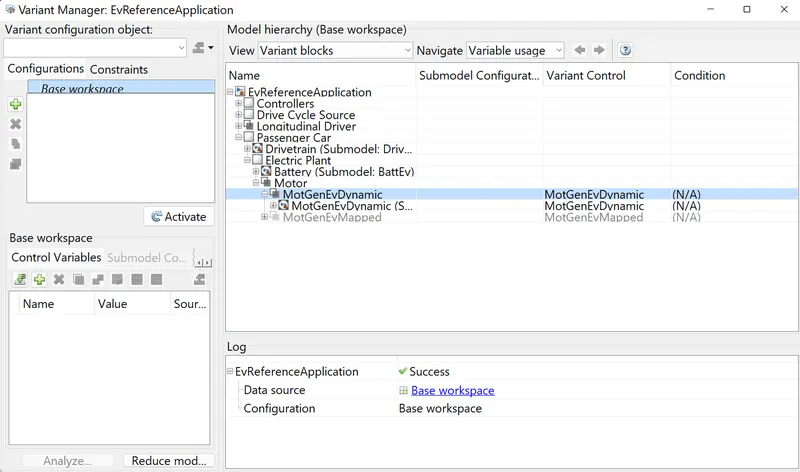
5. Now the system is converted to Dynamic model.
In this way we change the Model type.
2. How does the model calculate miles per gallon? Which factors are considered to model fuel flow?
A gallon is a unit of measurement for liquids that is equal to eight pints. In Britain, it is equal to about 4.546 litres. In America, it is equal to about 3.785 litres
MPG, or miles per gallon, is the distance, measured in miles, that a car can travel per gallon of fuel. MPG is also the primary measurement of a car's fuel efficiency: The higher a car's MPG, the more fuel efficient it is.
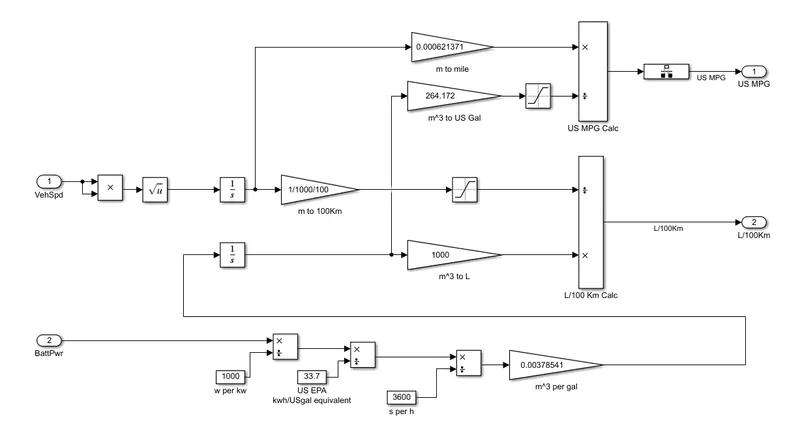
- The battery power is converted to Kg/sec of fuel flow using standard US gallon ratio. 1 Gallon = 3.7 lit
- The equivalent fuel flow from battery is added to the engine fuel flow and the sum is integrated to get equivalent fuel consumption.
- This is then converted to m^3/sec using gasoline density and then to gallons/s using m^3 to gallons conversion.
- The instantaneous velocity is integrated to get total diatance covered, which is then converted to miles.
- Thus by getting miles and gallons consumed, the MPG is calculated.
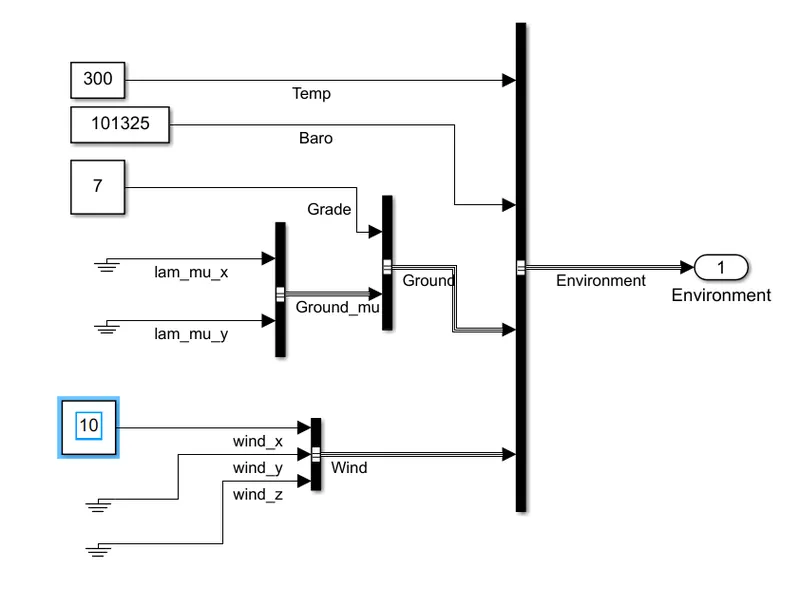
3. Run the HEV Reference Application with WOT drive cycle. Change the grade and wind velocity in the
environment block. Comment on the results.
Answer:
HEV Reference Application:
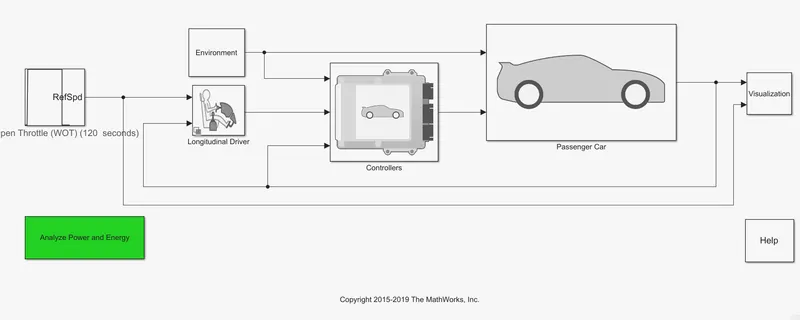
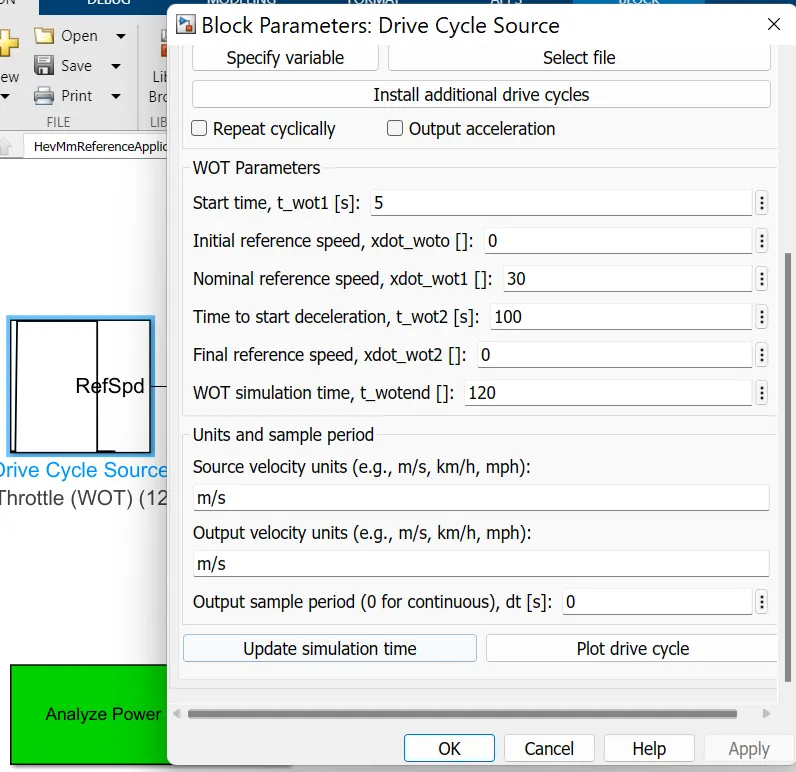
Drive cycle block:Drive cycle is changed from FTP75 to WOT wide Open Throttle.
WOT parameters are shown below:
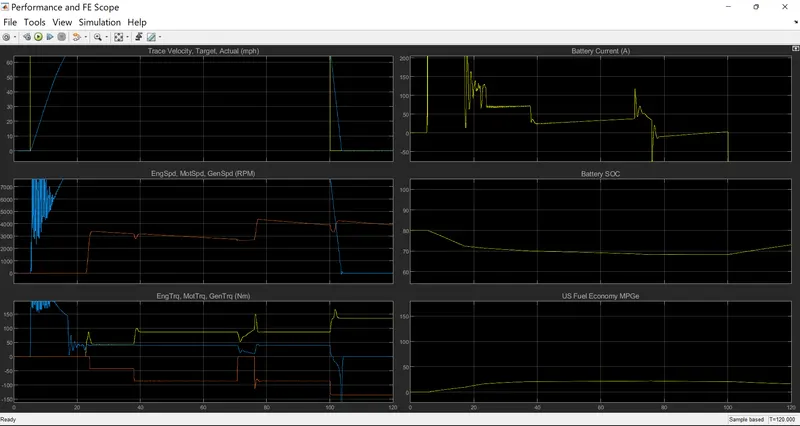
Step 2: Run the model with run time = 120sec
Result:
Step 3:
Run the model by changing the environment block parameters such as wind velocity and grade of the model as shown in the below image
Result:
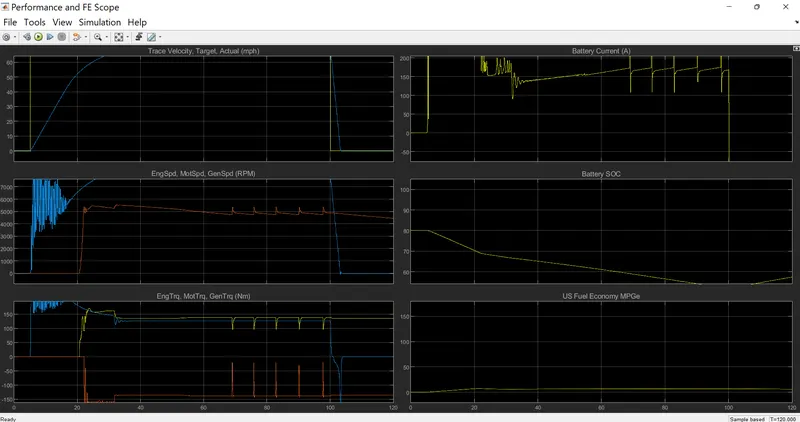
Observations:
- The peak velocity achieved in case1 is faster than case 2 this is because resistance offered by the grade and the wind velocity.
- The SOC of case 2 is steeper than case 1. It is observed from the graph.
- We can clearly see the difference in engine torque , motor torque and generator torque in the above graphs.
4. Keeping all other parameters same, compare the simulated results of hybrid and pure electric powertrains.
Comparison of Hybrid and pure electric power trains:
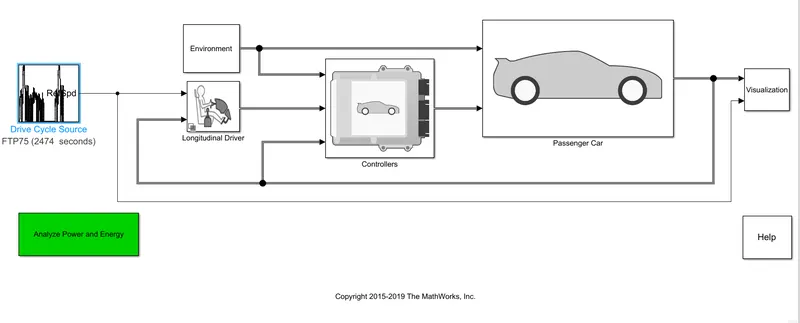
Hybrid power train block diagram:
HEV power train simulation result:
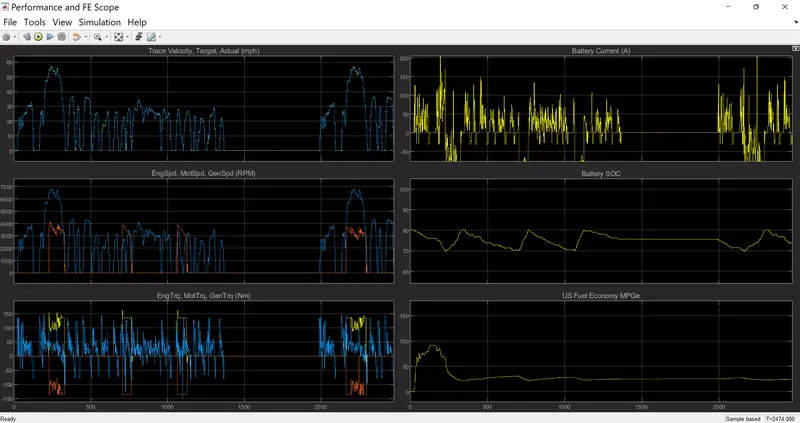
Observations:
- A hybrid Electric power train has engine, battery, power converter, generator trsnsmission, drive cycle and visualisation block .
- It runs in parallel, series or series - parallel configurations, depending on the architecture.
- There are two power sources in HEV power train so more energy can be generated and it is reliable compared to EV power train.
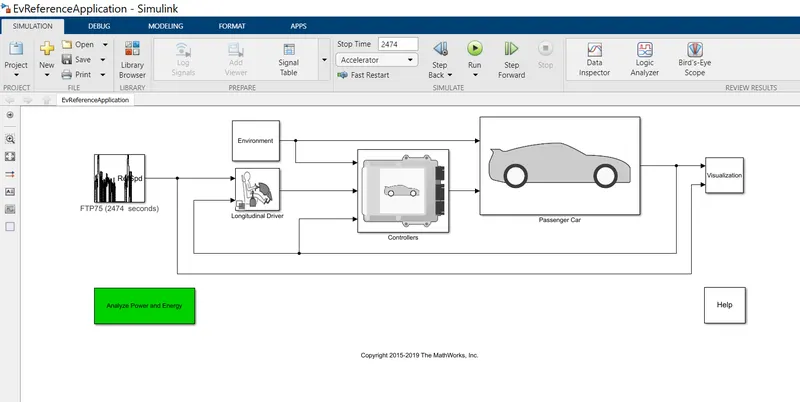
Pure Electric vehicle power train is shown below:
EV power train simulation Result:
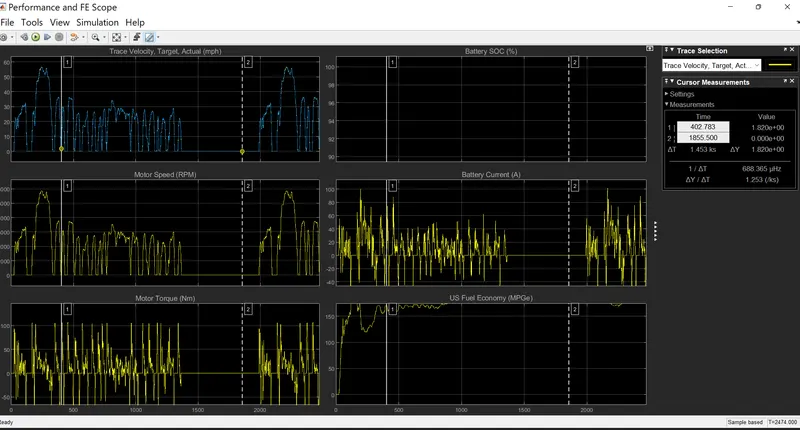
Observations :
- Here we have single source for generating energy.
Conclusions:
- HEV power train generates more power compared to the pure EV powertrain.
- This evident from the faster acceleration time, higher current and higher peak motor speeds for the HEV powertrain.
- The HEV consumes more energy.
- The economy of the pure EV is much better compared to HEV, as the economy drops as soon as the engine is turned on to take over the power generation and the battery .