Week-4 Challenge WOT Condition Part-2
Objective:
- What is the difference between the mapped and dynamic models of engine, motor, and generator? How can you change the model type?
- How does the model calculate miles per gallon? Which factors are considered to model fuel flow?
- Run the HEV ReferenceApplication with WOT drive cycle. Change the grade and wind velocity in the environment block. Comment on the results.
- Keeping all other parameters the same, compare the simulated results of hybrid and pure electric powertrains.
Theory:
Powertrain:
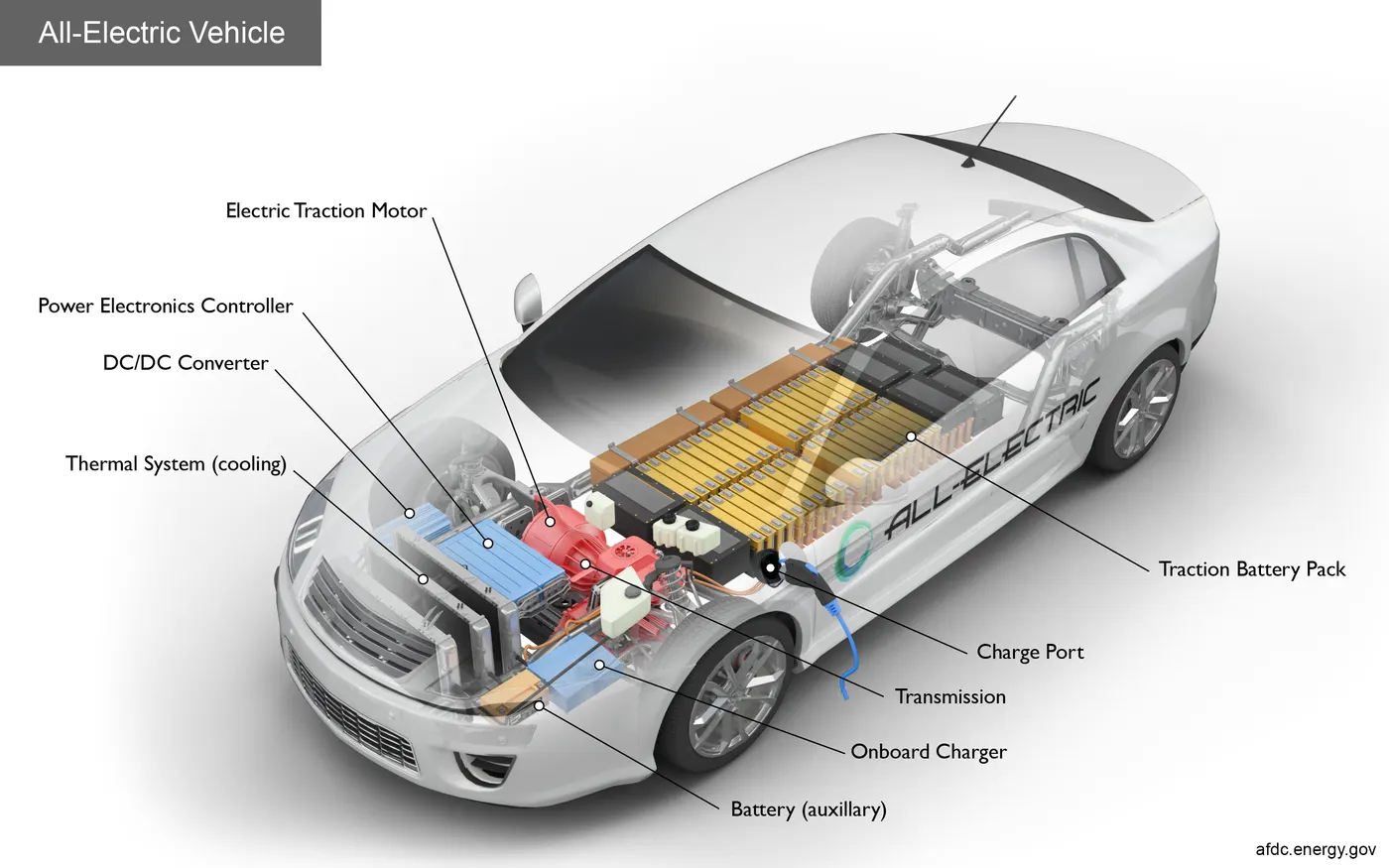
A powertrain is an assembly of every component that pushes your vehicle forward. Your car’s powertrain creates power from the engine and delivers it to the wheels on the ground. The key components of a powertrain include an engine, transmission, driveshaft, axles, and differential.
Wide Open Throttle (WOT):
Wide Open Throttle is the fully opened state of throttle on an engine. It is the maximum-speed state of running the engine. In the IC engine, This WOT condition opens the air intake valve of the Carburetor or Fuel Injector which allows the air-fuel mixture to enter the engine block.
Q.1. What is the difference between the mapped and dynamic models of engine, motor, and generator? How can you change the model type?
Ans.:
Mapped:
The model uses a set of steady-state lookup tables to characterize engine performance.
The tables provide overall engine characteristics, including actual torque, fuel flow rate, Brake specific fuel consumption, and engine-out exhaust emissions.
The Mapped model works faster than the Dynamic model.
Dynamic:
In the dynamic model, the model represents the actual characteristics of the components.
The model decomposes the engine behavior into engine characteristics that are separated into lower-level components.
By combining components in this way, the models capture the dynamic effects.
Steps to change the model between mapped and dynamic models:
- Open the powertrain block-set and open the EV reference application model.
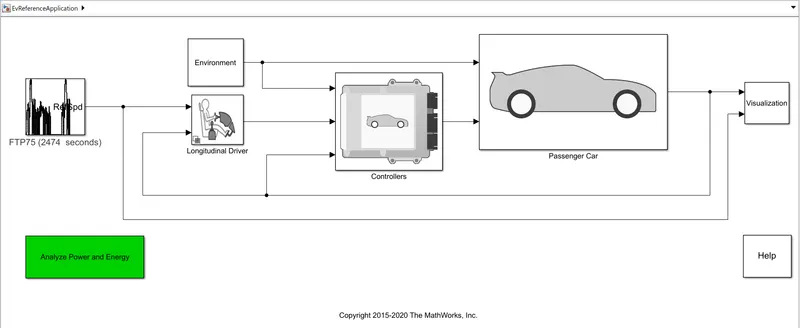
- After opening, double click on the passenger car block to open it.
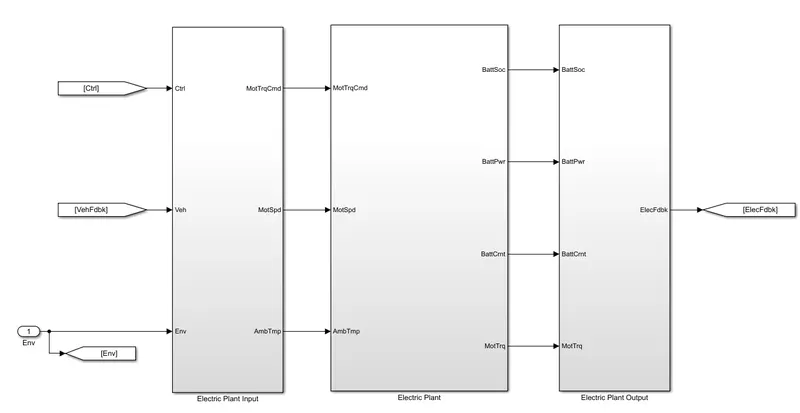
- In the passenger car block, open the electric plant displayed open this block.
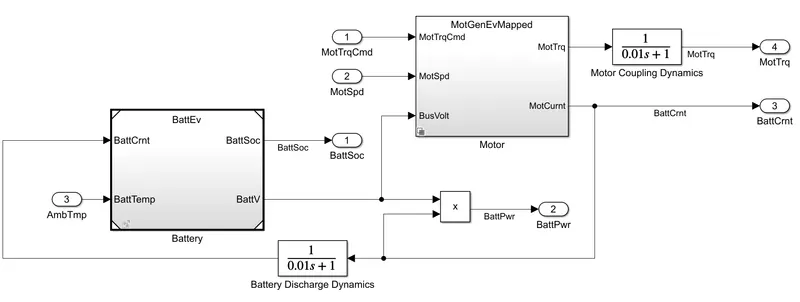
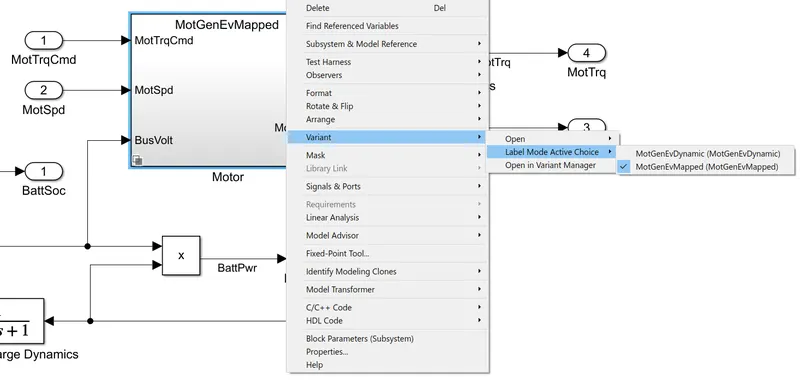
- Now, the motor block is shown right-click on it point the cursor on variant option and change the model type from Mapped to Dynamic model in Label mode active choice.
Q.2. How does the model calculate miles per gallon? Which factors are considered to model fuel flow?
Ans.:
- Miles per gallon (MPG) is a fuel economy rating determined by how far a car can travel using a gallon of fuel (i.e. gasoline or diesel for IC engines).
- In the case of an electric vehicle, the electrical energy is consumed by the battery pack to travel a fixed distance.
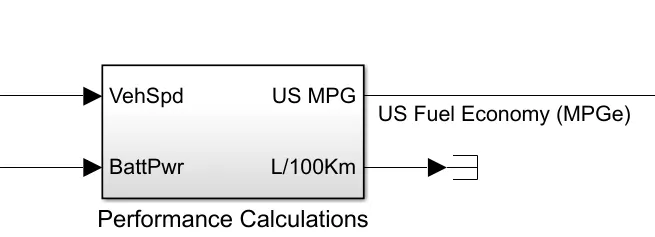
- The inputs which are taken into consideration are the vehicle speed, fuel flow, and battery power.
Q.3. Run the HEV ReferenceApplication with WOT drive cycle. Change the grade and wind velocity in the environment block. Comment on the results.
Ans.:
- Open the Powertrain blockset in the help section and open HEV Multibody Reference application model.
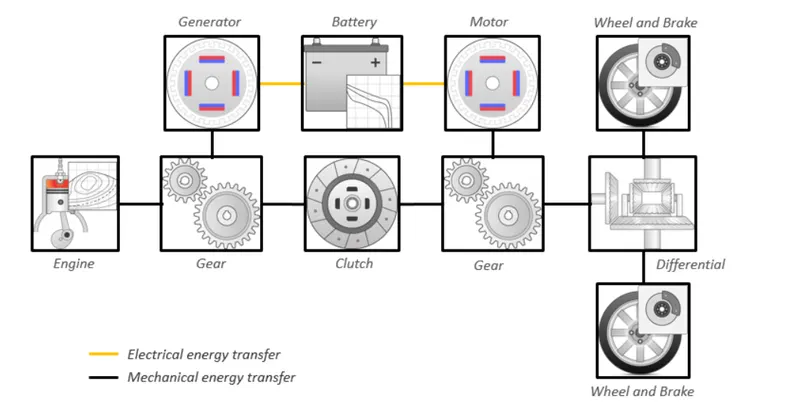
- This diagram shows the powertrain configuration.
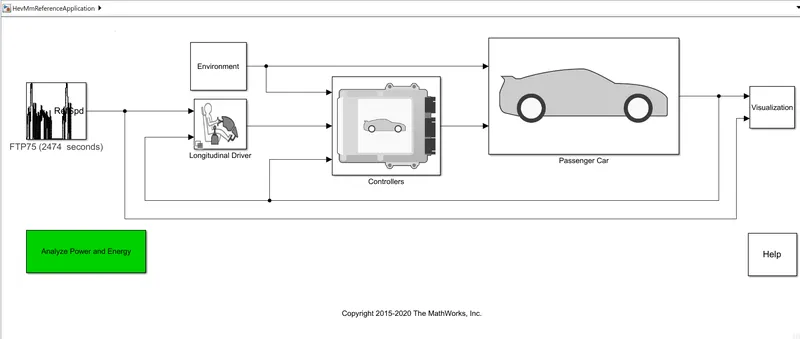
- Here is the simulink model is opened.
- Open the Drive cycle source block and the new dailog box will open.
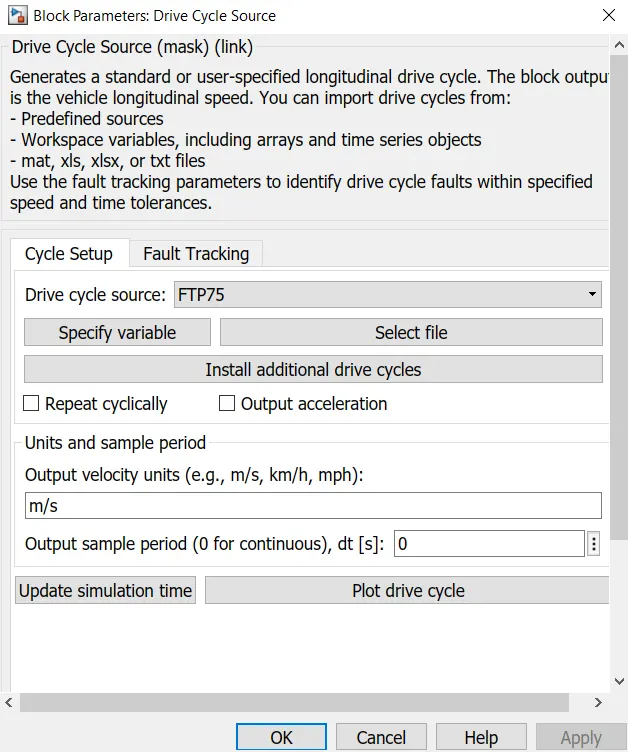
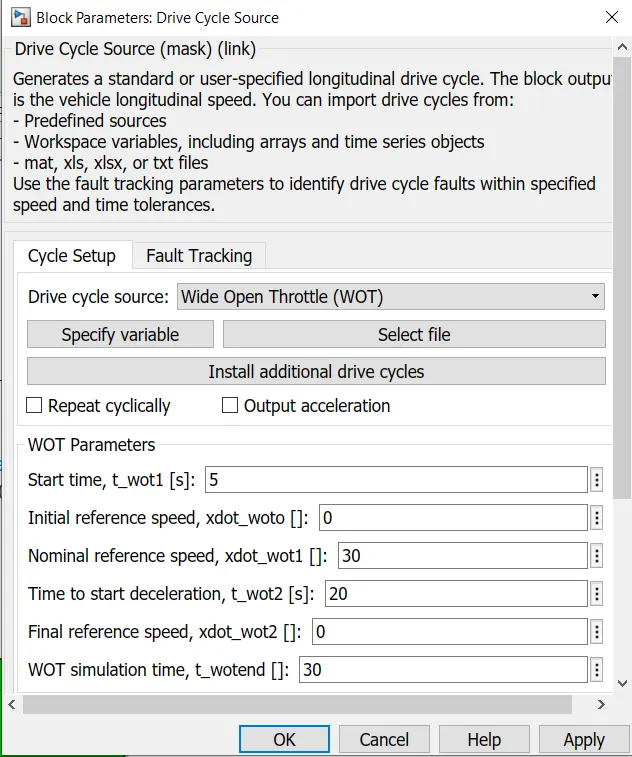
- In the drive cycle source, select the Wide Open Throttle (WOT) drive cycle and click apply.
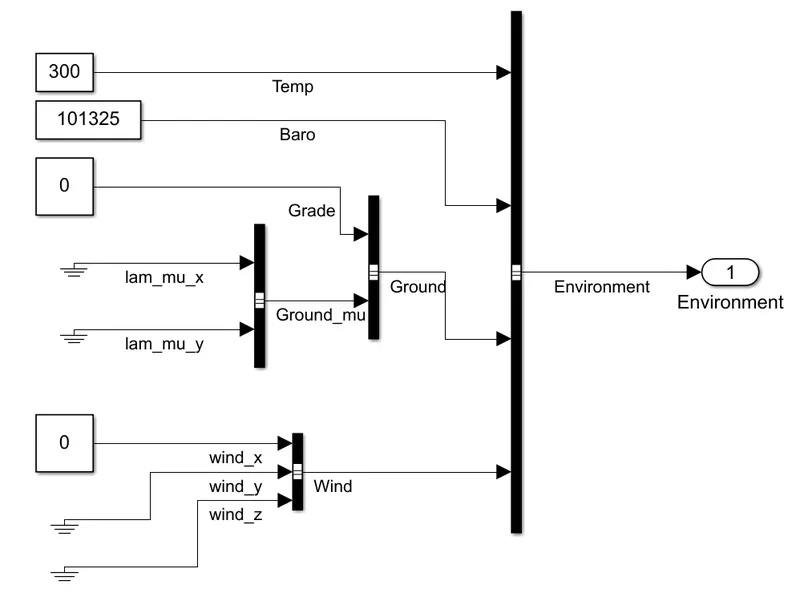
- Now, In the environmental block, check the Grade and Wind velocity values take it initially as zero(0).
- Run the model and open the visualization of the performance and FE scope.
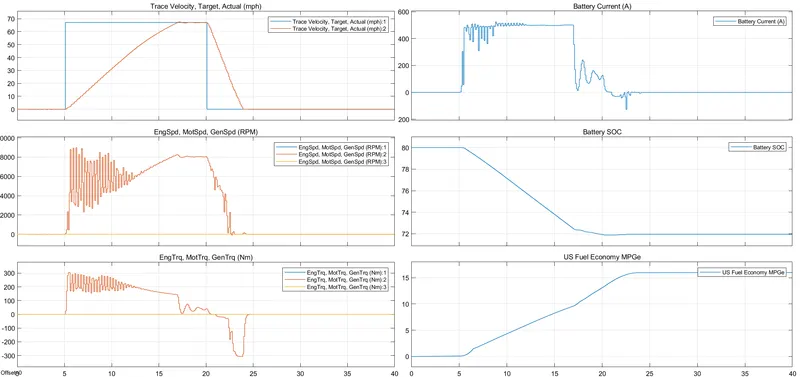
- Now change the grade and wind velocity to 7 degrees and 10 m/s respectively. Run the model.
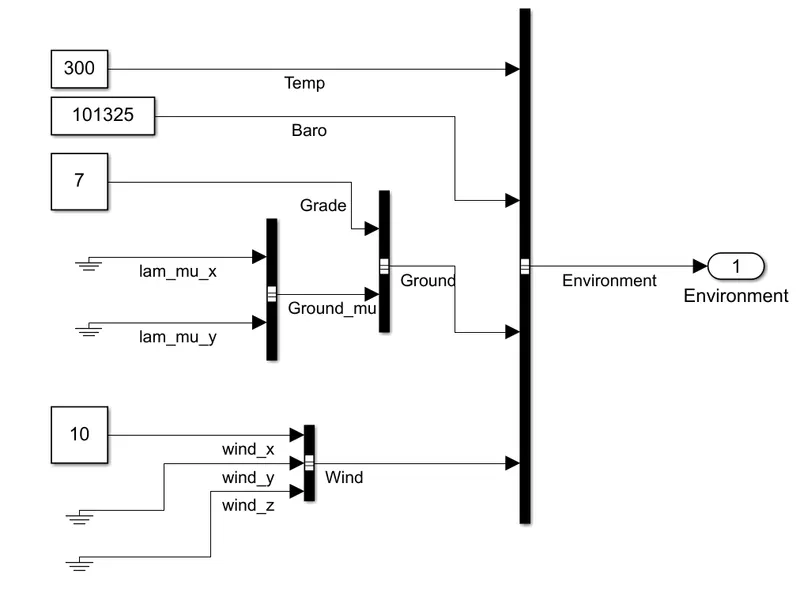
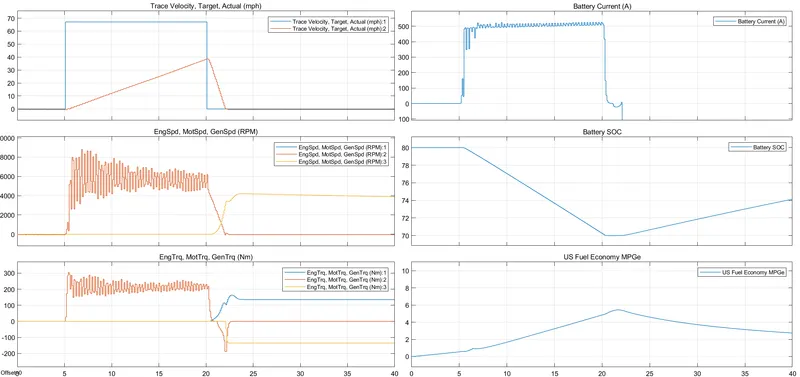
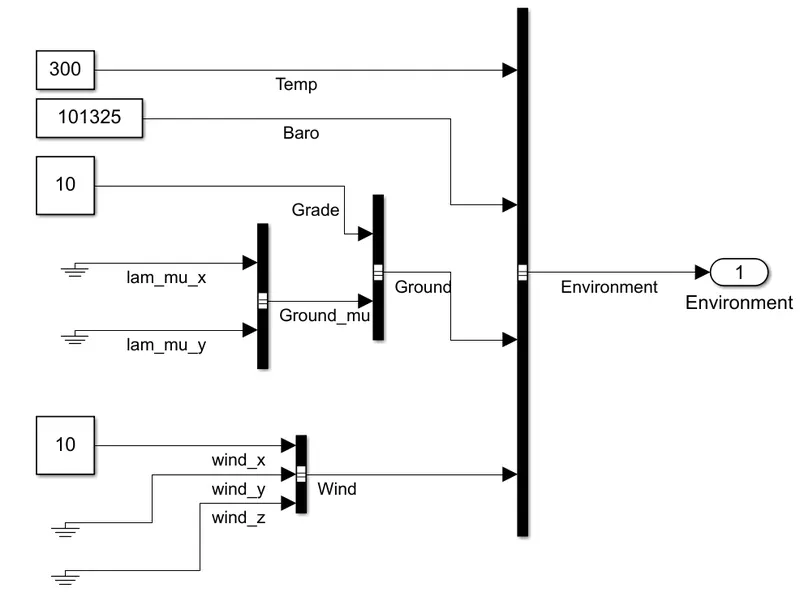
- Follow the same again, change grade and wind velocity to 10 degrees and 10 m/s respectively and run the model.
Q.4. Keeping all other parameters same, compare the simulated results of hybrid and pure electric powertrains.
Ans.:
- Open the Electric Vehicle reference application in the powertrain the blockset.
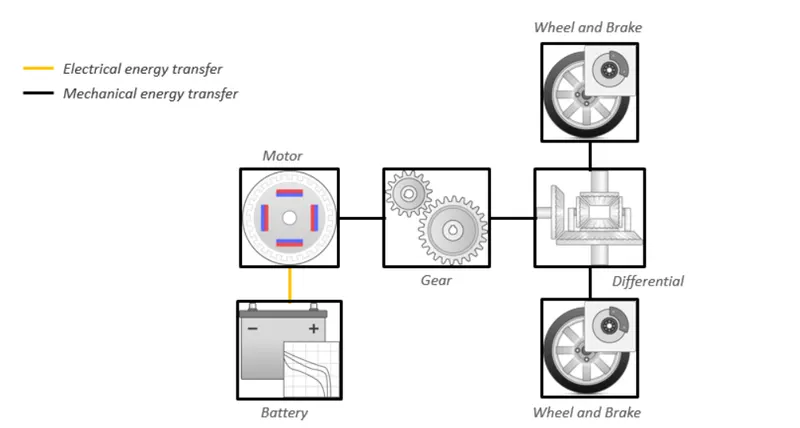
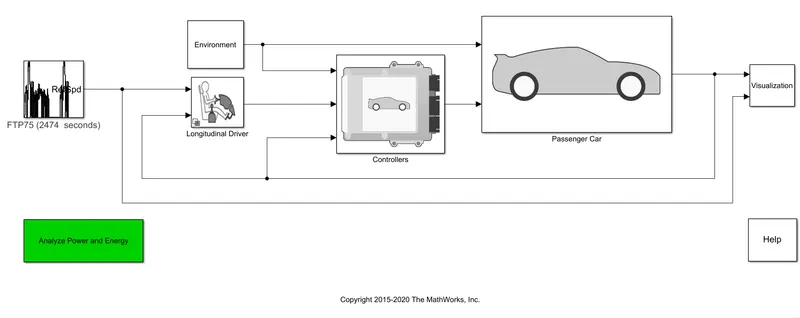
- Run the model without changing any parameters, keep it in default condition.
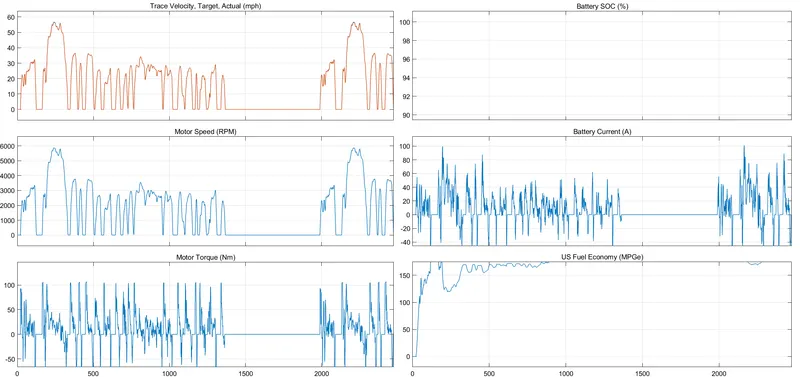
- Check the graphs.
- Also, Open the Hybrid Electric Vehicle reference application from the powertrain the blockset.
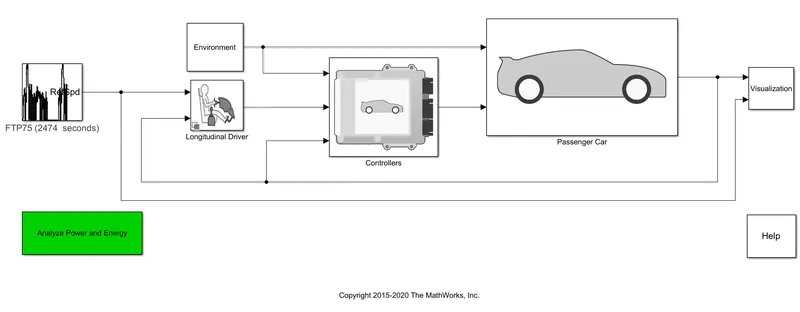
- Run the model without changing any parameters, keep it in default condition.
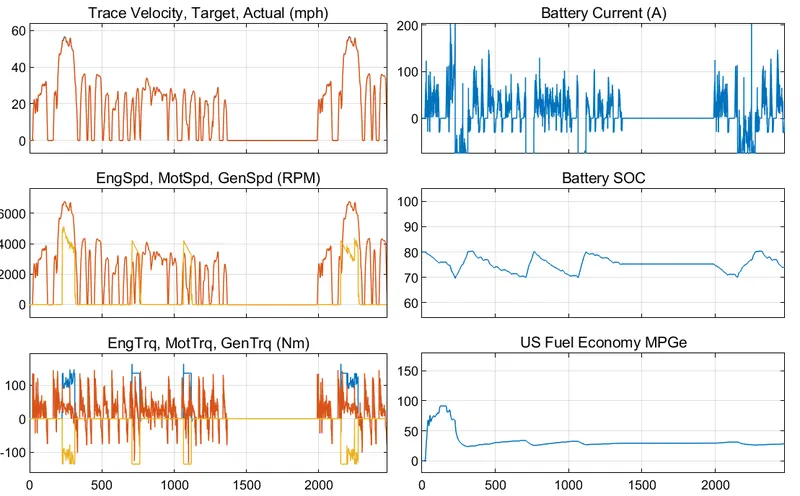
- Observe the changes in graph.
Results:
- Changing grade and wind velocity for HEV:
- The trace velocity graph has a major difference as the actual trace velocity is decreasing with the increase in wind velocity.
- The Engine speed is reduced as the wind velocity creates an air drag which slows the vehicle. Hence it requires more energy and time to reach the maximum speed.
- With the increase in wind velocity and grade, the battery is drained fast and fuel consumption increases.
- HEV vs EV:
- The top speed is seen in the Hybrid Electric vehicle model compared to Full Electric Vehicle.
- The fuel economy is higher in EV.
- The battery SOC is higher in EV compared to HEV.
Learning Outcomes:
- Learned to observe the power train block set and check how the model is working when the parameters are changed.