WOT CONDITION PART 2 [ EV VS HEV]
AIM :
- To understand the difference between Mapped and Dynamic models.
- How the fuel efficiency is calculated and factoes affecting the model
- Study the effect of gradient and wind velocity on the powertrain in WOT drive cycle
- Compare the results between hybrid and pure electric powertrains.
PROCEDURE :
1, Mapped Model vs Dynamic Model :
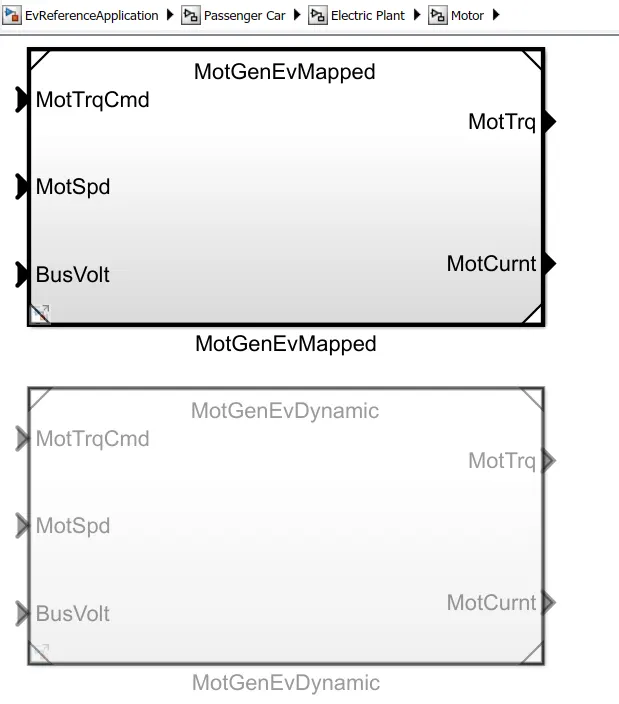
MAPPED MODEL :
It refers to the block where the inputs and ouputs of the block are in a steady-state tables. It is used for the simulation to study the effect of a factor on the simulation in the system level. The tables provide overall engine characteristics, including actual torque, fuel flow rate, BSFC, and engine-out exhaust emissions.
DYNAMIC MODEL :
The model is breaken down on a system or sub-system level into its components. Tge output of these components combined is taken as the output of the system. Model decomposes the engine behavior into engine characteristics that are separated into lower-level components. By combining components in this way, the models capture the dynamic effects. It is used to more detailes dynamic model and have component level data.
Changing the Model :

2, Fuel Efficiency calculated :
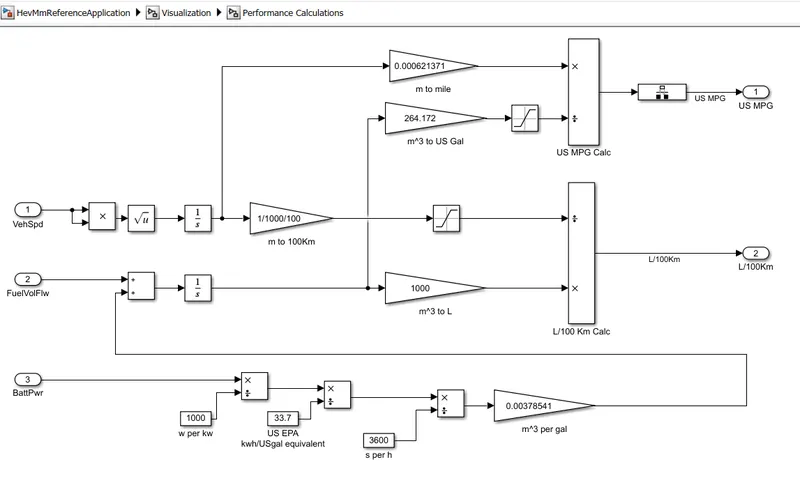
The above model is steps used to calculated the MPG in the HEV vehicle model.
Factors Considered :
- Vehicle Speed
- Fuel Volume Flow
- Battery Power
3, Effect of gradient and wind velocity on the Powertrain :
HEV MODEL :
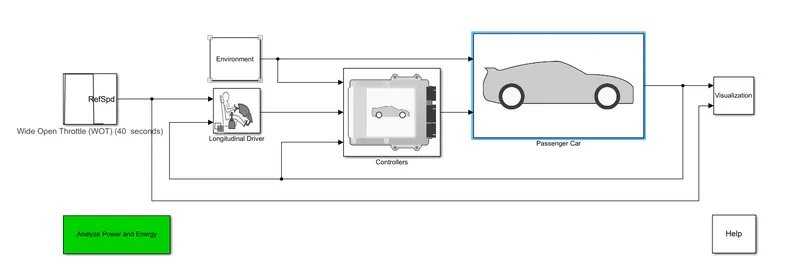
Setting up WOT Drive cycle :
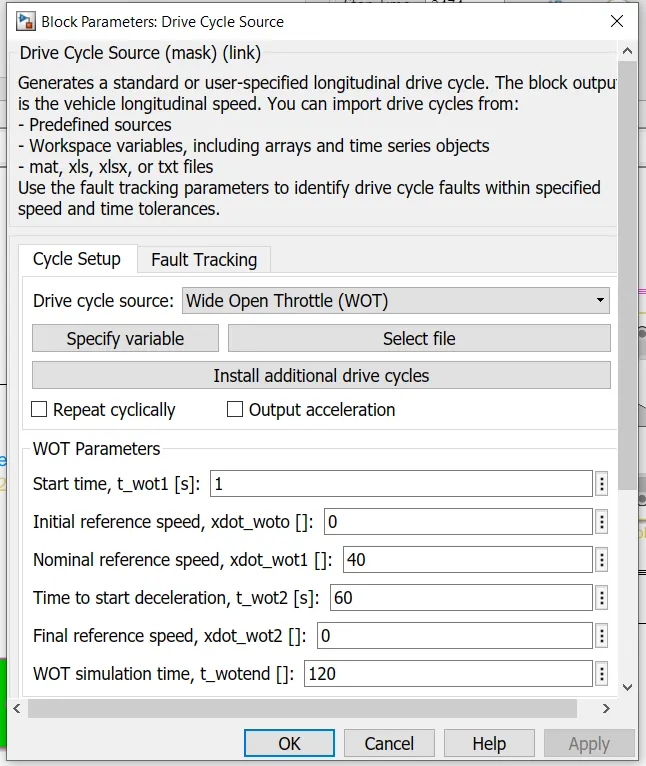
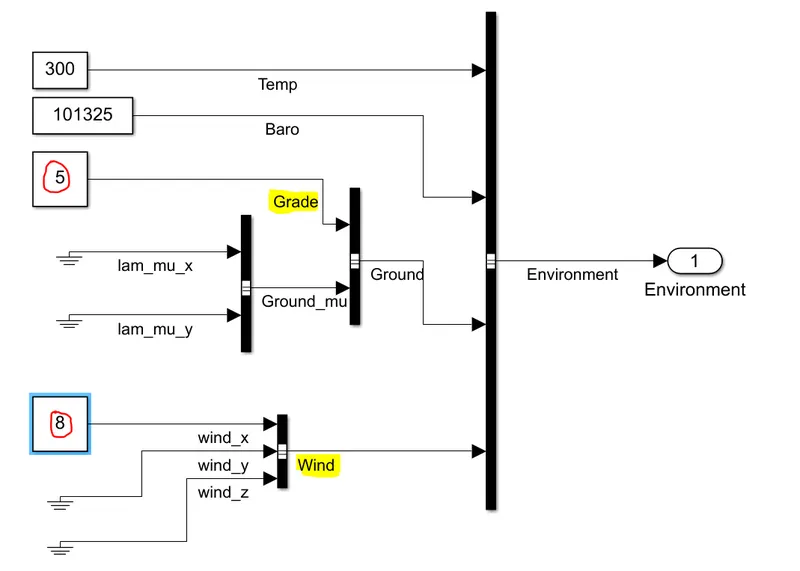
Changing the Grade and Wind Speed :
Graph :
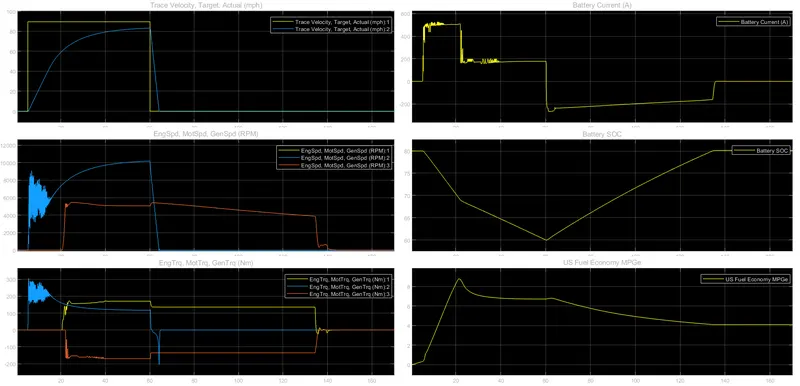
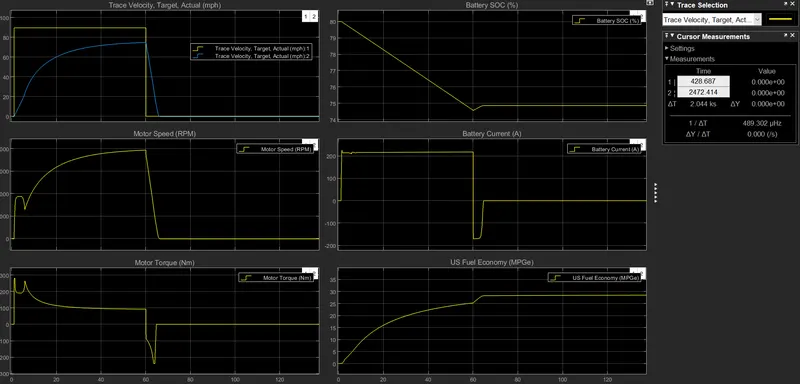
The HEV vehicle reaches a velocity of 83mph, since the the electric motor is used during this time period you can see the BatterySOC decreasing to 60% and the Fuel Efficiency increases. As the Velocity decreases as the vehicle decelerates, the Battery is charged to around 80% by regenerative braking. Since the Efficiency is slightly decreased which indicates the Engine is turned on in order to charge the Battery faster.
4, Comparing result between EV and HEV vehicles :
| EV | HEV |
 |
 |
 |
|
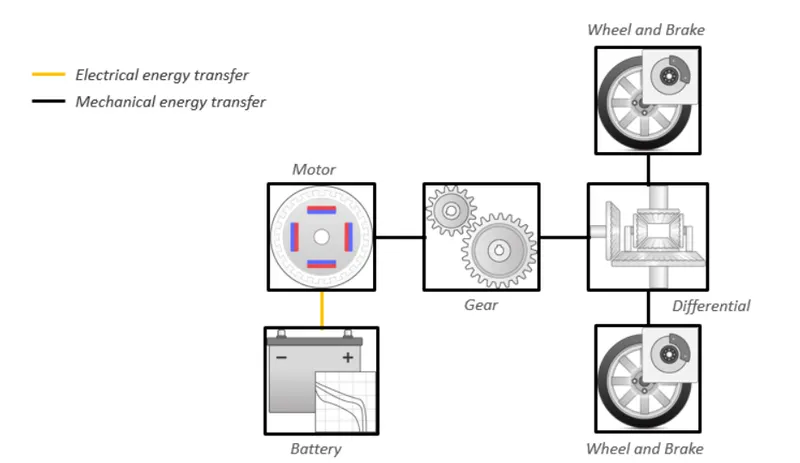
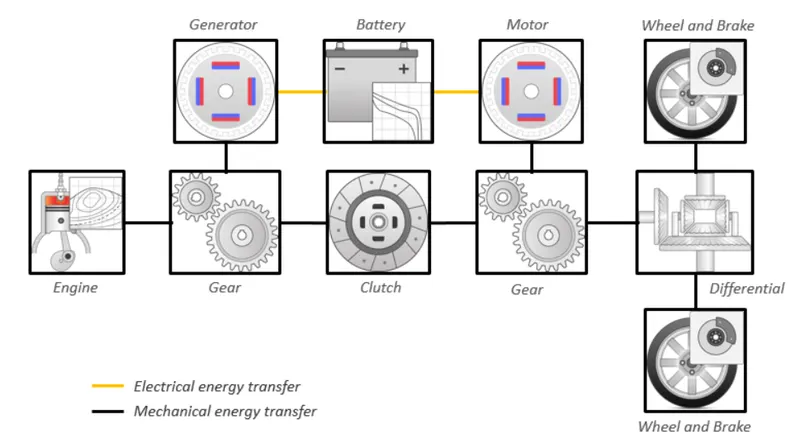
- The HEV have engines and generators while the EV have battery and motors.
- The discharge rate is lower in EV
- The efficiency of EV is greater.