Flow over a cylinder
AIM :
To simulate flow over a cylinder at different Reynolds Number. Run a baseline simulation and then calculate the Reynolds number. Then increase the Reynolds number by a factor of 20%, 40% and 100% and excute the transient flow simulation.
THEORY :
Gas and liquid flow behavior is quantified by partial differential equations representing conservation laws for mass, momentum, and energy. Computational fluid dynamics is a branch of fluid mechanics that uses numerical analysis and algorithms to solve fluid flows situations. CFD is based on the Navier-Stokes equations. With CFD analysis, we can understand the flow and heat transfer throught a design process. The basic methodology for any CFD analysis is based on a few procedures:
- Understanding the flow model
- Proving assumed model
- Model optimizing
PARAMETERS :
| Cylinder Diameter | 0.05m |
| Cylinder Length | 0.08m |
| Velocity along X-axis | 10 m/s |
| Working Fluid | Air |
| Density `(rho)` | `1.225kg//m^3` |
| Dynamic Viscosity `(mu)` | 1.81 x `10^-5 kg//ms` |
PROCEDURE :
1, Make a 3D model of a cylinder according to the parameters mentioned above.
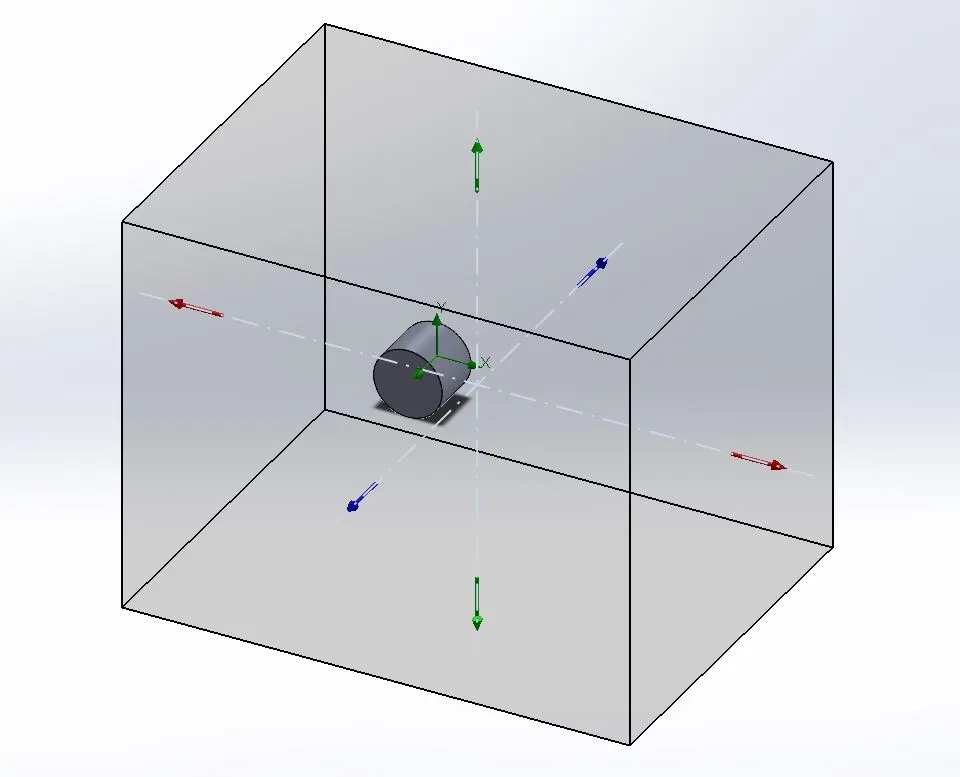
2, Start the flow simulation wizard with selection the fluid used as "AIR" and Velocity along the X-axis as 10m/s and obtaind the Computational Domain.
Computational Domain :
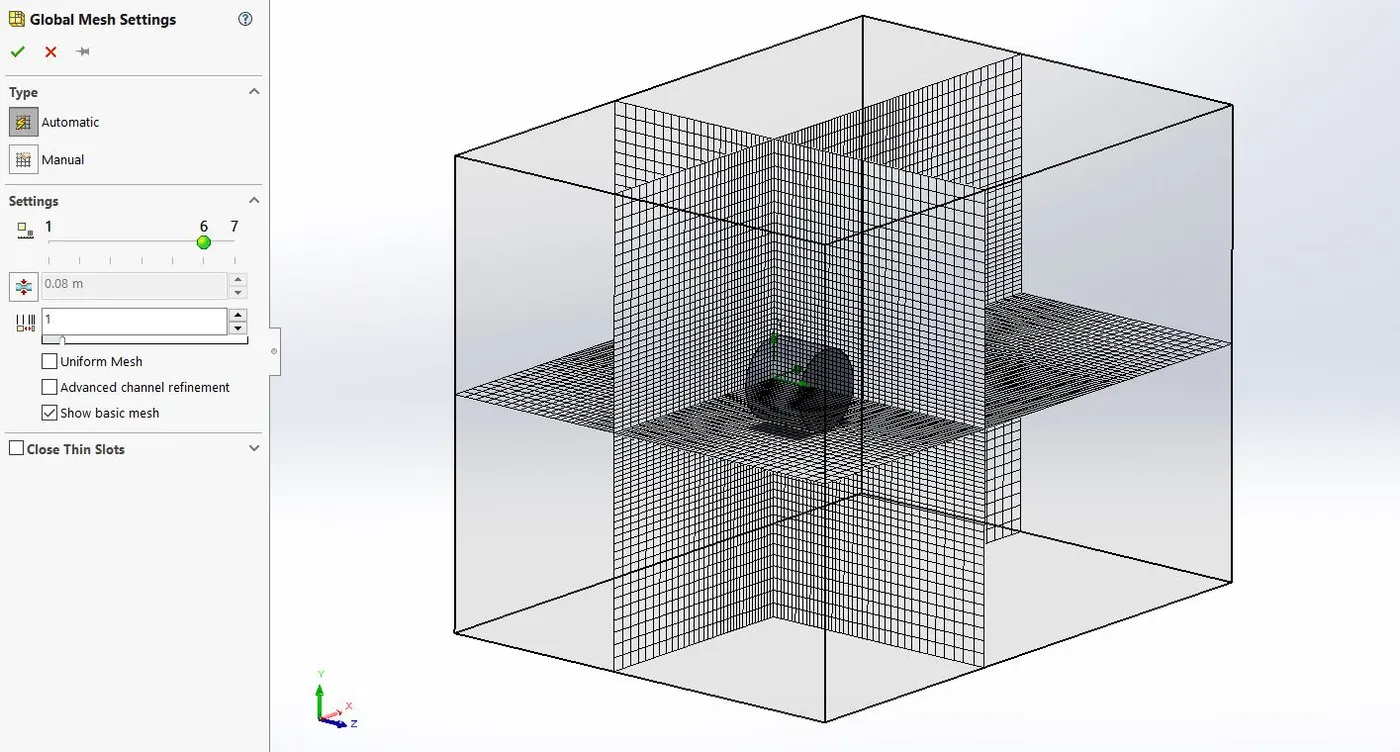
Global Mesh :
CALCULATIONS :
Baseline velocity = 10m/s
Reynolds No. = `rhovD//mu`
Length of Domain = 0.45m
Flow through time = Length of Domain/Inlet Velocity of Fluid
End time = 2* Flow through time
`therefore` We get the following Reynolds No. for different velocity
| VELOCITY | REYNOLDS NO. | FLOW TIME |
| V=10m/s | `R =`33839.77 | 0.045s |
| V=12m/s | `R =`40607.73 | 0.0375 |
| V=14m/s | `R =`47375.69 | 0.0321 |
| V=20m/s | `R=`67679.55 | 0.0225 |
RESULTS :
| REYNOLDS NUMBER | VELOCITY PLOT | PRESSURE PLOT |
| Intial | 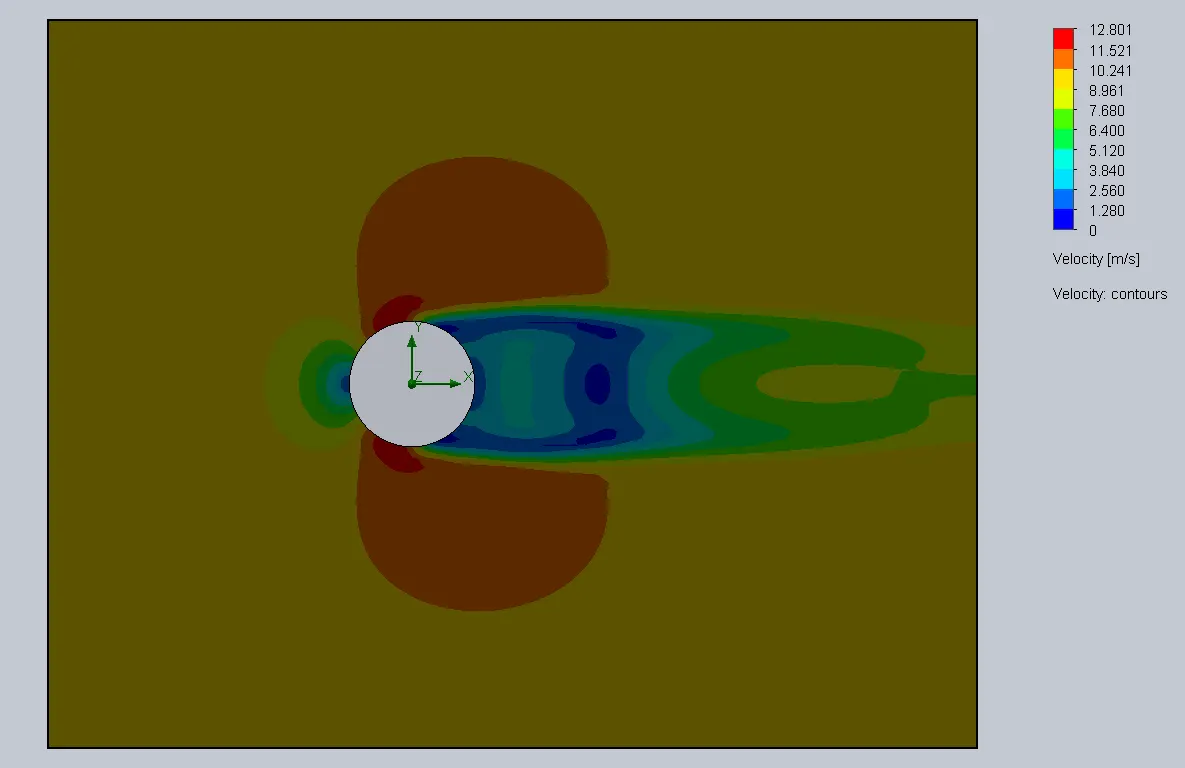 |
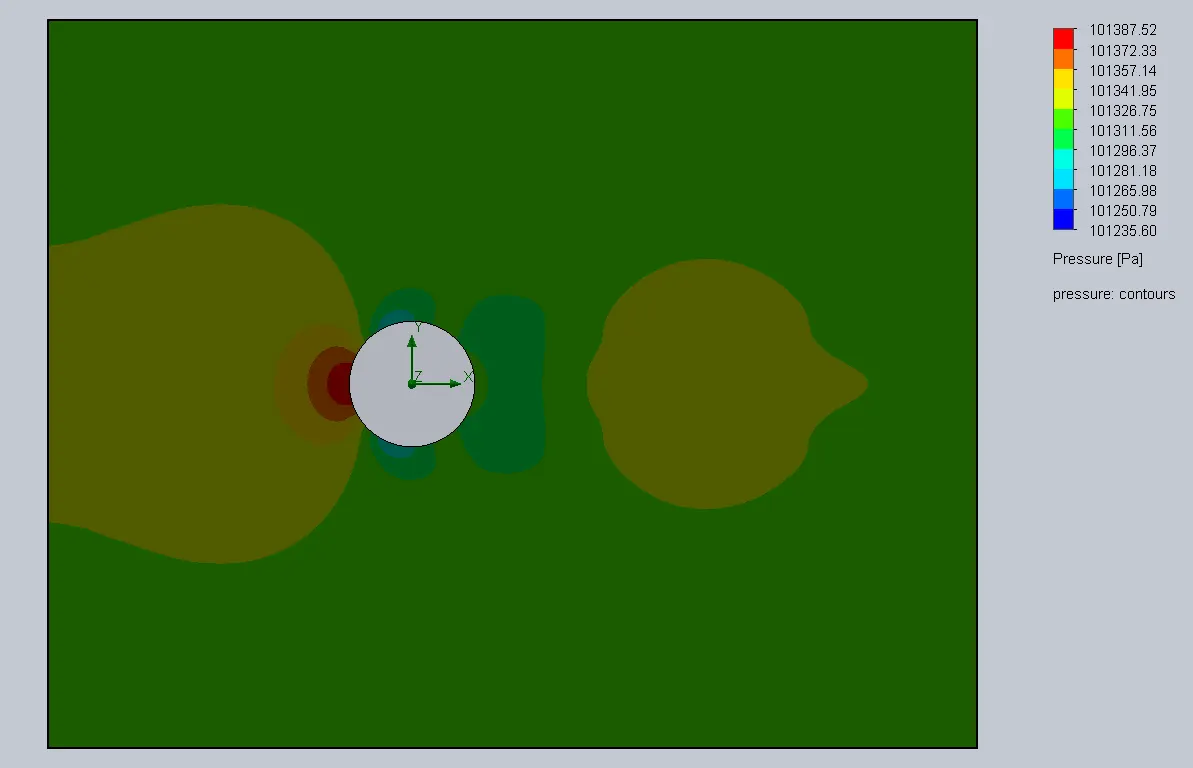 |
| Increased by 20% | 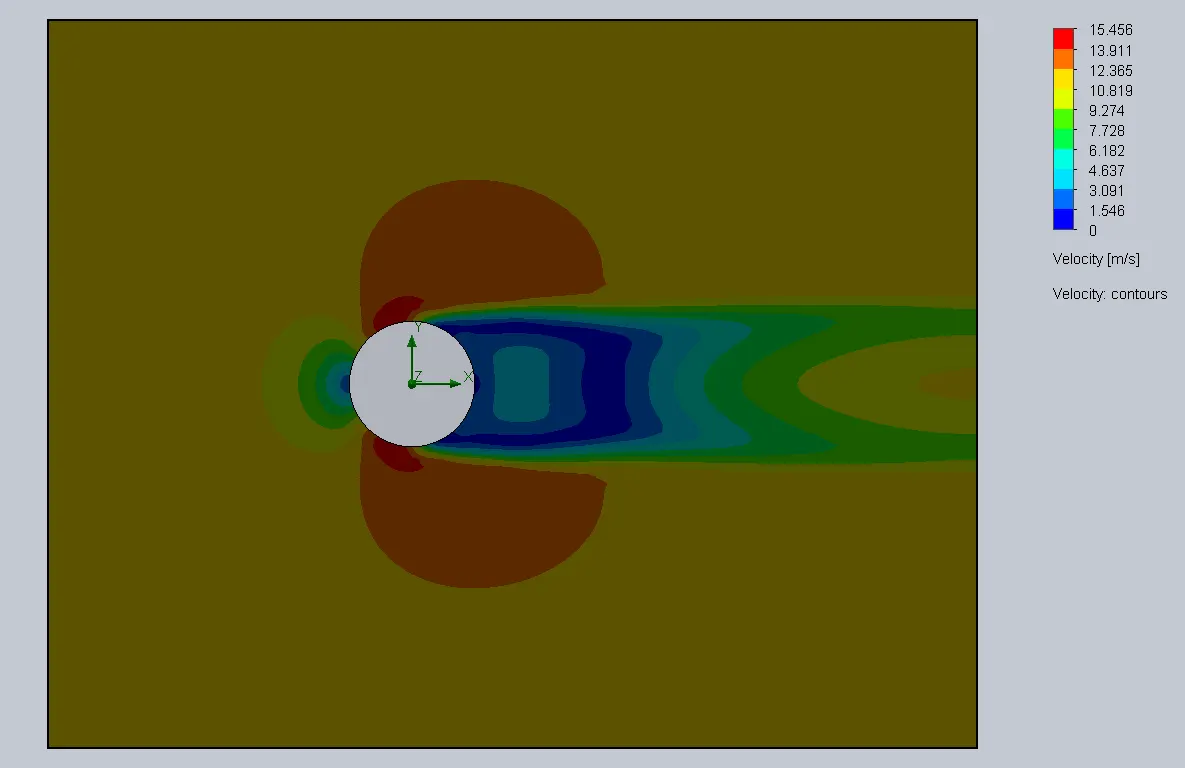 |
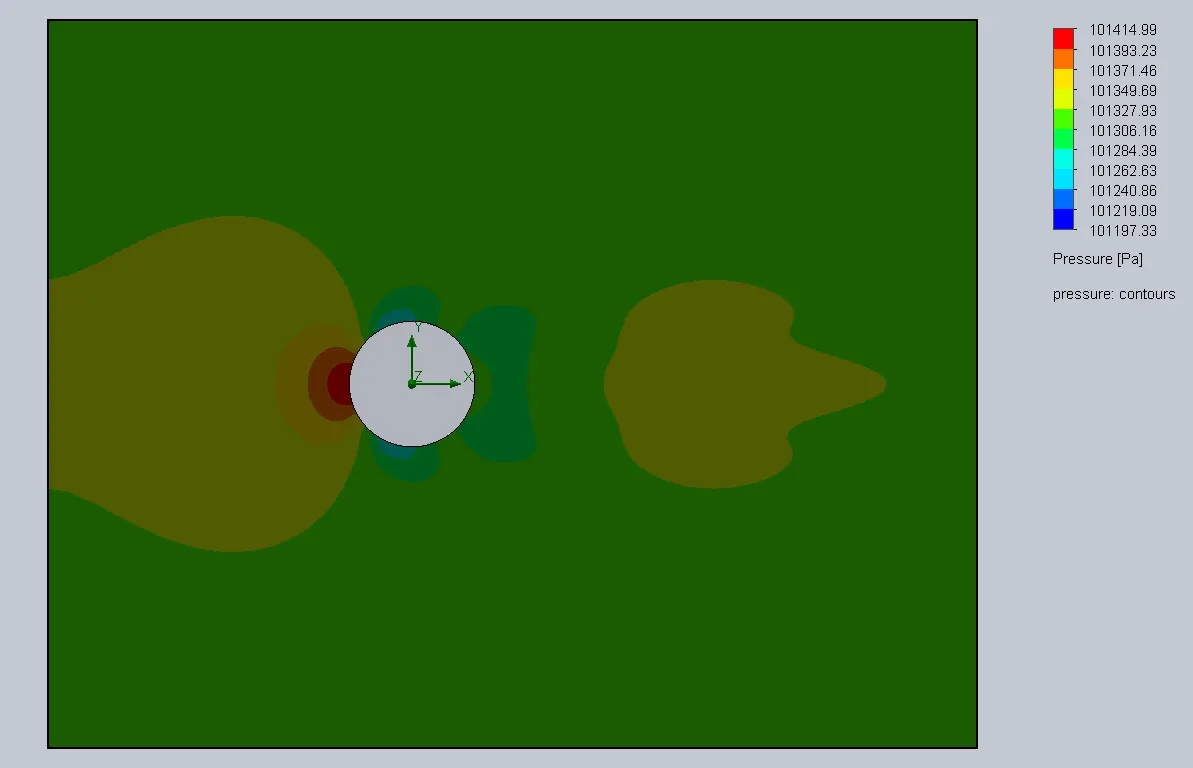 |
| Increased by 40% | 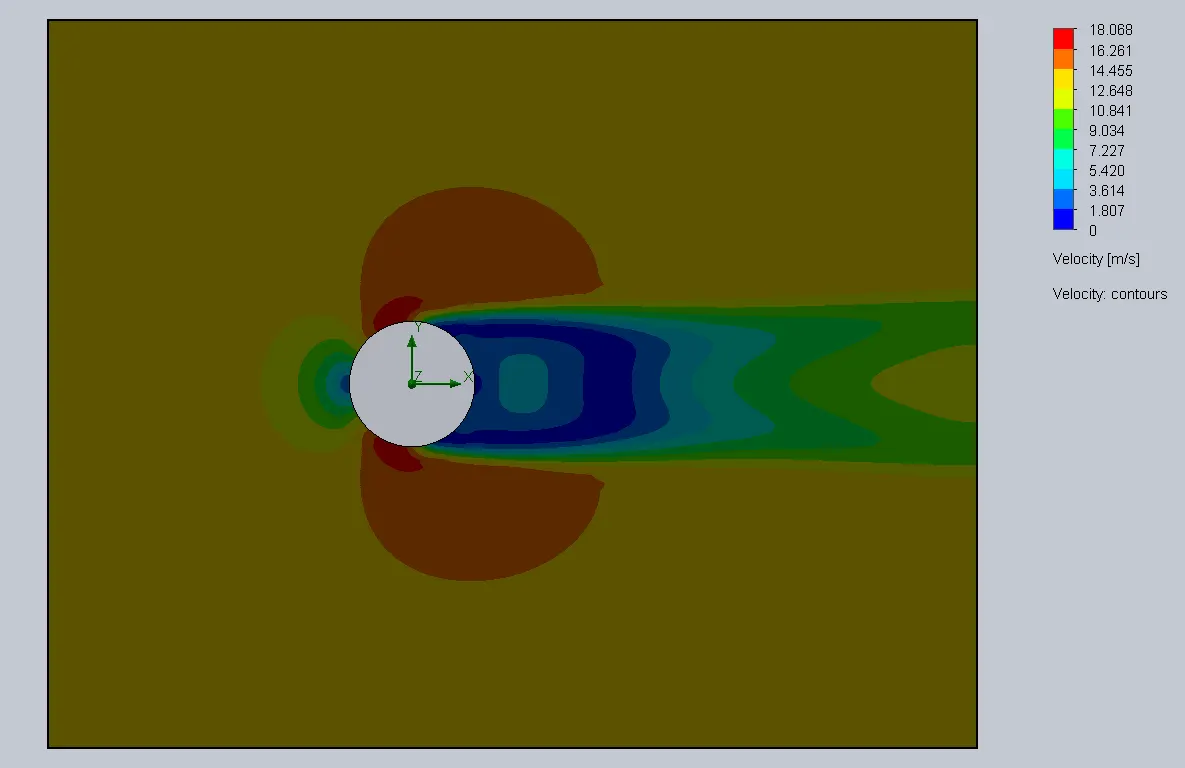 |
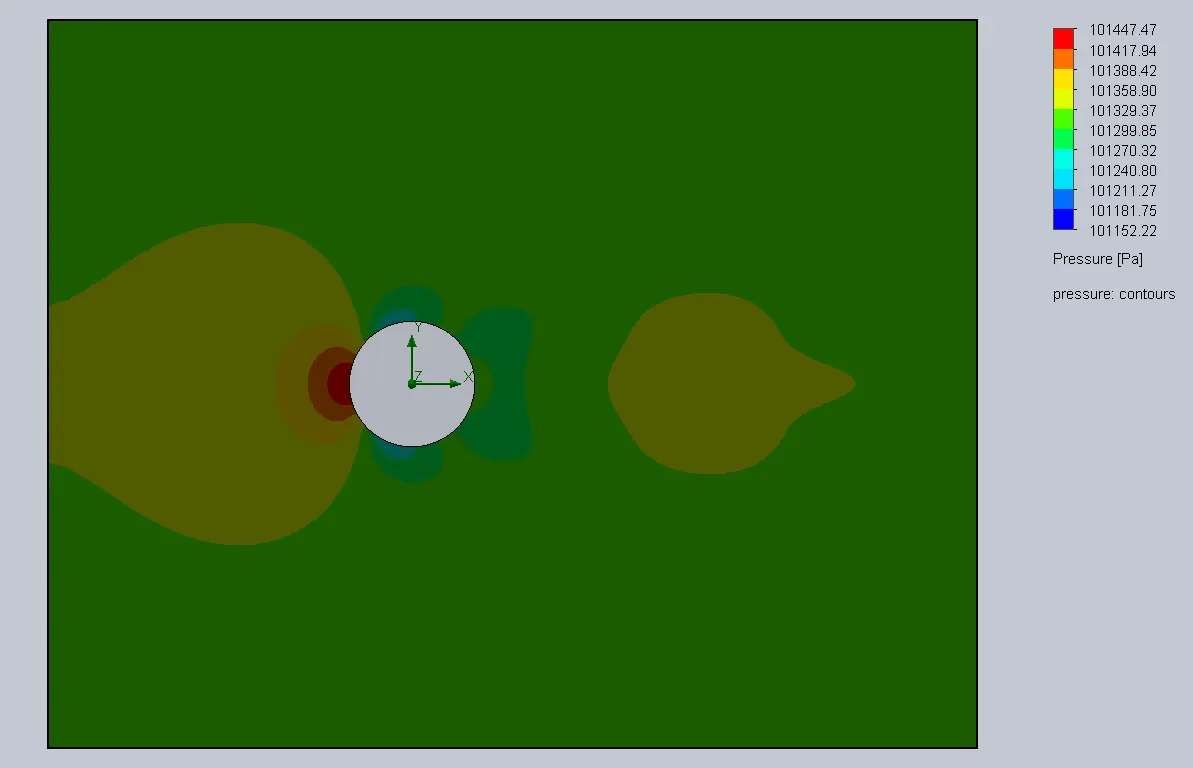 |
| Increased by 100% | 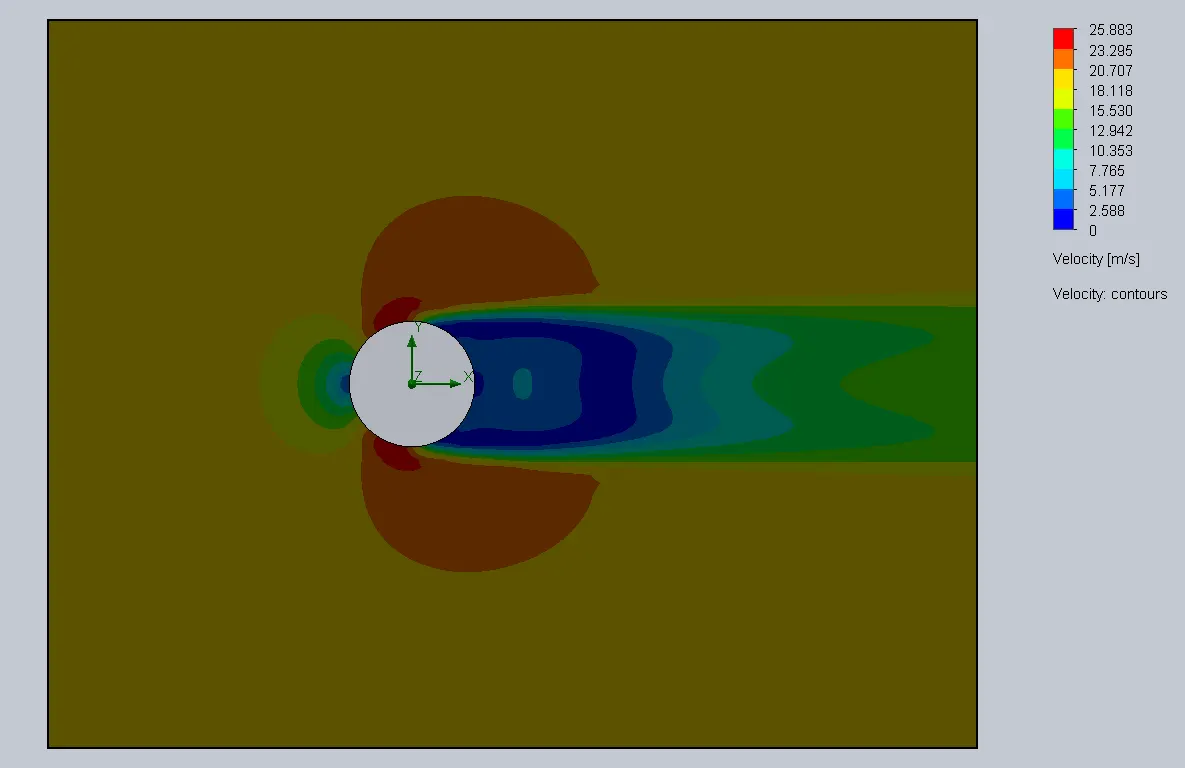 |
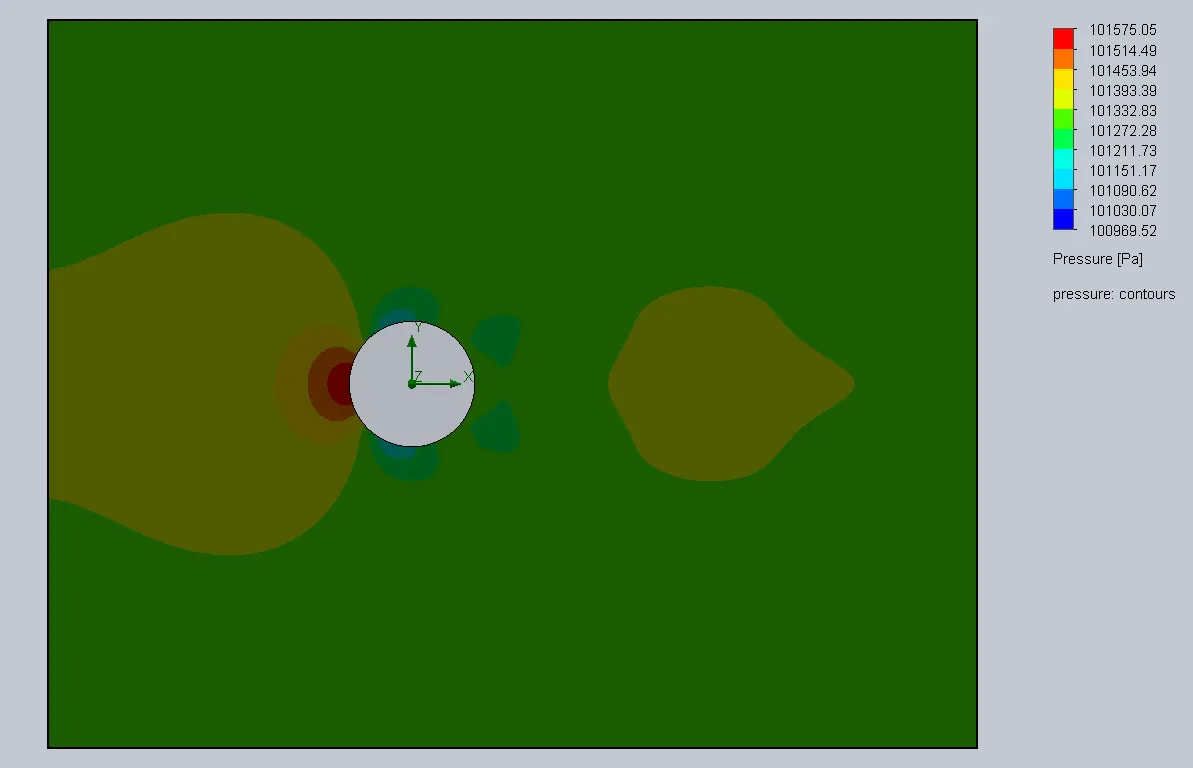 |
ANIMATION :
| REYNOLDS NUMBER | VELOCITY ANIMATION | PRESSURE ANIMATION |
| Initial | ||
| Increased by 20% | ||
| Increased by 40% | ||
| Increased by 100% |
CONCLUSION :
- Inlet velocity in the X-direction increases with the increase in Reynolds Number.
- When the velocity is increased, the velocity profile is longer behind the cylinder surface and it is approximately zero nearer to the cylinder surface.
- There is only a slight difference in pressure in all the four cases mentioned above.