Week 4 Challenge : CFD Meshing for BMW car
Aim: The main objectives of the challenge is
- Use topo clean-up options and remove all the single and triple cons.
- Mesh the surface of the BMW car with given target lengths within the quality criterion and remove the off elements.
- Proper usage of options and their significance to complete the surface mesh.
- Creation of the wind tunnel as per standard measurements.
- Generate the volume mesh where the fluid is thereby removing the solids.
Procedure:
The procedure flow chart in the ansa preprocessing tool
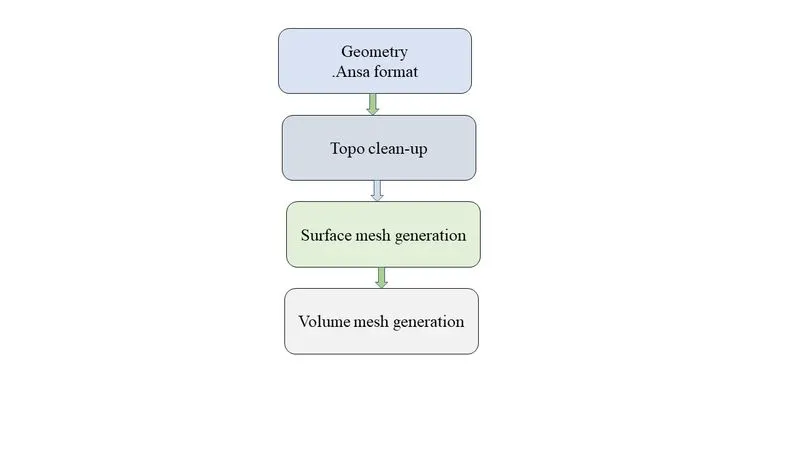
This chart outlines the basic four steps to complete preprocessing That is Geometry, topo clean-up, Surface meshing, and volume mesh.
The Topo clean-up is the main step to getting good-quality mesh which removes the single cons, and triple cons and removes the sharp corners where we cannot produce good-quality mesh which leads the discretization errors.
Topo Clean up:-
- First, the geometry is a symmetry which is exactly two halves except for the logo. So we can clean and surface the mesh half part and make it copy to the other half.
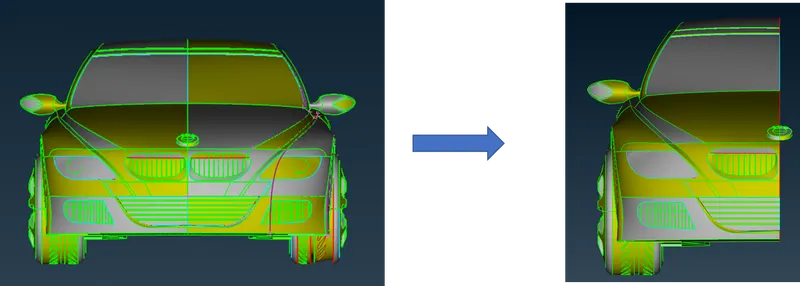
- Remove the single cons and triple cons from the logo and remove the sharp corners and try to remove small dimensions.
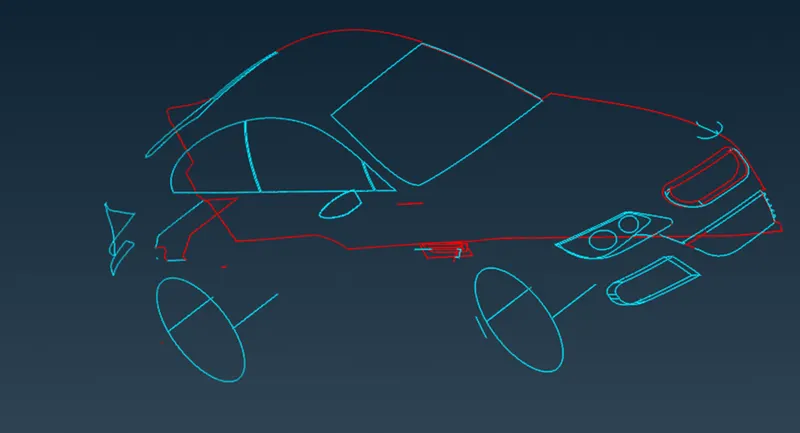
- Clean the geometry by removing single and triple cons from other PIDs like grills, lights, silencers, windows, mirrors, etc.
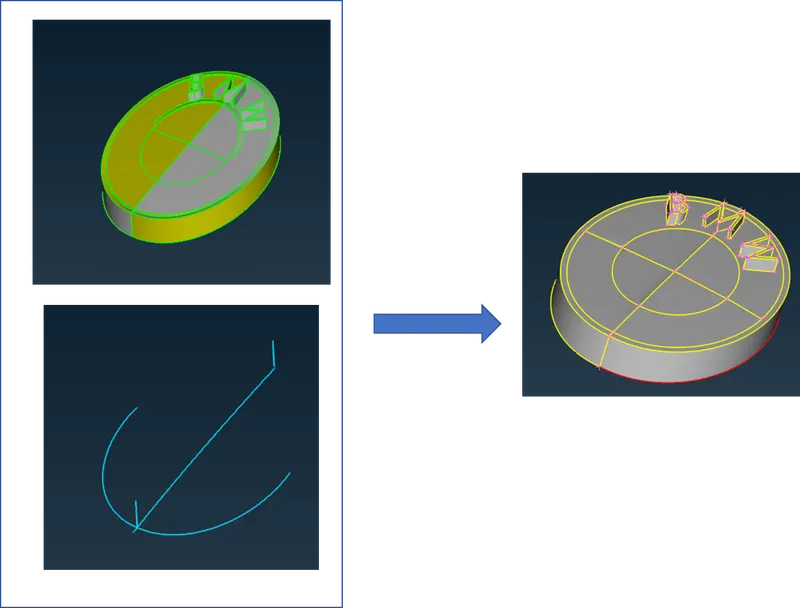
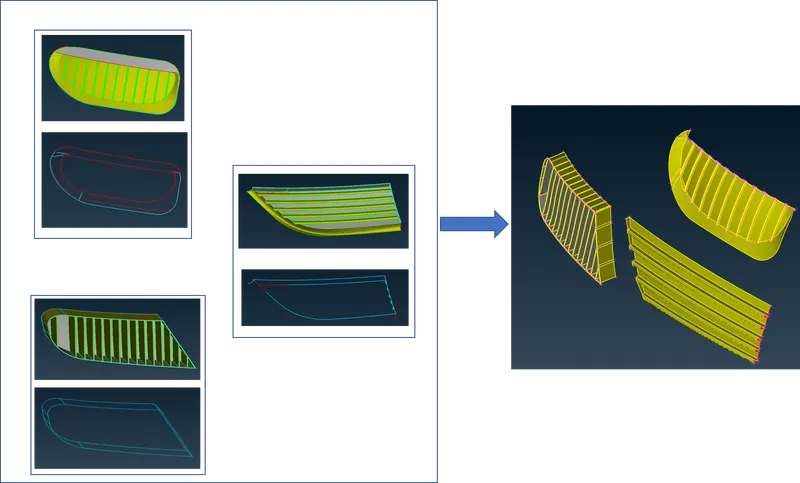
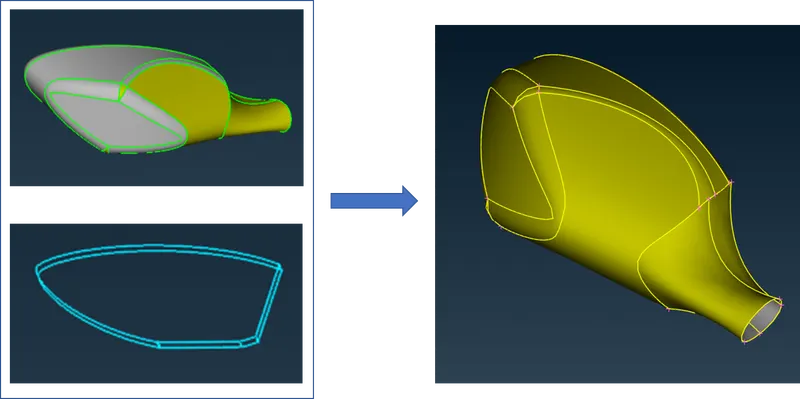
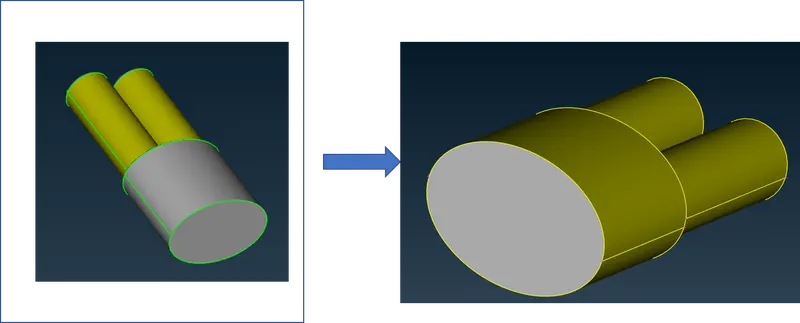
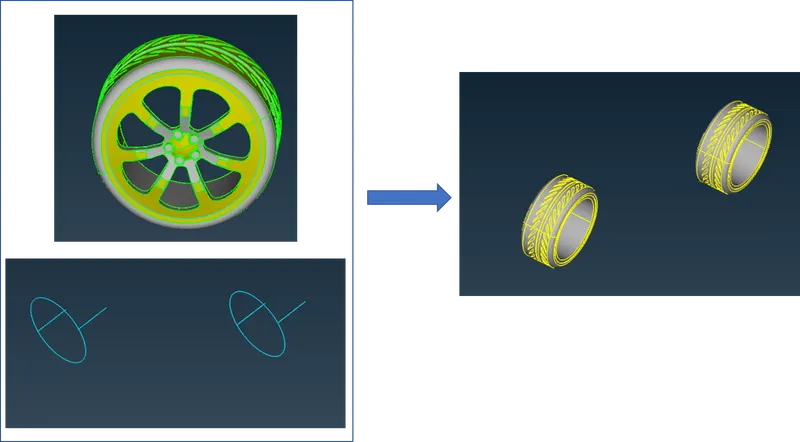
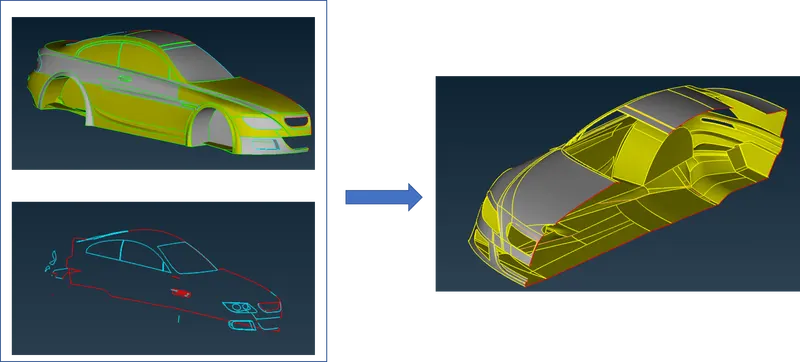
- Finally, clean the body part and redraw the bottom part of the car y using different options like curves from auxiliaries.
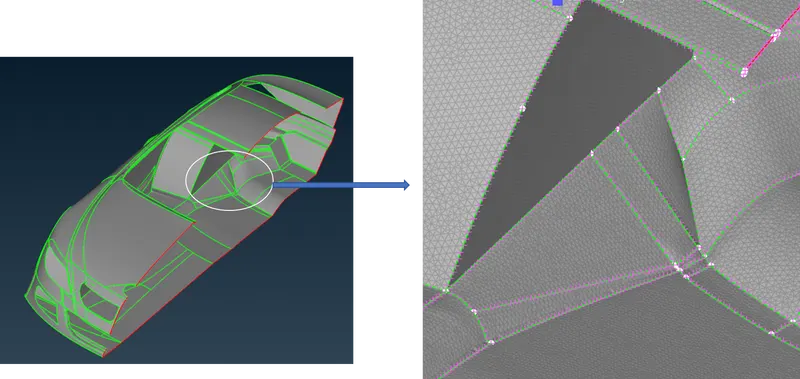
- Remove the collapsed cons by using the weld spot from the hot points option.
- Now start the surface meshing for different parts as mentioned in the problem by inputting in the quality criteria and mesh parameter section.
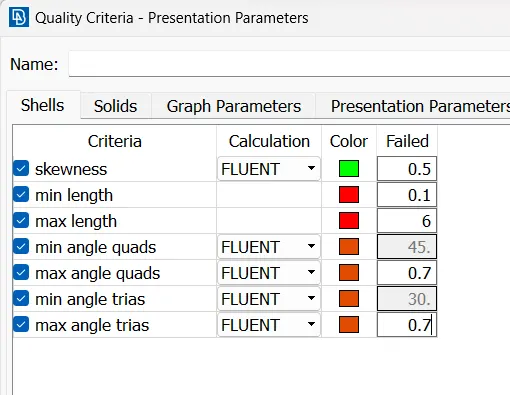
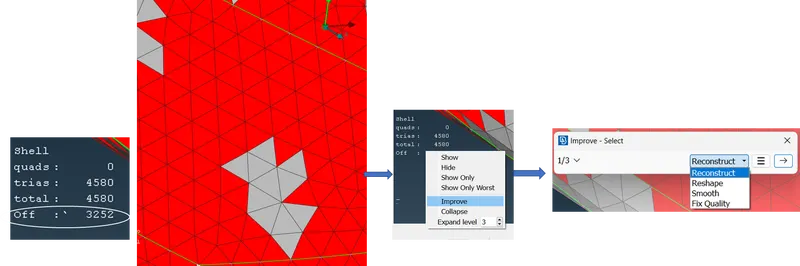
- Remove the off elements which indicate failing to get quality parameters as mentioned by using mesh improvement tools.
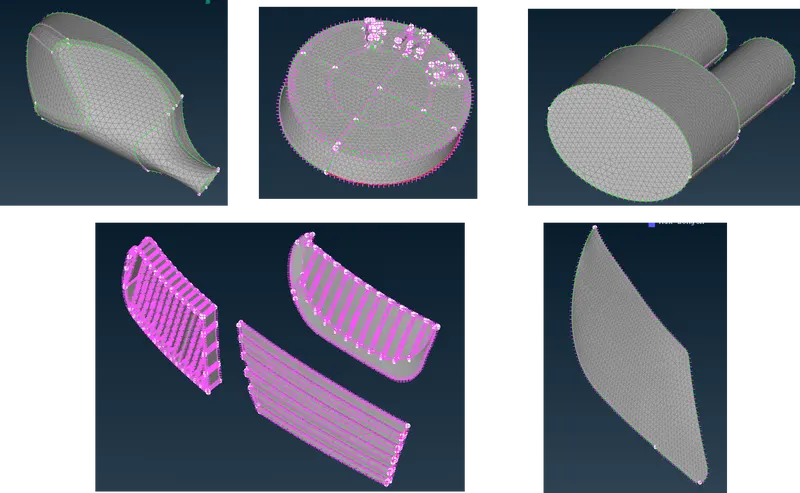
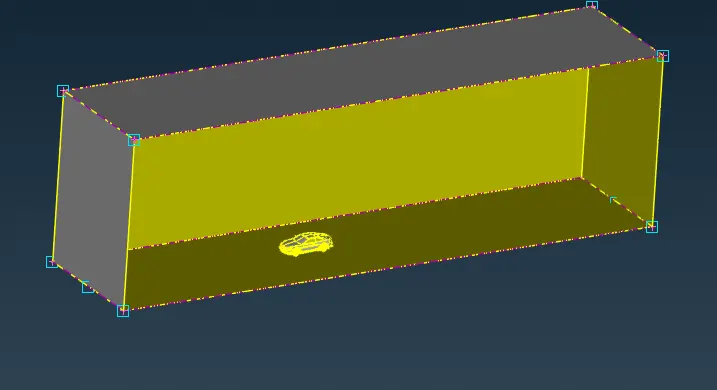
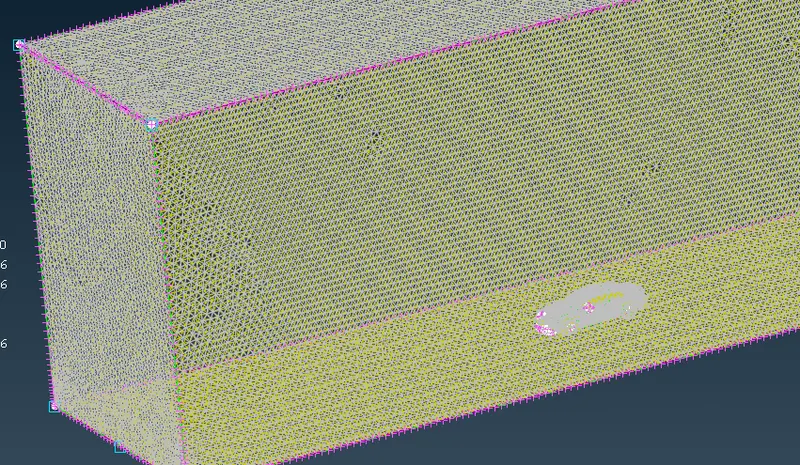
- Aftering creating all PIDs surface mesh and making them into within the quality then start creating the wind tunnel where the experiments take place for external flows like an airfoil, rockets, and automobiles to get to know the effect of the fluid flow over it. The wind tunnel dimensions are as follows from the front face = 4X, From the Back face = 6X, Top face = 3X, Side faces = X, where X = maximum length of the vehicle.
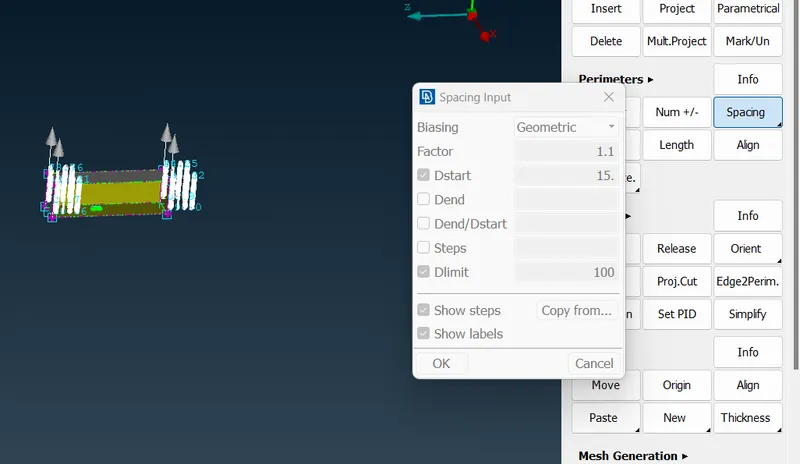
- Provide the bias factor for the nonuniform length of the mesh in a particular direction to create the finer mesh near the vehicle and coarser mesh far from the vehicle where the gradients won't be significant.
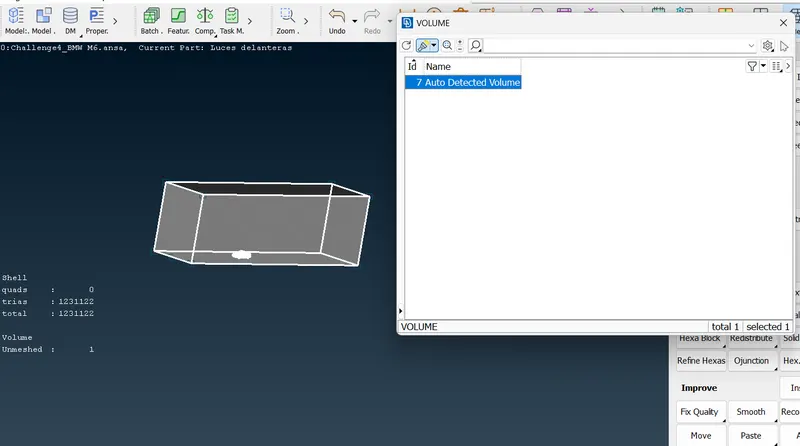
- In volume, mesh identifies the zone between the vehicle and the wind tunnel where the fluid is there and deletes the solid volumes.
Learning outcomes:
- The proper usage of the ansa options for the top clean up and regenerate some of the surfaces again.
- Quality criterion and its significance, How to remove the off elements from the surface mesh.
- Creation of the wind tunnel and generating non-uniform mesh.
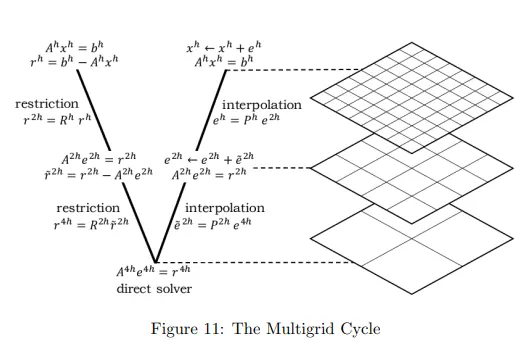
- The multi-grid concept is understood as useful to reduce the number of elements by giving coarse mesh where gradients are very less and fine mesh where gradients are significant.
Result:
- The increase in the number of elements leads to an increase in the computational effort and computational time, but the results are accurate.
- finer mesh required at the geometric variations and gradients are important.
Conclusions:
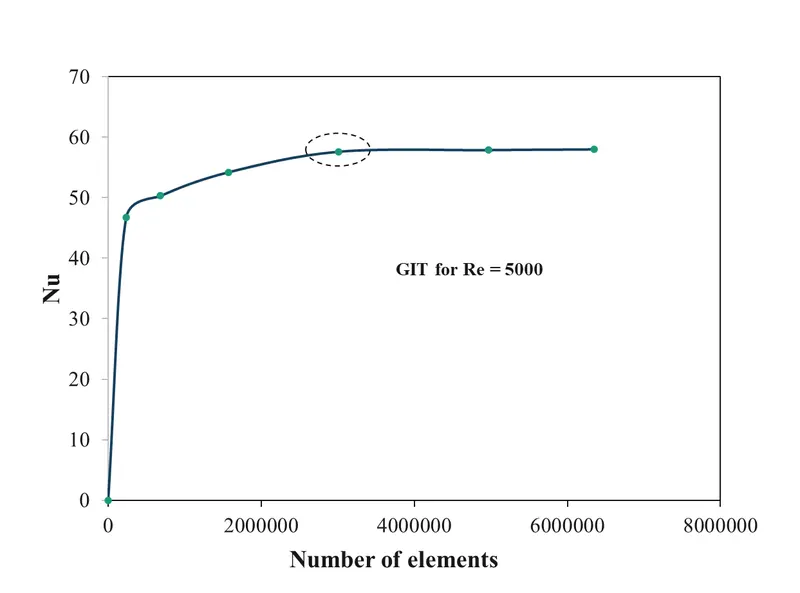
- The minimum number of elements used gets an invariable solution, which is calculated by performing the GIT.
- The computational cost is directly proportional to the computational cost.