Week 3 Challenge : CFD meshing on Turbocharger
Objective:
- To generate the surface meshing and volumetric mesh for the given turbocharger model with different target lengths at different locations per the PIDs mentioned.
- To learn the proper significance of options in a software tool and the significance of input parameters like target mesh.
Procedure:
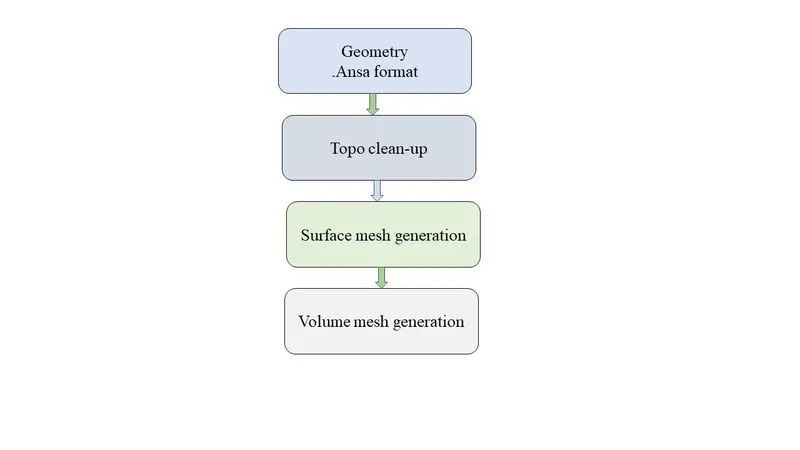
- First, we need to identify any glitches because of overlapping surfaces and delete those surfaces.
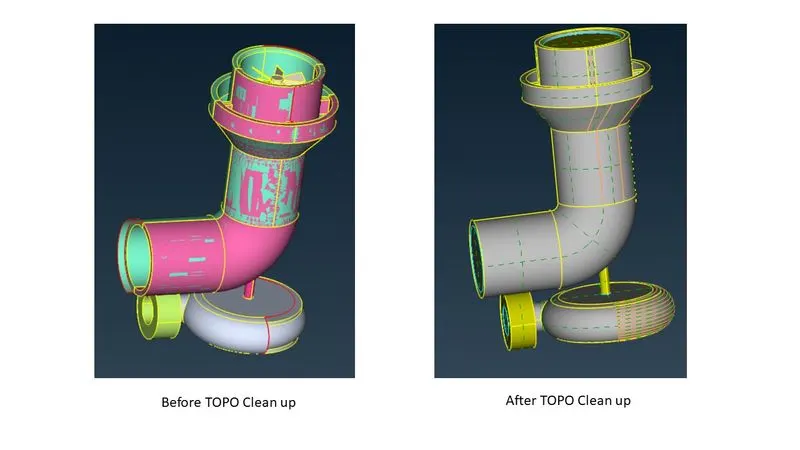
- Next, we need to check the single cons where ever it presets then try to convert them into double cons.
- If single cons are converted into triple cons then convert those triple cons into double cons by release, topo option in the cons section. The release option converts the triple con into 3 single cons, the double con into 2 single cons and the Topo option converts the triple con into a double con.
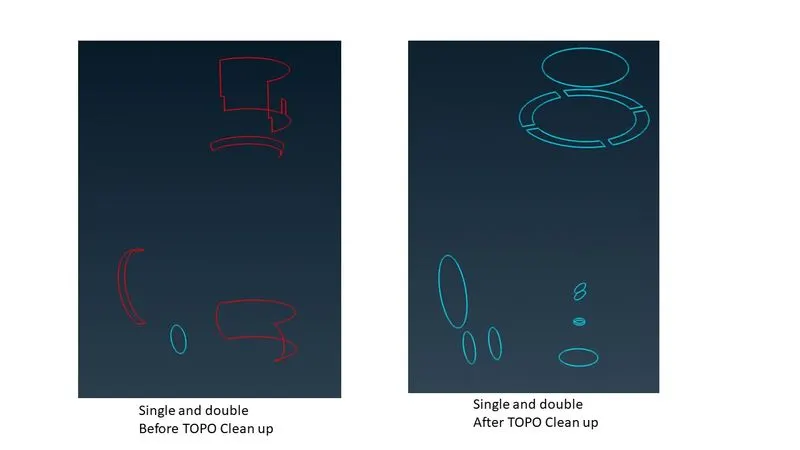
- After converting the single cons into double and triple cons, try to remove the triple cons wherever it is not required.
- Add PIDs to the geometry as per the model specification and for differentiating regions easily.
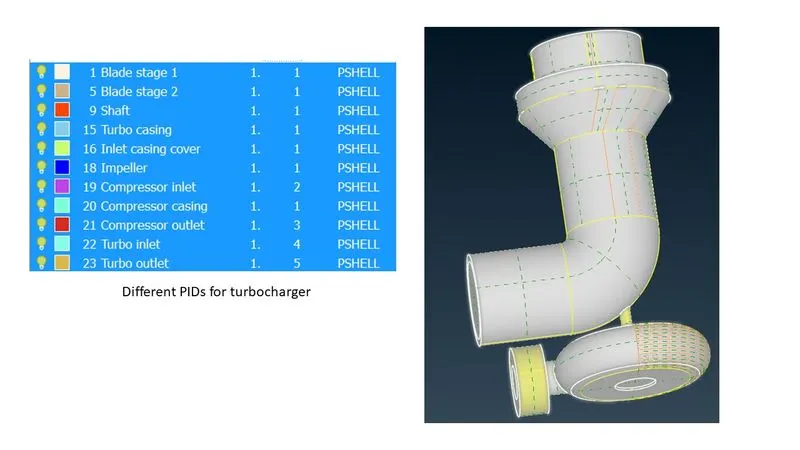
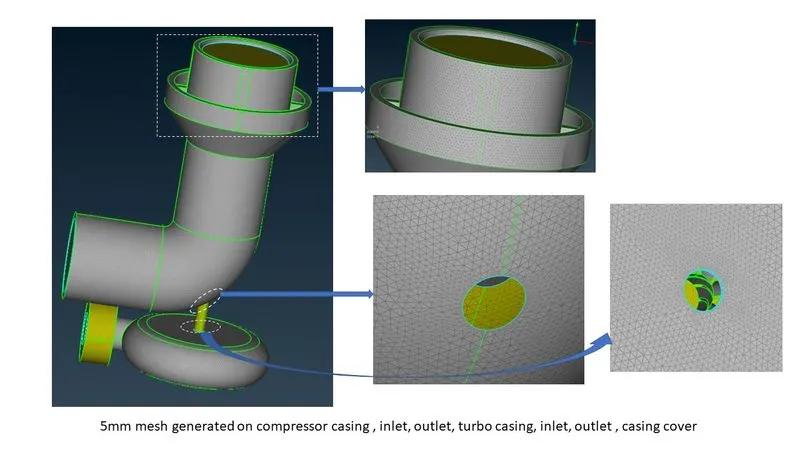
- Apply target mesh length and quality criteria for compressor components as 5mm.
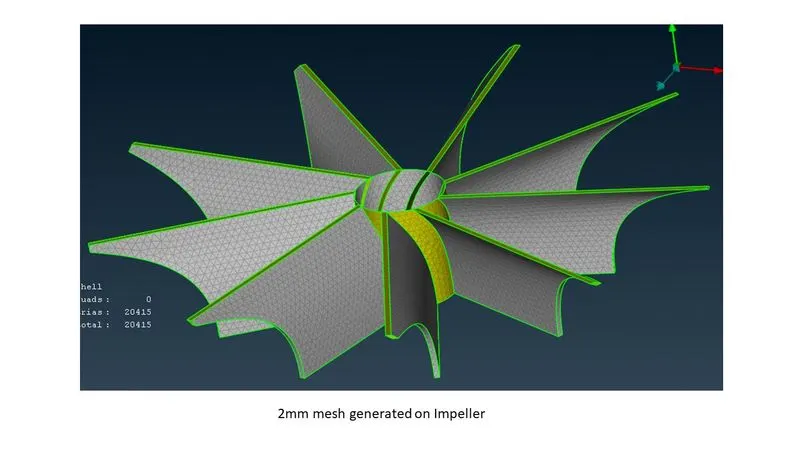
- Give a target length of 2mm to the impeller in the turbo casing PID region.
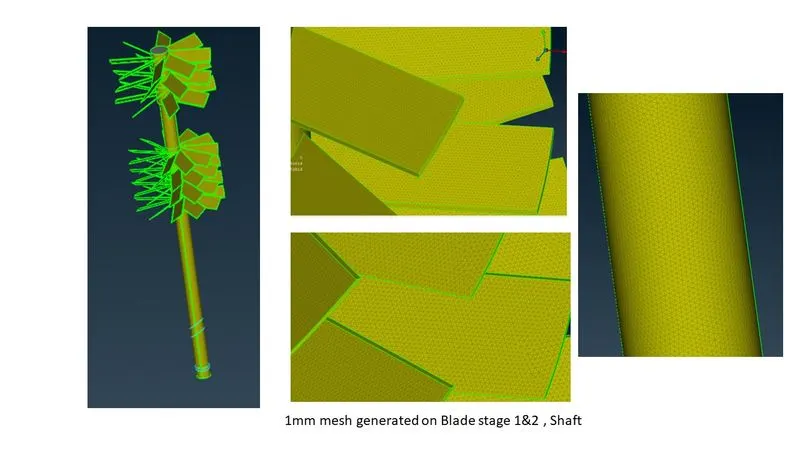
- Give a target length of 1 mm to blades at stages 1&2 and at the shaft to create a finer mesh that captures the sharp gradients that occur near these surfaces. The zones which are touching each other for different mesh lengths try to give an optimized one or a range.
- Move the model from the surface mesh deck to the volume mesh deck and detect the whole database of geometry for errors and warnings, if there is an error then remove them from the topo section.
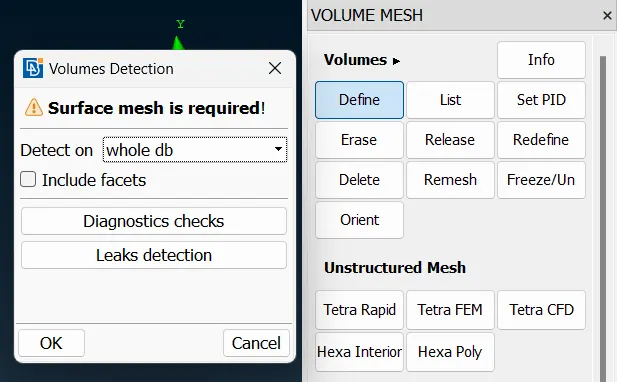
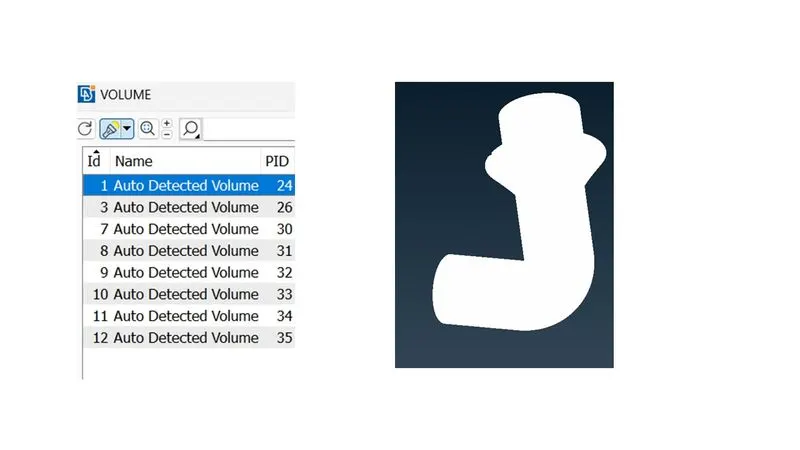
- Detect which volumes are responsible for fluid region and which are solid thickness parts, delete the regions which are not resposible for a fluid zone.
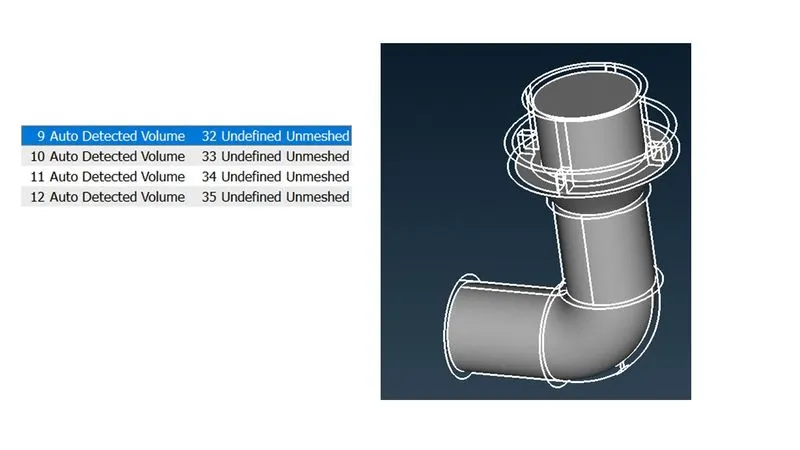
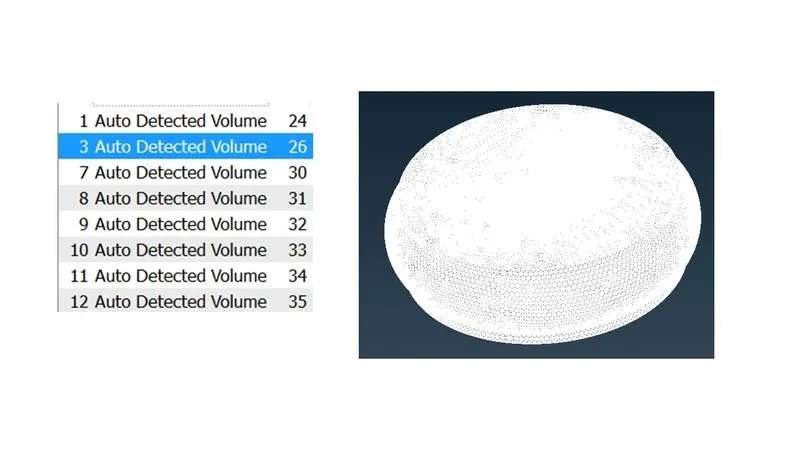
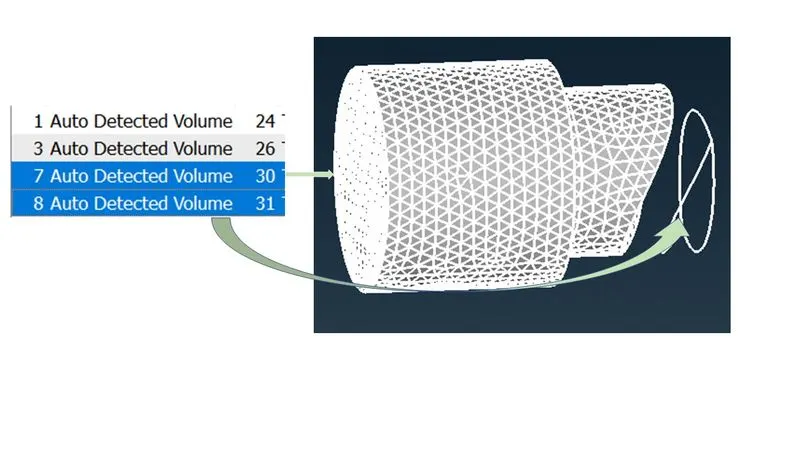
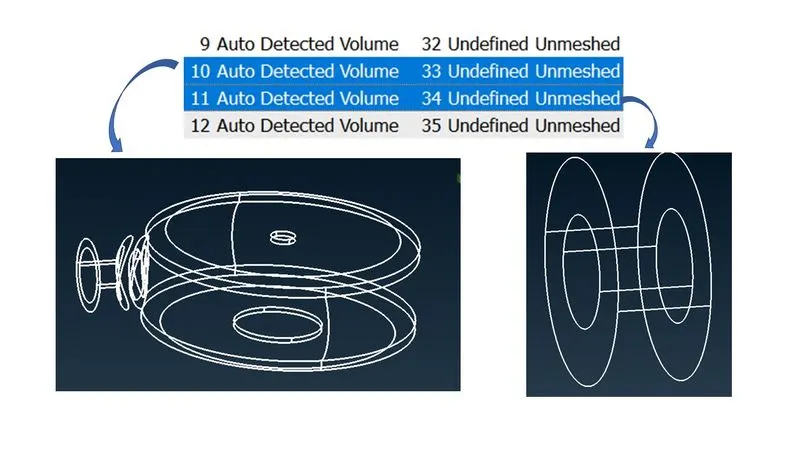
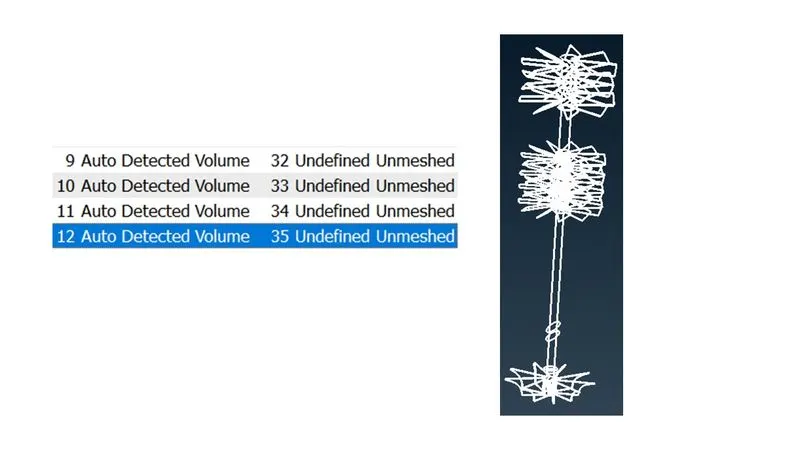
- Generate the tetra cfd mesh which is suitable for fluid flow applications.
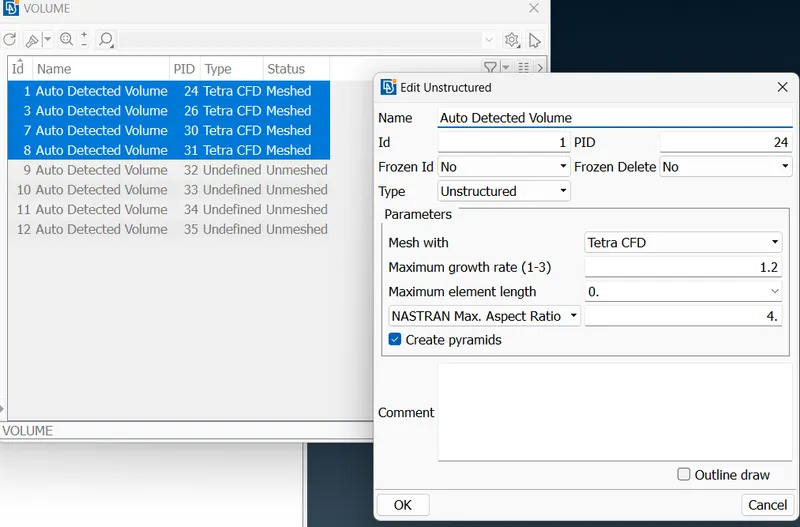
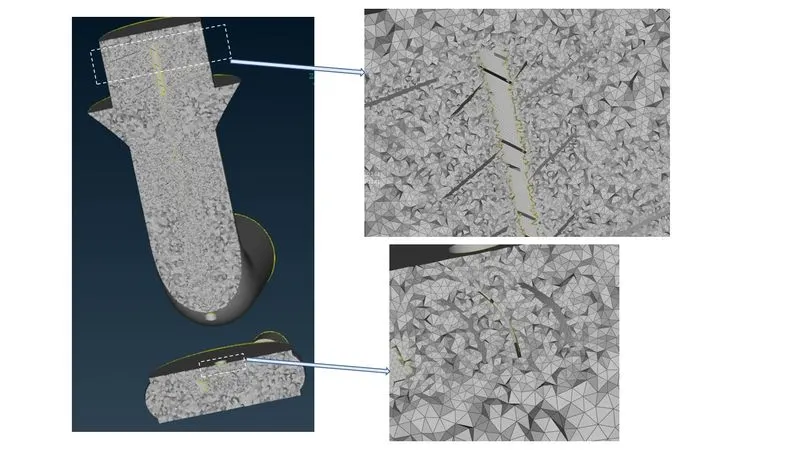
The volume mesh generated:
Learning outcomes:
- The topo clean-up and usage of the ansa tool.
- How to generate the surface mesh on normal surfaces and the surfaces which touch each other with different target lengths without any voids.
- Identifying the volumes responsible for the fluid volumes and generating the volume mesh on it.
Result:
- The finer mesh needs to generate near where the geometries change sharply, because of this large gradients may occur near that zone.
- The finer mesh is generated because of the lower target mesh length and which increases the no of the elements in the form of the tetra volumes.
Conclusions:
- We cannot mesh the entire domain with a low target mesh length which increases the number of elements and increases the computational effort and time.
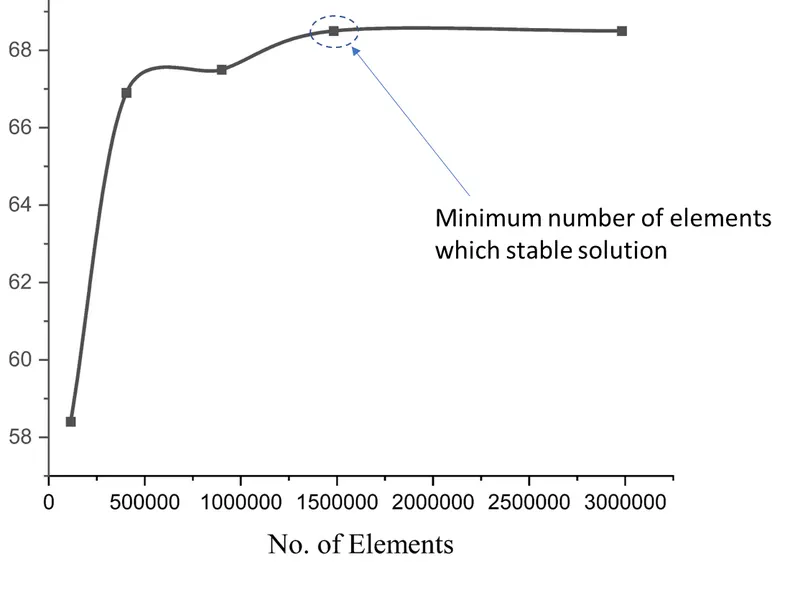
- The GIT (grid independence test ) leads to the number of elements being independent of the solution.