Week 4 Challenge : CFD Meshing for BMW car
Aim: To check and solve all geometrical errors on half portion, assign relevant PIDs, and generate a surface mesh on the BMW car geometry and wind tunnel surfaces.
Working Methodology :
The working methodology that is followed to generate mesh on any geometry is :
1. Import the geometry.
2. Check for geometrical errors.
3. Geometry cleanup.
4. Assigning relevant PIDs.
5. Meshing.
step-1: Import the geometry
First, the pre-designed geometry of the BMW car is imported into the ANSA.
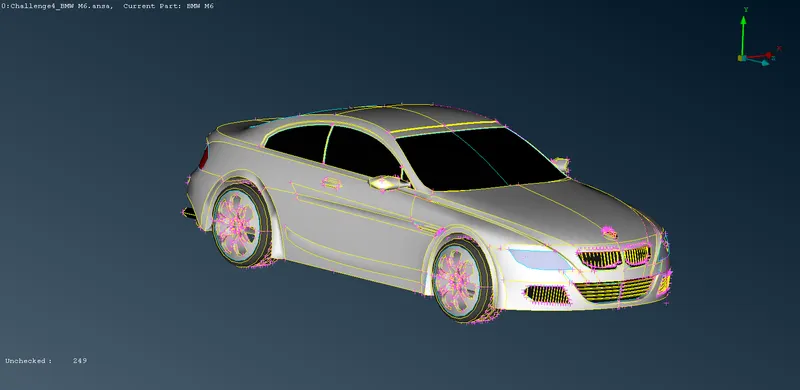
When observed closely all the features are approximated, so to capture the geometry accurately, all the edges are selected and given a length of 1mm.
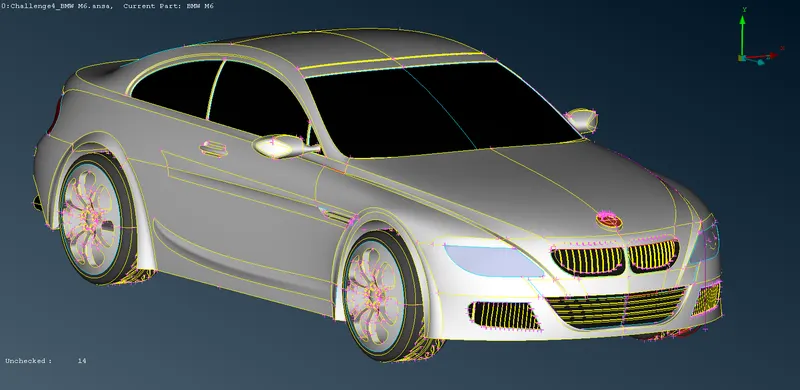
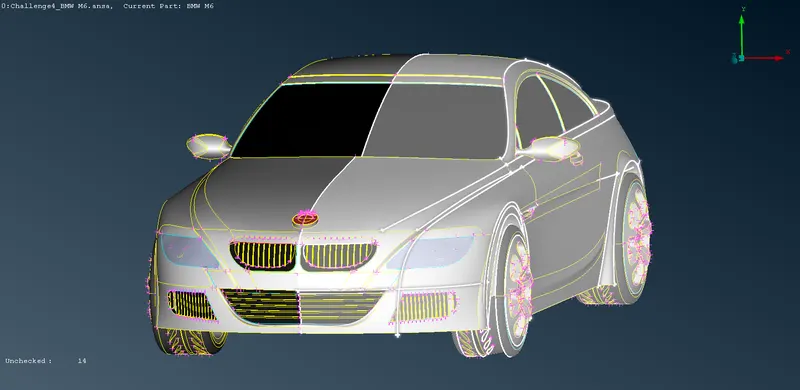
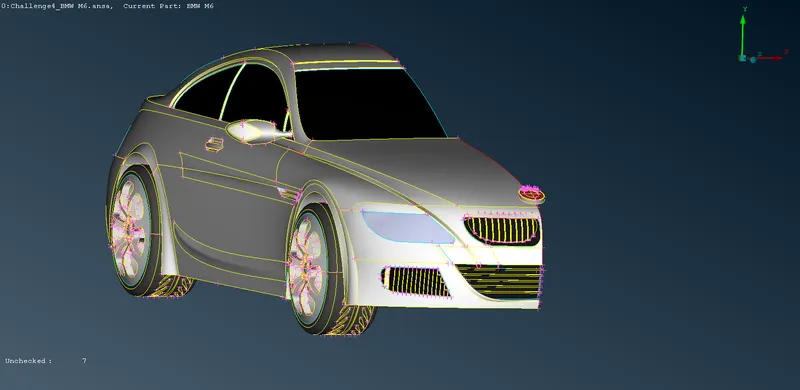
As this is a symmetrical model, half of the geometry will be deleted and worked upon, and finally, the mesh generated will be mirrored.
step-2: Check for geometrical errors
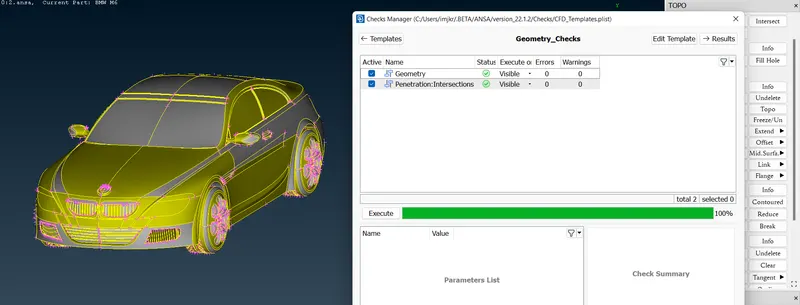
The Checks tool is used to check for geometrical errors like cracks, single CONS, intersections, penetrations, etc
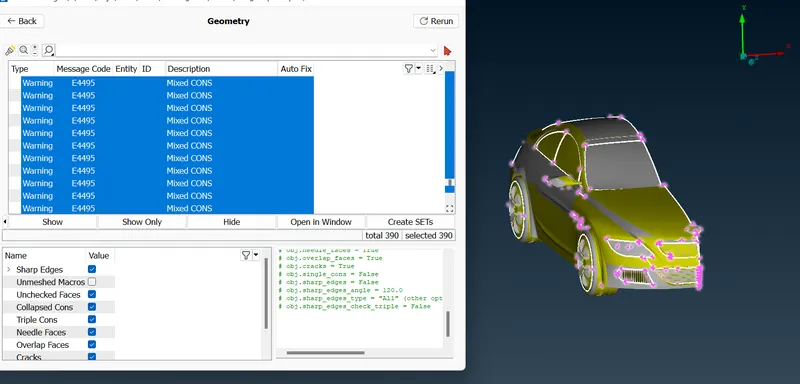
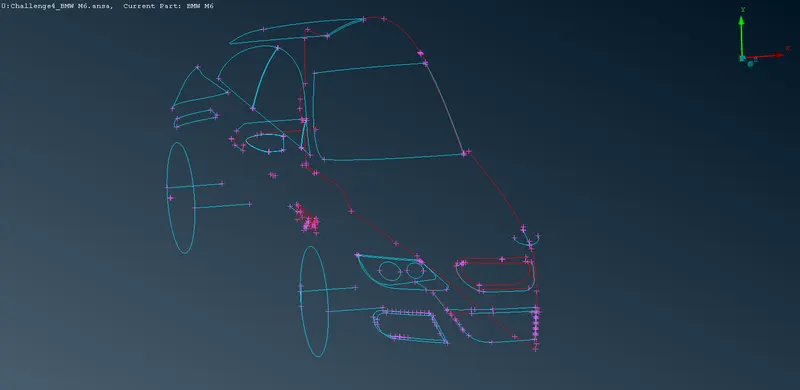
Step-3: Geometry cleanup
As this is a big and complicated model, the model is divided into different components and worked on separately.
1. Grill component :
a. grill 1 :
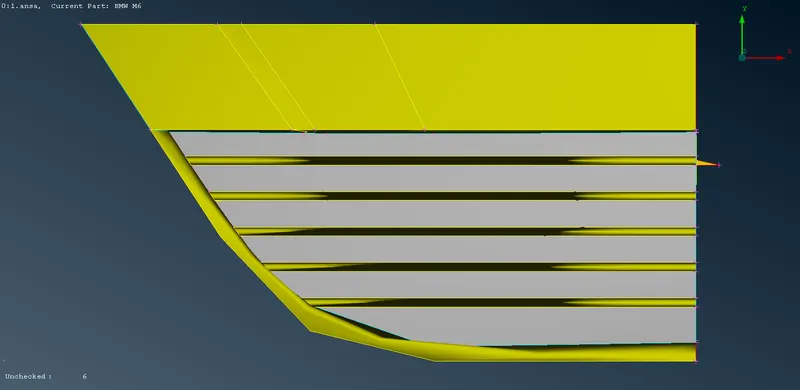
Initial grill component
The extra surfaces which create separate volumes are fixed by deleting the overlapping/internal surfaces.
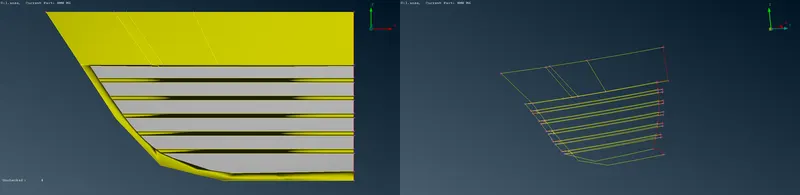
After geometry cleanup
b. grill 2 :
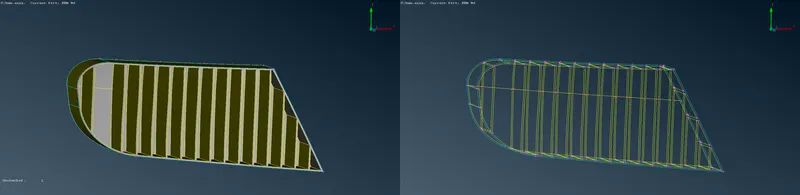
initial grill component
First, the extra overlapping surfaces (indicated by triple CONS) are deleted. The extra faces creating separate volumes are also deleted. Additionally, extra needle faces are deleted. Then, a water-tight model is created.
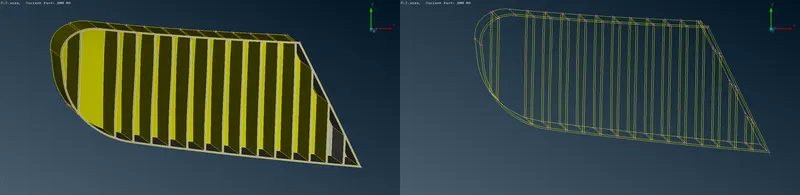
after geometry cleanup
c. grill 3 :
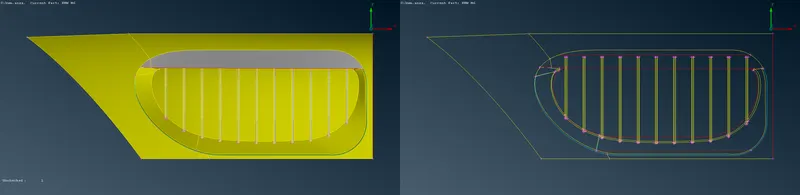
initial grill component
First, the extra overlapping/internal surfaces are deleted. Then, the CONS are projected on the grill, the extra grill surfaces are deleted, and the opening is closed. Thus a surface model is created which makes it a water-tight model.
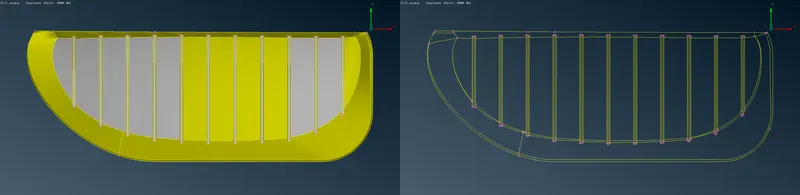
after geometry cleanup
2. lights :
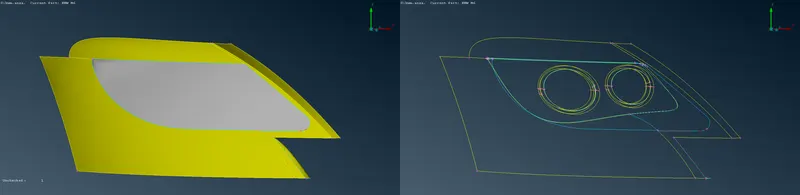
The features inside the lights are deleted, as the focus is to prepare our geometry to perform wind tunnel testing on the outer surface of the car geometry,
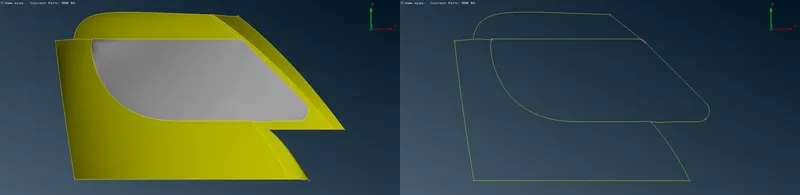
after geometry cleanup
3. optical rearview mirror :
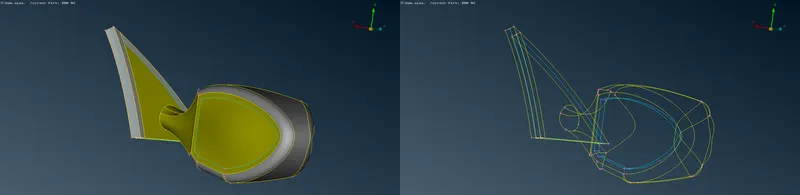
The extra overlapping/internal surfaces are deleted which makes the mirror hollow and also the face between the mirror and body is deleted making it a single volume.
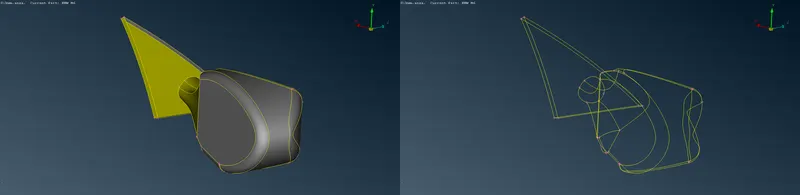
after geometry cleanup
4. Rims and tires:
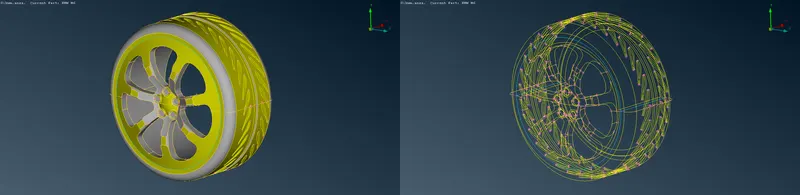
The extra overlapping/internal surfaces are deleted.
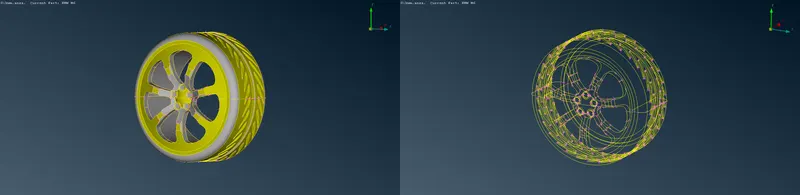
after geometry cleanup
5. windows :
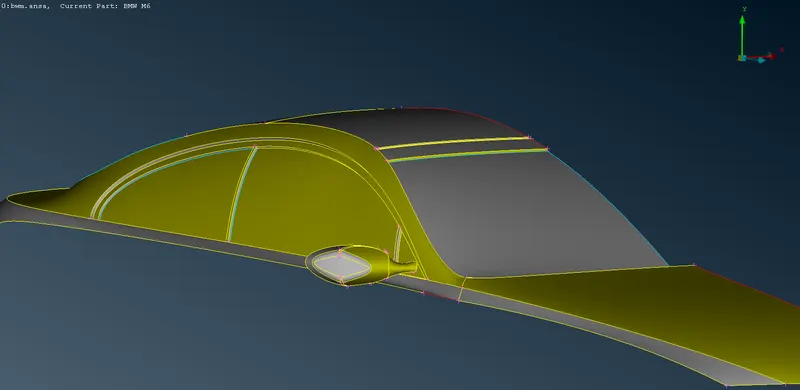
The extra overlapping/internal faces are deleted.
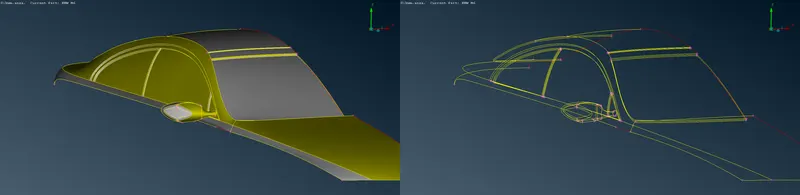
after geometry cleanup
6. logo :
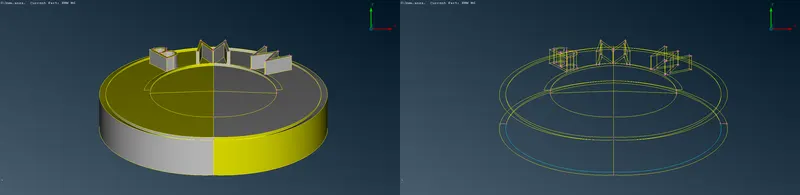
The faces creating separate volume is deleted. Small needle faces, where there is a chance of generating off elements, and its adjacent faces are deleted, and a new face is created replacing the needle faces.
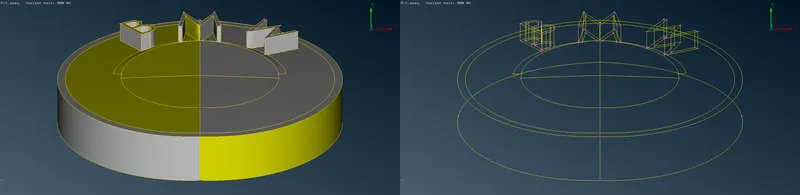
after geometry cleanup
7. Body :
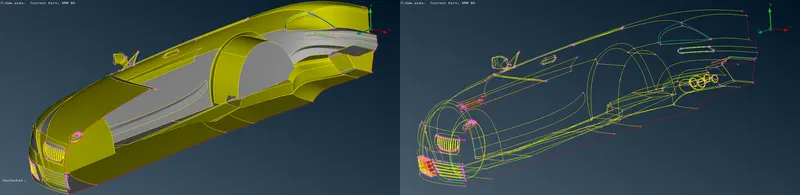
A lot of penetration and intersection errors are found on the floor part. To resolve this, the existing faces are deleted and new faces are created.
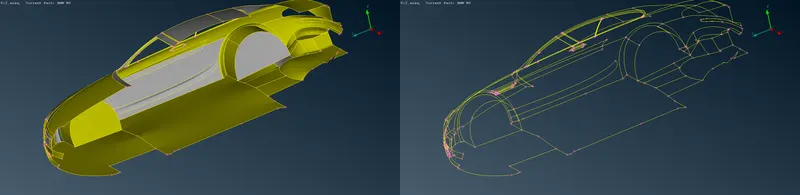
after geometry cleanup
8. Silencer :
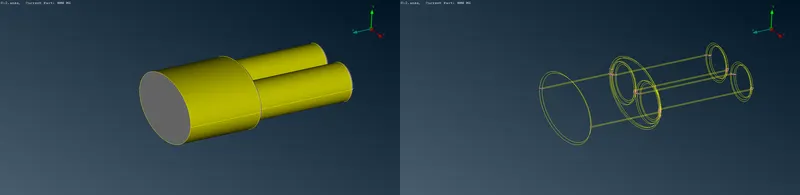
The internal surfaces which create separate volumes are deleted by releasing the CONS and deleting all the internal surfaces at once.
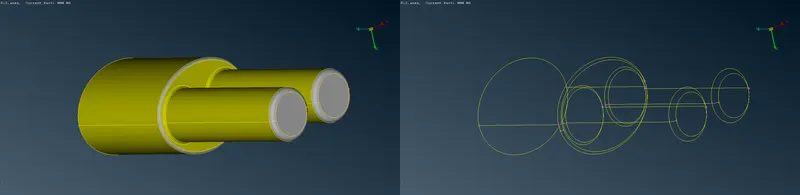
after geometry cleanup
After cleaning the geometry individually, the whole geometry is run for geometry and intersection errors in checks manager, and reflected on the other portion which was deleted earlier using transform tool.
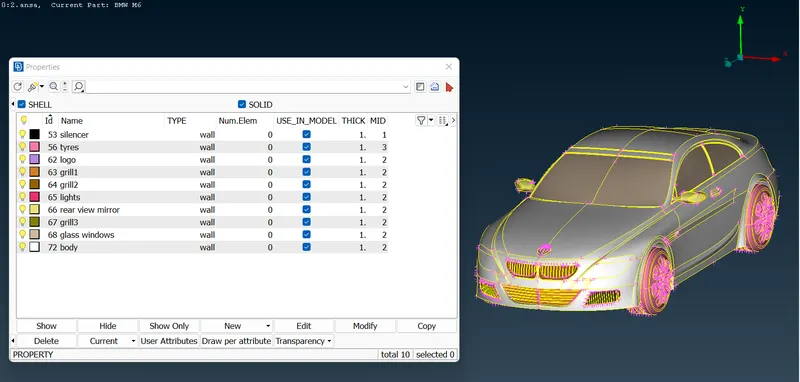
step-4 Assigning Relevant PIDs
Different regions are selected and relevant PID is given to it as shown below.
step-5 Mesh Generation :
surface meshing :
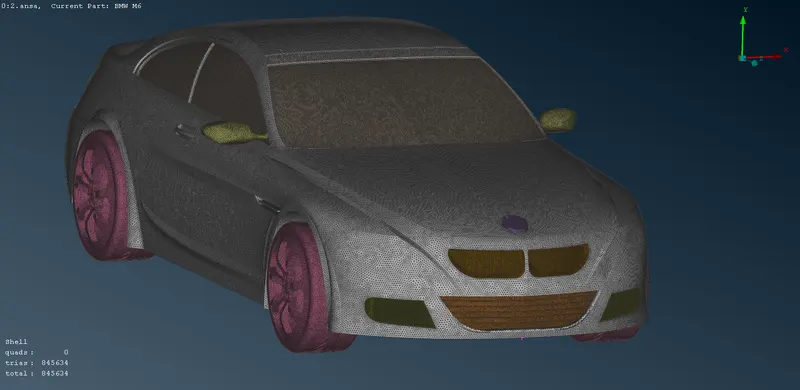
First, the mesh with a tolerance of 1mm for minimum and maximum lengths in the quality criterion, is generated on the car geometry using the CFD mesh tool. Different PIDs are given different mesh lengths as shown below:
- Body - 3 mm
- Lights - 4 mm
- Grills - 1 mm
- Rims and Tyres - 2 mm
- Optical Rear view mirror - 2 mm
- Window - 2 mm
- Silencer - 3 mm
- Logo - 1 mm
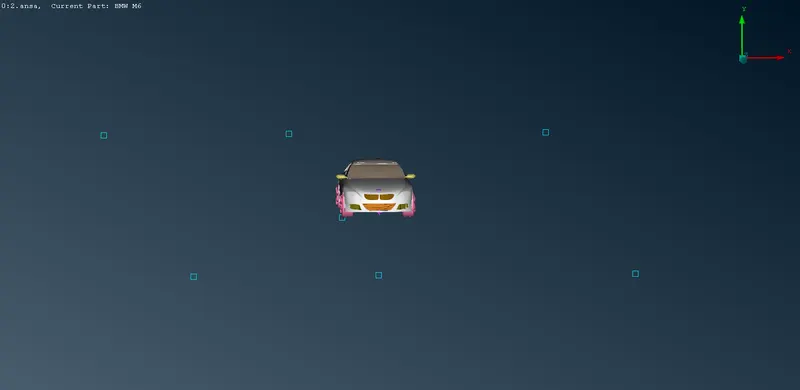
Then, the wind tunnel is created by creating points and then creating surfaces using the points.
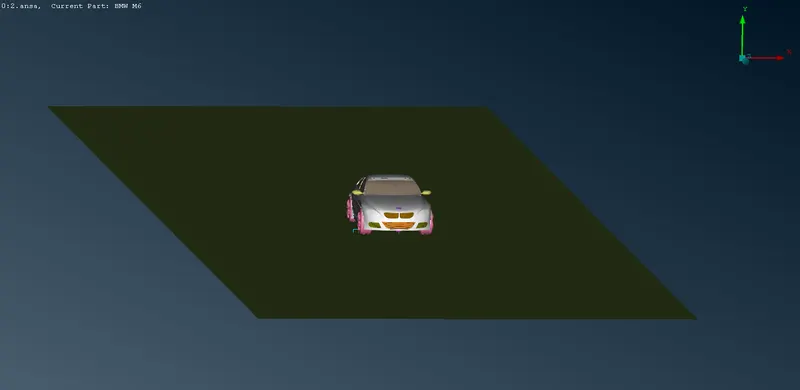
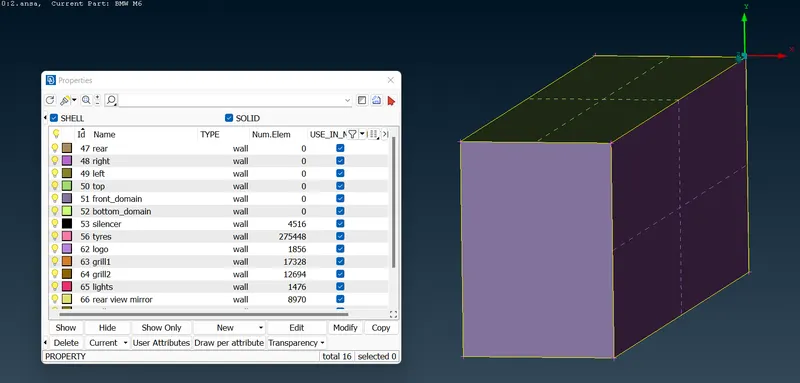
The top face of the domain is given a mesh length of 100mm while the bottom face is given 20mm. And the remaining faces mesh length should vary with a factor of 1.1 from bottom to top using the spacing tool in mesh deck.
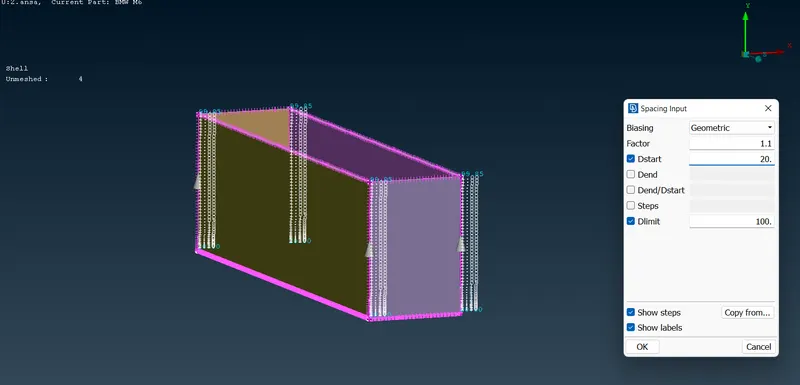
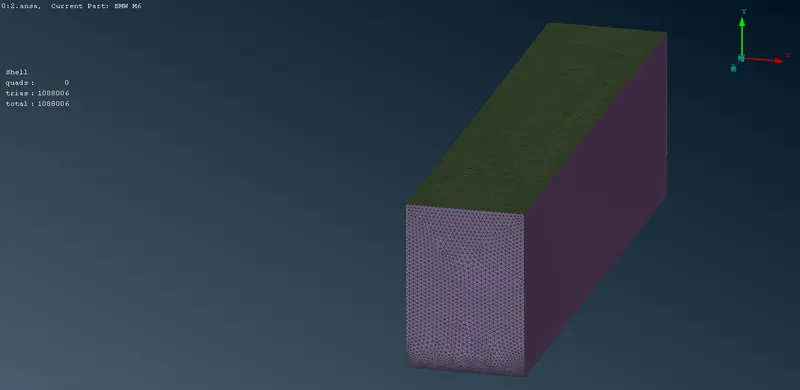
mesh on wind tunnel surfaces
Conclusion :
The surface mesh is generated on both the car geometry as well as the faces of the domain, which is the pre-step of generating volumetric mesh inside the fluid domain. As the generation of volumetric mesh requires a lot of resources, it is avoided.
drive link: https://drive.google.com/file/d/1kc5wnoNi9y3fKIhoruECK9X75BNuVT-g/view?usp=sharing