Week-4 : Basic Calibration of Single cylinder CI-Engine
1. SI vs CI comparison
| SI Engine | CI engine |
| Generally uses fuel as Gasoline | Generally uses fuel as Diesel |
| Combustion initiated by spark | combustion initiated by compressing charge to auto ignition temperature and pressure |
| Compression ratio generally lies between 8-12 | Compression ratio generally lies between 12-20 |
| Quality of fuel is denoted by Octane number | Quality of fuel denoted by Cetane number |
| Octane number denote ability to resist auto ignition | Cetane number denote ability to faster auto ignite |
| Engine speed generally is in range of 1000-12000 RPM | Engine speed generally is in range of 300-4000 RPM |
| Thermal efficiency is generally less than 35% due to lower CR | Thermal efficiency is generally higher than 35% due to high CR |
| Lower CR leads to lower peak pressure and temperature hence lower stresses hence engine structure is lighter than CI engine | Higher CR leads to higher pressure and temperature hence higher stresses hence engine structure is heavier than SI engine |
| Fuel can either be port or direct combustion chamber injected | Fuel can only be direct combustion chamber injected |
| Fuel Injection pressure is generally lower than CI i.e. <50bar | Fuel Injection pressure is generally very high than SI i.e. .>500bar |
| Combustion chamber size, CR and peak pressure-temperature is limited due to auto ignition (knocking) possibility | Combustion chamber size, CR and peak pressure-temperature is limited due ability of structure to sustain and not due to auto ignition |
| Charge before combustion is generally homogenious | Charge before combustion is generally heterogenous |
| Charge generally kept near to stoicheiometry or rich | Charge generally kept near to stoicheiometry or lean |
| Intake charge boosting by turbo or super charging is limited due to auto ignition | Intake charge boosting is done using Turbo or Super charging and it's not limited due to auto ignition |
| HC and CO is main problematic emmision from SI engine | NOx and Soot is main problematic emmision from CI engine |
| Flame front travel in cc during Combustion | no Flame front travel, combustion happens simultaniously at multiple locations in cc |
| Combustion noise is lower and smoother | Combustion noise is higher and rough |
| lower vibration | higher vibration |
| less complicated hence more reliable and less costly in maintainance | more complicated hence less reliable and more costlier in maintainance |
| More prefered for passenger vehicles and light duty applications | More prefered for commertial and off highway mobility and heavy duty applications |
| Emmits more green house gas and harmful to environment | emmits more hazardous gas and directly harmful to living beings |
| Three-way catalytic convertor, POC and LNT are primarily used technologies to control emmisions from combustion | DOC, DPF, SCR and AOC/ASC are primarily used technologies to control various emmisions from combustion |
| Fuel injection happens for much longer crank angle duration i.e. >100 degree CA and much before TDC | Fuel injection happens for much shorter crank angle duration i.e. <30 degree CA and very close to TDC |
| Alternate fuels can be used as CNG, LNG, Methanol, Ethanol, Hydrogen etc. | Alternate fuel can be used as Bio-Diesel |
2. BSFC : Break Specific Fuel Consumption in CI is always better than SI engine due to higher CR and thermal efficiency.
Exhaust temperature : Is generally higher in SI engine due to lower expansion post combustion and higher speed compared to CI
AFR : Air Fuel ratio for SI engineis 14.7:1 and for CI engine is 14.5:1. Yet to reduce peak temperature SI engine run Rich and maximum power can be obtained at 12.5:1 AFR. CI engine generally run lean even upto 18:1.
3. Impact on performance due to changing MFB 50.
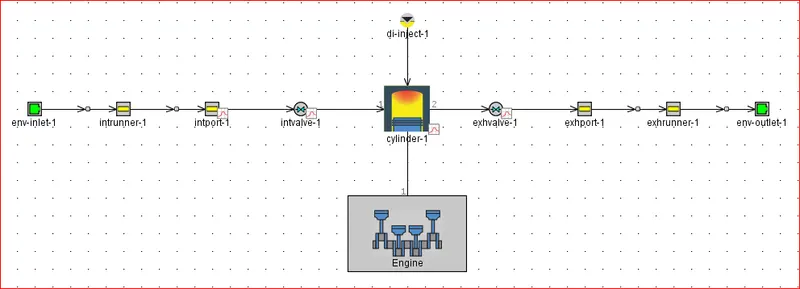
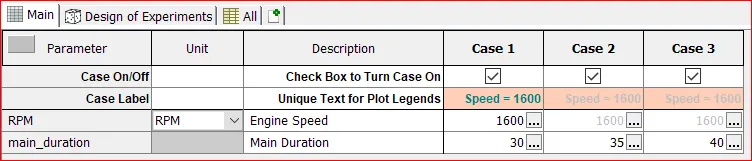
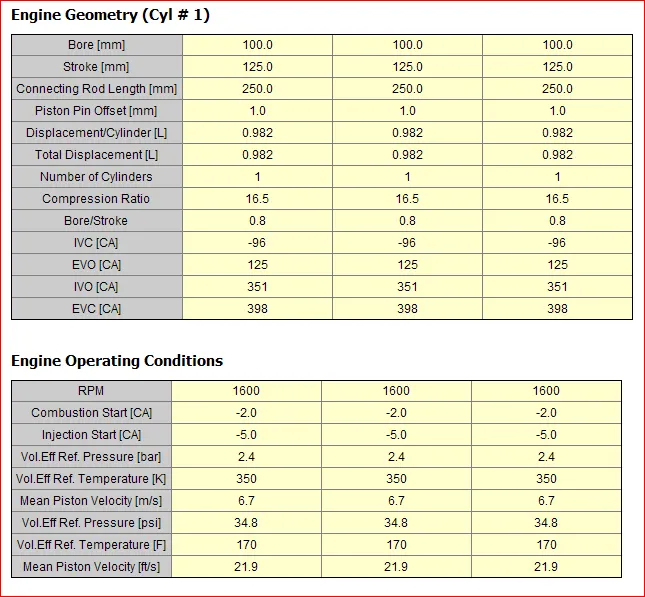
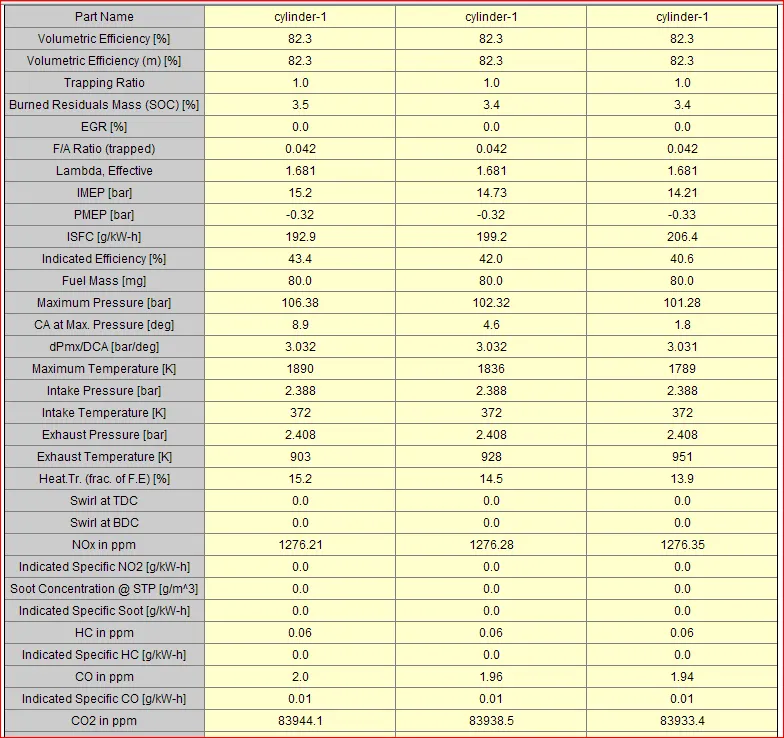
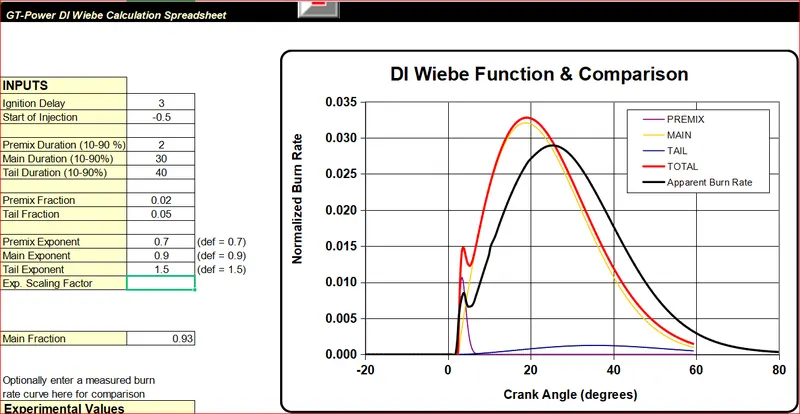
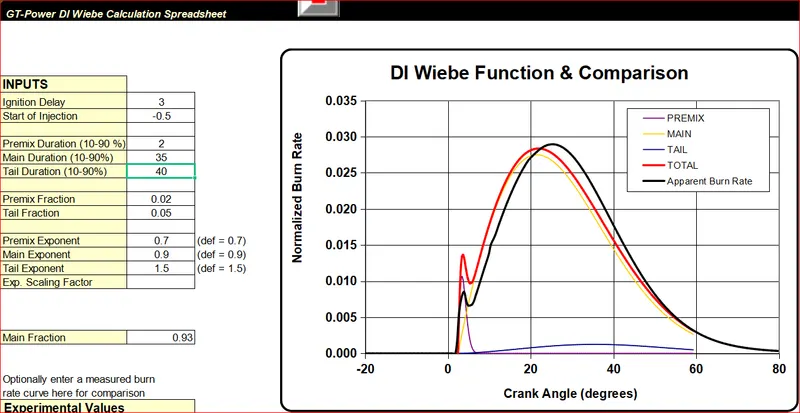
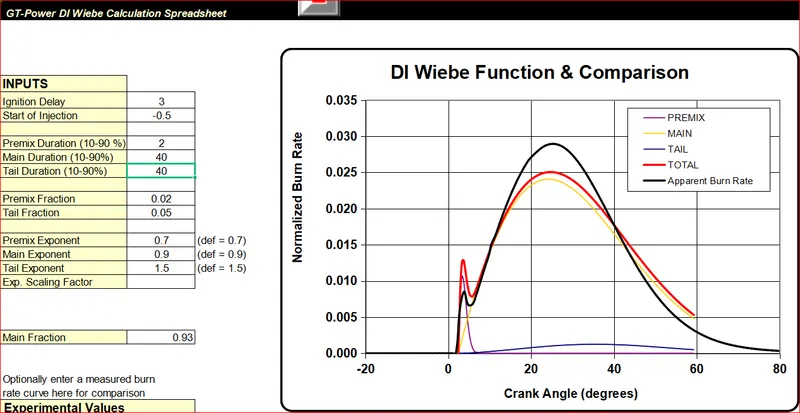
Out off all DI Wiebe co-efficients, 'main duration' has most significant impact on burn rate.
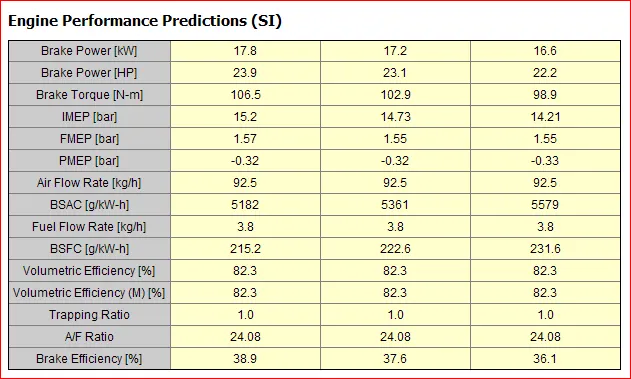
In above single cylinder DI engine i used three diferent values for main duration in same engine configuration to see its impact on burn rate (MFB50) as well as on engine performance and emmisions.
from Burn rate graph it is clear that lower the value of main duration, higher burn rate observed in more shorter duration i.e. combustion of fuel is faster.
from result it is clear that lower the value of main duration faster the burning of fuel, hence max. pressure and max. temperature is higher. this also justify why at lower 'main duration' shows higher power, higher torque and lower BSFC.
At lower 'main duration, due to higher amount of fuel being burned close to TDC, till piston reaches BDC, charge inside combustion chamber tends to lose more heat hence exhaust temperature drops more.