Week 2 : Basic Calibration of Single cylinder SI-Engine
1. Single Cylinder SI engine 1800RPM case
Important parameters :
environmental Inlet and Outlet pressure and temperature,
Intake and exhaust runner diameter, length and wall temperature,
Intake and exhaust port diameter, length, wall temperature and heat transfer multiplier base on material roughness,
Intake and exhaust valve referance diameter, cam timing angle, valve lash, crank angle vs valve lift data, flow co-efficient (array of forward and reverse CD),
injection delivery rate, timing angle, fuel temperature, location, fuel type, vaporized fuel fraction
Nozzle hole diameter, no. of holes per nozzle, nozzle discharge co-efficient
Bore, stroke, con-rod length, compression ratio, TDC clearance, pin to crank offset, engine type, engine speed, start of cycle, engine friction object, firing order (for multi cylinder)
Cylinder, head and piston wall temperature, initial stat object, heat transfer object, combustion object
Output:
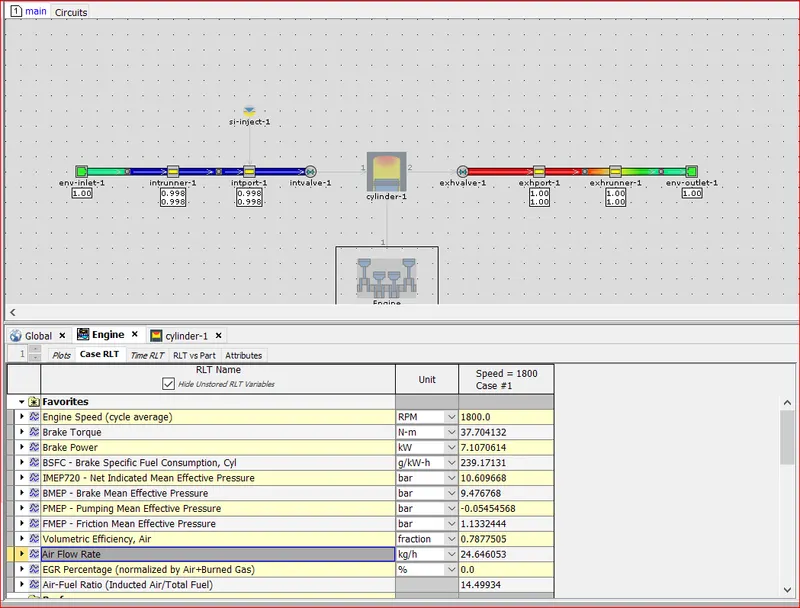
Air Flow rate = 24.646 kg/hr
BSFC = 239.17 gm/kw.hr
BMEP = 9.48 bar
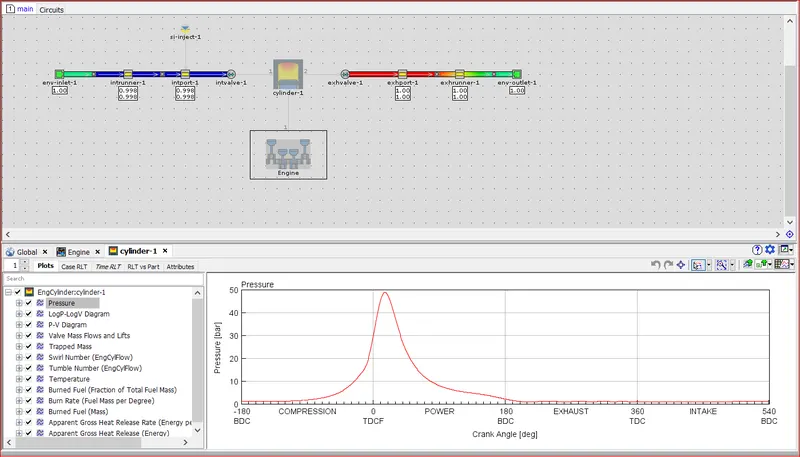
In-cyliner Pressure
2. increase Power Output by 10% at 3600 rpm
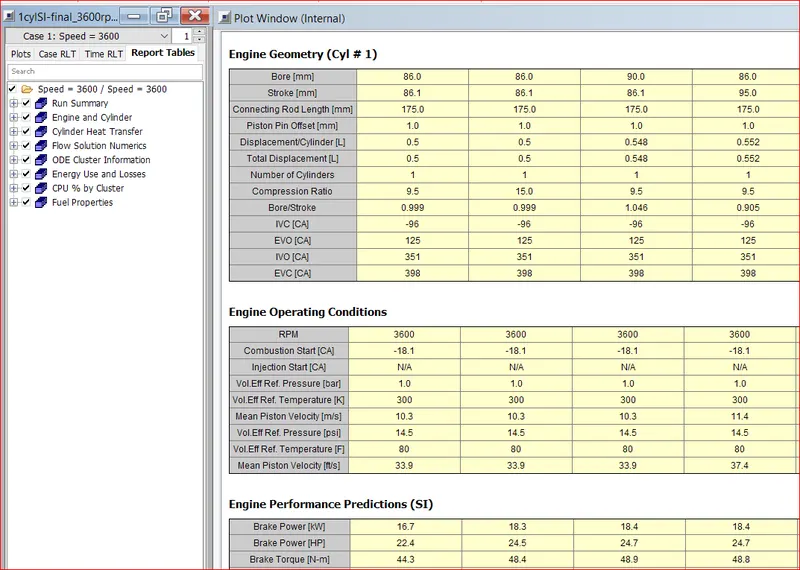
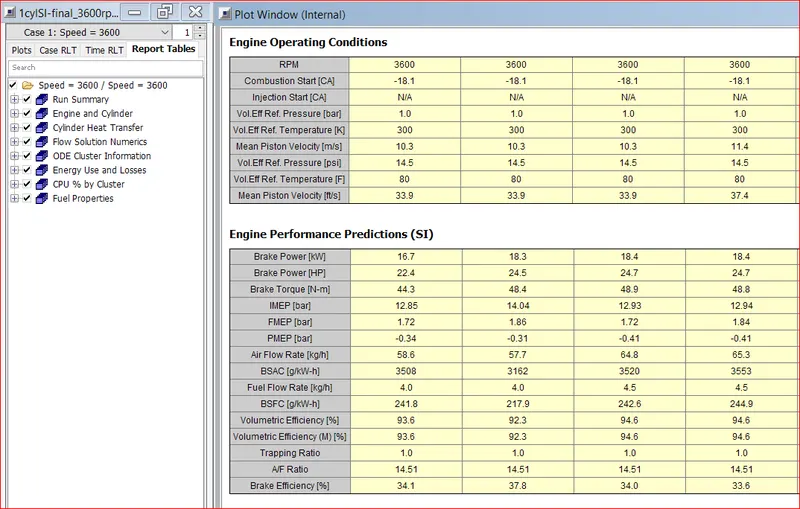
It is very evident from results that Anchor angle, Duration and Wiebe exponent has negligible impact on engine perfromance. There are no parameter remain other than changing diamentions of combustion chamber.
Surprisingly increase in intake valve diameter also shows negligible impact to increase engine power output.
Increasing or decreasing Connecting Rod length also shows negligible impact on engine power output.
Playing with valve timing could have been option but it need alteration in complete valve lift curve and CD which is not possible without proper data set.
Hence
To increase power output by 10% with same 3600 RPM I see three possible option,
i. Increasing CR to 15 from 9.5 but this is unrealistic option for gasoline fueled IC engine, as in reality it will lead to heavy knocking or need very high rating gasoline with additives to sustain such high CR.
ii. Increasing Stroke from 86mm to 95mm. But this increase BSFC by 1%. Also flame front travelling distance will increase by 9mm which is significant and can signifiantly increase knocking possibilities.
iii. Increasing Bore from 86 mm to 90 mm i.e 2 mm increase in existing engine diameter. if original engine is made with extra tolerances, changing piston and piston rings in addition to machining of bore can easily make this possibility as reality. Also as flame front travelling distance is incresed just by 2mm i.e. 5% it pose comparitively less possibility of knocking. Also increase in BSFC is less than 0.5% makes this case further more attractive to implement.