Week-4 : Basic Calibration of Single cylinder CI-Engine
1.Compare SI vs CI and list down differences (assignment no 2-SI)
Ans:-
The operating principle of SI Engine and CI Engine is totally Different.
| SI Engine | CI Engine | |
| (1) | SI Engine is Spark Ignition Engine i.e there is spark Plug to Ignite mixture of Air and Combustion Fuel Gasoline. | CI Engine is Self Ignition Engine in which only Air is compressed in Combustion Chamber and it increase Temperature and Pressure of Air. when fuel is injected into Combustion Chamber it ignite |
| (2) | SI Engine has Low compression Ratio. | CI Engine is High compression Ratio |
| (3) | In SI Engine Air and Fuel is mixed and then injected into combustion Chamber. So SI Engine Cylinder Head has Direct Inlet Port and tumble flow in Combustion Chamber | In CI Engine Non Homogeneous Mixture of Fuel and Air is generated in Combustion Chamber. therefore Cylinder Head has Helical Port to Provide Votrex flow to air so that when fuel injected, it create Homogenous Mixture |
| (4) | Fuel Used in SI Engine is Petrol,CNG and LPG as these fuel require almost same compression Ratio. | Fuel used in CI Engine is Diesel and Biodiesel. |
| (5) | Problem comes in SI Engine is Knocking | Problem comes in CI Engine is detonation |
| (6) | Emission Norms to be control in SI Engine is CO,NOx,HC | Emissioin Norms to be control in CI Engine is Co,Nox,HC and SOOT. |
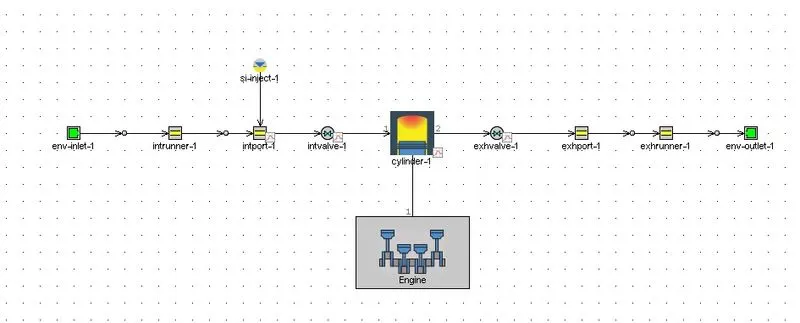
SI Engine Layout in assignment 2
SI Engine is single cylinder Engine with fuel injection in Inlet Port and mixture is injected in combustion chamber as shown Below
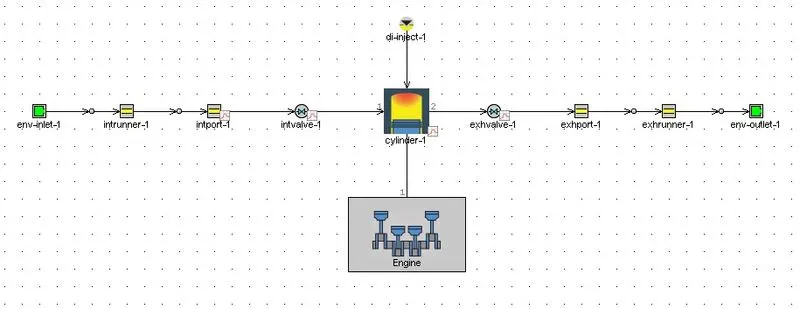
CI Engine Layout
In CI Engine fuel is direct Injected into combustion Chamber as shown below
2.Comments on following parameters
- BSFC
- Exhaust Temperature
- A/F ratios
BSFC:- It is Brake specific fuel consuption and it is rate of fuel consuption divided by the powe produced.The fuel consuption characterstic of an engine are generally expressed in terms of specific fuel consuption in Kilograms of fuel per kilowatt-Hour.
BSFC= Fuel consuption per unit time/ Brake Power
Exhaut Temperature It is temperature at exhaust Manifold of Engine and CI Engine Running at 2500 RPM has Exhasut Temperature 650-700 deg centigrade approx.
A/F Ratio
Air-fuel ratio (AF or AFR) is the ratio between the mass of air ma and mass fuel mf, used by the engine when running. For a gasoline (petrol) engine, the stoichiometric air-fuel ratio is around 14.7:1. This means that, in order to burn completely 1 kg of fuel, we need 14.7 kg of air. When the air-fuel ratio is higher than the stoichiometric ratio, the air-fuel mixture is called lean. When the air-fuel ratio is lower than the stoichiometric ratio, the air-fuel mixture is called rich. For example, for a gasoline engine, an AFR of 16.5:1 is lean and 13.7:1 is rich.
Compression ignition (CI) engines usually run on diesel fuel. Due to the nature of the combustion process, CI engines always run on lean mixtures, with AFR between 18:1 and 70:1. The main difference, compared with SI engines, is that CI engines run on non homogeneous air-fuel mixtures, while SI run on homogeneous mixtures
3.Change MFB 50 and observe impact on performance
MFB50 represent 50 percent fuel combustion with respect to crank angle.It effect Performance and emmission of Engine.
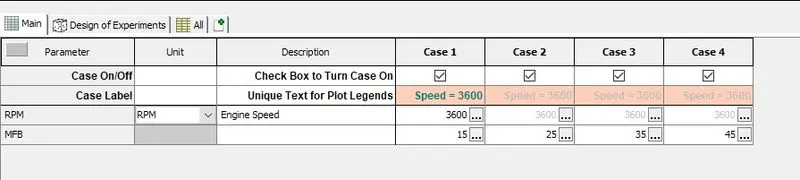
A CI engine as shown below is run on MFB with different crank angle and show results of change of Engine Performace Parameter like Power,Torque,BSFC and Emmission values.
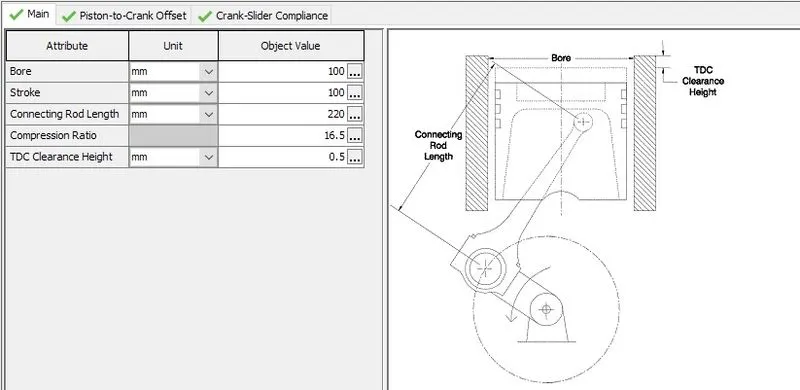
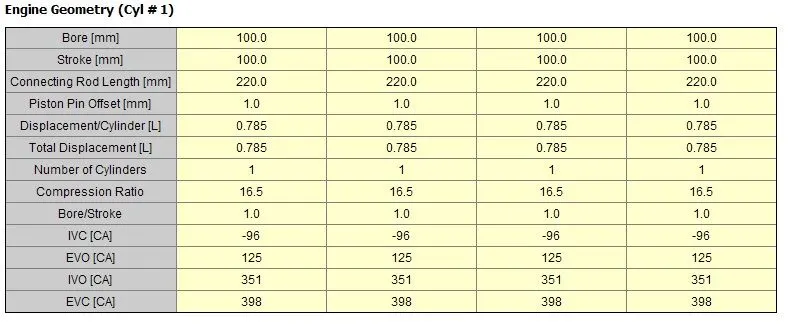
Engine geometric parameter like Bore,Stroke, Conrod length and compression ratio are given below.
Engine Run at 3600 RPM with Controlling parameter of MFB Having Crank angle 15,25,35 and 45 deg Respectively.
Result
After running the case setup open results in GT Post.
Engine Geometric Parameters are given below
Engine Performance Parameters
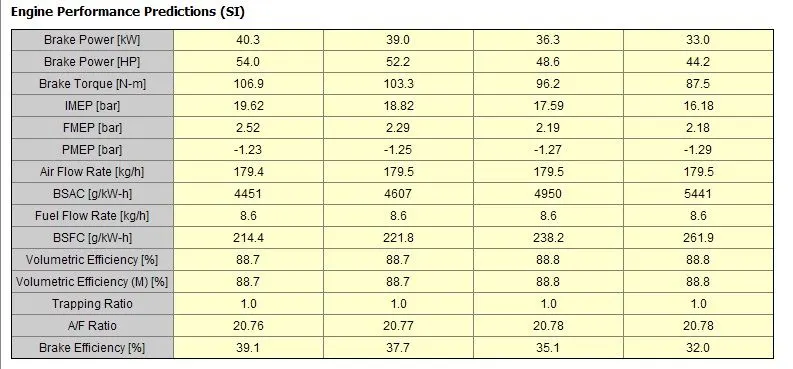
It shows Performance Parameters of Engine at MFB at four different crank angle Respectively. It shows that when 50 percent fuel burn in 15 deg of crank angle it Produce More Power 40.3 kw and Torque 106.9Nm which is higher than other three cases. AT case 1 BSFC is 214.4 g/Kw-h improved than other cases.
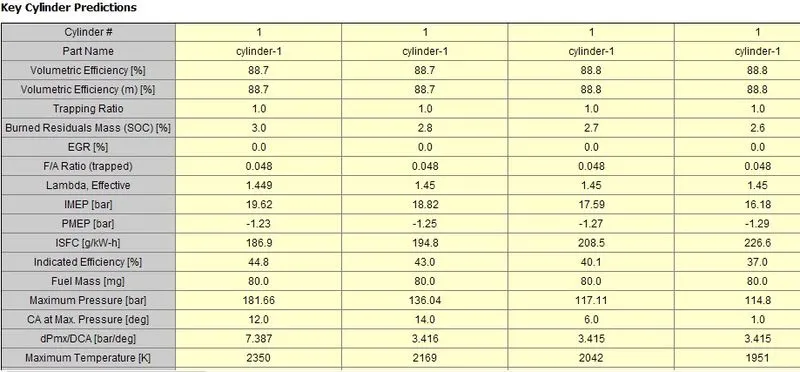
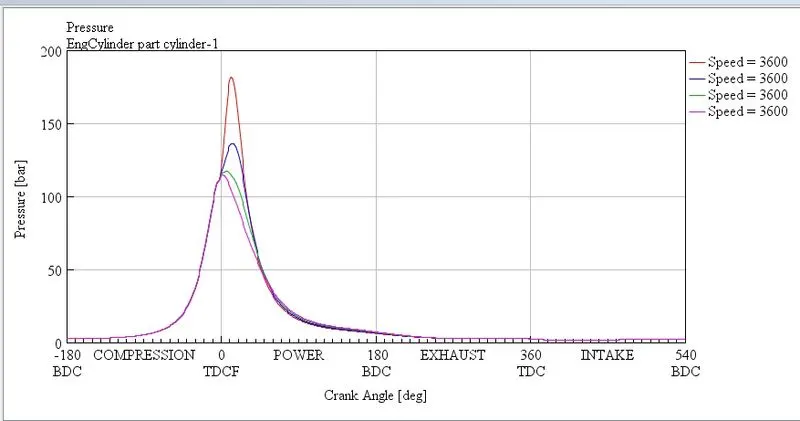
But due to Sudden burning of Fuel it create Maximum pressure of 181.66 bar in combustion Chamber which is far greater than other cases. Sudden High Pressure will Produce Noise and Vibration in Engine.
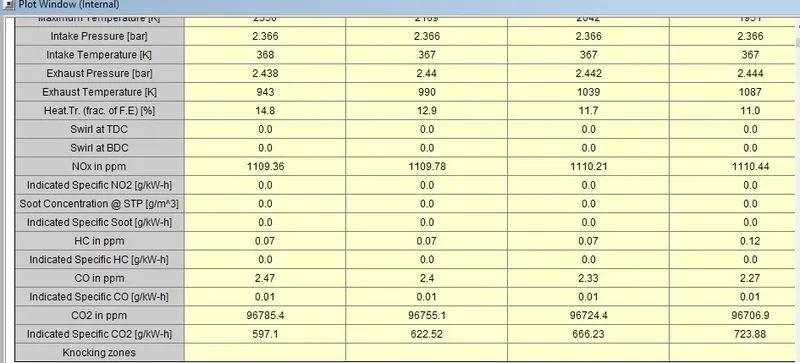
The Emmission Produce in four cases are given below which is almost same in all cases.
Graphical Results
Pressure
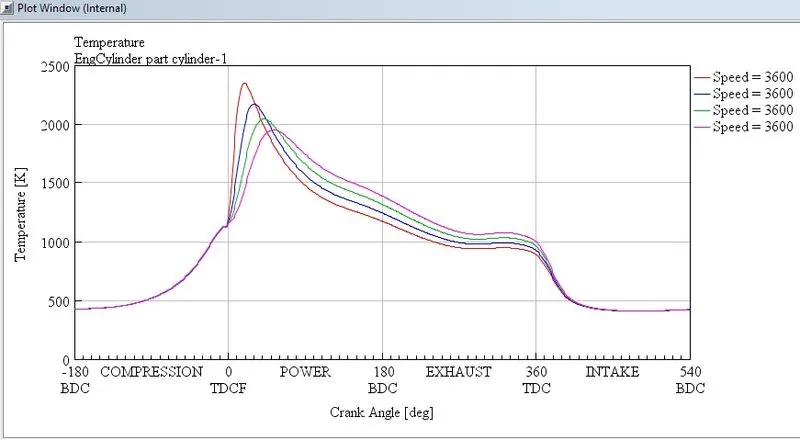
Graphical Results of 4 cases of MFB at 3600 RPM at 15,25,35 and 45 deg crank angle is shown below respectively.
MFB 50 at 15 deg CA has higher Incylinder Pressure that other cases Repectively.
Temperature
MFB 50 at 15 deg CA has higher Incylinder Temperature that other cases Repectively.
BURN RATE
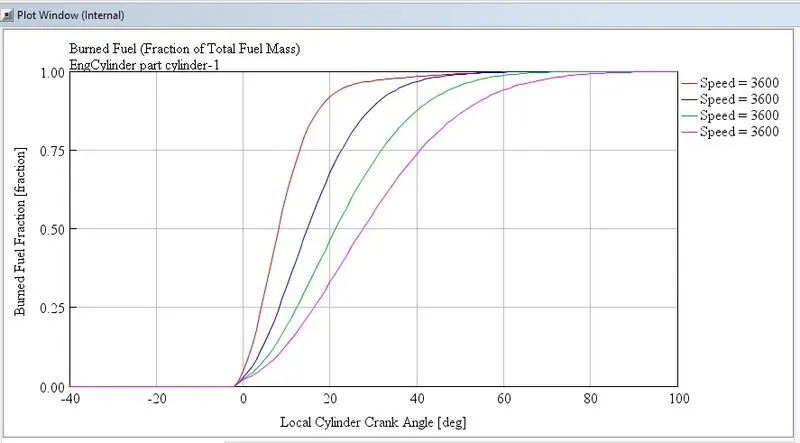
Burned fuel Fraction of MFB at 15 deg CA is faster that othe three cases
Conclusion
(1) MFB in less crank angle it means Burn rate of fuel is faster. It has higher Power, Torque and lower BSFC which is actually requried from Engine
(2) Drawback of MFB in less crank angle Produced Higher Incylinder Pressure which increase hgher Noise and Vibration of engine.
(3) Incylinder Temperature is also Higher for MFB in less Crank Angle than other 3 cases.