Week 5: Prandtl Meyer Shock problem
Problem:- Define Shock wave and Boundry condition for shock wave.In the Prandtl Meyer shock problem, look at the effect of SGS temperature value on cell count and the shock location.
Solution:-
Boundry condition
There are Different boundary conditions in the fluid simulation Problem.
(1) Velocity Boundry conditions
1.1 Slip Boundry conditions
1.2 Dirichlet Condition
1.2.1 No Slip Boundry Condition(Dirichlet Condition)
1.3 Law of wall
(2) Nuemann Boundry conditions
(3) Robin boundary Condition
Drichlet boundry condition is type of Boundry condition,where numetical value is given directly to boundry faces.It may also called Fixed condition.Therefore it ii used when a value needs to be imposed at a boundry. For example,a no slip condition is a Drichlet condition because it sets the value of the valocity to zero.
Nuemann Boundry Conditions
Nuemann boundary condition specifies the derivative of a variable at a boundary.It is used rather than actual value when a certain rate of change in value needs to be imposed for a variable at Boundary.These conditions are suitable for more complex behaviour.
Robin Boundary Conditions
Robin Boundary condition are combination of the value and derivatives of variable of boundary.
Shock
Shock is a type of propagating disturbance that moves faster than the local speed of sound in the medium. shock wave carries energy and can propagate through a medium at abrupt change and discontineouty. shock charactrized by change in pressure,Temperature and density of the medium.The energy and speed of a shock wave alone dissipates relatively quickly with distance. When a shock wave passes through matter, Energy is preserved but entropy increases. This change in the matter's properties manifests itself as a decrease in the energy which can be extracted as work, and as a drag force on supersonic object; shock waves are strongly irreversible Process.Shock waves are formed when a pressure front moves at supersonic speeds and pushes on the surrounding air. At the region where this occurs, sound waves travelling against the flow reach a point where they cannot travel any further upstream and the pressure progressively builds in that region.A high pressure shock wave rapidly forms.
Normal Shock
In elementary fluid mechanics utilizing ideal gases, a shock wave is treated as a discontinuity where entropy increases over a nearly infinitesimal region. Since no fluid flow is discontinuous, a control volume is established around the shock wave, with the control surfaces that bound this volume parallel to the shock wave (with one surface on the pre-shock side of the fluid medium and one on the post-shock side). The two surfaces are separated by a very small depth such that the shock itself is entirely contained between them. At such control surfaces, momentum, mass flux and energy are constant.
Oblique Shock
oblique shock wave is a shock wave that is inclined with respect to the incident upstream flow direction. It will occur when a supersonic flow encounters a corner that effectively turns the flow into itself and compresses. The upstream streamlines are uniformly deflected after the shock wave.The most common way to produce an oblique shock wave is to place a wedge into Supersonic e oblique shock wave consists of a very thin region across which nearly Discontineous changes in the thermodynamic properties of a gas occur. While the upstream and downstream flow directions are unchanged across a normal shock, they are different for flow across an oblique shock wave.
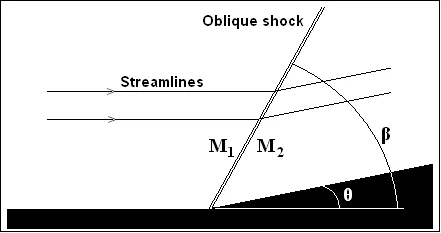
For a given Mach Number M1, and corner angle, θ, the oblique shock angle, β, and the downstream Mach number, M2, can be calculated. Unlike after a normal shock where M2 must always be less than 1, in oblique shock M2 can be supersonic (weak shock wave) or subsonic (strong shock wave). Weak solutions are often observed in flow geometries open to atmosphere (such as on the outside of a flight vehicle). Strong solutions may be observed in confined geometries (such as inside a nozzle intake). Strong solutions are required when the flow needs to match the downstream high pressure condition. Discontinuous changes also occur in the pressure, density and temperature, which all rise downstream of the oblique shock wave.
The θ-β-M equation

It is more intuitive to want to solve for β as a function of M1 and θ.
Maximum deflection angle[edit]
Within the θ-β-M equation, a maximum corner angle, θMAX, exists for any upstream Mach number. When θ > θMAX, the oblique shock wave is no longer attached to the corner and is replaced by a detached bow shock. A θ-β-M diagram, common in most compressible flow textbooks, shows a series of curves that will indicate θMAX for each Mach number. The θ-β-M relationship will produce two β angles for a given θ and M1, with the larger angle called a strong shock and the smaller called a weak shock. The weak shock is almost always seen experimentally.
The rise in pressure, density, and temperature after an oblique shock can be calculated as follows:




Bow Shock
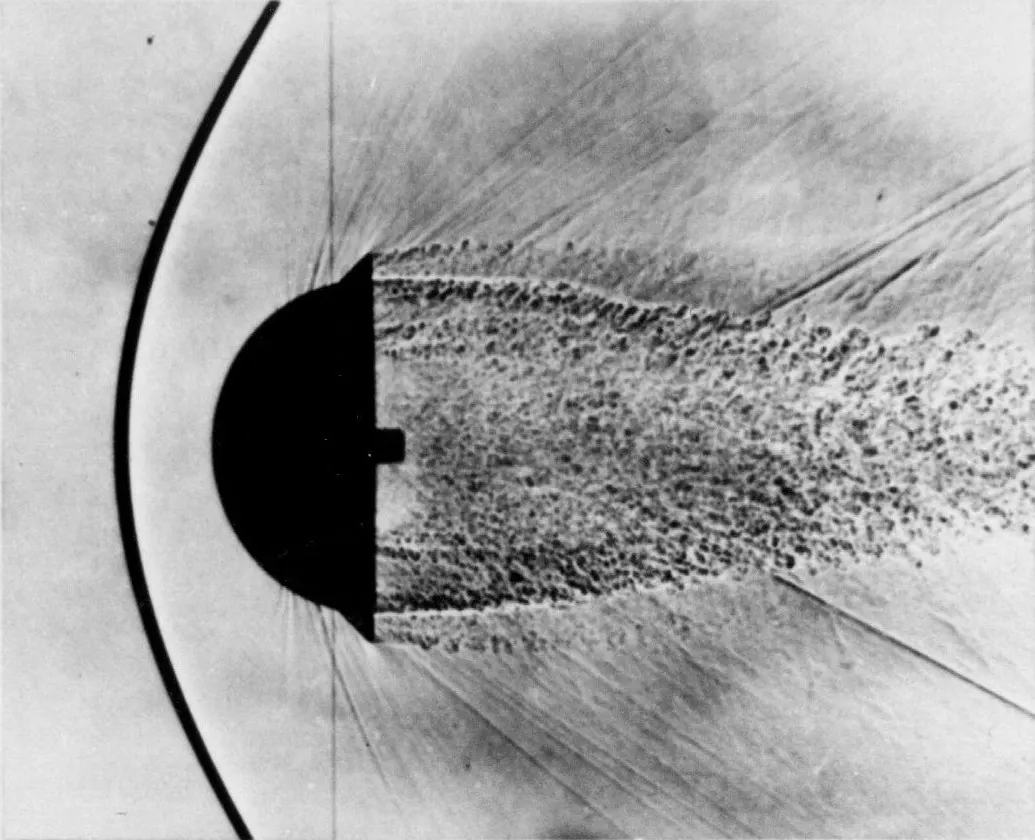
A bow shock, also called a detached shock or normal shock, is a curved propagating disturbance wave characterized by an abrupt, nearly discontinuous, change in Pressure, Temperature and Density. It occurs when a Supersonic flow encounters a body, around which the necessary deviation angle of the flow is higher than the maximum achievable deviation angle for an attached Olique. Then, the Oblique transforms in a curved detached shock wave. As bow shocks occur for high flow deflection angles, they are often seen forming around blunt bodies, because of the high deflection angle that the body impose to the flow around it.
Phenomenon types
Moving shock
- Usually consists of a shock wave propagating into a stationary medium
- In this case, the gas ahead of the shock is stationary (in the laboratory frame) and the gas behind the shock can be supersonic in the laboratory frame. The shock propagates with a wavefront which is normal (at right angles) to the direction of flow. The speed of the shock is a function of the original pressure ratio between the two bodies of gas.
- Moving Shock are usually generated by the interaction of two bodies of gas at different pressure, with a shock wave propagating into the lower pressure gas and an expansion wave propagating into the higher pressure gas.
- Examples: Balloon bursting
Detonation wave
- A Detonation wave is essentially a shock supported by a trailing Exothermic reaction. It involves a wave travelling through a highly combustible or chemically unstable medium. The chemical reaction of the medium occurs following the shock wave, and the chemical energy of the reaction drives the wave forward.
- A detonation wave follows slightly different rules from an ordinary shock since it is driven by the chemical reaction occurring behind the shock wavefront. I.
- When a shock wave is created by High Explosive such as TNT (which has a detonation velocity of 6,900 m/s), it will always travel at high, supersonic velocity from its point of origin.
Bow shock (detached shock)
- These shocks are curved and form a small distance in front of the body. Directly in front of the body, they stand at 90 degrees to the oncoming flow and then curve around the body. Detached shocks allow the same type of analytic calculations as for the attached shock, for the flow near the shock. They are a topic of continuing interest, because the rules governing the shock's distance ahead of the blunt body are complicated and are a function of the body's shape. Additionally, the shock standoff distance varies drastically with the temperature for a non-ideal gas, causing large differences in the heat transfer to the thermal protection system of the vehicle. S
- Such a shock occurs when the maximum deflection angle is exceeded. A detached shock is commonly seen on blunt bodies, but may also be seen on sharp bodies at low Mach numbers.
prandtl meyer shock Problem
PRANDTL-MEYER EXPANSION WAVES
Expansion waves are in many ways the antithesis of shock waves. They arise when a supersonic flow is turned away from itself. An expansion region is built up of an infinite number of weak Mach waves. Since each Mach wave is isentropic the entire expansion region is isentropic, which means that the isentropic relations may be used over the expansion region.
over an expansion region we will get an increase in flow Mach number, decrease in pressure, decrease in density and decrease in temperature.
Starting from a geometrical analyze of the slight change in flow angle over one single Mach wave and assuming calorically perfect gas, the Prandtl-Meyer function is derived. The Prandtl-Meyer function can be used to obtain the downstream flow Mach number after a expansion region given the upstream Mach number and deflection angle.
Setup case in Converge Studio
simulation is run under three different boundry condition
(1)AMR Sub grid criterion= 0.05 K
(2)AMR Sub grid criterion= 0.02 K
Case Setup
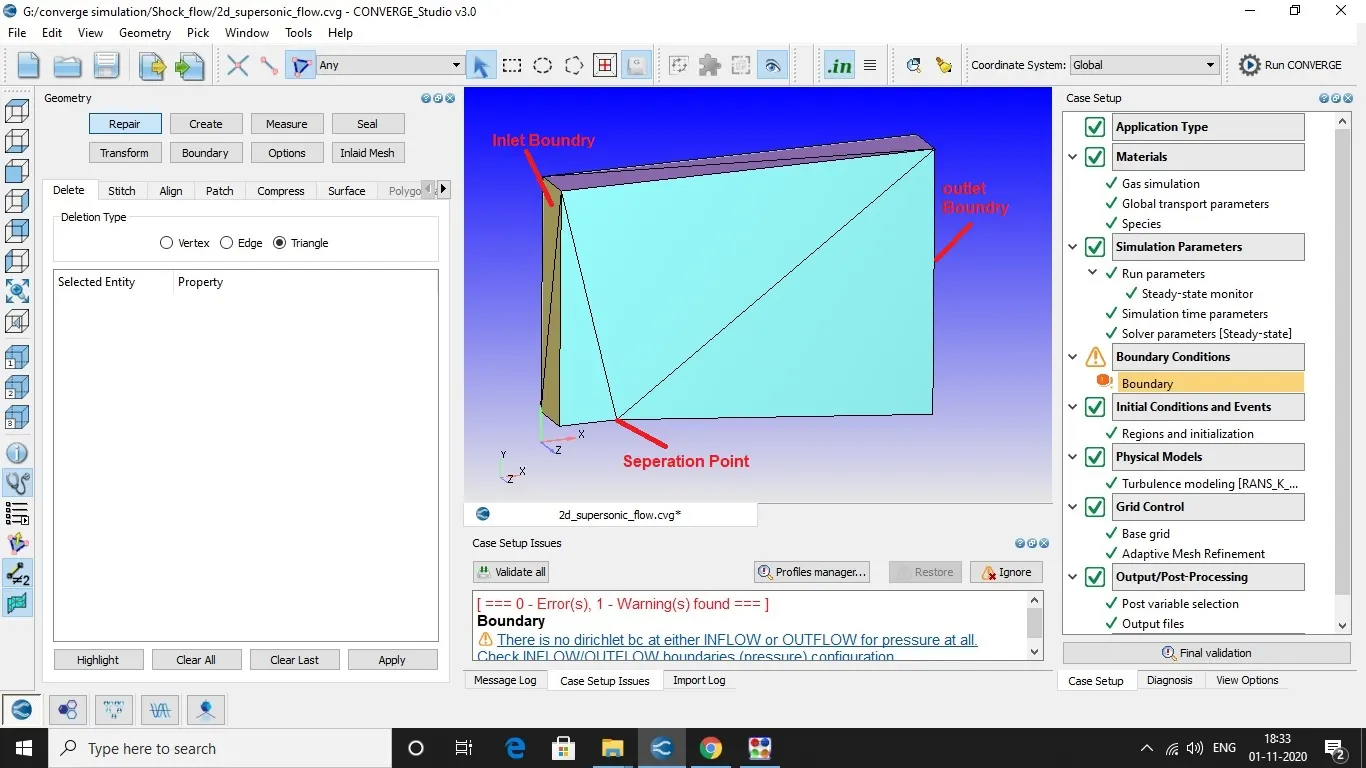
Make a Geometery for case setup of Prandtl Meyer shock Problem in converge studio as shown below. Supersonic flow is passed through Expansion fan problem and Mach wave is generated at sharp Corner. Inlet shock wave is proportional to inlet Mach number and Expansion wave is depends upon outlet Mach Number.
Give boundry flagging to Geometery to define inlet boundry,Outlet Boundry,top_bottom Boundry,fornt 2D and Back 2D Boundry.
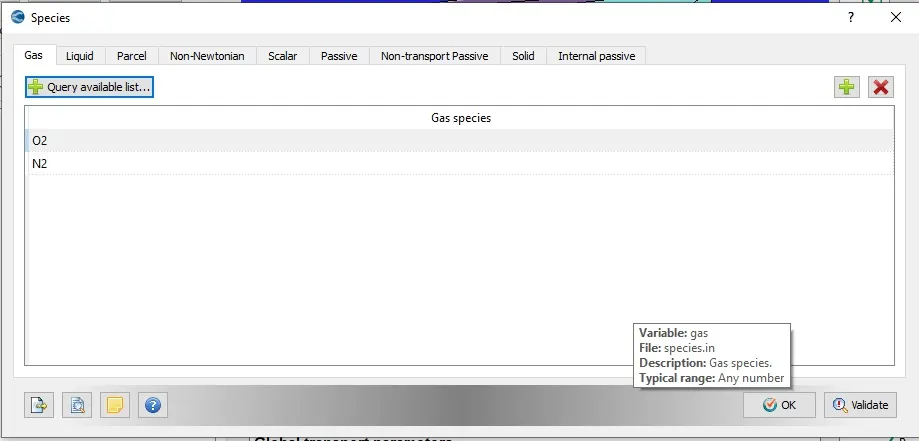
Species
Species:- Air
Simulation Parameter
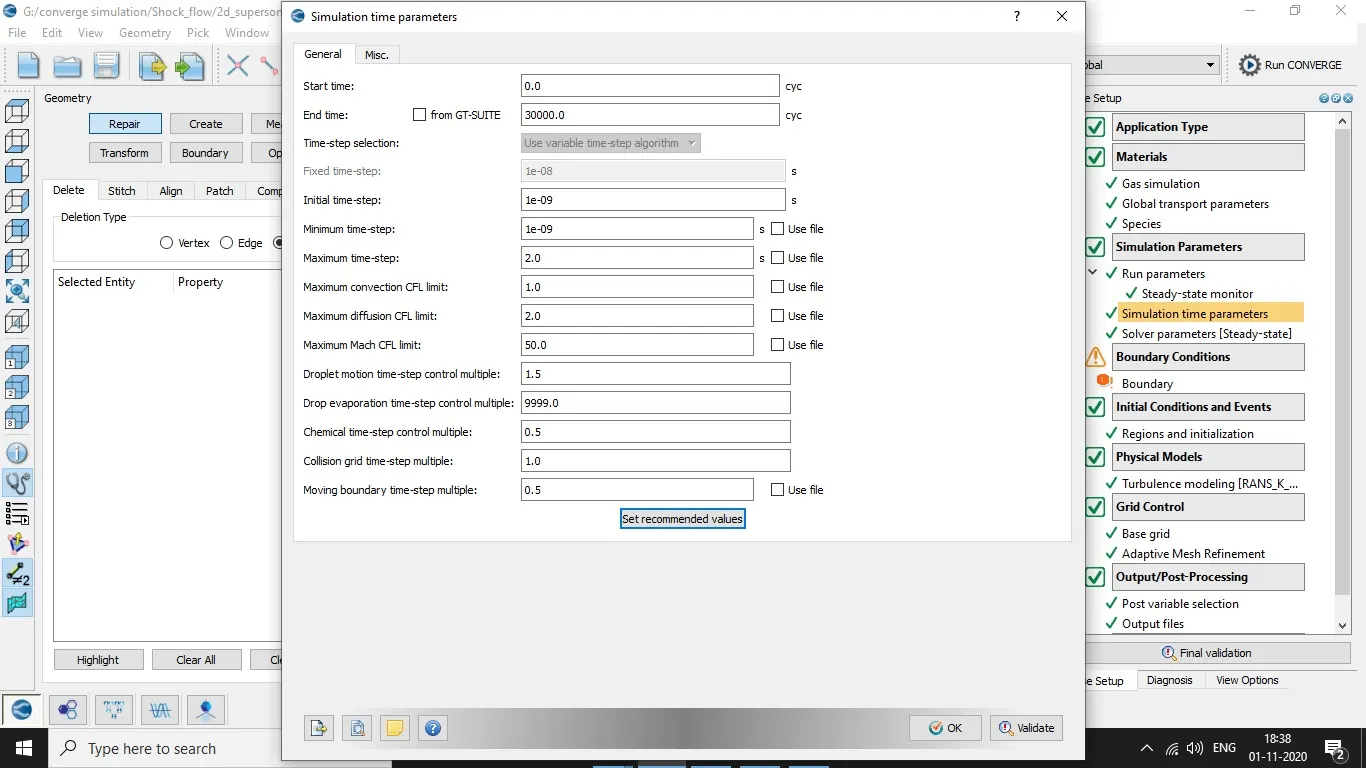
Define Simulation Parameter
Start Time:- 0 sec
End Time:- 30000Sec
Intial Time Step:- 1e-9
Minimum Time Step:- 1e-9
Other Parameters are given Below
Boundry Condition
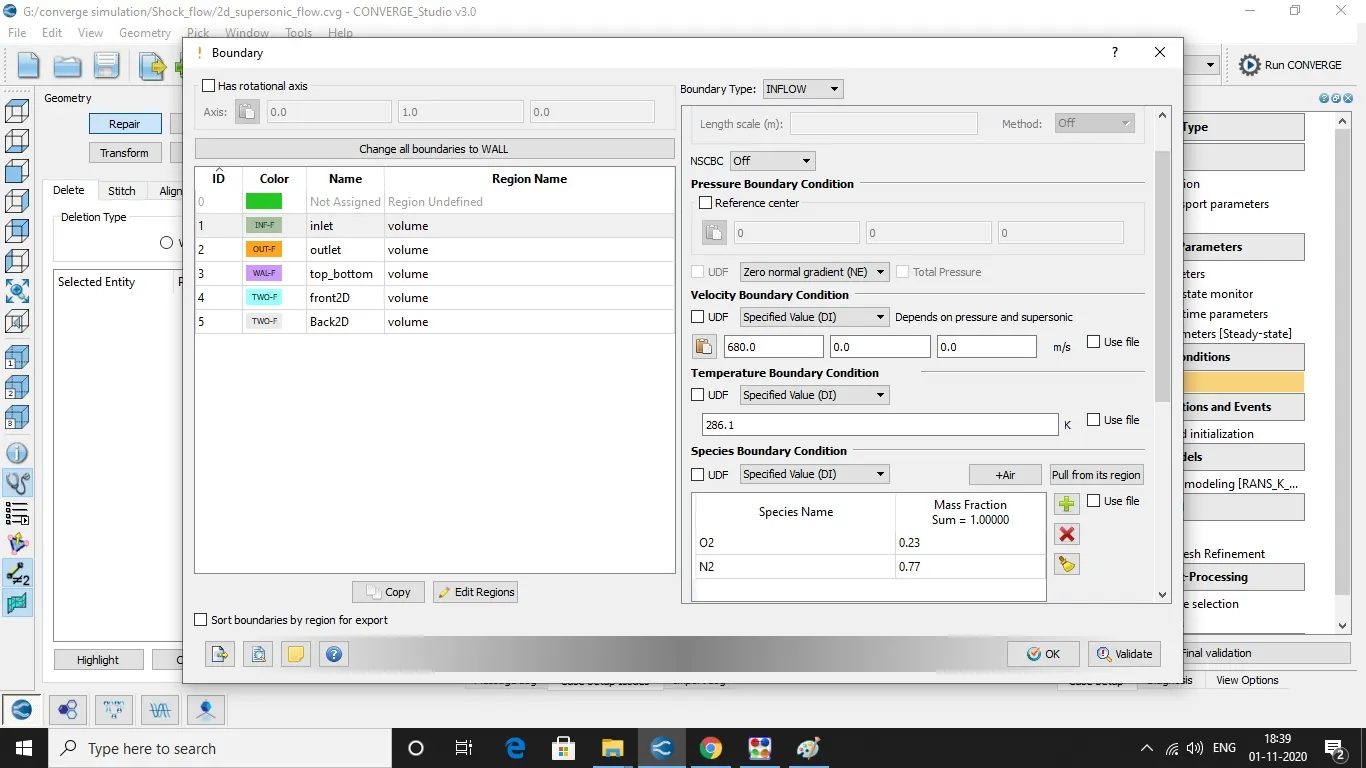
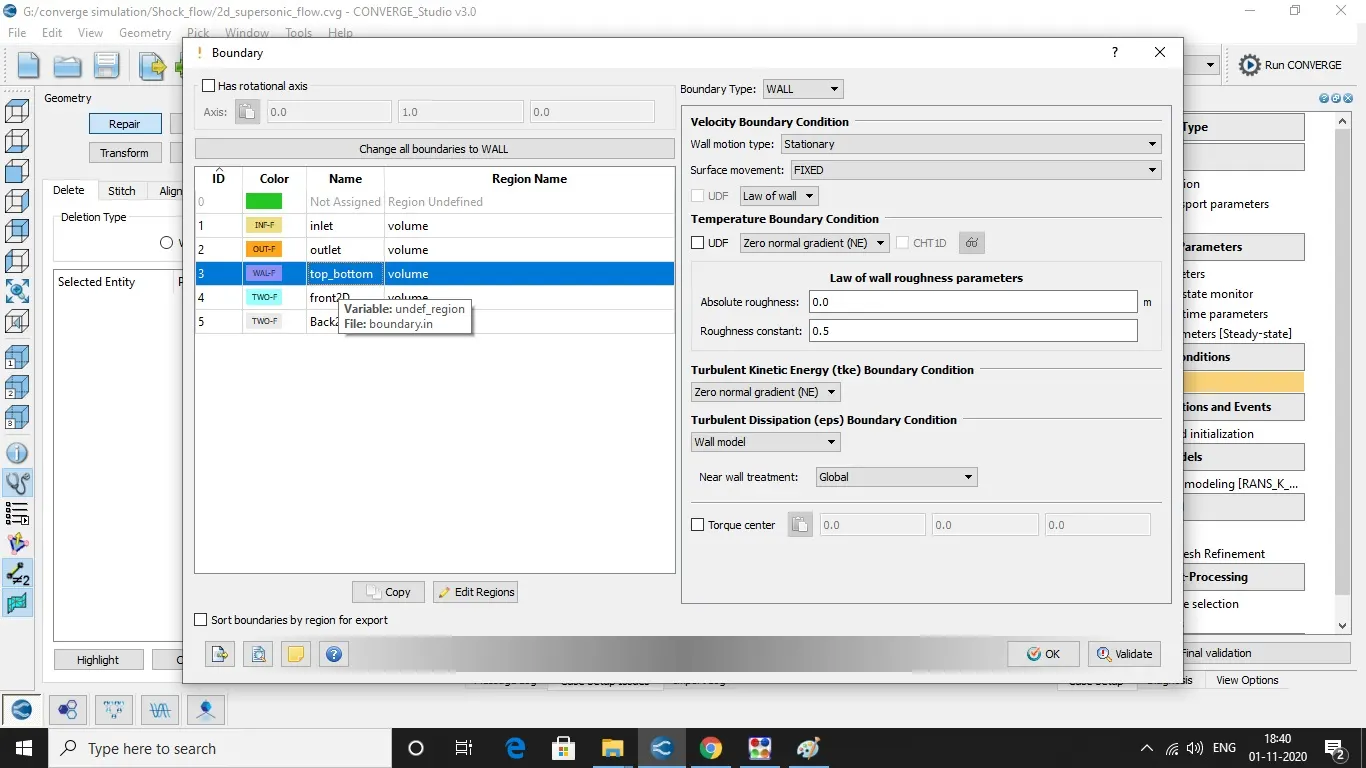
Inlet Boundry Condition:- Apply Dirichlet boundry condition at Inlet Boundry and define value of velocity 680 m/s in X-Direction and Temperature Boundry condition is 286.1 K.Speed of sound in air at 286.1 K is 338.4m/s. so Mach Number at inlet boundry is M=2.01.
outlet Boundry Condition:
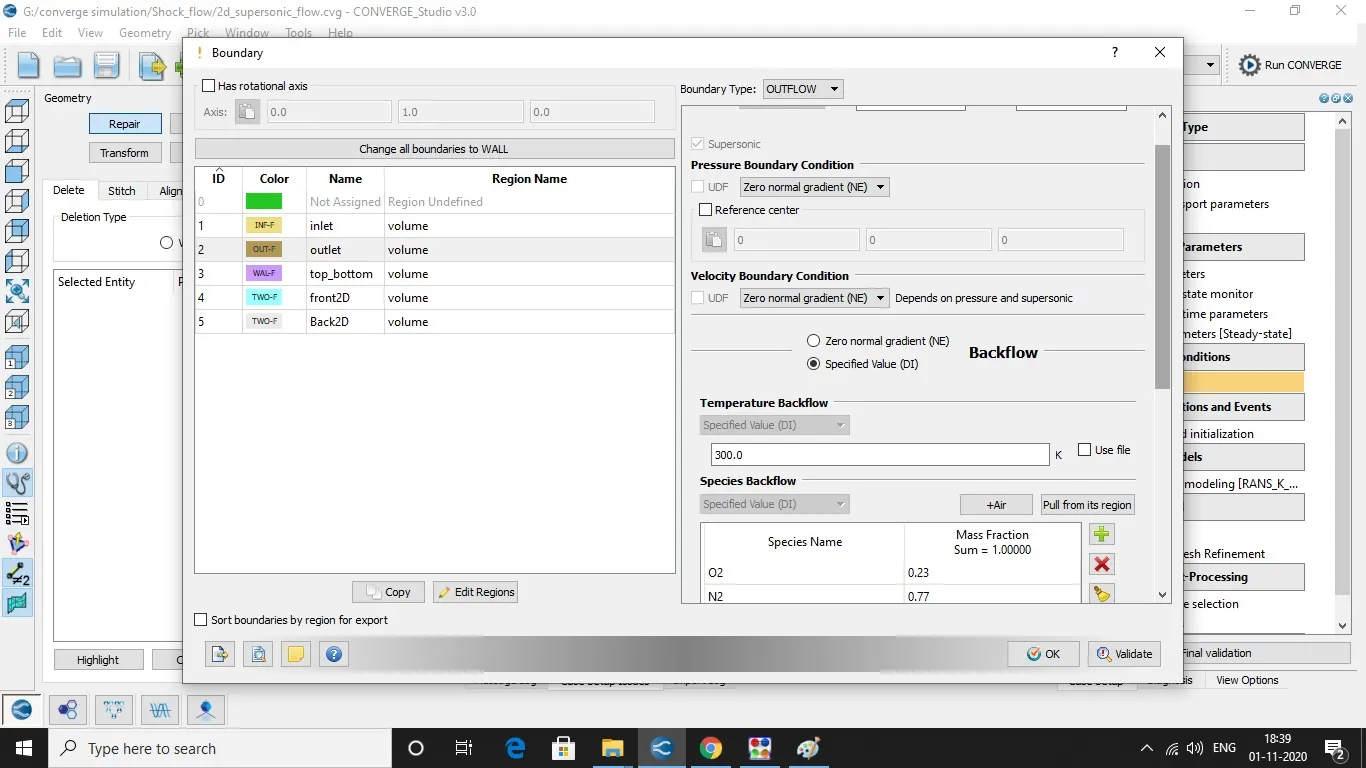
Outlet Boundry condition is Nuemann Boundary condition at option of Pressure Boundary Condition and Velocity Boundary Condition. Set Temperature Backflow at 300 k.
Top_Bottom Boundary Conditions
Set velocity Boundary condition at Law of wall condition and Temperature boundary condition at Nuemann Boundary condition. And front 2D and Back 2D Boundary at Two Dimension
Region
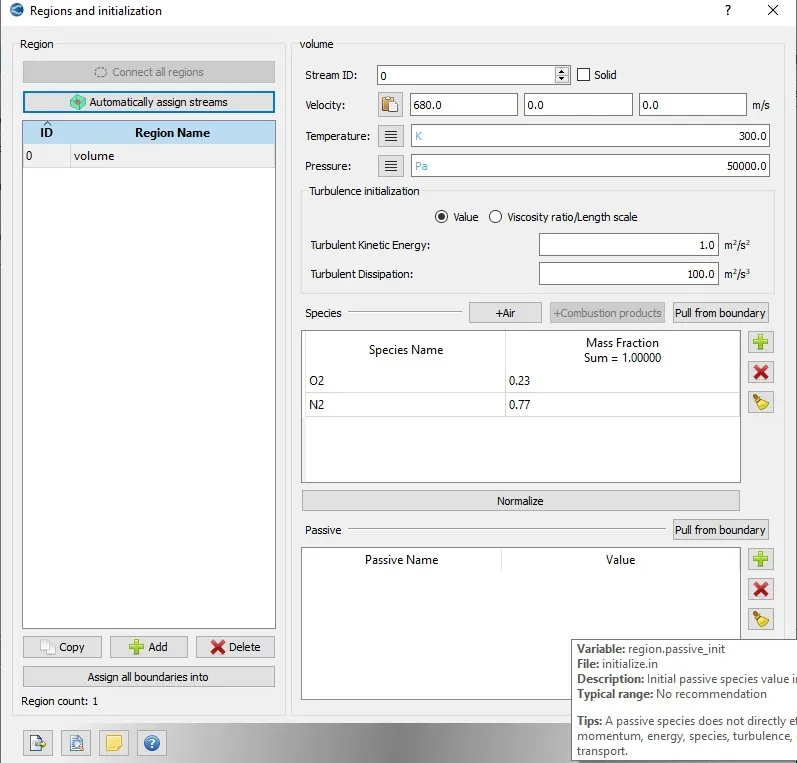
Set region condition with velocity value of 680m/s and temerature at 300k and pressure at 0.5 bar as shown below.
Grid Control
Set Mesh size dx=0.8,dy=0.8 and dz=0.8
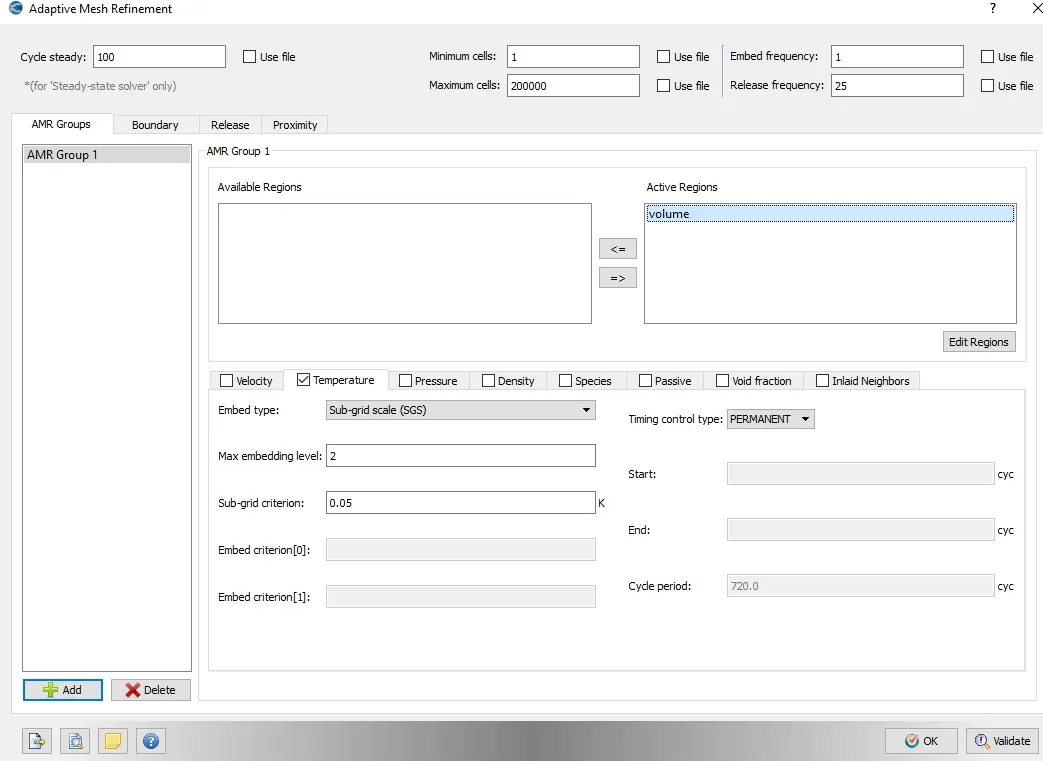
Apply Adaptive mesh Refinement(AMR) as shown below. It will apply on adaptive region volume and mesh is refined. There is two option to apply AMR Velocity and Temperature. With variation of velocity and temeprature sub grid criterion and max. embedding level.In this case i have used Temperature option and Run in three cases as given above by changing Sub Grid Criterion to 0.05 K,0.1k and 0.15 k. so when there is change in Temperature,the mesh size is refined to 2 embedding levels.
Output Files
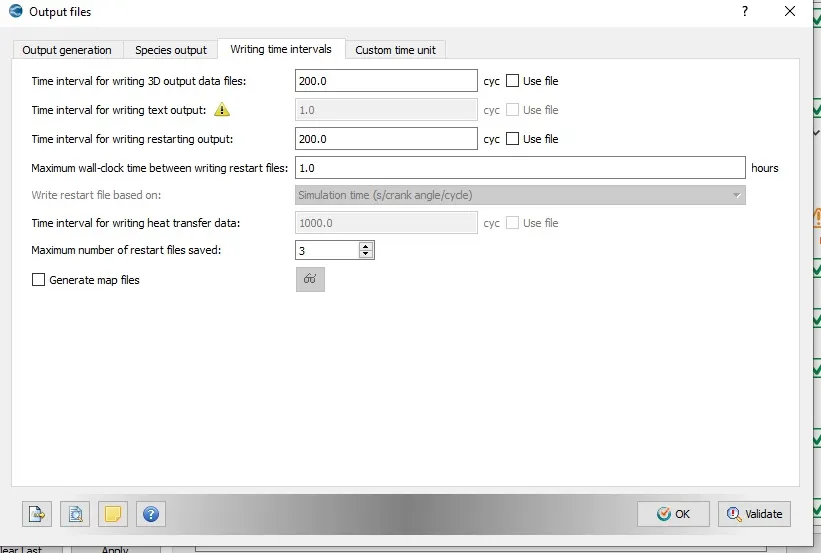
In this case we generate 150 files,so set values as given below.Export files to folder.
Cygwin and Paraview
Run files and cygwin,it will create output files.Open Converge studio and Convert output files to 3D post out files in paraview VTK-inline Binary format. Paraview will open these post out files and show results as given belows.
Results
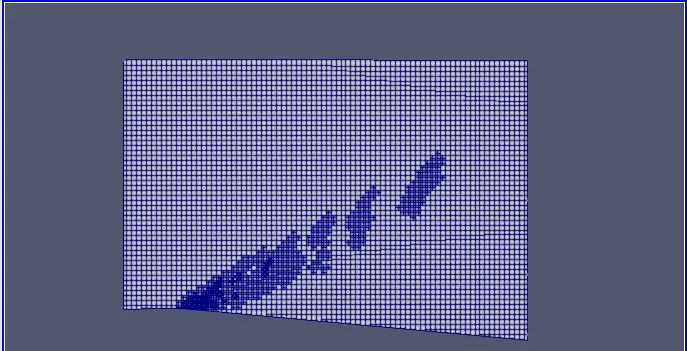
(1)AMR Sub grid criterion= 0.05 K
As shown below,when temperature in increased from 0.05k,the mesh is refined to 2 level of embedding
Pressure
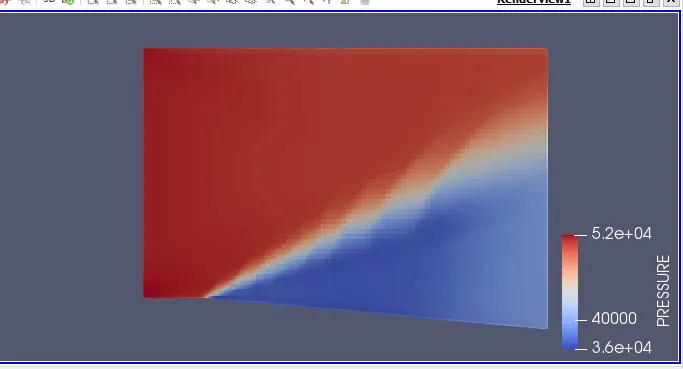
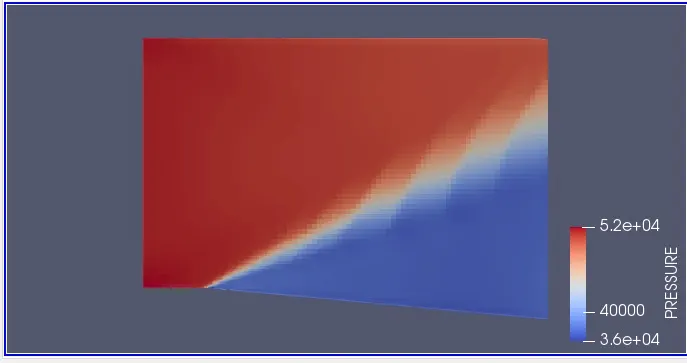
As shown below pressure is decrease at sharp edge when mach Number is changed form M=2, Expansion is occour in flow and mach value is decreased in Expansion.
Velocity
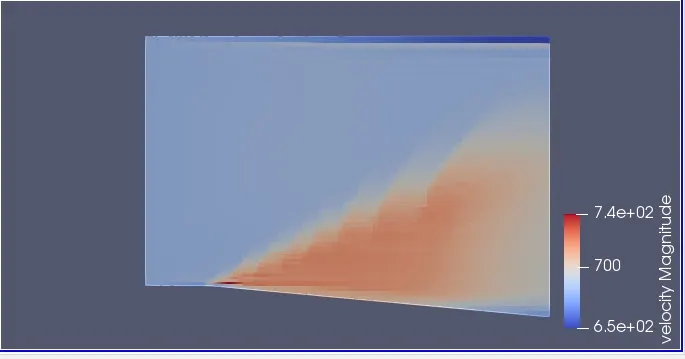
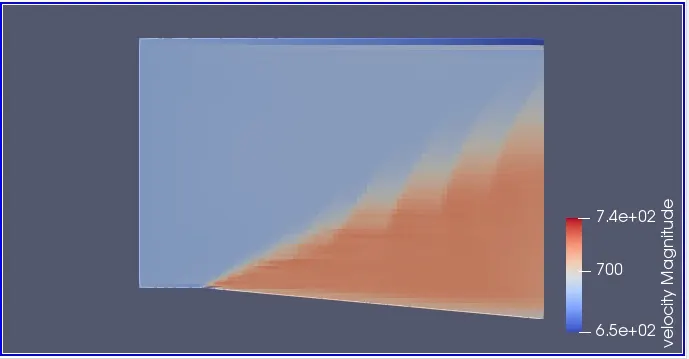
velocity is increase at sharp Edge as shown below in Red Color
Line Plots
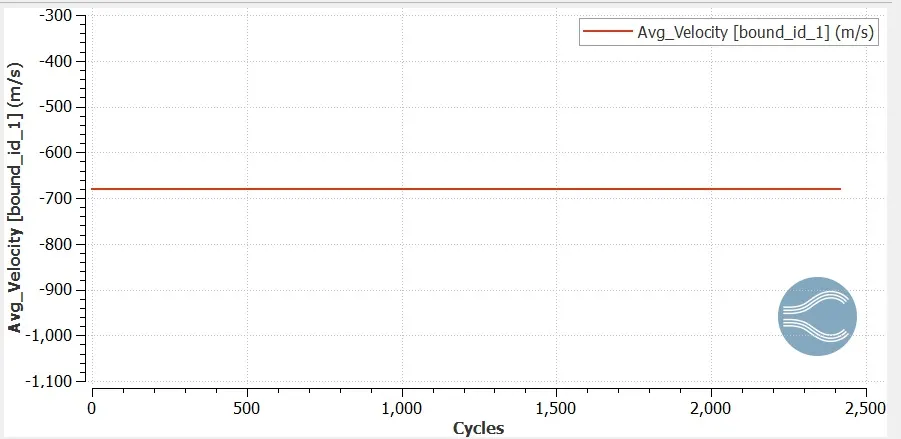
Velocity at inlet Boundry
Velocity at inlet is converged to value of 680m/s
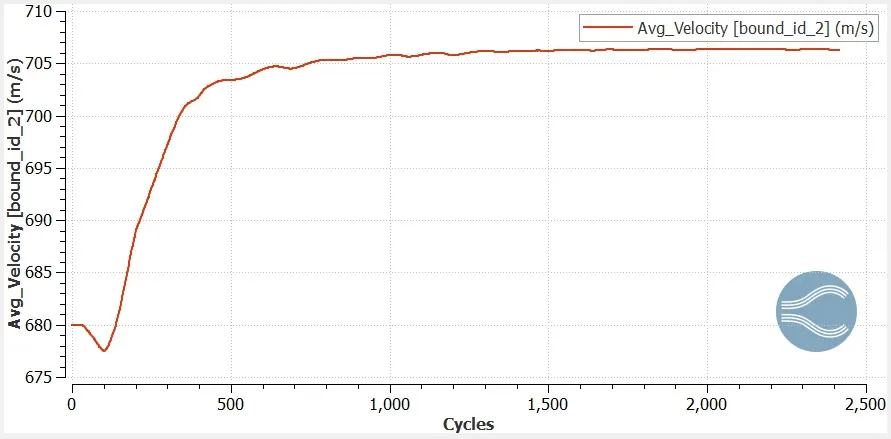
Velocity at outlet Boundry
Velocity at outlet boundry is converge to value of 706.3m/s
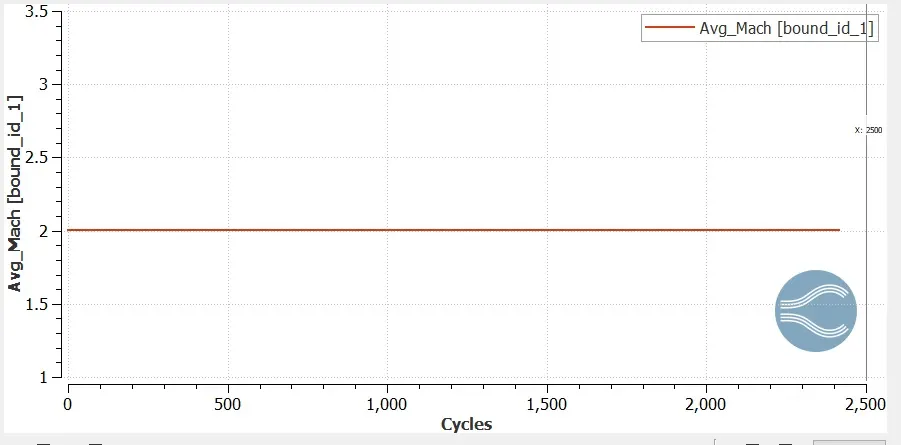
Mach Number
Mach Number at inlet Boundry is M=2
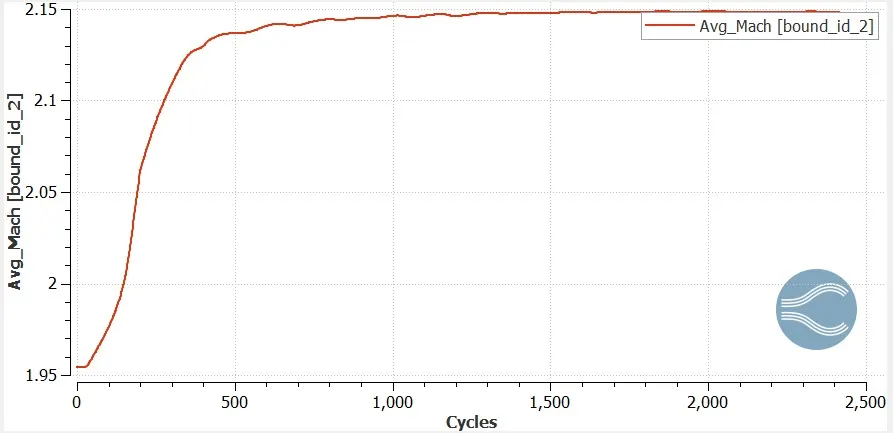
Mach Number at Outlet Boundary
Mach Number at outlet boundary is converged to M=2.15
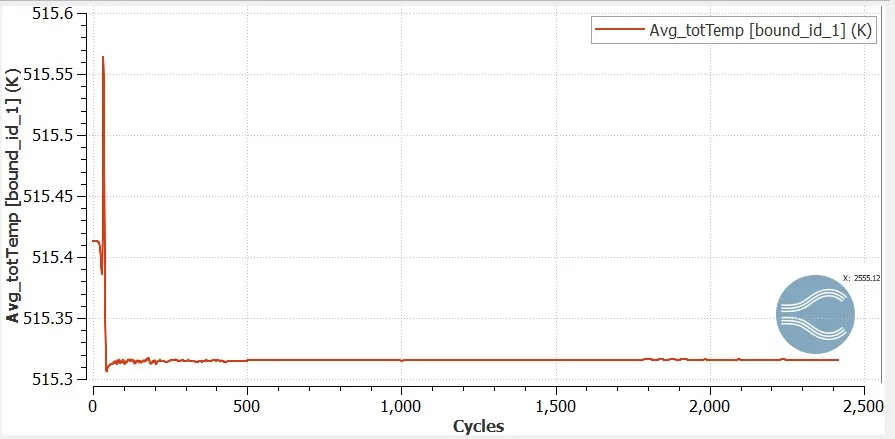
Average Total Temperature at inlet Boundary
Average Total Temperature at inlet boundary is converges to 269.3K
Average Total Temperature at Outlet Boundary
Average Total Temperature at Outlet Boundary is 518.8K.
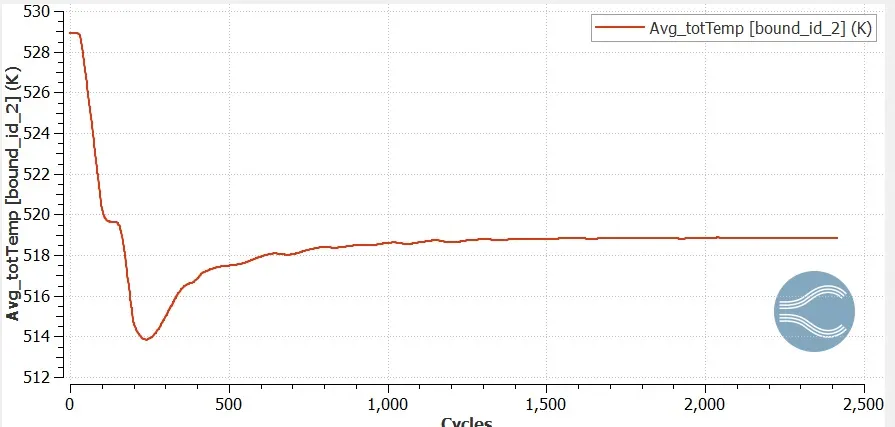
case-2
AMR Sub grid criterion= 0.02 K
As shown below,when temperature in increased from 0.02k,the mesh is refined to 2 level of embedding
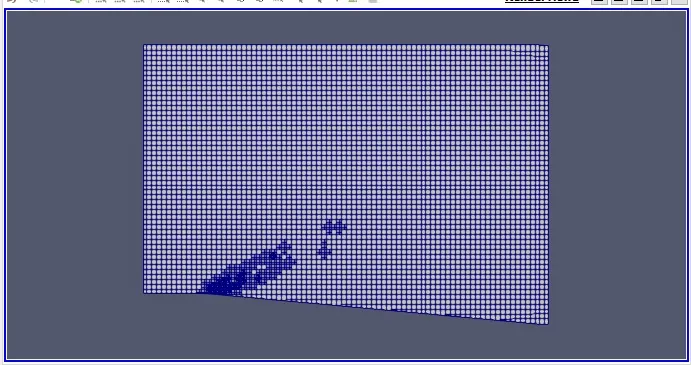
Pressure
Pressure Profile for Case-2 SGC=0.02K
Velocit
velocity Profile for Case-2 SGC=0.02K
Line Plots
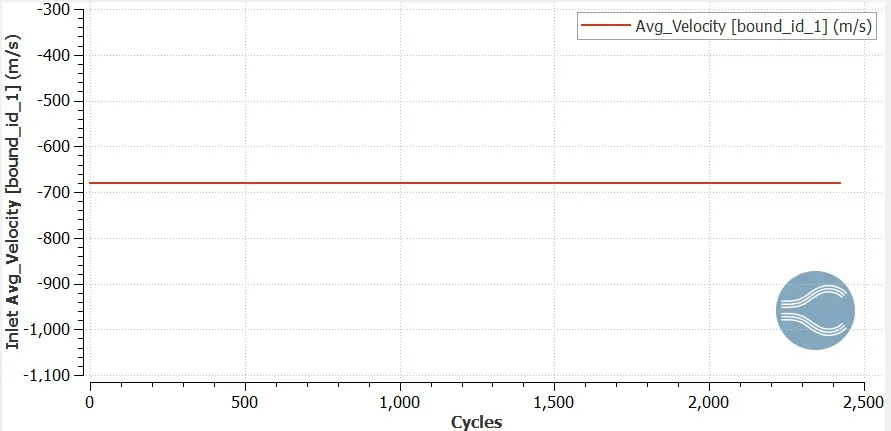
Velocity at inlet Boundry
Velocity at inlet is converged to value of 680m/s
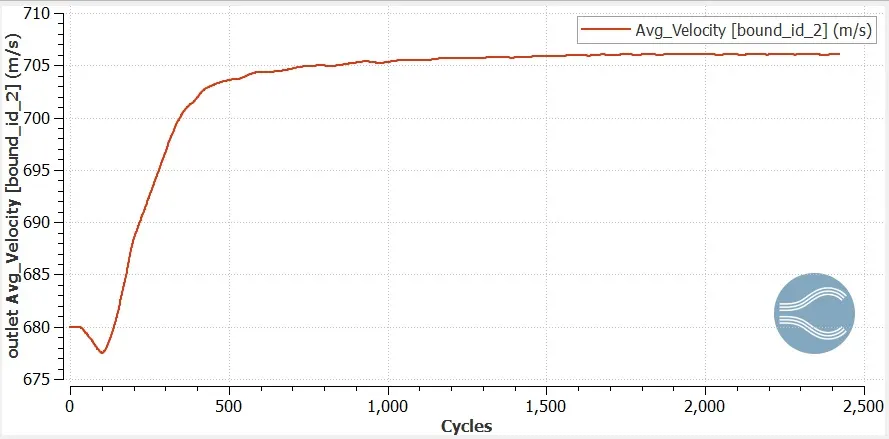
Velocity at outlet Boundry
Velocity at outlet boundry is converge to value of 706.0m/s
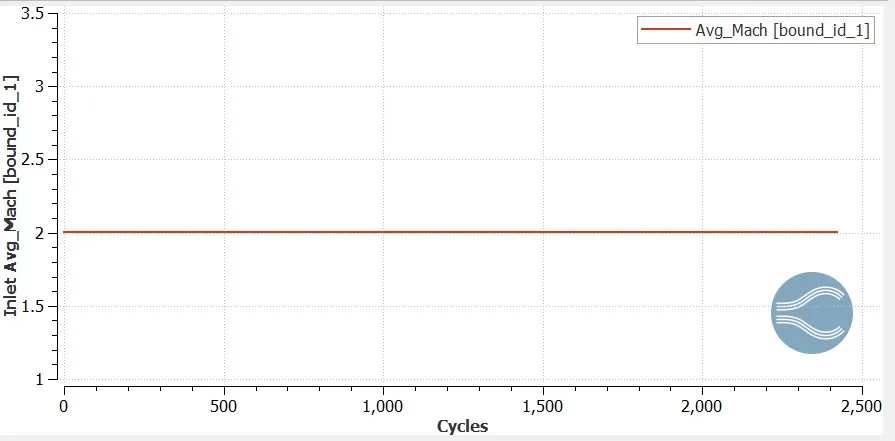
Mach Number
Mach Number at inlet Boundry is M=2
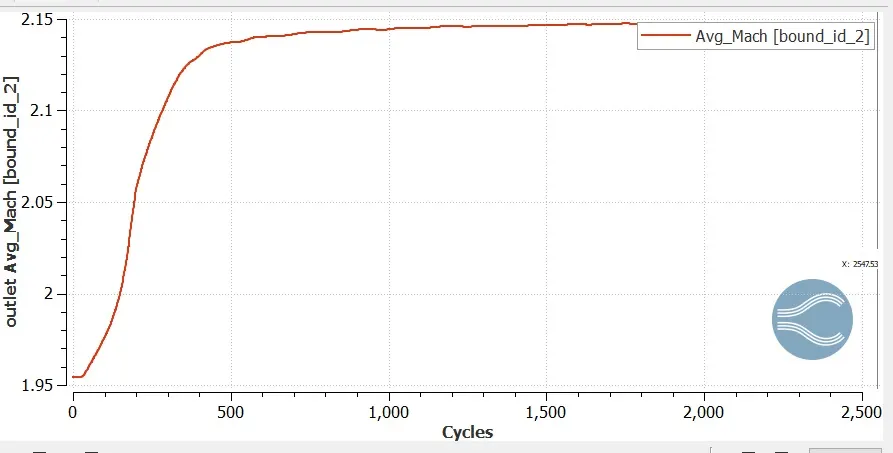
Mach Number at Outlet Boundary
Mach Number at outlet boundary is converged to M=2.15
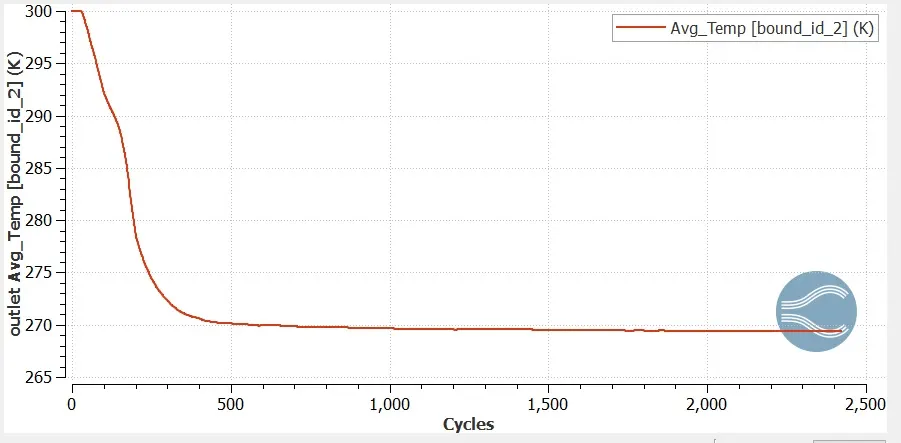
Average Temperature at inlet Boundary
Average Temperature at inlet boundary is converges to 269.3K
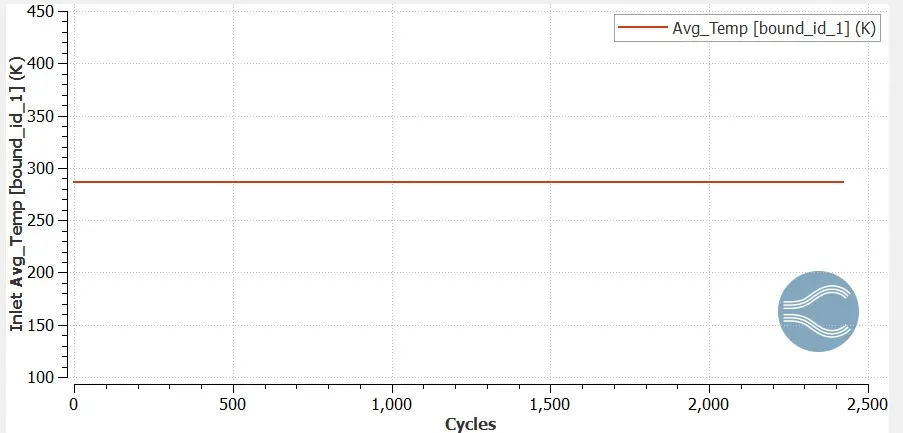
Average Temperature at Outlet Boundary
Average Temperature at Outlet Boundary is 269.4K.