Week-4 : Basic Calibration of Single cylinder CI-Engine
AIM:
Basic calibration of single cylinder CI-Engine.
OBJECTIVE:
- Compare SI vs CI and list down the differences
- Comments on following parameters
- BSFC
- Exhaust Temperature
- A/F ratios
- Change MFB50 and observe impact on performance
1.COMPARISON BETWEEN SI AND CI ENGINE:
|
SI ENGINE |
CI ENGINE |
|
Si engine uses a spark plug to initiate ignition |
Ci engine doesn’t have spark plug |
|
Spark is initiated by the spark plug |
Spark is initiated by the heat of compressed air |
|
Petrol, LPG, CNG can be used as fuel |
Diesel is the fuel |
|
Based on otto cycle |
Based on diesel cycle |
|
Constant volume heat addition |
Constant pressure heat addition |
|
Compression ratio varies between 6-10 |
Compression ratio varies between 16-20 |
|
Low thermal efficiency due to low compression ratio |
High thermal efficiency |
|
Si engines are high-speed engines |
Ci engines are low-speed engines |
|
Si engine emissions are CO, HC and NOX |
Ci engine emissions are CO, HC, NOX and soot |
|
Knocking is the phenomenon in SI engine |
Detonation is the phenomenon in CI engine |
2.SIMULATION MODEL:
Under tutorials > modelling applications > engine performance > 1cylDI-final.gtm
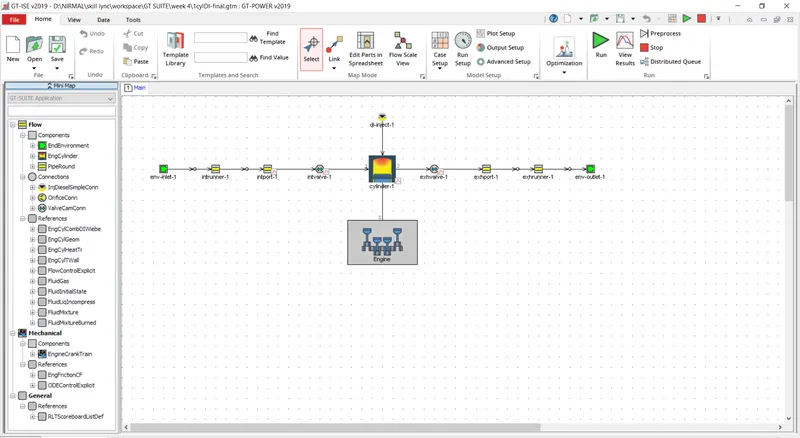
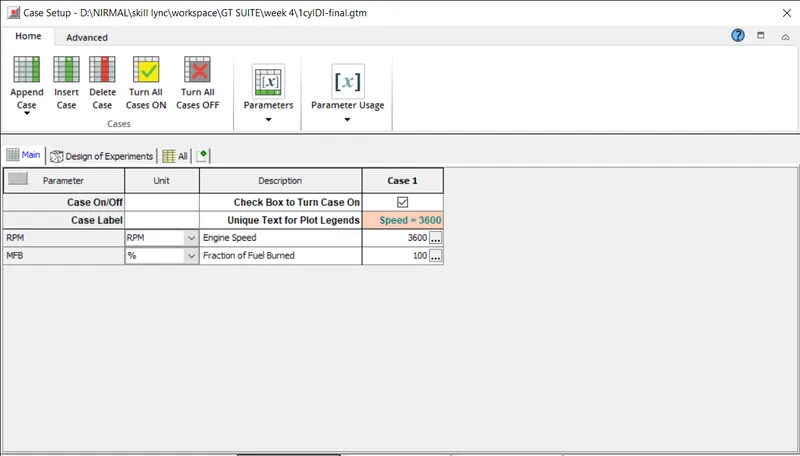
CASE SETUP:
RESULTS:
BSFC:
Brake-specific fuel consumption (BSFC) is a measure of the fuel efficiency of any prime mover that burns fuel and produces rotational, or shaft power. It is typically used for comparing the efficiency of internal combustion engines with a shaft output.
It is the rate of fuel consumption divided by the power produced. It may also be thought of as power-specific fuel consumption, for this reason. BSFC allows the fuel efficiency of different engines to be directly compared.
BSFC = r/p
Where, r is fuel consumption rate in grams per second (g/s)
P is power produced in watts
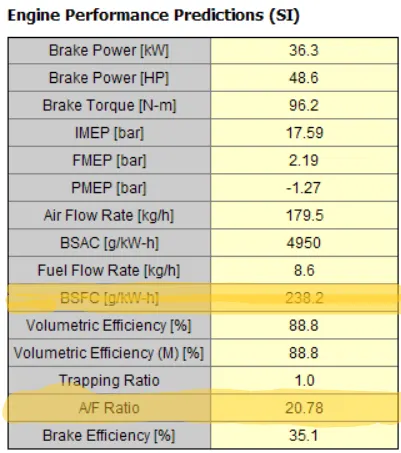
so, for this case BSFC is 238.2 (g/kw-h). This value determines the fuel efficiency of the engine.
EXHAUST TEMPERATURE:
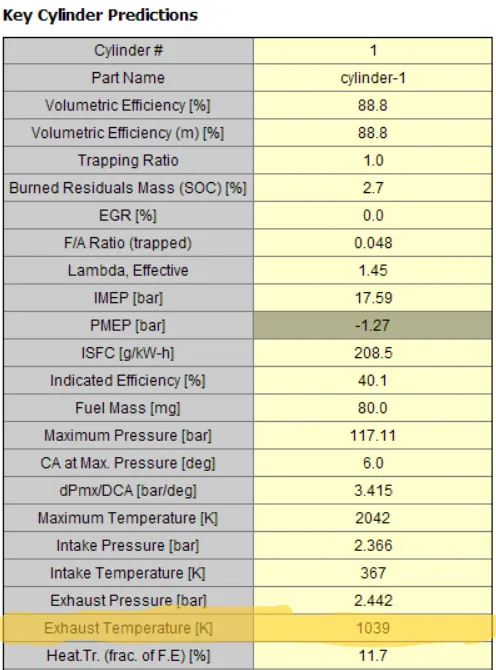
The exhaust temperature of this engine is 1039 k.
A/F RATIO:
Diesel engine runs in high air-fuel ratio because diesel has high cetane number. The high cetane number indicates faster burning of fuels.
In this case the A/F ratio is 20.78.
3.Change MFB50 and observe impact on performance:
CASE SETUP:
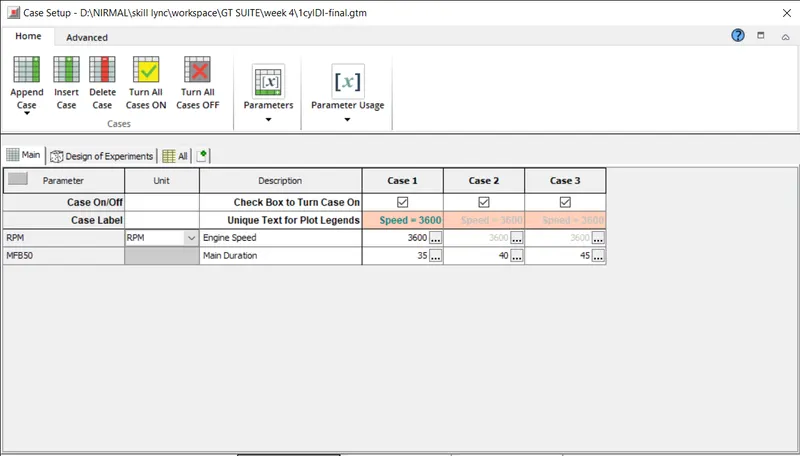
For this problem we are running the engine at constant speed of 3600 rpm by varying the MFB50 from 35 to 40 and 45 respectively.
RESULTS:
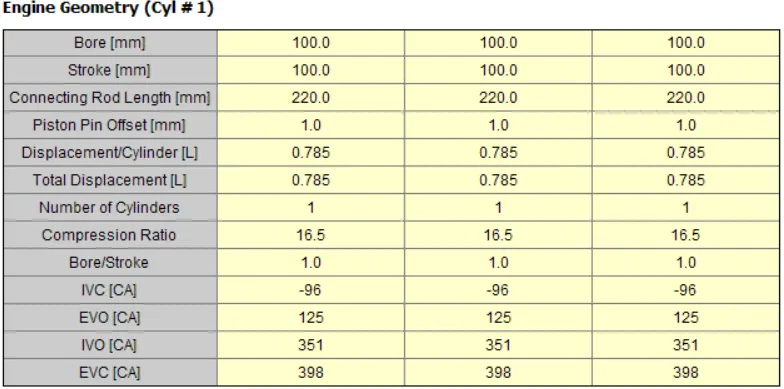
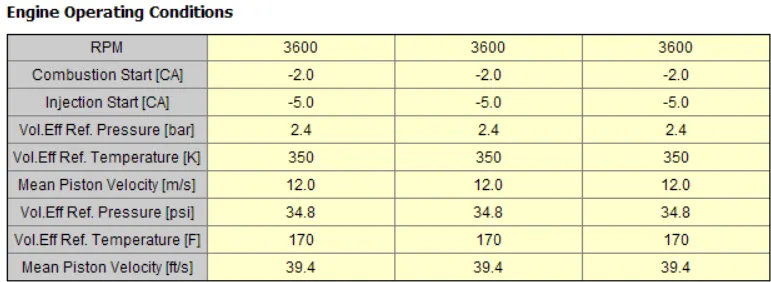
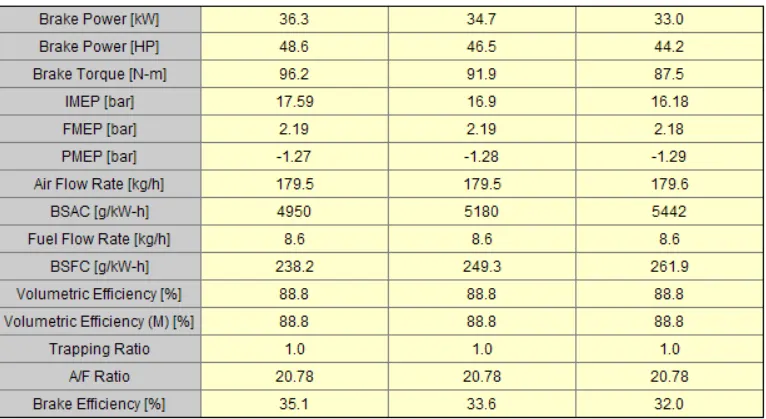
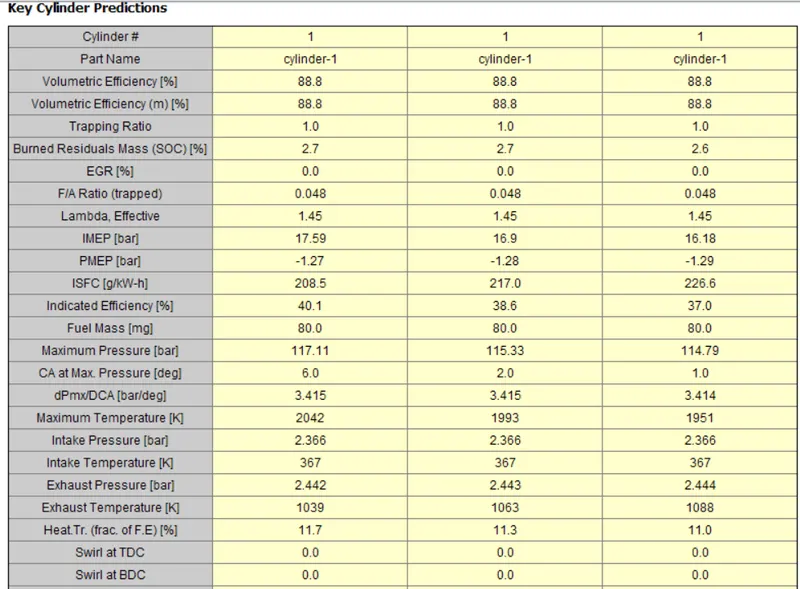
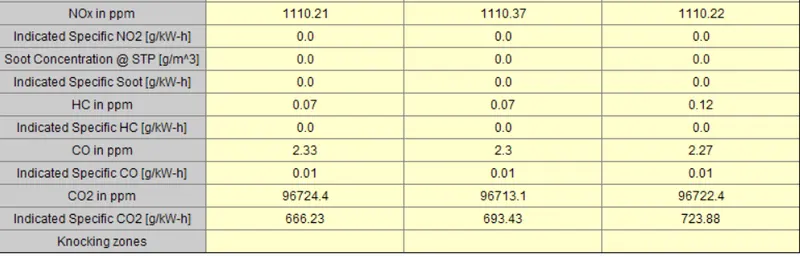
The above results shows how the various parameters changes with respect to change in MFB50.
CONCLUSION:
- As the MFB50 increases, brake power decreases.
- As the MFB50 increases, brake torque decreases.
- As the MFB50 increases, mean effective pressure decreases.
- As the MFB50 increases, exhaust temperature increases.
- As the MFB50 increases, BSFC increases.