Week 3 Verification of Weld Joints
1. Objective
We have to do a simulation of weld joints using 3 different materials like Stainless steel, aluminum alloy and bronze. A force of 15KN is applied at the rectangular hole in a small plate. Also, we have to find the directional deformation, equivalent strain experienced by the setup. Then we have to identify the weld joint that experiences the highest equivalent stress in each case and compare the results.
2. Case setup and execution
in case 1, stainless steel will be the material of the plates and weldments without any flux. in case 2, the plate material will be stainless steel but the rib material will be Aluminum alloy. In case 3, stainless steel will be material for both plates and copper will be material for ribs.
3. Results of case 1
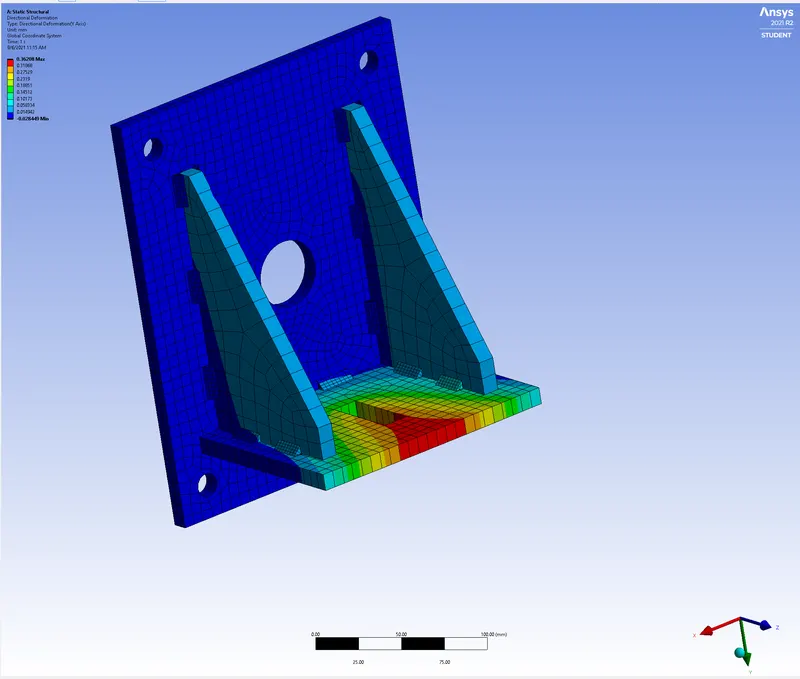
Fig 1 Directional deformation
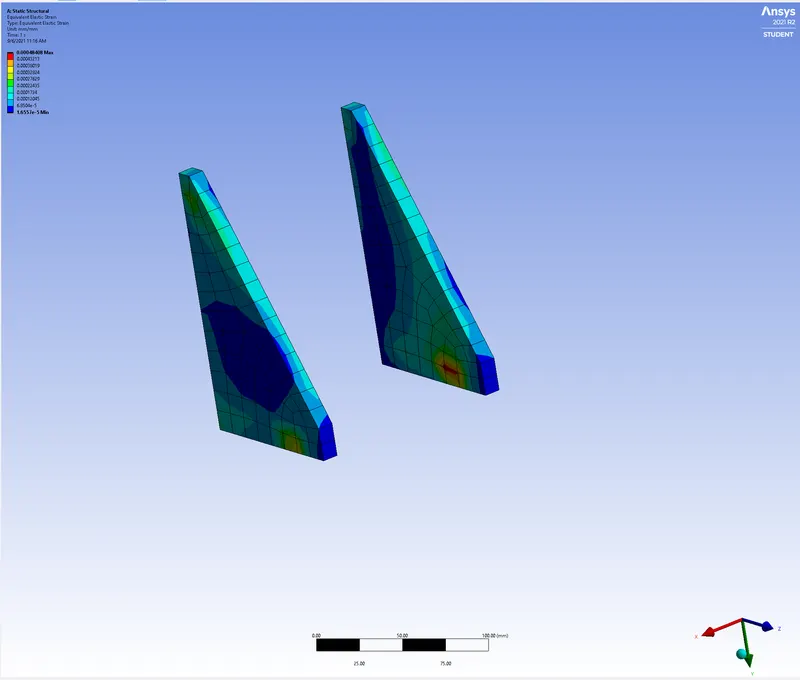
Fig 2 Equivalent strain
4. Results of case 2
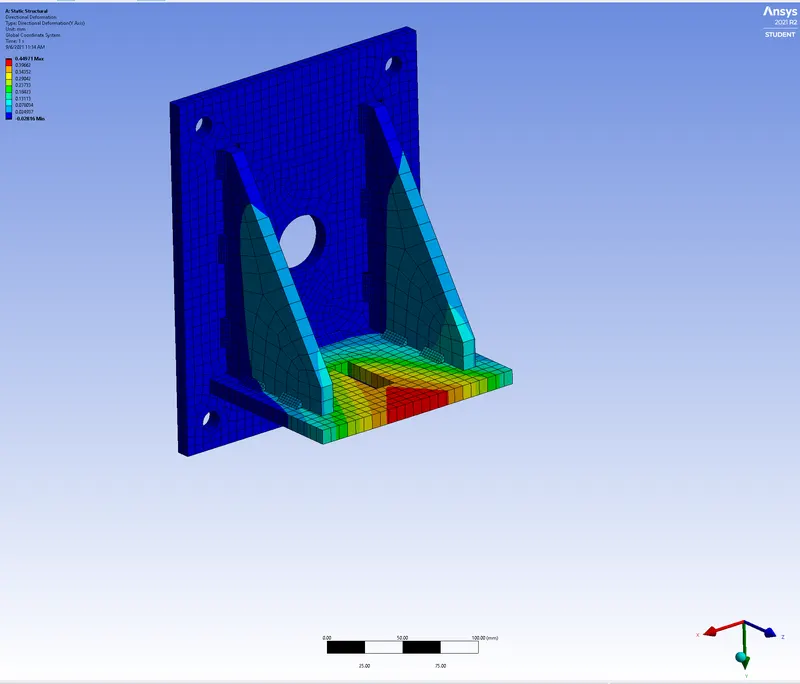
Fig 3 Directional deformation
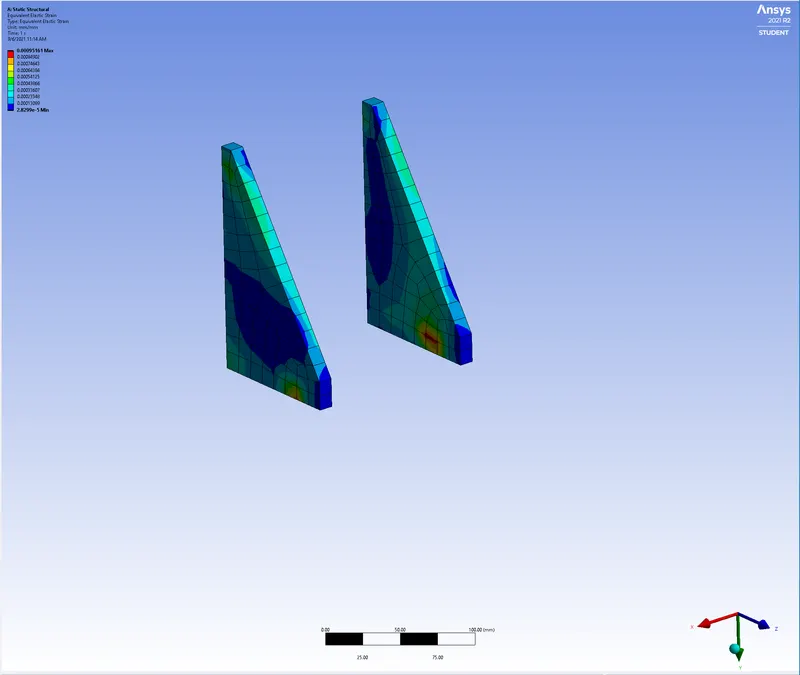
Fig 4 Equivalent strain
5. Results of case 3
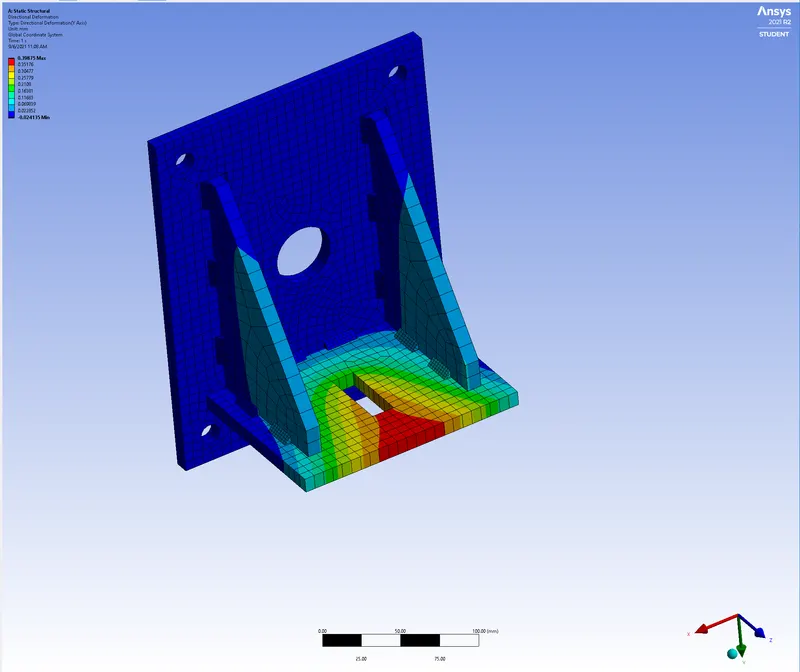
Fig 5 Directional deformation
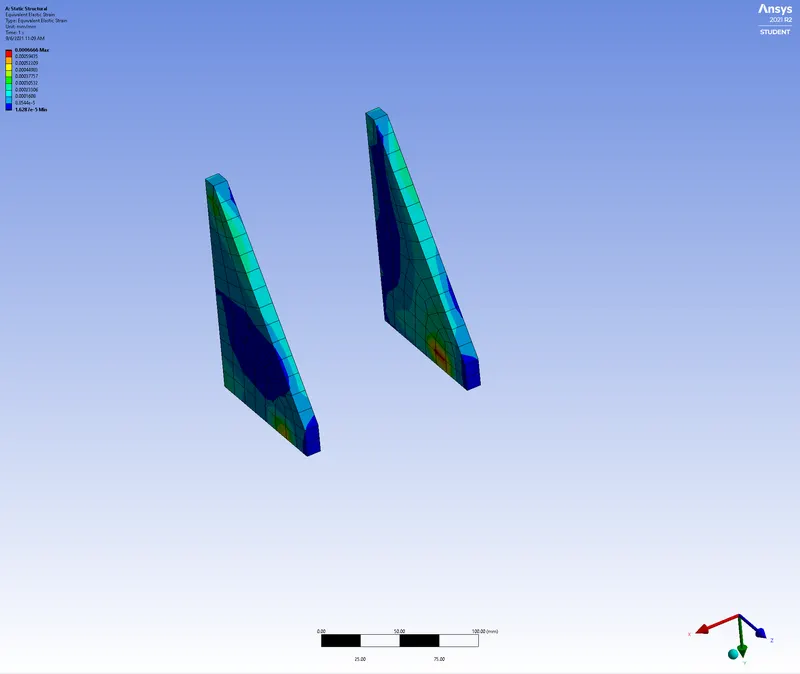
Fig 6 Equivalent strain
6. Results, conclusion and report presentation
For case 1
| Equivalent strain | 4.8408e-4 |
| Directional deformation | 0.36208 mm |
For case 2
| Equivalent strain | 9.5161e-4 |
| Directional deformation | 0.44971 mm |
For case 3
| Equivalent strain | 6.666e-4 |
| Directional deformation | 0.39875 mm |
If we look at all 3 cases, the equivalent strain and directional deformation is higher in case 2 compared to other cases.
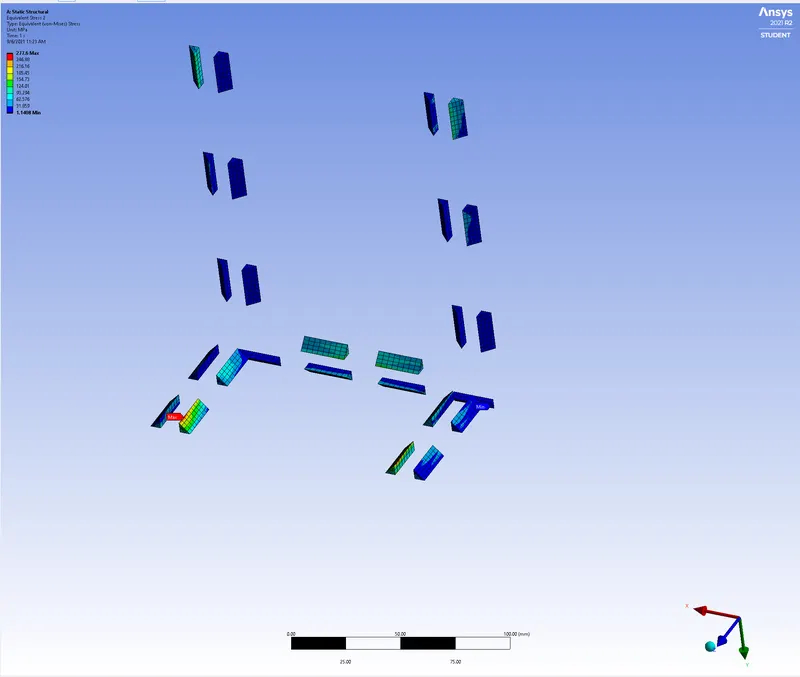
Fig 7 Case 1 weld joint maximum stress
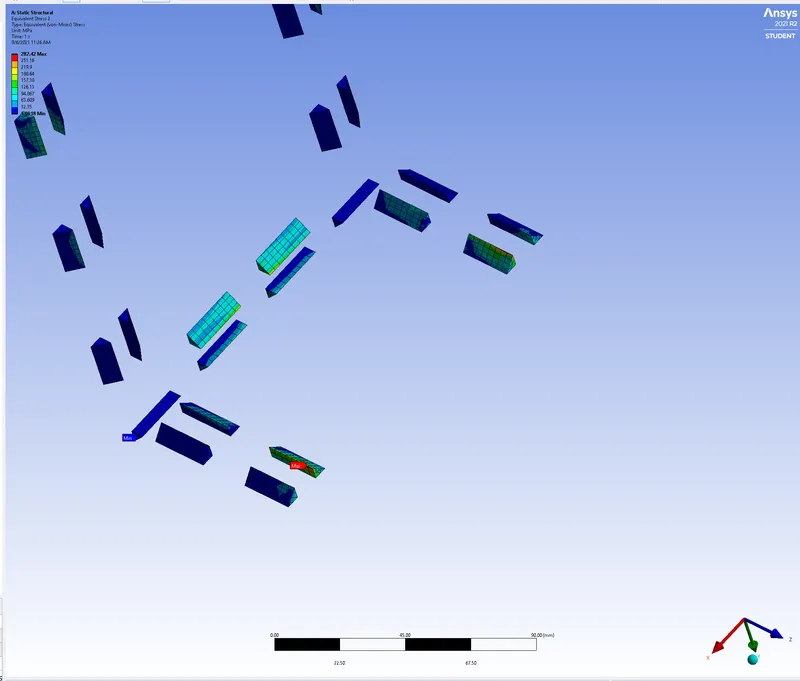
Fig 8 Case 2 weld joint maximum stress
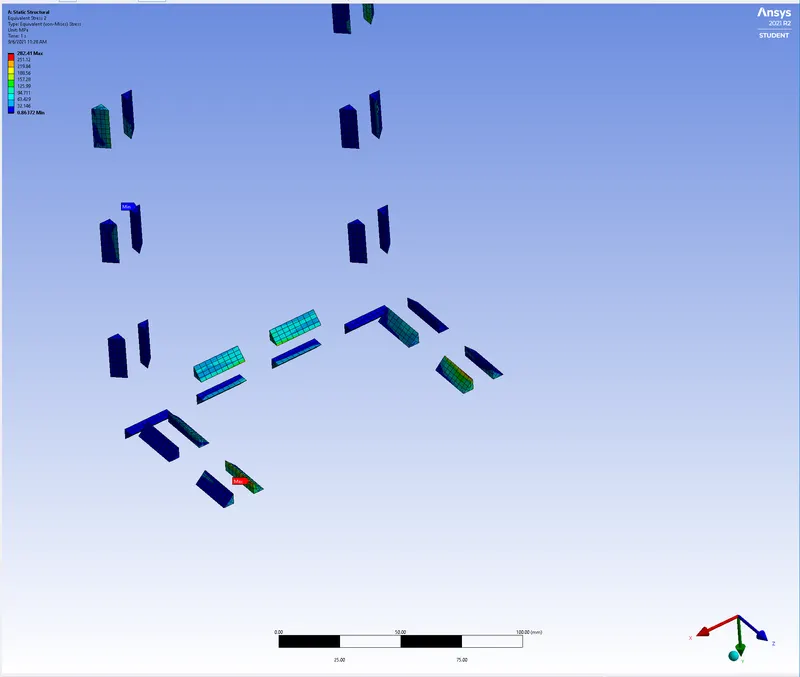
Fig 9 Case 3 weld joint maximum stress
| Simulation cases | weld joint stress |
| 1 | 277.6 MPa |
| 2 | 282.42 MPa |
| 3 | 282.41 MPa |
As seen from the above values, maximum stress at weld joints occurs in cases 2 and 3 compared to case 1.
7. Simulation files
Files are attached