Week 3 Verification of Weld Joints
AIM:
Simulate three different types of welding using three different weld materials
OBJECTIVE:
To perform the simulation on spur gear using static structural analysis using Cast iron (ductile), Cast steel, and cast bronze as a material to find the result out the equivalent stress,total deformation and stress intensity.Analysis of the result on spur gear using three different materials evaluate it and then compare the best material that can be used in the manufacturing process.
PROCEDURE:
. Select Static Structural, drag and drop into Project Schematic.
. Choose material of welded joints and plates as per requirement in all cases, under Engineering Data.
. Under geometry tab, import the given Welded geometry, double-click to open Space Claim to register the model.
. Then in Mechanical Module, assign a frictional connection between the plates and ribs with coefficient of friction = 0.2, whereas a bonded connection is to be assigned for all welded joints.
. The mesh size was set to default, but the plates were given 5mm mesh sizing.
. Under static structural tab, we assign a fully fixed support to the 5 holes of the big plate.
. A force of 15kN is assigned to the cut-out in the small plate
. Total Deformation in Y-axis, Equivalent Elastic Strain and Equivalent Stress plots are requested from the solver as outputs
. We also request the Eq. stress in welded joints to find out which joint undergoes max. stress.
. Run the simulation by clicking on “solve”.
The conditions shown below which are used.
MATERIAL PROPERTIES:
STAINLESS STEEL 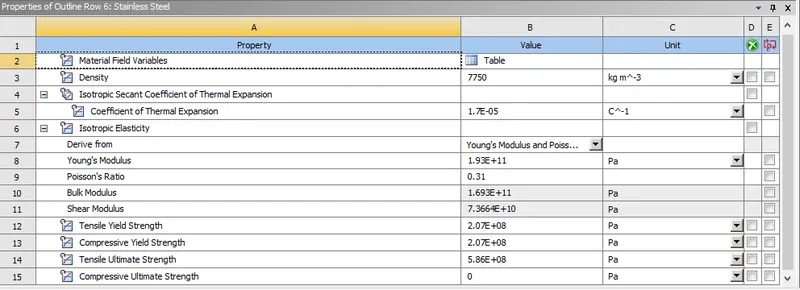
ALUMINIUM ALLOY (HIGH STRENGTH,WROUGHT)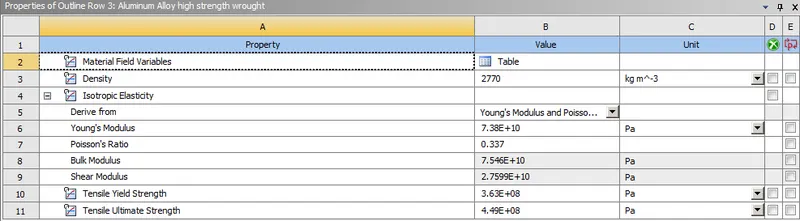
CAST BRONZE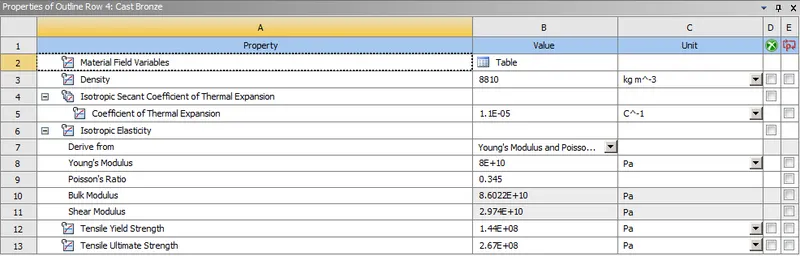
COPPER ALLOY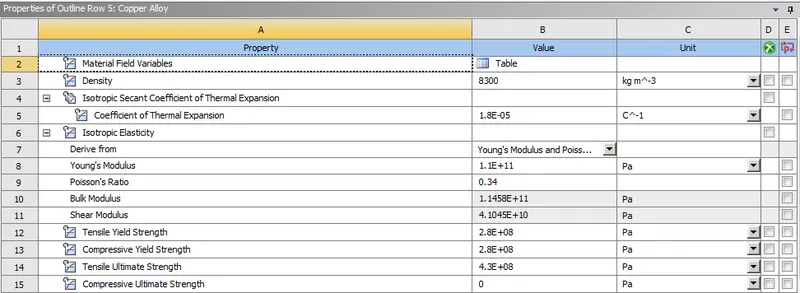
MESHING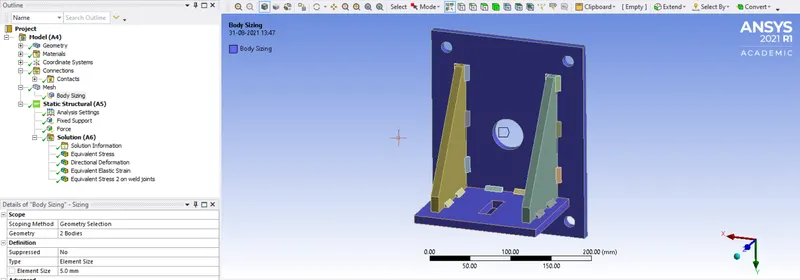
LOADS:
FIXED SUPPORT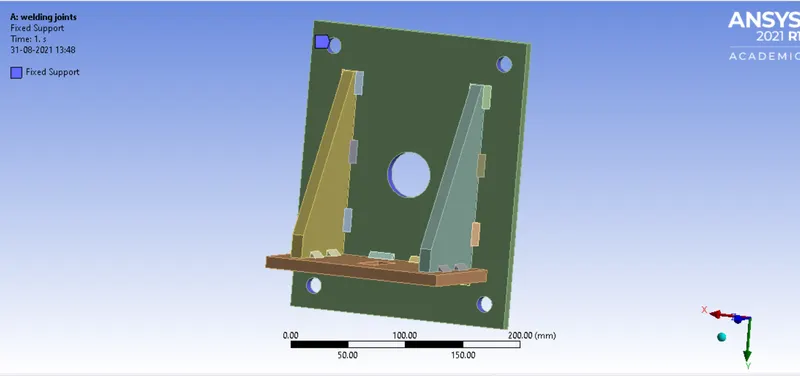
FORCE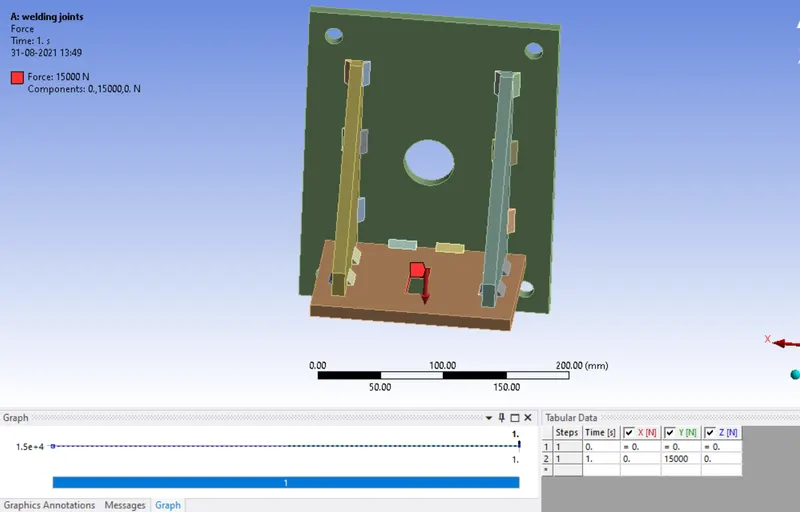
CASE 1: Stainless Steel: In this case, the material of the plates must also be the same. Use Stainless steel for both weldments and plates. No need to add flux to the weldments.
EQUIVALENT STRESS( FULL BODY)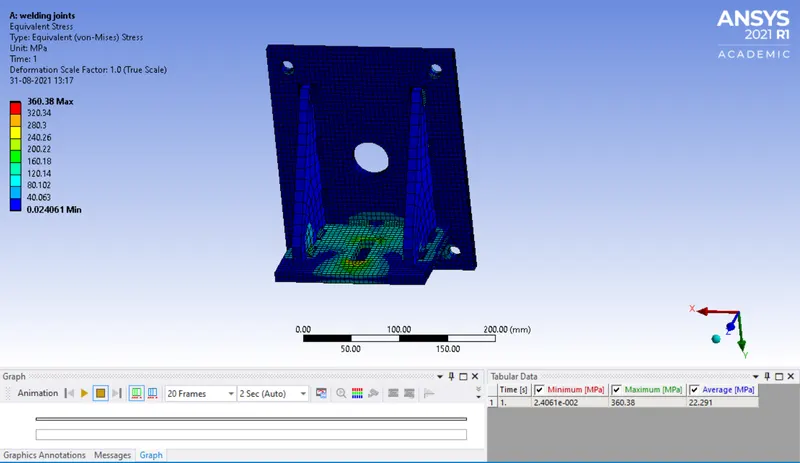
EQUIVALENT STRESS ON WELD JOINTS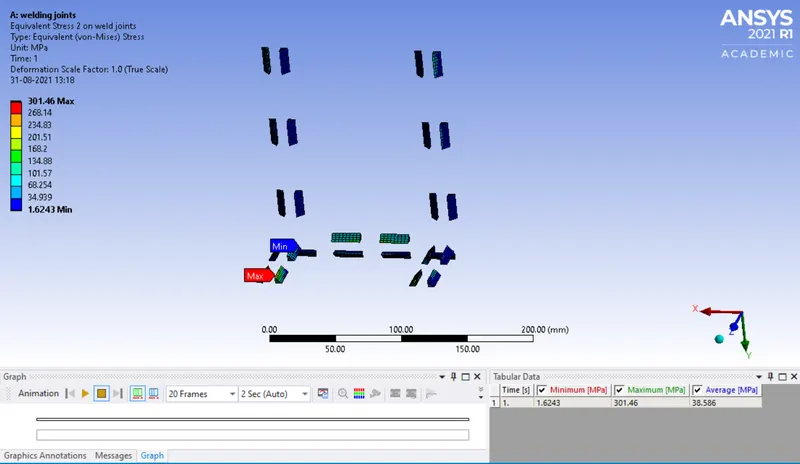
EQUIVALENT ELASTIC STRAIN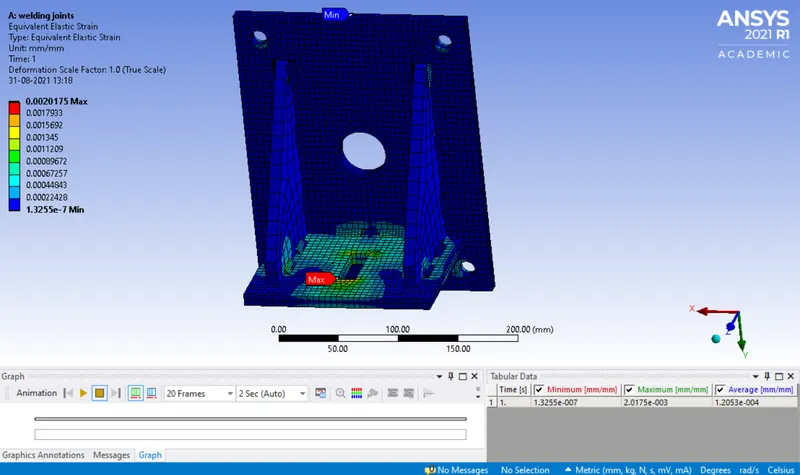
DIRECTIONAL DEFORMATION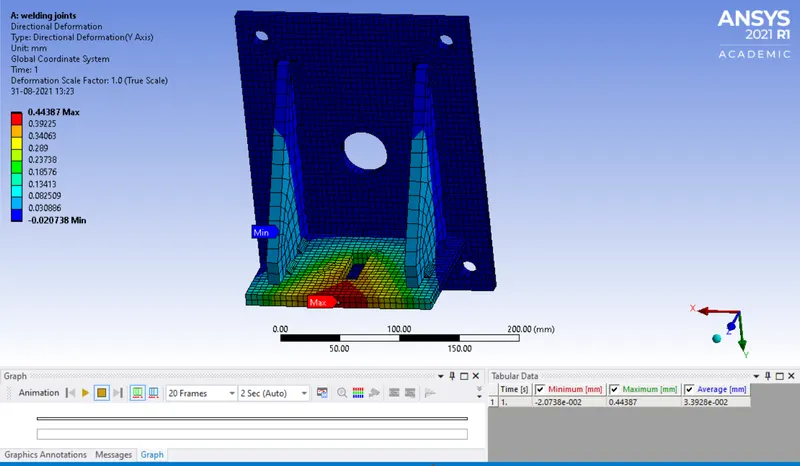
CASE 2: Aluminium Alloy: The material to be chosen for this case is Aluminium alloy (high strength, wrought)(Plate material to be used is stainless steel).
EQUIVALENT STRESS (FULL BODY)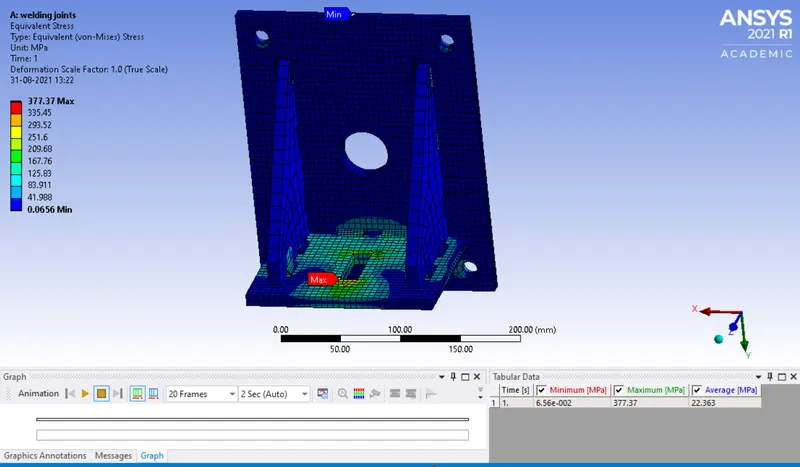
EQUIVALENT STRESS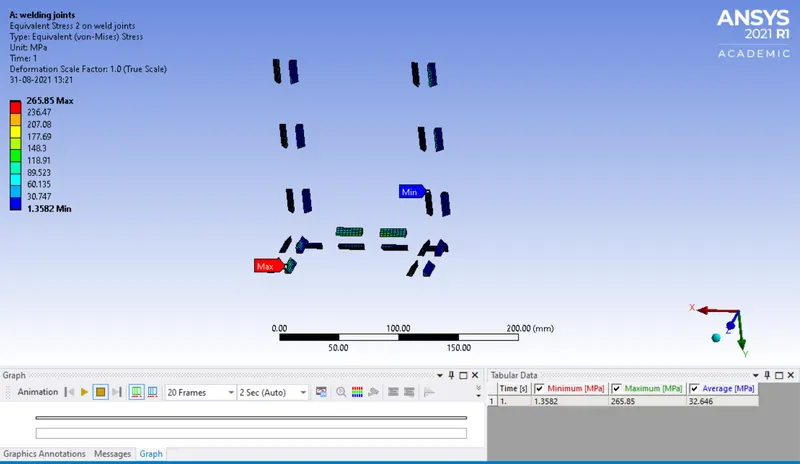
EQUIVALENT ELASTIC STRAIN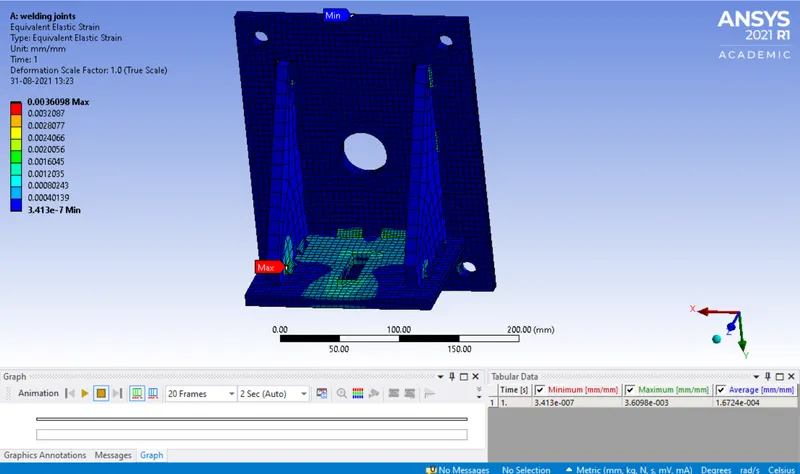
DIRECTIONAL DEFORMATION
CASE 3: Bronze: In order to simulate "Brazing", you should be using bronze as the weld material. Assign Stainless Steel to both plates and Copper to the RIBS.
EQUIVALENT STRESS( FULL BODY)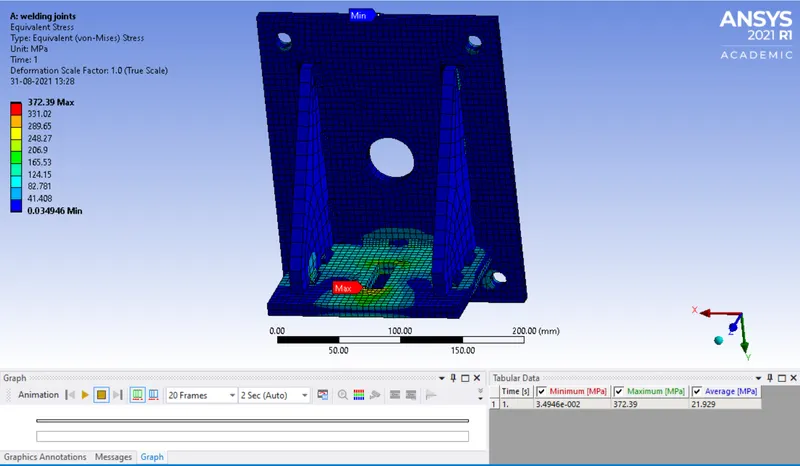
EQUIVALENT STRESS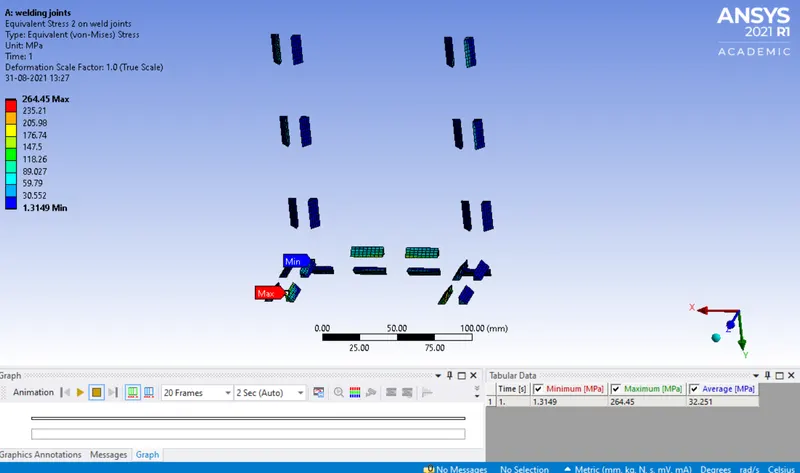
EQUIVALENT ELASTIC STRAIN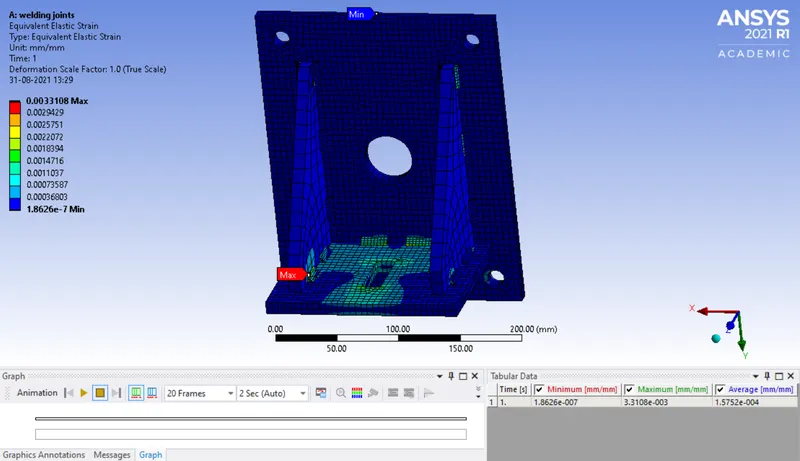
DIRECTIONAL DEFORMATION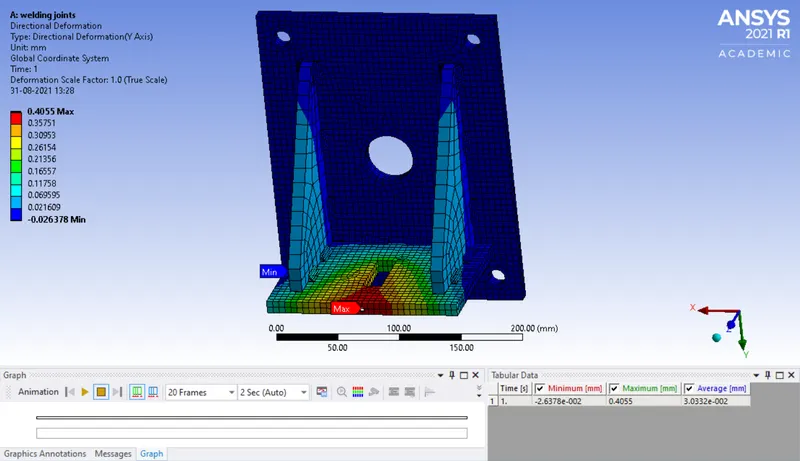
CONCLUSION :
|
Case |
Plate Material |
Weld Material |
Eq. Stress (MPa) |
Eq. Strain |
Directional Deformation (mm) |
|
1 |
Stainless Steel |
Stainless Steel |
360.38 |
0.0020175 |
0.35037 |
|
2 |
Stainless Steel |
Aluminium Alloy |
377.37 |
0.0036098 |
0.44387 |
|
3 |
Stainless Steel & Copper |
Bronze |
372.39 |
0.0033108 |
0.4055 |
From the above cases it is clear that Stainless steel plates and weld joints experiences the lowest stress, strain and directional deformation, whereas Stainless Steel and aluminium alloy(Case 2) experiences the largest stress, strain and directional deformation.
IN case of maximum stress on Weld joints,it is maximum in case of CASE 1.i.e stainless steel (all parts are made of stainless steel) as shown in the image below