Week 3 Verification of Weld Joints
Objective:
To do the analysis of weld joints using three different materials( Al Alloy, Stainless steel and Bronze) and compare their result for the Directional Deformation and equivalent strain experienced by the setup and also to Identify the weld joint that experiences the highest equivalent stress in each case and compare the results for all three cases.
Setup and Procedure:
- In the Engineering data source of static structural analysis we have selected the material as shown below.
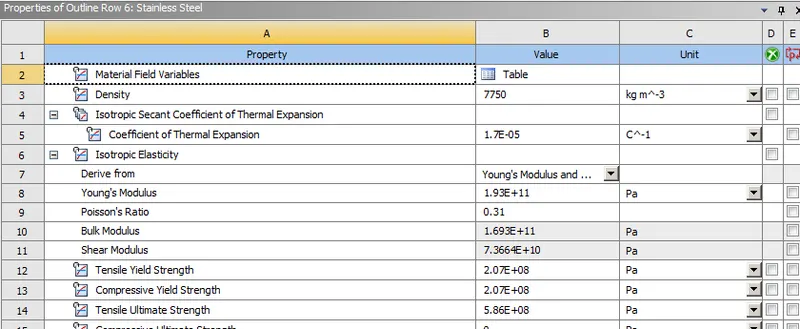
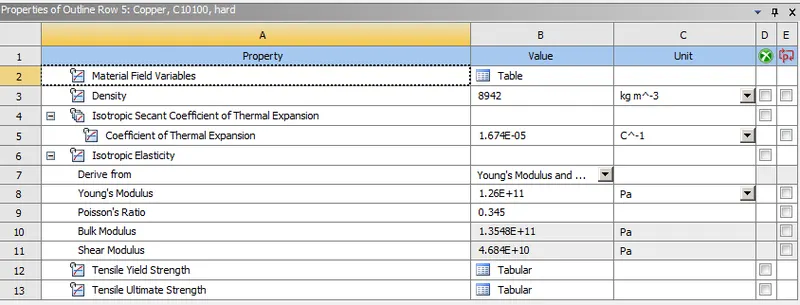
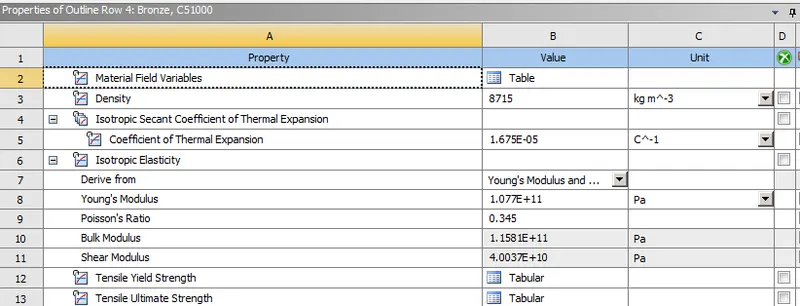
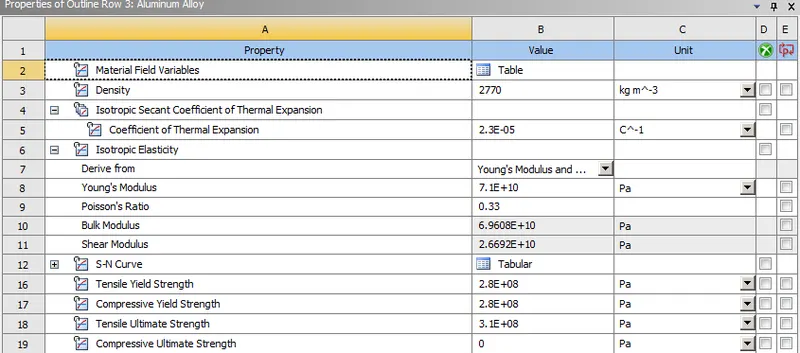
- In the geomerty section we have imported the weld geometry for the analysis purpose. The CAD diagram is shown below.
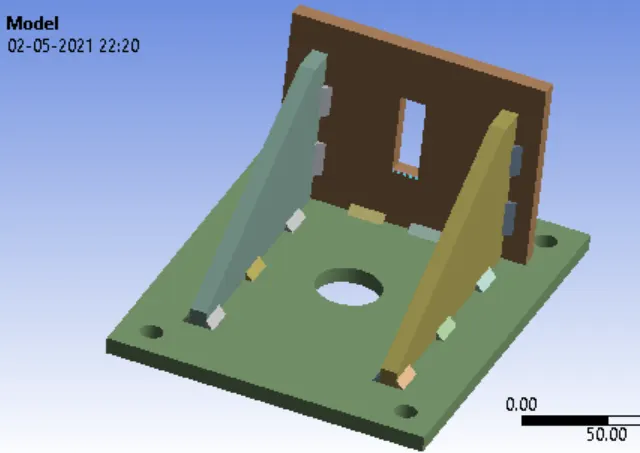
- In the contact section we have assigned bonded contact to all the weldments where as we have assigned frictional contact to the plates and the ribs with coefficient of friction as 0.2
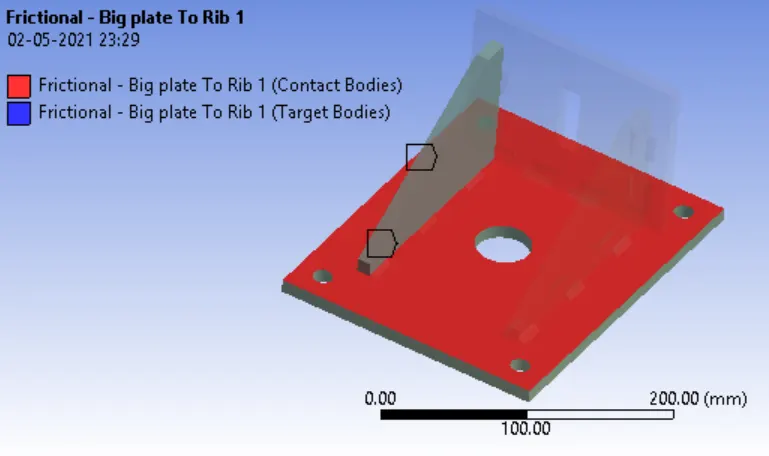
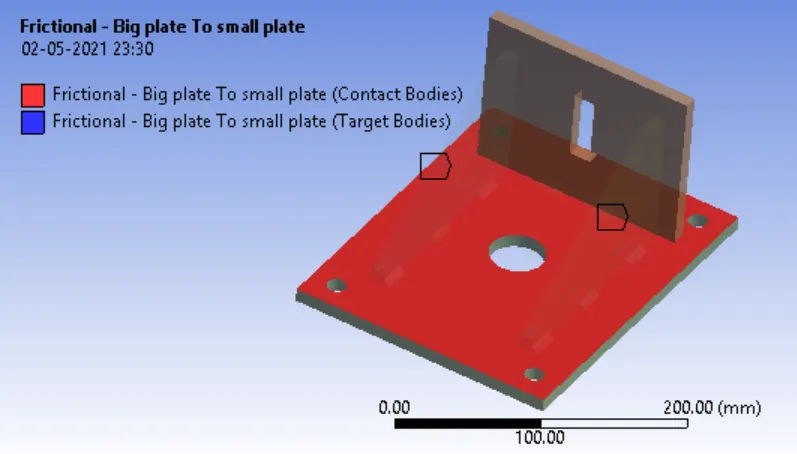
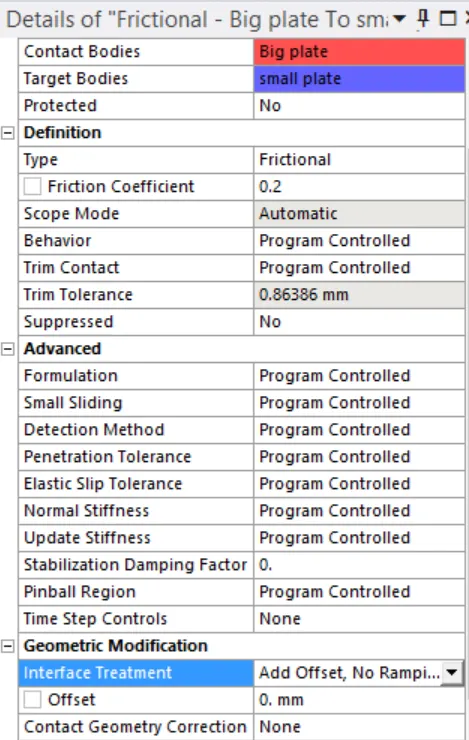
- The analysis setting is shown below for the frictional contact.
- In the mesh section we have assigned body sizing to the plates with element sze of 5mm. The total number of elements are 2815 and nodes as 18480.
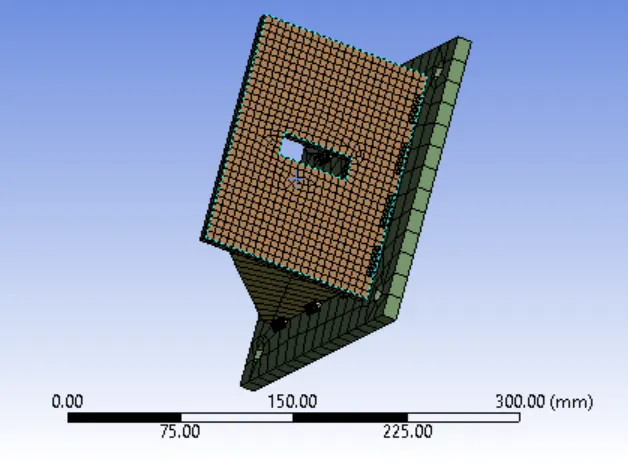
- In the analysis setting we have used only one step to apply the load, To observe the non linearity we have on the large deflection.
- In the load section we have applied a force of 15000N in the Y direction to the rectangular hole present in the smaller plate where as the bigger plate has been kept fixed.
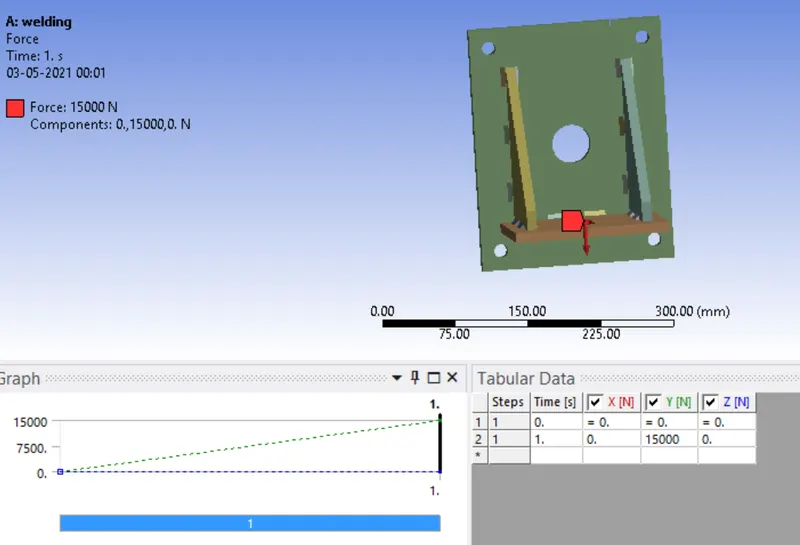
Results:
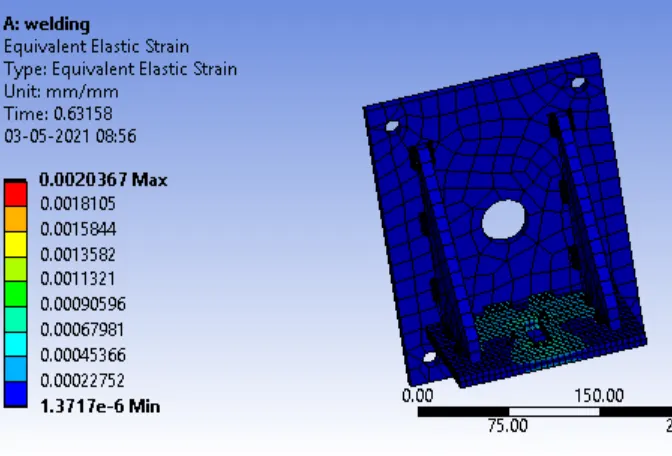
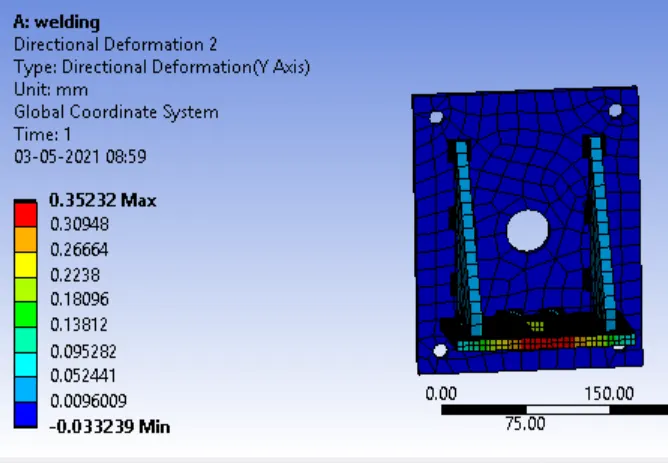
Case 1 (Weld material stainless steel)
Elastic Strain:
Directional deformations:
Equivalent Stress:
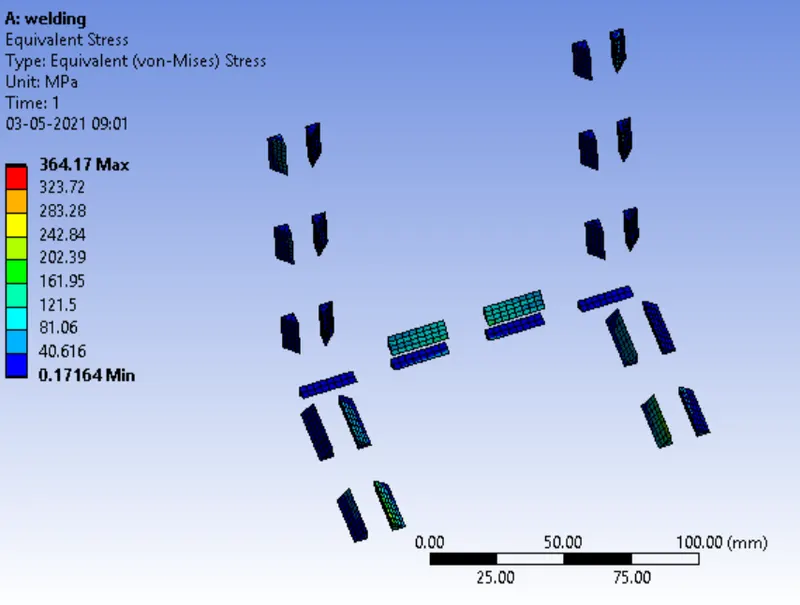
Case 2: (Weld material as Al Alloy)
Elastic Strain: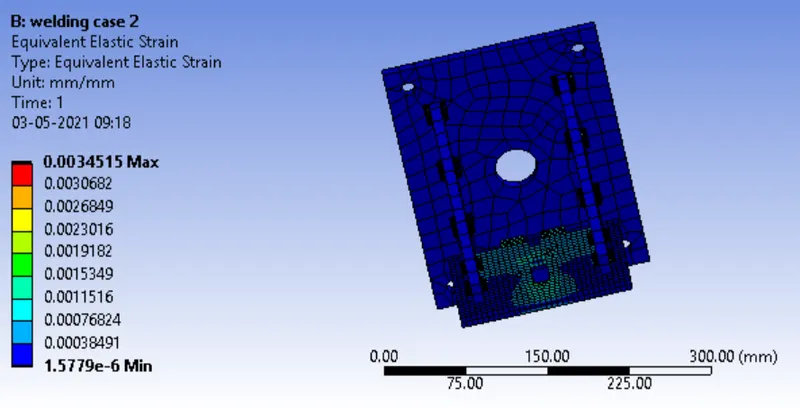
Directional deformation: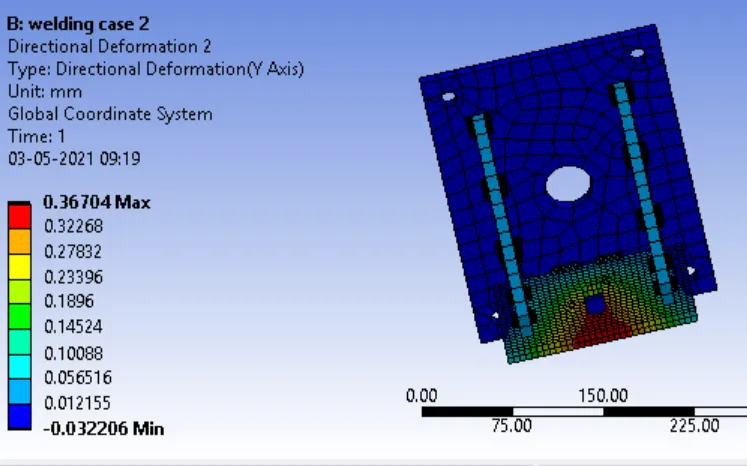
Equivalent Stress: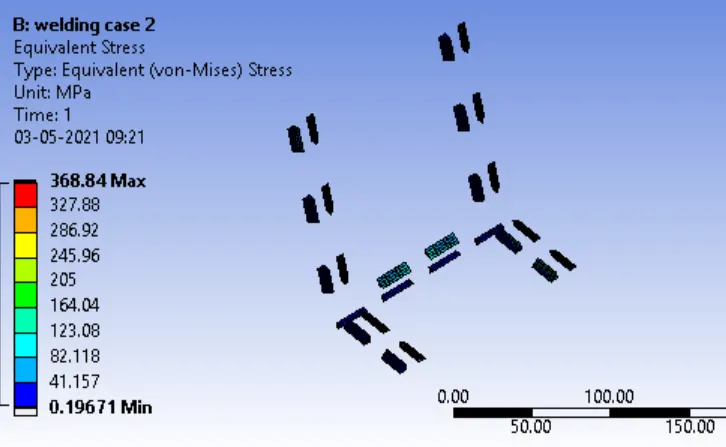
Case 3 (Weld material of Bronze & Ribs of Copper)
Elastic Strain: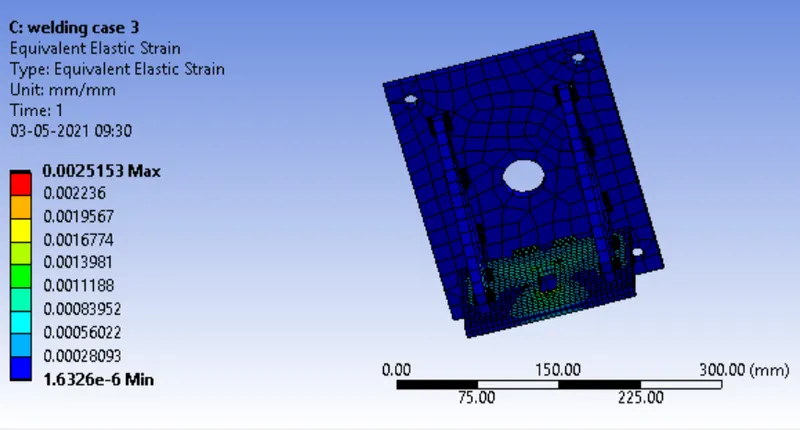
Directional deformation: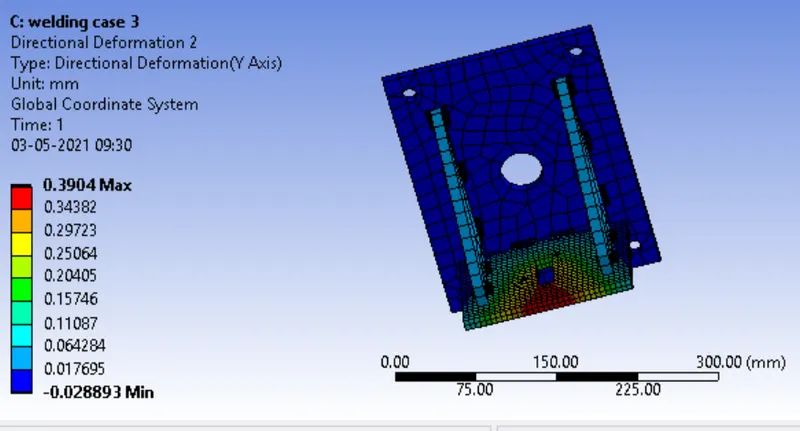
Equivalent Stress: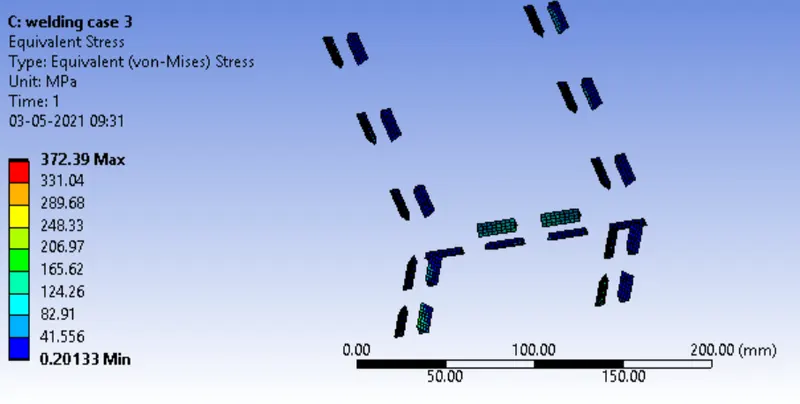
Discussion & Conclusion:
| Case | Elastic Strain | Directional deformation | Equivalent stress |
| Case 1 | 0.00203mm/mm | .3523 mm | 364.17 MPa |
| Case 2 | 0.00345mm/mm | .3670 mm | 368.84 MPa |
| Case 3 | 0.00251mm/mm | .3904 mm | 372.339 MPa |
- The directional deformation is maximum in case 3 ( weld material as bronze) followed by Al and then in case of structural steel as a weld material the deformation is minimum.
- Since deformation is maximum in case of bronze as a weld material so equivalent stresses are also going to be maximum in it. The least stresses are observed in case 1 where the we have used stainless steel as a weld material, this is because of the high strength of stainless steel compare to other weld material used for this analysis.
- In case of elastic strain the maximum value has occured in case 2, where Al alloy has been ussed as a weld material.
Thus from the above observation we can conclude that stainless steel as a weld material should be used for the welding purpose as it will provide more structural rigidity to any structure under the action of load.
The figure shown below indicate the weld joints with the maximum stress. 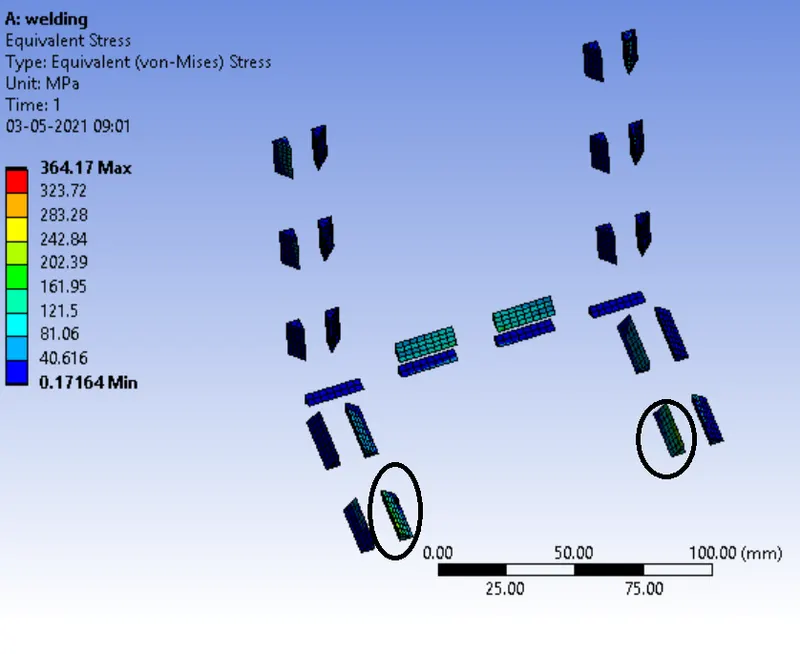
https://drive.google.com/file/d/1q6qQzZgo3VlNOMxwlyHpRIpa5sOs6QJn/view?usp=sharing