Week 3 Verification of Weld Joints
AIM:
Perform Advanced Structural Analysis on the weld joints setup with different materials Using ANSYS WORKBENCH.
OBJECTIVE:
Analyze the weld joints setup to find out their directional deformation, equivalent strain under the load of 15000 N with three different mterials. Identify the weld joint that experiences the highest equivalent stress in each case and compare the results for all three cases
GIVEN MODEL:
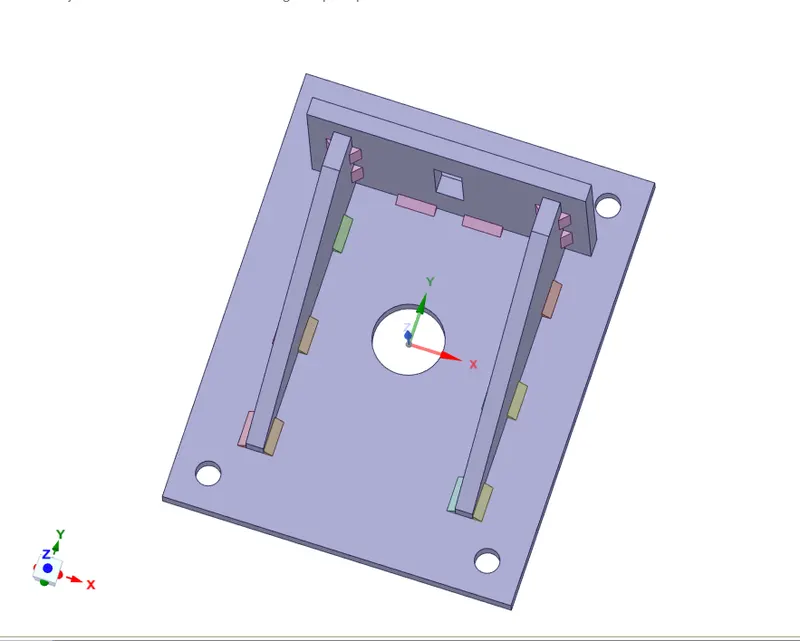
Fig(1).
PROCEDURE:
Assign the material as stainless steel for both the cases by, Selecting the Engineering data >> Edit >> Engineering data sources >> General Materials >> Stainless steel.
*Properties of the stainless steel is shown in below Fig(2).
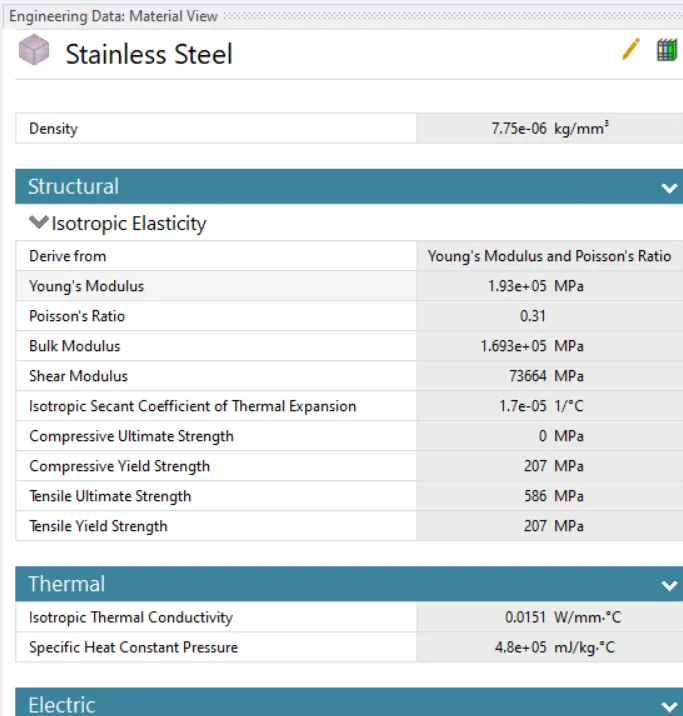
Stainless steel Fig(2).
*Similarly assign the Aluminium Alloy, Bronze and Copper material cards as shown below images
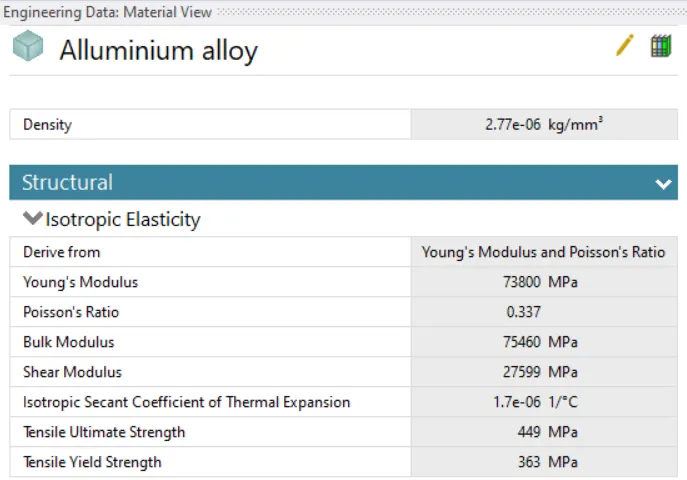
Alluminium alloy Fig(3).
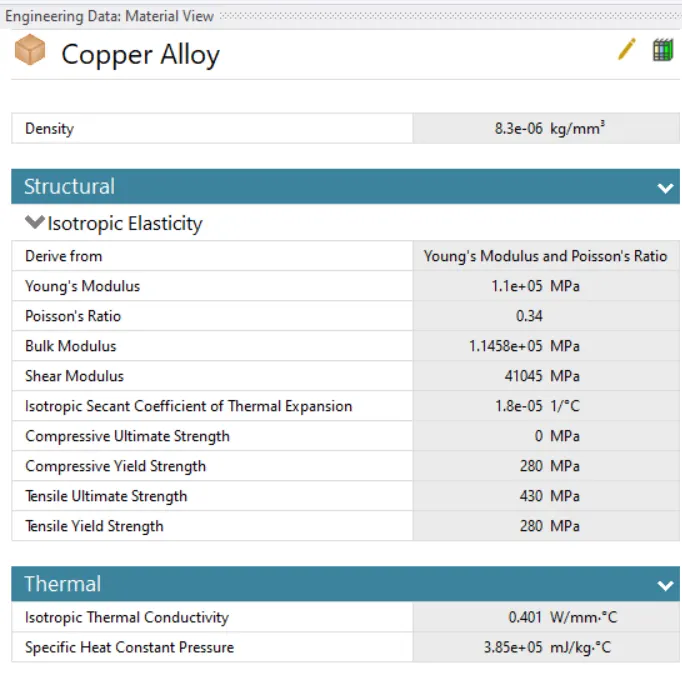
Copper alloy Fig(4).
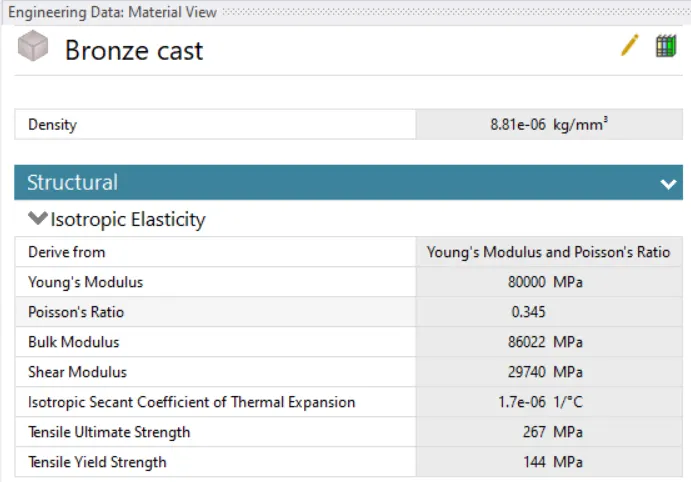
Bronze Fig(5).
*After Assigning the material close the engineering data and open new space claim to make the required designs.
*Once geometry is imported from the space claim then open the model and eidt the geometry in Mechanical moduler.
*After that Give all analysis setting in steps of time.
*Assign fixed joint and load joint on the geometry.
CASE-1
*Use Stainless steel for both plates and weldmates
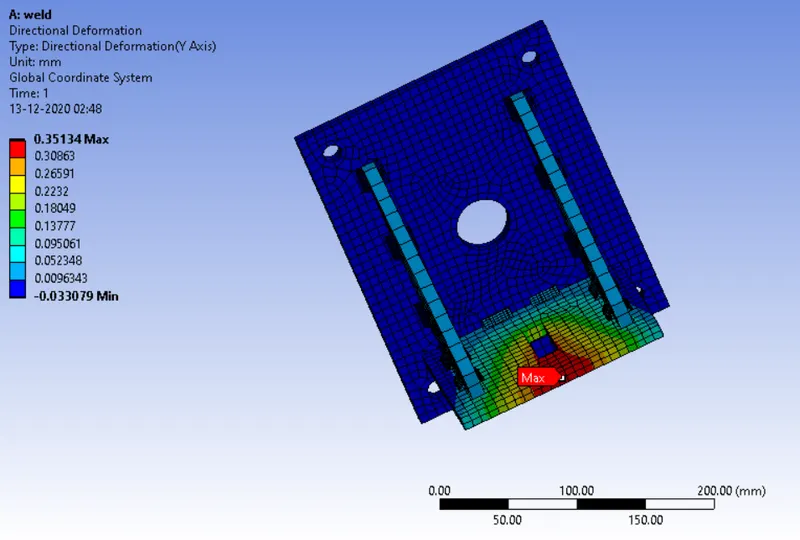
Directional Deformation:
Max:0.3513 (mm) and Min: -0.0330 (mm)
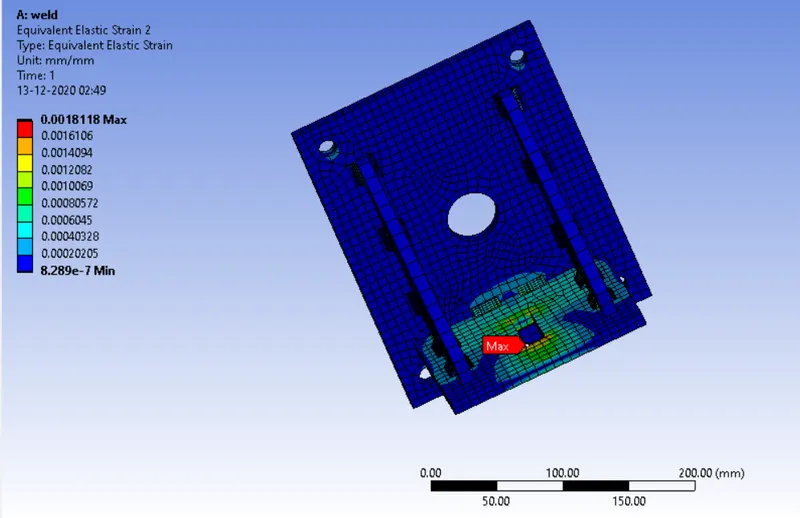
Equivalent Elastic Strain:
Max:0.001811 and Min:8.289E-7
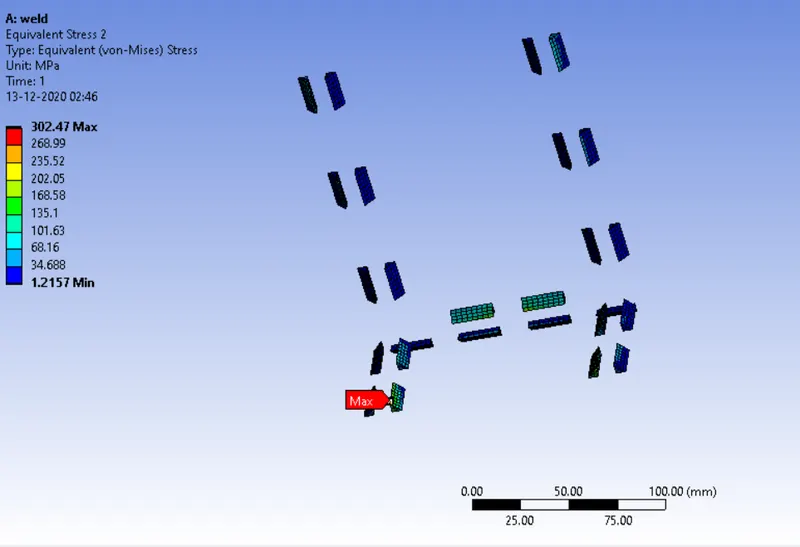
weld joint that experiences the highest equivalent stress:
Max:302.47 (MPa) and Min:1.215 (MPa).
CASE-2
*Aluminium Alloy:The material to be chosen for this case is Aluminium alloy(high strength, wrought). [Plate material to be used is stainless steel]
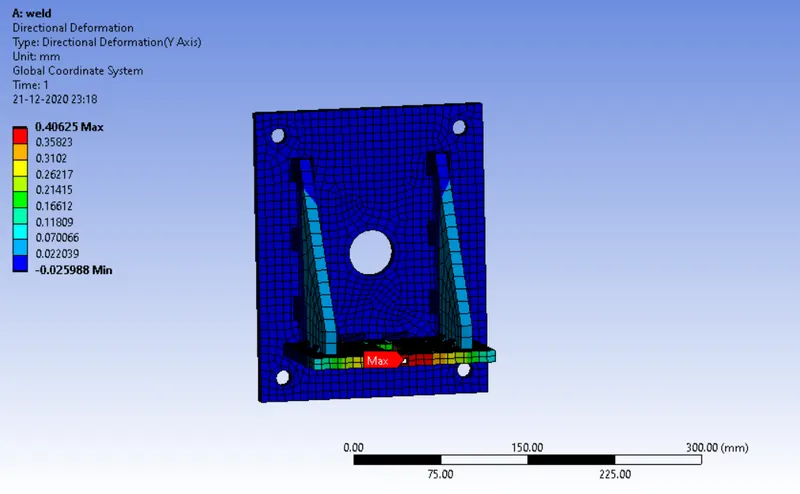
Directional Deformation:
Max:0.40625 (mm) and Min:-0.0259 (mm)
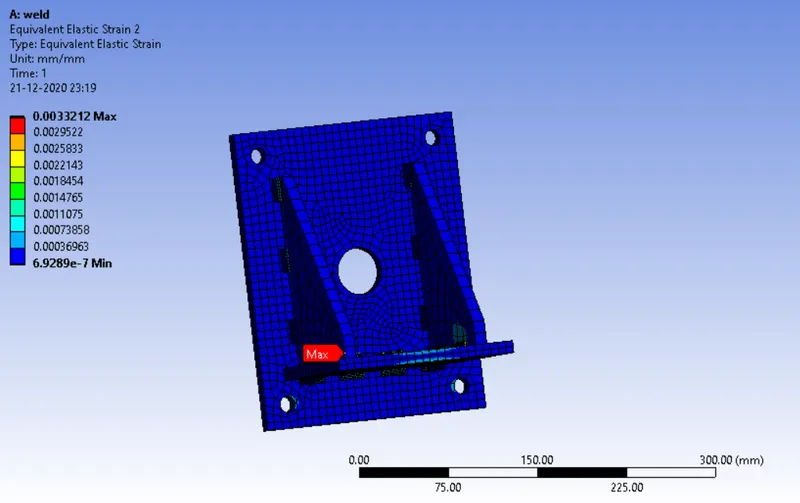
Equivalent Elastic Strain:
Max:0.003321 and Min:6.928E-7
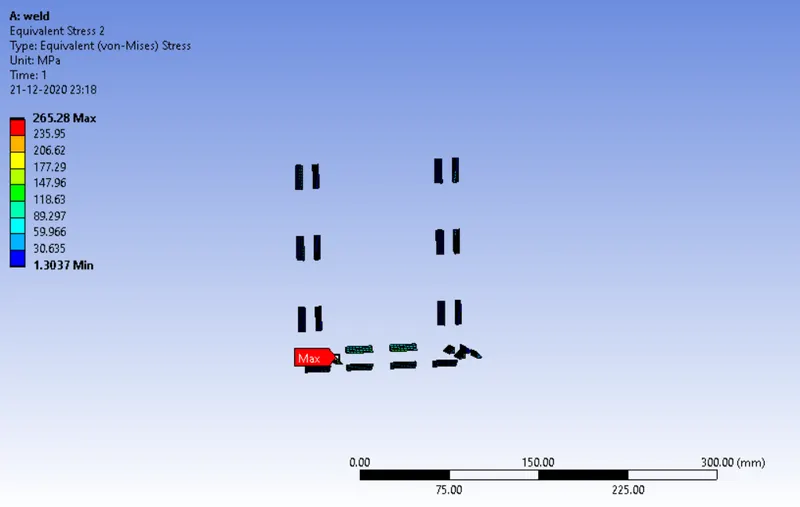
weld joint that experiences the highest equivalent stress:
Max:265.28 (MPa) and Min:1.303 (MPa).
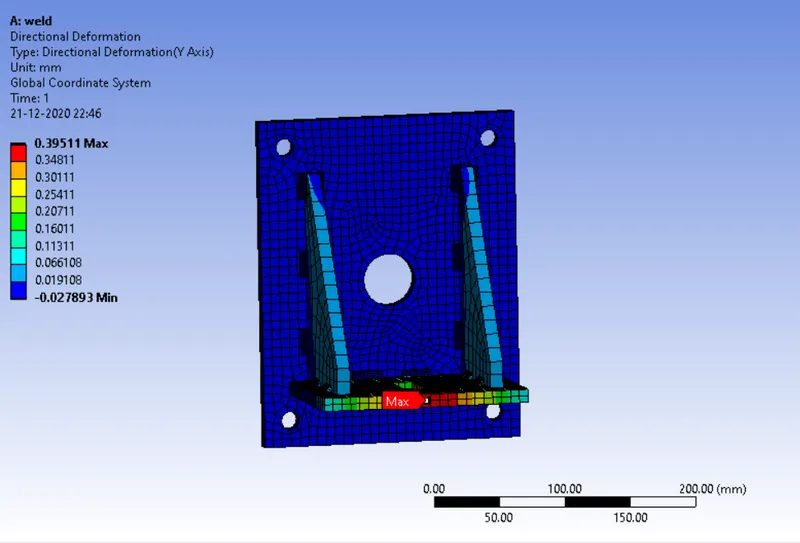
Case 3.Bronze: In order to simulate "Brazing", you should be using bronze as the weld material. Assign Stainless Steel to both plates and Copper to the "Ribs"
Directional Deformation:
Max:0.3951 (mm) and Min:-0.0278 (mm)
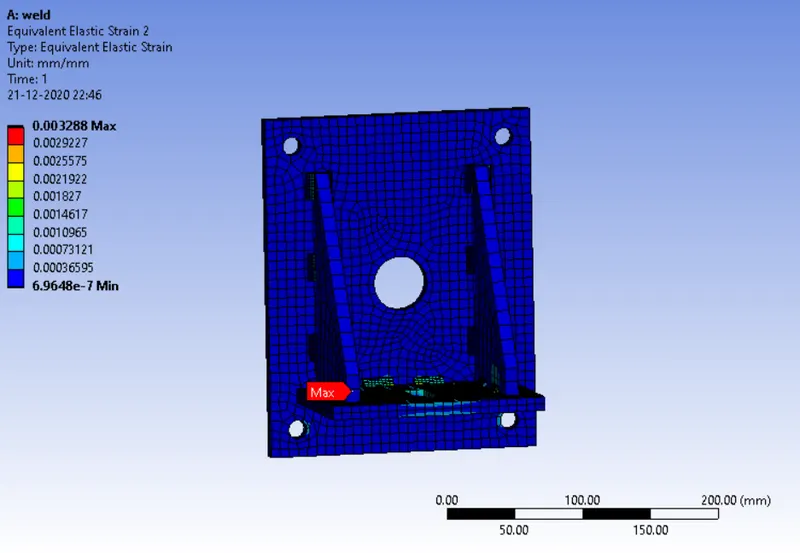
Equivalent Elastic Strain:
Max:0.003288 and Min:6.964E-7
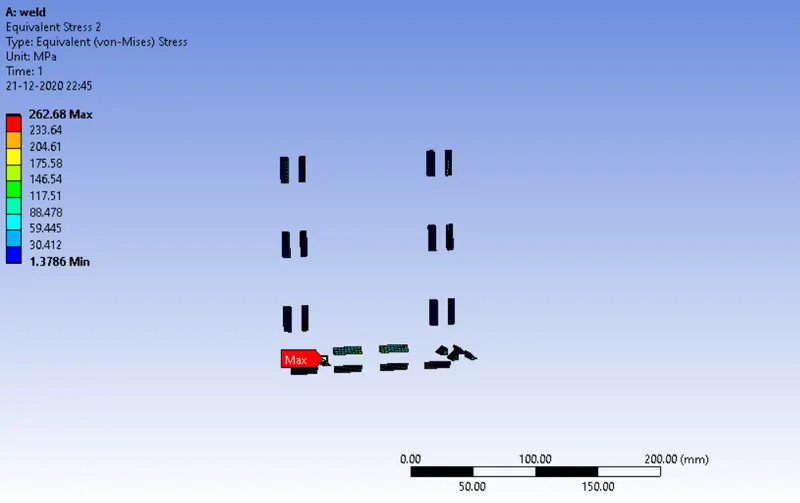
weld joint that experiences the highest equivalent stress:
Max:262.68 (MPa) and Min:1.378 (MPa).
COMPARING THE REULTS:
| SL.No | CASE |
DIRECTIONAL DEFORMATION Max (mm) |
DIRECTIONAL DEFORMATION Min (mm) |
EQUIVALENT ELASTIC STRAIN Max |
EQUIVALENT ELASTIC STRAIN Min |
EQUIVALENT STRESS Min (Mpa). |
EQUIVALENT STRESS Min (Mpa). |
| 1. | 1 | 0.3513 | -0.0330 | 0.00181 | 8.289E-7 | 302.47 | 1.215 |
| 2. | 2 | 0.4062 | -0.0259 | 0.003321 | 6.928E-7 | 265.28 | 1.303 |
| 3. | 3 | 0.3951 | -0.0278 | 0.003288 | 6.964E-7 | 262.68 | 1.378 |
CONCLUSION:
*Directional Deformation is maximum in Case-2 i.e alluminium as weld material compared to other two cases, Because it has minimum Young's modulus.
*Equivalent Stress Distribution in weld joint is maximum in Case-1 because Stainless steel can bear more loads than another two materials.
*Equivalent elastic strain is very less in stainless steel material and high in alluminimum material.