Week 3 Verification of Weld Joints
Aim:Simulate three different types of welding using three different weld materials
Procedure:
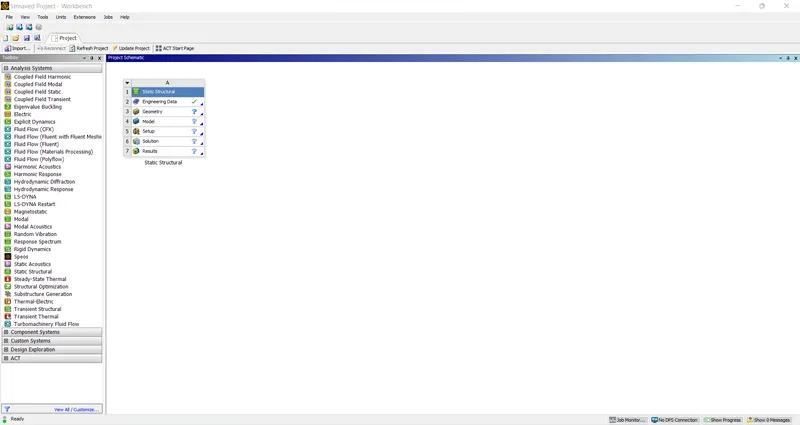
The analysis we are doing is a static structural analysis and Since we have to do an analysis on three different materials and compare the results. Aluminum alloy(high strength, wrought), Copper Alloy, Bronze, and Stainless Steel are added to the engineering data, Since Bronze and aluminum are not available in the engineering Data, They are added manually
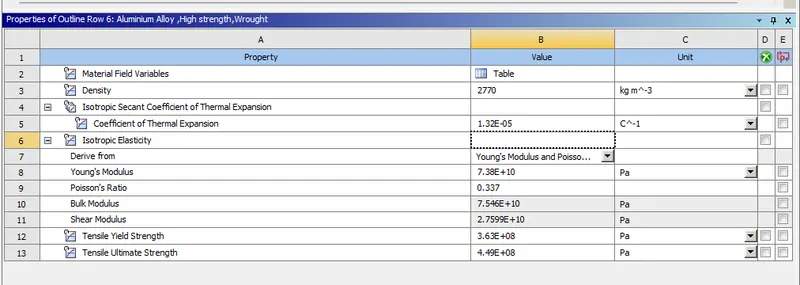
(Aluminum Alloy)
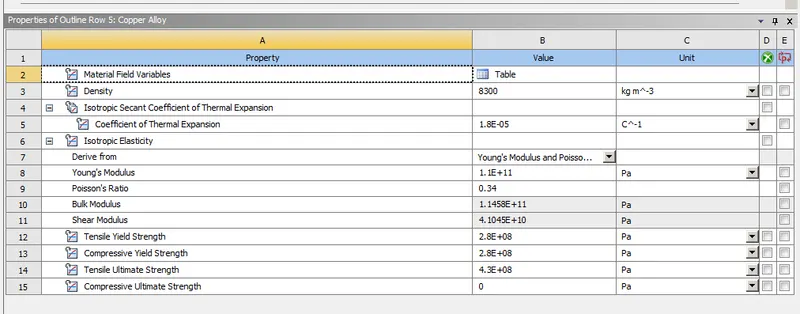
(Copper Alloy)
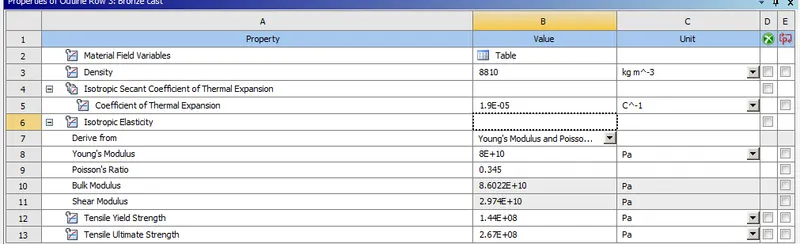
(Bronze Alloy)
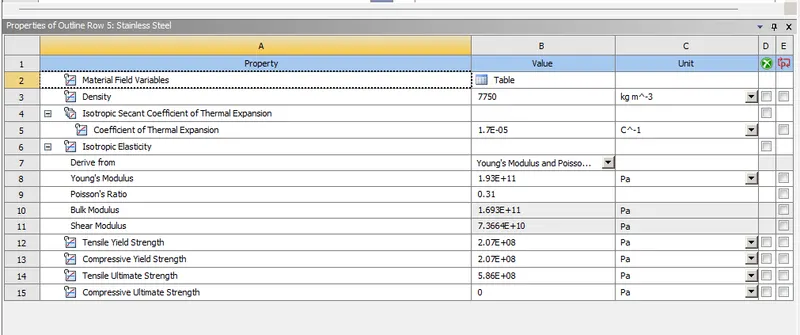
(Stainless steel)
Before we can begin analysis we need to create a model with the given dimensions but since the model is already given it is imported using the import option in the geometry and the model is checked for any imperfections
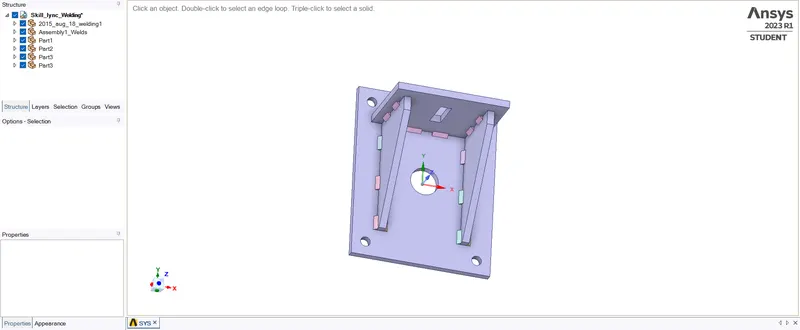
Once the model is updated, contacts have to be established Since these are plates welded together, there are two types of contacts one is contact between weld and plates which are bonded in nature and another contact is between plates and ribs which are frictional and has a frictional coefficient of 0.2 and is given as shown below
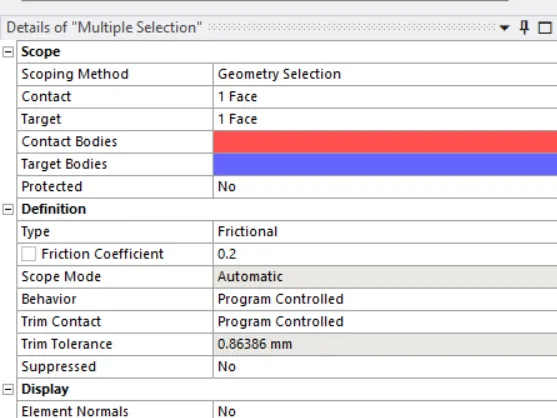
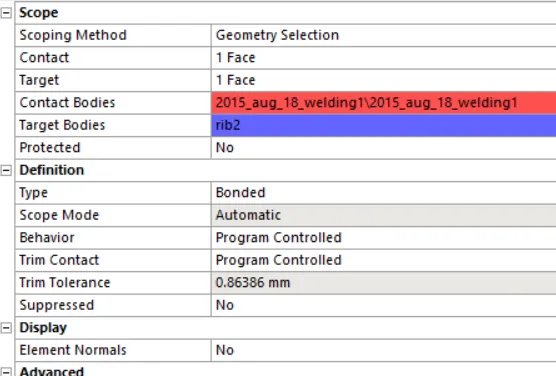
We have to perform mesh of different sizes over materials plates and ribs that have a finer mesh
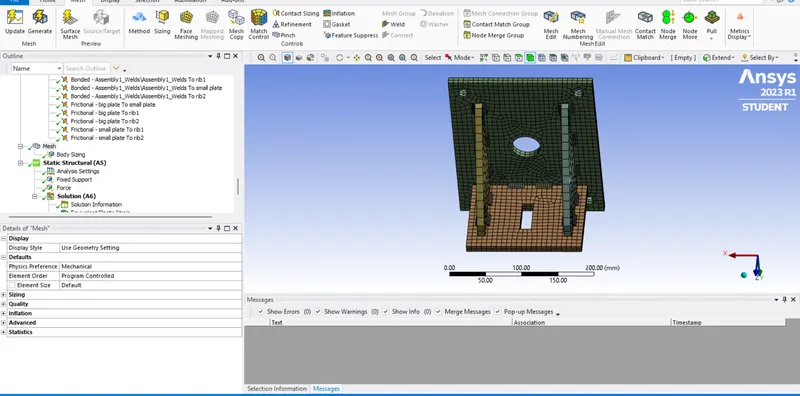
After the analysis is done the model is set for boundary conditions
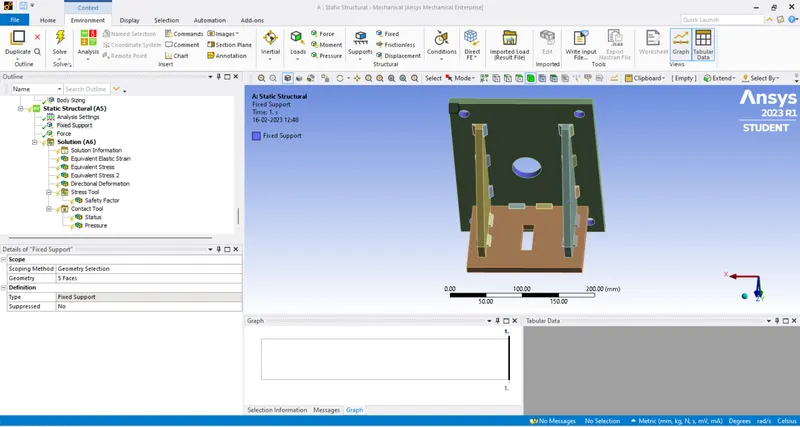
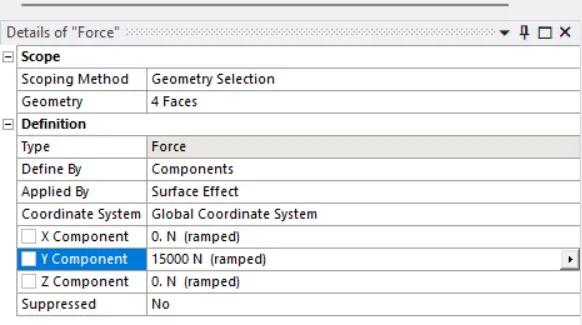
(Fixed support) (Force applied)
Case 1: Stainless Steel: In this case, the material of the plates must also be the same. Use Stainless steel for both weldments and plates. No need to add flux to the weldments.
Results
1:Equivalent Elastic Strain
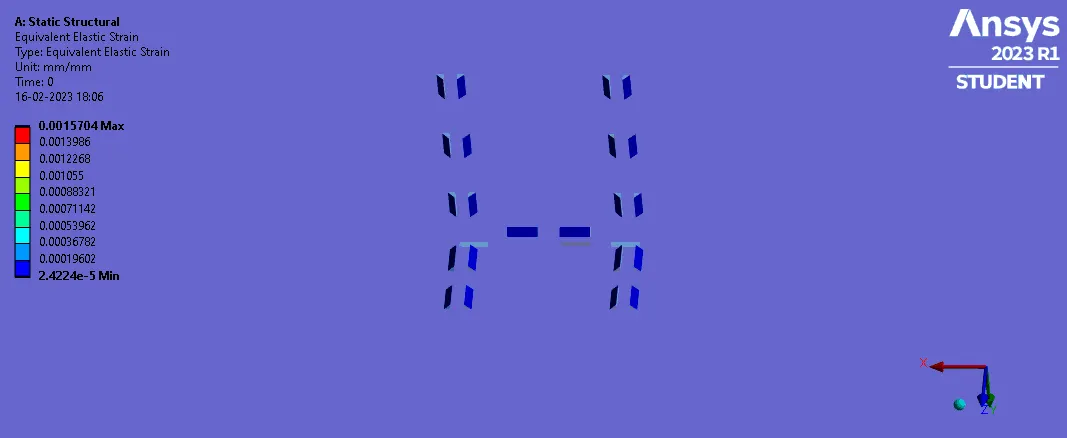
2:Equivalent stress
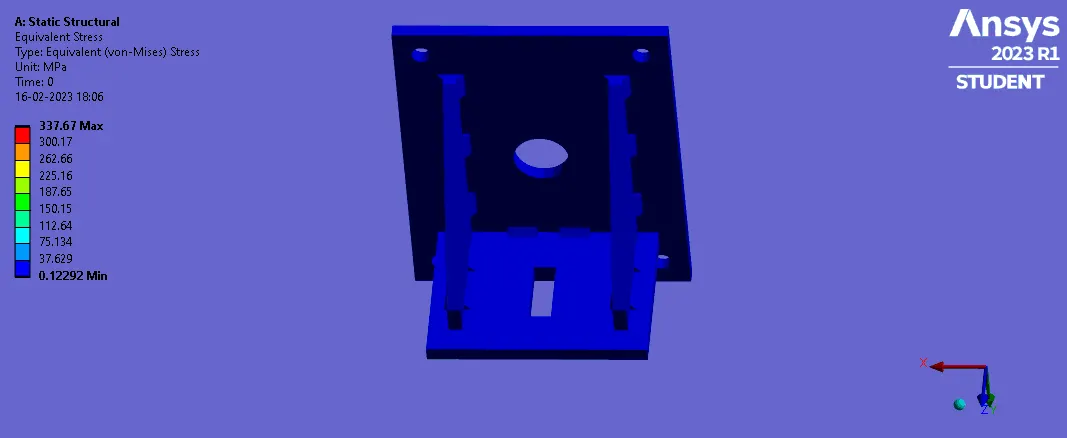
3:Equivalent stress on the ribs
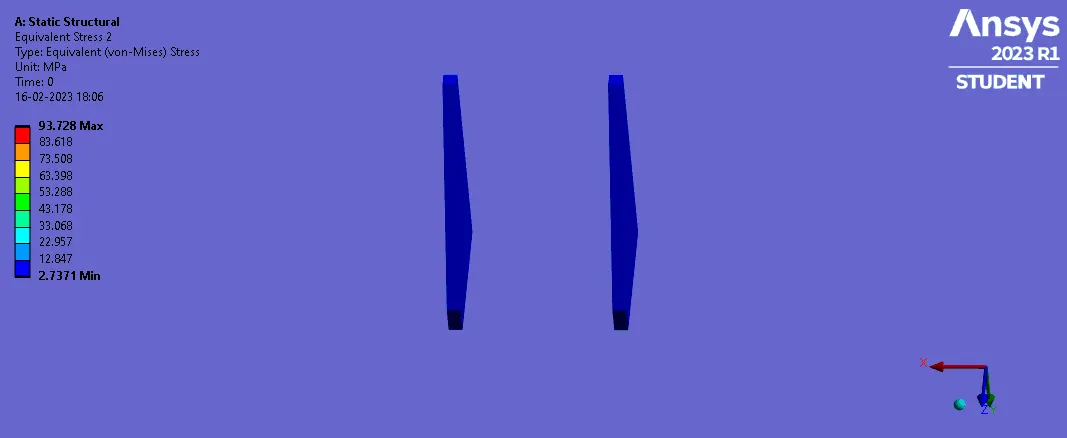
4:Directional Deformation
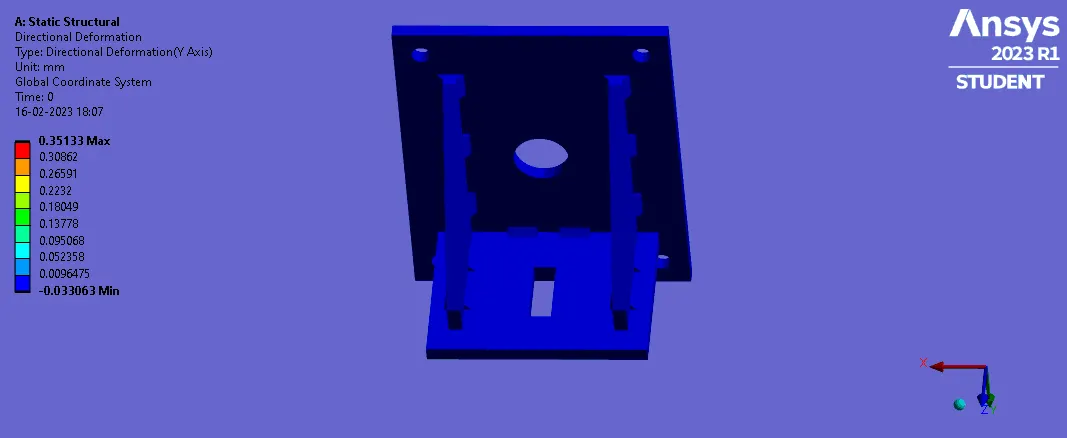
5:Factor of safety
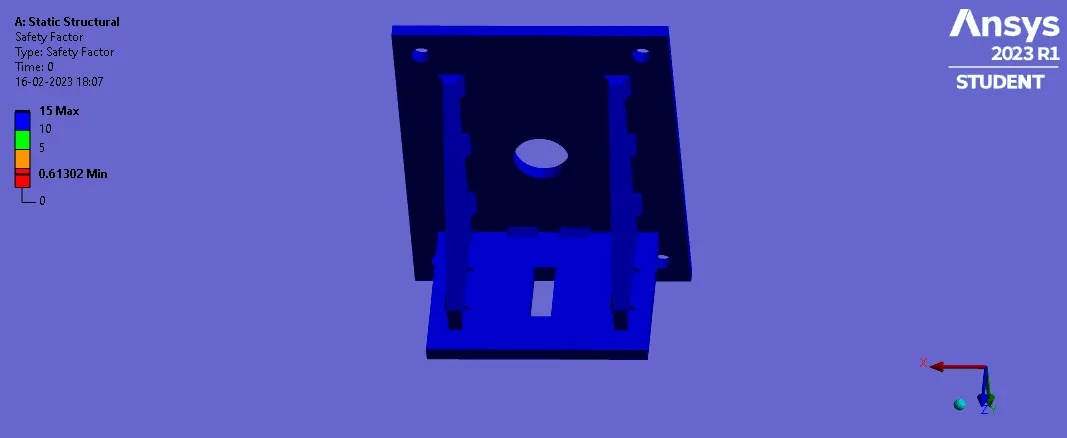
Case2:Aluminium Alloy: The material to be chosen for this case is Aluminium alloy(high strength, wrought). [Plate material to be used is stainless steel]
1:Equivalent Elastic Strain
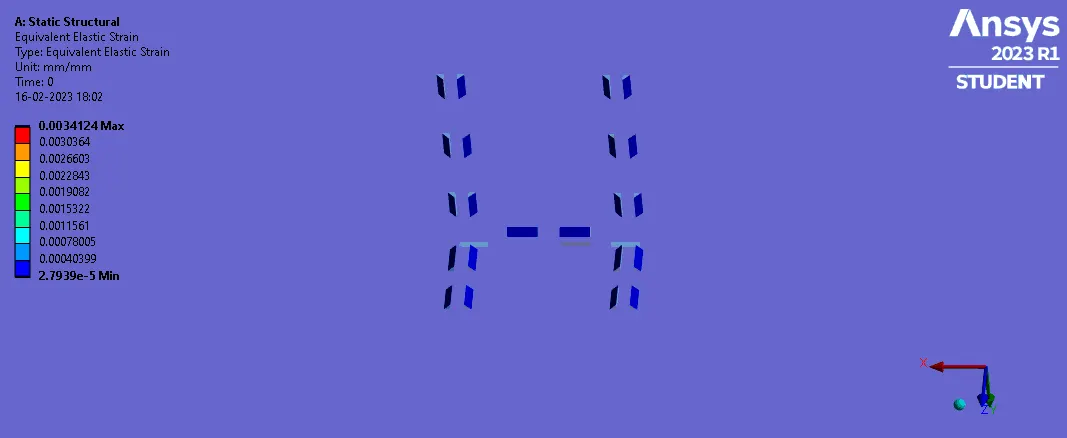
2:Equivalent stress
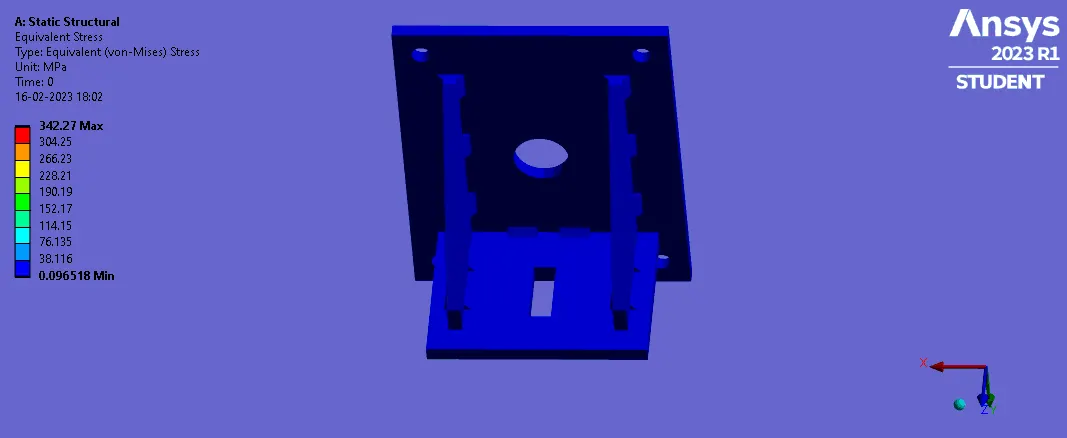
3:Equivalent stress on the ribs
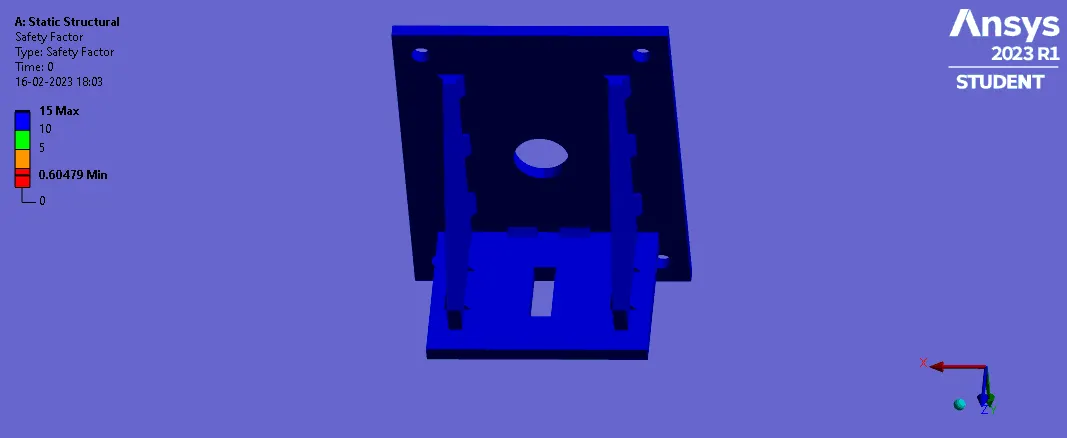
4:Directional Deformation
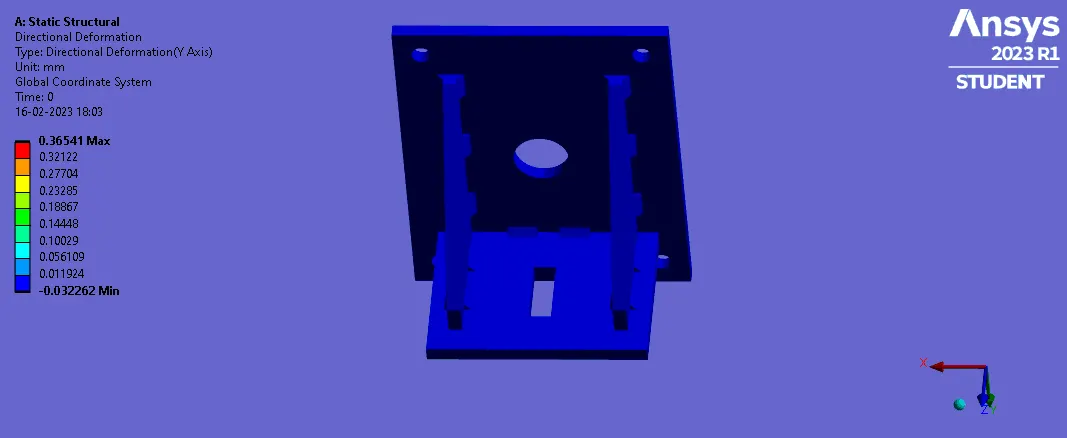
5:Factor of safety
Case3:Bronze: To simulate "Brazing", you should be using bronze as the weld material. Assign Stainless Steel to both plates and Copper to the "Ribs".
1:Equivalent Elastic Strain
2:Equivalent stress
3:Equivalent stress on the ribs
4:Directional Deformation
5:Factor of safety
Conclusion: On Comparing the three results Component having Stainless as the material has lower stress and strain values also the deformation is less when compared to Aluminium and Bronze alloy