Week 3 Verification of Weld Joints
AIM:Simulate three different types of welding using three different weld materials
Objective:
Weld Material used:
Case 1. Stainless Steel: In this case, the material of the plates must also be the same. Use Stainless steel for both weldments and plates. No need to add flux to the weldments.
Case 2. Aluminium Alloy:The material to be chosen for this case is Aluminium alloy(high strength, wrought). [Plate material to be used is stainless steel]
Case 3.Bronze: In order to simulate "Brazing", you should be using bronze as the weld material. Assign Stainless Steel to both plates and Copper to the "Ribs".
Run the simulation for a load of 15000N that is to be applied at the rectangular hole in the small plate.
For each case, find out the Directional Deformation and equivalent strain experienced by the setup. Identify the weld joint that experiences the highest equivalent stress in each case and compare the results for all three cases.
Procedure:
Note: Procedure for each case is same i am explaining only one case.
Case 1. Stainless Steel: In this case, the material of the plates must also be the same. Use Stainless steel for both weldments and plates. No need to add flux to the weldments.
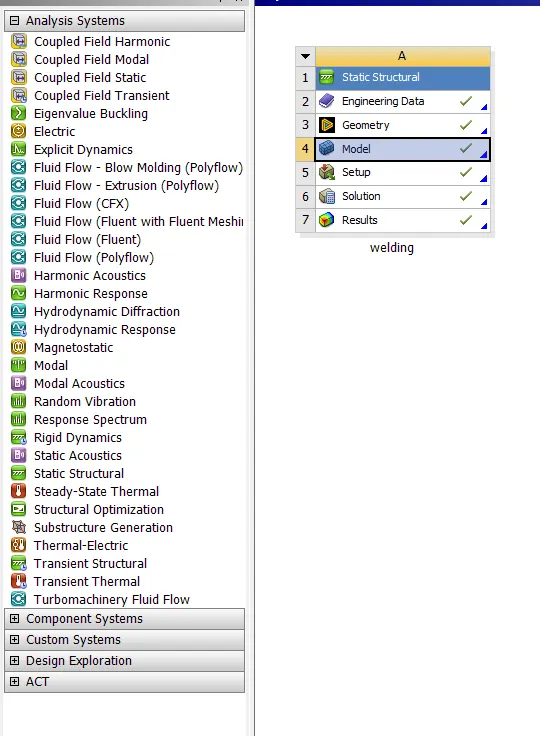
- First we have to double click on the static structural analysis and rename it welding as shown below.
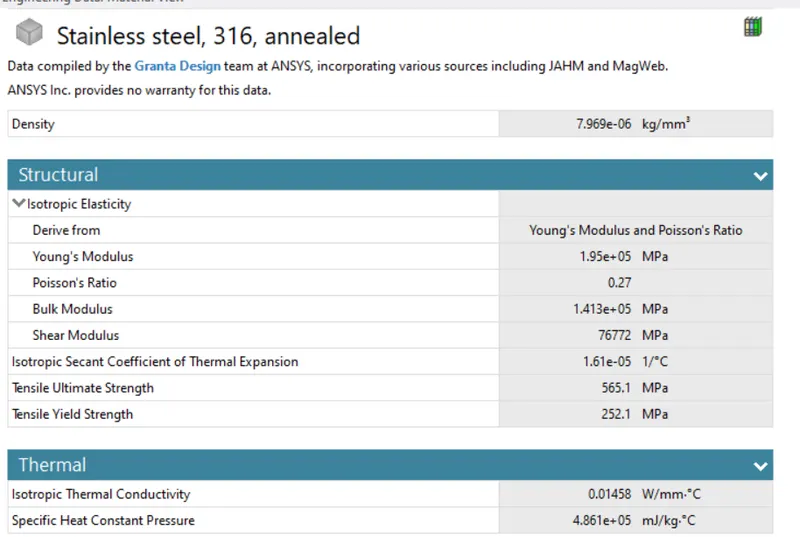
- After that we have to right click on the engineering data and click on edit which is here in first case we have to select the Stainless steel.So add the stainless steel data to it
- Then we have to right click on the geometry and then click on import option and import the geometry given in the question section.
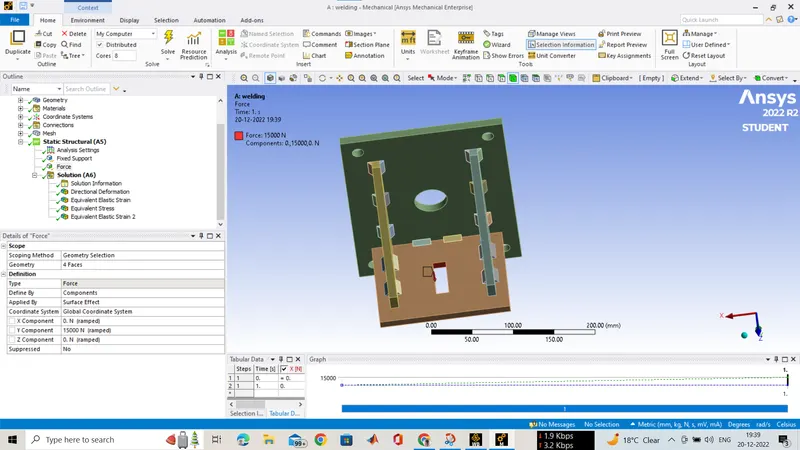
- Then we have to right click on to the model na click on update now we have to again right click and clikon edit and a mechanical window opend as shown below.
- Then rename the geometry as Shown below.
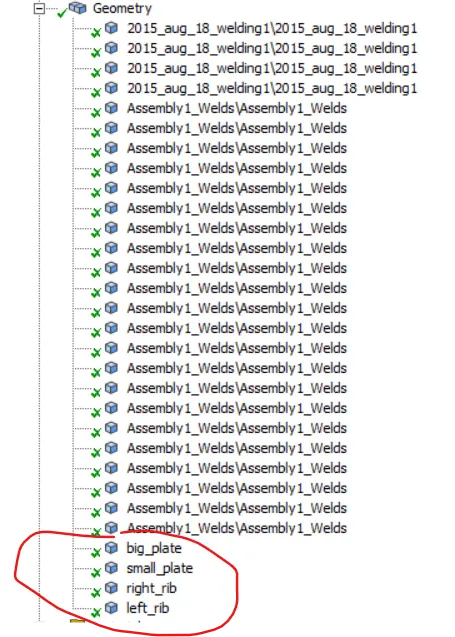
Rename these 4 parts.
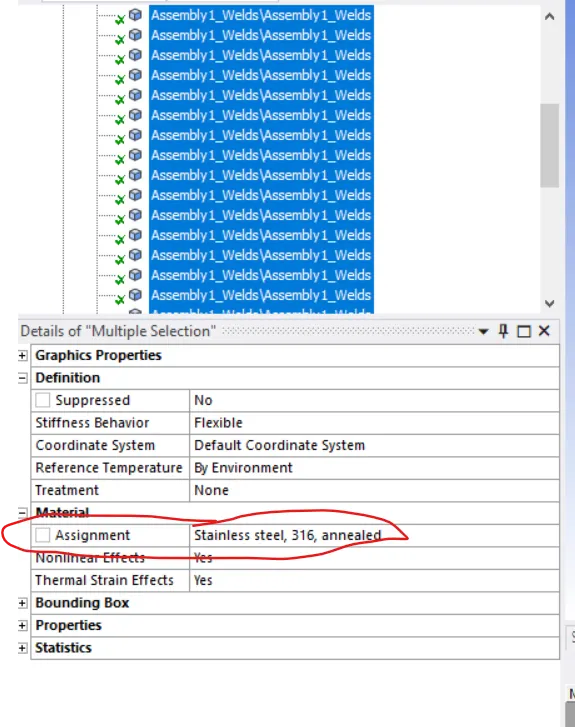
- Select the material as stainless steel here for all the plates,ribs and weld joints.
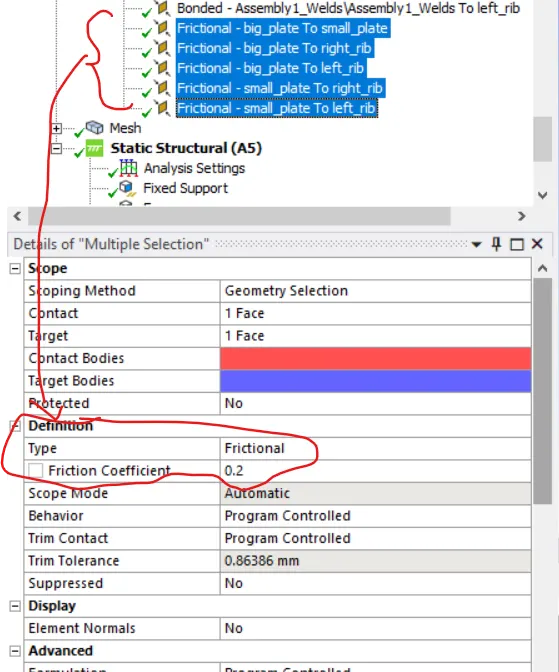
- In connection click on contact and select all the parts and right click and click on rename based on connection. and the connection between the plates and ribs we have to give the type as frictional and coefficient of friction as 0.2.
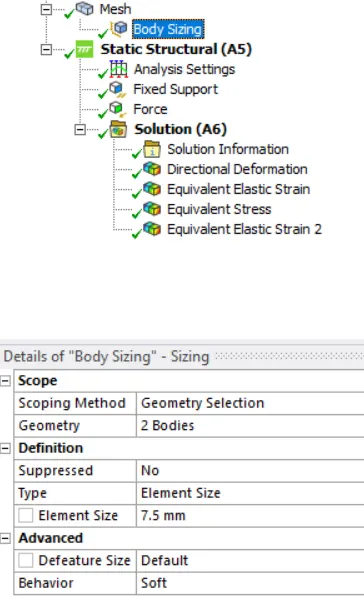
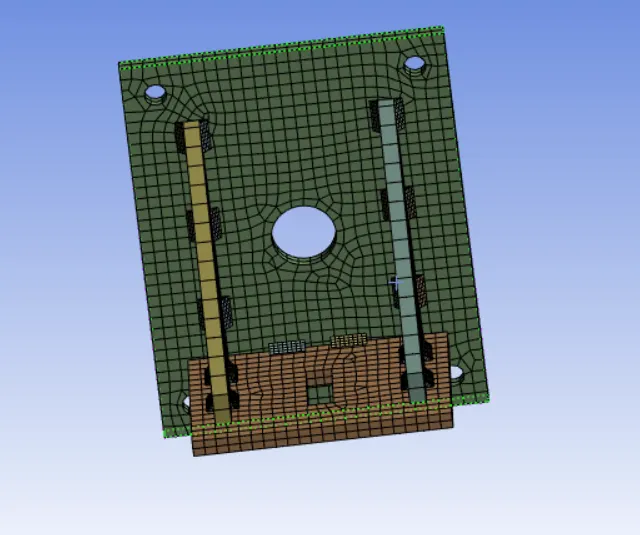
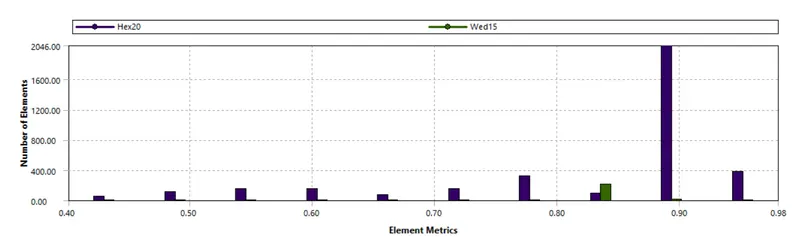
- After that we have to select the mesh and right click and insert the sizing and select the both plate and give element size as 7.5mm and then click generate mesh.
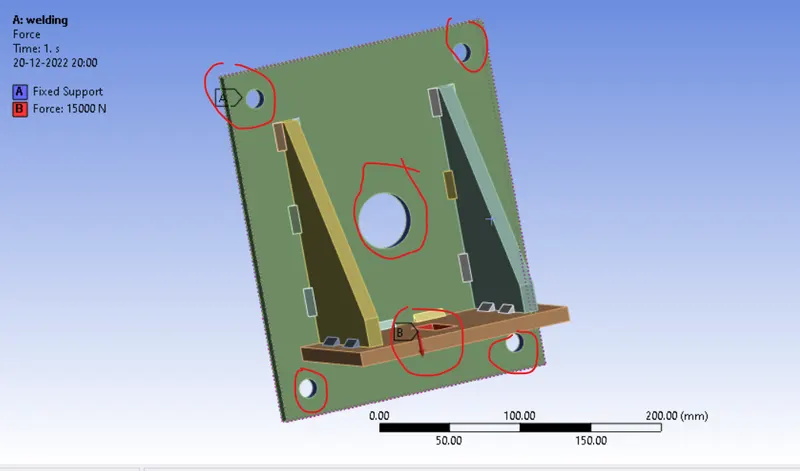
- Now the next step is to give boundey condition here i gave fixed support to all the holes of the big plate and force of 15000N to the hole of small plate in y direction.
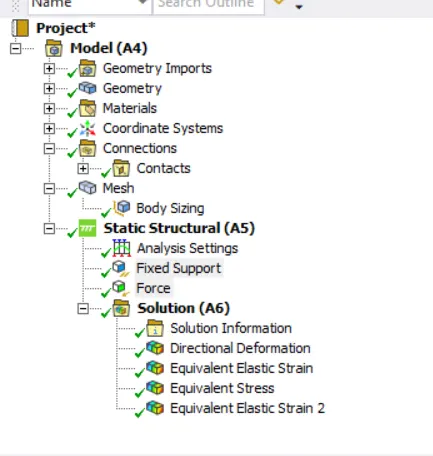
- Finally as per the question we have to analyze the result of Directional Deformation and equivalent strain experienced by the setup the weld joint that experiences the highest equivalent stress.
Results:
maximum Equivalent stress on welding joints:
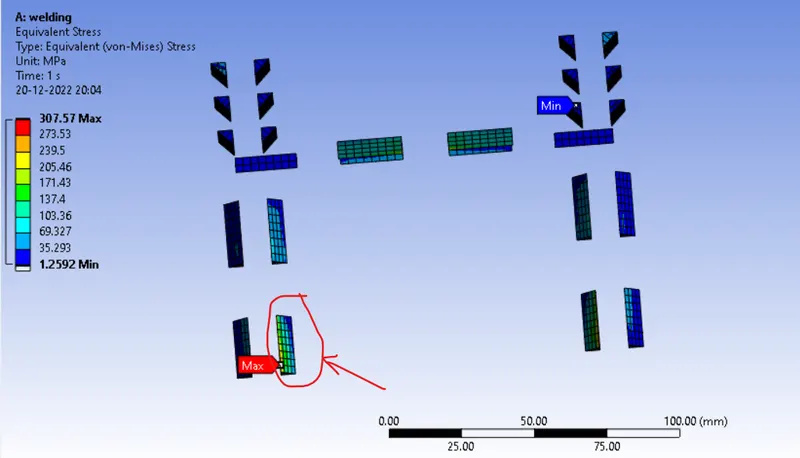
This weld joint is having max equivalent stress i.e, 307.57 Mpa.
Directional deformation:
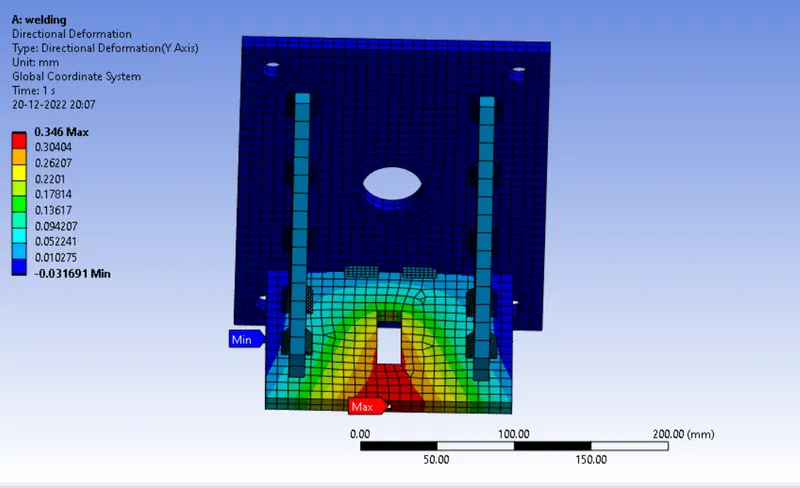
Max Directional deformation in y direction is is 0.346mm .
equivalent strain:
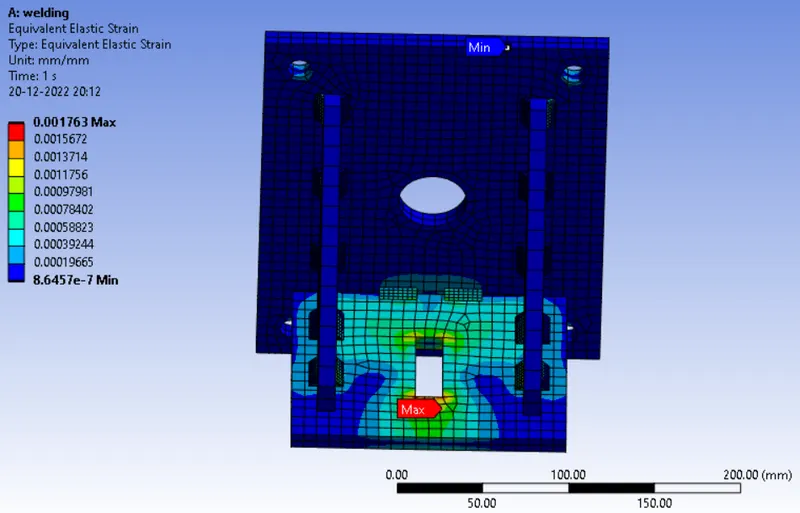
Max Equivalent strain is 0.001763 at the located position.
Equivalent strain on the ribs:
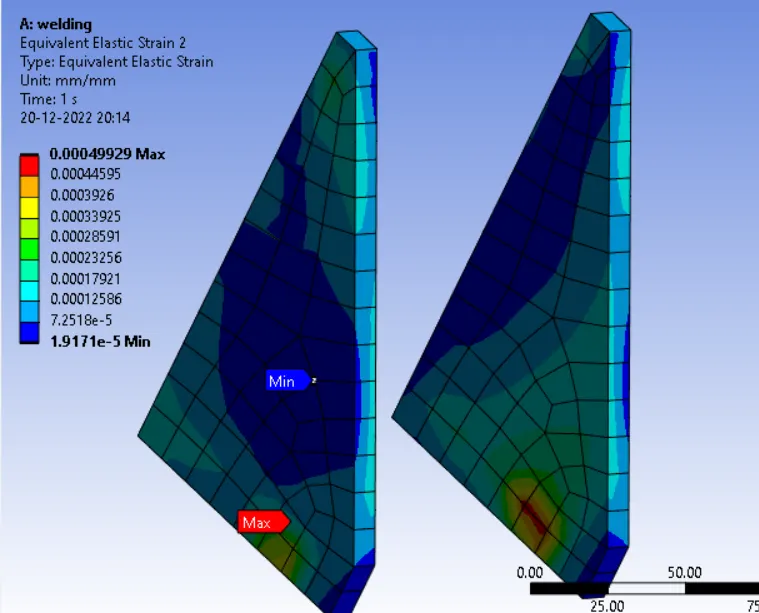
Max equivalent strain is 0.00049929 at the located position in the image.
Case 2. Aluminium Alloy:The material to be chosen for this case is Aluminium alloy(high strength, wrought). [Plate material to be used is stainless steel]
Procedure:
Procedure is same for this case just we have to change the material of the weld joints as aluminum alloy and the plate is same as stainless steel.
Results:
maximum Equivalent stress on welding joints:
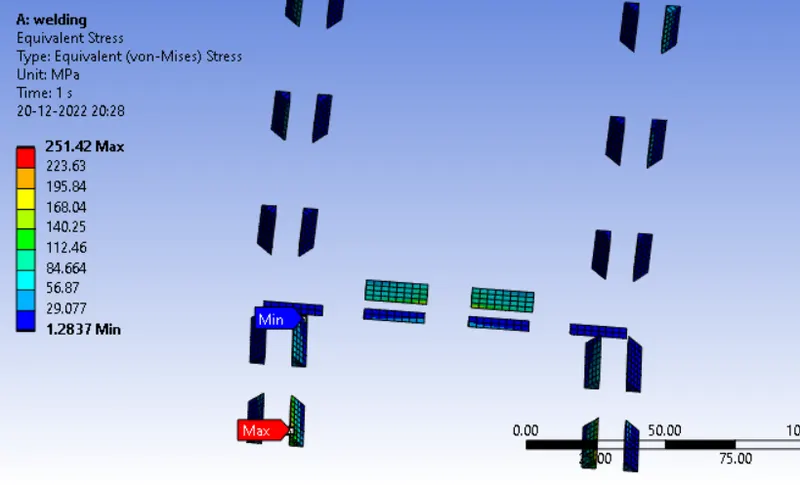
This weld joint is having max equivalent stress i.e,251.42 Mpa.
Directional deformation:
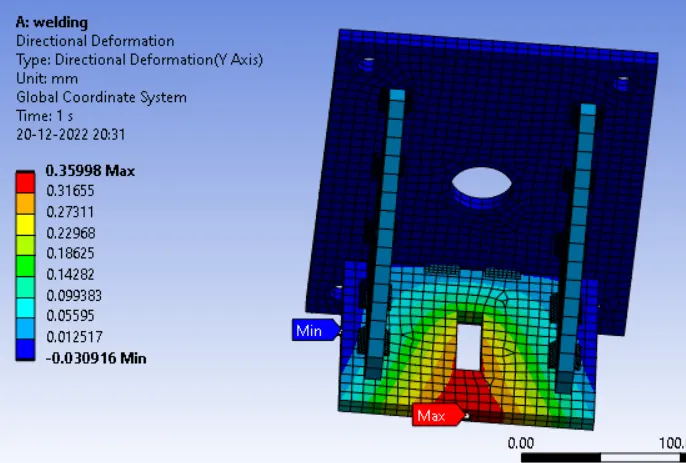
The maximum directional deformation is 0.35998 mm.
Equivalent strain:
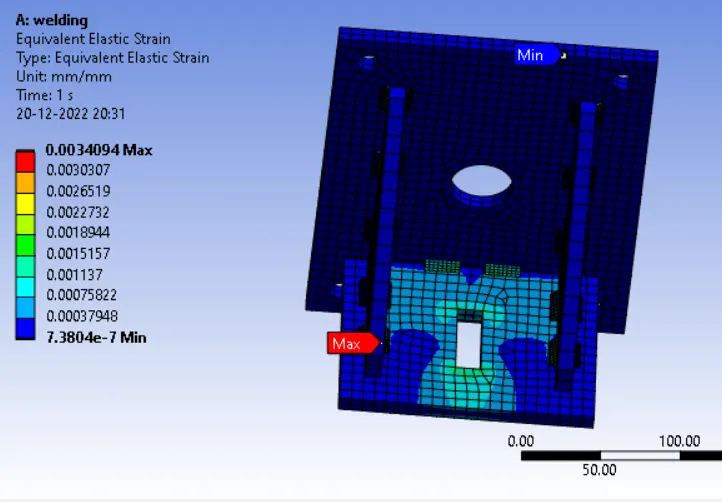
Max elastic strain is 0.0034094
Equivalent strain on ribs:
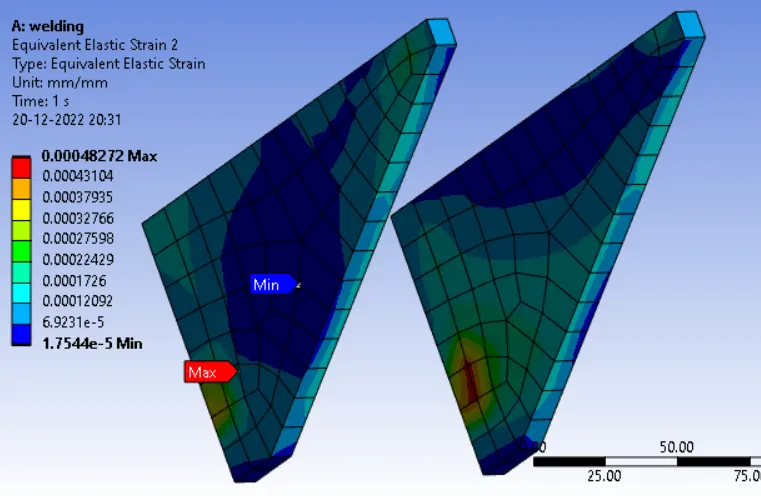
The max value of equivalent strain on rib is 0.00048272.
Case 3.Bronze: In order to simulate "Brazing", you should be using bronze as the weld material. Assign Stainless Steel to both plates and Copper to the "Ribs".
Procedure:
here just we have to give the bronze cast to all welding joints and copper to the ribs and stainless steel to the plates.
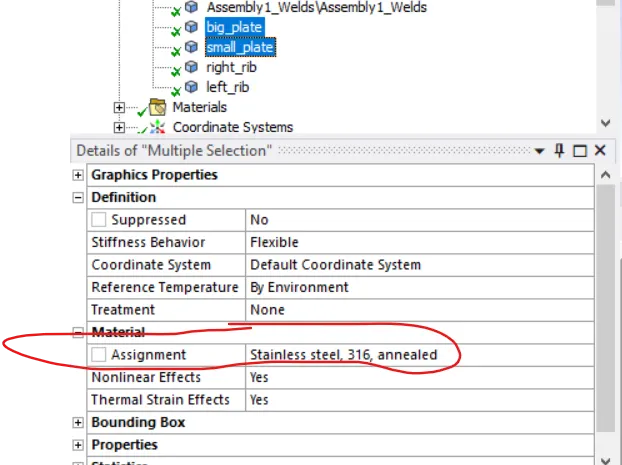
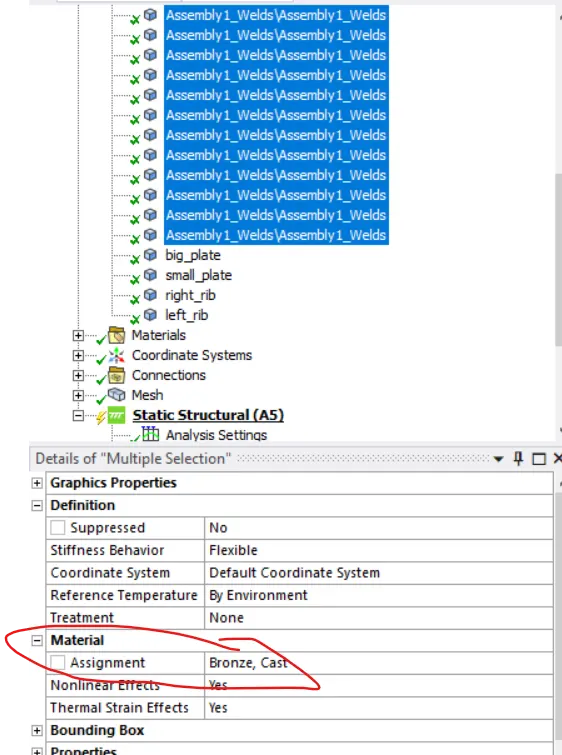
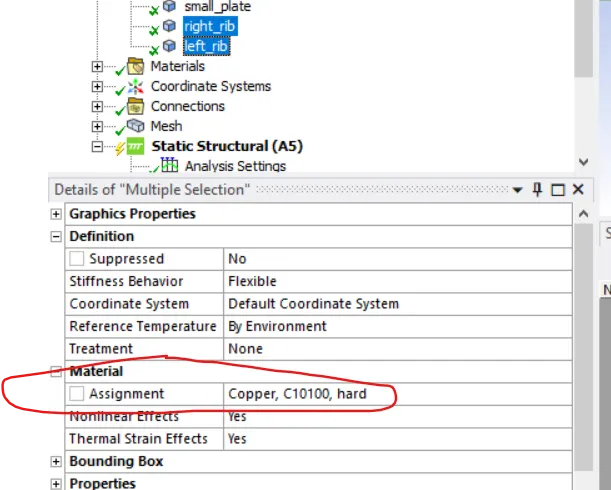
Rest all the procedures are same
Results:
maximum Equivalent stress on welding joints:
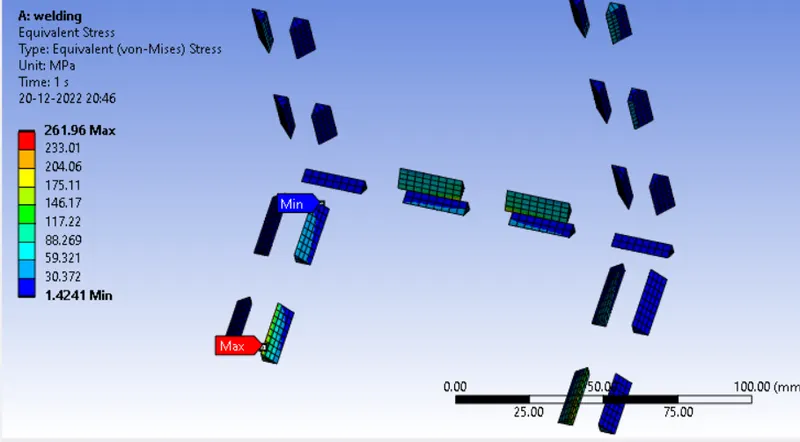
This weld joint is having max equivalent stress i.e, 261.96 Mpa.
Directional deformation:
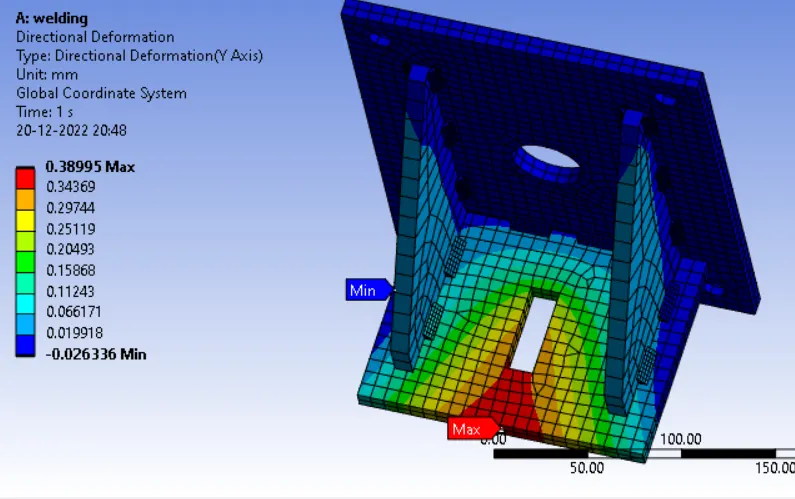
The maximum directional deformation is 0.38995 mm.
Equivalent strain:
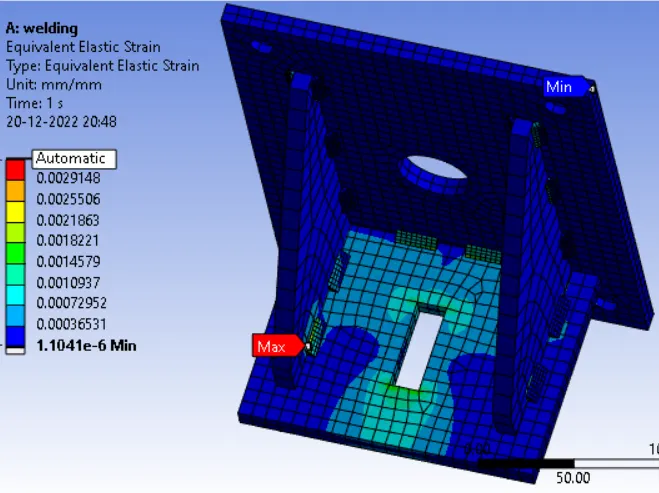
Max elastic strain is 0.003279
Equivalent strain on ribs:
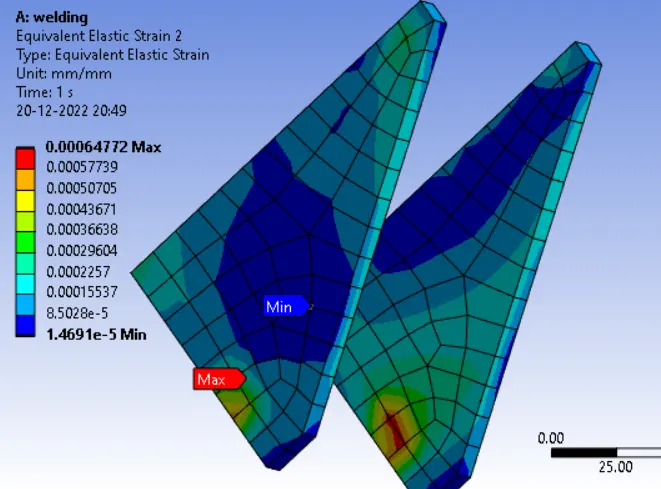
The max value of equivalent strain on rib is 0.00064772.
Discussion over all the three cases:
| Cases | Equivalent stress on weld joints (Mpa) |
Directional deformation (mm) |
Equivalent strain | Equivalent strain on ribs |
| case 1 | 307.57 | 0.346 | 0.001763 | 0.00049929 |
| case 2 | 251.42 | 0.35998 | 0.0034094 | 0.00048272 |
| case 3 | 261.96 | 0.38995 | 0.003279 | 0.00064772 |
- Max equivalent stress on weld joints is in case 1 where we use stainless steel as the material for whole,and the lowest stress value in case 2 where aluminum alloy is used for the weld joint and rest other is stainless steel.
- Max directional deformation is highest on case 3 where cast bronze is used for weld joint and for rib is copper and plates are of stainless steel.and minimum vale at case 1 where stainless steel is used.
- Max eqivalent strain is induced at higher in case 2 and the lowest in case 1 and the max equivalent strain on ribs having highest value in case 3 and lowest value in case 2.
Conclusion:
From the stress point of view the lowest value in case 2 where aluminium alloy is used for weld joints and it is good to go with case 2.