Week 3 Verification of Weld Joints
Verification of Weld Joints
Objective:
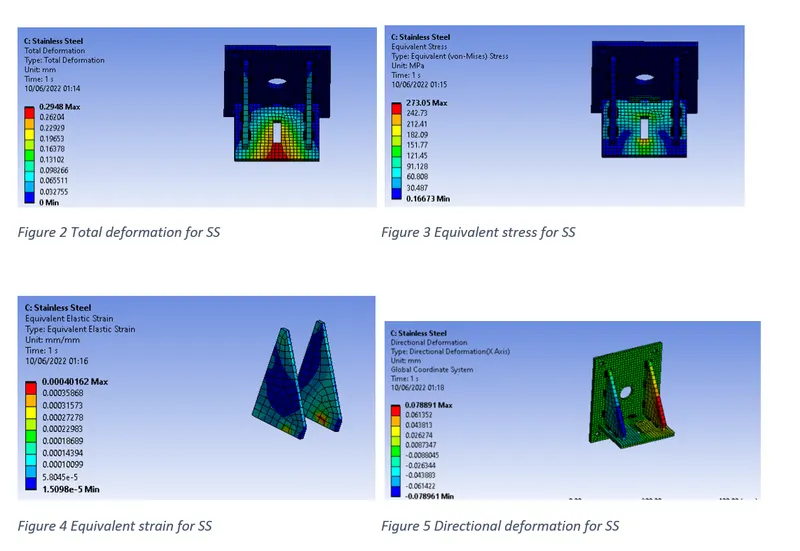
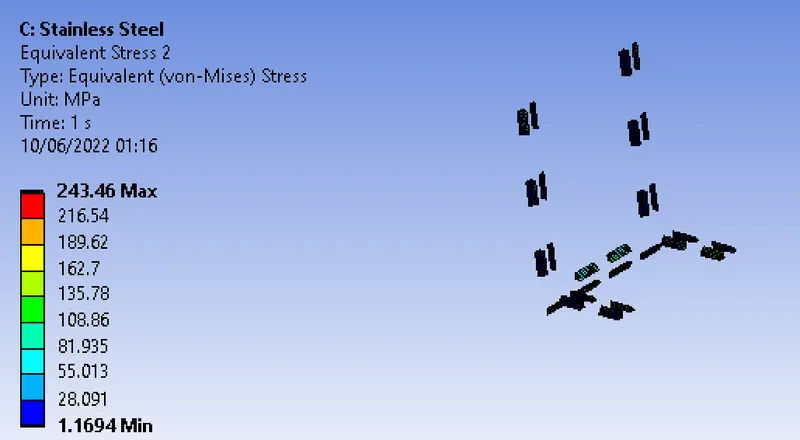
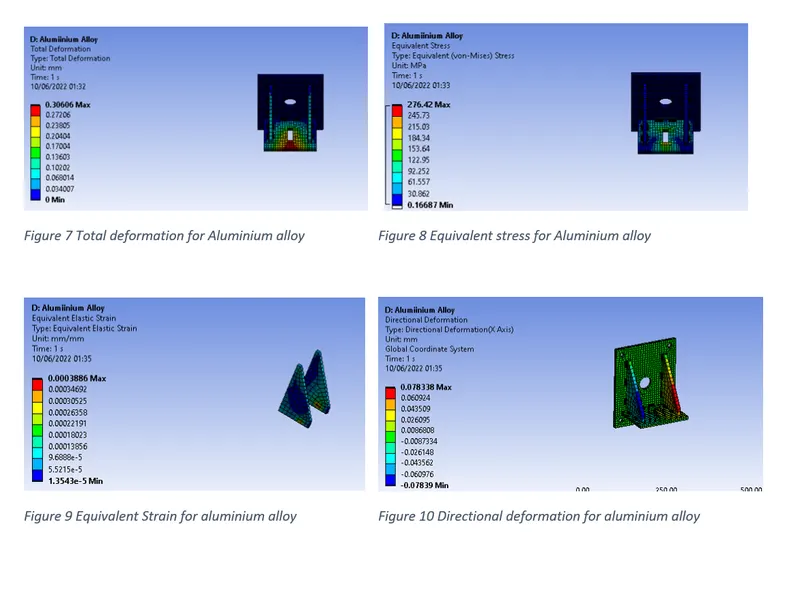
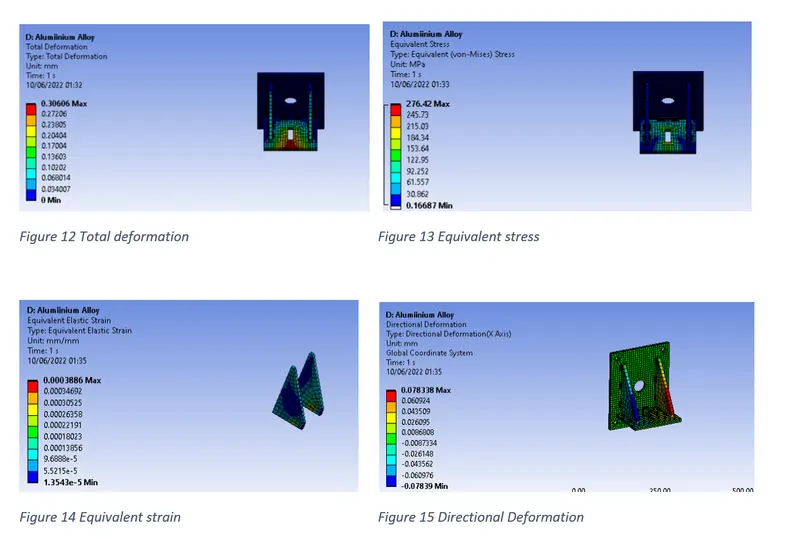
To find out the Directional Deformation and equivalent strain experienced by the setup. Identify the weld joint that experiences the highest equivalent stress in each case and compare the results.
Geometry file:
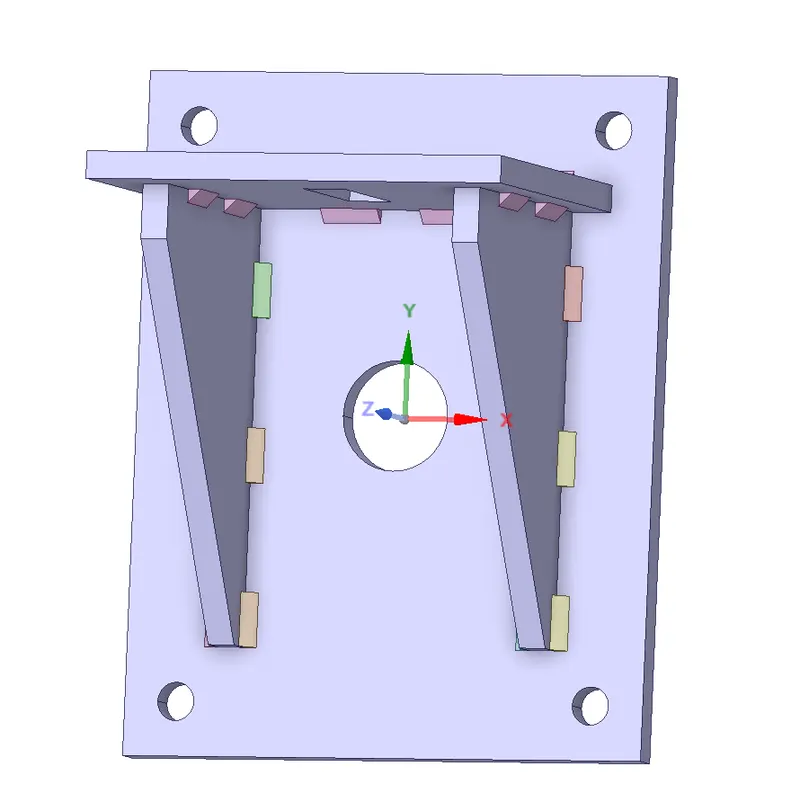
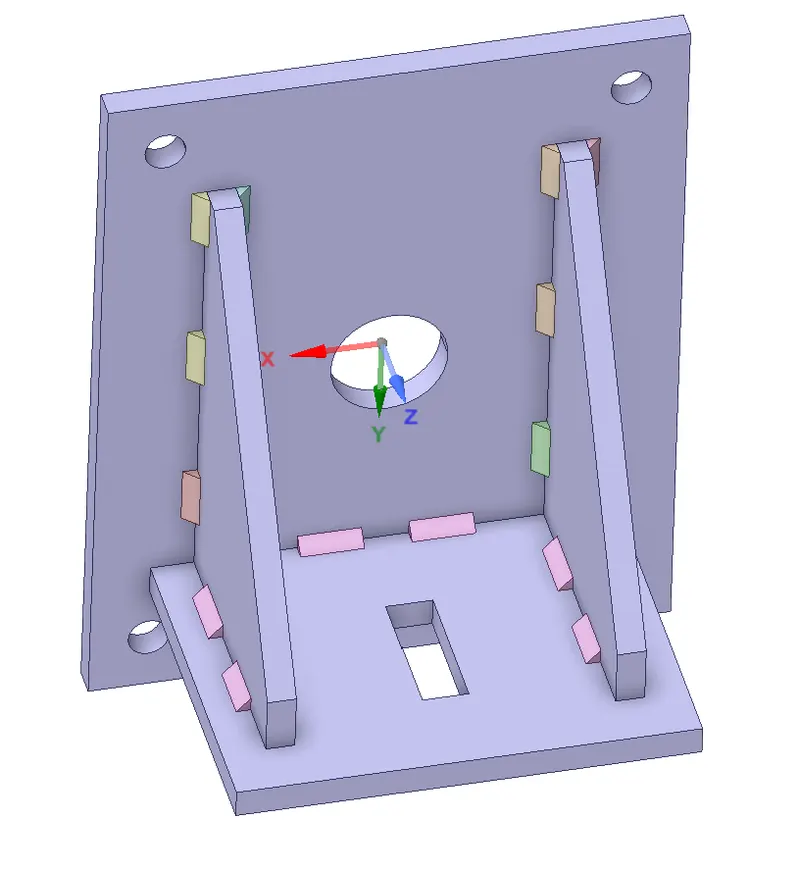
Mesh Details:
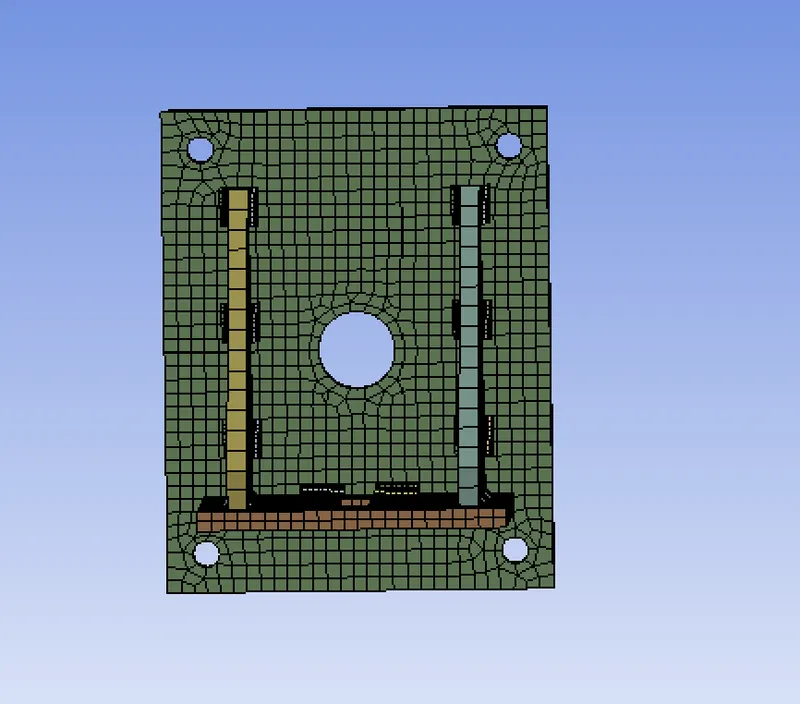
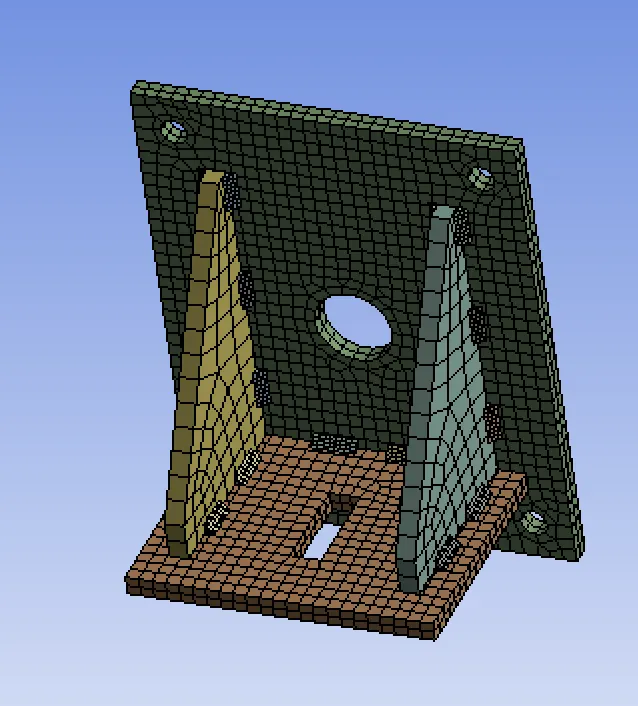
The model meshes with the Ansys mesher. As we want to evaluate the weld joints and the force that has been acting on the plate chose an element size of 7mm for the big plate and the small plate and the rest of the body meshes with the default size.
Also performed a grid dependency test on the plates but there isn’t a big change so we could go with a 7mm element size to reduce the amount of time and cost of production.
Contacts Setup:
Contacts at the interface were set up for every weld assembly and plate as the force is going to act on the plates there will be friction acting on the plates hence chosen plates and ribs to be frictional joints with a frictional co-efficient of 0.2mm.
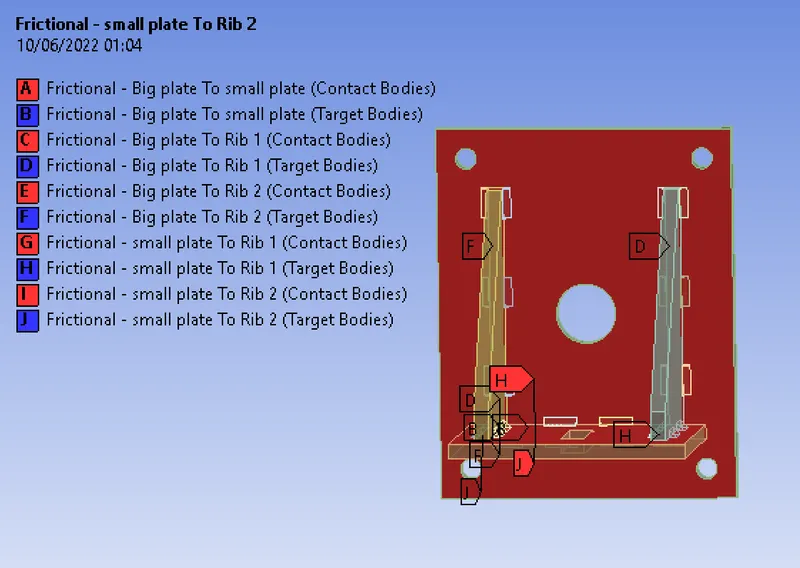
Analysis setup:
Simulations are performed by choosing the fixed supports and then the force acting on the plate faces and the force acted is given on the y axis with a force of 12000N.
The simulations are performed with different materials like Stainless steel, aluminum alloy, copper alloy, and bronze with three different cases, and simulation results are listed below and the results are compared.
Simulation Results:
CASE 1
In this case, the material of the plates also both the weldments and plates used are stainless steel.
CASE 2
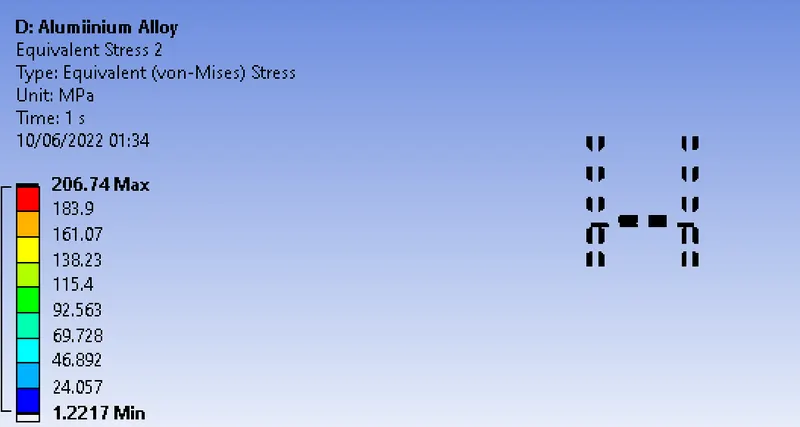
In this case, the Aluminium alloy is used for weld joints and the plates used are stainless steel.
CASE 3
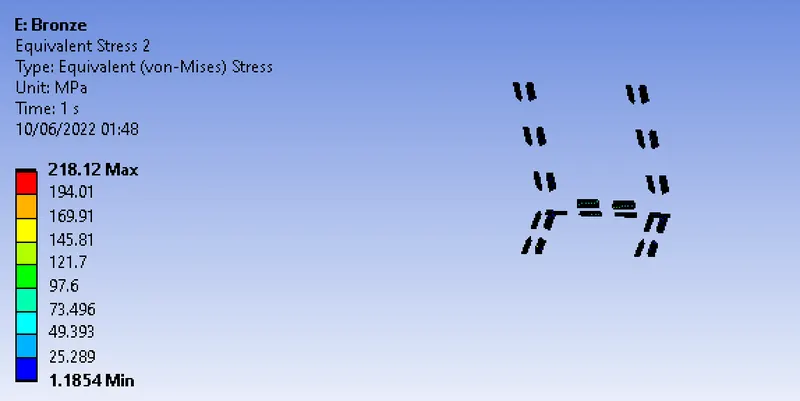
In this case, bronze Is used for welding material stainless steel to both the plates, and Copper is used for ribs, and results are listed below.
Comparison of Results:
|
Material |
Maximum |
||||
|
Total Deformation |
Equivalent stress |
Equivalent strain (mm) |
Directional Deformation (mm) |
Equivalent stress for weld joints |
|
|
Stainless Steel |
0.2948 mm |
273.05 MPa |
4.0162e-004 |
7.8891e-002 |
243.46 MPa |
|
Aluminium Alloy |
0.30606 mm |
276.42 MPa |
3.886e-004 |
7.8338e-002 |
206.74 MPa |
|
Bronze, AA and Copper Alloy |
0.34094 mm |
281.43 MPa |
5.669e-004 |
8.8581e-002 |
218.12 MPa |
Conclusion:
From the above table, we can conclude that among the three materials we can go with Aluminium alloy as a weld material because of its yield strength.
If we compare the above results of equivalent stress for weld joints with the Tensile yield strength column we can see that Aluminium alloy hasn’t reached the tensile yield strength whereas the other two materials crossed the tensile yield strength.
Also, the Aluminium alloy has less factor of safety even though it has more total deformation than stainless steel for the applied load of 12000N.
Hence we can choose Aluminium alloy for the weld materials in this case.