Week 2 Railwheel and Track
Railway Track
Static Structural analysis is done on a railway track with a bearing load of 500000N. The material used in the analysis is structural steel and the analysis is carried out in an Ansys workbench.
The properties of the material used in the analysis are listed below,
Density 7850 kg m^-3
Youngs modulus 2E+11
Poisons ratio 0.3
Bulk modulus 1.667E+11
Shear modulus 7.692E+10
Railway track geometry file:
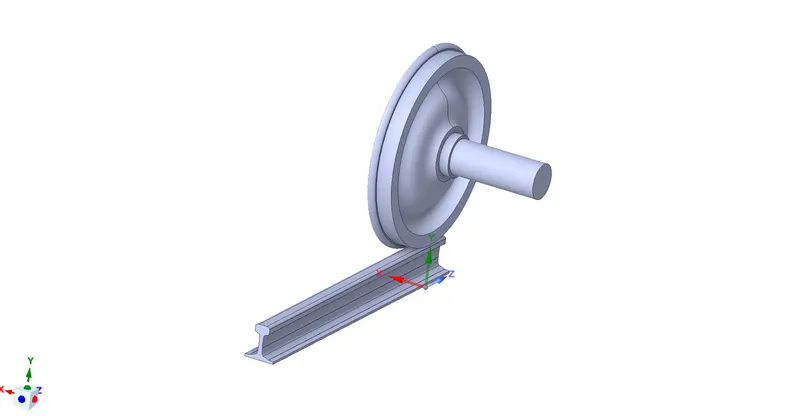
Geometry mesh details:
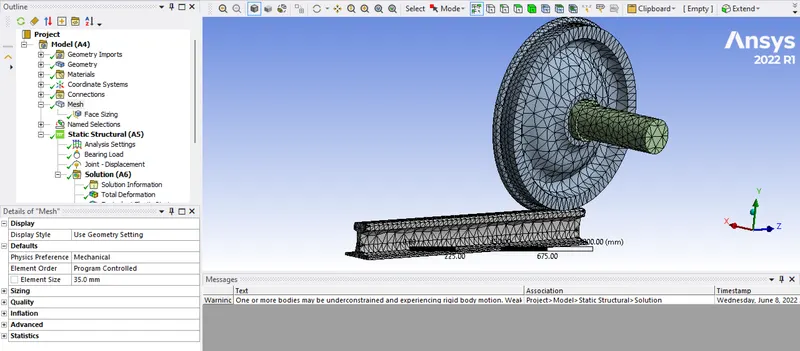
The model has meshed with Ansys meshes with an element size of 50mm as we are focusing on the contact joints we separately selected face sizing and gave an element size of 35mm in order to get a finer mesh.
Contacts setup:
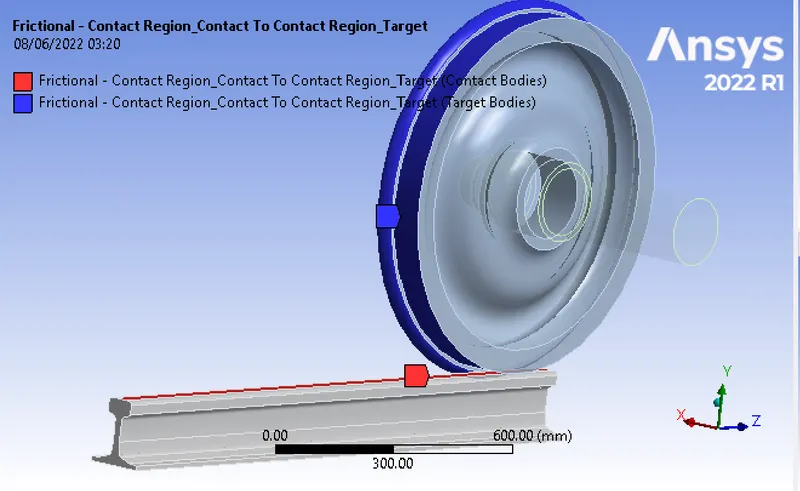
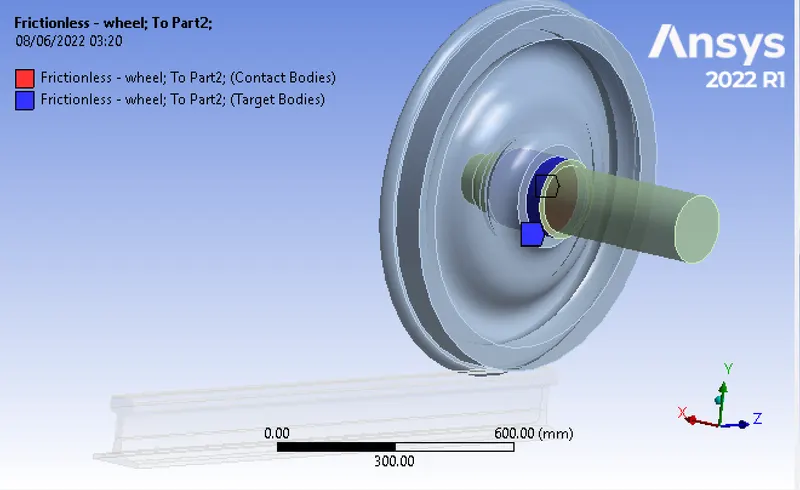
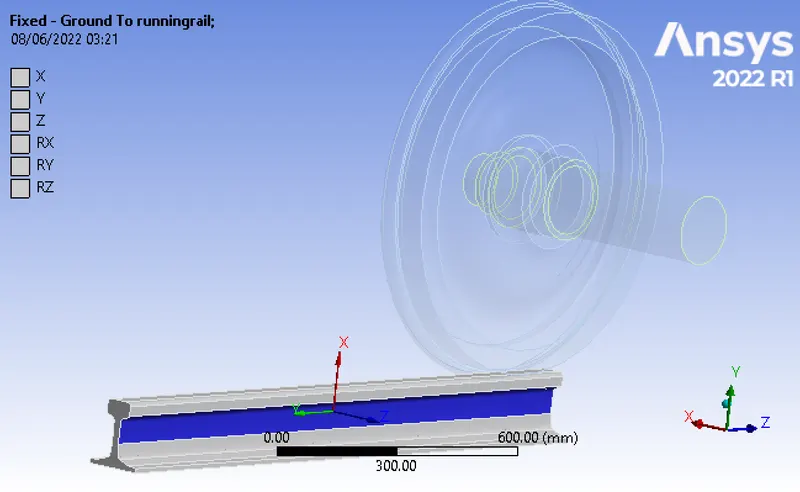
Select one contact as frictional contact as the wheel rotates on the track and produces friction whereas the other contact is frictionless contact as the shaft only provides the circular motion to the wheel.
Joints setup:
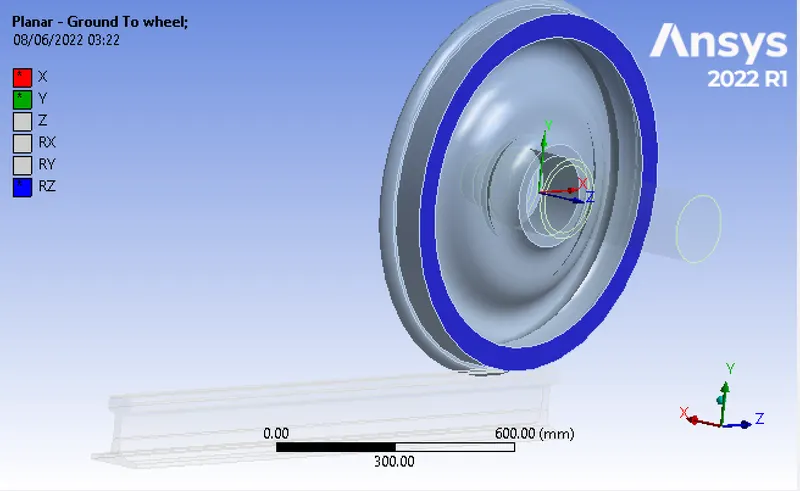
Then select the joints,
Track as fixed joints as we need to give translation motion to the wheel on the track.
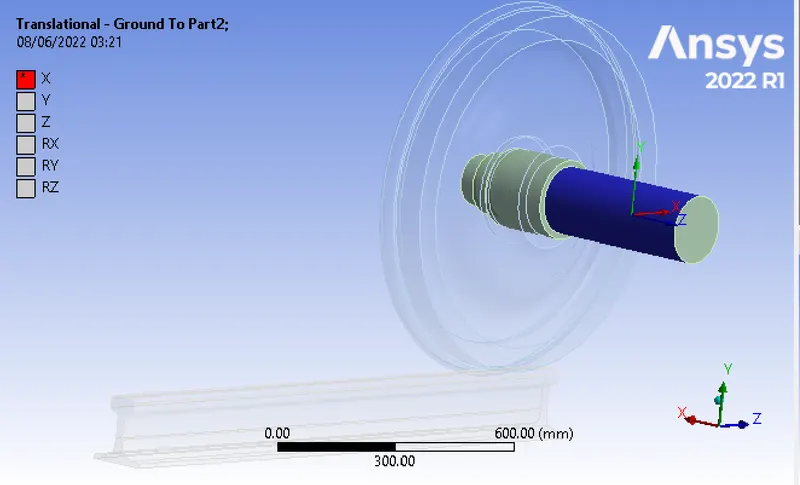
Translation motion as another joint on the x-axis.
Bearing load joint as the third joint as we need to verify how much deformation, stress and strain are acting on the wheel and the track.
Simulation Results:
Case 1
Evaluating the load of 100000 N
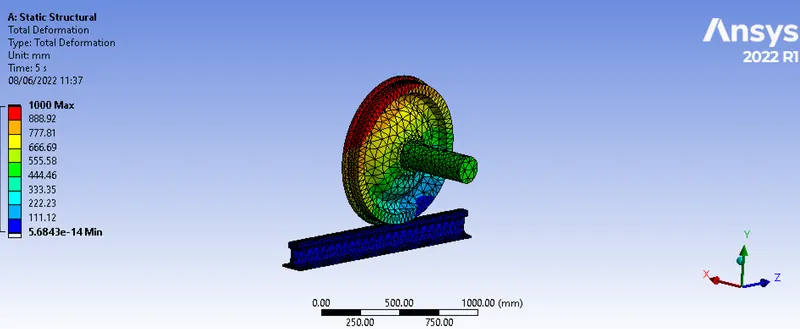
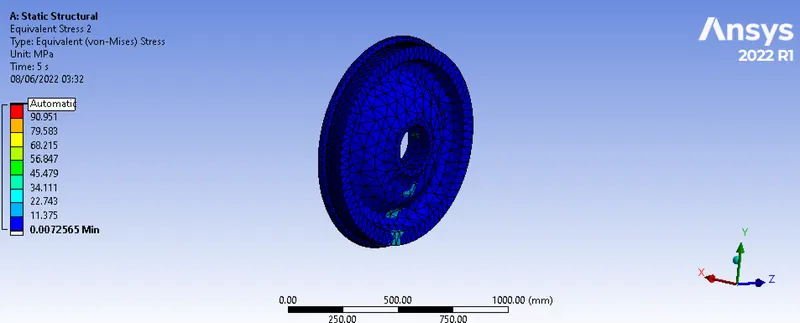
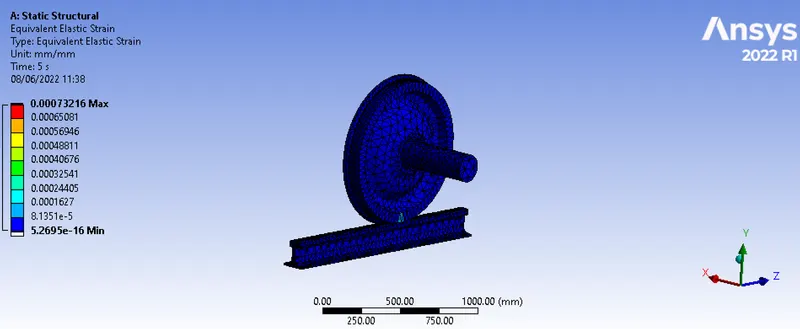
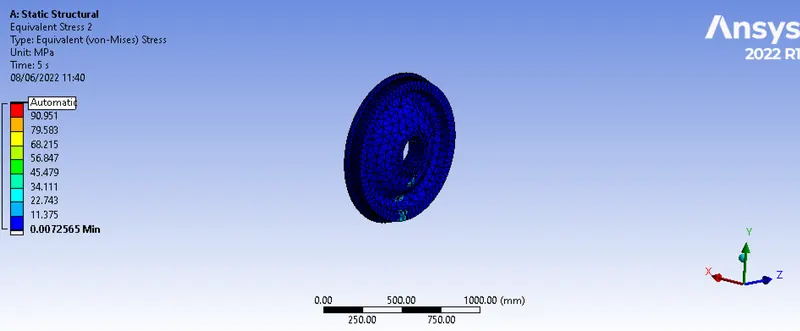
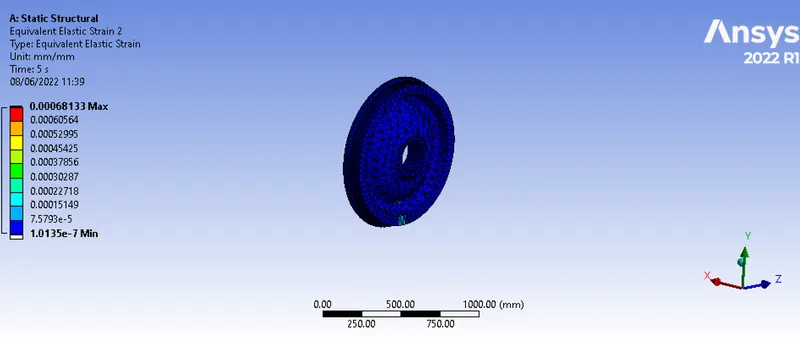
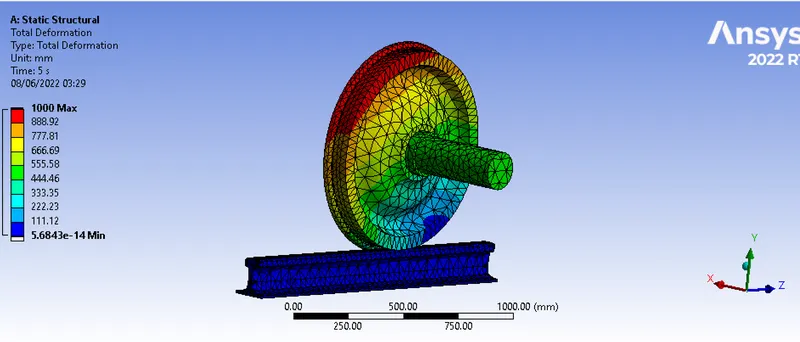
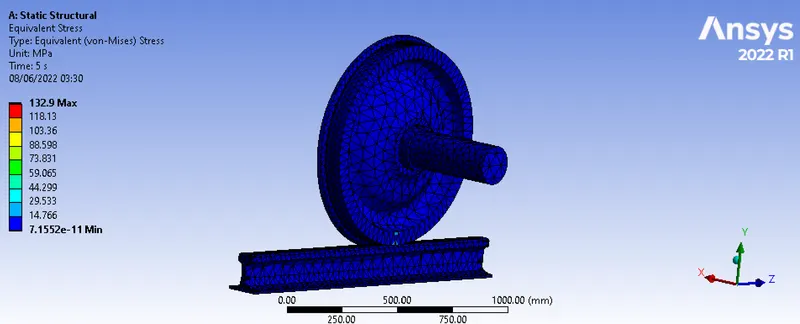
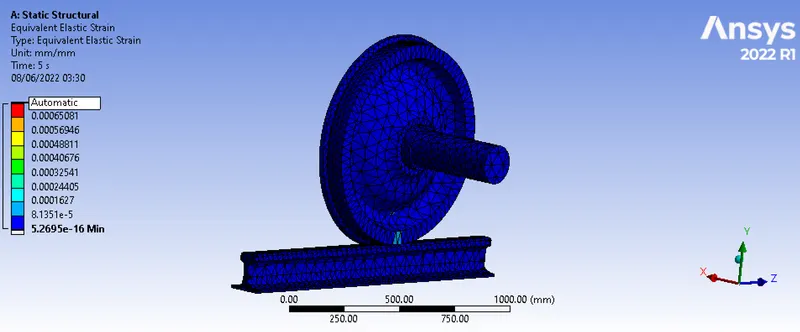
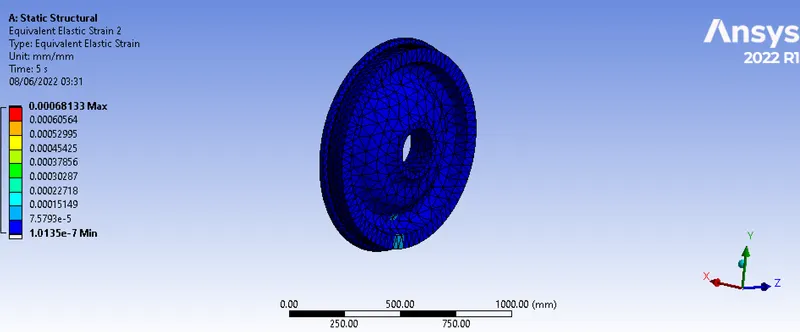
By giving displacement in the X direction and applying a bearing load in the y-direction of 100000 N . Below are the Total amount of deflection stress and strain acted upon the Railway track.
Evaluating with the load of 500000 N
By giving displacement in the X direction and applying a bearing load in the y-direction of 500000 N . Below are the Total amount of deflection stress and strain acted upon the Railway track.
Comparison of Results:
|
LOAD |
Max Total Deformation(mm) |
Max Equivalent Stress(Mpa) |
Max Fatigue life (cycles) |
Min Fatigue life (cycles) |
|
100000 N |
1000 |
132.9 |
1.00E+06 |
1.1465e+005 |
|
500000 N |
999.57 |
563.35 |
1.00E+06 |
1058 |
From the above table, we can see that for a load of 500000 N we get equivalent stress of 513.07 MPa which is much larger compared to the load of 100000 N which is only 133.4 N. Also the Minimum fatigue life is reduced in case of an increased load in comparison to 100000 N load.
CASE 2
Total deformation for 100000N
User-defined results for 100000N
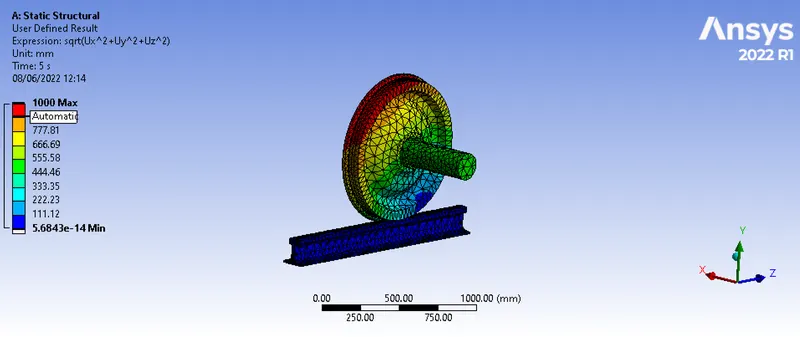
ON Evaluating for the load of 100000 N the total deformation and the user-defined results are the same. The expression used to compute the user-defined result is sqrt(Ux^2 + Uy^2 + Yz^2) as it is the resultant.