Week 3 Verification of Weld Joints
AIM:
To perform static structural analysis on welding joints using three different materials and to compare the results like directional deformation, stress and generated on welded joints strain development.
OBJECTIVE:
Case 1. Stainless Steel: In this case, the material of the plates must also be the same. Use Stainless steel for both weldments and plates. No need to add flux to the weldments.
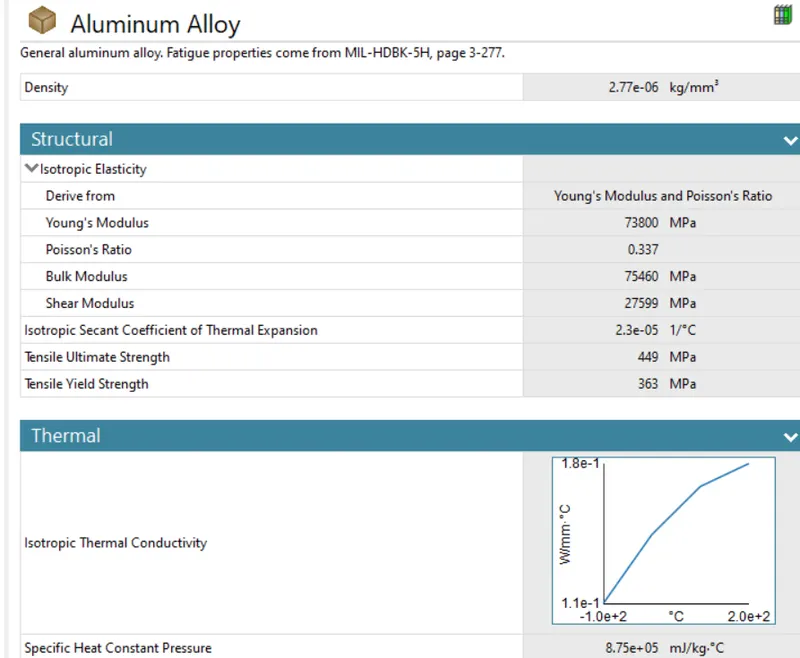
Case 2. Aluminium Alloy:The material to be chosen for this case is Aluminium alloy(high strength, wrought). [Plate material to be used is stainless steel]
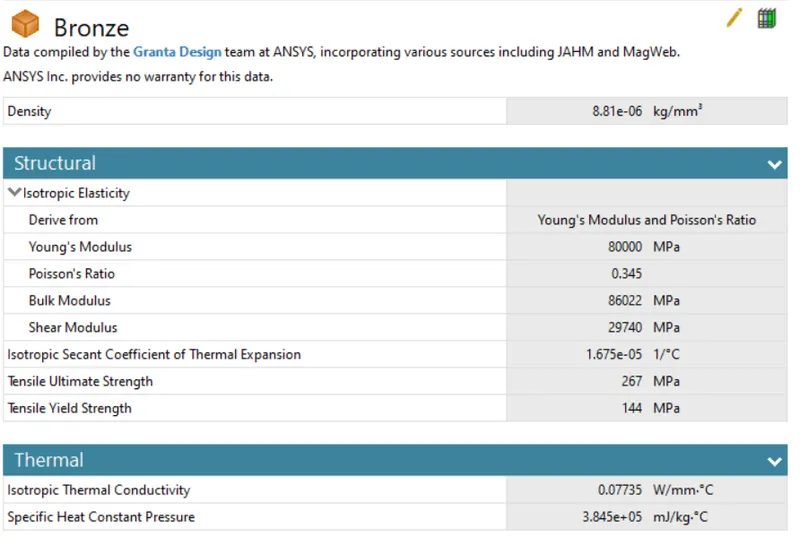
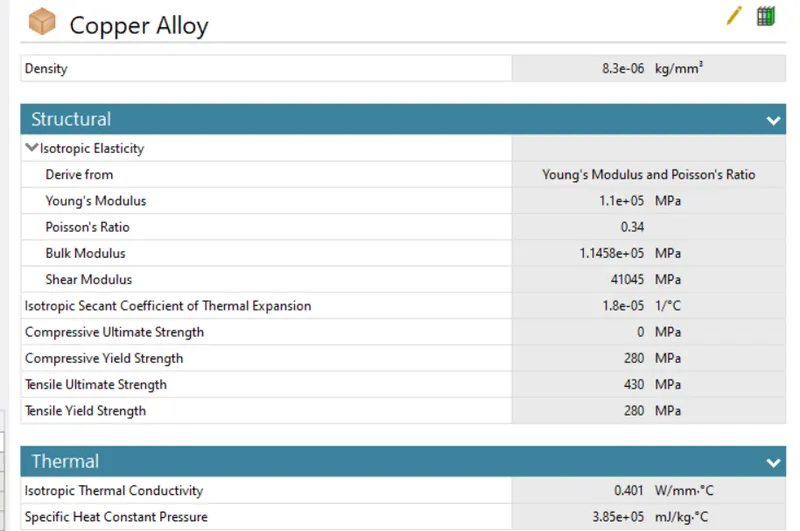
Case 3.Bronze: In order to simulate "Brazing", you should be using bronze as the weld material. Assign Stainless Steel to both plates and Copper to the "Ribs".
Run the simulation for a load of 15000N that is to be applied at the rectangular hole in the small plate(Same as in the video).
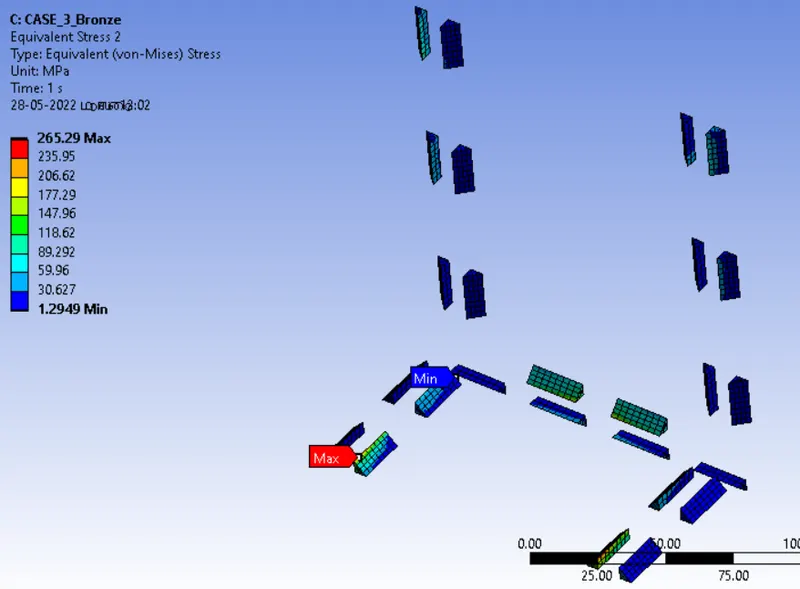
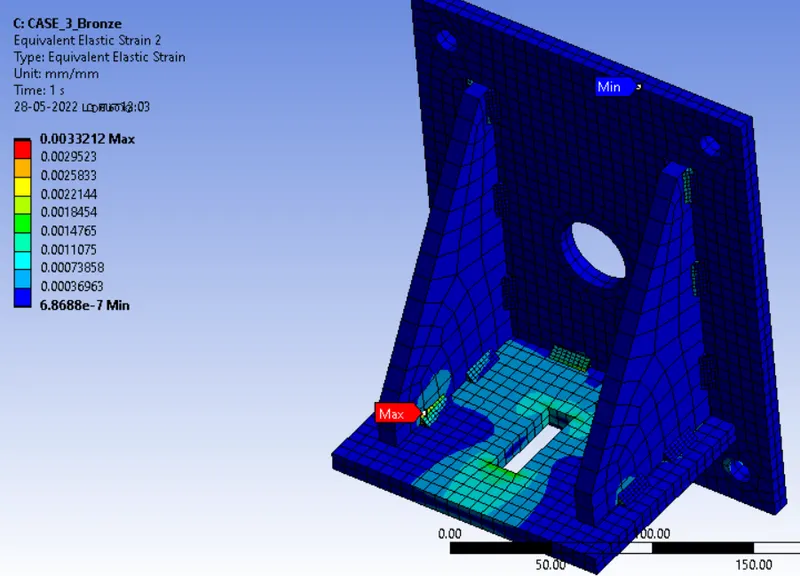
For each case, find out the Directional Deformation and equivalent strain experienced by the setup. Identify the weld joint that experiences the highest equivalent stress in each case and compare the results for all three cases
WELDING:
Welding is a fabrication process that uses heat, pressure, or both to fuse two or more parts together, forming a joint as the parts cool. Welding is typically used on metals and thermoplastic, but can also be used on wood. The completed welded joint can be referred to as a weldment. Some materials require the use of specific processes and techniques. Some are considered “unweldable,” a term not typically found in dictionaries but useful and descriptive in engineering.
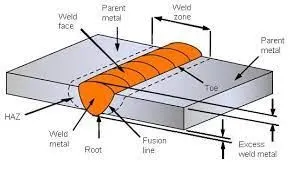
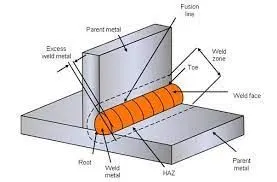
Welding works by joining two materials together without a separate binder material. Unlike brazing and soldering, which use a binder that has a lower melting point, welding joins the two workpieces directly together.Most welding done today falls into one of two categories: arc welding and torch welding.Welders use stainless steel, carbon steel, and low-carbon mild steel, depending on the project. Mild steel is especially ductile, which makes it easy to weld. The more carbon steel has, the more effort it takes to weld, though welding carbon steels still happens with the proper equipment and methods.
BRAZING WELD:
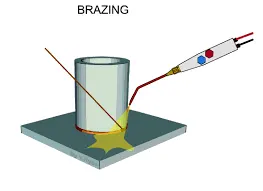
Brazing is a metal-joining process in which two or more metal items are joined together by melting and flowing a filler metal into the joint, with the filler metal having a lower melting point than the adjoining metal. Brazing differs from welding in that it does not involve melting the work pieces. Brazing is used to bond a variety of metals, dissimilar metals and even non-metals (e.g., metalized ceramics) Component tolerances maintained more accurately than welding. Brazing does not melt the base metal; it allows a much stricter control of the tolerances.Most brazing processes run at temperatures between 800°F and 2,000°F. For a strongest braze joint, the metals that are being joined together need to be at close to the same temperature.
PROCEDURE:
- First drop the static structural from tool box.
- Now open the Engneering data, assign the required material.
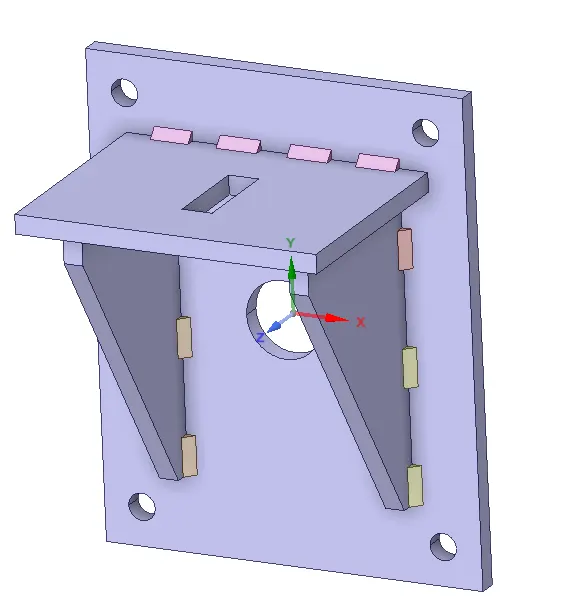
- Next open the geometry and import the geometry, file named as ''Skill_lync_Welding.stp''
Material:
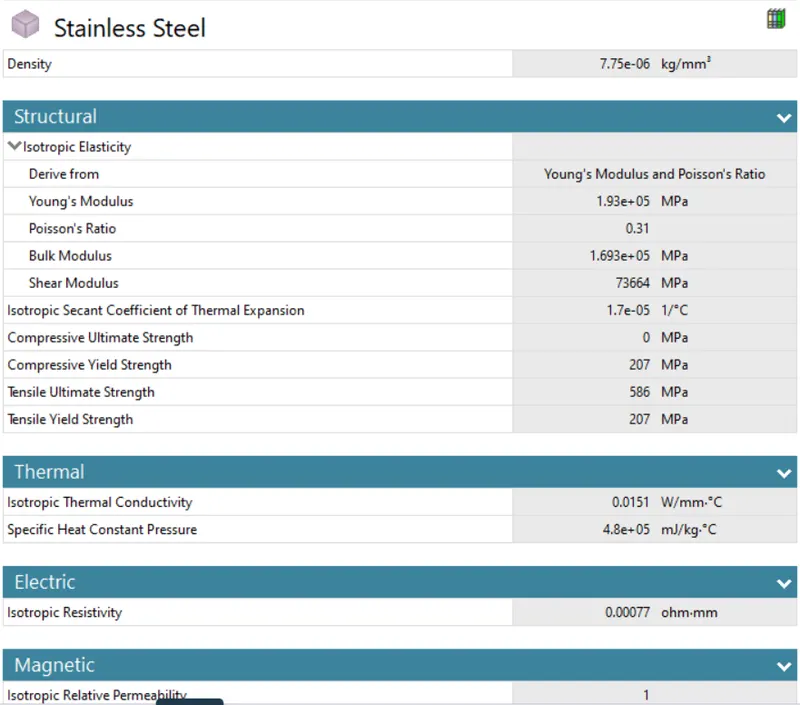
Stainless steel
Aluminium Alloy
Bronze
Copper
Geometrty:
- After importing geometry,open the model.
- In the Mechanical model, open the material change the name to BIG_PLATE,SMALL_PLATE,Rib_1,Rib_2.
- Now allocate stainless steel to plates and ribs
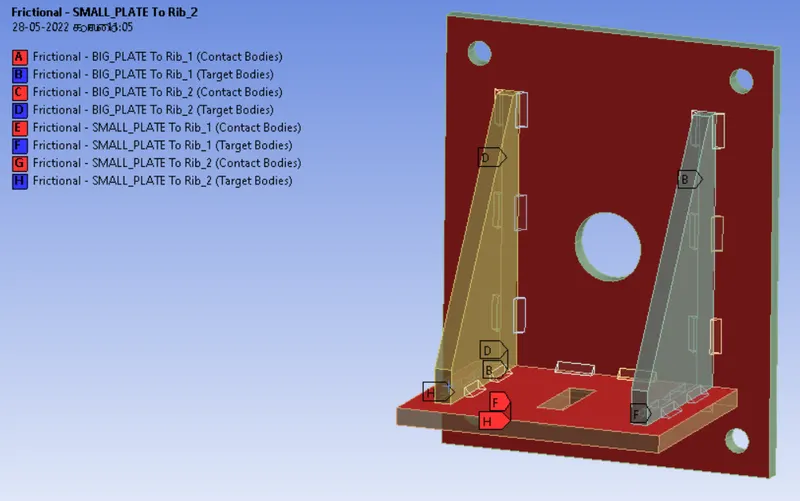
- Open the contact, change Rename Based On Definition.
- After rename, change a type bonded to frictional for BIG_PLATE to Rib_1,BIG_PLATE to Rib_2, SMALL_PLATE to Rib_1, SMALL_PLATE to Rib_2. Frictional coefficient is 0.2.
Contact:
Mesh:
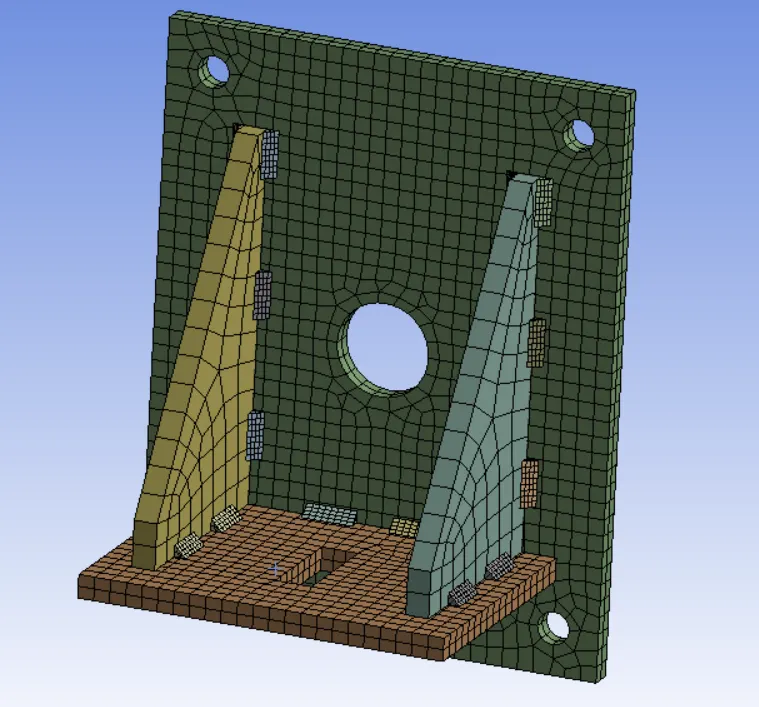
- Open the mesh, insert the sizing, in geometry select the BIG_PLATE and SMALL_PLATE use solid filter.
Mesh size = 7 mm
Nodes = 25090
Element = 3994
Boundary Conditions:
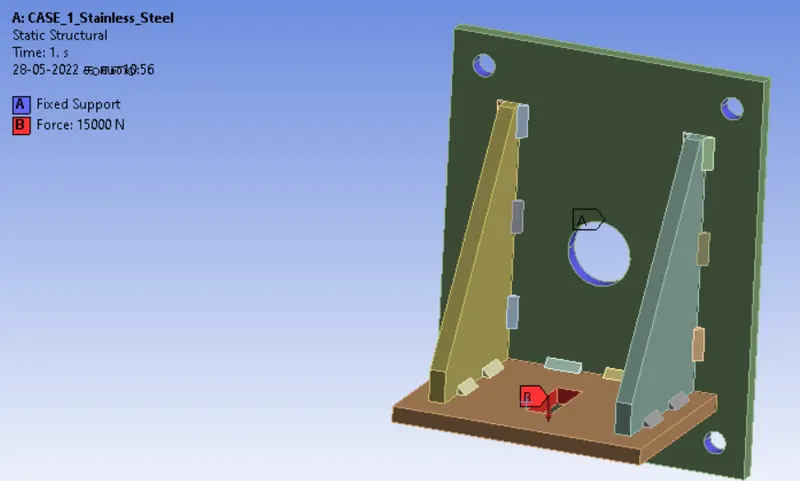
- Insert the fixed support,choose a BIG_PLATE and select the all holes in BIG_PLATE.
- Then insert a force, choose a SMALL_PLATE and select the rectangular hole, 15000N force applied on Y direction in SMALL_PLATE
Large deflection = ON
SOLUTION:
After giving proper boundary conditions,create desired solutions for output results,create solutions for Directional deformation, stress and strain. slove evaluate for solutions.
RESULTS:
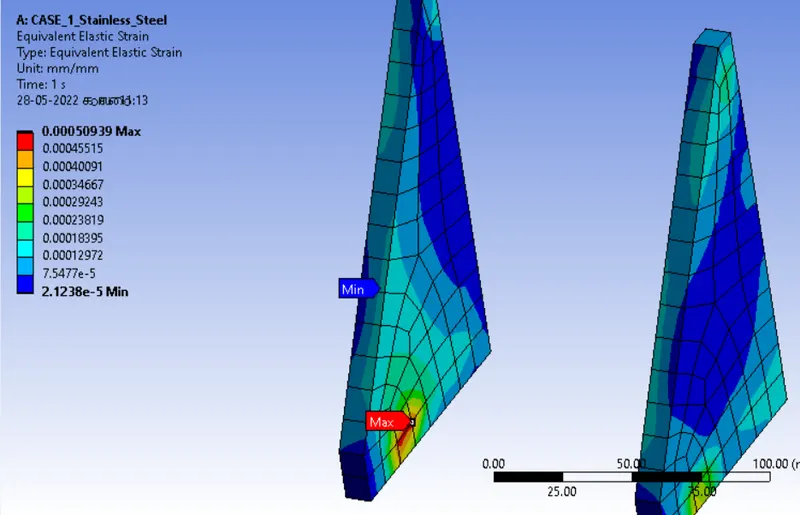
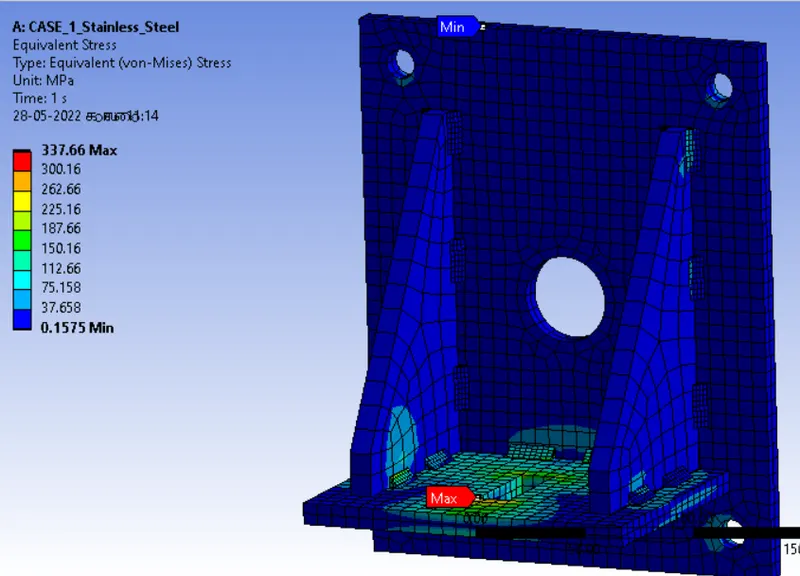
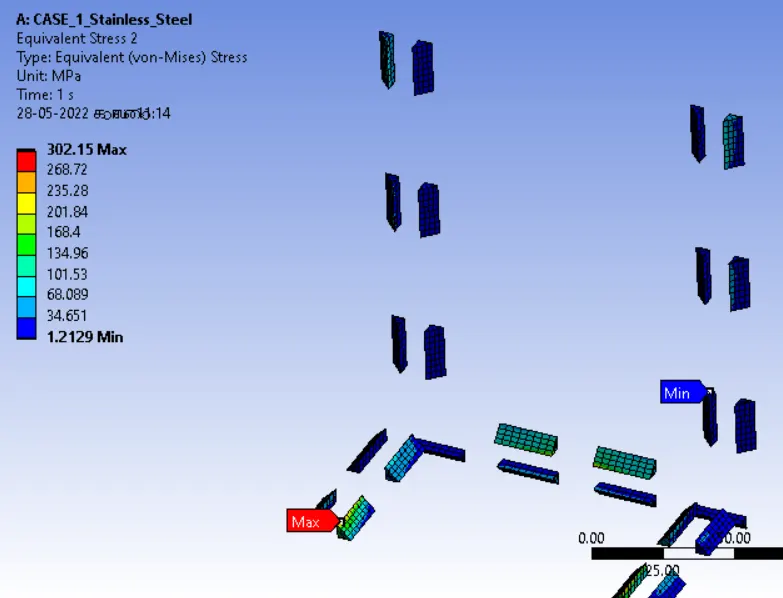
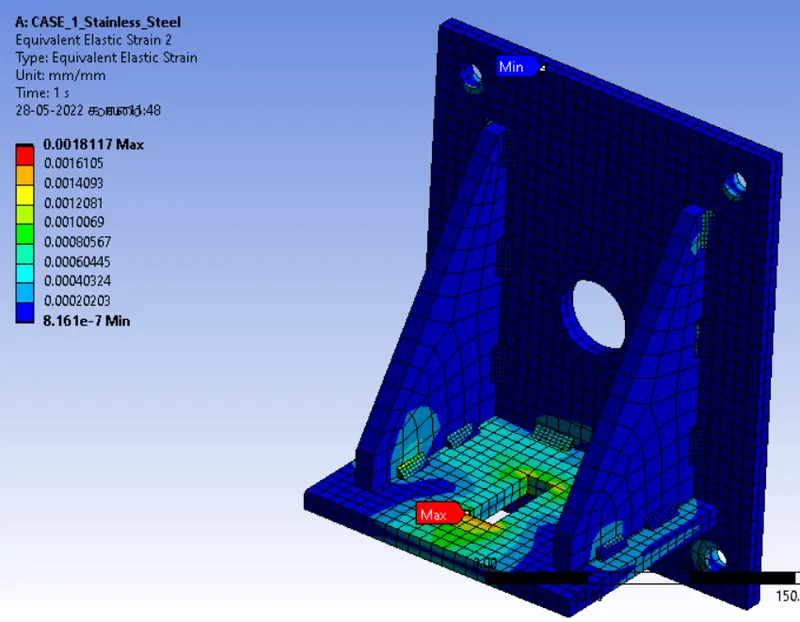
case:1
Material : Stainless steel
Directional Deformation
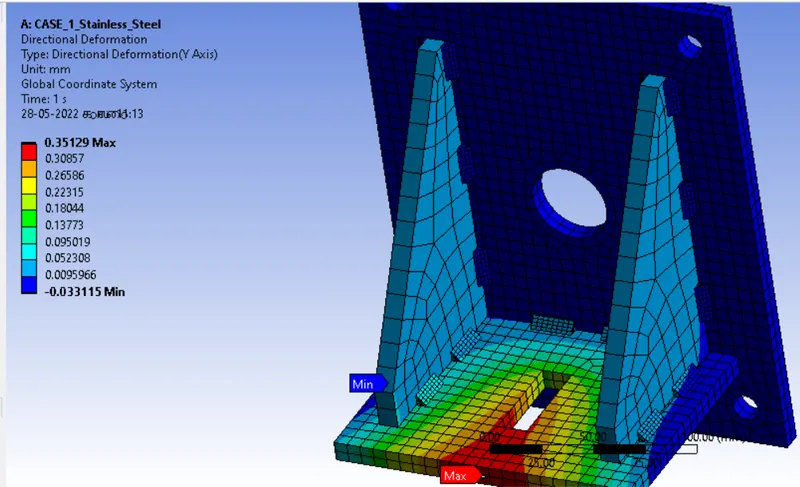
Equivalent strain
Equivalent stress
Equivalent stress for weld joint
Equivalent strain for full body
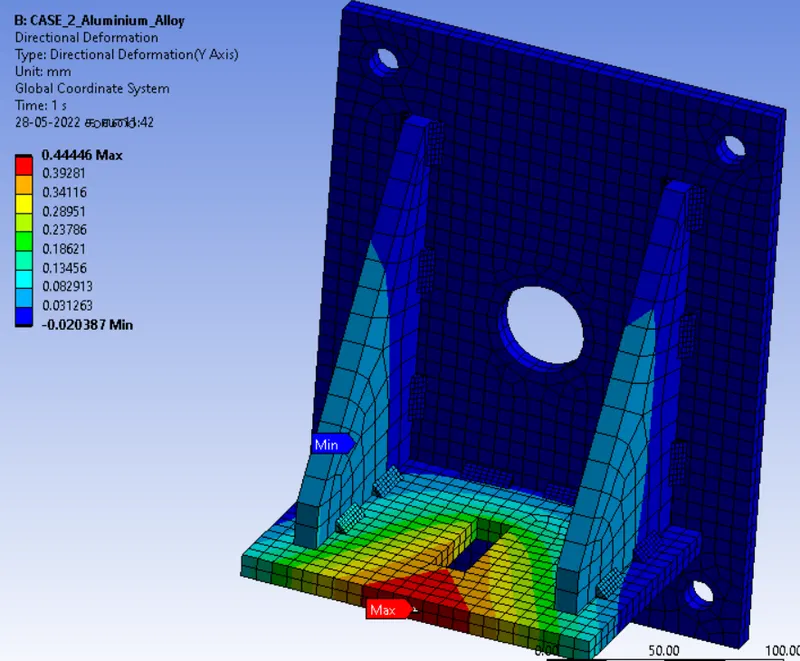
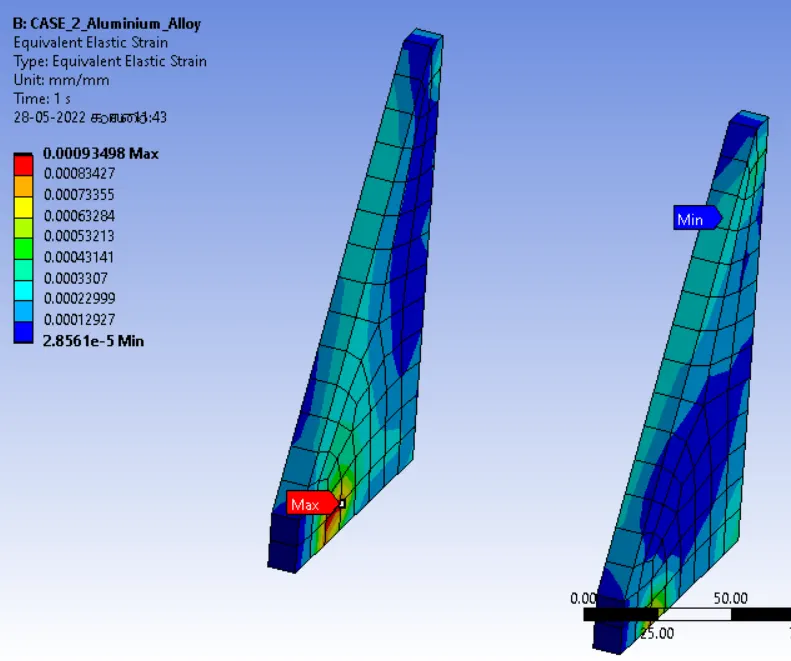
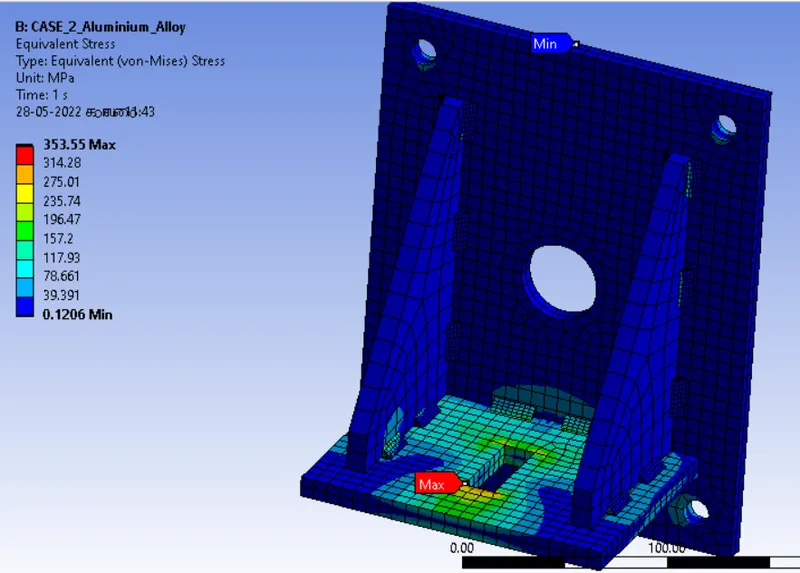
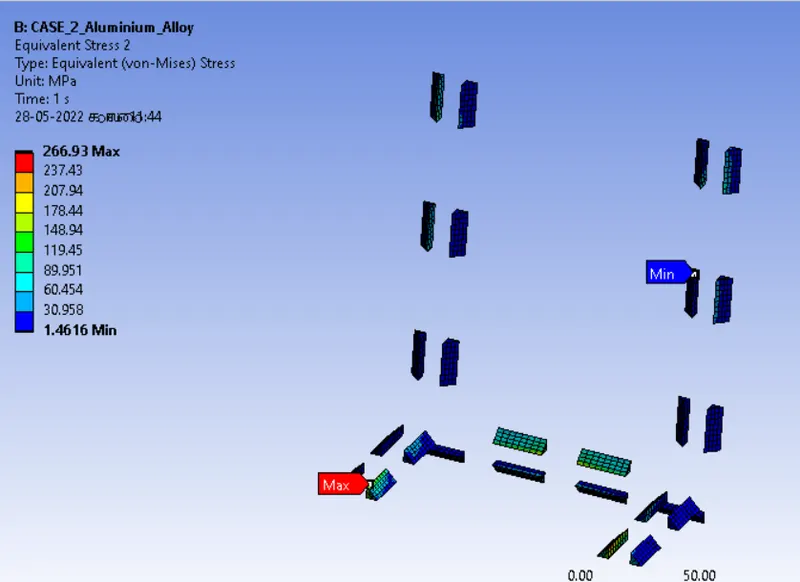
case:2
Material : Aluminium Alloy
Directional Deformation
Equivalent strain
Equivalent stress
Equivalent stress for weld joint
Equivalent strain for full body
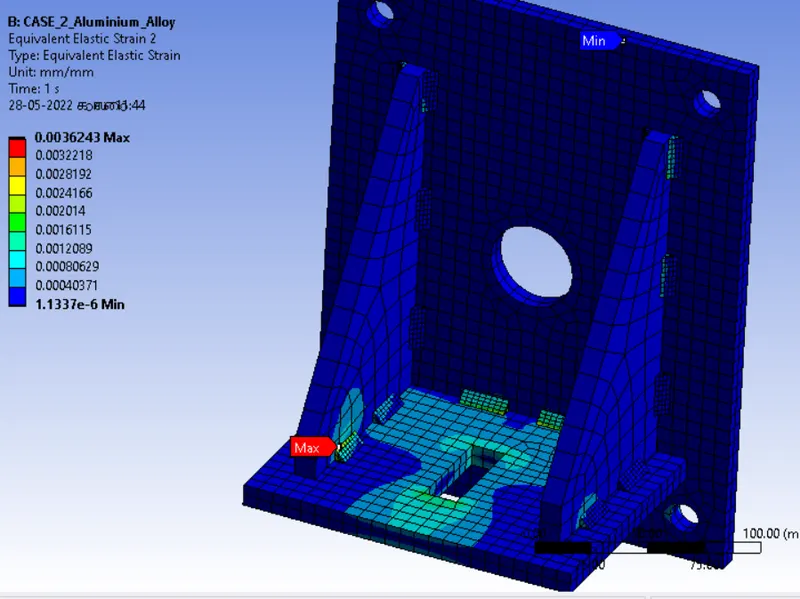
case:3
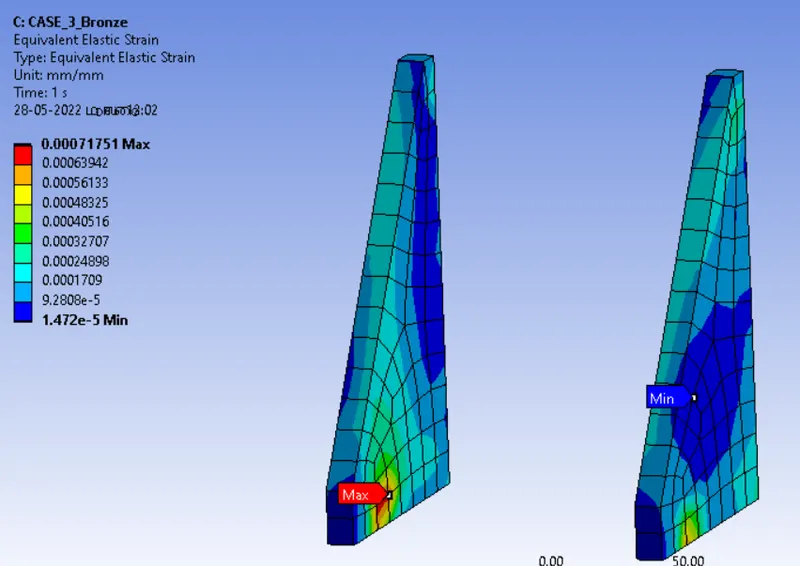
Material : Bronze
Directional Deformation
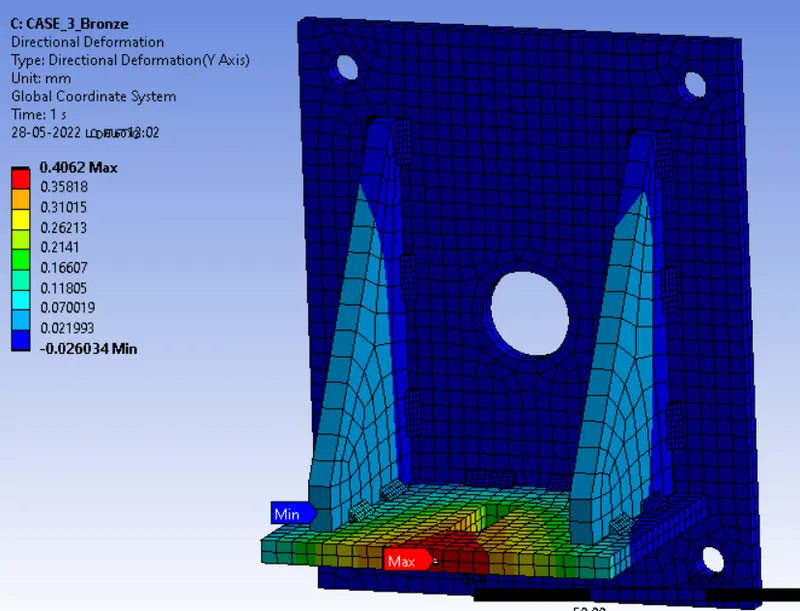
Equivalent strain
Equivalent stress
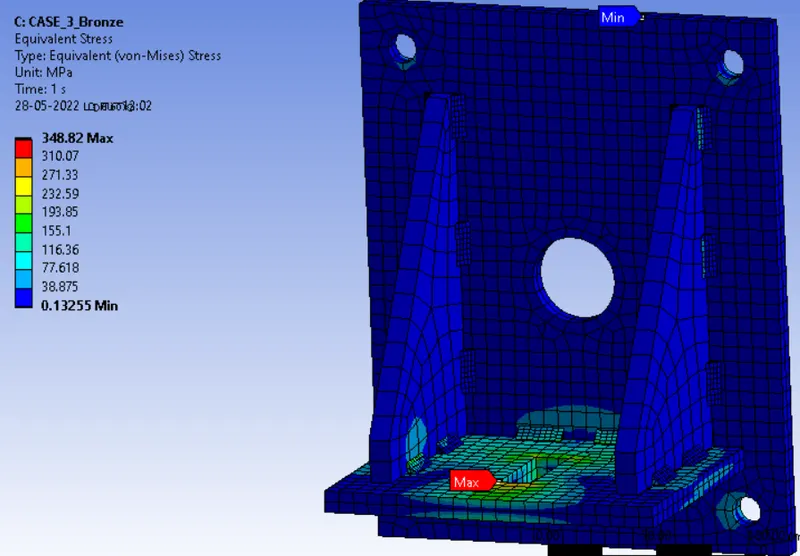
Equivalent stress for weld joint
Equivalent strain for full body
RESULTS:
case1
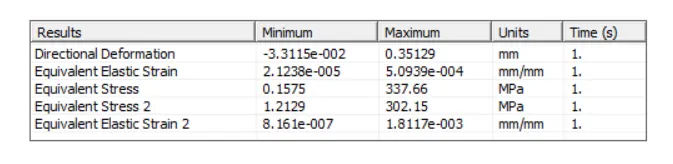
case2
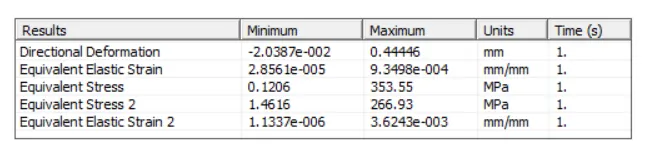
case3
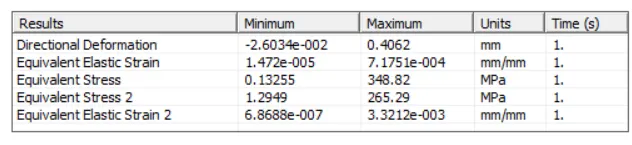
CONCLUSION:
- From the results of Directional deformation and Equivalent strain, the stainless steel weldments exprienced least deformation and strain copare to other weldments.
- The stainless steel weld joint experienced the higher equivalent stress where as,Aluminium Alloy exprienced least equivalent stress.
- From the point of design, the Aluminium weld joint is perferred choice, because deformation and strain exprienced is less and the maximum equivalent stress developed is less then the yield stress value as well as safety factor is above one.
LINK:
https://drive.google.com/file/d/1LdjdSS9XcN9BEFVZ05UeVuZEj0UeANtI/view?usp=sharing