Week 3 Sheet metal Bending challenge
SHEET METAL BENDING
Aim
To setup a given sheet metal bending process and compare the difference using 3 material models.
Theory
Bending is one of the most common sheet metal fabrication operations. Also known as press braking, flanging, die bending, folding and edging, this method is used to deform a material to an angular shape.
This is done through the application of force on a workpiece. The force must exceed the material’s yield strength to achieve a plastic deformation. Only then can you get a lasting result in the form of a bend.
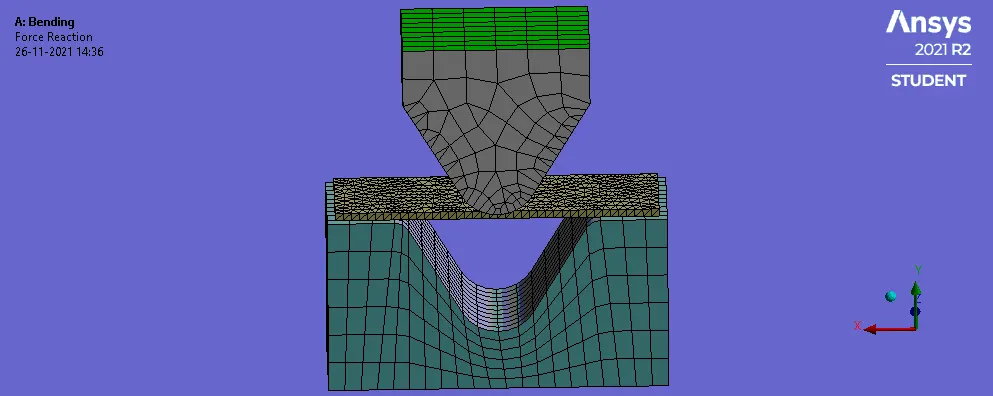
Procedure
- Start a new static structural model in ansys and import the model
- Add the nonlinear materials of Aluminium, copper and magnesium alloys .
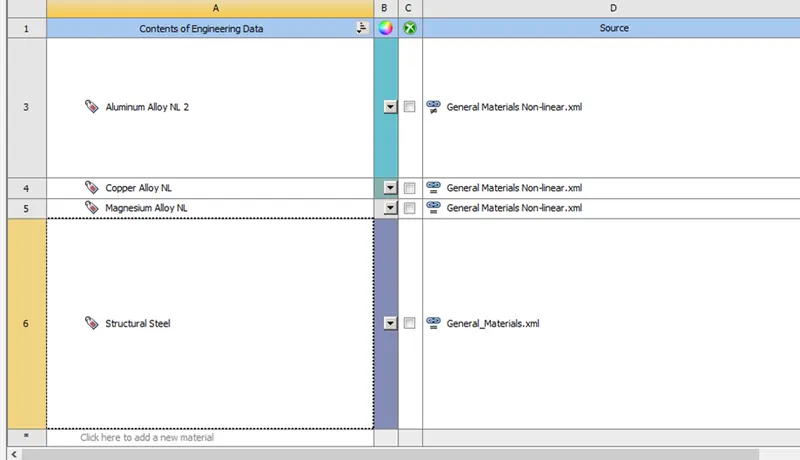
- Verify that the model is proper in space claim.
- Open Ansys mechanical by double clicking the icon
- Check that the materials were properly assigned to the model
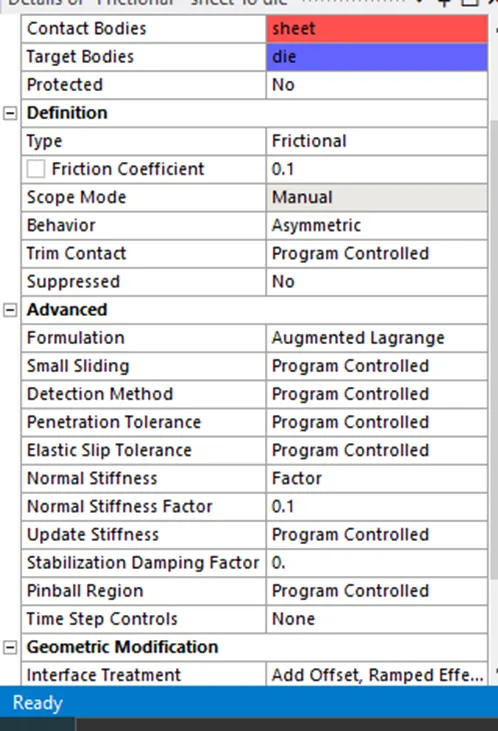
- Verify proper contact regions, set frictional coefficient to 0.1
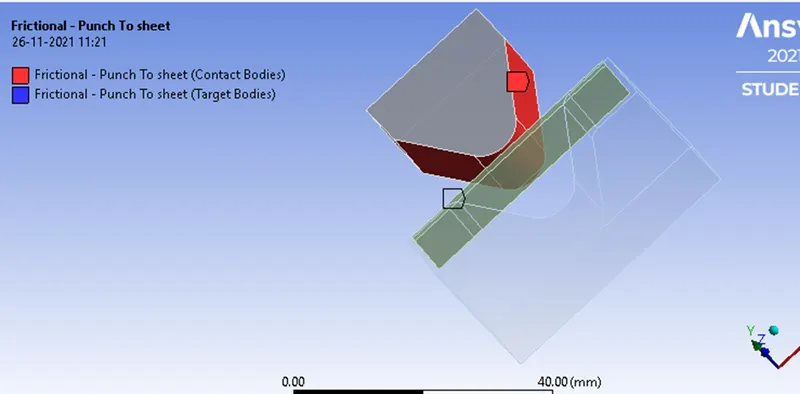
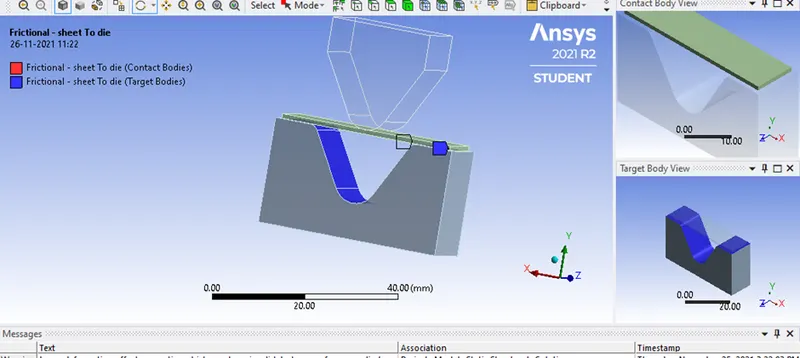
- For the contacts assign the appropriate properties as shown
Meshing
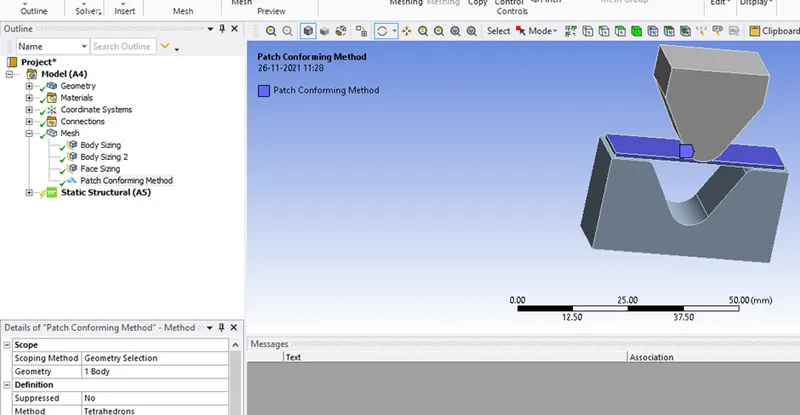
Set a mesh size of 4mm for the die and punch, and create a face sizing for the areas of interest with a mesh size of 1mm (the sheet and the faces which come into contact with the sheet from the punch and die).
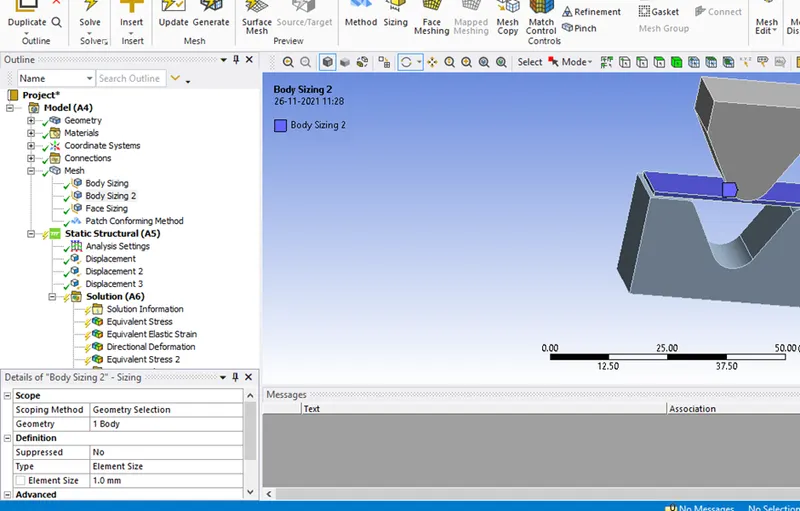
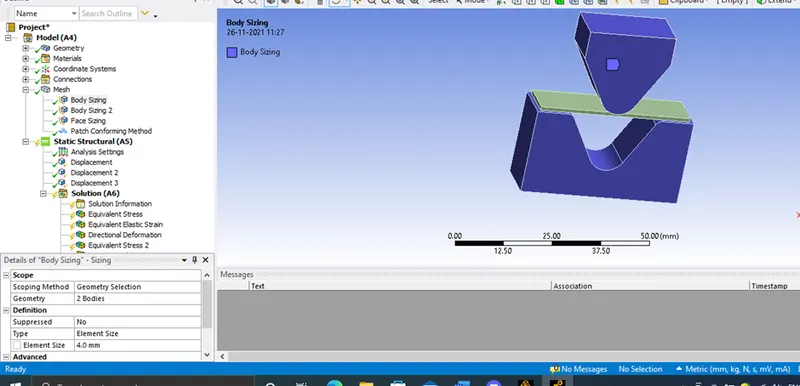
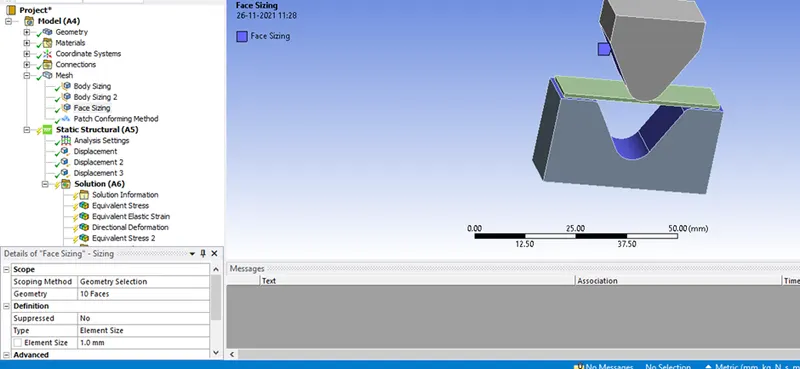
Set the sheet metal elements to tetrahedron elements using the patch conforming method.
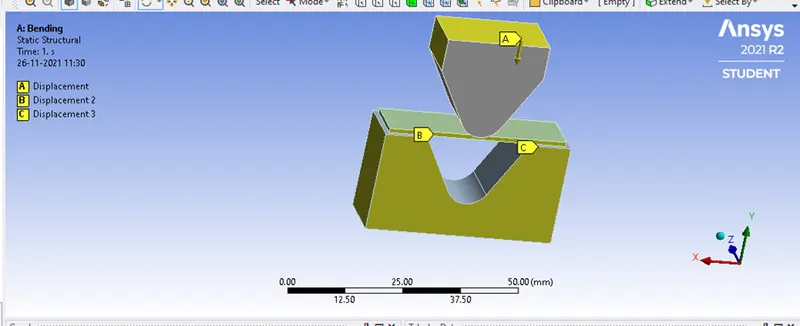
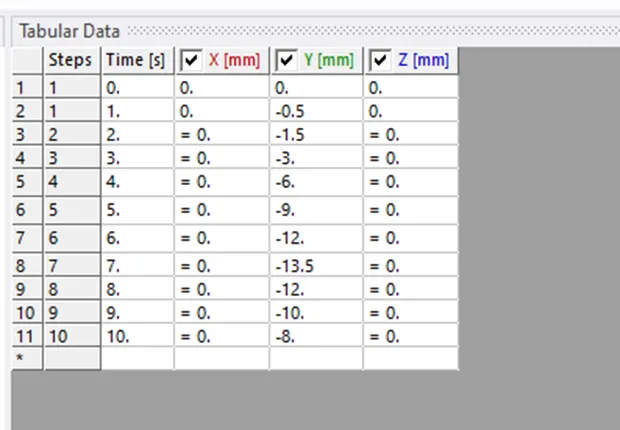
- Define displacements for the die to move and bend the sheet, set the parallel sheel elements to be rigid along the z axis and set the die to be rigid.
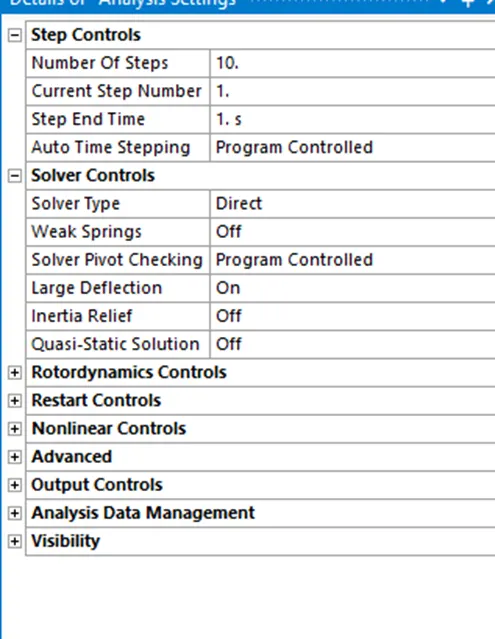
Analysis Settings
Set the analysis settings as shown.
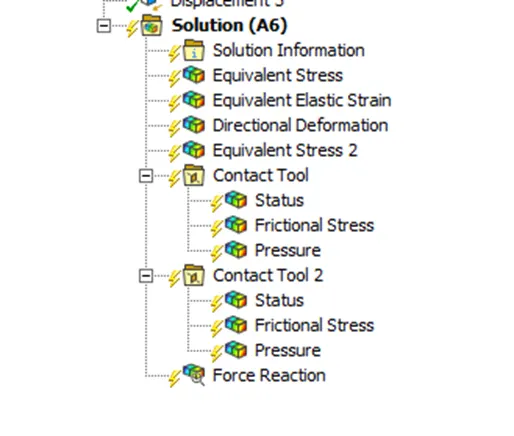
Set your output blocks as shown
Post Processing
Case 1 Aluminium Alloy

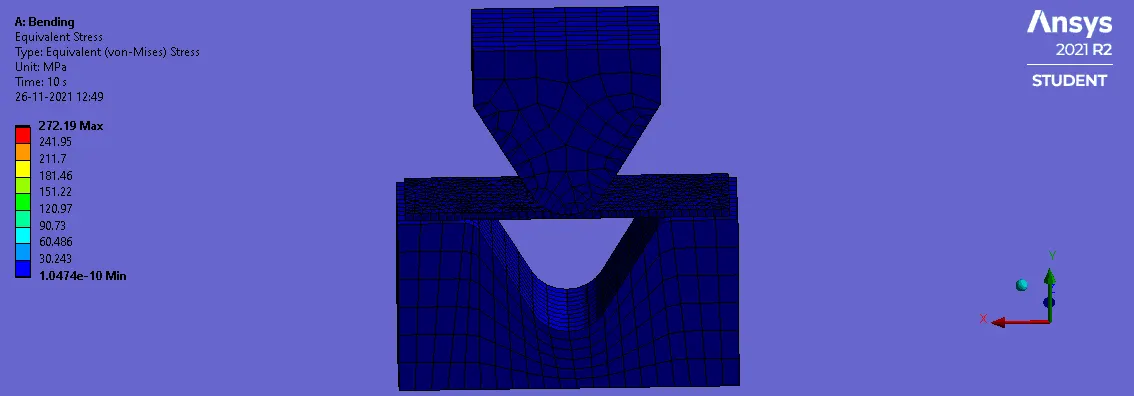
Case 2Magnesium Alloy
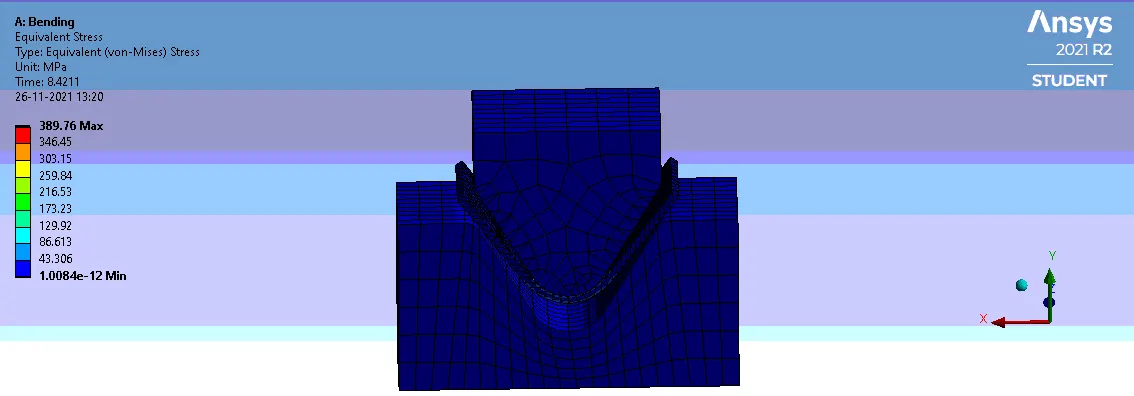
Case 3:Copper Alloy
Tabulated Results of Case1, Case 2 and case 3
|
Material |
Aluminium |
Magnesium |
Copper |
|
Maximum Stress (MPa) |
190.49 |
272.19 |
389.76 |
|
Maximum Strain |
0.0030 |
0.0060 |
0.0035 |
|
Maximum Stress on Sheet (MPa) |
190.49 |
272.19 |
389.76 |
|
Maximum Pressure on Sheet-Punch (MPa) |
12.002 |
14.419 |
23.724 |
|
Maximum Pressure on Sheet-Die (MPa) |
14.904 |
15.999 |
29.893 |
|
Directional Deformation (mm) |
3.6801 |
3.7415 |
3.6926 |
|
Frictional Stress-Sheet and die (MPa) |
1.4904 |
1.5999 |
2.98 |
|
Frictional Stress-Sheet and Punch (MPa) |
1.1113 |
1.4419 |
2.0414 |
Since we have only defined displacement and not an actual force applied, the stresses and pressure experienced will be different for each material as they have different resistances to bending forces and thus require different stresses for deformation
It can be seen clearly that in terms of Strength Copper is significantly stronger than magnesium and aluminium , indicating that it can be used for higher loads.
But it should be noted that Aluminium is much lighter and magnesium alloys are typically used as cast alloys.The manufacturing challenges faced for each material should also be noted as they can make a such impact on the overall cost of the product.
Conclusion
Bending of sheet metal is a common and vital process in manufacturing industry. Sheet metal bendingis the plastic deformation of the work over an axis, creating a change in the part's geometry. Similar to other metal forming processes, bending changes the shape of the work piece, while the volume of material will remain the same.
In this project, a sheel metal bending process was modelled and run using 3 different material models (Aluminium Alloy, Magnesium alloy and copper alloy) and the results were compared.