Week 3 Sheet metal Bending challenge
Aim: To run simulation on Sheet Metal Bending Model with 3 different materials and compare the results.
Procedure:
- Import the model and open the mechanical module.
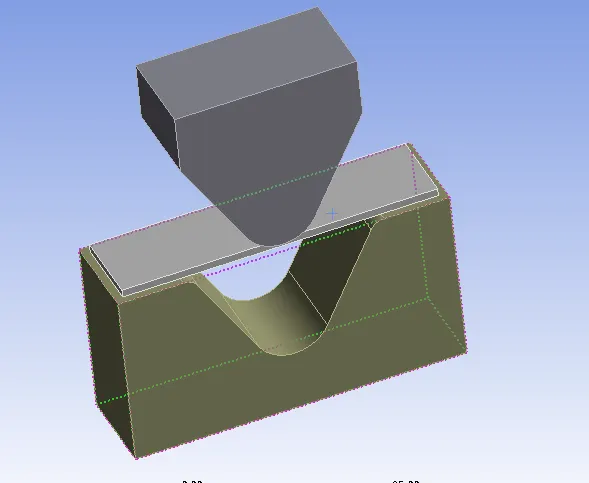
- Import the required material in the model library.
- Clear the previous contacts in the connections and create manual contacts.
- Create the manual contact and select the contact and target bodies.
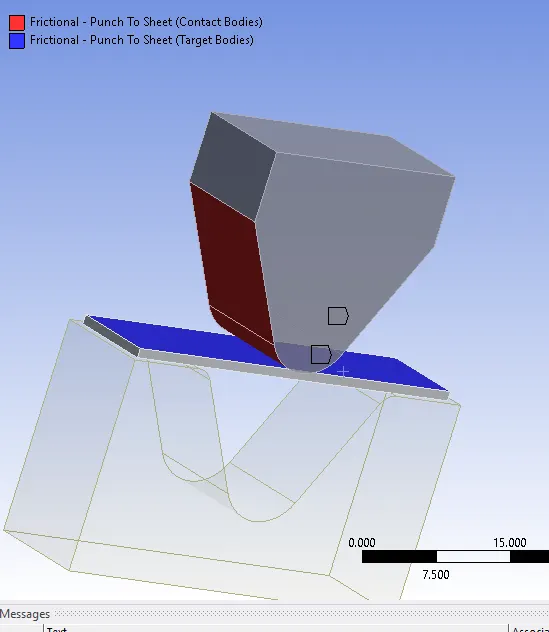
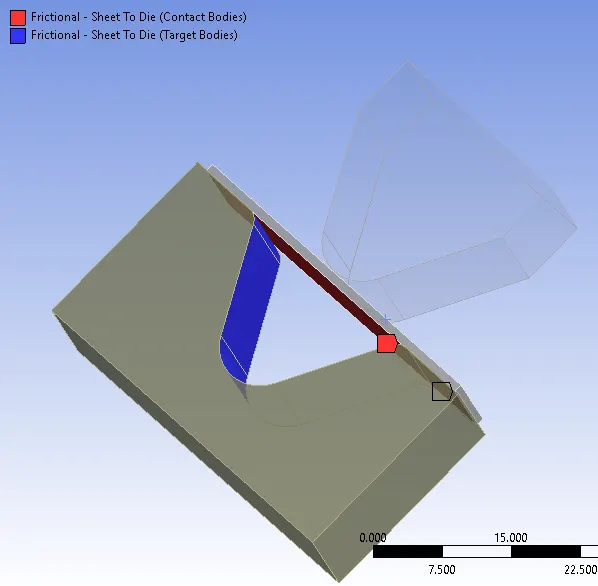
- Create another manual contact and select the contact and target as below.
Mesh:
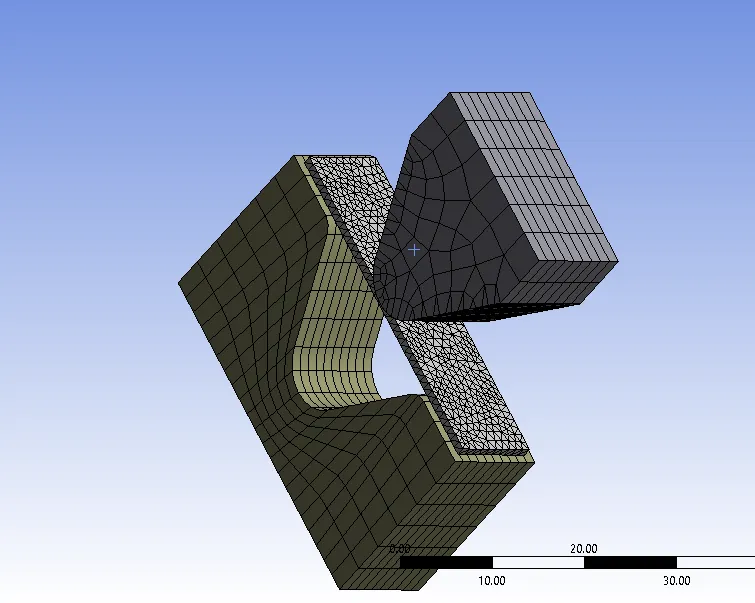
- Insert the sizing select the die and punch bodies and assign the size of 4mm.
- Insert the sizing and select the body as sheet and element size as 1mm.
- Insert the Sizing and select the faces that undergoes contacts and assign the element size as 1mm
- Insert the method and select the sheet and type as Tetrahedrons. Click on generate mesh.
Analysis Settings:
- No. of steps: 10
- Auto-time stepping: Program Controlled
- Stabilization: Constant
- Energy Dissipation Ratio:0.1
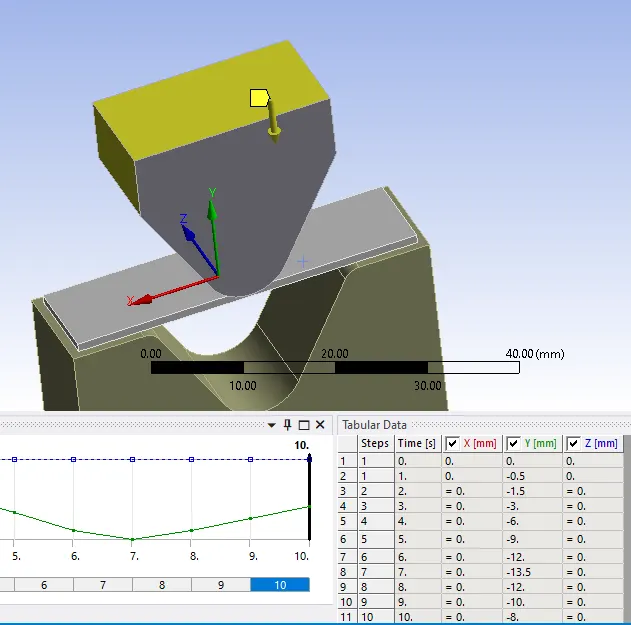
- Insert Displacement select the 3 faces and select the tabular data and insert the values such that the die returns back.Since the entire simulation runs on Y axis values to be entered in the Y tabular data.
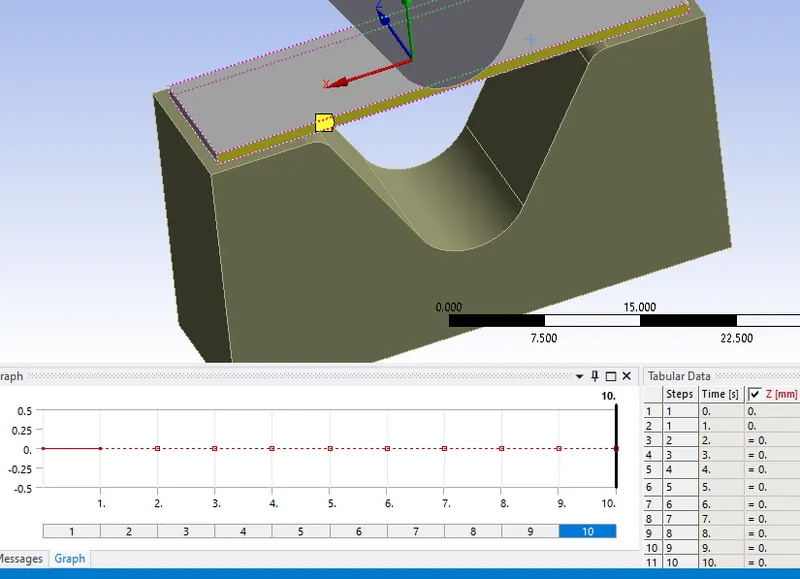
- Insert displacement and select the faces of the sheet in Z-direction and select the tabular data in Z Direction and leave it as 0 for entire table. This is to constrain the motion Z direction.
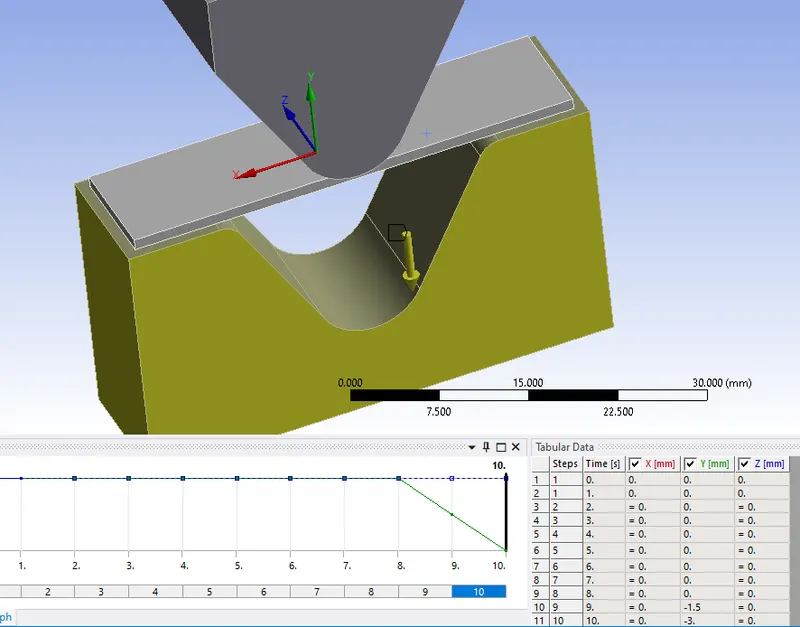
- Insert the displacement and select the 5 faces of the die and assign the values in the Z direction as below.
- In the solution information insert,
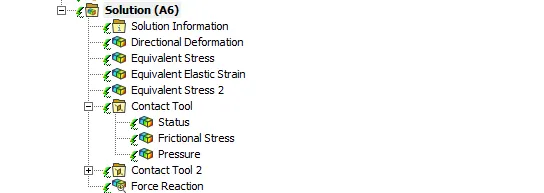
- Directional defromation in Y Direction.
- Contact tool 1 for 1st contact only.
- Contact tool 2 is only for 2nd contact only.
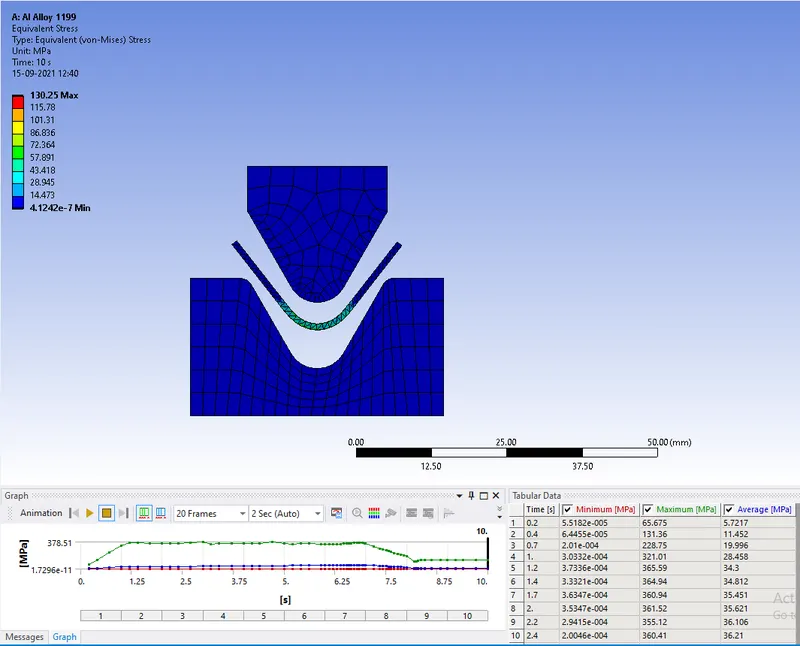
- Eq. Stress to is only for the sheet body.
CASE-1:
Aluminium Alloy1199:
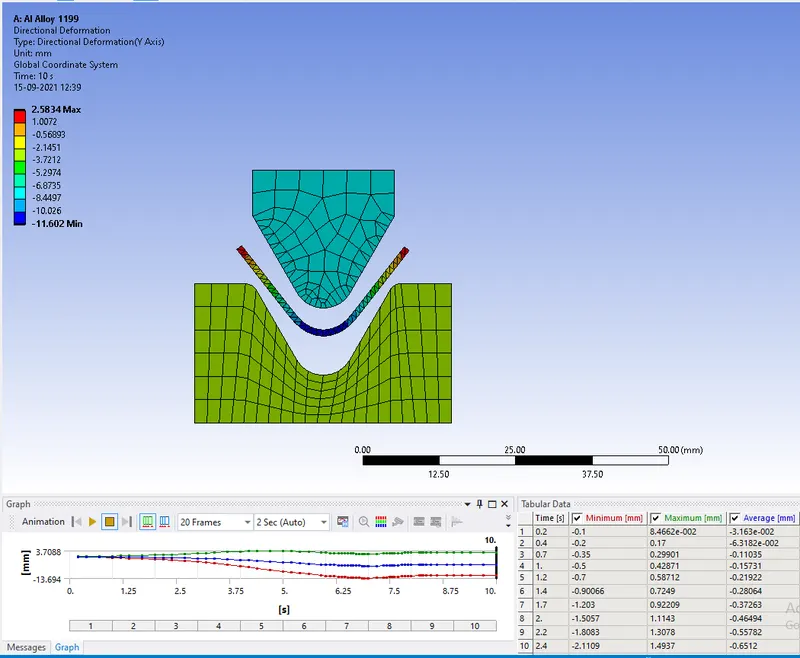
Assign the aluminium alloy to the metal sheet.
Directional Deformation:
Equivalent Stress:
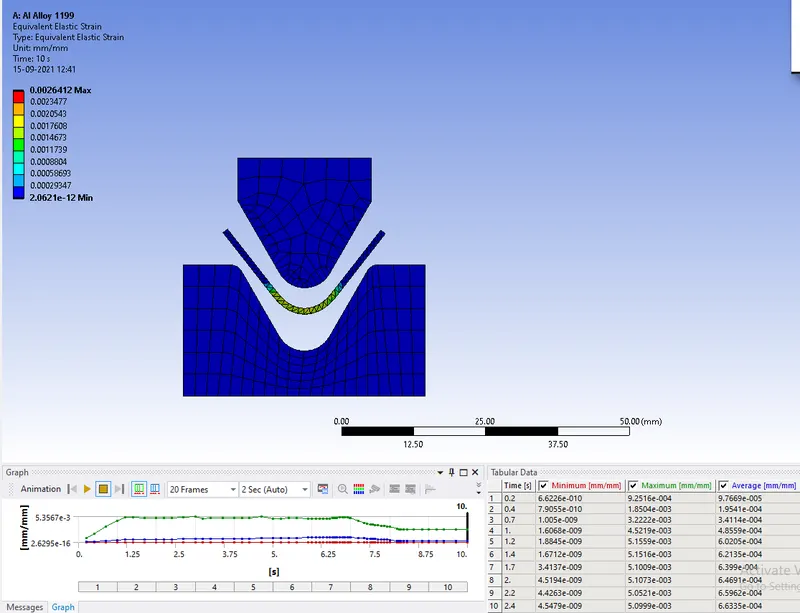
Equivalent Strain:
Copper Alloy NL:
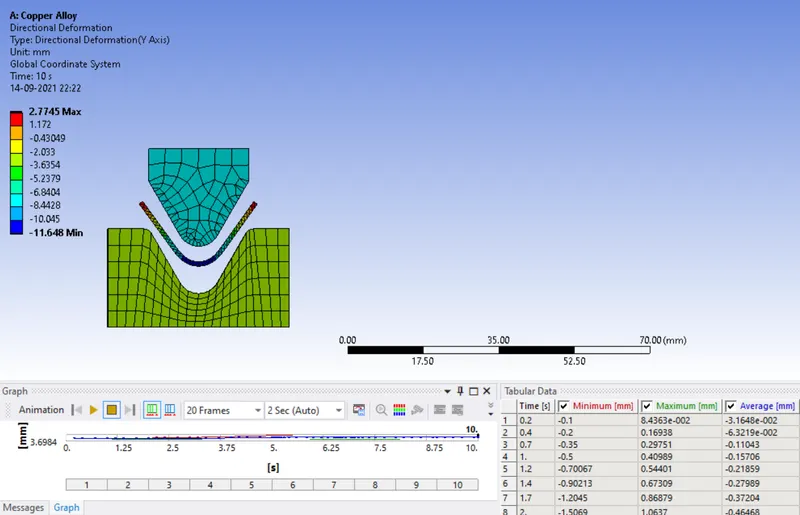
Assign the material as copper alloy NL for sheet metal.
Directional Deformation:
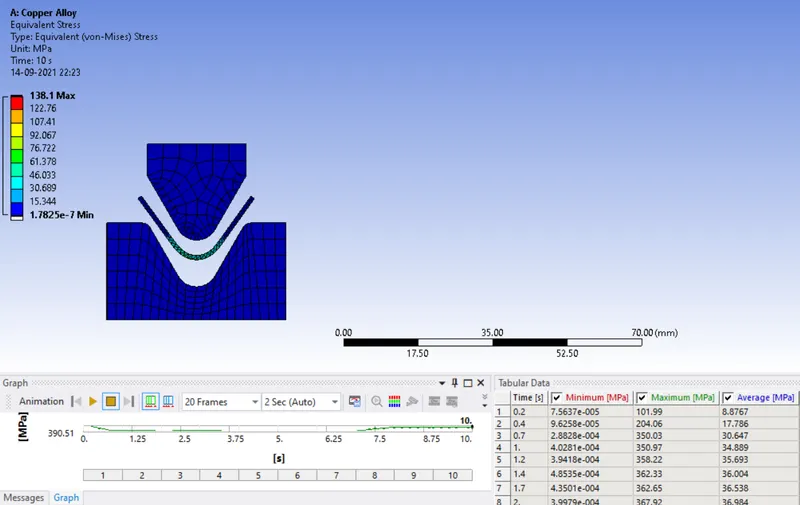
Equivalent Stress:
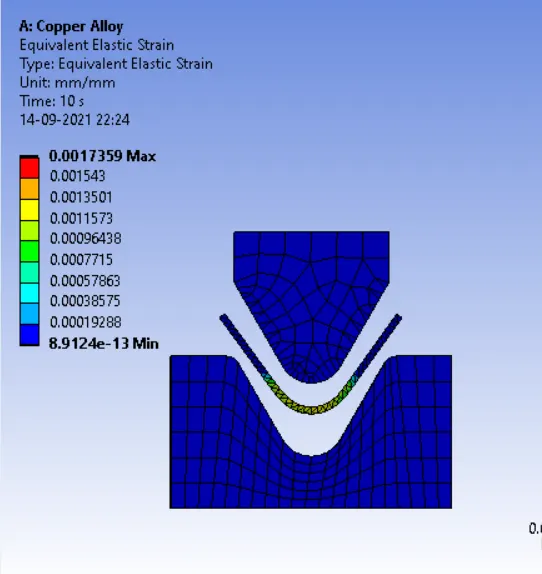
Equivalent Strain:
Magnesium Alloy NL:
Assign the material as Magnesium Alloy NL for sheet metal.
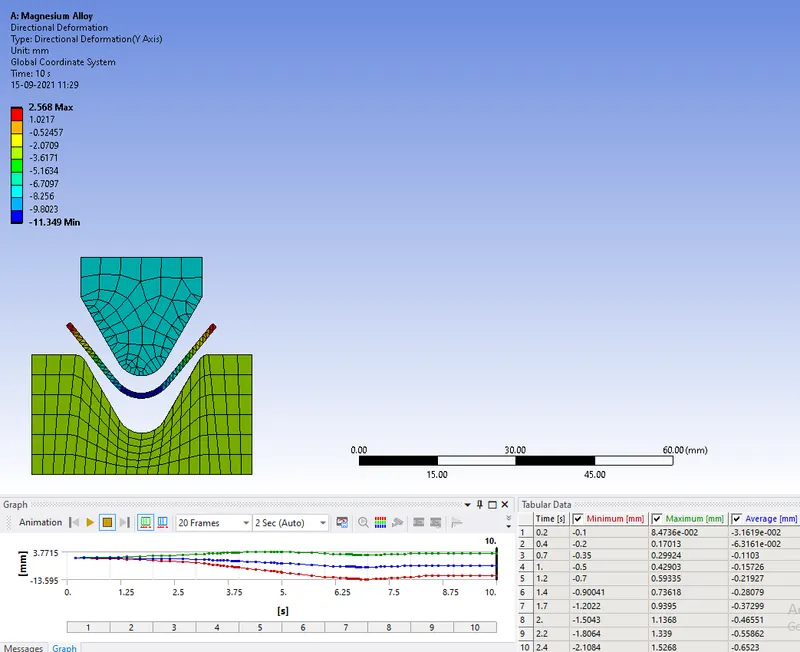
Directional Deformation:
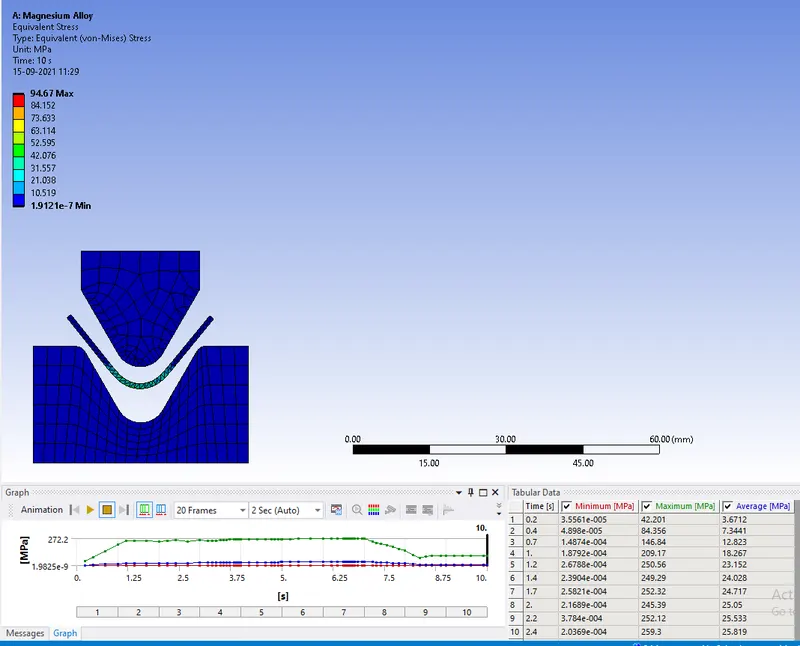
Equivalent Stress:
Equivalent Strain:
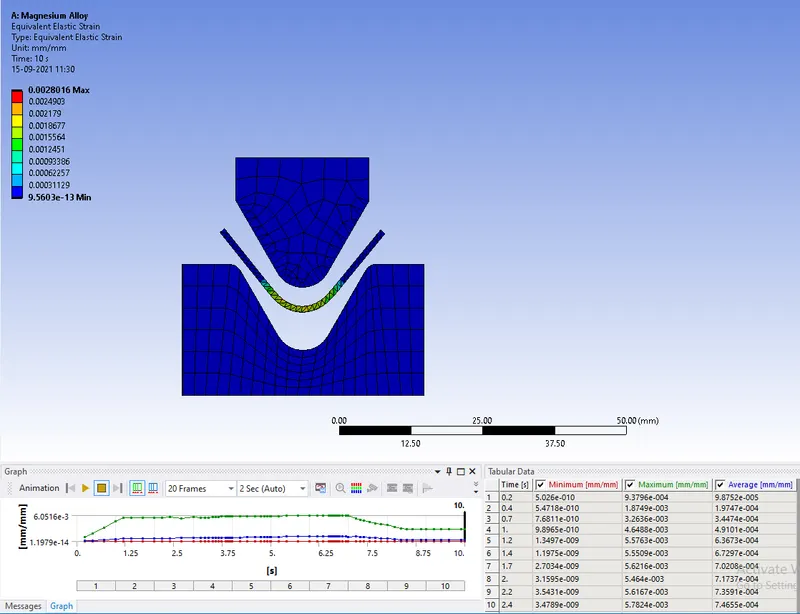
Comparison for three materials,
| Material | Total Deformation-Y (mm) | Eq.Stress (MPa) | Eq.Strain |
| Aluminium Alloy | 2.58 | 130.2 | 0.0026 |
| Copper Alloy | 2.77 | 138.1 | 0.0017 |
| Magnesium Alloy | 2.56 | 94.67 | 0.0028 |
CASE-2:
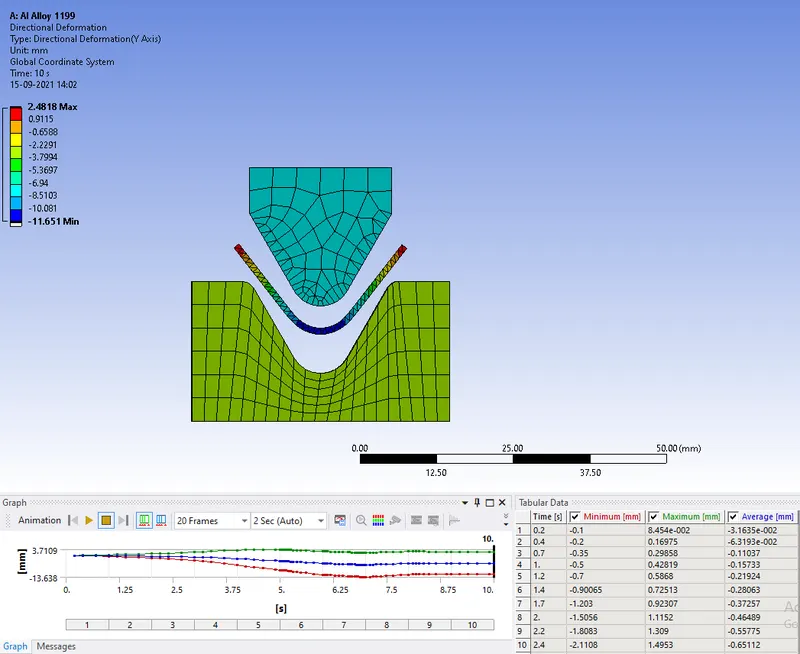
Assign the Aluminium alloy to the sheet metal with a coeffiecient friction of 0.19.
Directional Deformation:
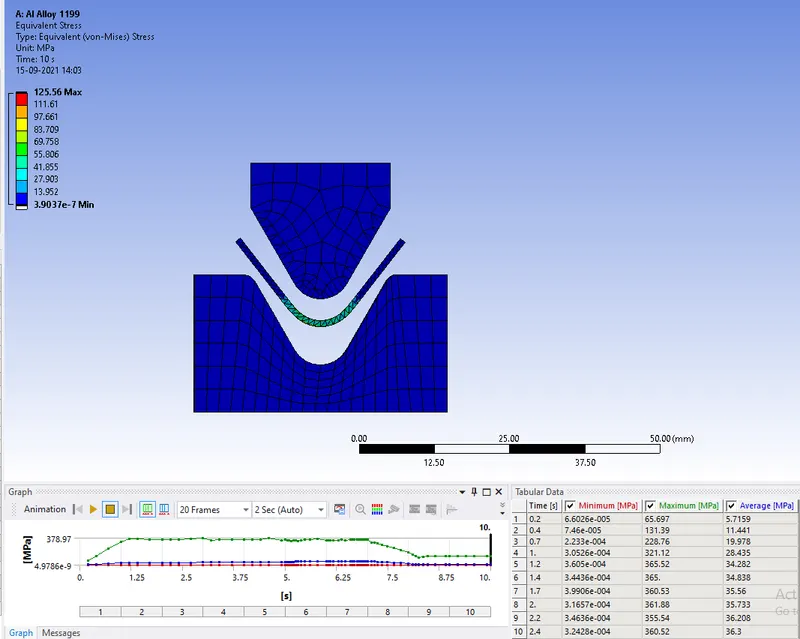
Equivalent Stress:
Equivalent Strain:
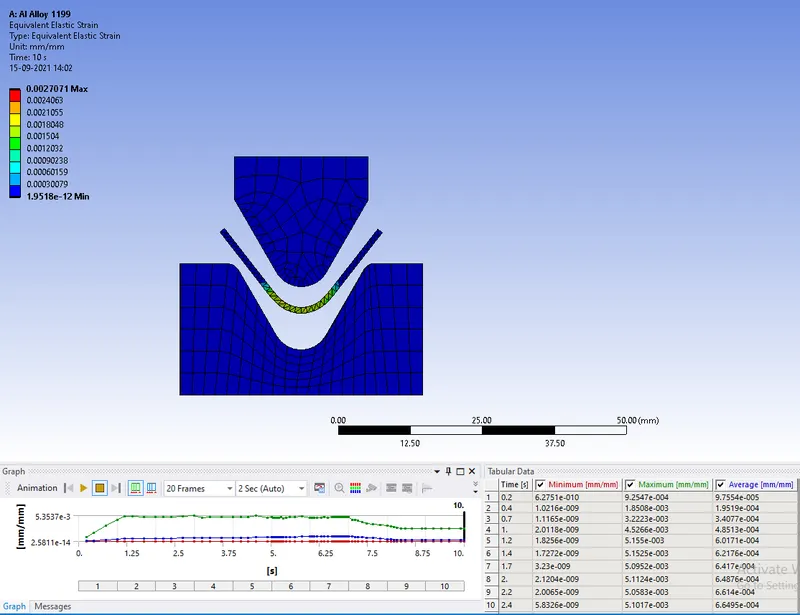
Comparison for Aluminium Alloy in Case-1 & 2.
| Aluminium Alloy | Total Deformation-Y (mm) | Eq.Stress (MPa) | Eq.Strain |
| Case-1 fric.Coeff(0.1) | 2.58 | 130.2 | 0.0026 |
| Case-2 fric.coeff(0.19) | 2.48 | 125.5 | 0.0027 |
CASE-3:
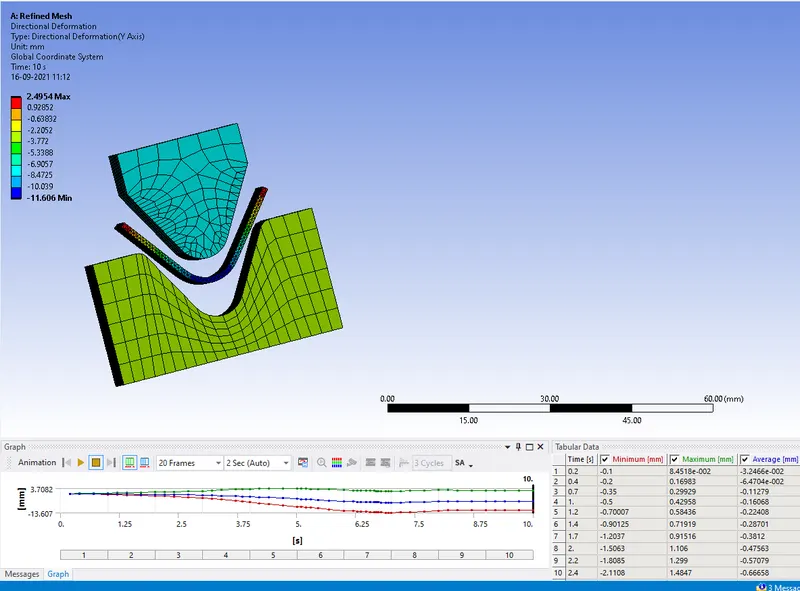
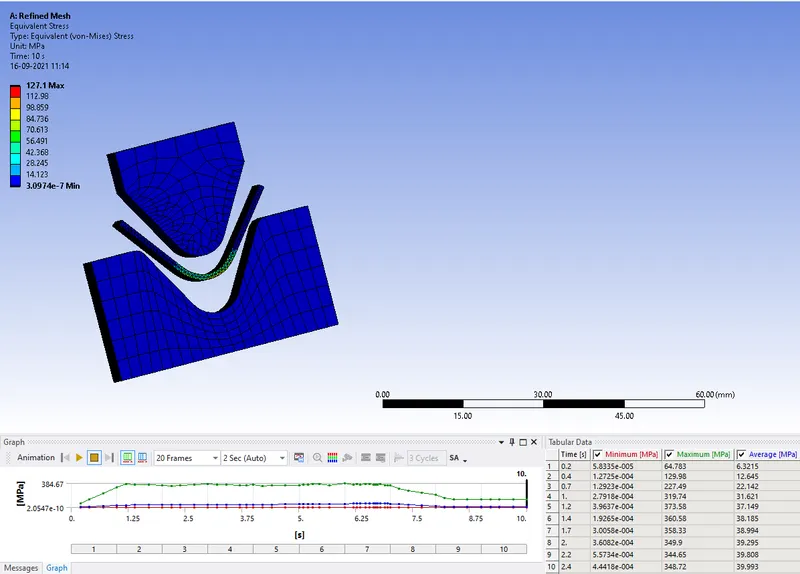
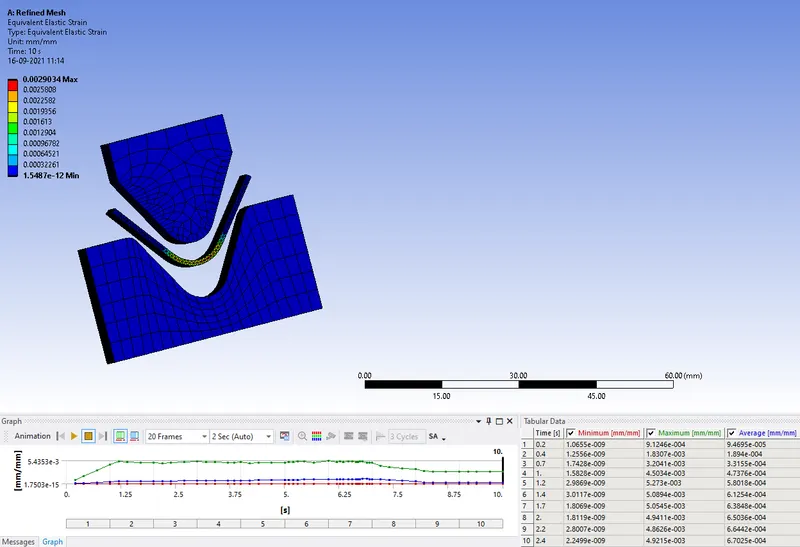
Refining the mesh on the sheet with aluminium alloy as material.
Directional Deformation:
Equivalent Stress:
Equivalent Strain:
Comparison for Aluminium Alloy in Case-1 & 2.
| Aluminium Alloy | Total Deformation-Y(mm) | Eq.Stress (MPa) | Eq.Strain |
| Case-1 Mesh Size-1mm | 2.58 | 130.2 | 0.0026 |
| Case-3 Mesh Size-0.75mm | 2.49 | 127.1 | 0.0029 |