Week 3 Sheet metal Bending challenge
Objective: The objective of this challenge is to perform the Static Structural Analysis on the Sheet Bending Operation in three different cases.
Case1: With Thress different Materials Al Alloy 1199, Cu Alloy NL, and Mg Alloy NL.
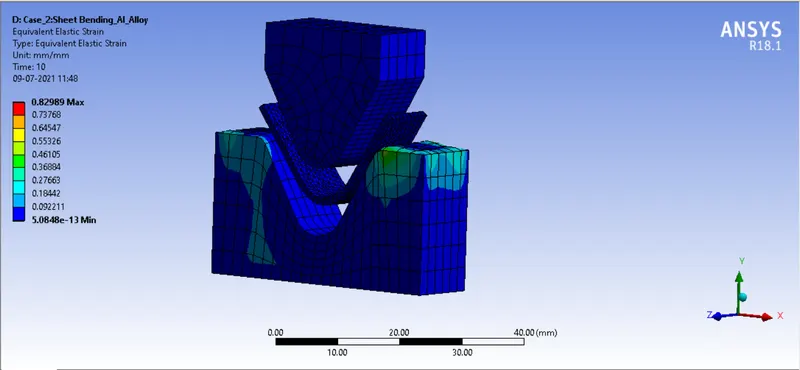
Case2: Changing the value of the Coefficient of friction to 0.19.
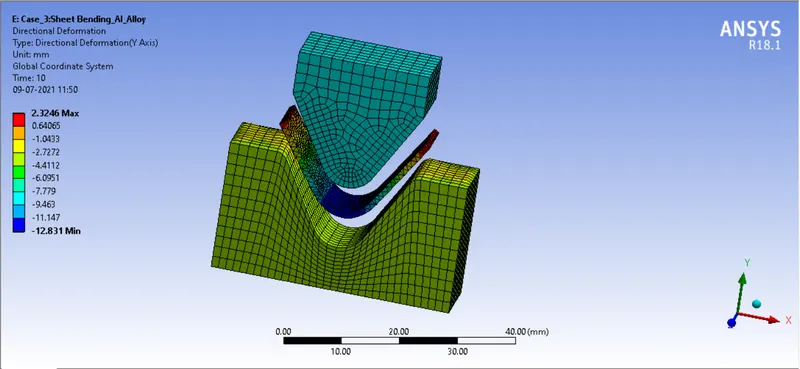
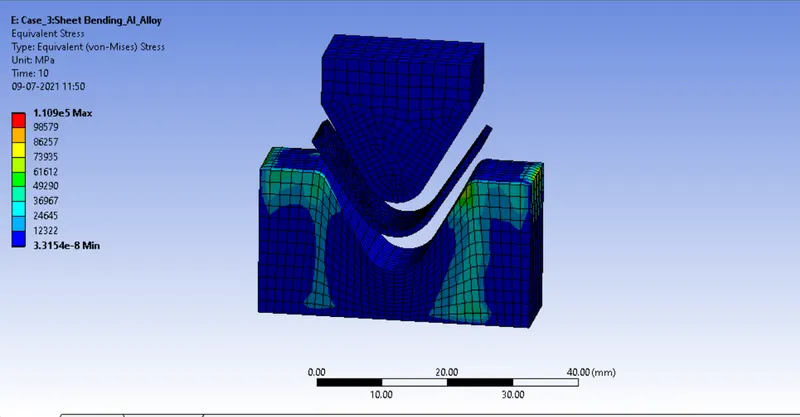
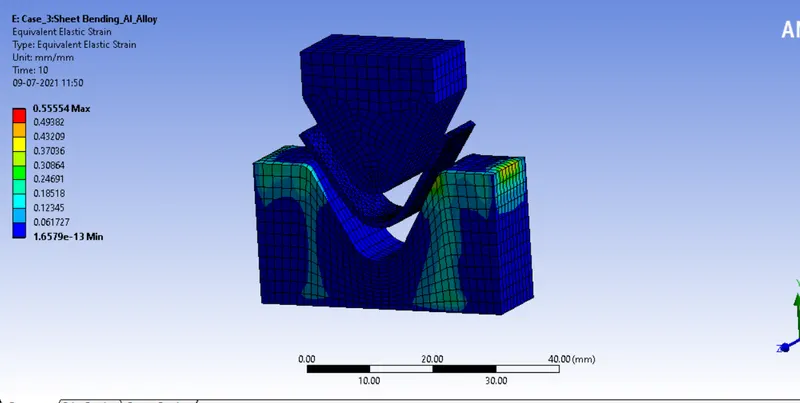
Case3: By Refining the mesh with Al Alloy as a Material.
Then we compare the results for the above three cases.
Geometry:
Assembly Consists of three parts 1) Punch 2) Die 3) Sheet.
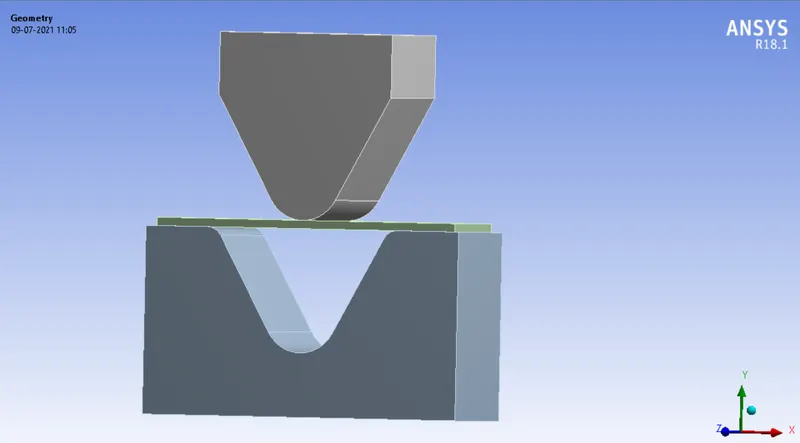
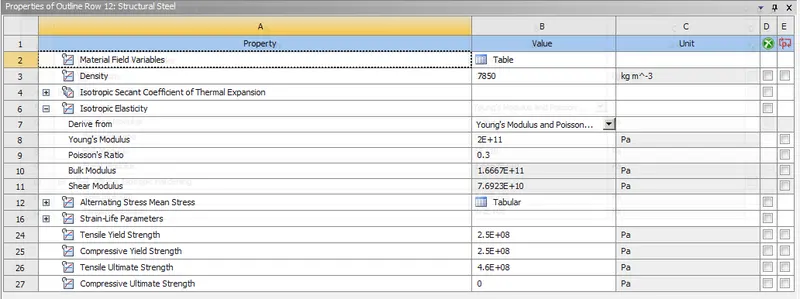
Material: The Material used for Punch and Die is Structural Steel and for the sheet, we will use three different materials 1) Aluminium Alloy 1199 2) Copper Alloy NL 3) Magnesium Alloy NL.
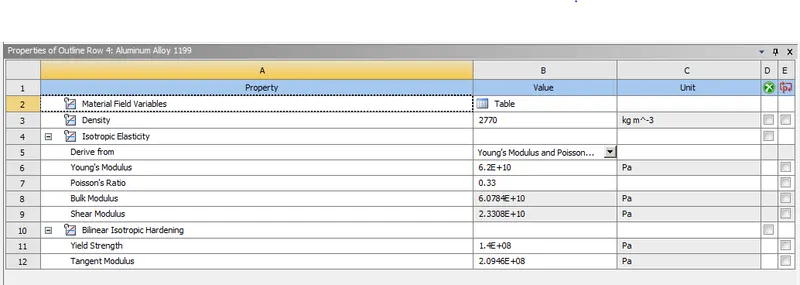
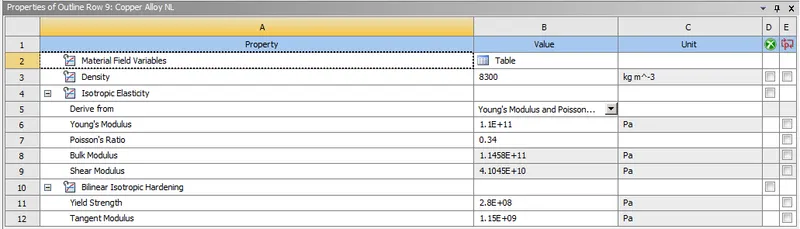
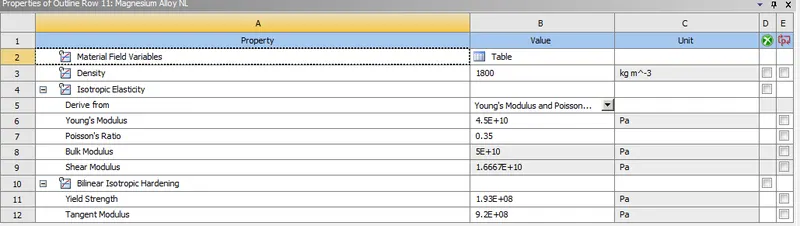
The Properties of these materials are given below.
1) Aluminium Alloy 1199
2) Copper Alloy NL
3) Magnesium Alloy NL
4) Structural Steel
Contacts:
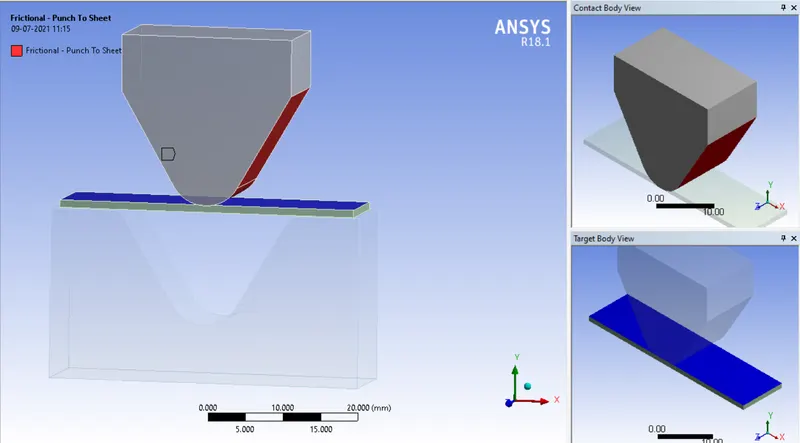
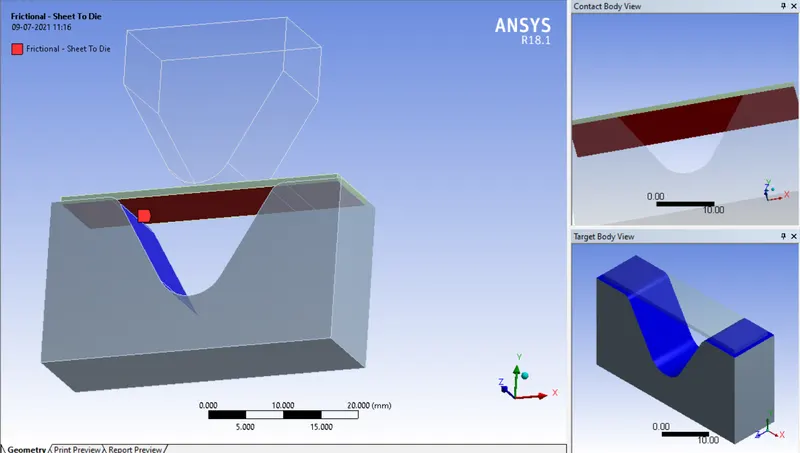
We have provided two Frictional Contacts with c.o.f=0.1. in Case1 and with c.o.f=0.2 in case2.
in both cases. Contact Formulation= Augmented Lagrange and INterface Treatment= add offset, ramped effect.
1) Frictional Contact between Punch and Sheet:
1) Frictional Contact between Die and Sheet:
Mesh:
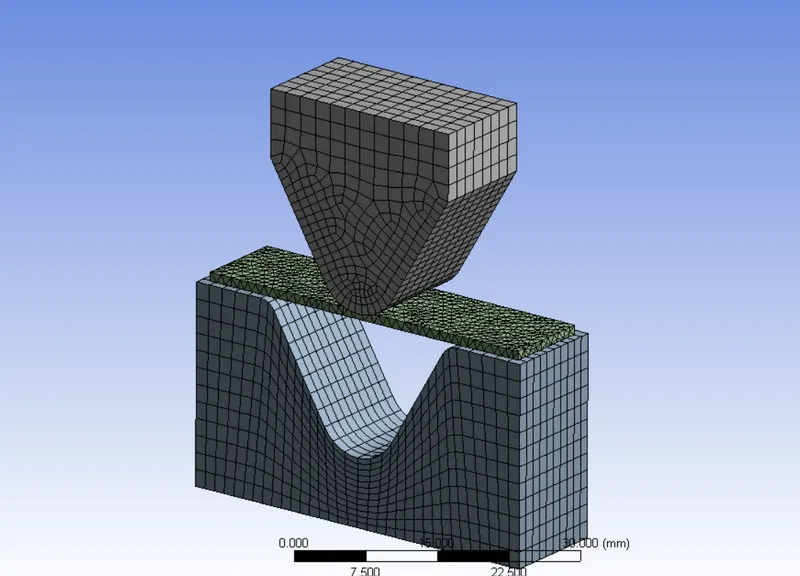
For the first two cases, we have deployed default mesh on Punch and die with body sizing of 4mm.
The sheet has meshed with tet mesh and body sizing of 1mm.
Face sizing of 1mm is given to the faces which are going to be in contact.
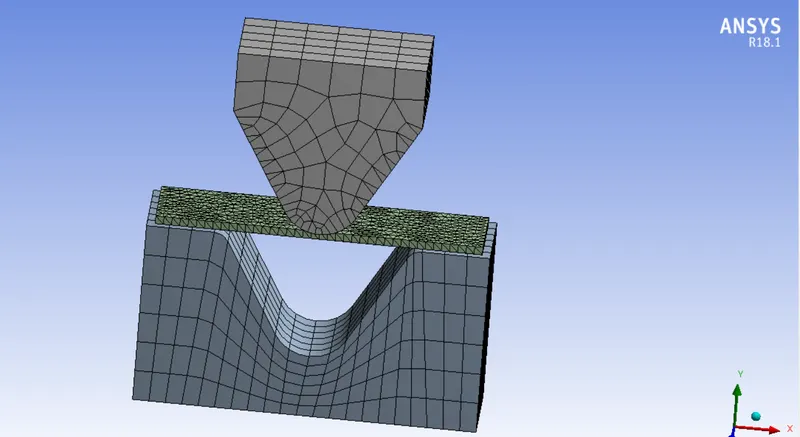

For the third case, we refine the mesh by reducing the element size to 2mm.

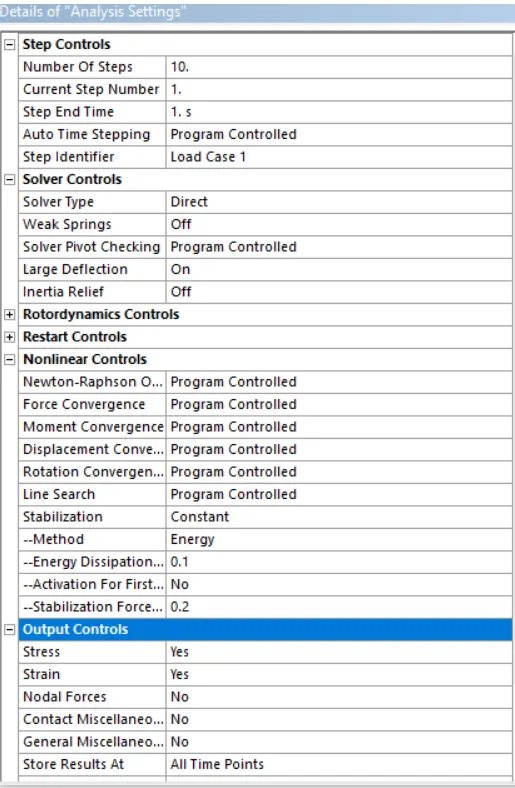
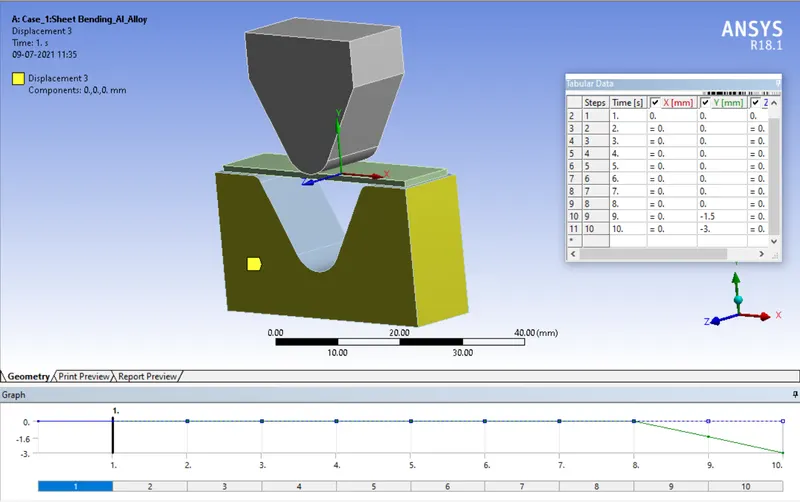
Analysis Settings: We are running this simulation in 10 steps, with the following settings.
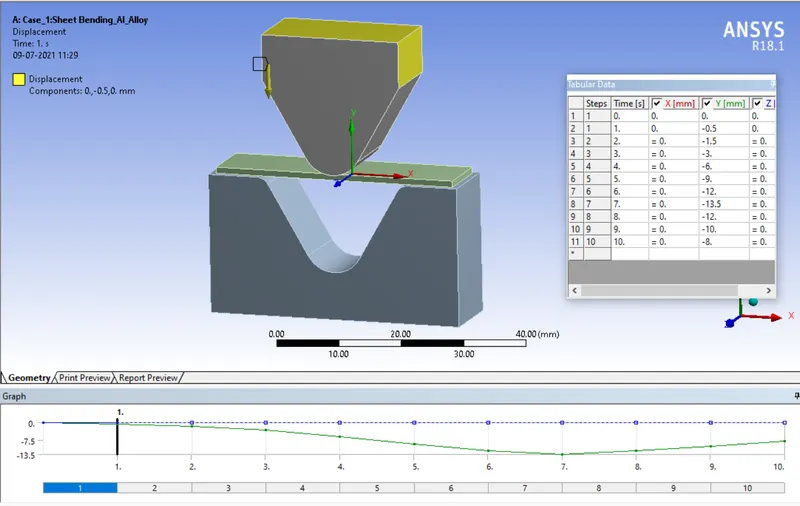
Boundary Conditions:
We have applied the displacement boundary condition to all three bodies.
1) For Punch
We have displaced the punch in the downward direction by 13.5 mm and again by 5 mm to give chance to the die so that it will retrieve back.
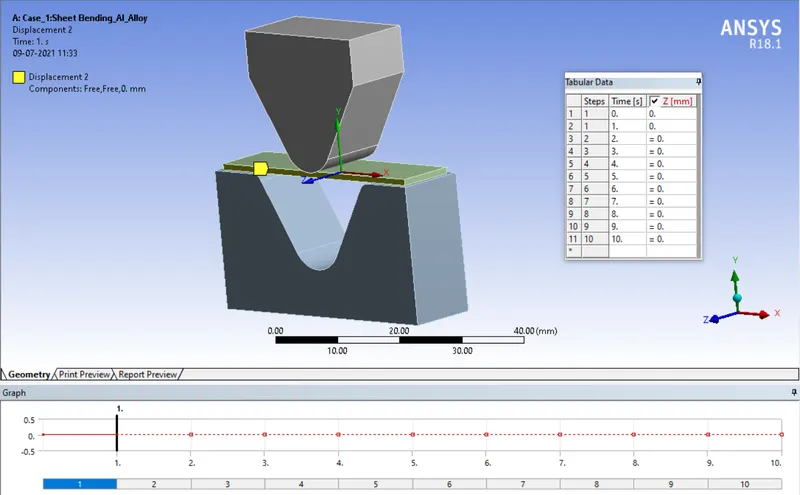
3) For Sheet: The sheet should move in a downward direction only, so we have to restrict its movement in the other two directions.
3)For Die: The die should move upward by some distance in two last steps.
Results:
Animation:
1) Case1: With three different materials
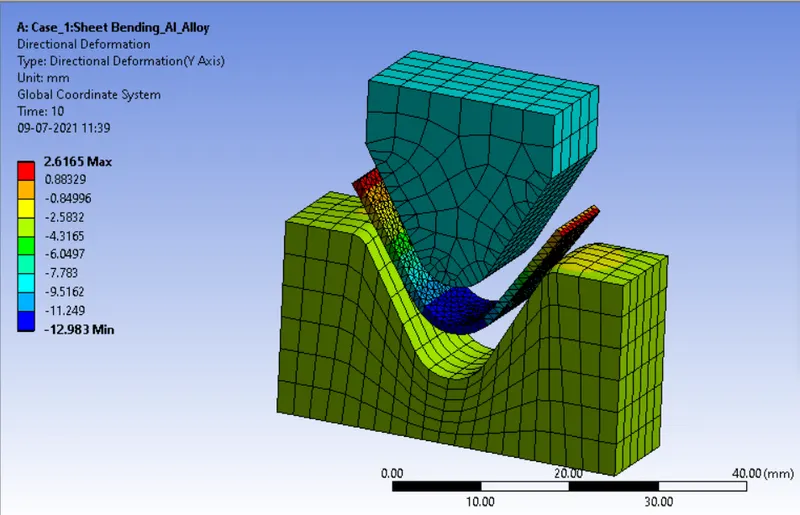
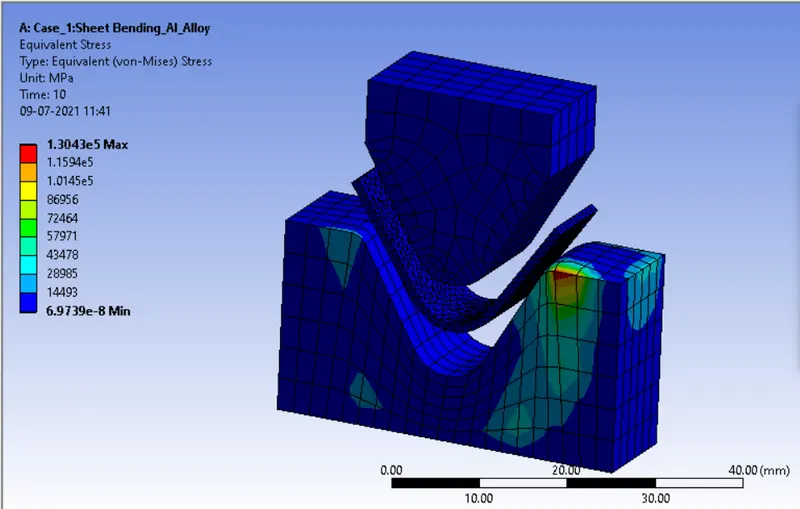
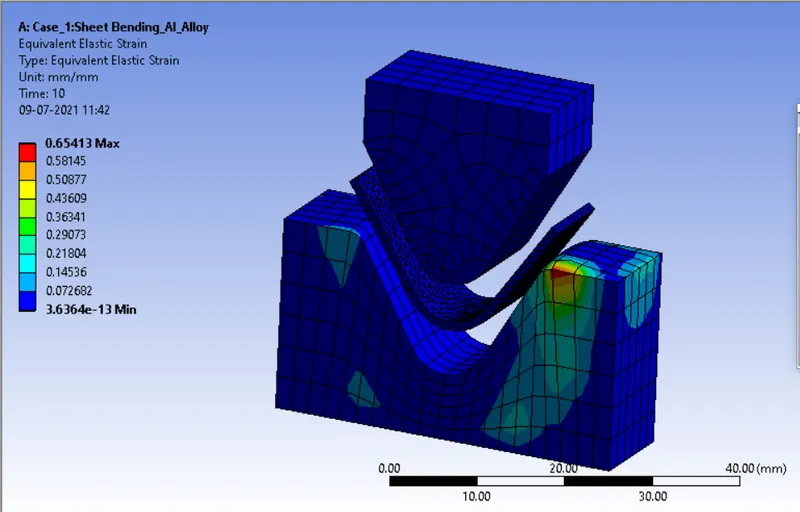
A) Al Alloy 1199
a) Total Deformation in Y-Direction:
b) Equivalent Stress:
c) Equivalent Strain:
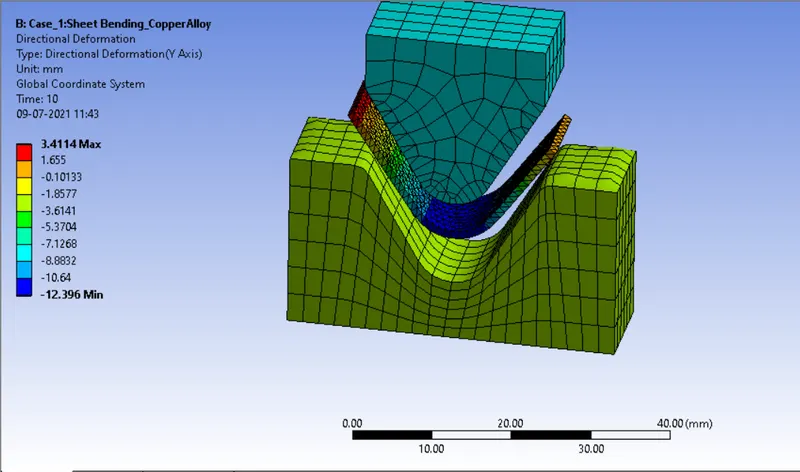
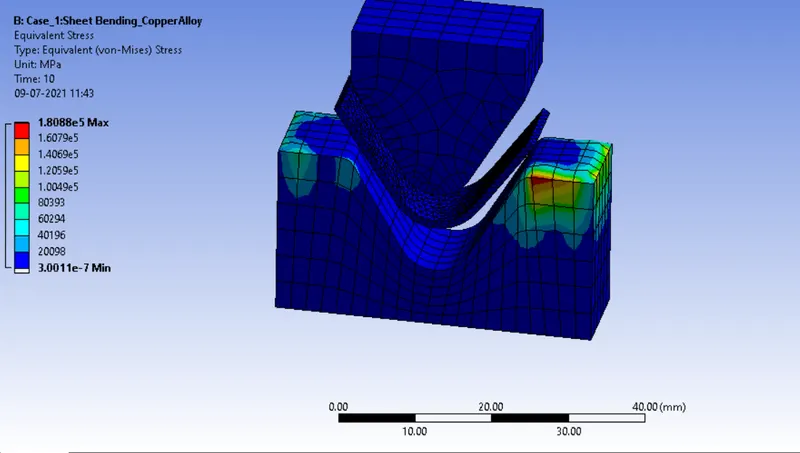
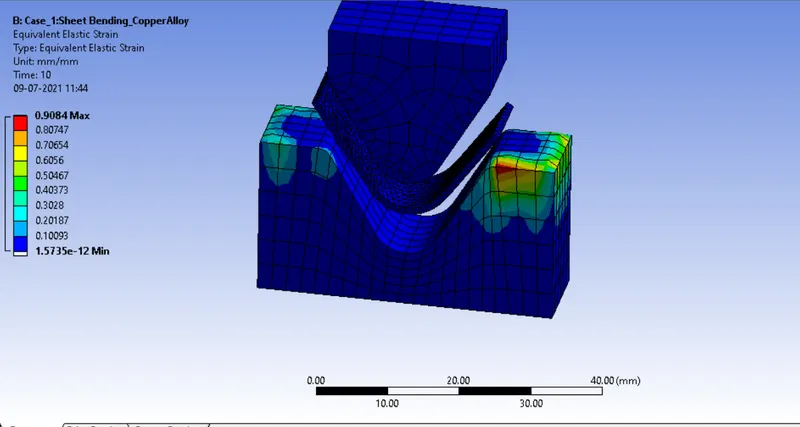
B) Cu Alloy NL
a) Total Deformation in Y-Direction:
b) Equivalent Stress:
c) Equivalent Strain:
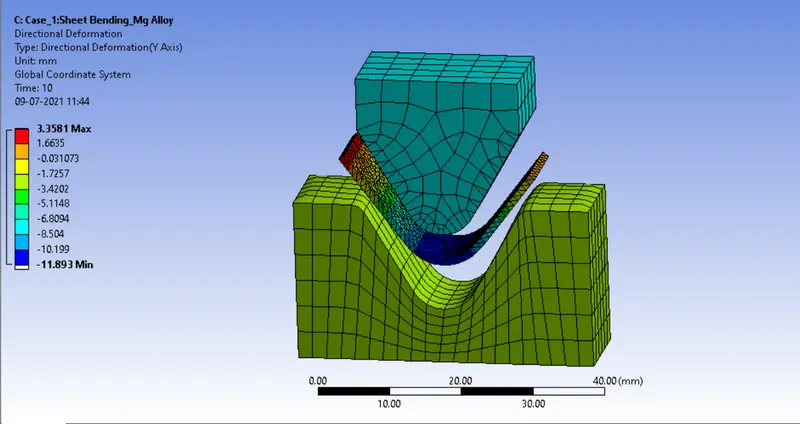
C) Mg Alloy NL
a) Total Deformation in Y-Direction:
b) Equivalent Stress:
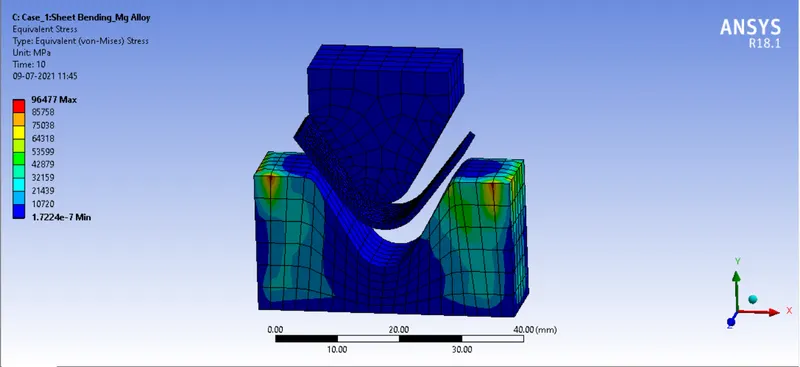
c) Equivalent Strain:
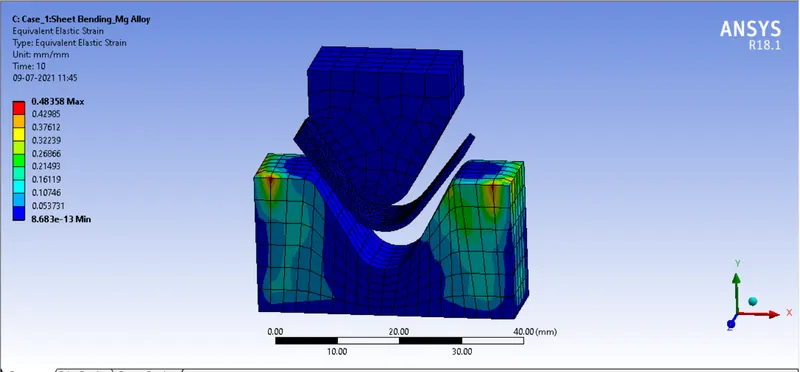
Case2: Coefficient of contact=0.19 and Al 1199 As material.
a) Total Deformation in Y-Direction:
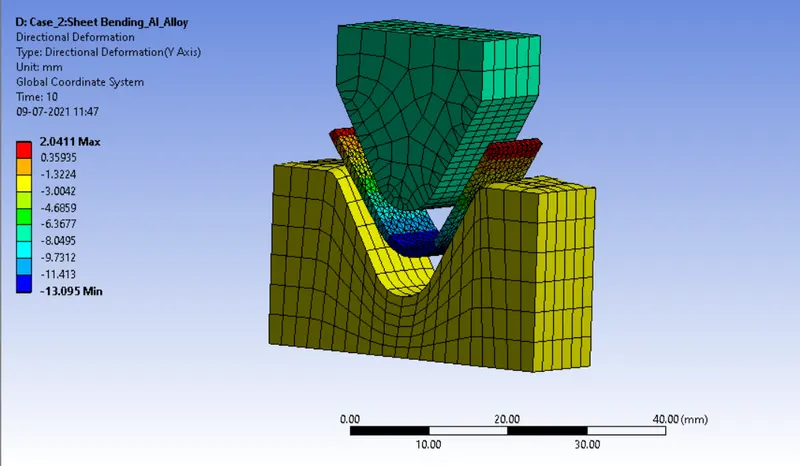
b) Equivalent Stress:
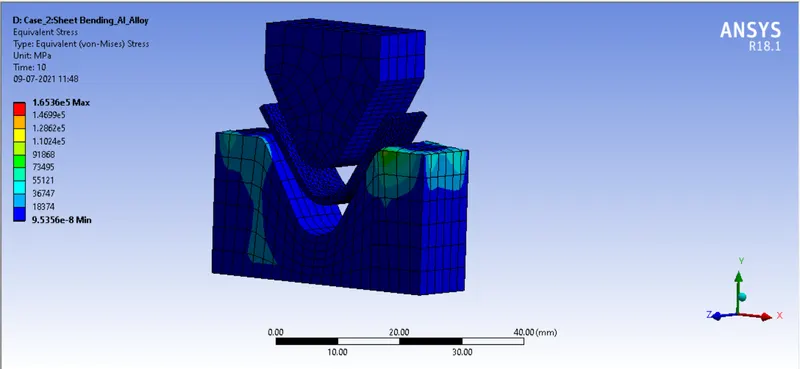
c) Equivalent Strain:
Case3: With Refined mesh and Al 1199 As material.
a) Total Deformation in Y-Direction:
b) Equivalent Stress:
c) Equivalent Strain:
Conclusion:
For 1st case, the results are shown in fig. below.
| Material | Max. Deformation In Y direction (in mm) | Max. Stress (in MPa) | Max. Strain (in mm/mm) |
| Al Alloy 1199 | 2.6165 | 1.30e5 | 0.6541 |
| Cu Alloy NL | 3.4114 | 1.80e5 | 0.9084 |
| Mg Alloy NL | 3.3581 | 1.65e5 | 0.4835 |
1) The maximum deformation, stress, and Strain are obtained in Copper alloy sheet material. and leat in Magnesium Alloy Sheet. Which is expected.
Case2 and Case1 Comparison:
| C.O.F. | Max. Deformation In Y direction (in mm) | Max. Stress (in MPa) | Max. Strain (in mm/mm) |
| 0.1 | 2.6165 | 1.30e5 | 0.6541 |
| 0.19 | 2.0411 | 1.6534e5 | 0.8298 |
1) as we increase the friction the stress-induced is increased due to the friction effect. Also, strain in the sheet increased.
Case3 and Case1 Comparison
| Mesh Size (in mm) | Max. Deformation In Y direction (in mm) | Max. Stress (in MPa) | Max. Strain (in mm/mm) |
| 4 | 2.6165 | 1.30e5 | 0.6541 |
| 2 | 2.3246 | 1.10e5 | 0.5555 |
As we refine the mesh the stress, deformation, and Strain values are reduced, hence to get accurate results we have to perform a grid dependency test