Week 3 Sheet metal Bending challenge
Aim: To perform structural analysis on sheet metal with cases given below
Case 1:Aluminium Alloy 1199( mentioned in the course video), Copper Alloy NL, and Magnesium Alloy NL. Find out the Equivalent stress, Equivalent elastic strain, and Total Deformation in the Y direction and compare the results for the three materials.
Case 2:With the material as Aluminium Alloy, change the friction coefficient to 0.19 and run the analysis as mentioned in Case 1. Compare the results with that in case 1.
Case 3: Refine the mesh on the plate such that it doesn't cross the academic limit. With Aluminium alloy as material, run the analysis as in Case 1 and compare the results.
Submit the challenge as you would do in a proper project report with all relevant details such as settings, mesh size, images, and tables included to provide your findings. Also, explain which property/ properties of the materials affect the outcome
Procedure:
The analysis we are doing is a static structural analysis and Since we have to do an analysis on three different materials and compare the results
Aluminium Alloy 1199( mentioned in the course video), Copper Alloy NL, and Magnesium Alloy NL are added to the engineering data
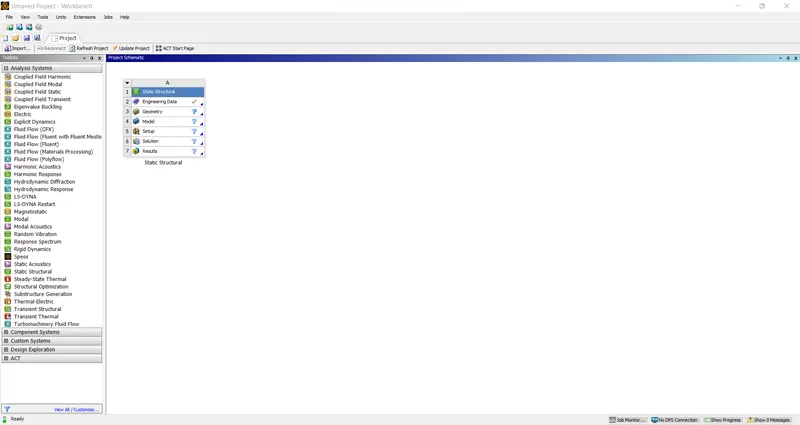
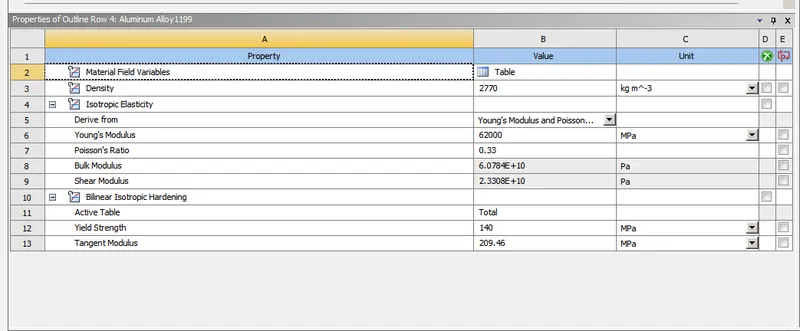
(Aluminum Alloy)
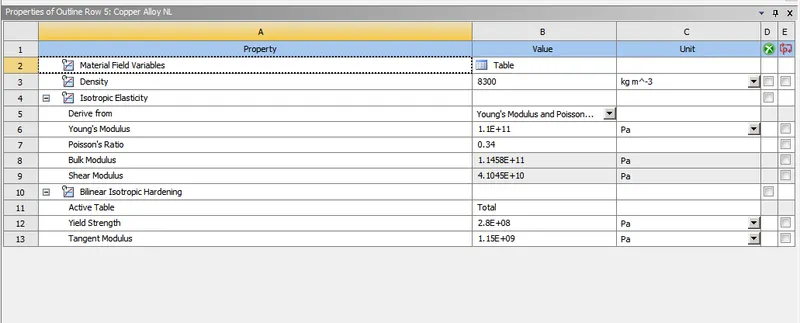
(Copper Alloy)
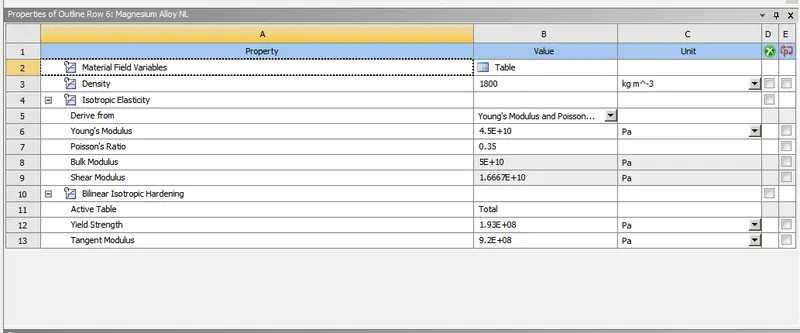
(Magnesium Alloy)
Before we can begin analysis we need to create a model with the given dimensions but since the model is already given it is imported using the import option in the geometry and the model is checked for any imperfections
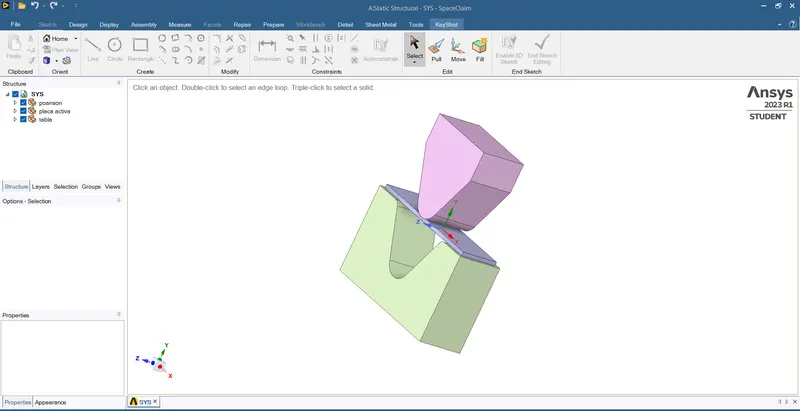
Once the model is updated, contacts have to be established Since this is a typical sheet metal press, there are two types of contacts one is contact between punch and sheet metal and another contact is between sheet metal and die and is given as shown below
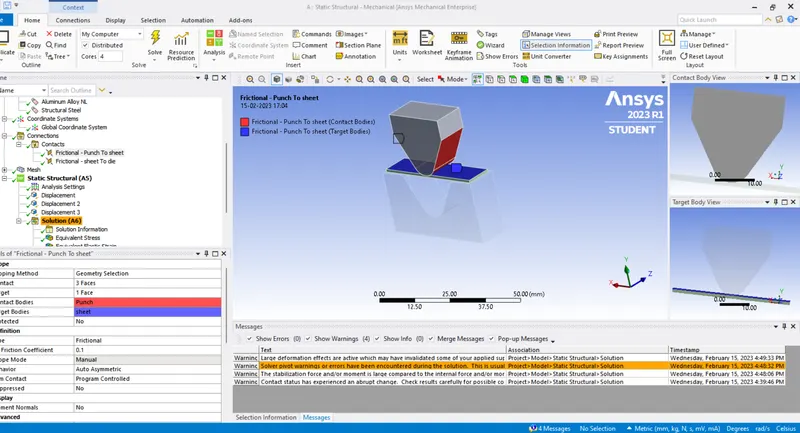
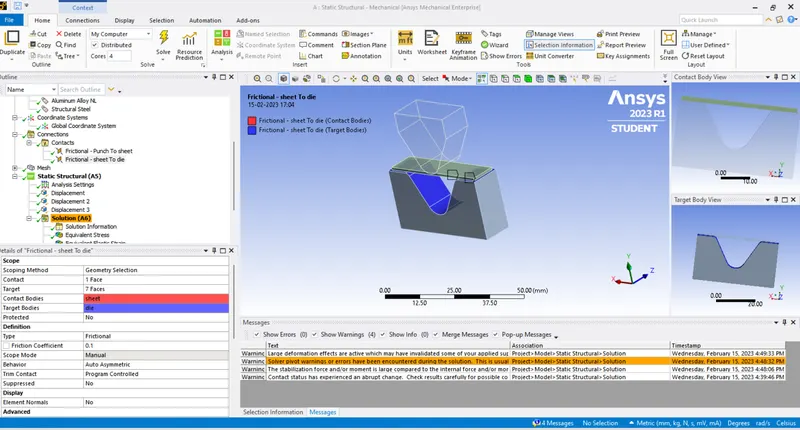 After contacts have been established meshing is done on the components
We have to perform mesh of different sizes over materials 4, and 1 mm respectively. There is a program-controlled mesh of 1.75 mm for the face sizing so that the mesh could get finer than coarse. Lastly, we are generating a fine mesh over the bevel gear which is further carried out to give the desired result:
Case 1: Mesh size_4mm for faces is not important for analysis
Case 2: Mesh size_1mm for faces where there will be contact btw the sheet metal, die and punch
Case 3: element type: Tetrahedron for sheet metal
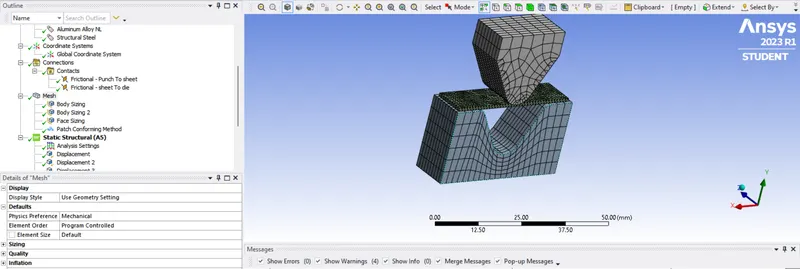
After the analysis is done the model is set for boundary conditions
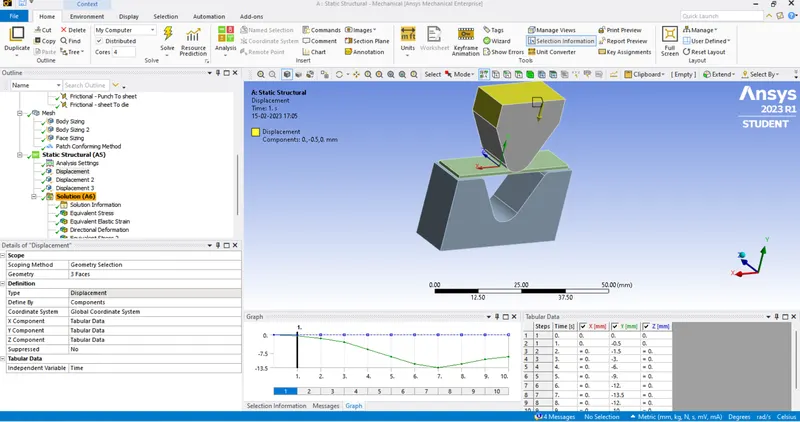
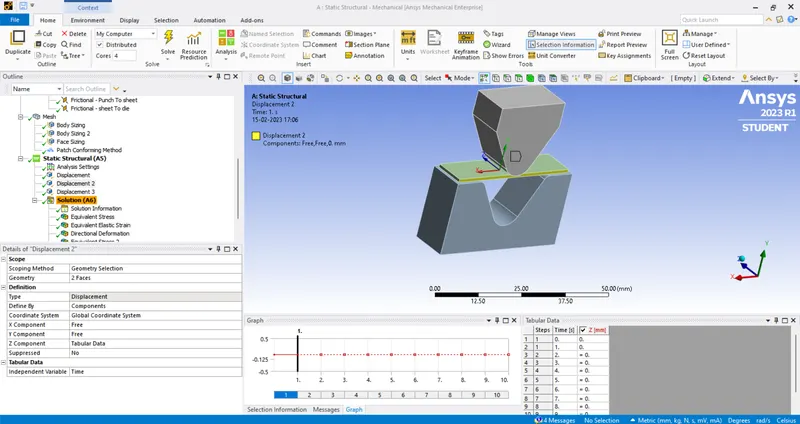
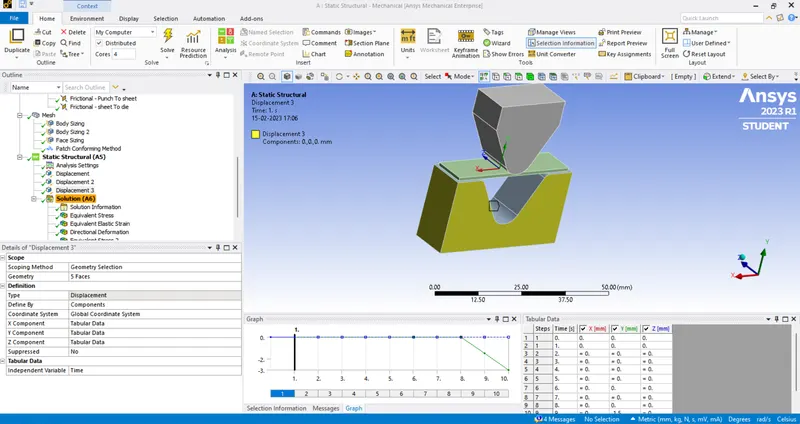
Results:(For aluminium alloy)
1:Deformation along the Y axis
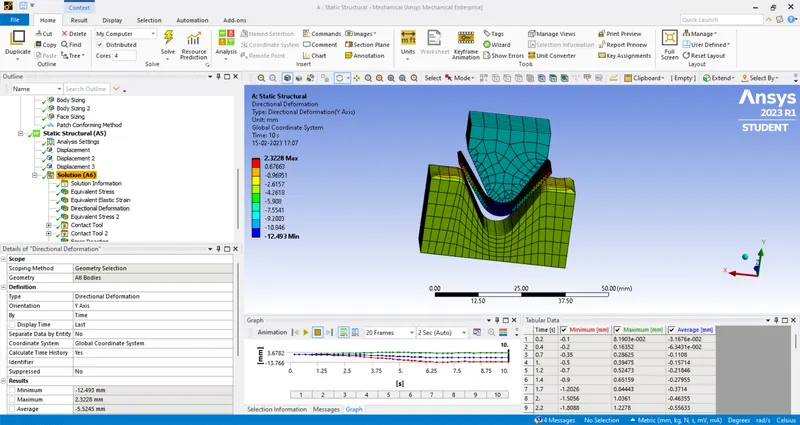
2:Stress
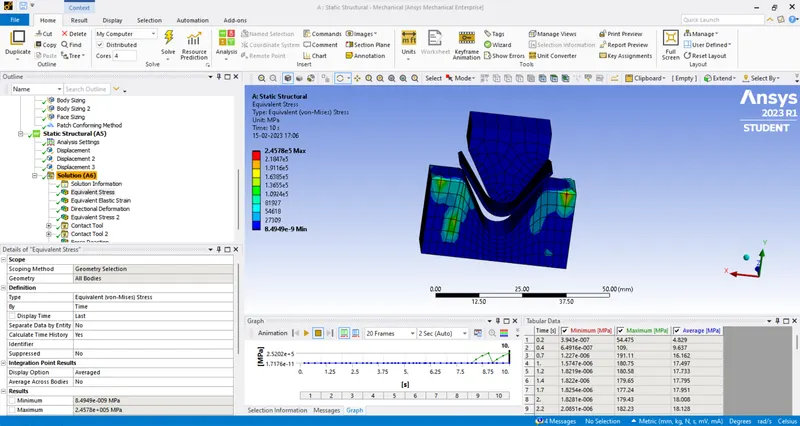
3:Strain
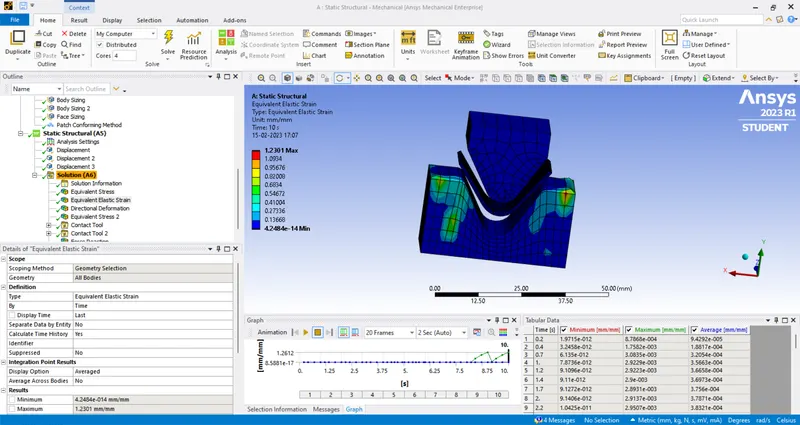
4:Stress on the plate
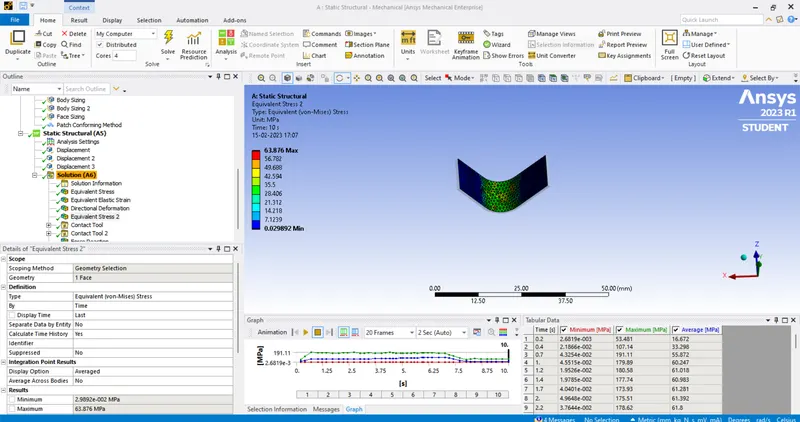
5:Force Reaction
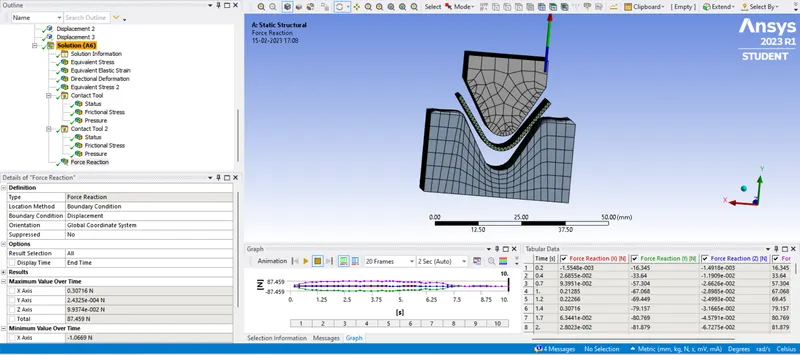
Case 1:Aluminium Alloy 1199( mentioned in the course video), Copper Alloy NL, and Magnesium Alloy NL. Find out the Equivalent stress, Equivalent elastic strain, and Total Deformation in the Y direction and compare the results for the three materials.

On Comparing the results we can see Copper Alloy has the highest deformation and magnesium has the least deformation whereas Aluminum has the highest strain and stress whereas magnesium has the lowest strain and stress
Case 2:With the material as Aluminium Alloy, change the friction coefficient to 0.19 and run the analysis as mentioned in Case 1. Compare the results with that in case 1.
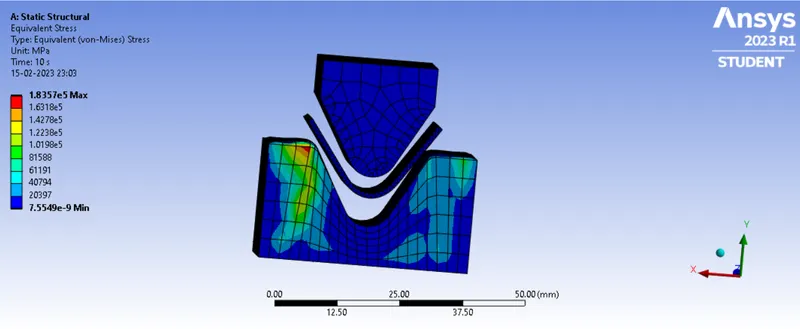
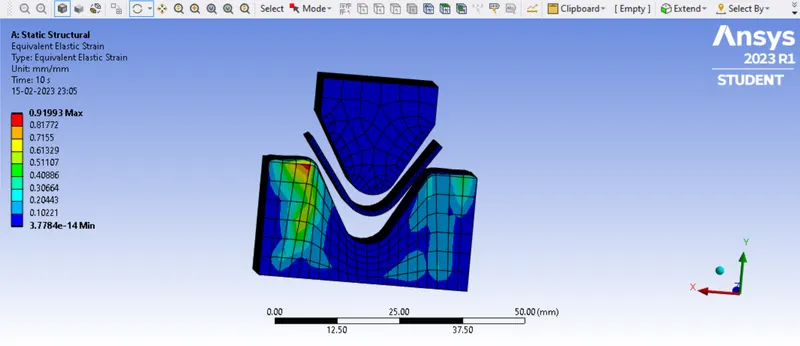
The result obtained by giving Frictional efficiency as 0.19
1:Stress
2:Strain
3:Deformation
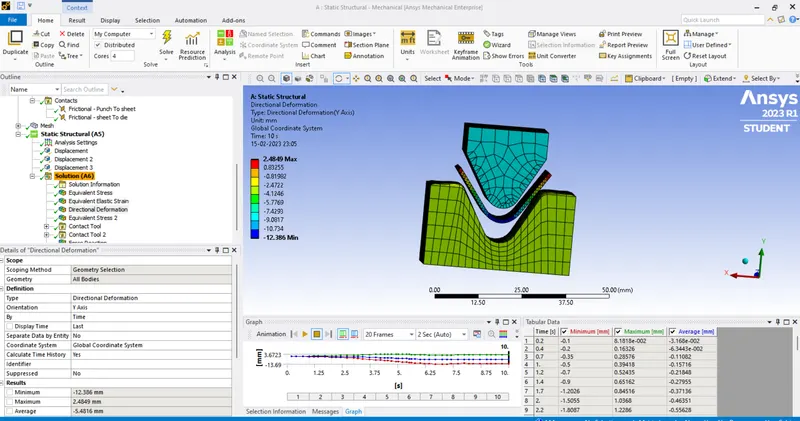
By increasing the coefficient of friction the stress and strain values can be decreased
Case3:Refine the mesh on the plate such that it doesn't cross the academic limit. With Aluminium alloy as material, run the analysis as in Case 1 and compare the results.
On further refining, the mesh within the academic version limits Stress and strain and deformation were almost similar when compared to case1
link for the Animation files:https://drive.google.com/drive/folders/1SJuSZx4lL51UeB6aJPtVduZKZW5n3my8?usp=share_link