Week 3 Sheet metal Bending challenge
Sheet metal bending
Objective:
Stimulating sheet metal bending with three different materials of aluminum alloy 1199, copper alloy nl, magnesium alloy nl. and to find out equivalent stress, directional deformation, equivalent strain.
Procedure:
assigning the material properties for the given component and updating using mechanical module.
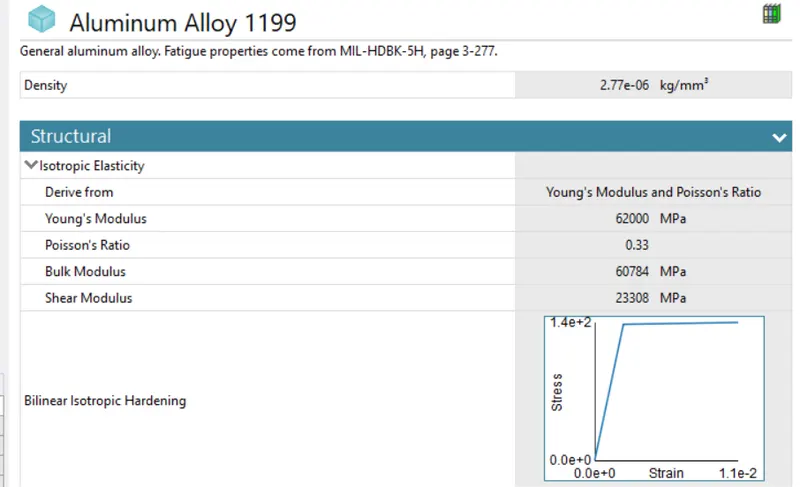
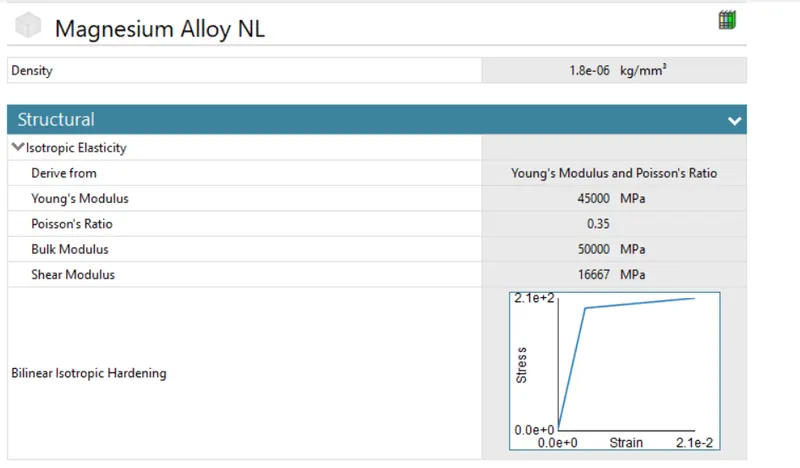
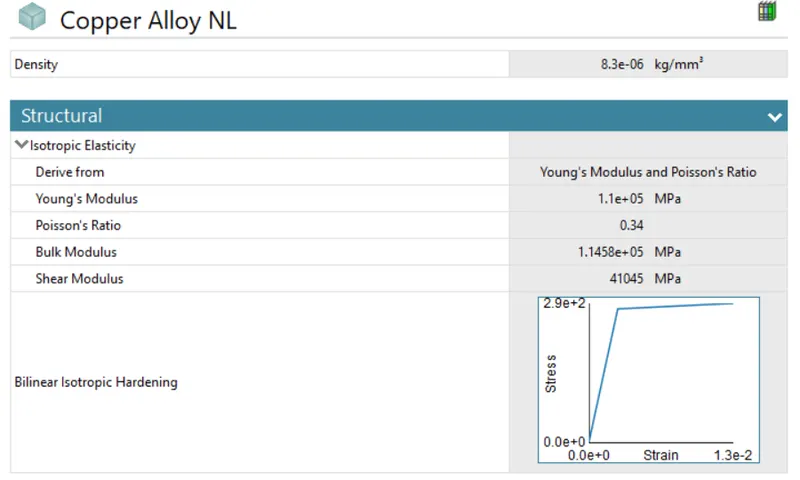
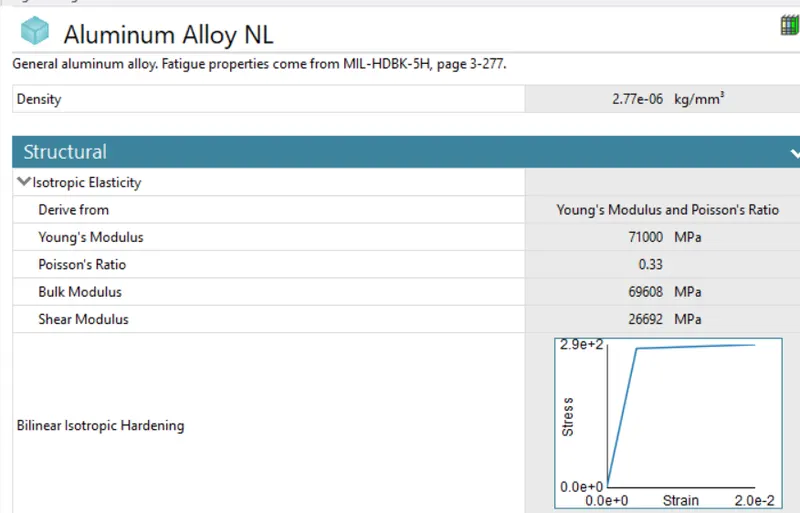
now we have to assign frictional contacts between punch and sheet and also sheet and die.
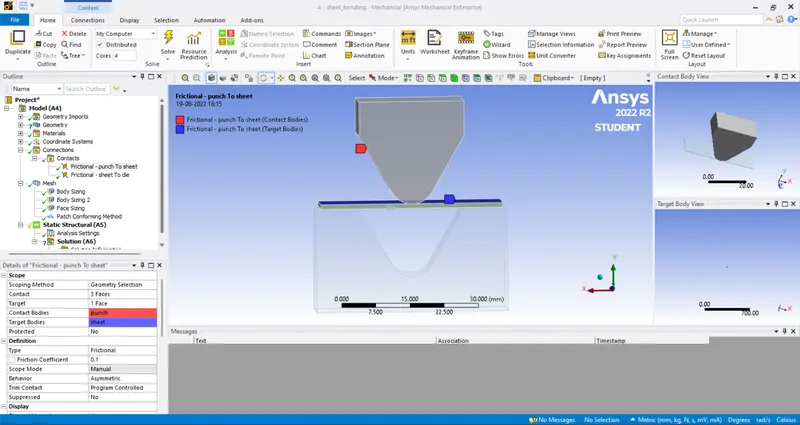
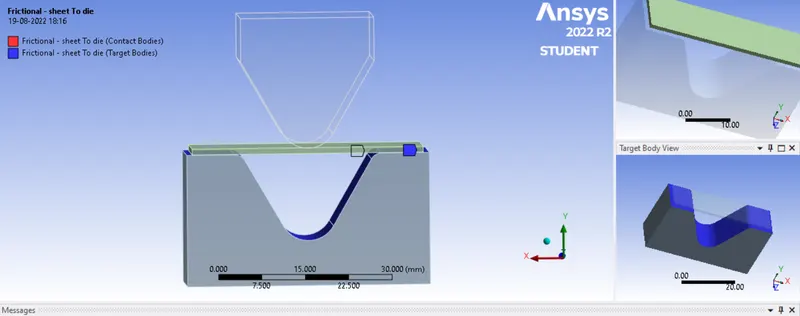
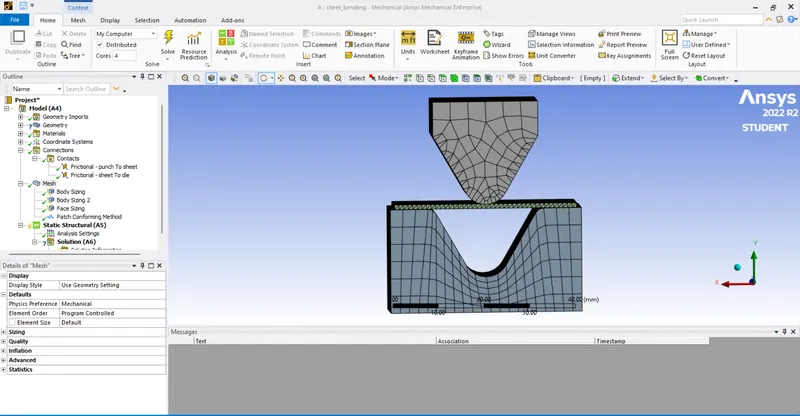
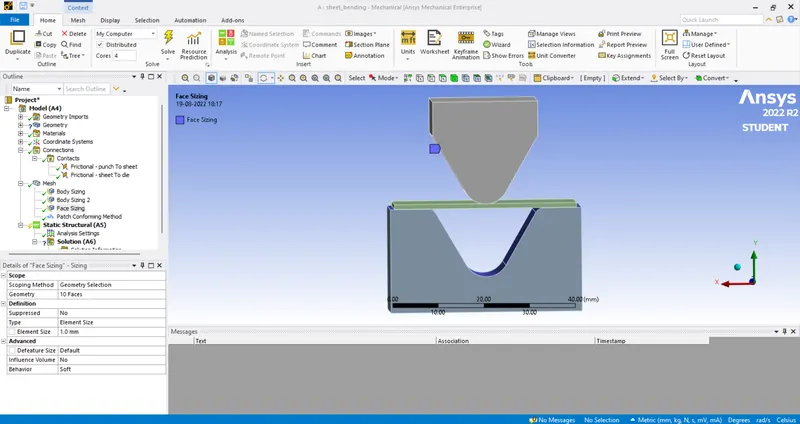
then we have to perform a mesh using body sizing.
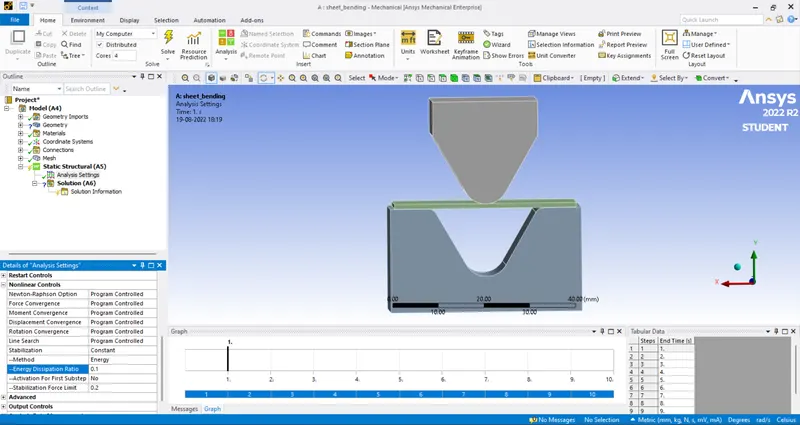
in analysis settings the number of steps we have to perform is 10 with large deflection on
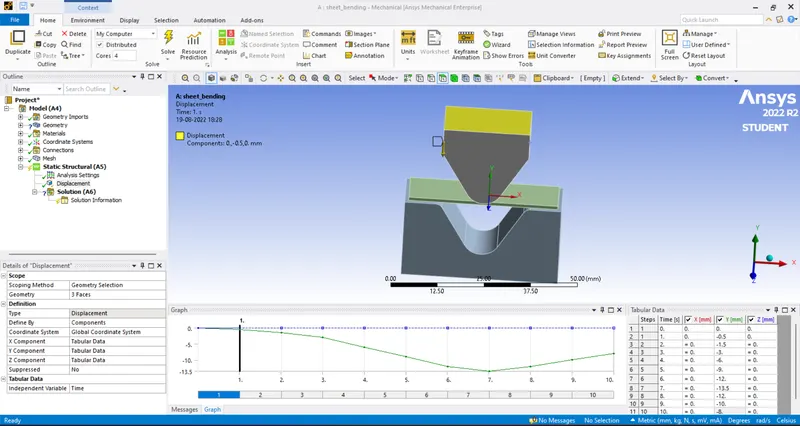
We have to give a displacement load for the punch which should be acting downwards
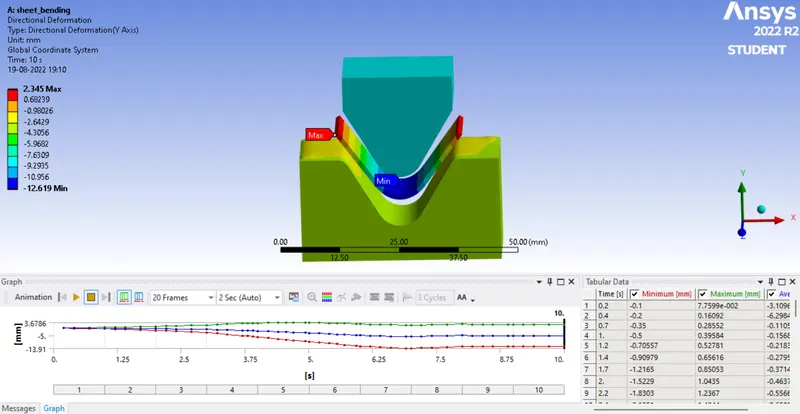
Directional deformation for aluminum alloy 1199
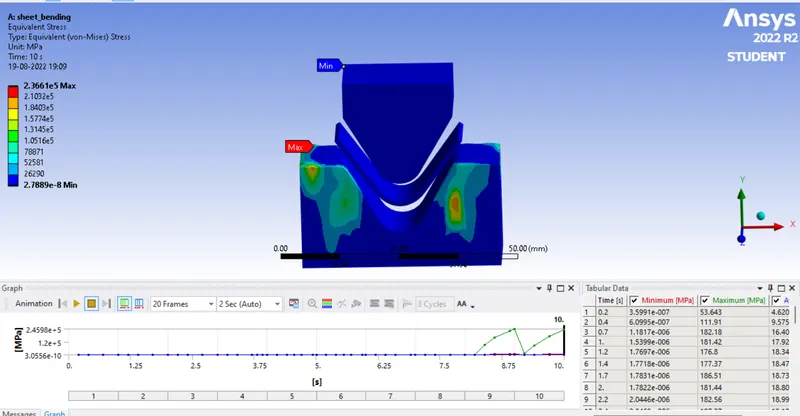
Equivalent stress for aluminum alloy 1199
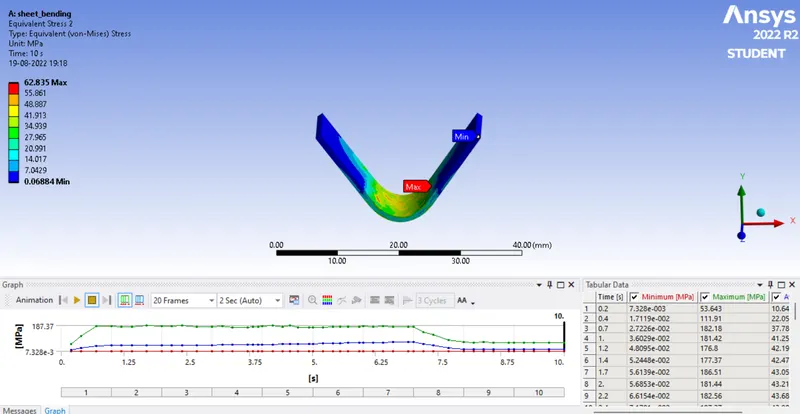
Equivalent stress on aluminum alloy 1199 sheet metal
Equivalent strain for aluminum alloy 1199
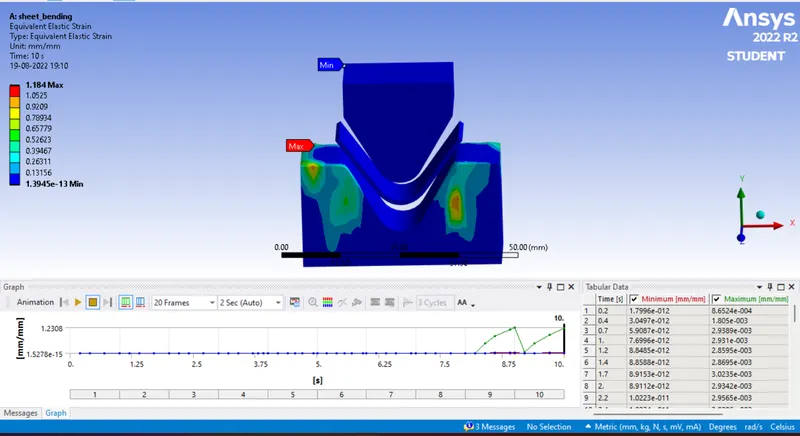
Directional deformation for copper alloy NL
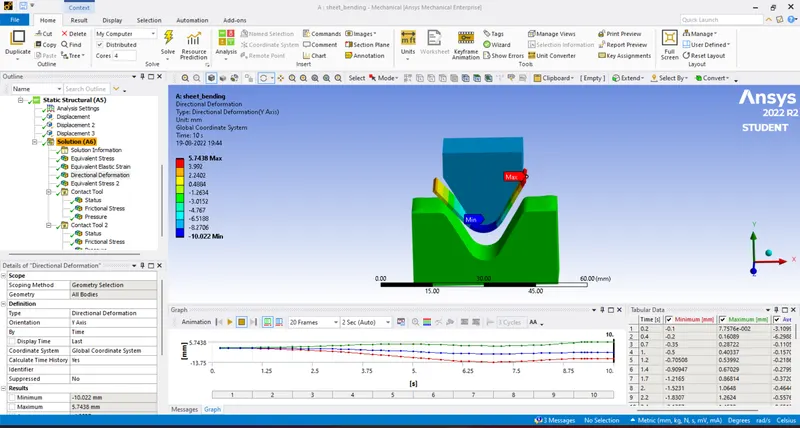
equivalent stress for copper alloy NL
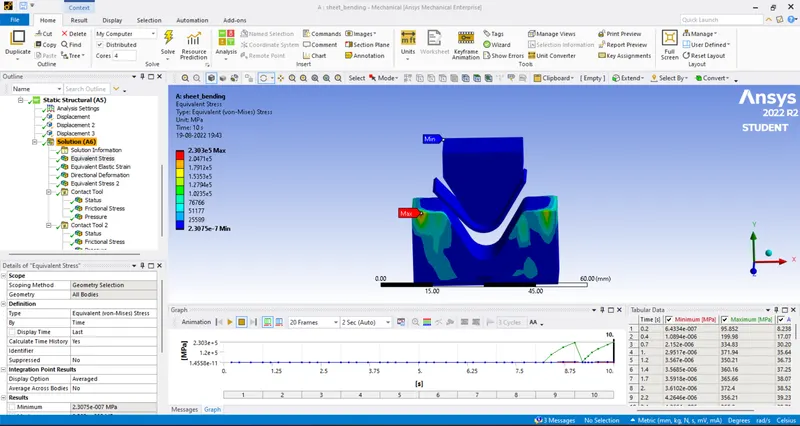
equivalent stress on copper alloy NL sheet metal
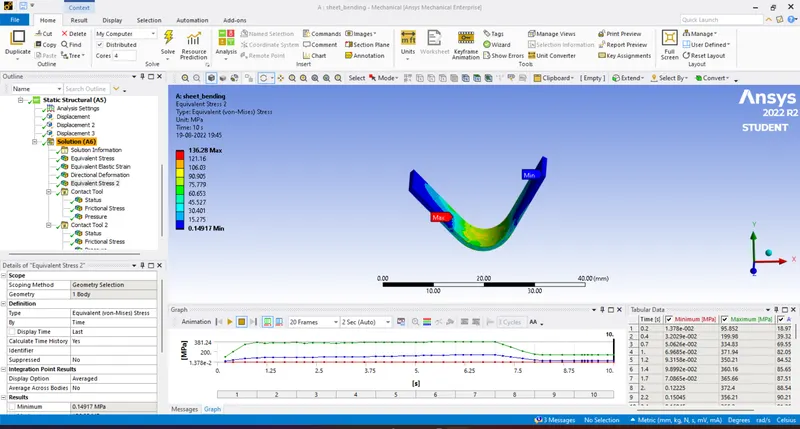
Equivalent strain for copper alloy NL
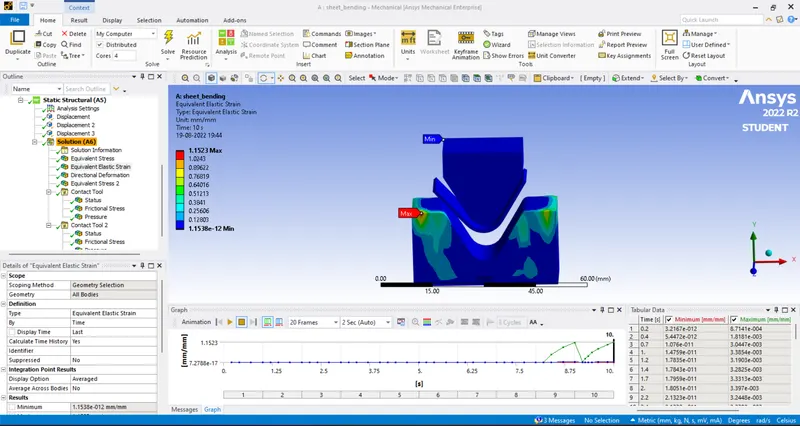
Directional deformation for magnesium alloy NL
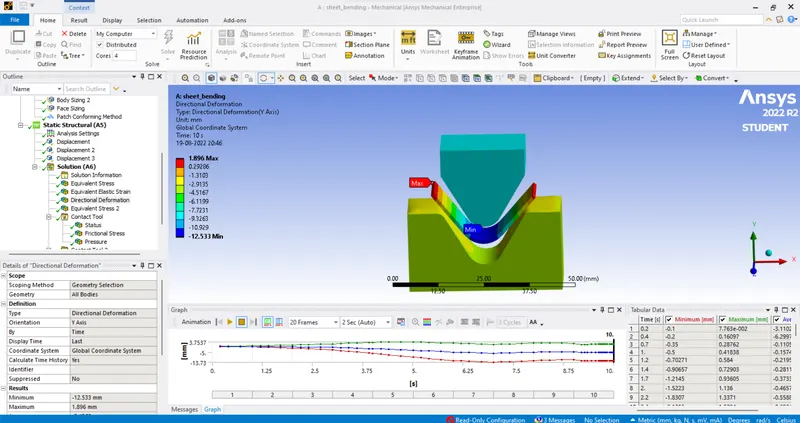
equivalent stress for magnesium alloy NL
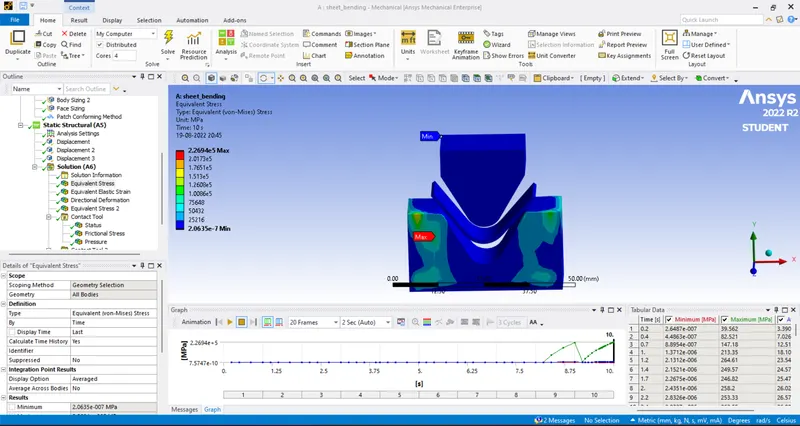
equivalent stress on magnesium alloy NL sheet metal
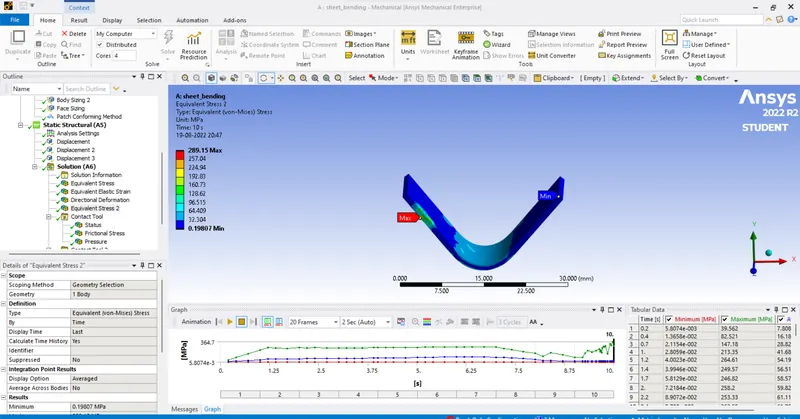
equivalent strain for magnesium alloy NL
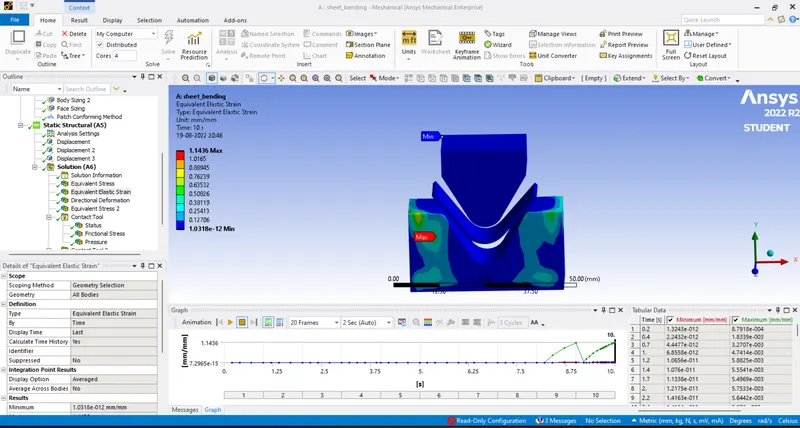
Results for case 1:
|
Directional deformation |
equivalent stress |
equivalent elastic strain |
|
|
Aluminum alloy 1199 |
2.345 |
2.3661e5 |
1.184 |
|
copper alloy NL |
5.7438 |
2.303e5 |
1.1523 |
|
Magnesium alloy NL |
1.896 |
2.2694e5 |
1.1436 |
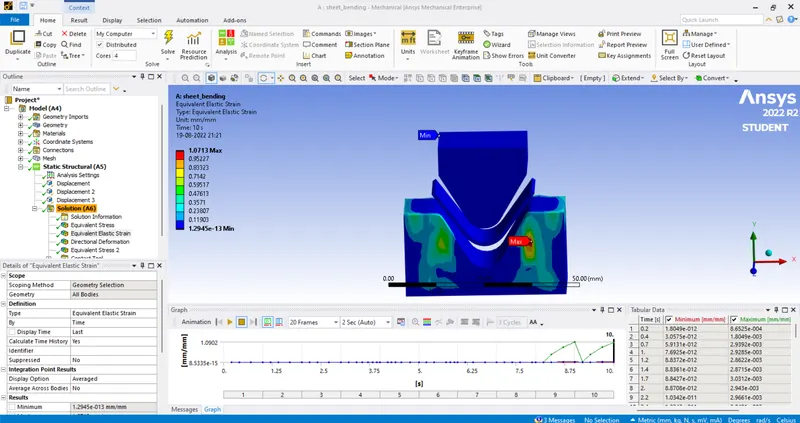
For case 2 with the coefficient of friction is 0.19 and the material is aluminum alloy 1199
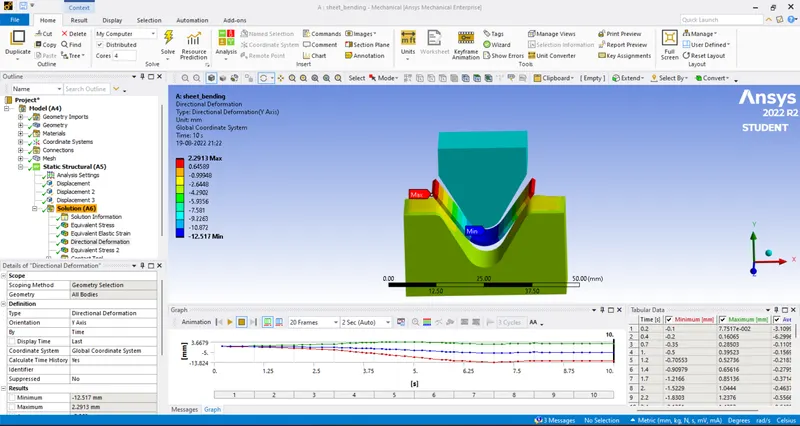
Directional deformation for aluminum alloy 1199 with COF 0.19
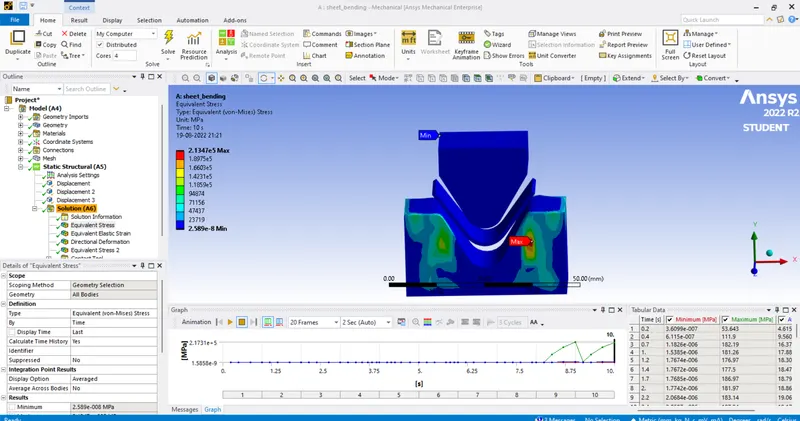
Equivalent stress for aluminum alloy 1199 with COF 0.19
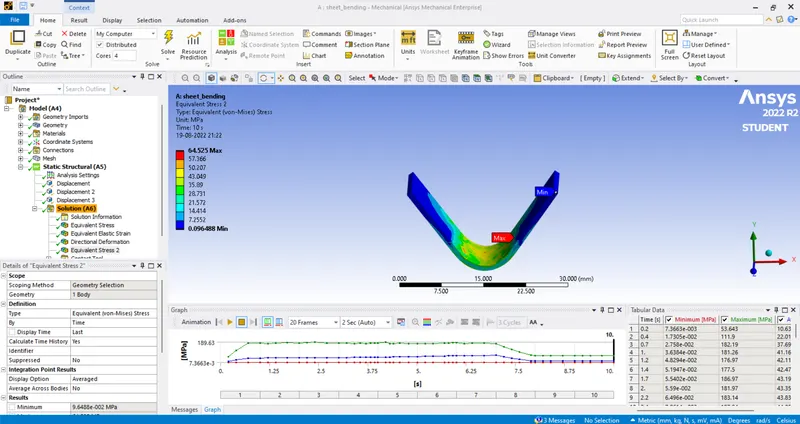
Equivalent stress on aluminum alloy 1199 sheet metal with COF 0.19
Equivalent strain for aluminum alloy 1199 with COF 0.19
|
Materials |
Directional deformation |
equivalent stress |
equivalent strain |
|
Aluminum alloy 1199 with COF (0.1) |
2.345 |
2.3661e5 |
1.184 |
|
Aluminum alloy 1199 with COF (0.19) |
2.2913 |
2.1347e5 |
1.0173 |
Case 3 refining mesh size with aluminum alloy material
Conclusion:
In case 1 the maximum equivalent is developed in copper alloy is minimum and with magnesium alloy as maximum. but maximum equivalent strain is more in magnesium alloy and minimum in copper alloy.
In case 2 after increasing or coefficient of friction the maximum equivalent stress and maximum equivalent strain both increases