Week 3 - Pitot tube
Aim: To perform simulation on the pitot static tube using Ansys fluent.
Objective:
- To do a literature review of pitot-static tube. Also establish a relationship between Total (stagnation) pressure and static pressure.
- Calculate the total and static pressures and find the error in percentage for velocity.
Introduction:
Pitot tubes measure the fluid flow velocity,It is widely used to determine the airspeed of aircraft,the water speed of boats and the flow velocity of liquids, air, and gases in industry.Pitot tube actually measure the pressure that is used in calculating the velocity of the fluid or body.
Types of Pitot tubes :
- Simple pitot tube : Measure the total pressure of the incoming fluid
- Static tube : Measure the static pressure of the fluid
- Pitot static tube
- Pitot static Tube:
- Measure the total and static pressure of the incoming fluid.
- It is used in aviation to determine an aircraft's airspeed,Mach number, altitude and altitude trend .
- The construction of the pitot static tube is the combination feature of the other two pitot tube.
- It has two opening one opening faces the flow directly to sence the Total (stagnation) pressure,and the other opening is perpendicular to the flow to measure the static pressure.
The relation between the static pressure ,total pressure and the velocity of the fluid is as follows :
`V=sqrt(2 ((P_(Total)-P_(Static))/rho)`
Where :
V= velocity of the body
`rho`=Density of fluid
`P_(Total)`= Total pressure of the fluid
`P_(static)`= Static pressure of the fluid
Procedure :
- Import the given mesh model in ansys fluent:
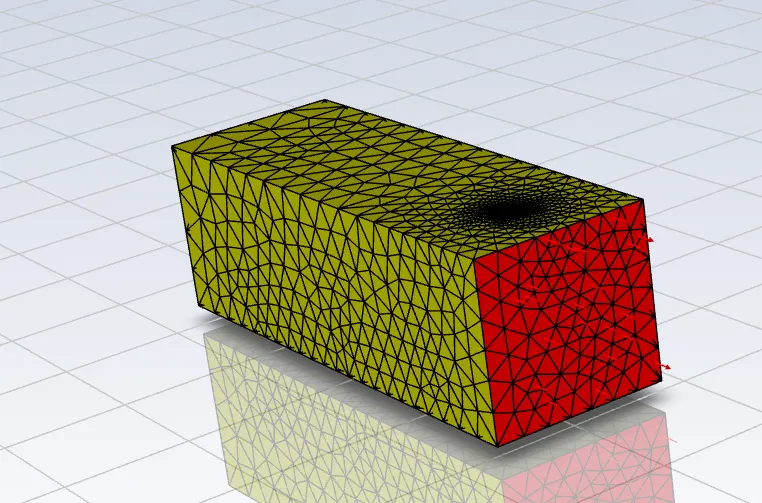
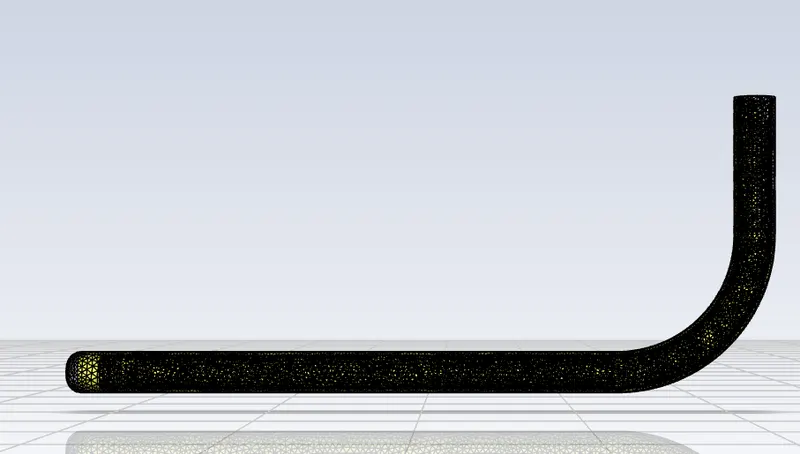
- Set up and solution
- Solver Type:Pressure Based
- Solver Time : Steady
- Viscous model : Laminar
- Material : Air and is assumed to be incompressible :
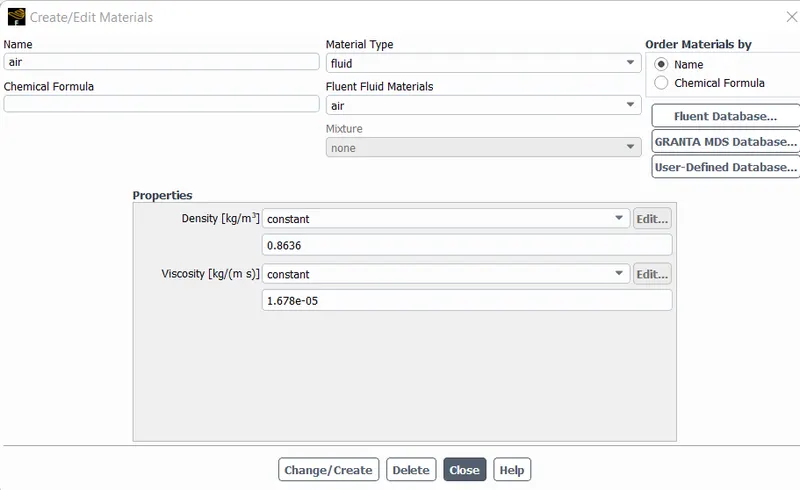
- Operating pressure : 0 Pa
- Boundary condition:
- Inlet : Velocity inlet
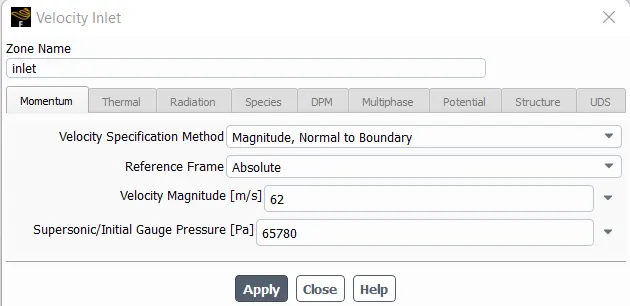
- Outlet:pressure outlet
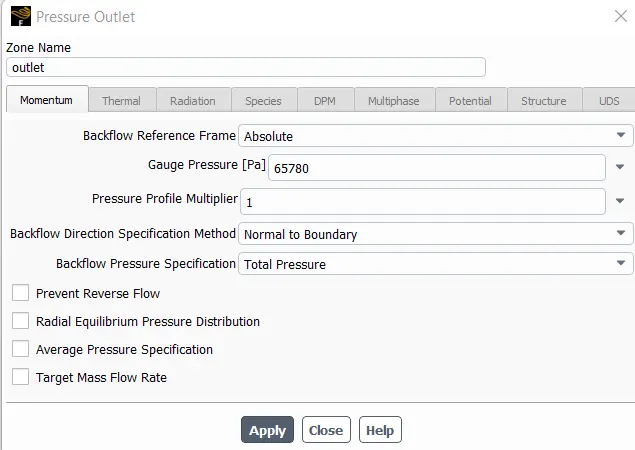
- Solution initialization: Hybrid ( we can also follow the FMG initialization)
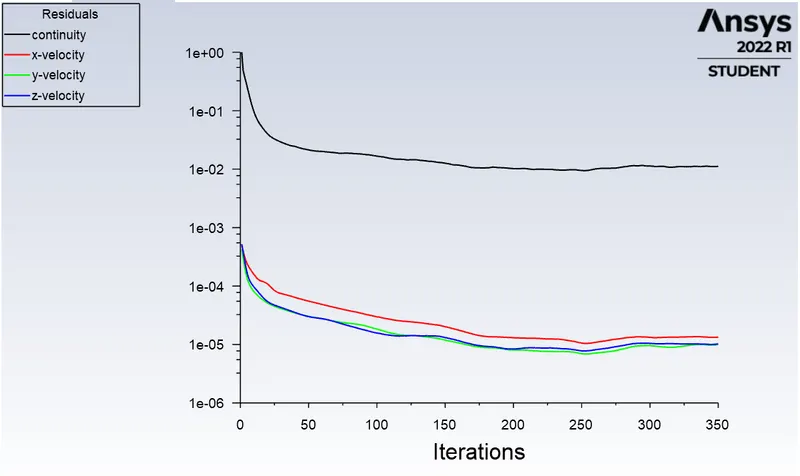
- Number of iterations : 350
- Results : Case 1) V =62 m/sec ,Gauge pressure =65780 Pa
- Residual plot :
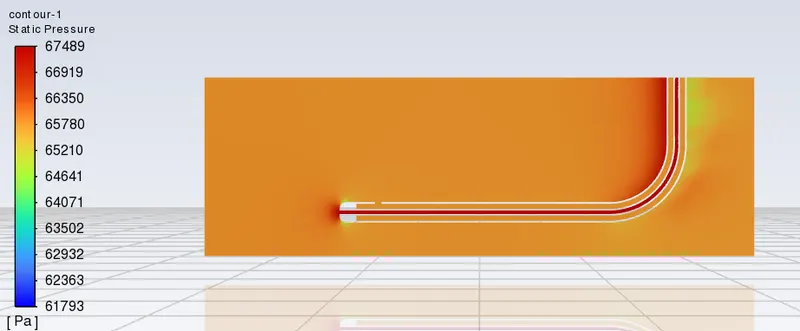
- Static pressure contour :
- Total Pressure contour :
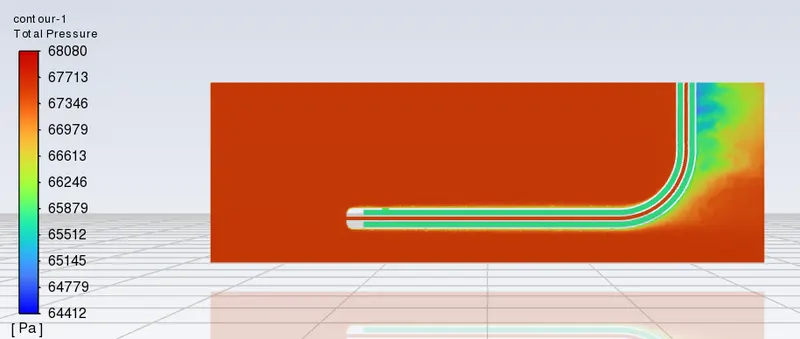
Now from surface integral option we get total and static pressure as ;
`P_(Total` =67452.196
`P_(Static)` = 65776.21
We substitute this values in equation below to get velocity :
`V=sqrt(2 ((P_(Total)-P_(Static))/rho)`
`V=sqrt(2 ((67452.196-65776.21)/0.8636)`
V =62.30 m/sec
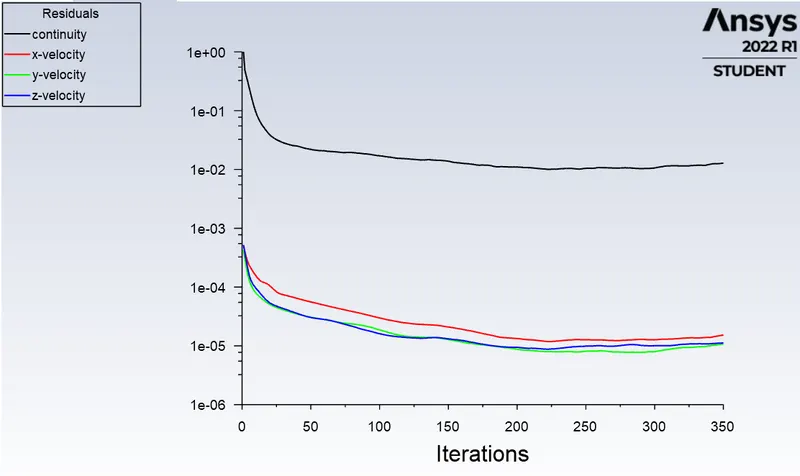
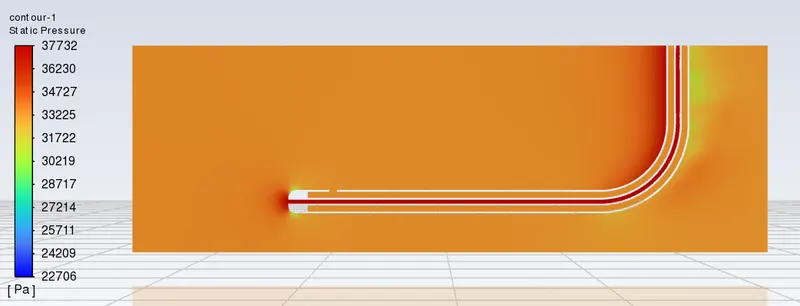
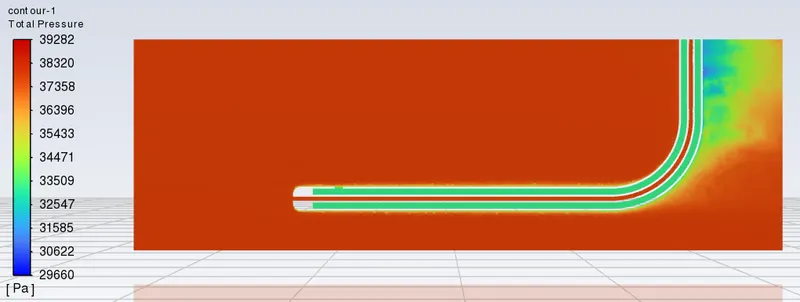
Results : Case 2) V = 100 m/sec , Gauge Pressure : 33287 Pa
- Residual Plot :
- Static pressure contour :
- Total pressure contour :
Now from surface integral option we get total and static pressure as ;
`P_(Total)=37607.394`
`P_(Static)=33276.694`
We substitute this values in equation below to get velocity :
`V=sqrt(2 ((P_(Total)-P_(Static))/rho)`
`V=sqrt(2 ((37607.394-33276.694)/0.8636)`
V = 100.1469 m/sec
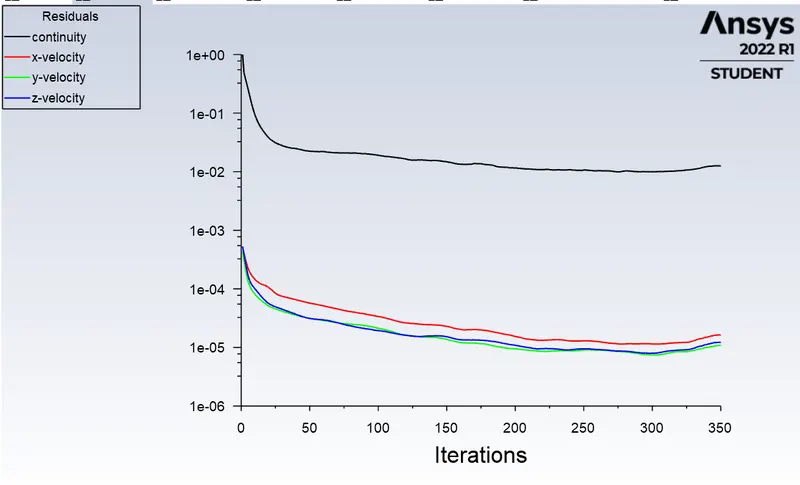
Results : Case 3) V = 240 m/sec , Gauge Pressure : -2817 Pa
- Residual Plot :
- Static pressure contour :
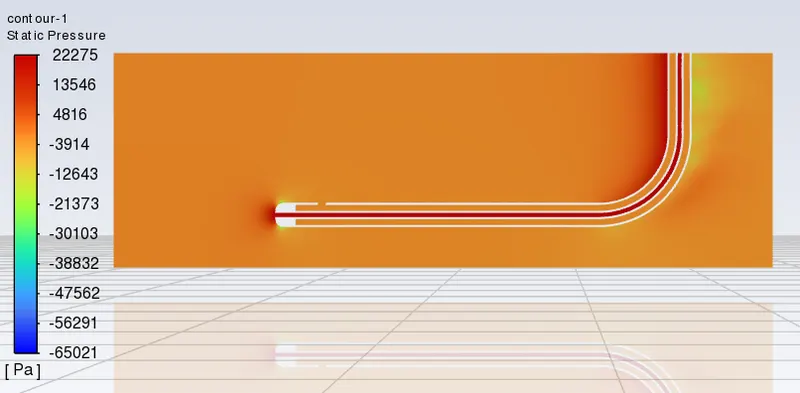
- Total pressure contour :
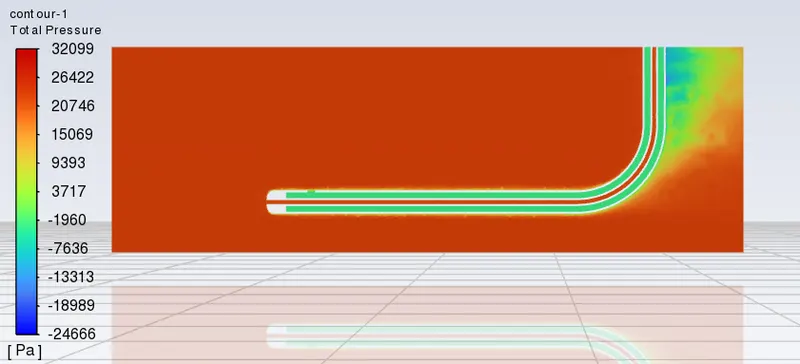
Now from surface integral option we get total and static pressure as ;
`P_(Total)=21389.985`
`P_(Static)=-2909.1786`
We substitute this values in equation below to get velocity :
`V=sqrt(2 ((P_(Total)-P_(Static))/rho)`
`V=sqrt(2 ((21389.985+2909.1786)/0.8636)`
V =237.2216 m/sec
Percentage Error :
Case Given Velocity Velocity obtained (simulation) Percentage Error
1 62 62.30 0.4838
2 100 100.1469 0.1469
3 240 237.2216 1.1576
Conclusions:
- The literature review of pitot static tube was done.
- The velocity is measured with the help of total and static pressure .
- The percentage error is very less which is acceptable .