Week 3 - Pitot tube
Aim
1. A pitot static tube geometry is attached below.
a.You are required to do a literature review of pitot-static tube. Also establish a relationship between Total (stagnation) pressure and static pressure
b.You are required to create surfaces and fill it separately for Total pressure port and static pressure port as shown below.
2. For the values of velocity given below calculate the total and static pressures and find the error in percentage for velocity.
|
Velocity(m/s) |
Gauge Pressure (Pa) |
|
240 |
-2817 |
|
100 |
33287 |
|
62 |
65780 |
Introduction
A pitot tube, is a flow measurment device used to measure fluid flow velocity. It is widely used to determine the airspeed of an aircraft,[3] water speed of a boat, and to measure liquid, air and gas flow velocities in certain industrial applications.
The basic pitot tube consists of a tube pointing directly into the fluid flow. As this tube contains fluid, a pressure can be measured; the moving fluid is brought to rest (stagnates) as there is no outlet to allow flow to continue. This pressure is the stagnation pressure of the fluid, also known as the total pressure or (particularly in aviation) the pitot pressure.
The measured stagnation pressure cannot itself be used to determine the fluid flow velocity (airspeed in aviation). However, Bernoulli's equation states:
- Stagnation pressure = static pressure + dynamic pressure
Which can also be written

Solving that for flow velocity gives

where
 is the flow velocity;
 is the stagnation or total pressure;
 is the static pressure;
 is the fluid density.
Mesh
Setup
- Viscous model set to laminar
- Air density is changed to 0.86 and the dynamic viscosity to 1.678e-5
- Coupled model is selected
- Hybrid initialisation is done and given 700 iterations to start solving
Outputs
Case 1
Inlet velocity = 240 m/s
Guage pressure = -2817 pa
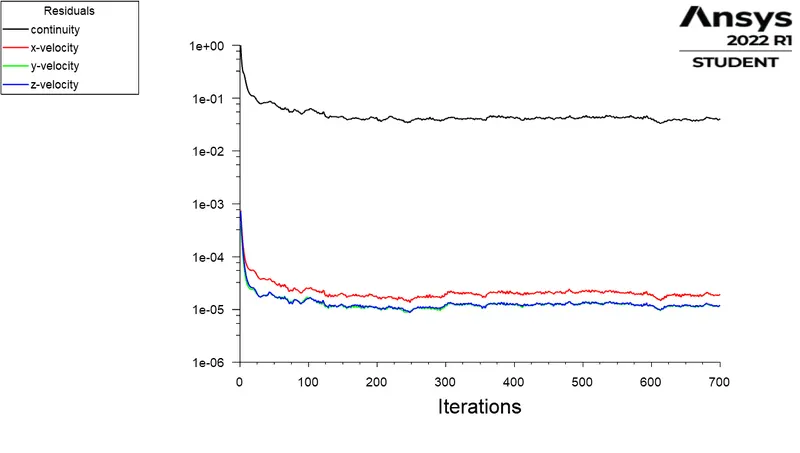
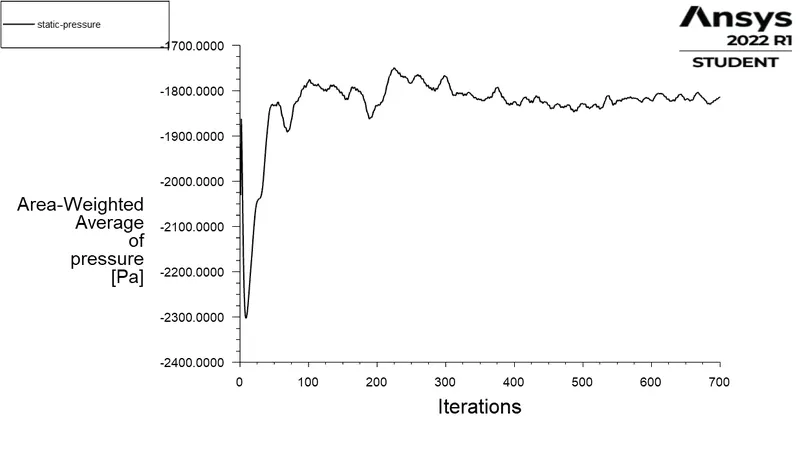
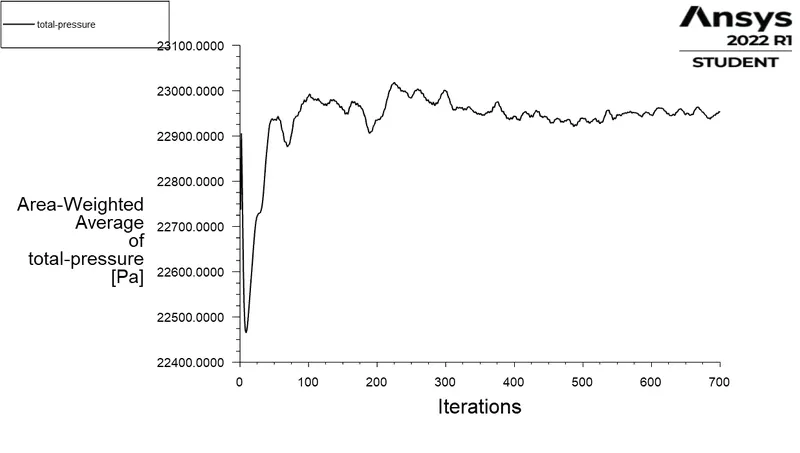
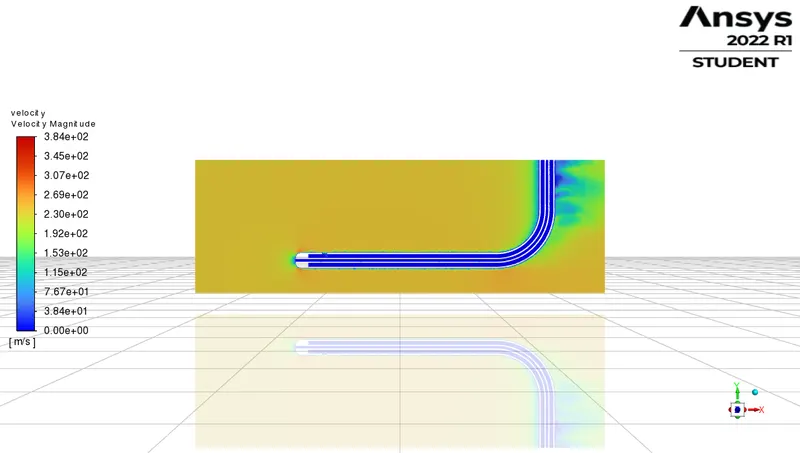

Calculation
Pt = 22952.189 pa
Ps = -1815.7962 pa
Hence U = `((2(22952.189-(-1815.7962)))/0.86)^0.5`
U = 239.9999 m/s
Case 2
Inlet velocity = 100 m/s
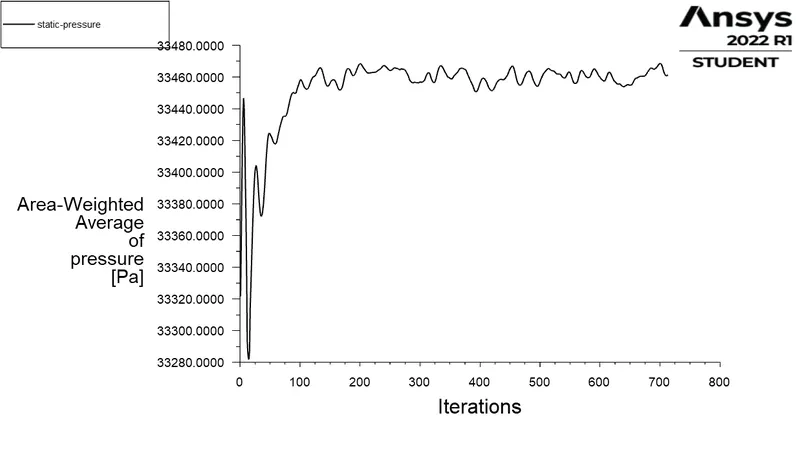
Guage pressure = 33287 pa
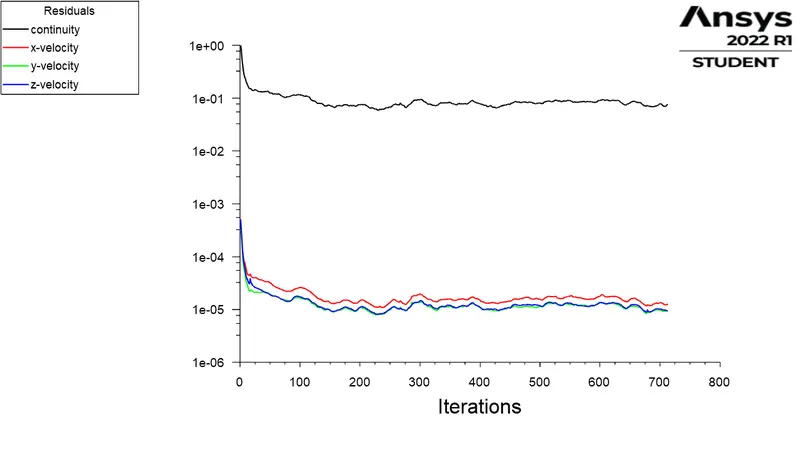
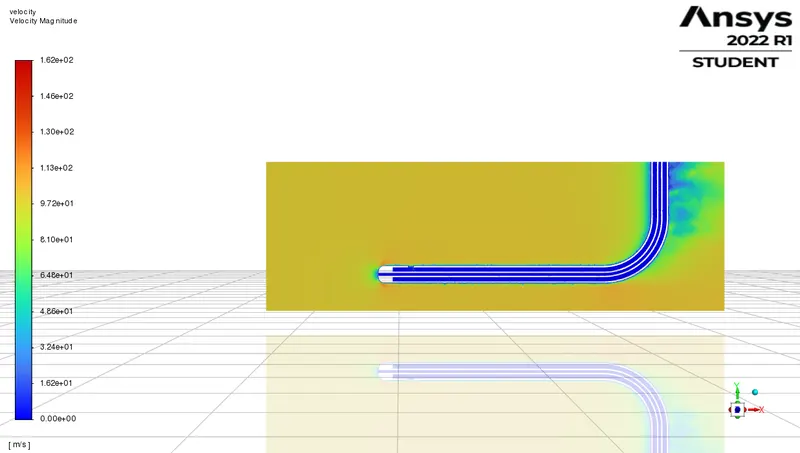

Calculation
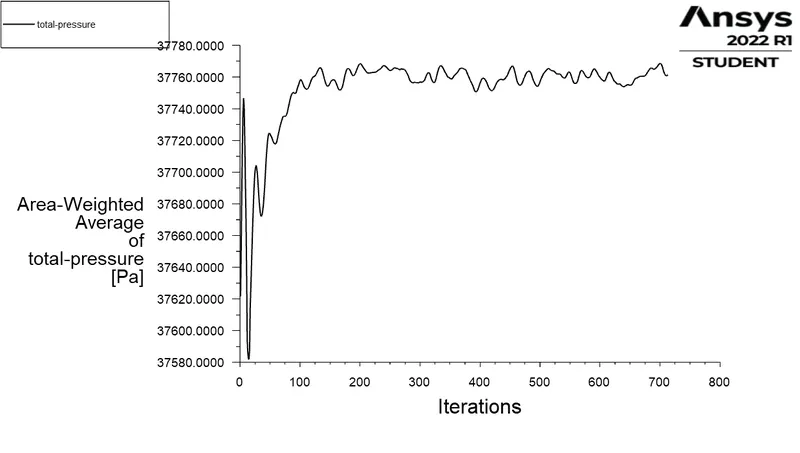
Pt = 33461.373 pa
Ps = 37761.37 pa
Hence U = `((2(33461.373-(37761.37)))/0.86)^0.5`
U = 100.00430 m/s
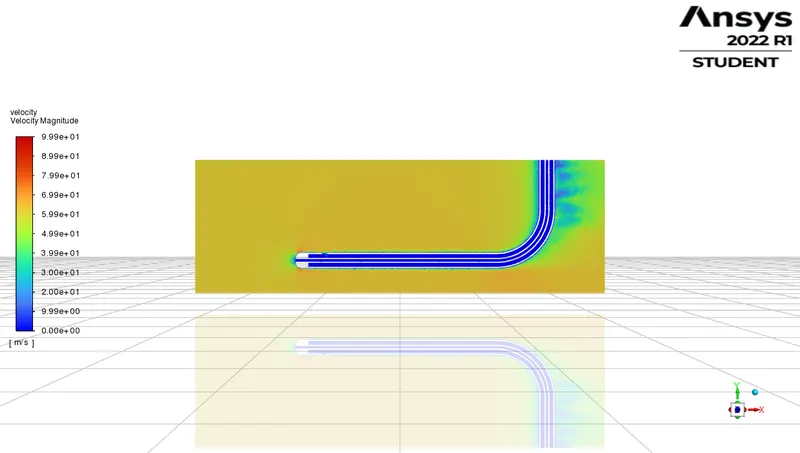
Case 3
Inlet velocity = 62 m/s
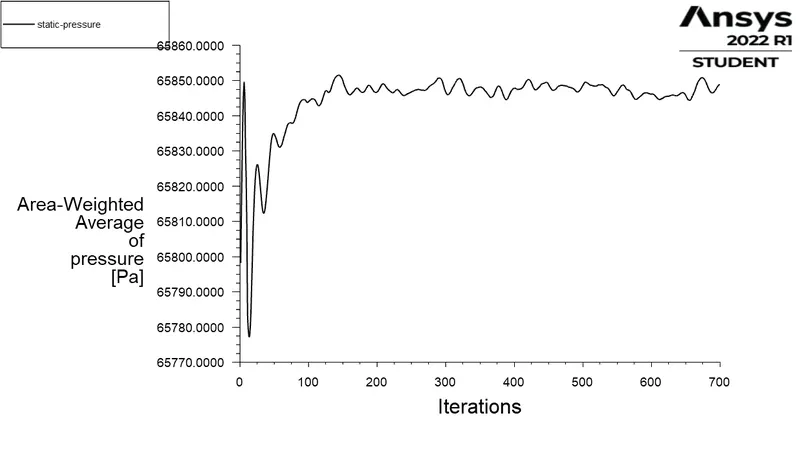
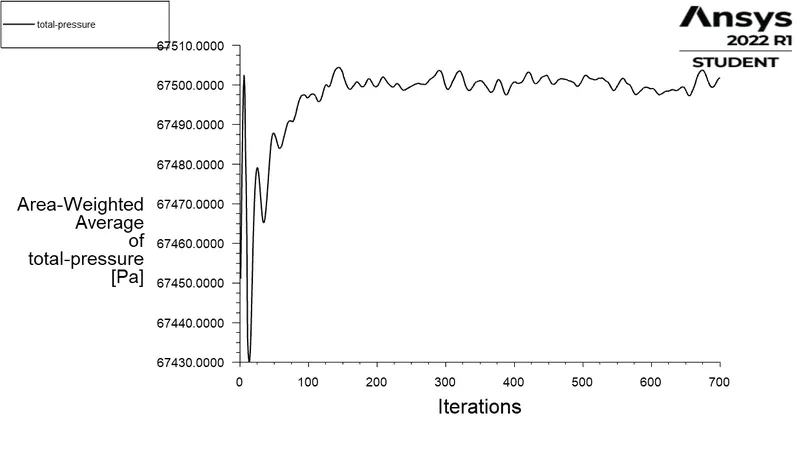
Guage pressure = 65780 pa
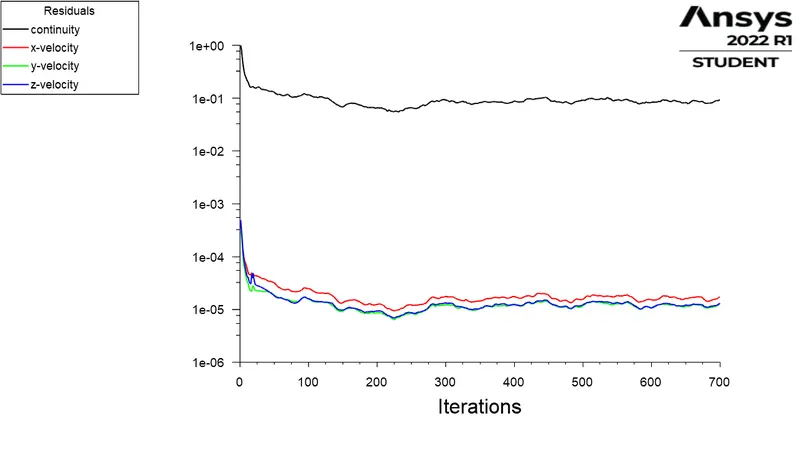

Calculation
Pt = 67501.748 pa
Ps = 65848.829 pa
Hence U = `((2(67501.748-(65848.829)))/0.86)^0.5`
U = 61.99998m/s
Discussion
| Cases | Velocity at inlet (m/s) | Calculated velocity | Percentage of error |
| 1 | 240 | 239.9999 | 4.1e-5 % |
| 2 | 100 | 100.00430 | 4.3e-3 % |
| 3 | 62 | 61.99998 | 2e-5% |
- Since the deviation of calculated value of velocity is small the results can be validated
Conclusion
- Literature review on pitot tube is done
- established the relationship between Total (stagnation) pressure and static pressure
- Velocity is calculated using total pressure and static pressure and percentage of error is calulated