Week 3: Flow over a backward facing step
Back Ward facing step: It is 2D flow analysis of fluid flow in pipe with sudden enlargement. By this we can analysis that reconnect distance and recirculation region.
Here we analyze for 3 different mash size.
- dx = dy = dz =2e-3m
- dx = dy = dz =1.5e-3m
- dx = dy = dz =1.0e-3m (If this is too much for your PC, use 1.2e-3m)
Loses due to sudden enlargement:
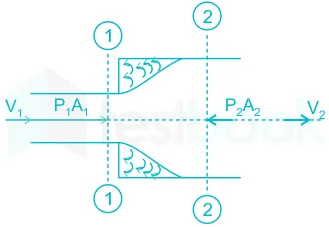
If the pipe diameter increases suddenly then there is a reverse eddy flow create in the sudden enlargement aria for that energy loss in the pipe flow.
The streamline take a typical diverging pattern. this creates pockets of turbulent eddies in the corners resulting in dissipation of mechanical energy into intermolecular energy.
Mainly the fluid flow in the direction of higher pressure gradient to lower pressure gradient that is called favorable pressure gradient. here as per the above fig. section 1 have pressure p1 and v1 and section 2 have pressure p2 and v2.
If we consider area of sudden enlarged diameter, the fluid flowing through the smaller dimeter pipe have high kinetic energy so that fluid flow with divergent manner and a low pressure region created side of it. then at section -2 there is higher pressure then the low pressure region created by sudden enlargement so due to favorable pressure gradient turbulent eddy fluid flow happen in that region.
Now apply the momentum theory apply in the control volume.

i.e. 
From Bernoullis equation
i.e. 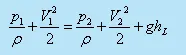
i.e.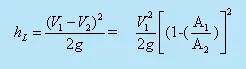
Backward facing step is a process:
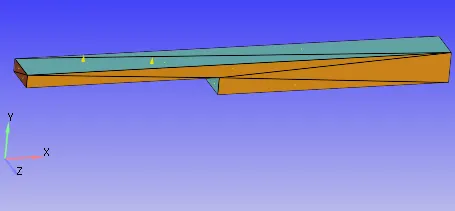
Boundaries:
Set the boundaries:
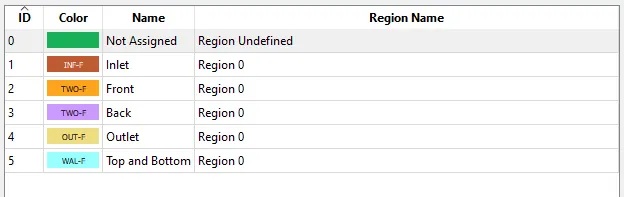
Then inlet pressure is 110325.
outlet pressure is 101325.00 and
Top And bottom is as wall boundaries .
Then Front and back is 2D boundaries.
Region and Initialization:
Then to define the control volume create the region and air is the working fluid and initial pressure is 101325.0 pa.
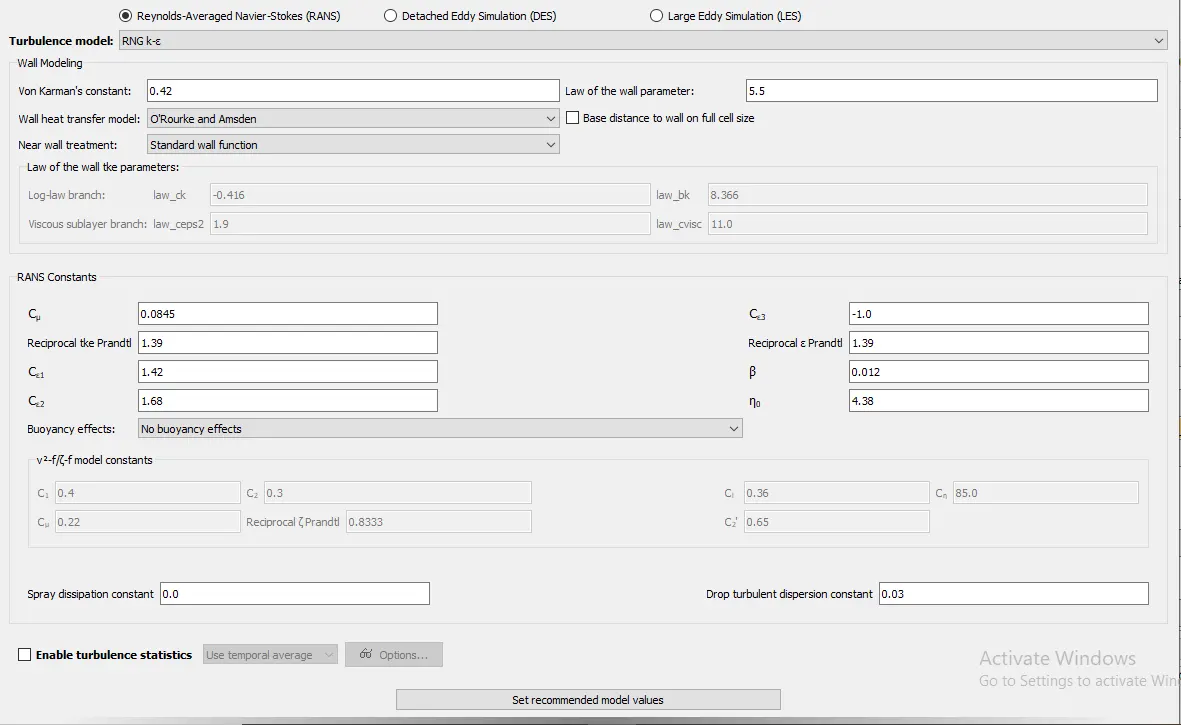
RANS K-epsilon turbulence model use :
Grid Formation:
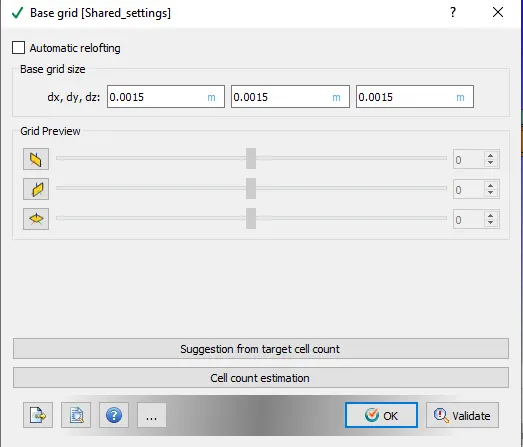
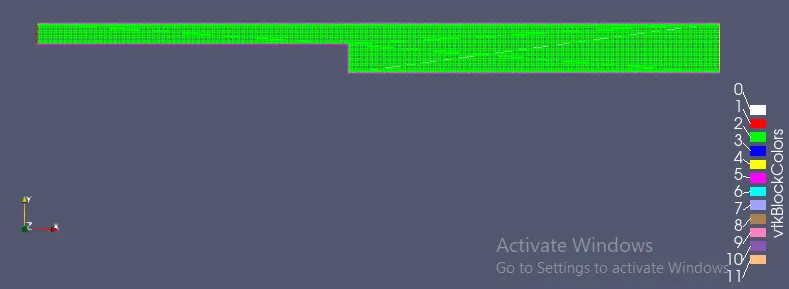
Create Base grid of 0.002 mm and maximum no cell of 500000.
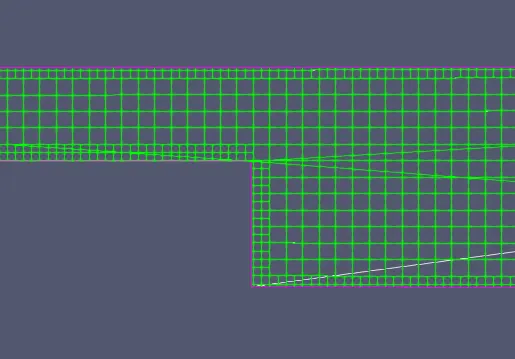
Fixed Embedding
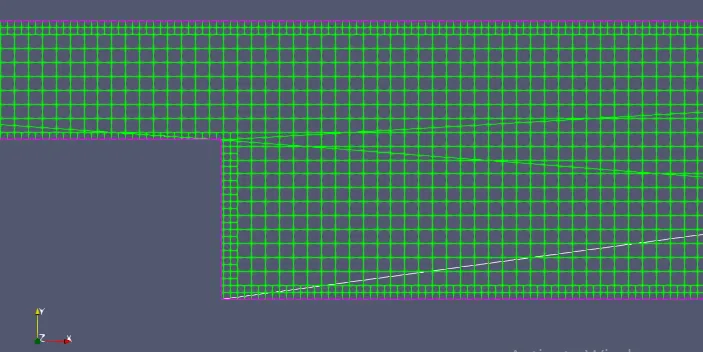
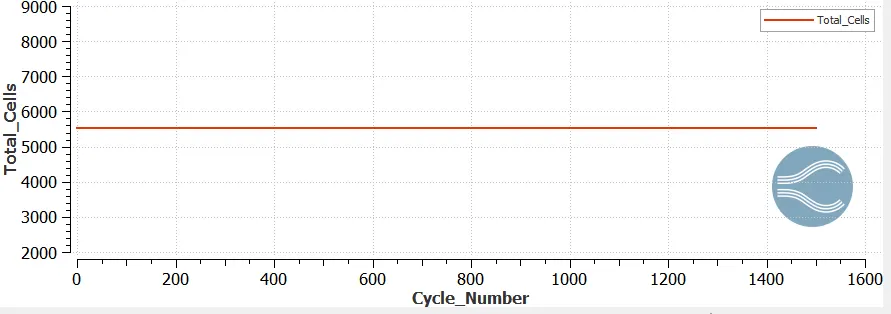
In the fixed emending we create fine mash near the wall and it helps to capture the near wall variables and it help to control the total cell count.
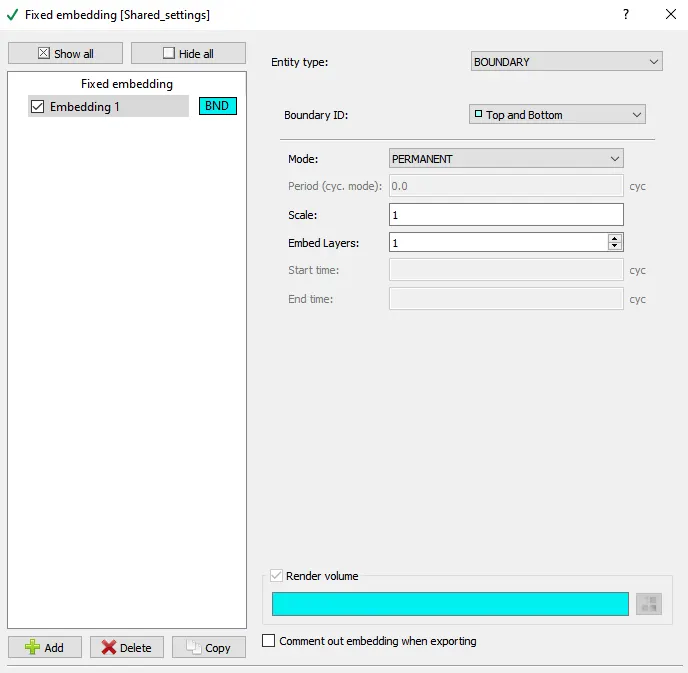
Create a mash near the wall of 0.002 m till 1 layer but in free flow region it create higher mash size.
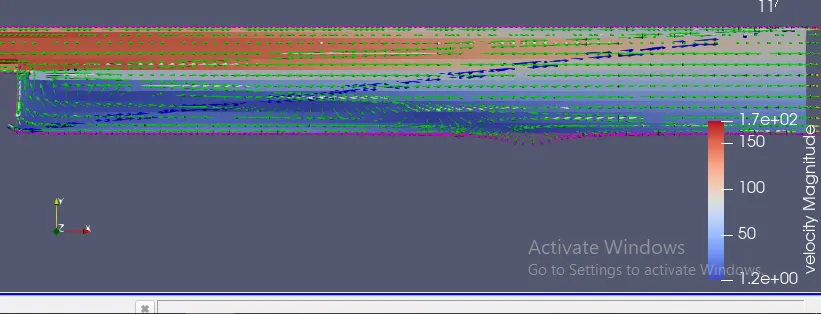
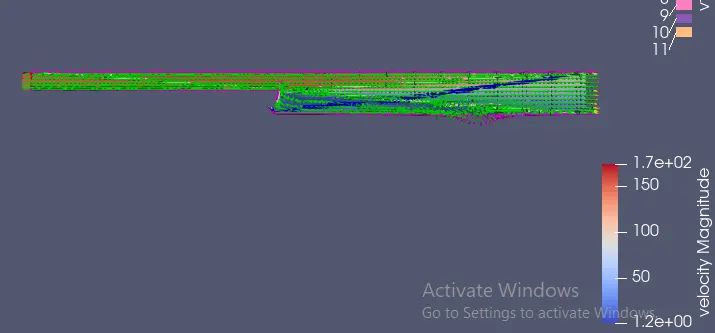
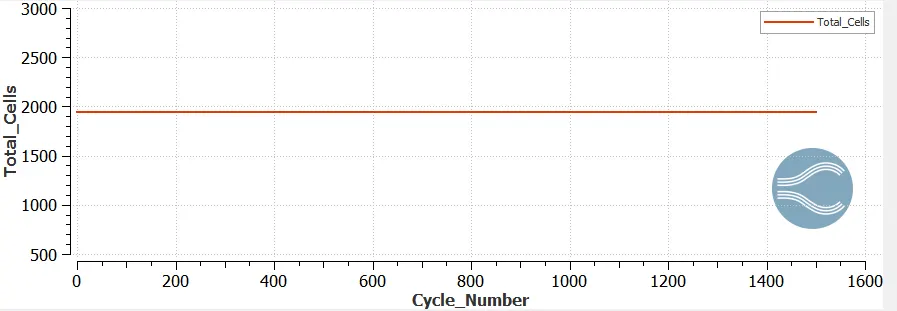
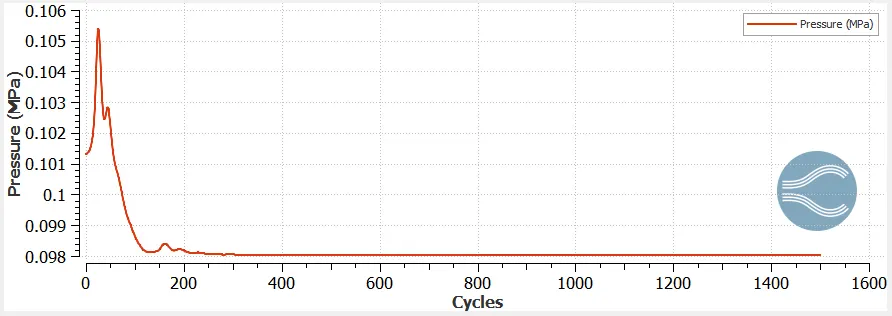
For mash size 0.002:
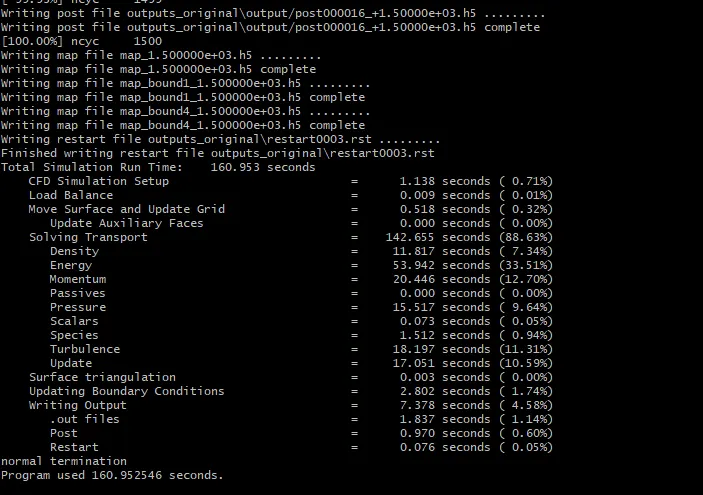
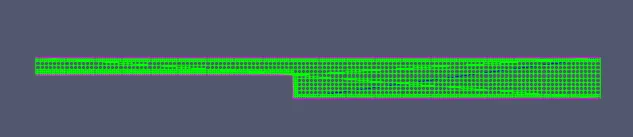
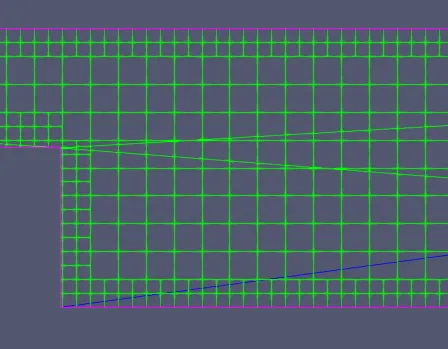
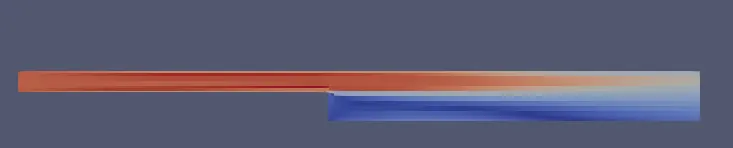
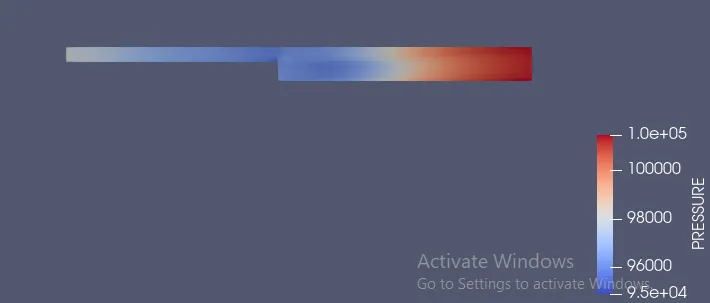
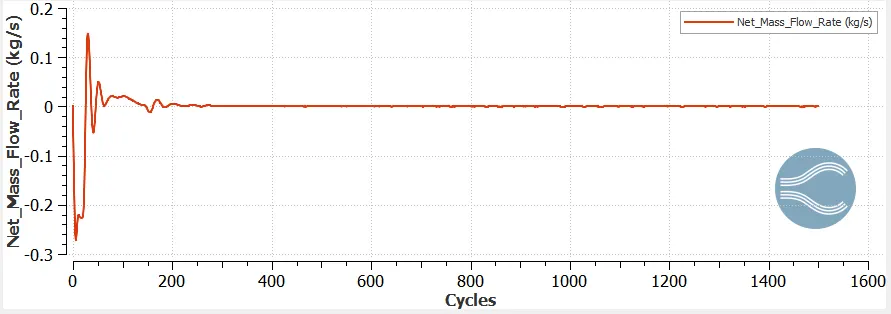
For mash size 0.0015:


For mash size 0.001:
Conclusion:
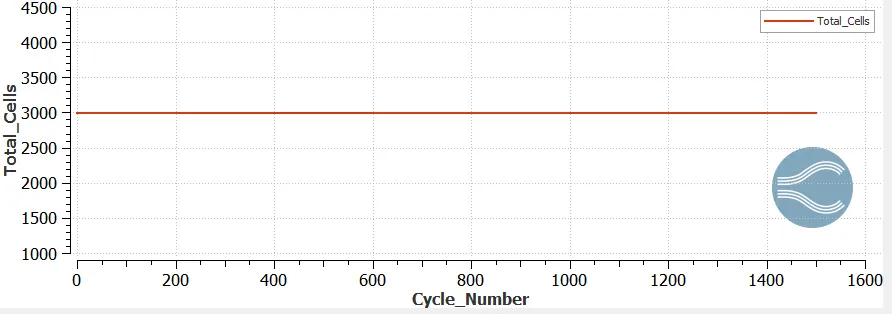
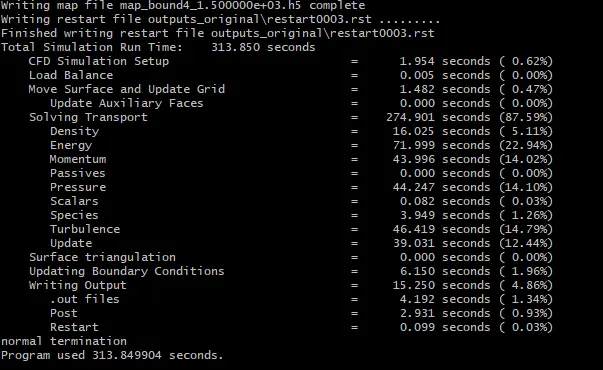
1. As we increase the cell count the overall timing of the processing get increases because the cell count increases usually.
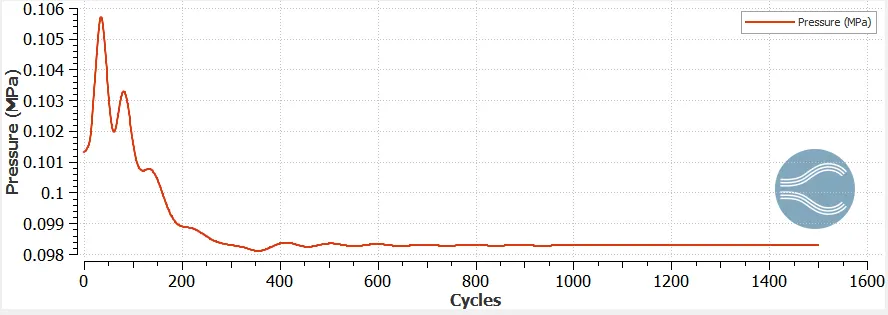
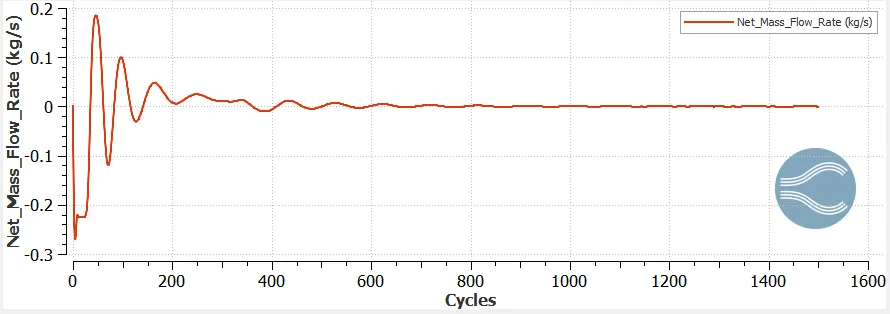
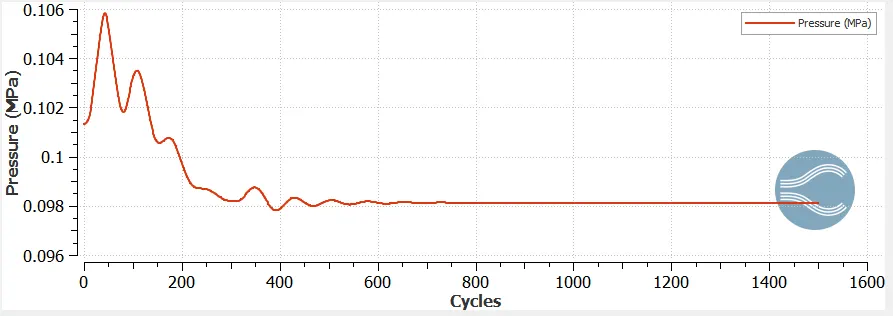
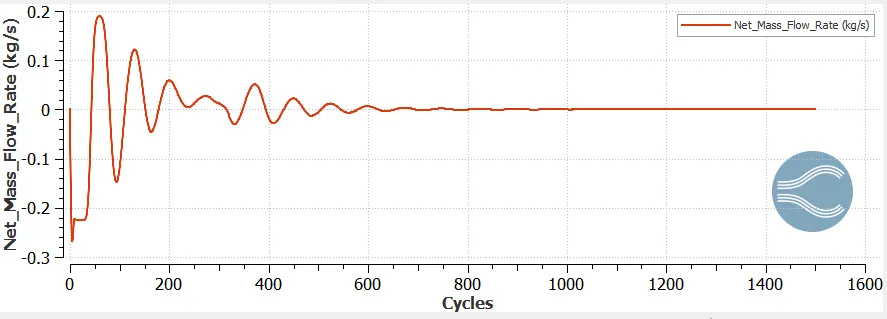
2. As we analyze the pressure and mass flow rate plot the solution of three different mash get stable, because the variable get stable output.
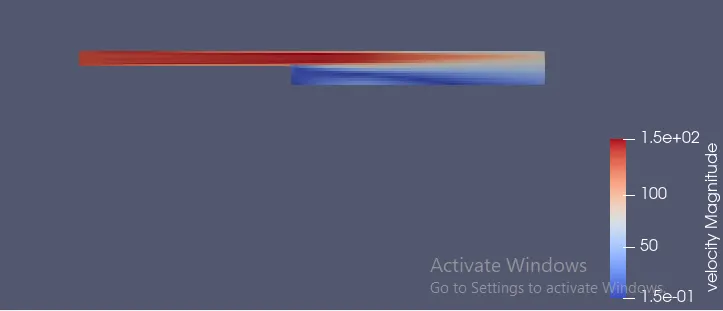
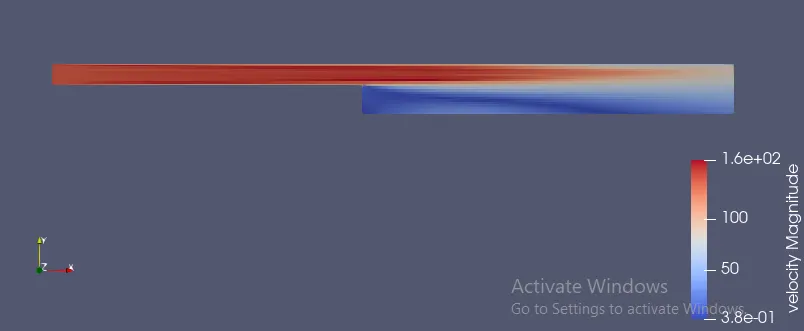
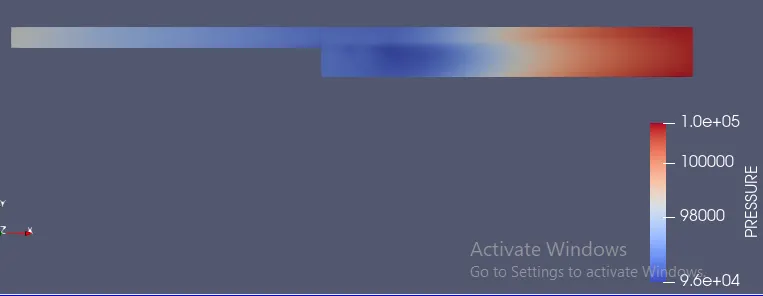
3. If you analyze the pressure contour in outlet side the pressure is very high because it is the static pressure. but air is flowing from inlet to outlet because the total pressure head (Dynamic pressure head + static pressure head) at inlet is very high, this can be understandable by the velocity contour.
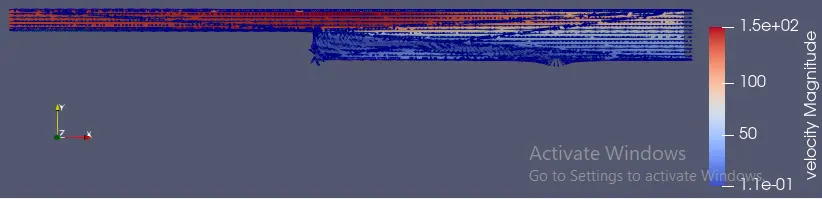
4. If we analyze the velocity contour at the inlet the velocity due to the higher dynamic pressure head. when the flow face the sudden enlargement of dimeter happen the fluid show divergent flow it is to the moment of inertia of the fluid particles.
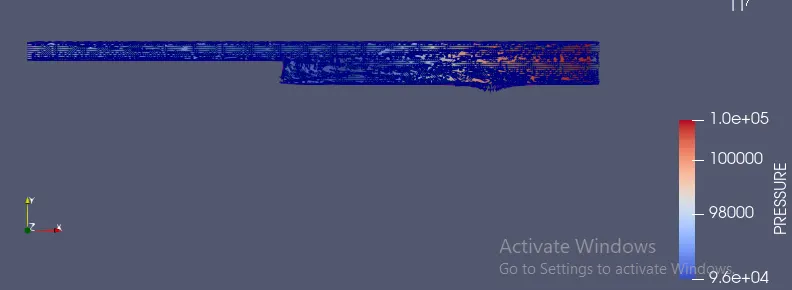
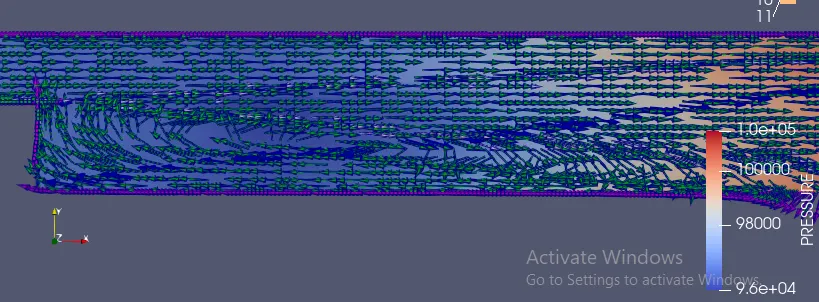
5. If we analyze the velocity vectors of the fluid we can analyze the re circulating region. That can be understood by the pressure contour. At enlarged dimeter the dynamic pressure is high but static pressure is low so air is moving from static region to the stream.
6. After the fluid touch pipe, then we analyze the static pressure is very high so there is reverse flow to the low pressure region.
7. Over all it create a turbulence eddy. so that it create pressure loss due to sudden enlargement in dimeter.