Week 3 - External flow simulation over an Ahmed body.
|
Content
|
1) Intoduction:
What is an Ahmed body and what is its significance?
Ahmed body is an experiment steup which help in understanding flow seperation, drag coefficient in an external flow over a body. This geometry was constructed to give an understanding of aformentioned properties. Also, as the experiments were conducted on the Ahmed body there exist a huge dataset that is helpful foe conducting individual experiments and simulation.
The features of Ahmed body closely match that of a normal vehicle. This being a good geometry to understand the aerodymamics of a car. From this simulation we can understand how a body with the configuration will perform in real conditions. This can be helpful in devlopment of better designes and performance will greatly increase.
- To reduce the computation cost the body is split into half and the simulation is conducted.
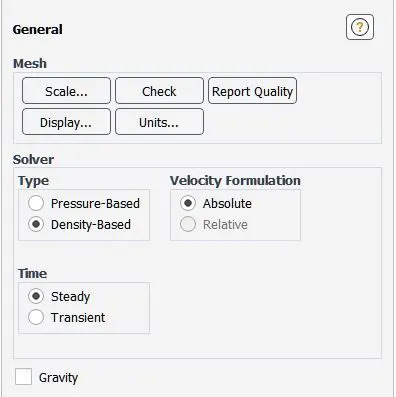
- A density based solver is used as the mach number is 0.8 and the equations need to be solved together as the pressure and velocity are sensitive to each other.
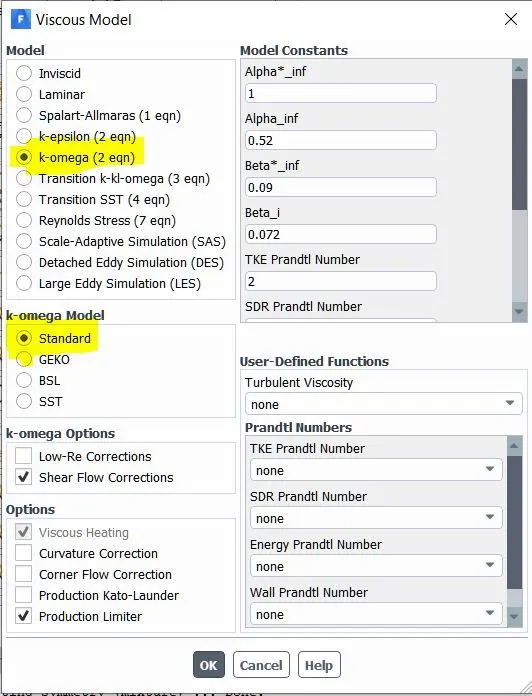
- A k-Omega model(Standard) was used as it is good for external flows.
- The contour plots were obtained using fluent post.
2) Snippets of the problem setup in Ansys:
1) Baseline
|
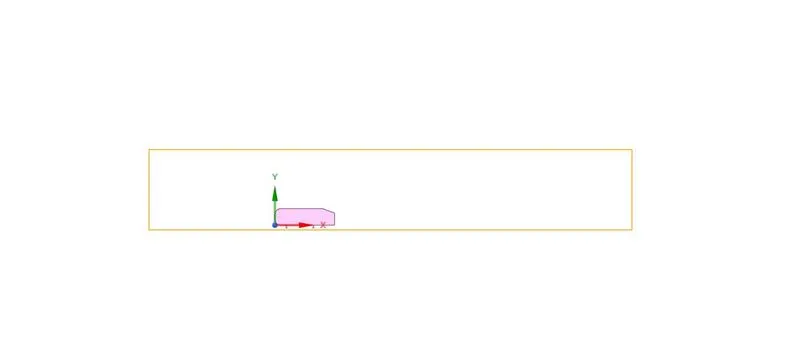
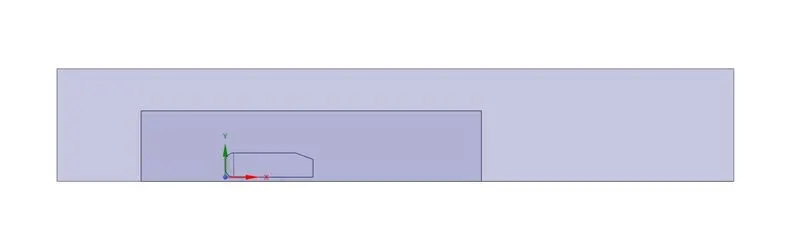
Geometry Body inside the Encloser.
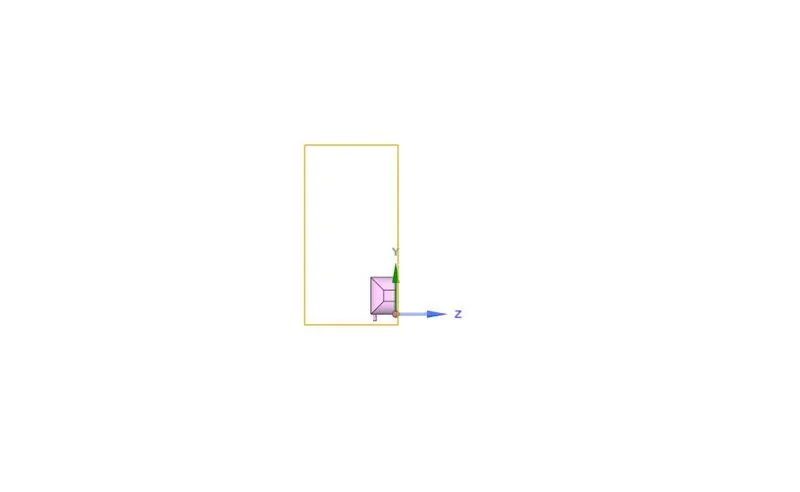
Front view of the body.
|
|
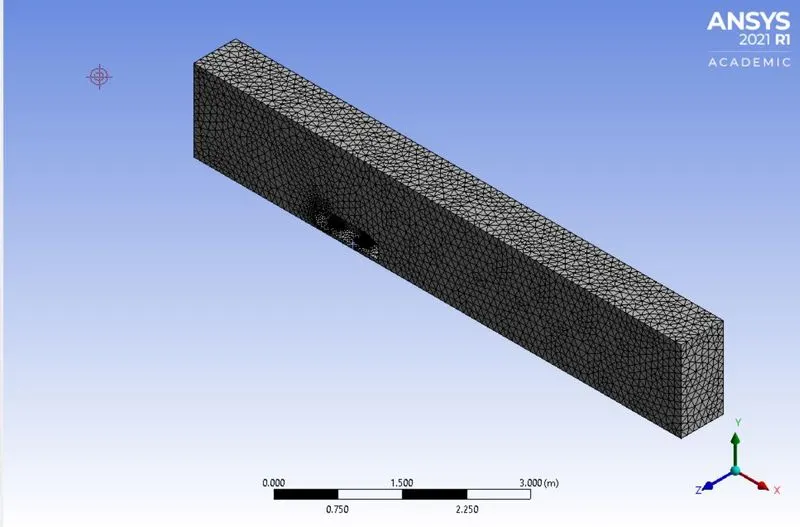
Mesh
|
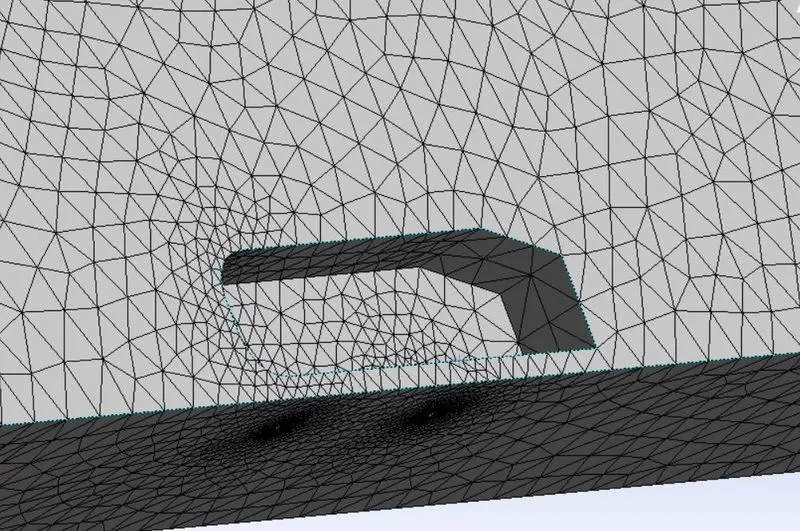
2) Refined
|
Geometry
|
|
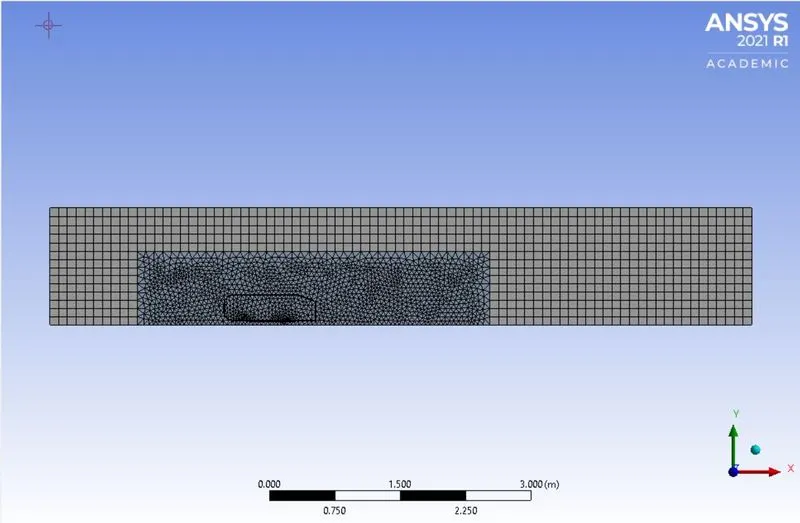
Mesh
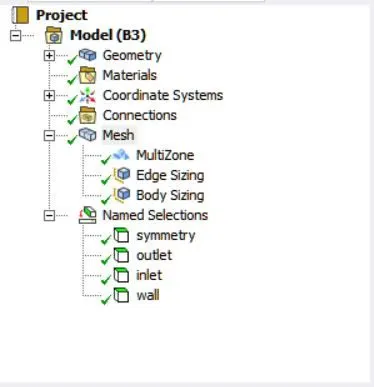
Inflation layer: Example inflation layer menu(case 2)
|
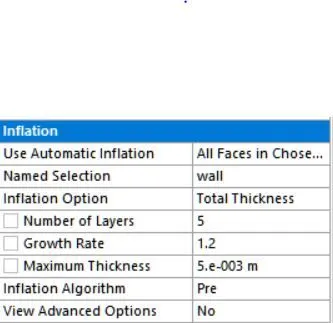
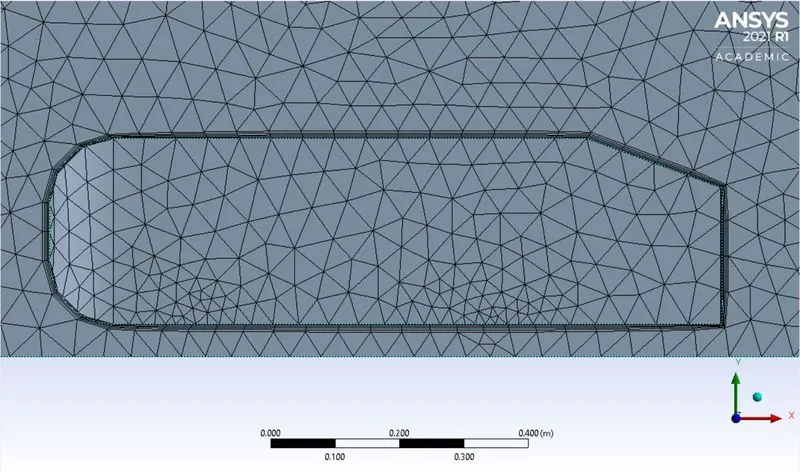
3) Setup
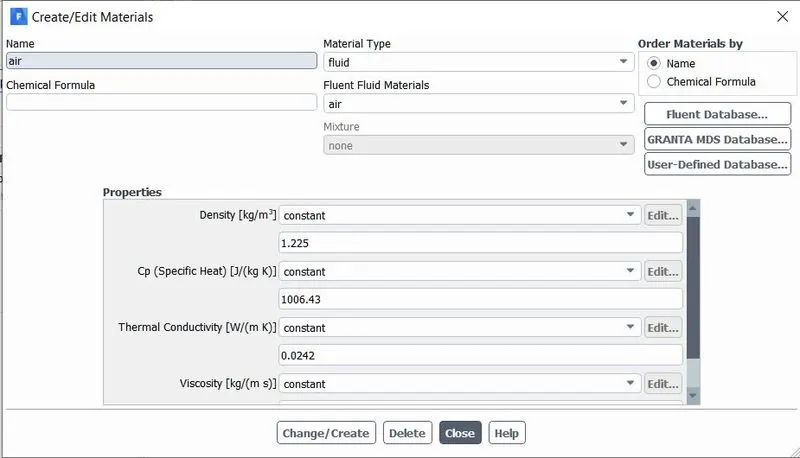
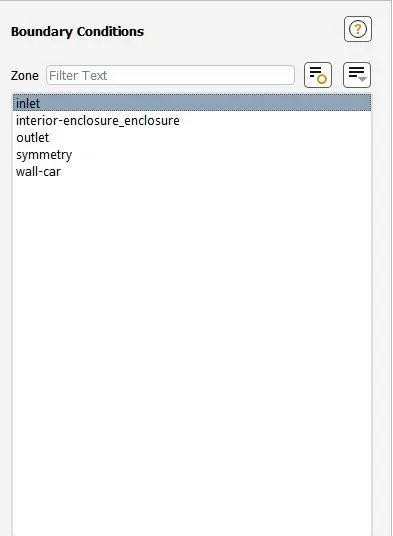
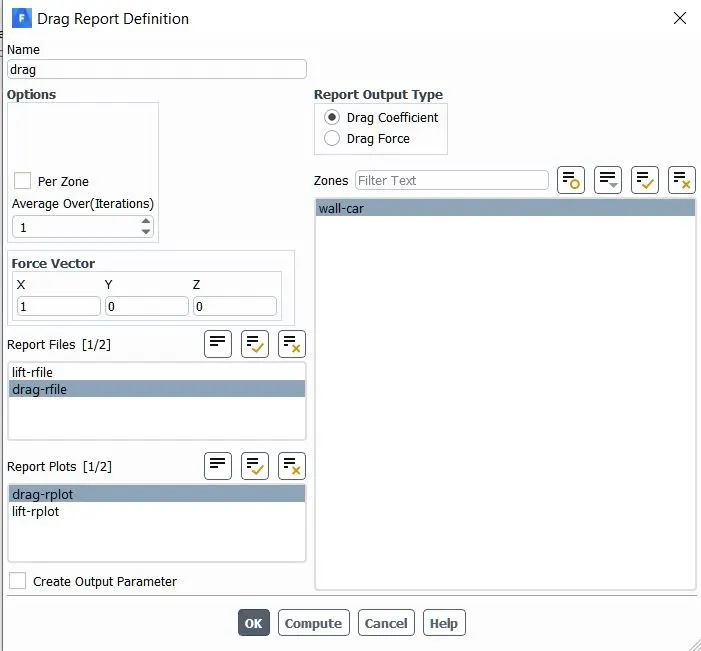
The setup is same for all cases, the table below shows the important aspects of setting up the problem.
|
Solver (Density Based) |
 |
|
Model (K-Omega-Standard) |
 |
|
Material (Air) |
 |
|
Boundary conditions |
 |
|
Drag report (On-Car wall) |
 |
NOTE: The Geometry and mesh is same for all the cases and the only difference is the number of elements and inflation layer. The table below has the relevent data of the same.
| Case name | Number of Elements | Drag Coefficient |
| Baseline |
83362 |
0.4217163 |
| Refinement 1 | 110581 |
0.35775346 |
| Refinement 2 | 277612 |
0.35219528 |
| Refinement 3 | 467704 |
0.26489297 |
4) Simulation and its result
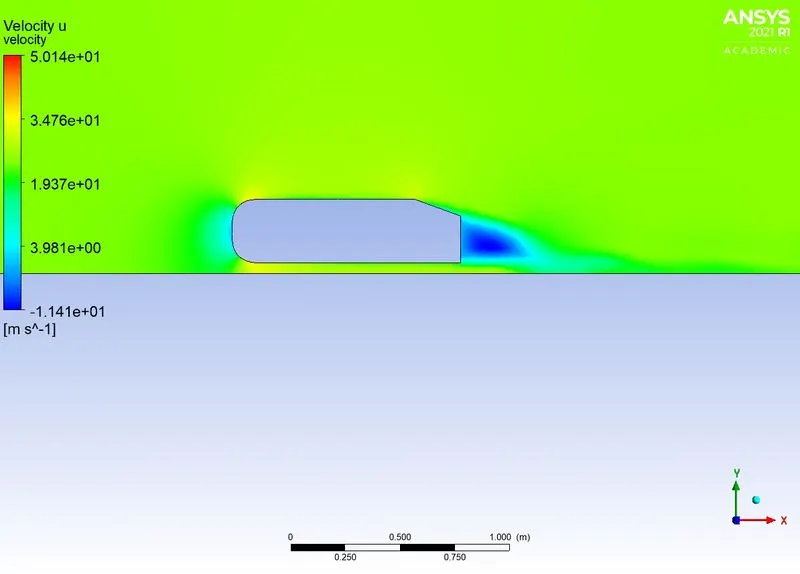
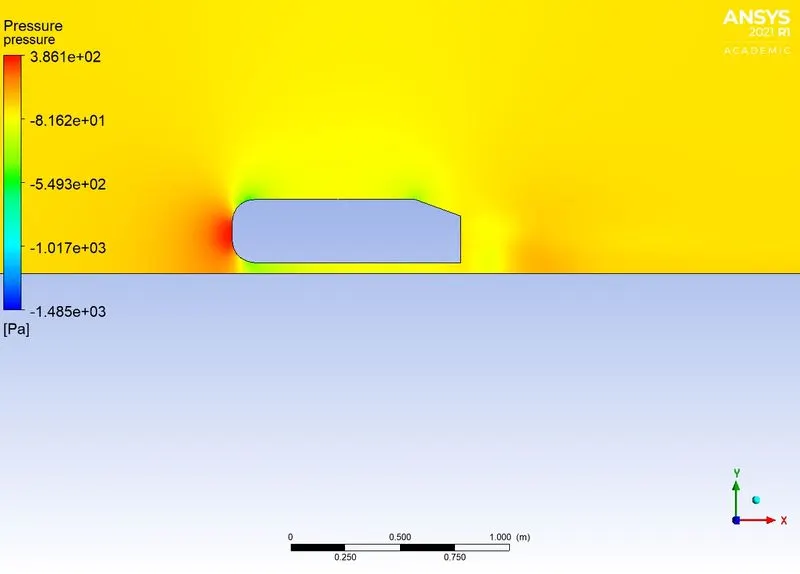
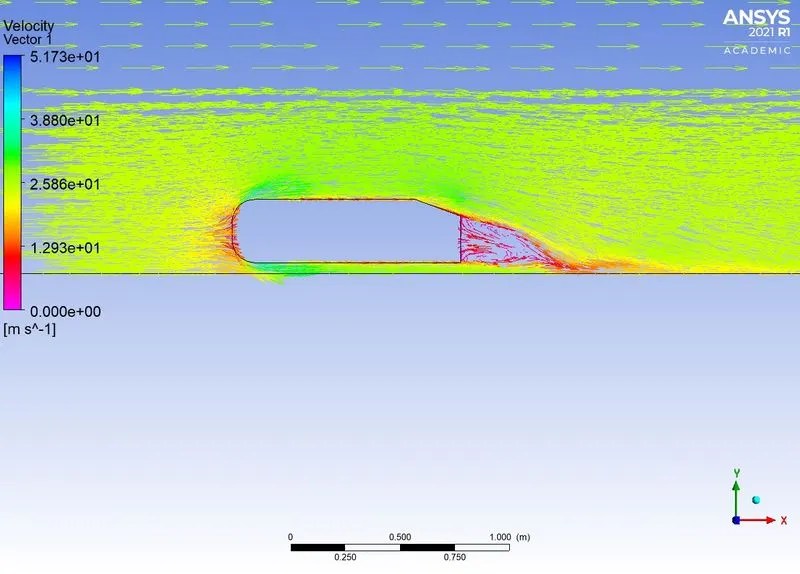
a) Baseline
|
Velocity
|
|
Pressure
|
|
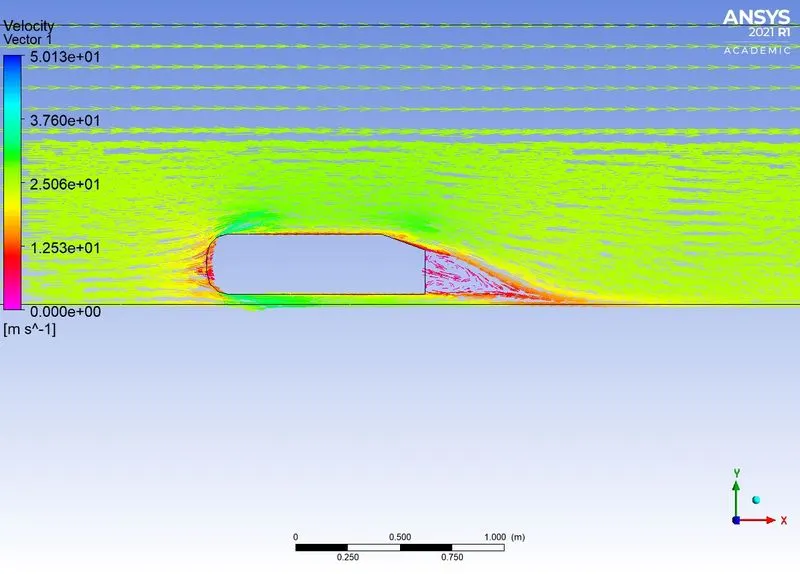
Vector plot
|
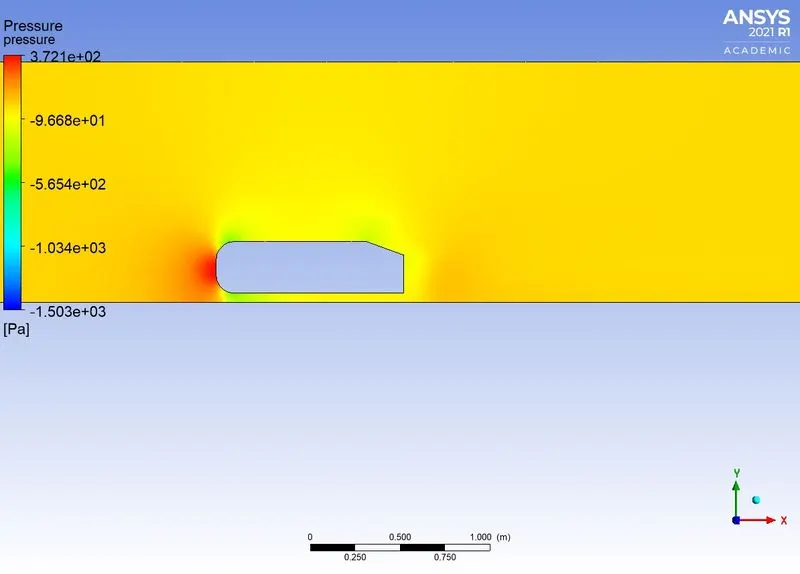
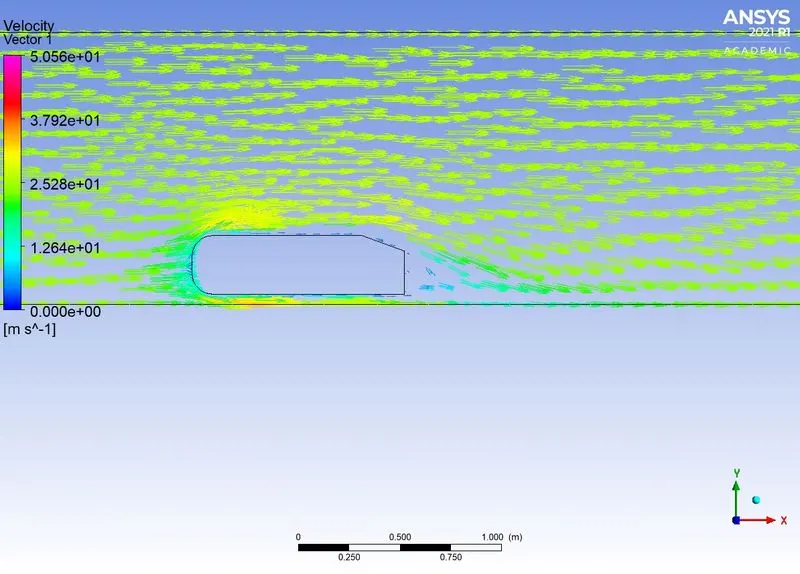
b) Refinement 1
|
Velocity
|
|
Pressure
|
|
Vector
|
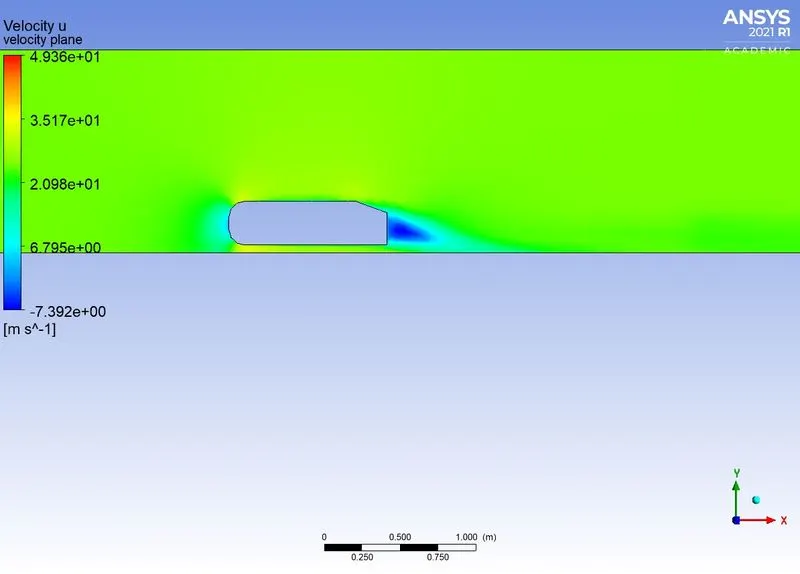
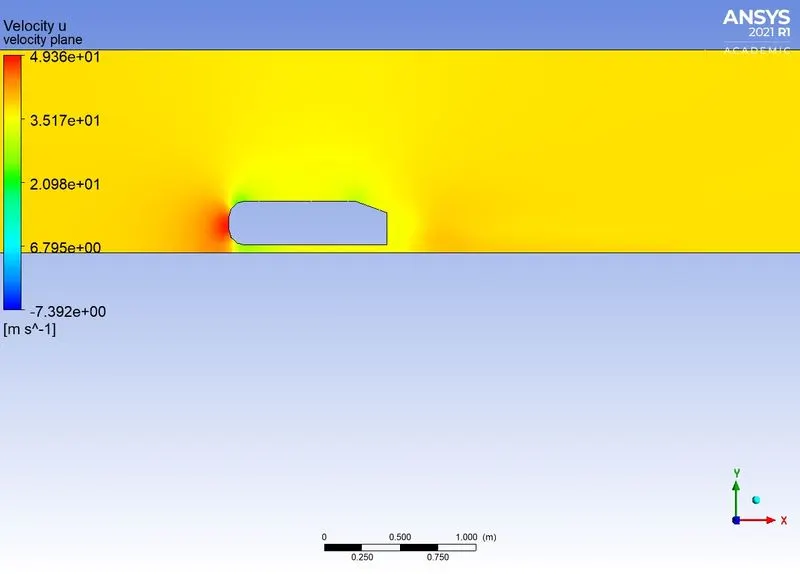
c) Refinement 2
|
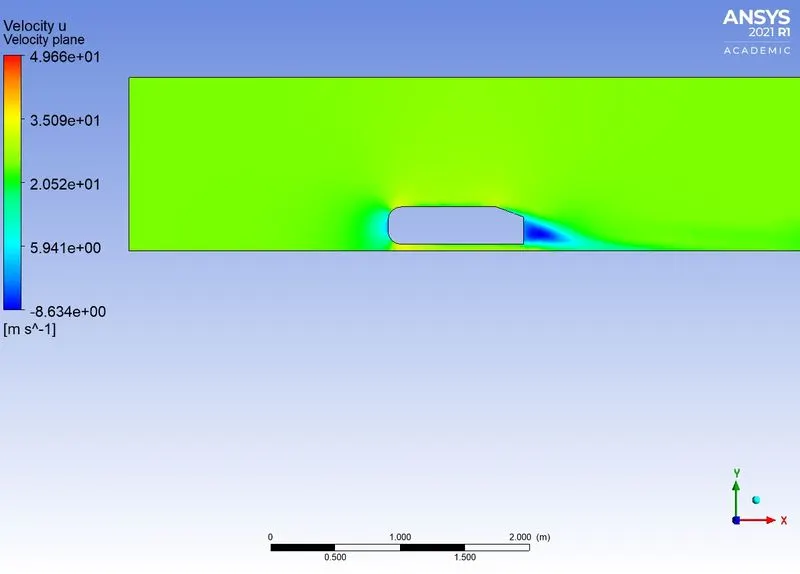
Velocity
|
|
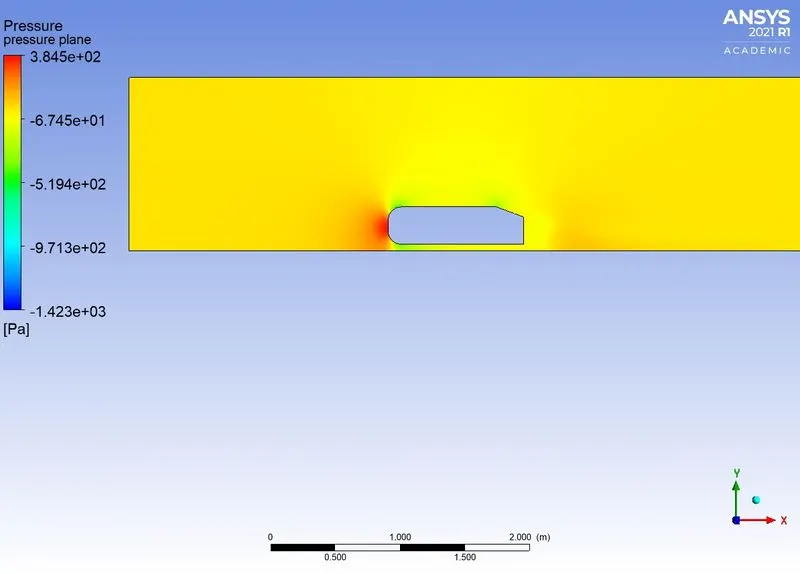
Pressure
|
|
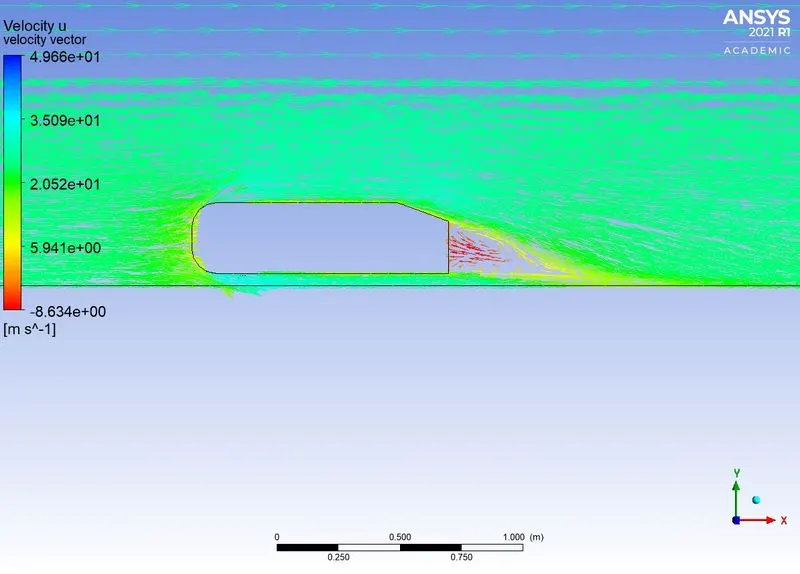
Vector
|
d) Refinement 3
|
Velocity
|
|
Pressure
|
|
Vector
|
5) What is the Significance of Wake?
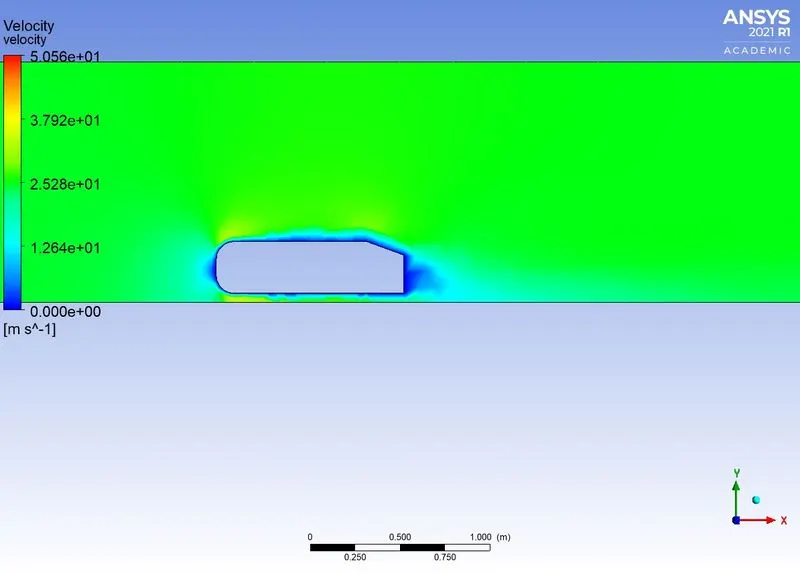
A wake region is a occurs due to the presence of a body inside a flow field, also the flow seperation is responsible for this. A wake is a region behind the Ahmed body where the pressure is lowest and the velocity of fluid is opposite to the normal free stream velocity.
The wake region is detrimental to the performance of a body, as the wake region devlopes vortex shedding strarts to ooccure. As there exist a frequency for this vortex shedding there is a good chance that this frequency could match the resonant frequency of the body which in turn will make the body unstable and could lead to catastrophy espicially a vehicle at high speeds.
6) Grid independancy: The table below shows the data for the grid independence.
|
Refinement |
Element |
Drag |
Inflation |
|
Baseline |
83362 |
0.4217163 |
NA |
|
1 |
110581 |
0.35775346 |
0.0125 |
|
2 |
277612 |
0.35219528 |
0.005 |
|
3 |
467704 |
0.26489297 |
0.005 |
As it is evident for 4 cases as the number of elements increased the the change in drag coefficient was evident but due the licencing restiction furether investigation could not be done.
From this test we can conclude the grid is not independent for the 0.5 million cells.
7) Significance of point of seperation:
As the wake region is detrimental to the body's performance the point of seperation is contributing factor in this wake generation in Ahmed body. The fluid sticks to the surface and this is called no slip condition where the velocity of layer is zeros. As the body moves in space the there comes a point where the layer detaches from the body and creates a negative pressure. This is the point of seperation and is responsible fro creating a negative pressure which causes the recirulation/backwards flow of the fluid. It is necessary for the flow to be attached as it keeps the body stable.
As it is evident form the image, the point of seperation leads to creation of vortices and wake. Also, from the velocity profile we can observe how the flow goes in opposite direction as the flow seperates. This is an idication that the point of seperation is counterintuvitive to thestability of body.
8) Conclusion:
The simulation conducted has given a good idea of concepts of point od seperation, wake, negaive pressure on a body in an external flow. With this the results obtained are valid and close to the experimental results.