Week 3 - External flow simulation over an Ahmed body.
EXTERNAL FLOW SIMULATION OVER AN AHMED BODY
OBJECTIVES
1.Describe Ahmed's body and its importance
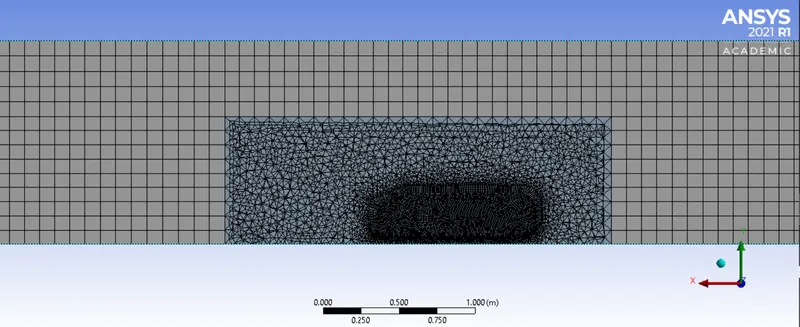
2.create a local refinement area around the ahmed's body and make refinements and modifications in the initially setup basic flow domain.
3.Post-process the result and validate the reason for negetive pressure in wake region
4. explain the significance of point of seperation.
INTRODUCTION
The automotive industry has a high demand for reliable simulation methods capable of tackling the complex turbulent air flow around vehicles. Ahmed body is a generic car-type fluff body model. It is a bench mark test case for this kind of flow. It has relatively simple geometry but retains some of the main features around real cars. According to the original model most of the drag in the body is due to pressure drag at the rear end. Maximum drag was found at slant angle of 30 degree. The Reynolds number in this case depend on the bulk velocity of flow, length of the model and kinematic energy.
The Ahmed body was first defined and its characteristics described in the experimental work of Ahmed. Therein, it is shown that most of the drag of the body is due to pressure drag, which is generated at the rear end. The structure of the wake is very complex, with a separation zone and counter-rotating vortices coming off the slant side edges, whose strength is mainly determined by the base slant angle. The maximum drag was found for a critical slant angle of 30˚. Above this angle a sudden drop in drag occurs which corresponds to a change in the wake structure. Below this angle, strong counter-rotating vortices are present and the flow separates in the middle region of the top edge and reattaches at the sloping surface. For angles above the critical angle, the counter-rotating vortices are weaker, the separation
occurs along the entire top and the side edges and there is no reattachment.
The aim of the project is to investigate experimentally aerodynamic behaviour of given Ahmed body under varying geometrical conditions and to test ability of CFD simulations.
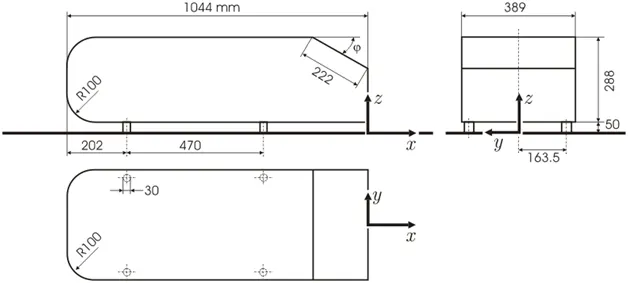
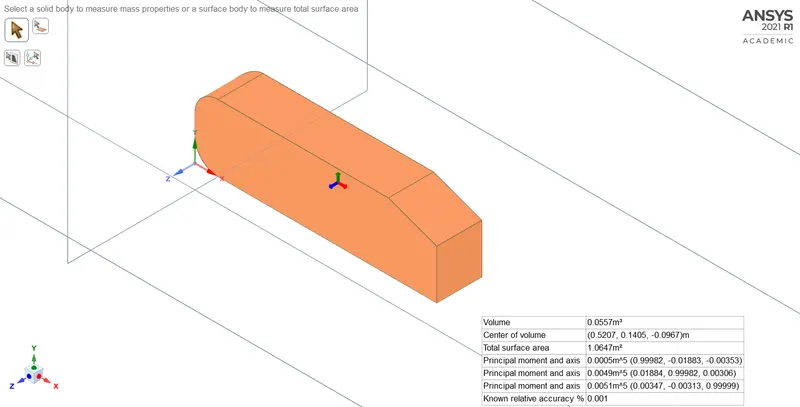
GEOMETRY
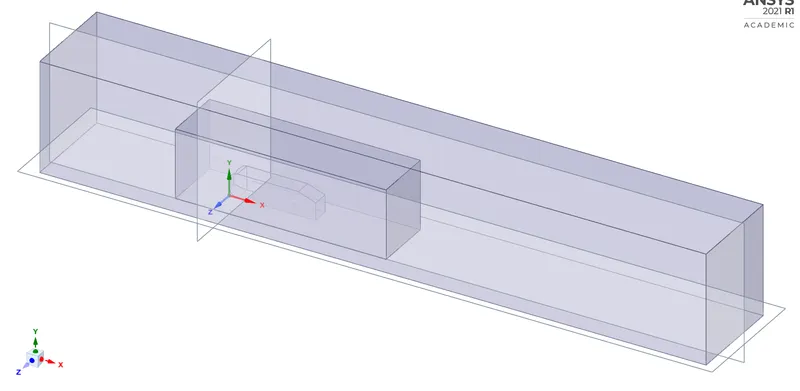
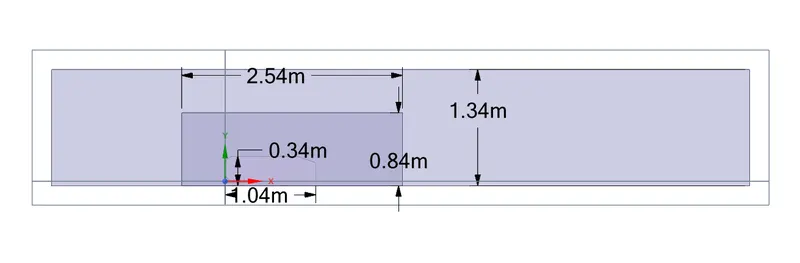
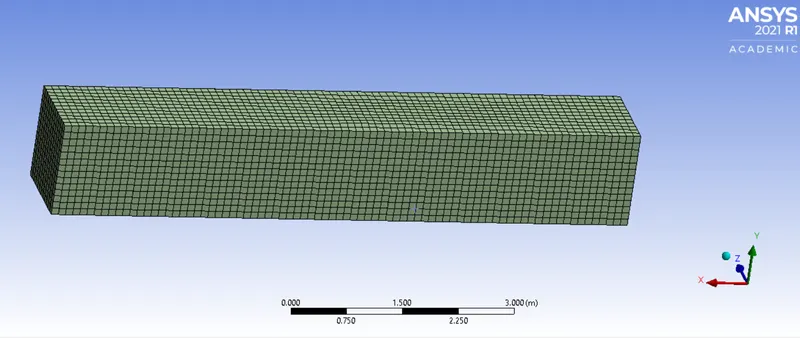
The outer enclosure is created with 5m from the outlet,2m from the inlet,1m upward and 0.5m on both sides. The inner enclosure is created with 1m from outlet,0.5m from inlet,0.5m upward and 0.26 on both sides. The downward distance is zero for both enclosures.
,
MESHING
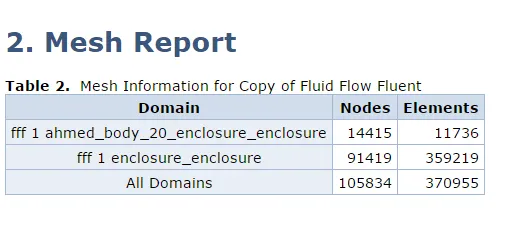
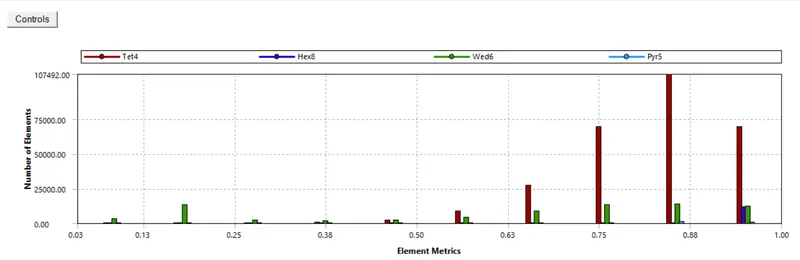
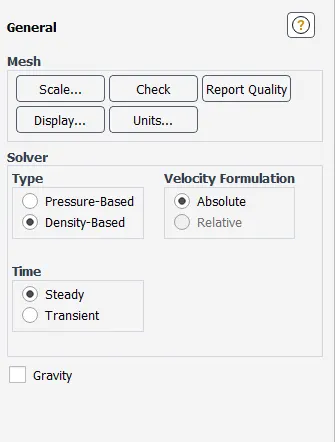
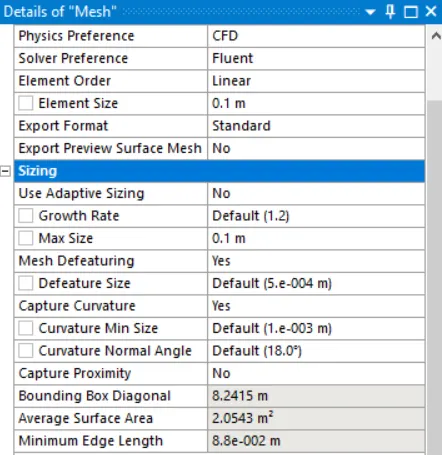
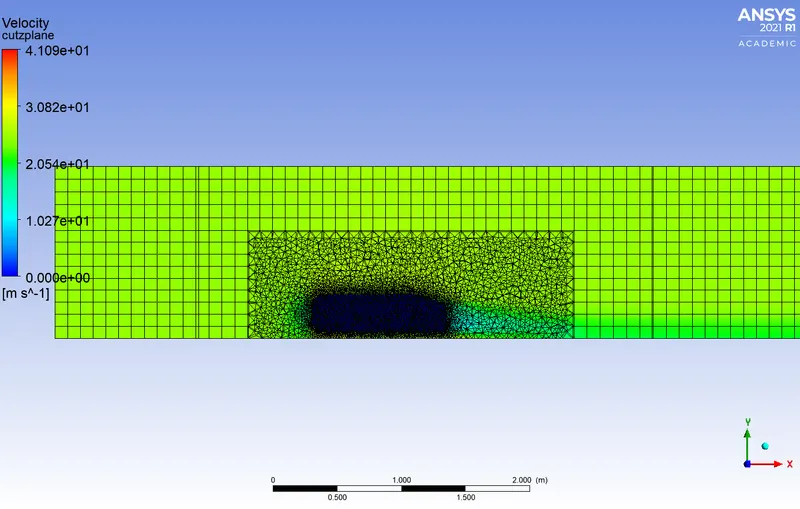
Hexahedral meshing is used with element size of 100mm. The inner box of Ahmed's body has element size of 50mm.Inflation layers are added around the car wall and first layer total thickness of 12.44mm is added.
Boundary Condition
For the car model boundary condition is applied at the
inlet, outlet and the walls of the model.
1 Inlet-velocity inlet
2 Outlet-pressure outlet
3 Wall condition-no slip and adiabatic wall condition
SETUP
The reynolds number depends on the inlet velocity,length of the body,and density of the fluid. In this model the inlet velocity is 25m/s,hence the reynolds number is found to be 467027.02 which is very high and the flow is turbulent.
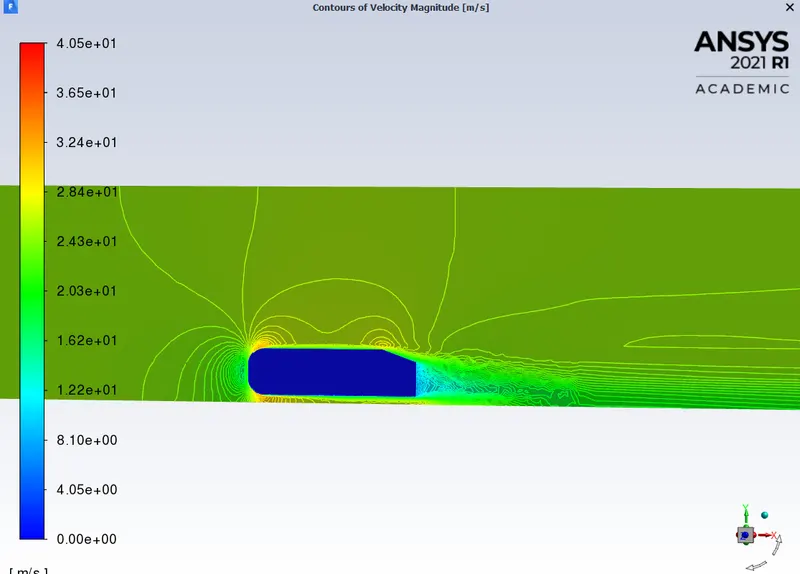
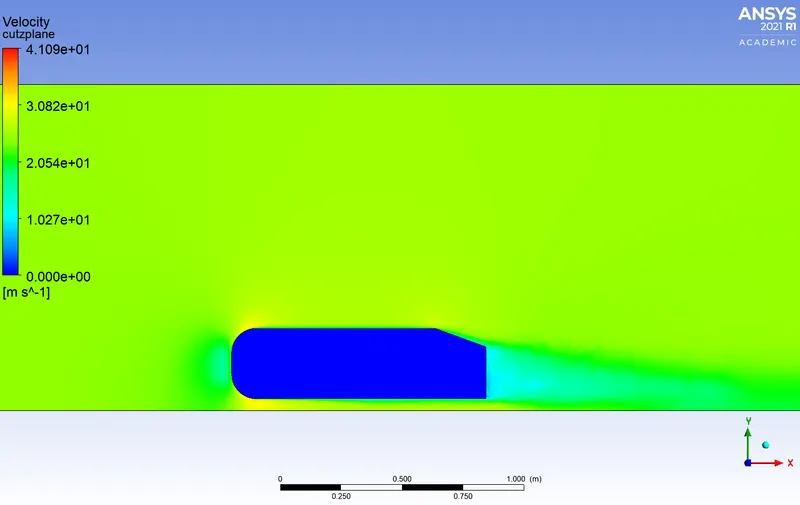
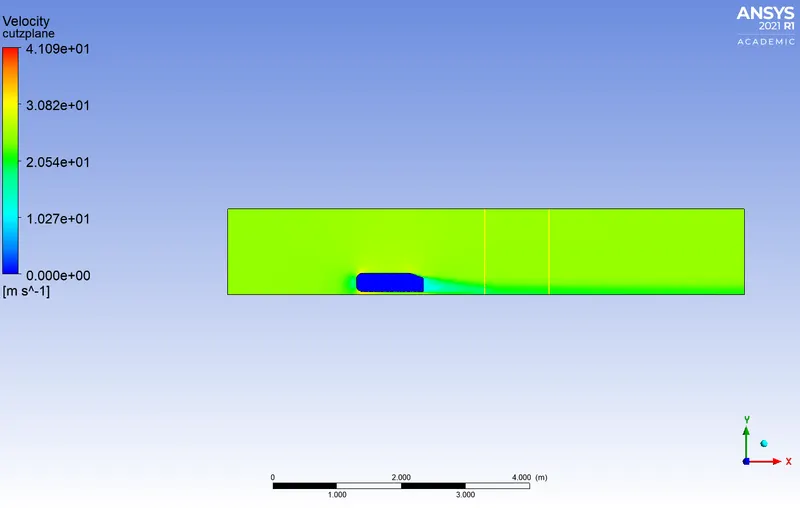
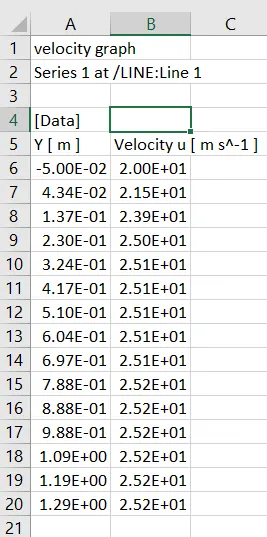
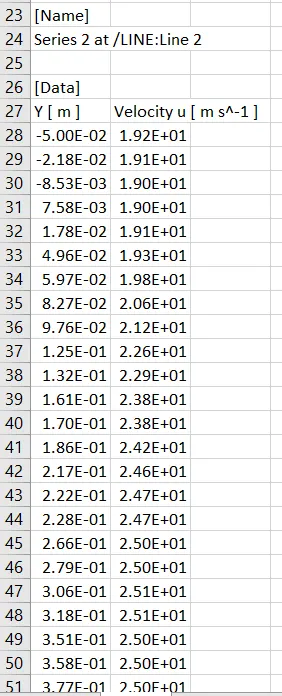
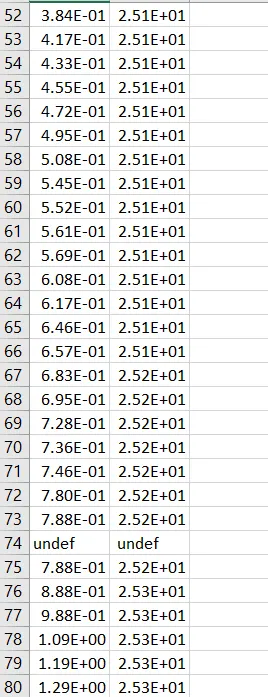
The velocity counter simulation
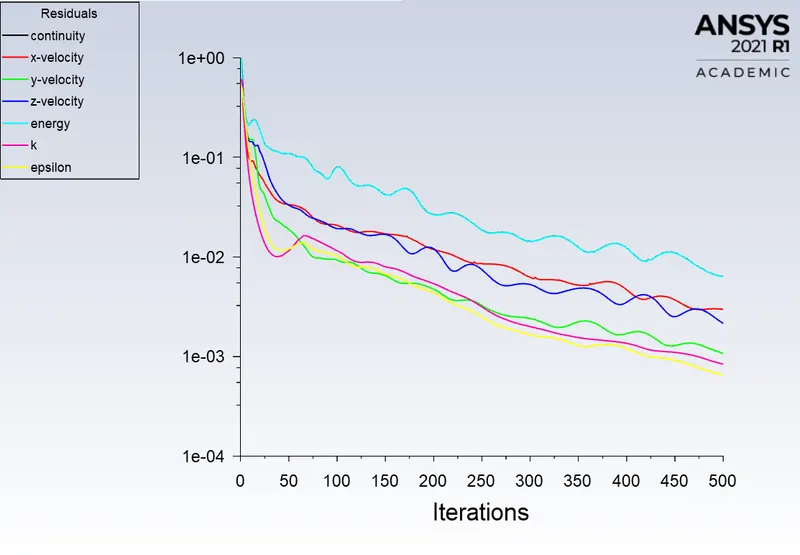
Residuals
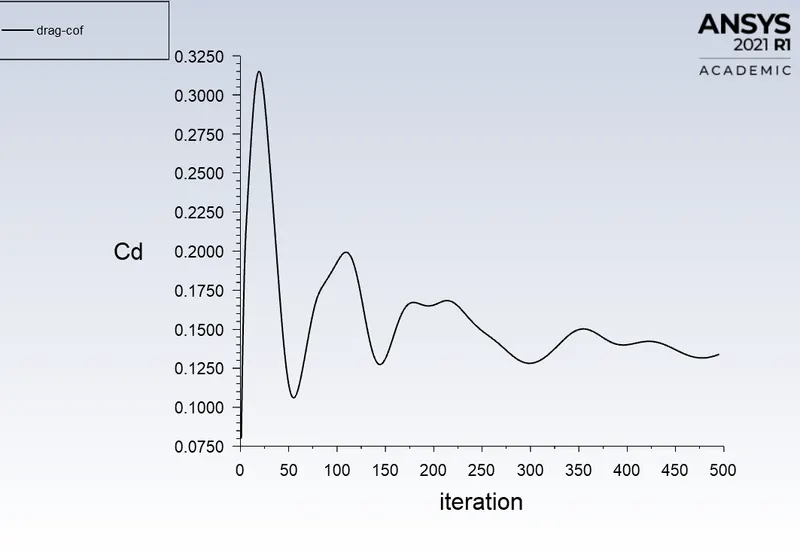
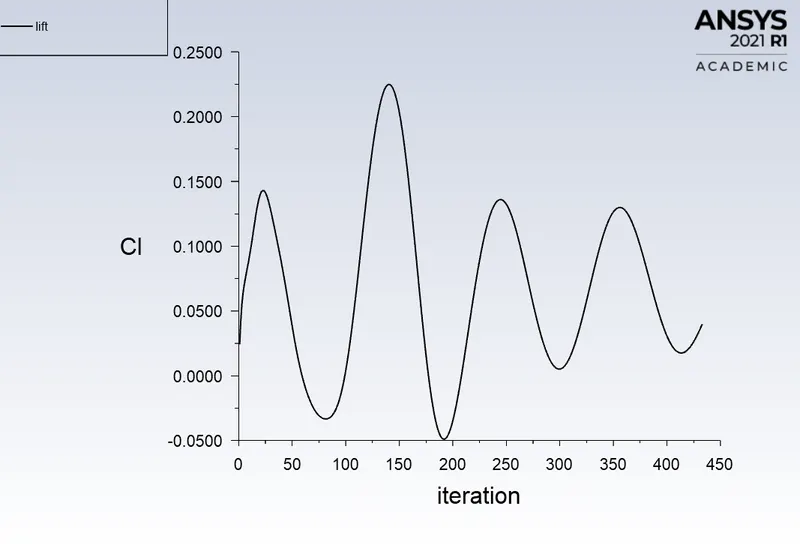
the drag coefficient plot is given below
RESULTS
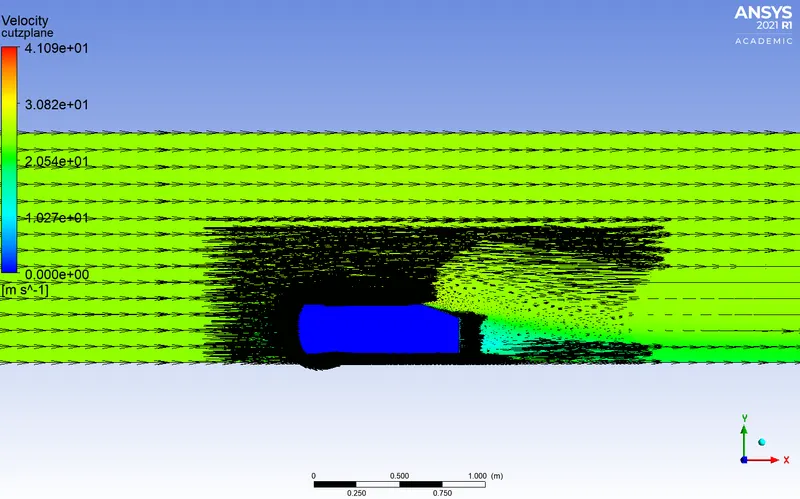
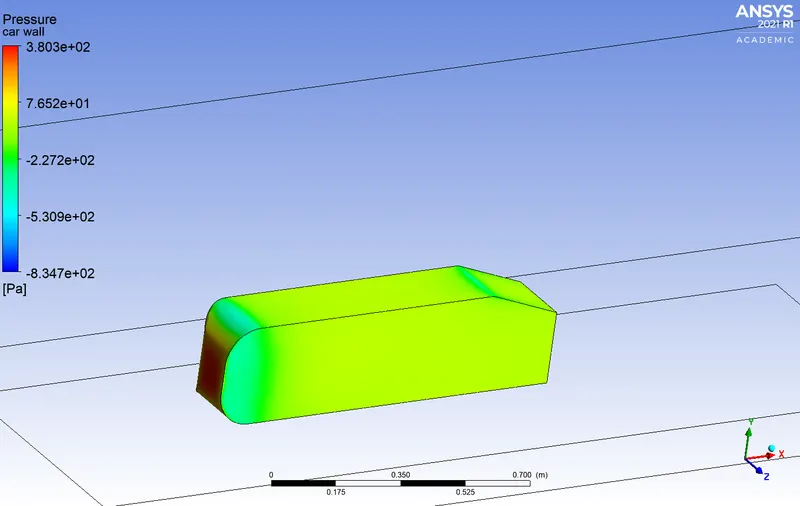
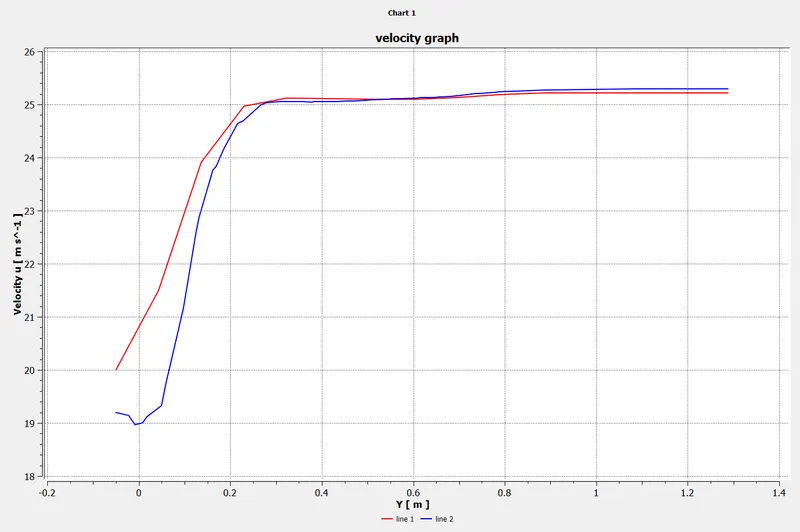
Most of the drag pressure is due to the pressure drag at the rear end of the model. Maximum drag was found at 30 degree slant angle. Above this angle sudden drop in drag which corresponds to change in wake region. The counter rotating vortices are present below this angle.since they move downwards the pressure is negative in the wake region.Hence due to flow recirculation,flow seperation and to overcome shear stress the pressure is negetive in the wake region.
Significance of point of seperation
The wake separation flow behind the Ahmed body is the main contributor to the drag force, accurate prediction of the separation process and the wake flow are the key to the successful modelling of this case.
1.The flow separation downstream of the Ahmed body contributes most of its drag.
2.At low critical aspect ratio, the edge vortices stabilise the wake and increase the stall angle. For higher aspect ratios, the flow separation at the leading edge occurs at a lower angle of attack
The Ahmed body with the rear slant angle of 25° belongs to the back side of vehicles, which exhibit very strong inward longitudinal vortices at the rear side. These vortices extend far into the wake region and generate a field of downwind in the enclosed region. At a slant angle of 30°, directly before transition to the full square back flow, this pair of vortices is developed most strongly, and the flow separates at the lower edge of the slant. This produces strong under pressures at that position, so that the aerodynamic drag reaches its maximum in this state.