Week 3 - External flow simulation over an Ahmed body.
INTRODUCTION
The external flow annalysis is an import part of structural annalysis were various parameters can be generated which include drag,lift,force,pressure,velocity distribution and many more. These annalyis pave an important role in annalysis of an design which can range from small structurure to large structures like airfreames.
AHMED BODY
Ahmed body is a simplified or conceptual car body created by S.R Ahmed which was the base for the simulation and study of properties of various design of cars ad other vehicle.This shape provides a model to study geometrical effects on the wakes of ground vehicles. This is the kind of baseline geometry for automobile bodies. The flow of air around Ahemd body captures the essential flow features around an automobile and it describes how to calculate the turbulent flow field around a simple car-loke geometry using the turbulent, flow, K-epsilon interface. Ahemd body is used to validate their numerical model because the experimental data for Ahemd body closely resembles to the modern day ground vehicles . Once the numerical model is validated, its is used to design new models of the car and also used for faster calculation and for comparision of analytical results.
Importance of AHMED BODY
*to capture characteristics feature of the real time similar ground vehicle model
*to annalyse the drag and lift of the model
*to have the basic understanding of air flow over the vehicle body
*to increase the efficiency of the model based on the design data
Feature of Ahmed Body
The Ahmed body was described originally by S. R. Ahmed in 1984 [1]. Three main features were seen in the wake:
- The A recirculation region that is formed as the flow separates at the top of the vertical back surface of the model
- The B recirculation region that is formed due to the separation at the base of the model.
- The c-pillar vortices that form as the vorticity in the side boundary layers roll up over the slant edges.
Geometry
dimensions
*length - 1044 mm
*breath- 389 mm
*height- 288 mm
angle of bend is 20 degrees
The design of the ahmed body was generated in the step file using various CAD Softwares. The present step was imported from the website for the assignment. The design was modified using the Space Claim software.
For the efficiency and simplication the design was split into two halfs and the annalysis of a one half was carried out based on the ahmed body property which is it is symetric in the X-Y Plane based on the body is split .
For the annalysis of flow over ahmed body we have to generate a wind tunnle around the given ahmed body which was carried out in space claim .The two types of enclosure is given as seen in the above diagram .The enclosure are given to generate two types of mesh surface which are the finer one and the normal mesh
The wind tunnle length is about 5 metre at the back,2 metre at the front end,height of 1 metre above the ahmed body and the side boundaries are at 0.5 from the side surface. the small enclosure measurement are 1,0.4,0.4,0.25 respectively .
Meshing
It is one of the important part of the analysis where based on the mesh quality the result generated is accurate . Mesh quality is defined with the numner of nodes generated in the mesh based on the given mesh size
1.mesh-outer block
2. mesh sizing and inflation
Setup
Boundaries
inlet - inlet
outlet - pressure outlet
car boundary (no-slip)
back, top and bottom - symmetry
symmetry zplane - symmetry
A separate boundary was created for the symmetry plane to make post processing easier.
Viscous
k-omega SST was used for all simulations for this project due to its excellence in solving external flows and wake regions.
Reports
Two reports were created.
1. Lift Coefficient of wall-car
2. Drag Coefficient of wall-car
Based on these Reports and solution
* Lift coefficient was predicted
*drag coefficient was generated
*wake region was identified
*Vector plot for wake region was generated
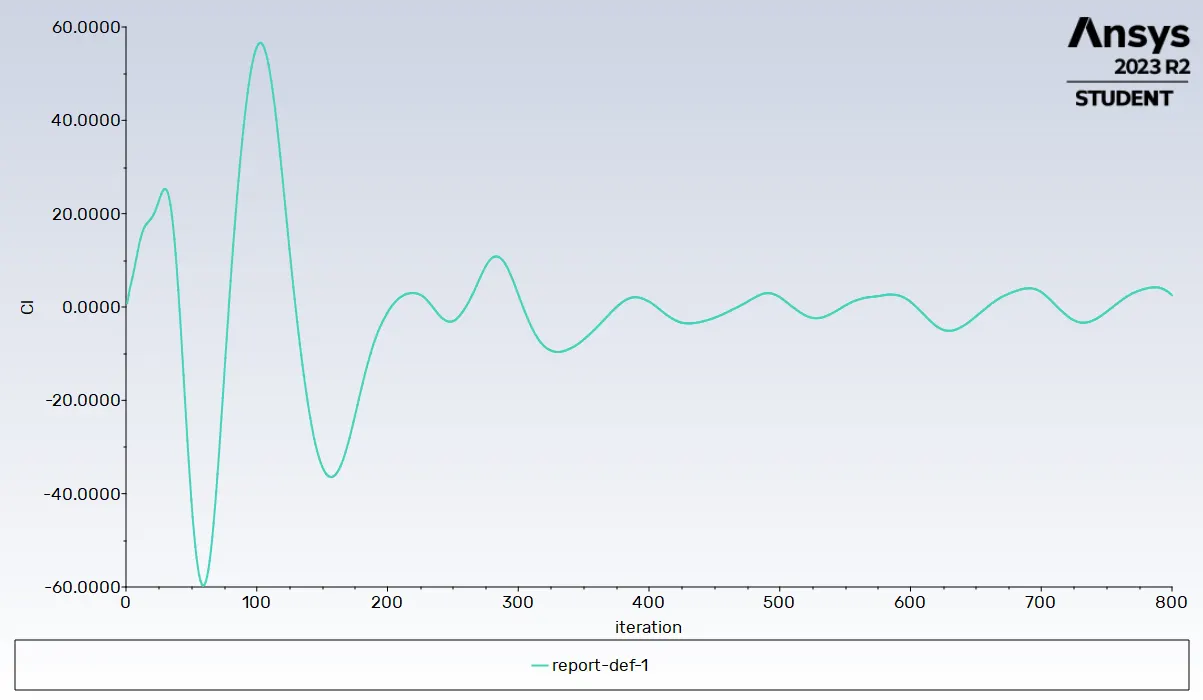
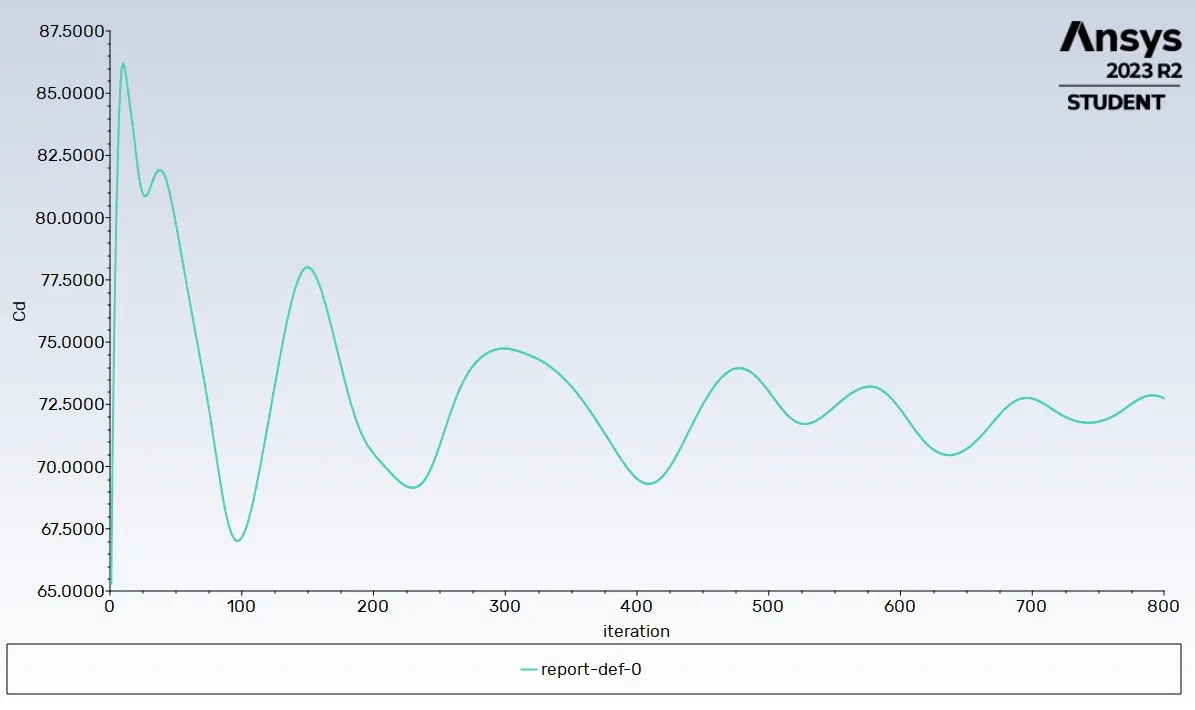
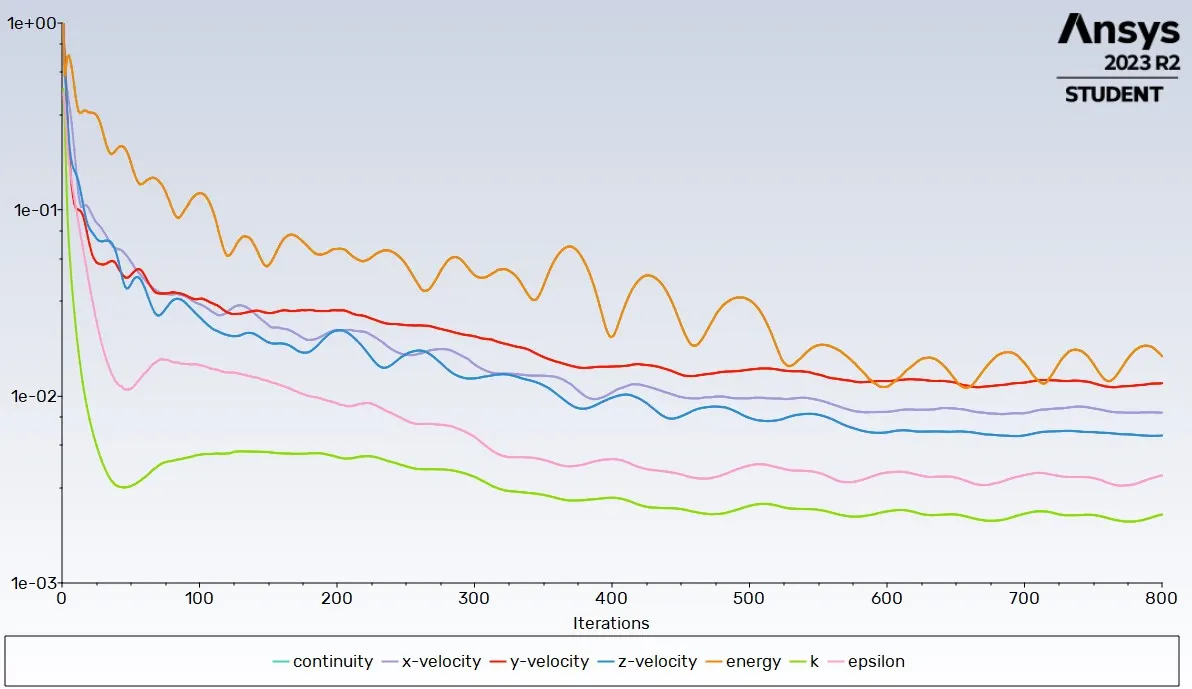
Iterations result
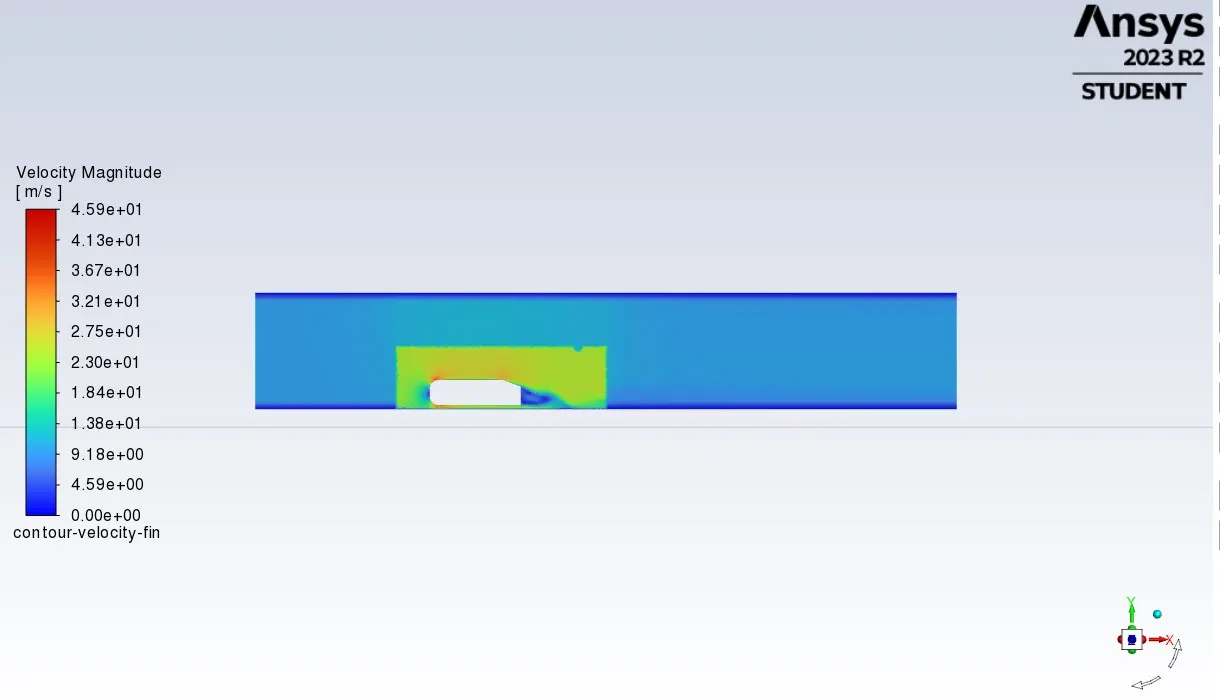
Velocity profile
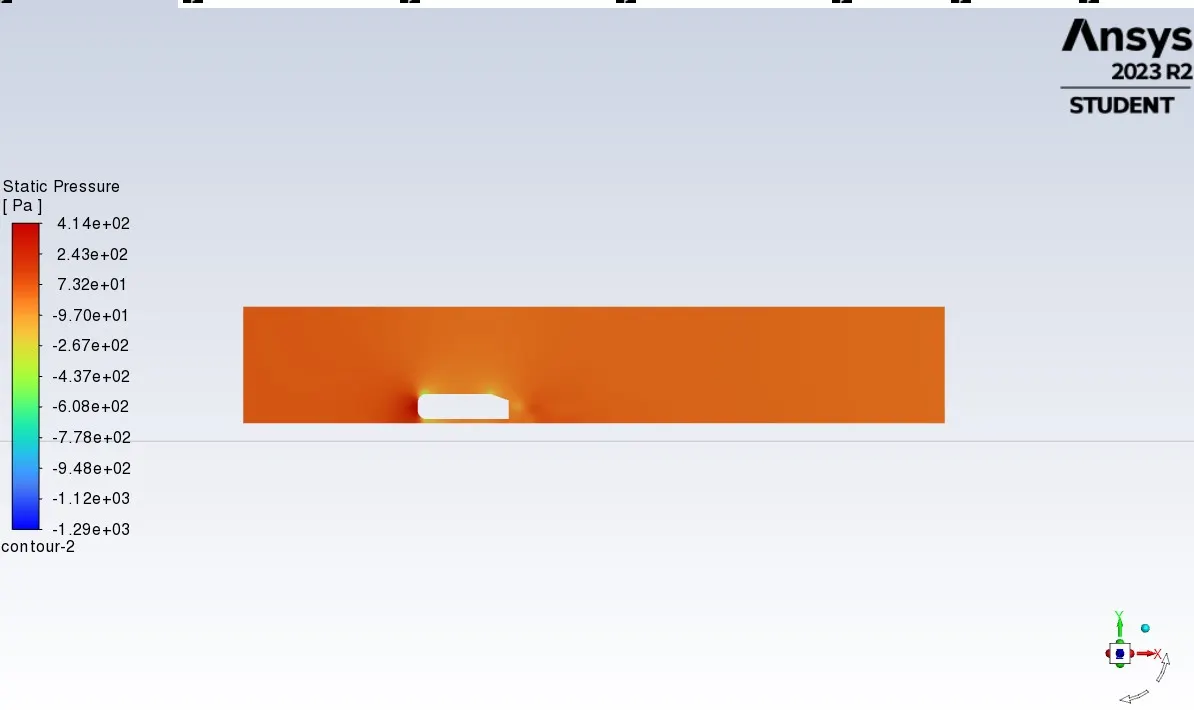
pressure profile
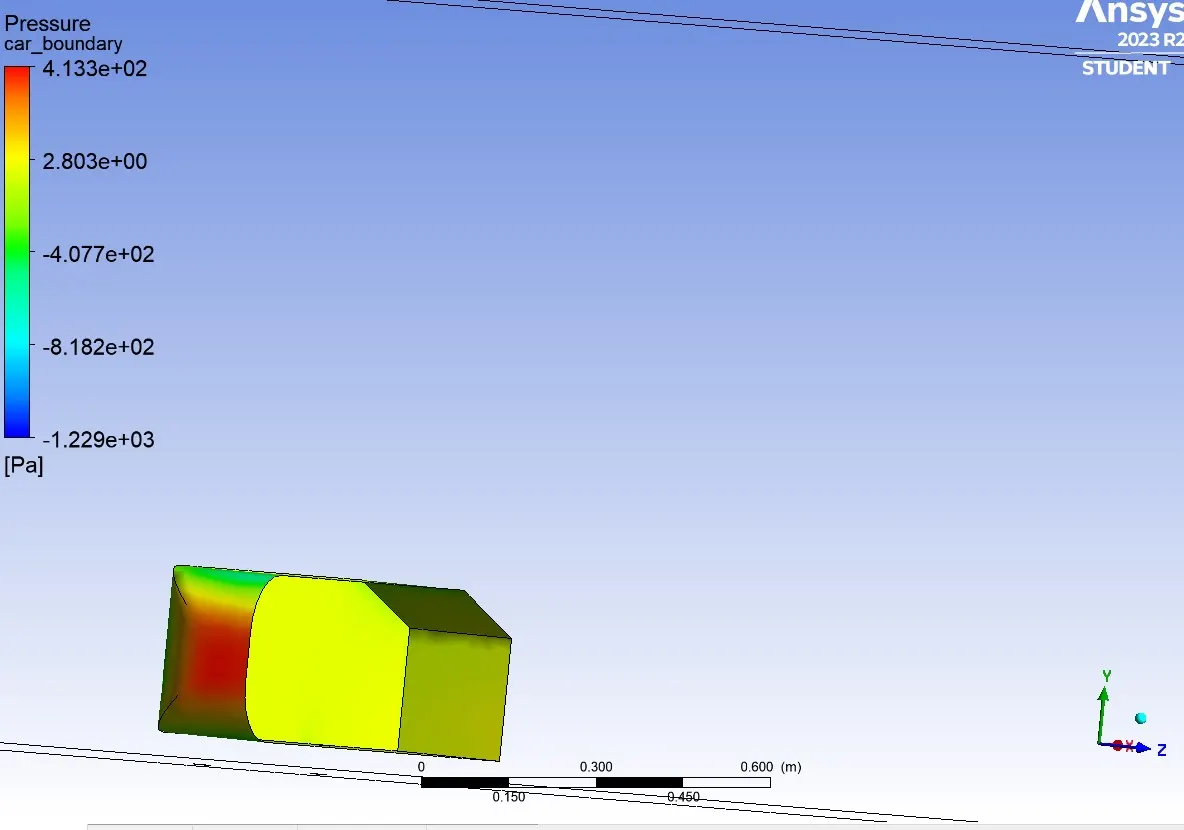
pressure distribution on th ahmed body
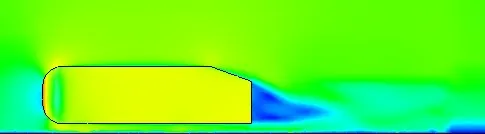
Velocity variation along the ahmed body
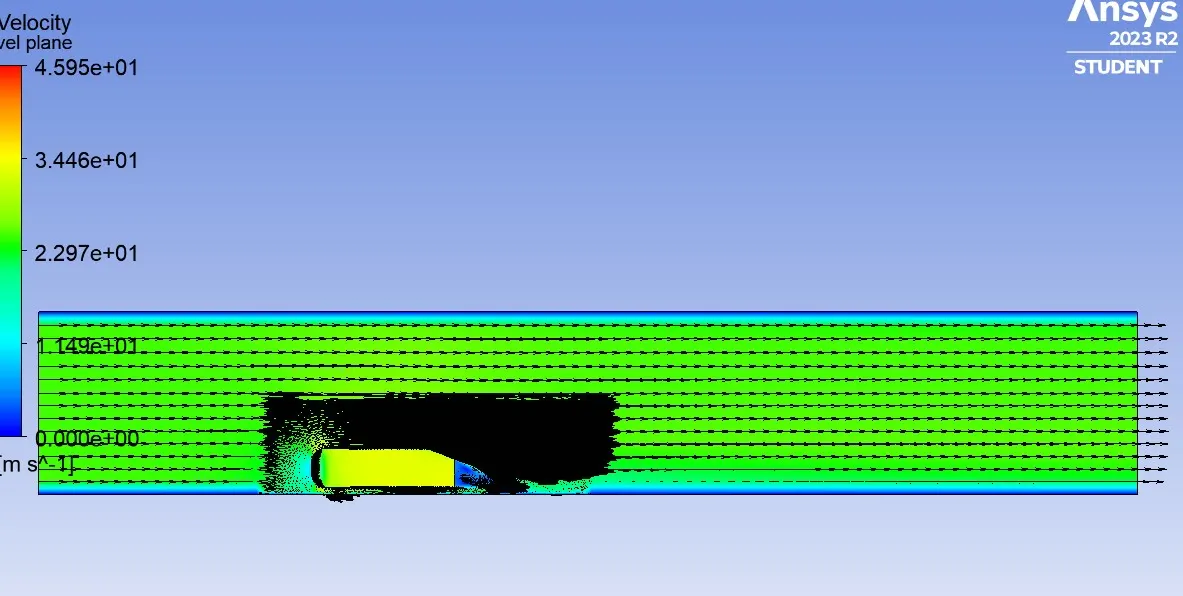
Vector representation of velocity profile
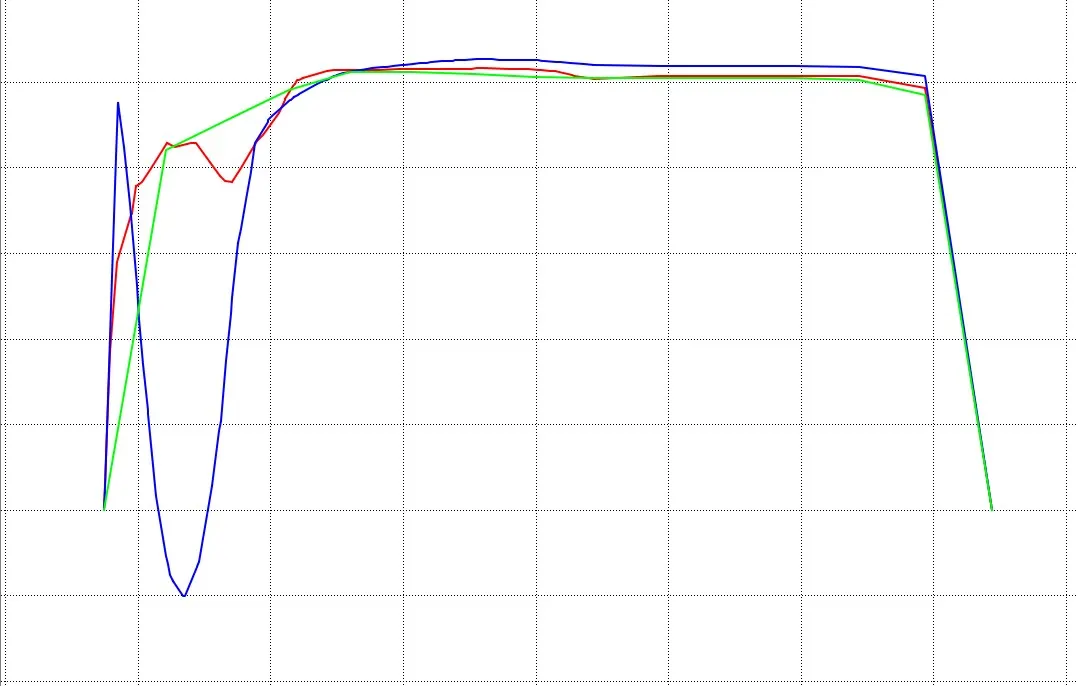
Variation of velocity at different regions which are at a distance from ahmed body in X direction
RESULTS
lift coefficient = 0.378
drag coefficient =0.752
Conclusion:
- High pressure is formed at the frontal area of the Ahmed body due to the loss of kinetic energy of the air.
- The adverse pressure gradient is created near the wake regions because of the flow separation which is occurring because of the geometry of the model. As a result flow separation alters the pressure gradient which in turn affects the drag and lift coefficients.
- In order to reduce the size of the wake region, detachment of the fluid should be farther away from the body which can be achieved by an increase in the slant angle.
- With the increase in mesh size, the numerical results approach closer to experimental results.