Week 3 - External flow simulation over an Ahmed body.
Question and Answers
1.Ahmed Body
- Ahmed body is a simplified car body and was first created by S.R Ahmed.
- This shape provides a model to study geometrical effects on the wakes of ground vehicles.
Importance
- Ahmed body allows us to capture characteristic features that are relevant to bodies in the automobile industry.
- This model is also used to describe the turbulent flow field around a car-like geometry.
- Once the numerical model in validated, it is used to design new models of the car.
2. Explain the reason for the negative pressure in wake region
- The pressure inside the wake region remains low as the flow separates and a net pressure force (pressure drag) is produced.
- In other words, due to the production of pressure drag being produced from flow separation, the pressure in the wake region is low.
- This is what is causing the vacuum.
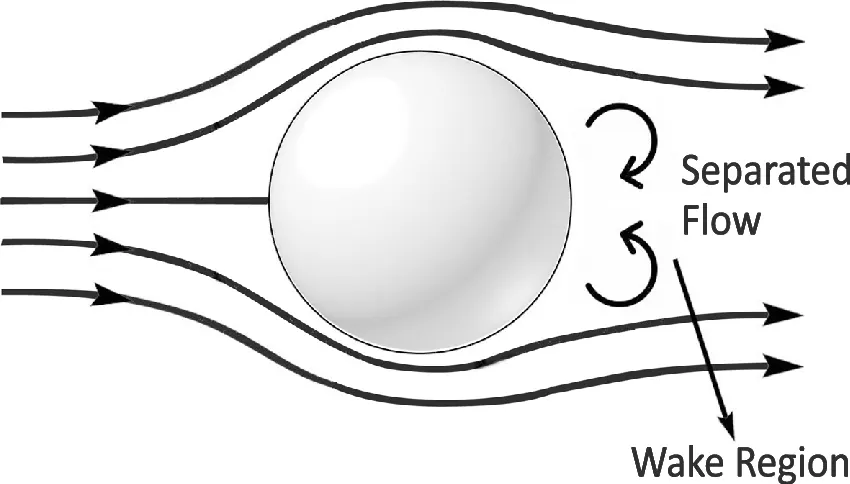
3. Significance of the point of separation
- The separation point is the point where the air stops "sticking" to an object that is moving through the air.
- When an object is moving through the air, the air molecules push back on it and resist the object's movement - this resistance is called pressure drag.
Ahmed body
Aim
- To verifying the Ahmed body flow over the air check the external aerodynamics.
Introduction
- Ahmed body nothing but basic car body. Creating the enclosure Flow over the body the air
- will check the Velocity and Pressure contours
- Drag Coefficient plot
- Vector plot velocity
- Grid independency test
Theory
Ahmed body is a simplified car body and was first created by S.R Ahmed.This shape provides a model to study geometrical effects on the wakes of ground vehicles.Ahmed body allows us to capture characteristic features that are relevant to bodies in the automobile industry.This model is also used to describe the turbulent flow field around a car-like geometry. Once the numerical model in validated, it is used to design new models of the car.Ahmed body allows us to capture characteristic features that are relevant to bodies in the automobile industry. This model is also used to describe the turbulent flow field around a car-like geometry.It is used to design new models of the car.
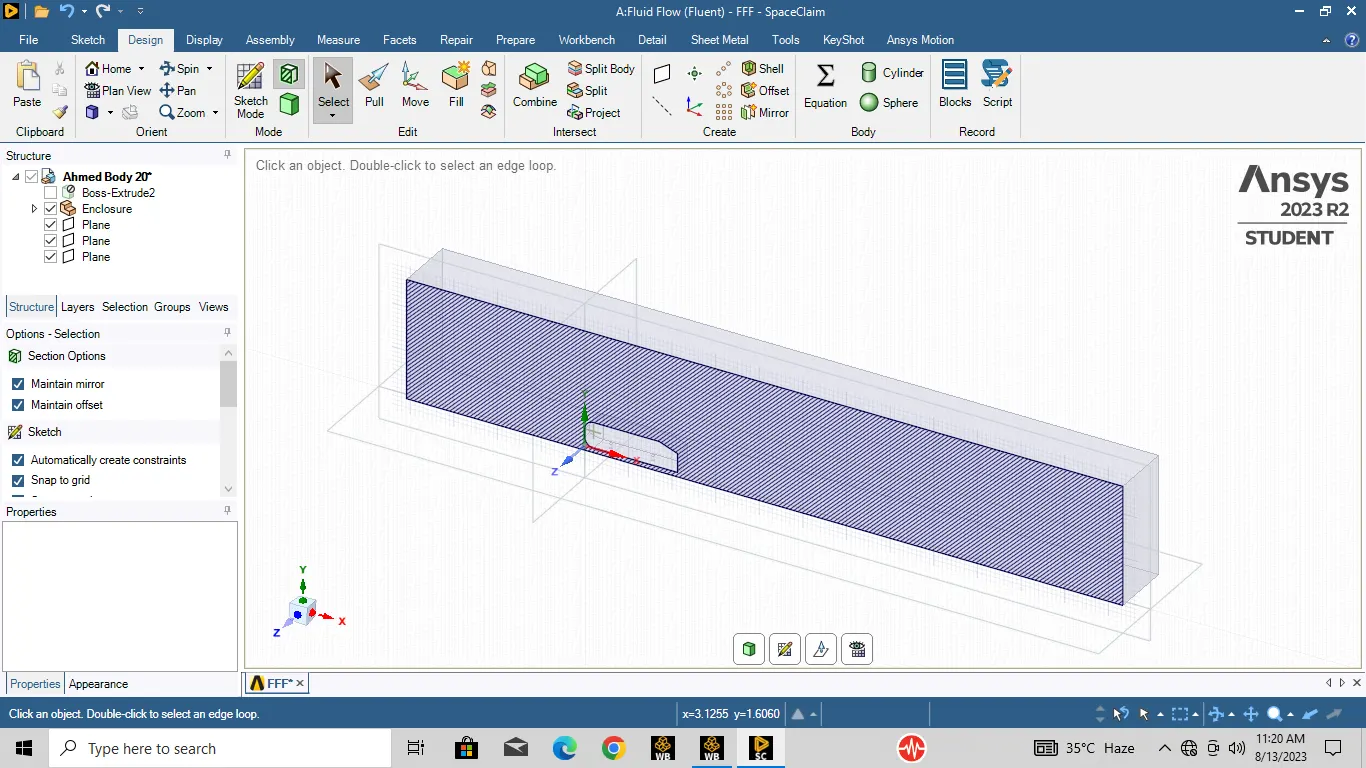
Spaceclaim
A wind tunnel has to be created around Ahmed's body, There are multiple methods to achieve this, but the easiest is using the enclosure tool in ANSYS to generate the tunnel. The inlet of the wind tunnel is 2 metres from the front of the Ahmed body, the outlet is 5 metres from the back of the body. The height of the enclosure is 1 metre above the ahmed body while the width is 0.5m from the side of the body. The enclosure is checked for Interference and it is repaired as well.
This is the final geometry with two enclosures. We don't want car volume so click the suppress to physics neglected.
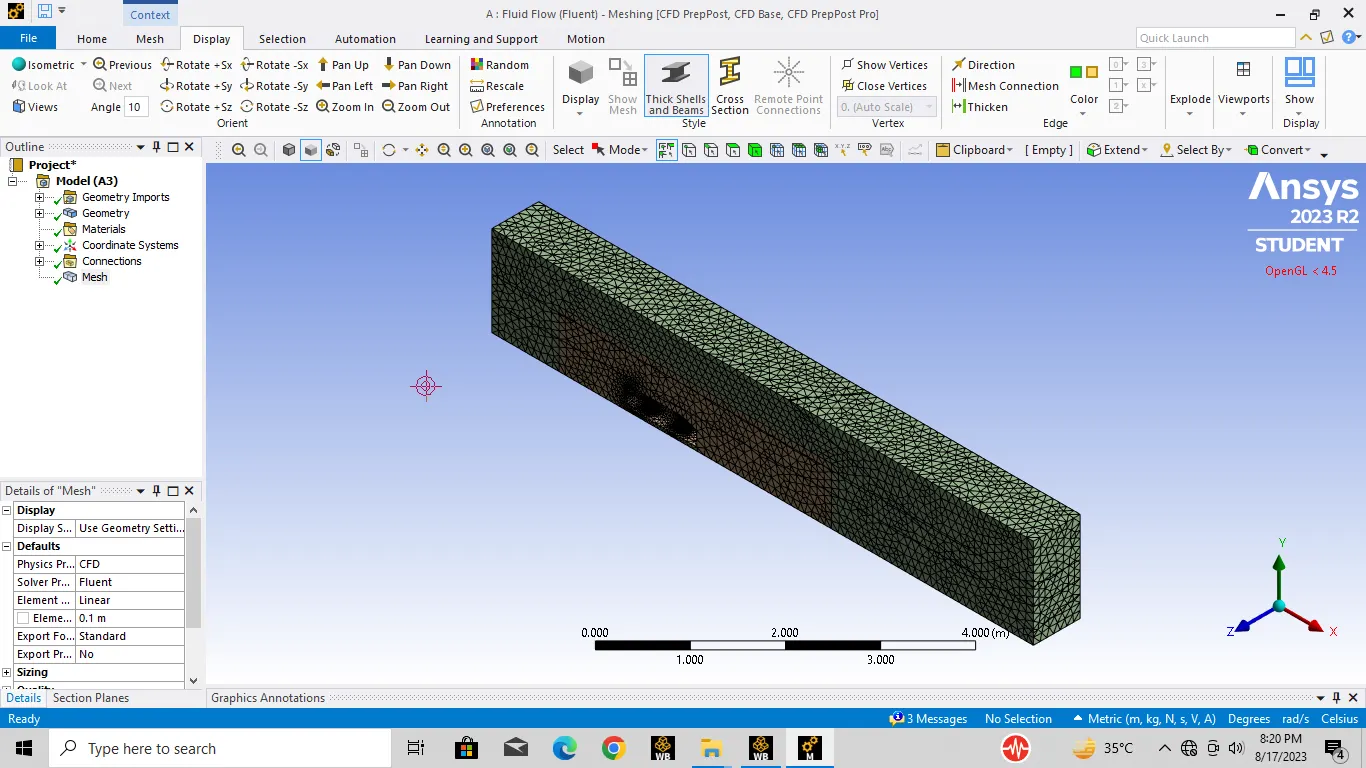
Meshing
- The base size is 0.1m. There are multiple mesh controls used to generate the mesh for this geometry, they are
- Method -> Multizone
- This option is used to generate mesh in the outer region which is primarily hexahedral.
- Sizing -> Body Sizing
- This option is used to refine the larger inner enclousure of the wind tunnel. The increased size gives us more accurate results near the ahmed body. Element size is 0.05m.
- Mesh -> Inflation
- This option is used to accurately capture the boundary layers on the surface of the body
Setup
- Boundary Condition
- inlet - inlet V=25m/s
- outlet - pressure outlet
- wall-car - wall (no-slip)
- back, top and bottom - symmetry
- symmetry zplane - symmetry
- A separate boundary was created for the symmetry plane to make post processing easier
Reference Values
- The most important values here are: Area, Density, Length and Velocity.
- The area was calculated using ANSYS Fluent, Results -> Reports -> Projected Areas:
- This is the cross sectional area for the half ahmed body
Reports
- Methods will give simple options
- finally initialize the model
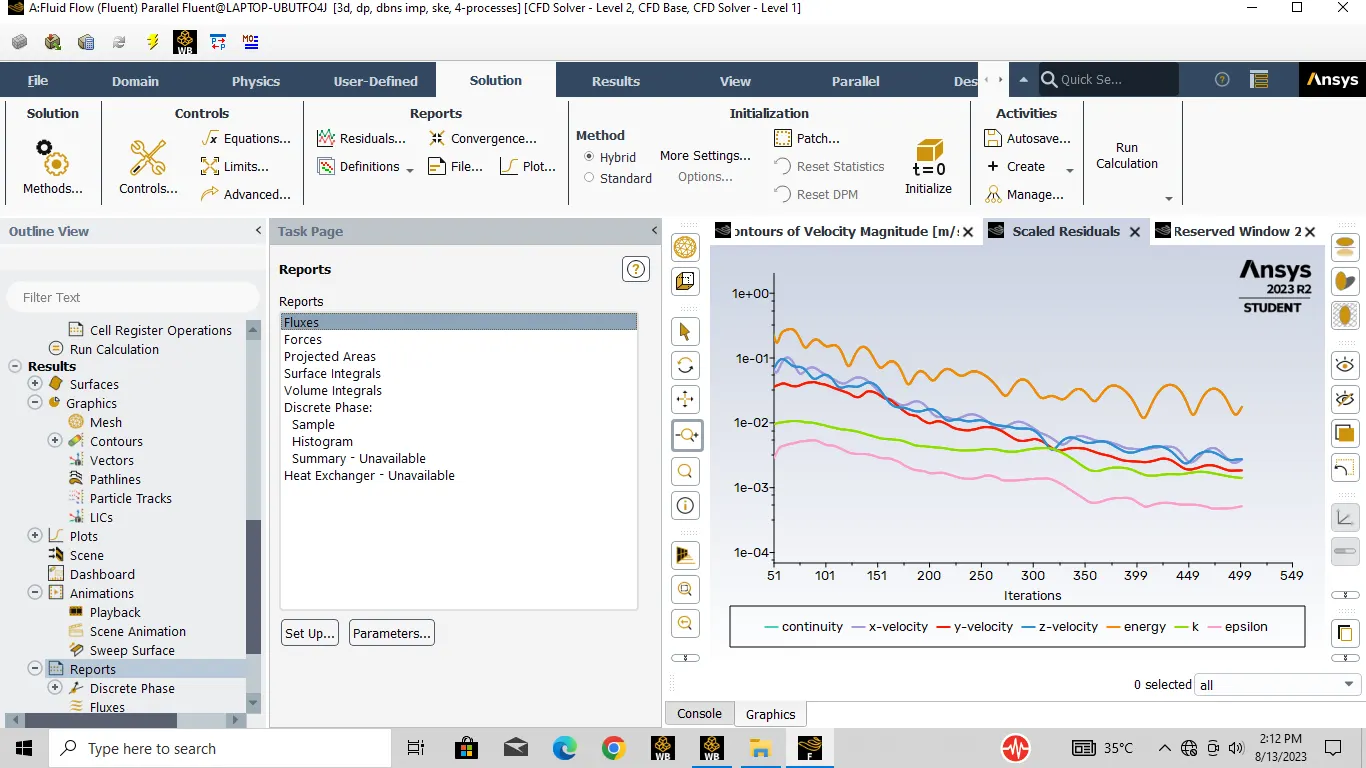
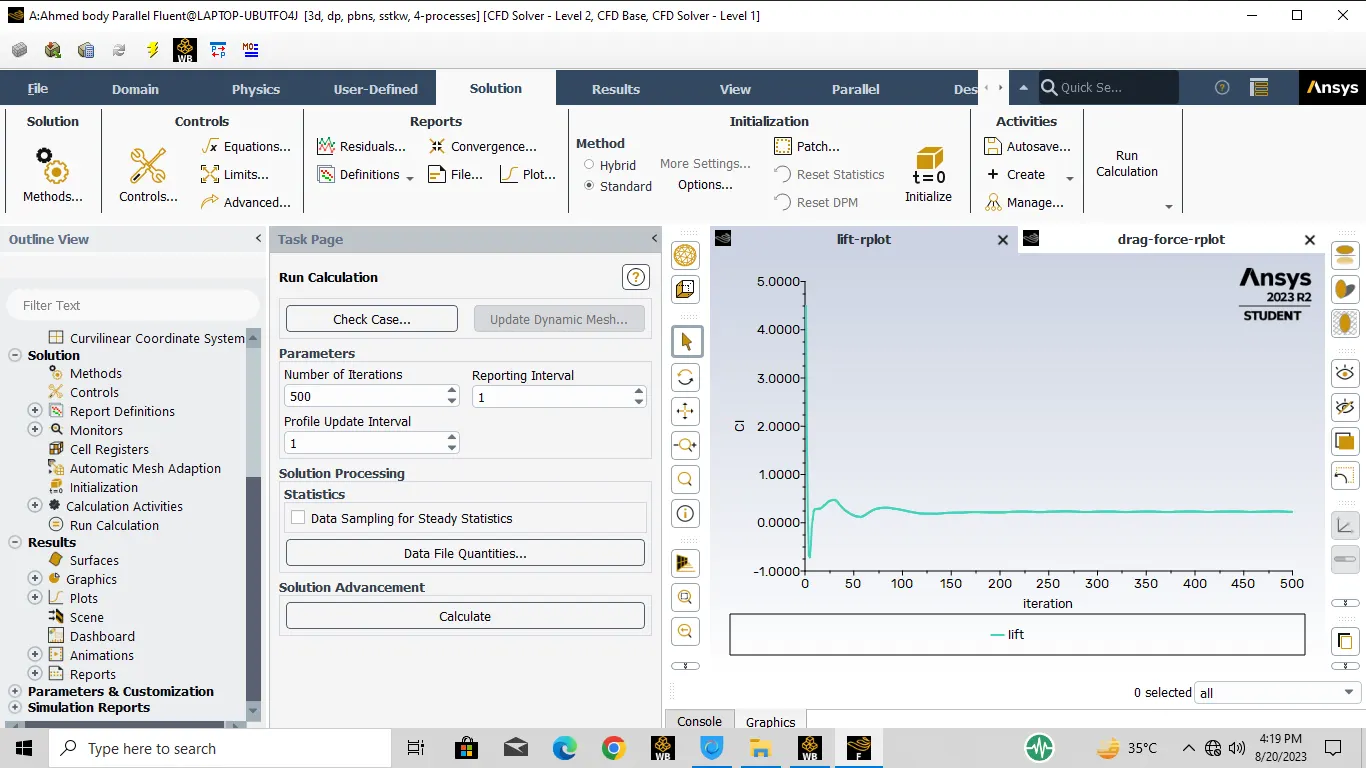
- Run the model for 500 iteration .
- Finally show the Residual plot,Lift coefficent,Drag coefficient plot
- After the initialization create the pressure and velocity contour
- Show the pressure and velocity contour
Residual plot
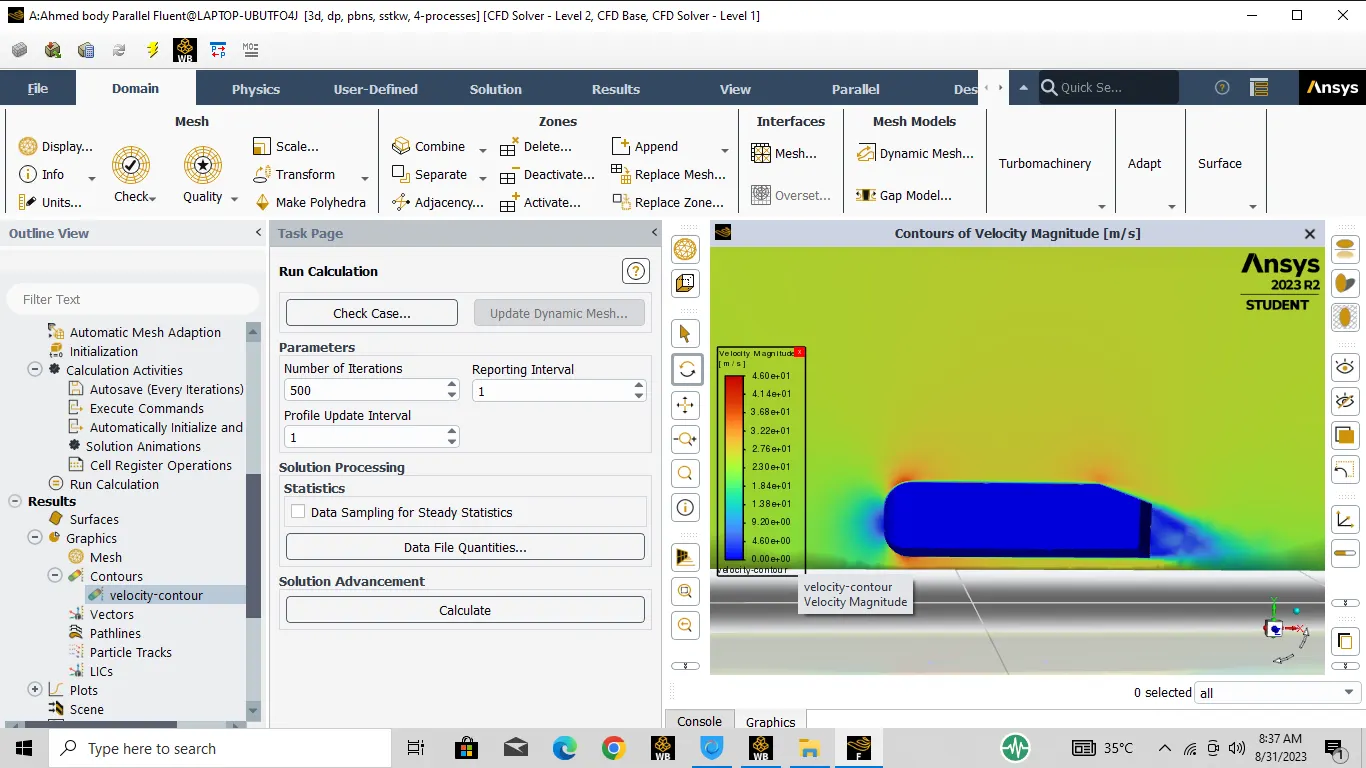
Velocity Contour (Fine mesh)
These were taken in CFD - Post
Pressure contour
These were taken in CFD - Post.
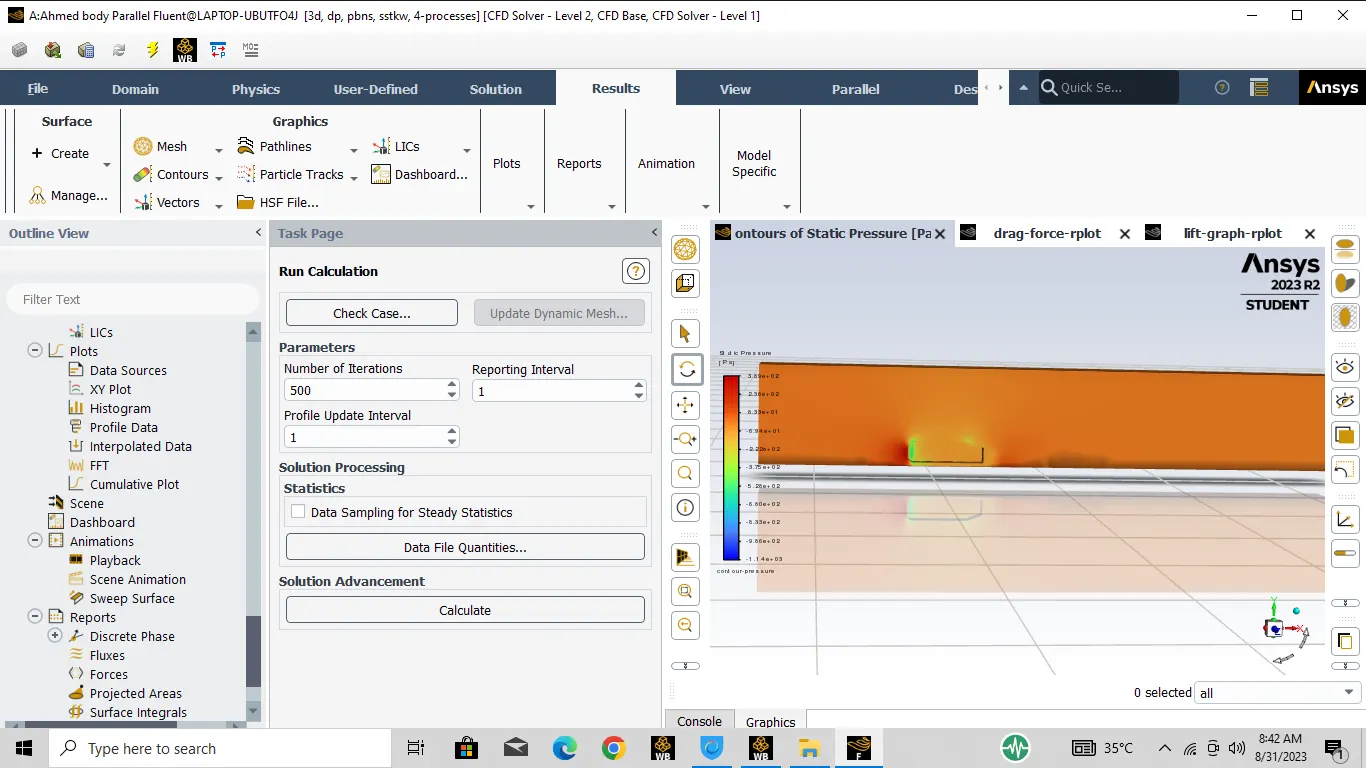
- There is a high pressure region at the front of the body due to how flowing air is accumulated at the front of the car .
Inlet Velocty 25m/s
Drag plot
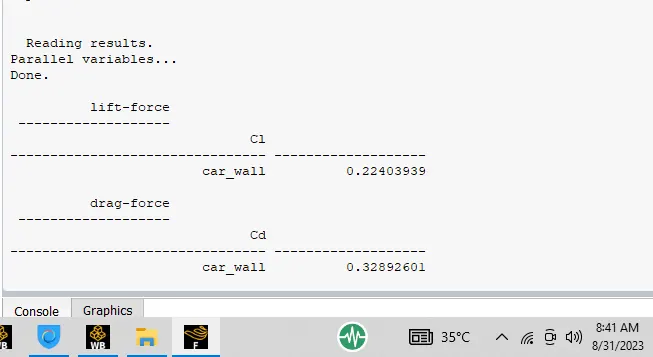
- The final value of drag coefficient is 0.328926018 , which is in agreement with experimental and simulation data.
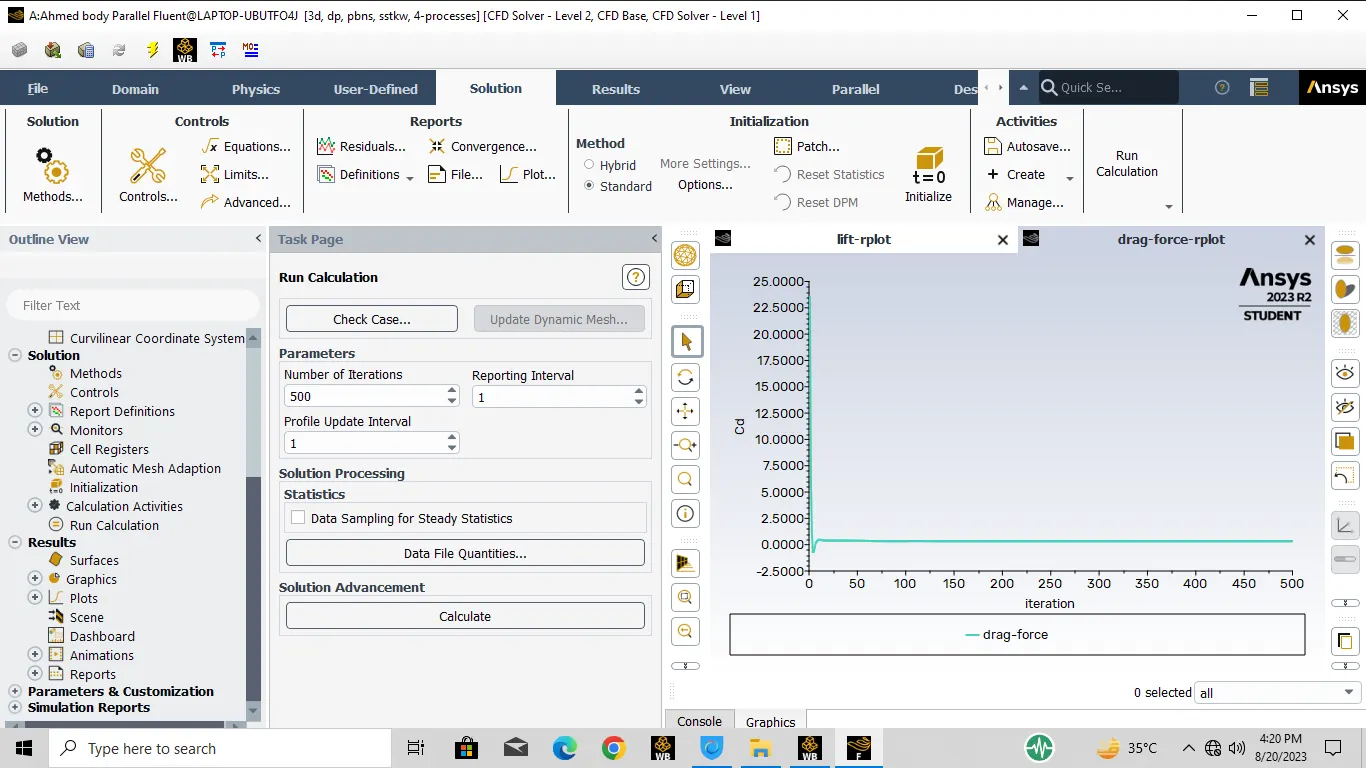
Lift plot
- The final value of lift coefficient is 0.22403939, the discrepancy is due to variation in reynold's number and low mesh resolution near some regions of the ahmed body.
| Inlet Velocity | Drag coefficient | Lift Coefficient |
| 25m/s | 0.32892601 | 0.22403939 |
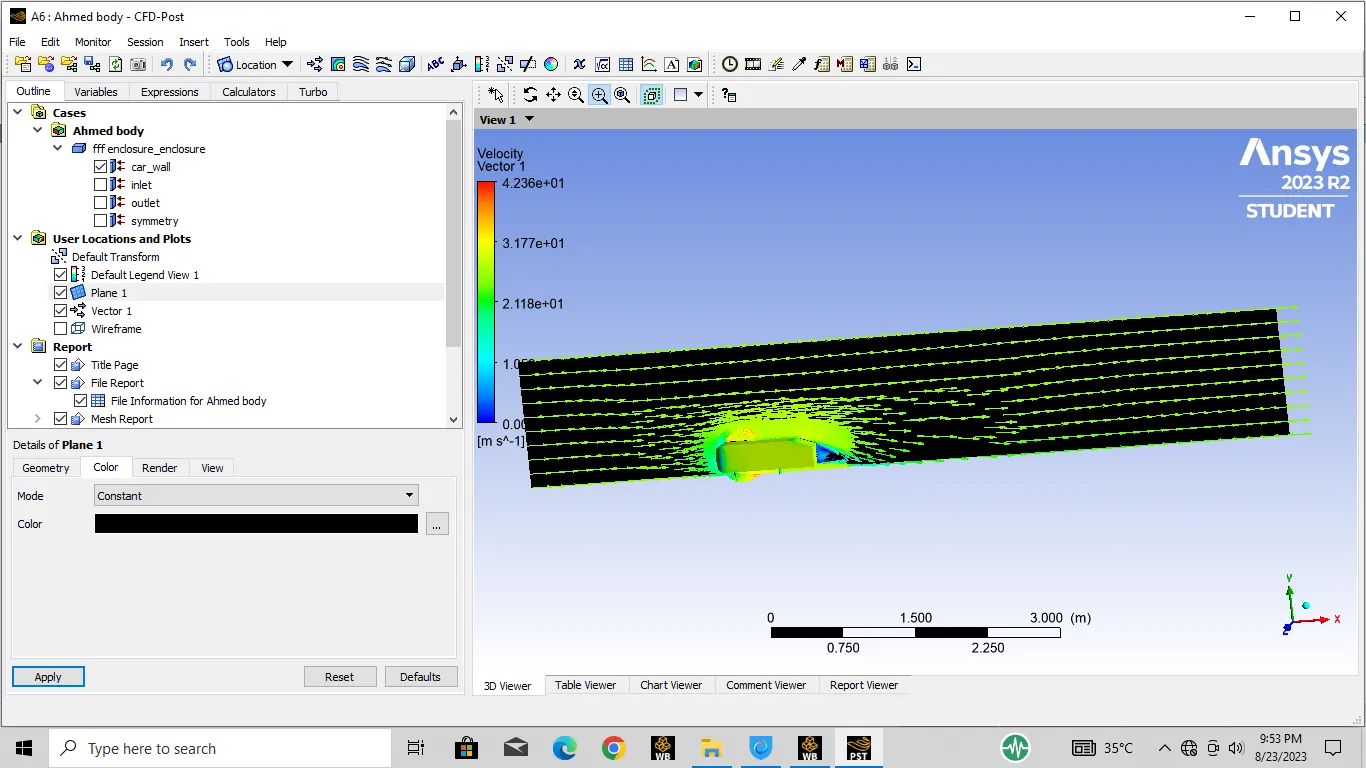
Vector Plot
- These were taken in CFD - Post. The background contour is the velocity contour.
Grid Independence test
A Grid Dependence Test is used to ascertain whether the final values of the solution are dependent on the mesh or not. This is an important test to ensure the simulation results are correct.
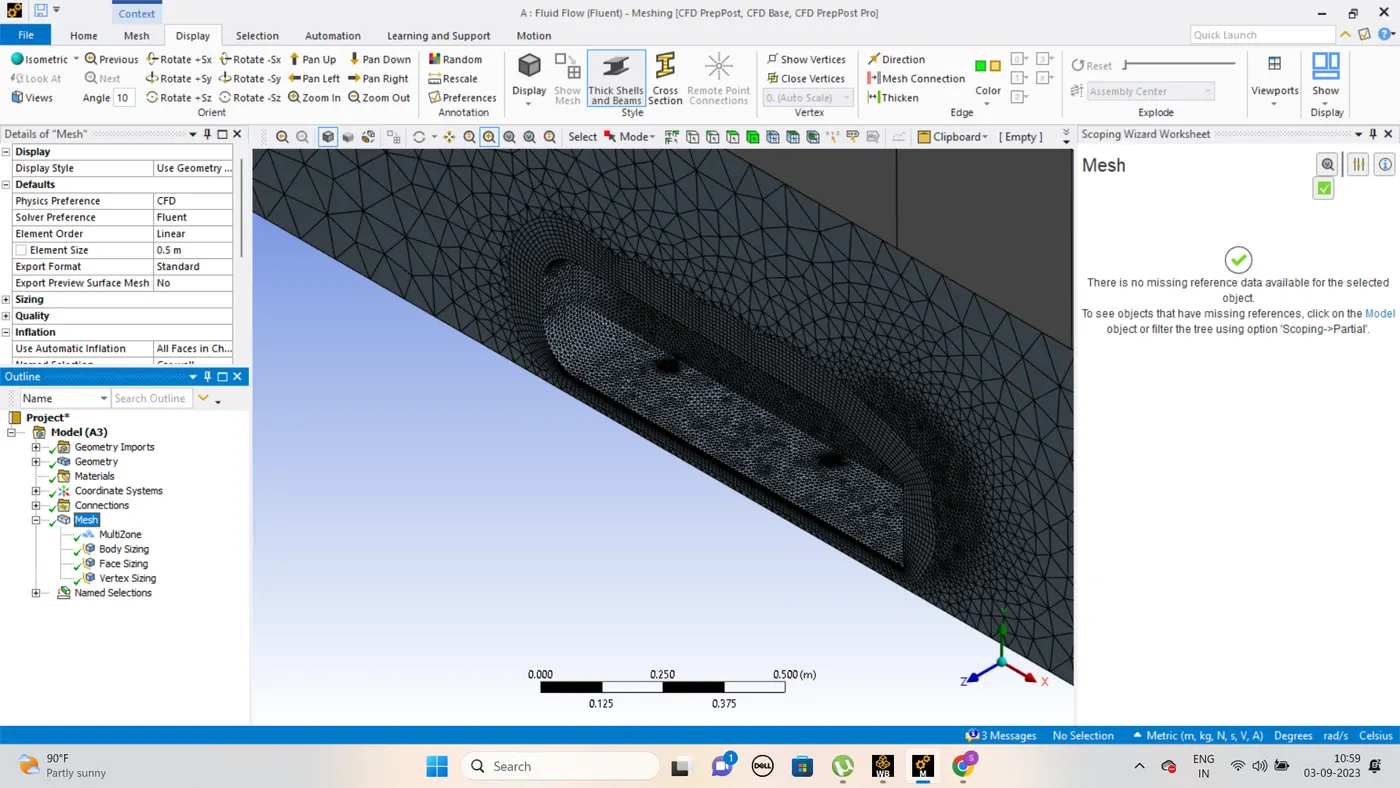
Fine mesh
Mesh -> Controls -> Sizing
This is a seen region is
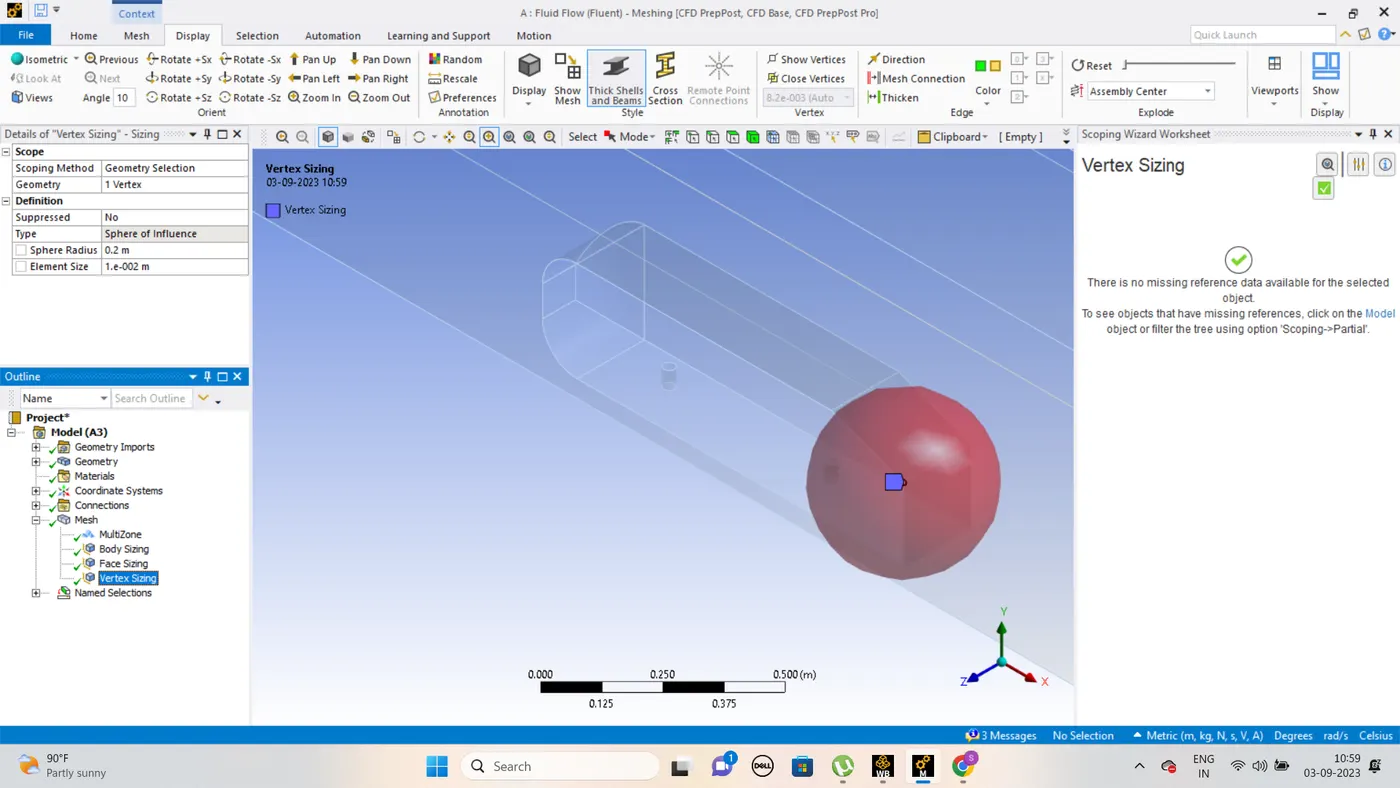
Near the wall fine meshing ,so drag value reduced
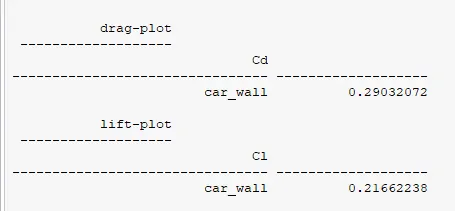
The values of drag and lift coefficient are below:
Lift Coefficient: 0.21662238
Drag Coefficient: 0.29032072
Drag coeffcient decreases as number of elements increase.
The important takeaway is that drag coeffcient does not vary significantly when the mesh is made more finer. While the drag coefficient does vary when the mesh is made more coarse. This means that the grid dependence test has passed.
Conclusion and Observations
- The simulation of the Ahmed Body runs well and is in some agreement with experimental and empirical data on the body.
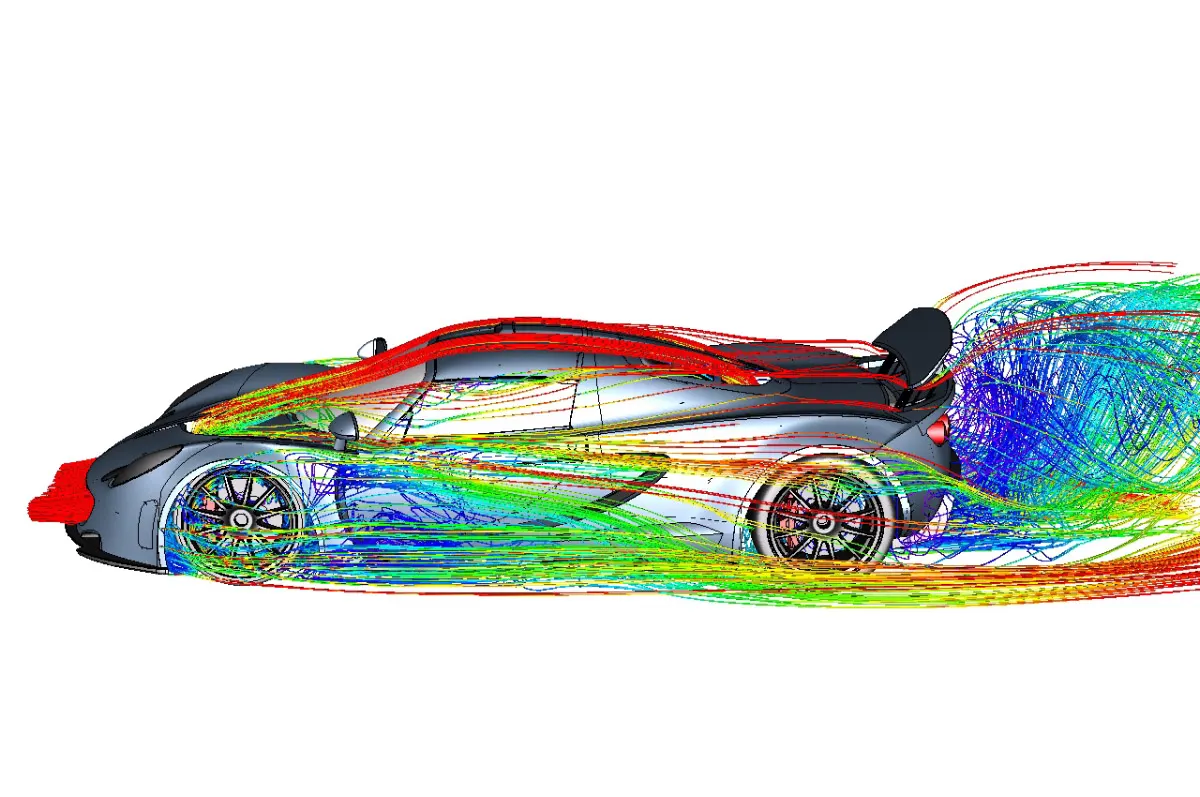
- There are regions behind the body where wakes are formed, circling regions of low velocity which induce a considerable amount of velocity drag on the body.
- The values of drag coefficient although there is limited data for a slant angle of 20 degrees for the Ahmed Body.
- The values of lift coefficient agree with some sources and disagree with others, this discrepancy is due to coarser mesh around the botton region of the ahmed body.
- Grid Depedence Test was conducted and the test was succesful, an additional observation was also made - the drag coefficient decreases as number of elements increases.