Week 3 - External flow simulation over an Ahmed body.
Aim:
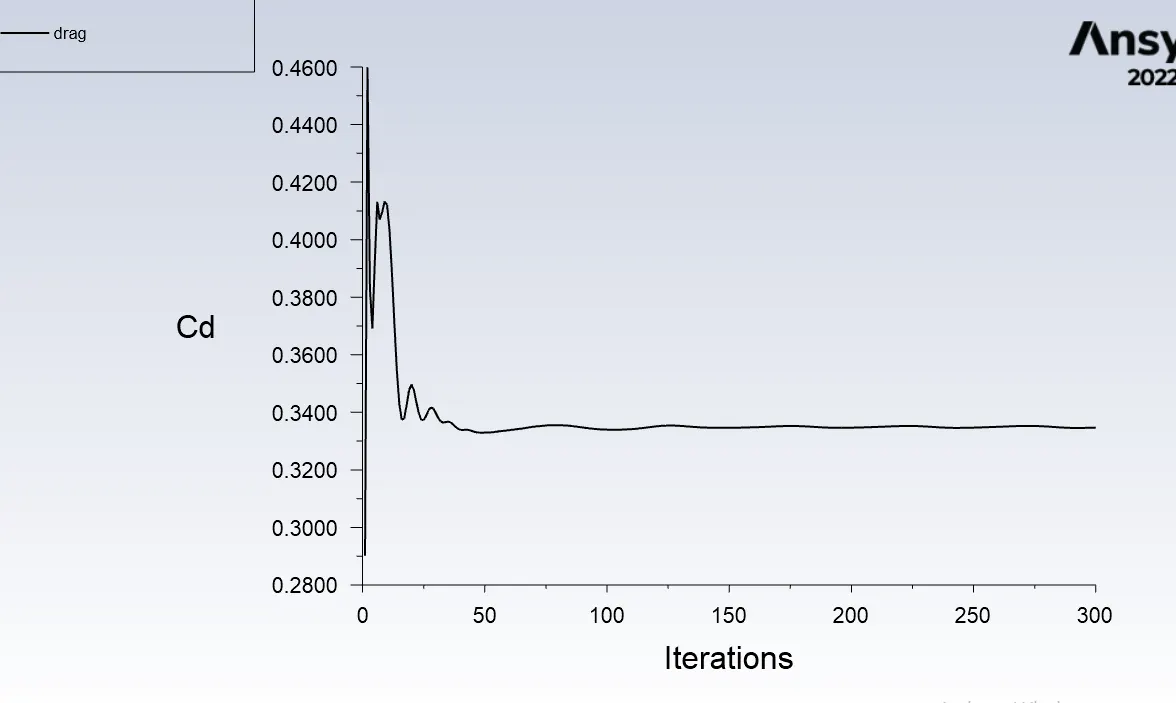
To simulate the Ahamed body and to find the coefficient of drag
Background theory:
The Ahmed body was described originally by S. R. Ahmed in 1984 . Three main features were seen in the wake:
1. The A recirculation region that is formed as the flow separates at the top of the vertical back surface of the model
2. The B recirculation region that is formed due to the separation at the base of the model.
3. The c-pillar vortices that form as the vorticity in the side boundary layers roll up over the slant edges.
The wake was shown to be highly dependent on slant angle. For slant angles less than 12°, the flow remains attached over the the slant. The flow is essentially two-dimensional and has low drag. Between 12° and 30° the flow becomes much more three-dimensional as the c-pillar vortices form. These reach maximum strength at 30°. The drag increases significantly as the low pressure cores act on the rear surfaces. Past 30° the flow separates fully off the slant. This results in a sudden decrease in drag and weaker c-pillar vortices.
Wake region:
The wake is the region of disturbed flow (often turbulent) downstream of a solid body moving through a fluid, caused by the flow of the fluid around the body.
Point of separation:
The point of the body at which the boundary layer is on the verge of separation from the surface is called “point of separation
The separation point denotes the location at which the air ceases to adhere to a moving object passing through it. As an object moves through the air, the air molecules exert a resistance force, commonly known as pressure drag, pushing back and hindering the object's motion.
Procedure
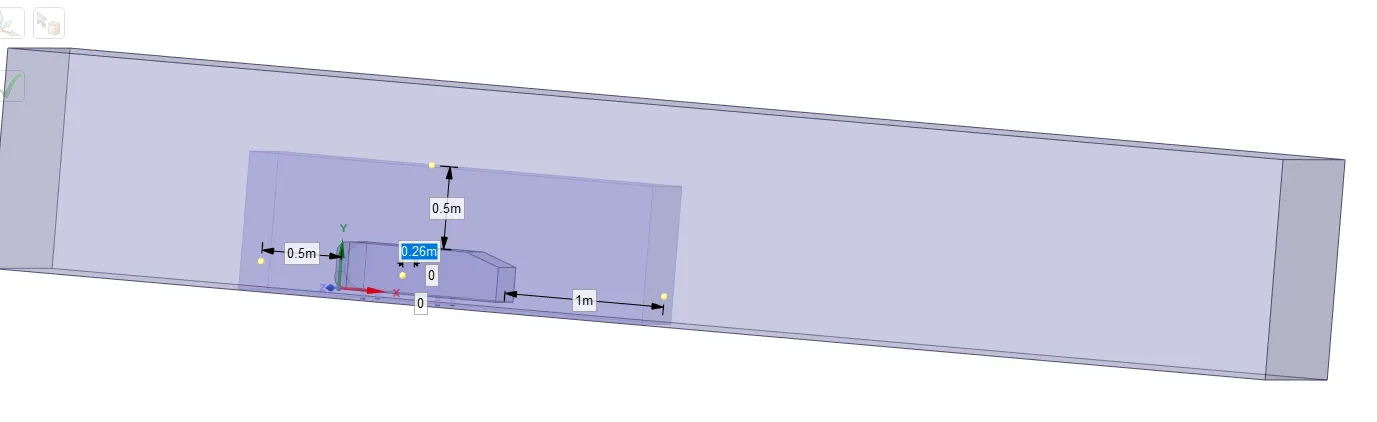
- Preparing the geometry
Enclosure, Interference, share topology, commands are used to prepare the geometry
2. Meshing are done by using Body sizing (Multizone), inflation, face sizing
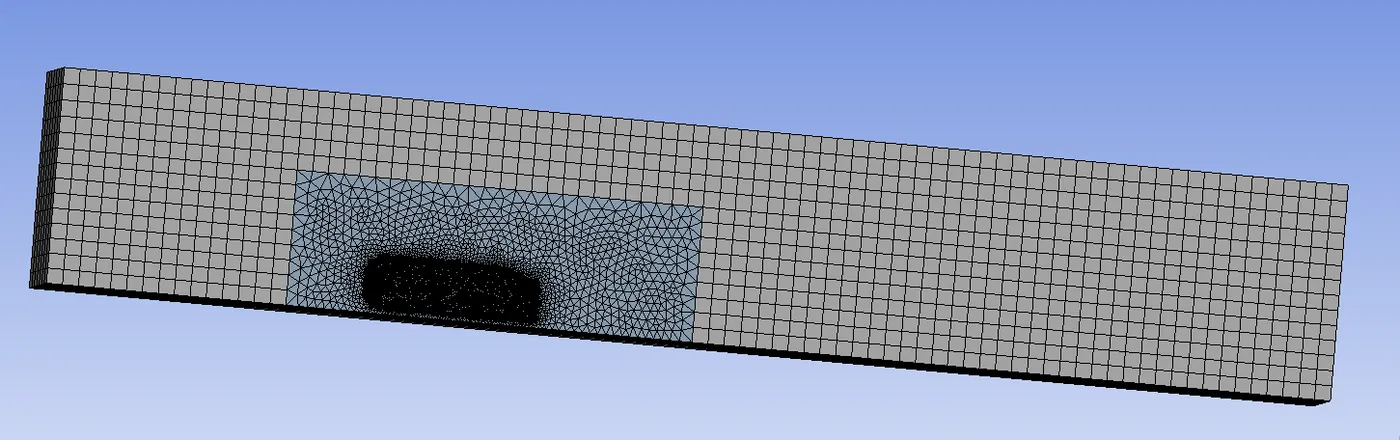
First layer thickness, no of layer and growth ratio are calculate in online
Reference:
Y+ is assumed as 30
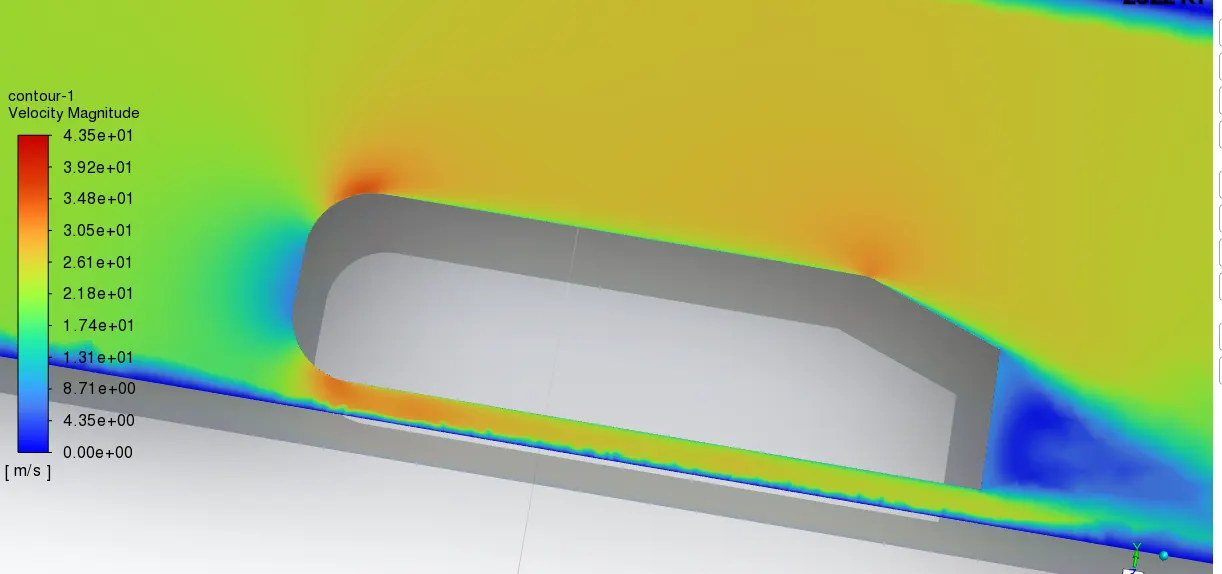
3. Velocity = 25 m/s
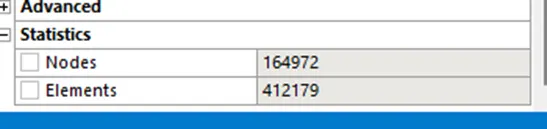
No of elements = 412179
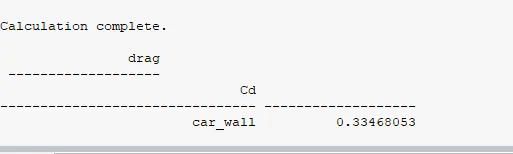
k-epsilon
3a.Velocity contour
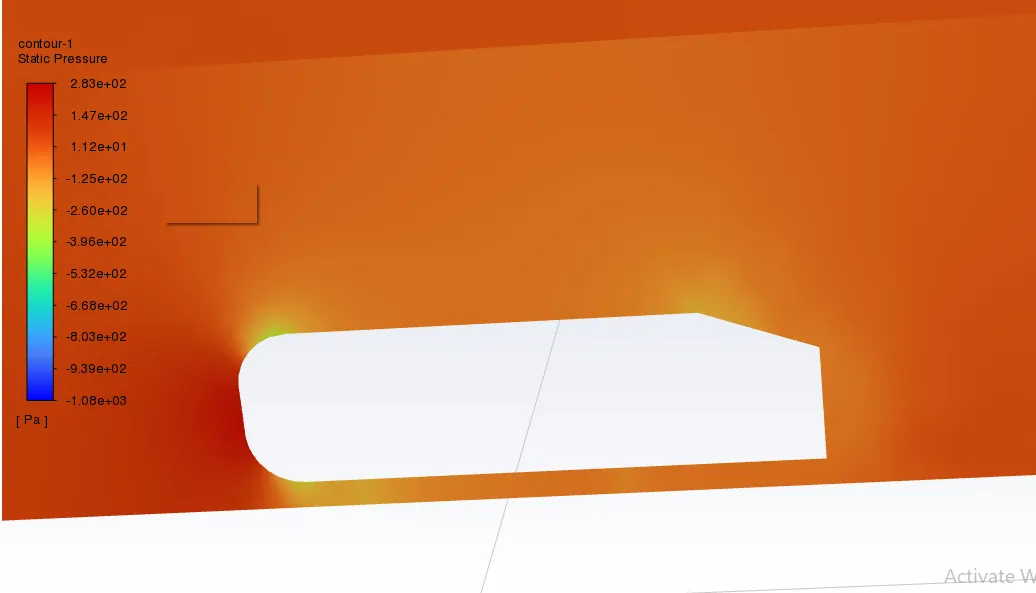
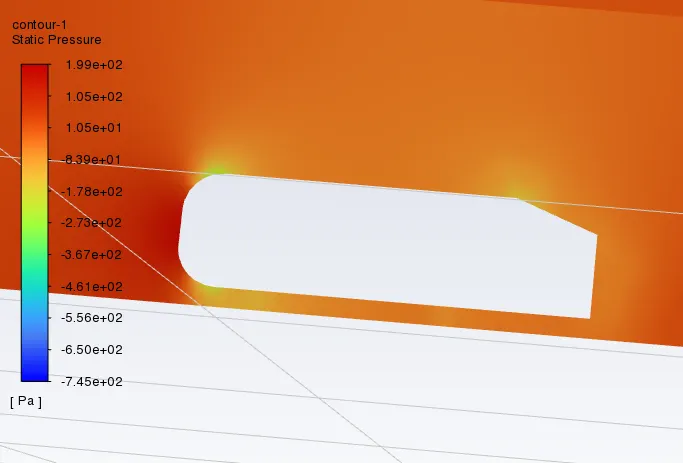
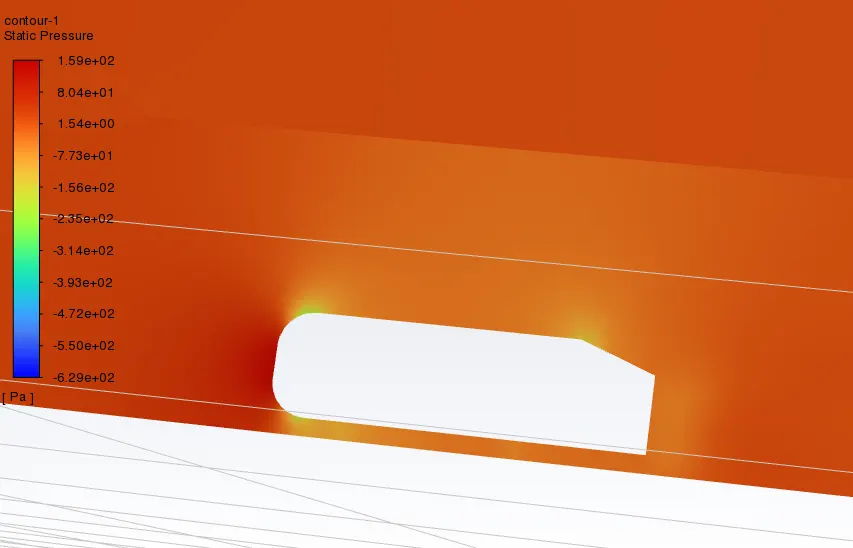
3b. Pressure contour
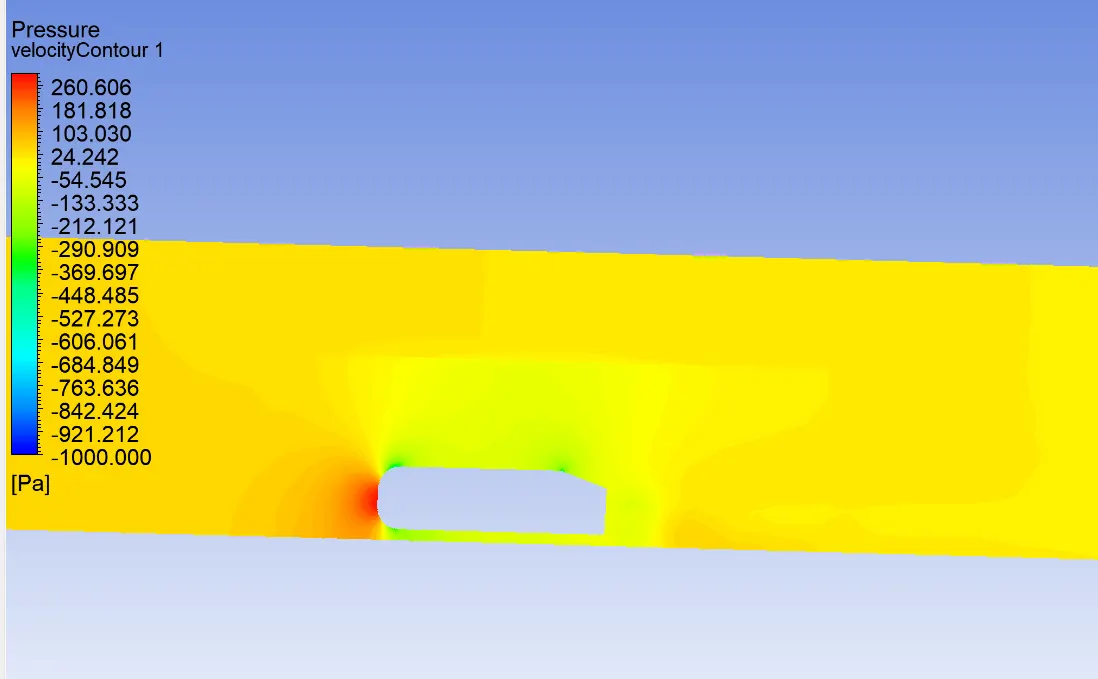
The pressure within the wake region stays at a low level due to flow separation, resulting in the generation of a net pressure force known as pressure drag. In simpler terms, the low pressure in the wake region is caused by the production of pressure drag resulting from flow separation, which leads to the creation of a vacuum effect.
3c. In this region the velocity vector is not good so mesh has to be refined here
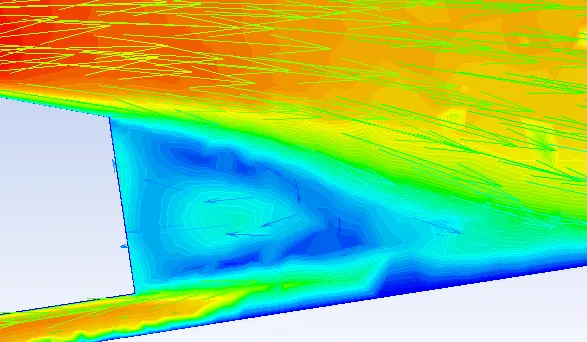
3d. Increase the no of elements in wake region by sphere of influence method
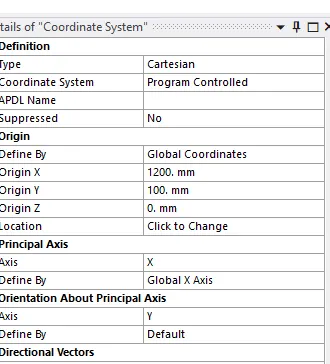
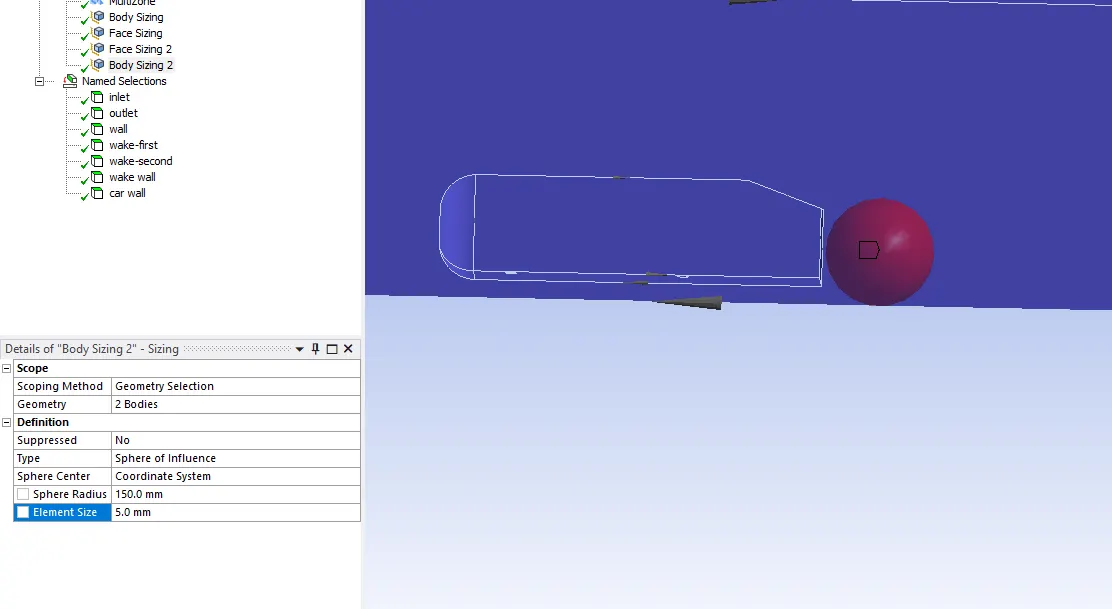
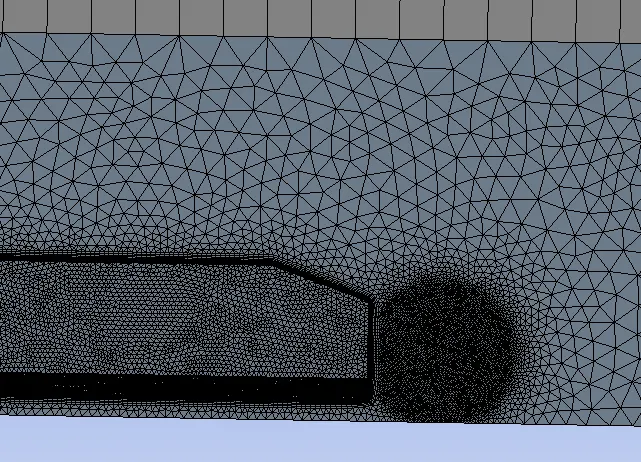
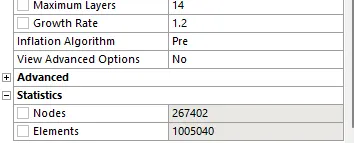
Now the number of elements is 1005040
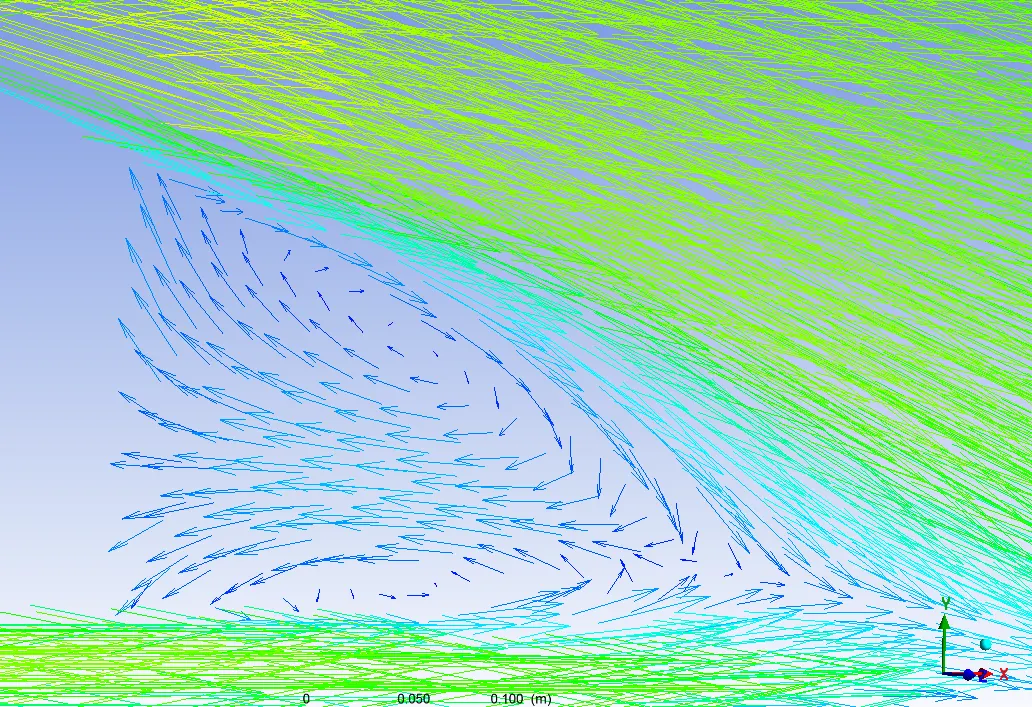
3e. The vector plot shows the wake region in the ahamed body.
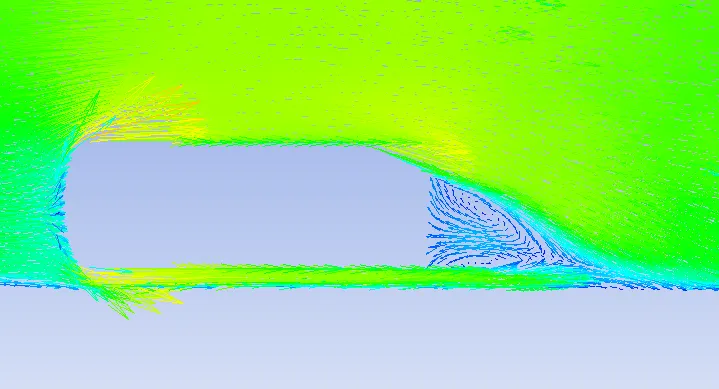
Recirculation and high turbulence are observed in wake region and the velocity is low in the wake region
Grid independence test
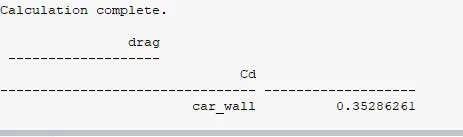
- Extra coarse
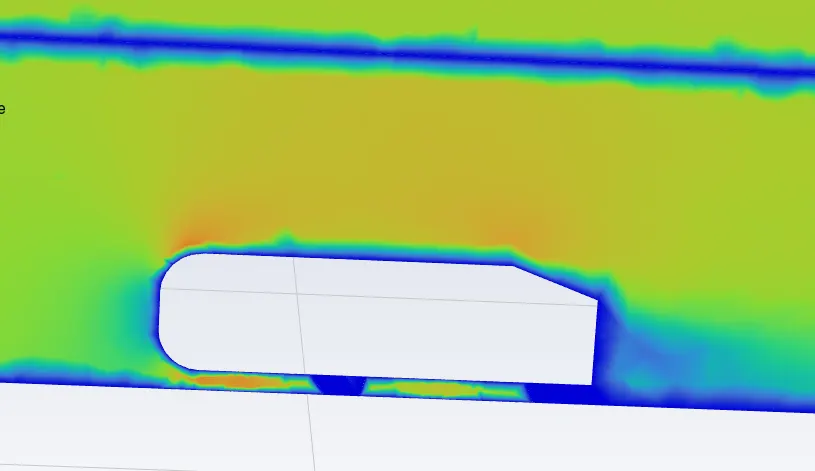
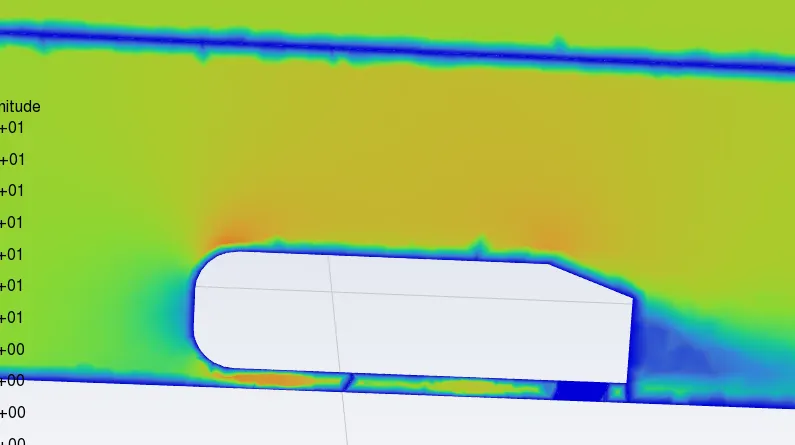
Velocity contour
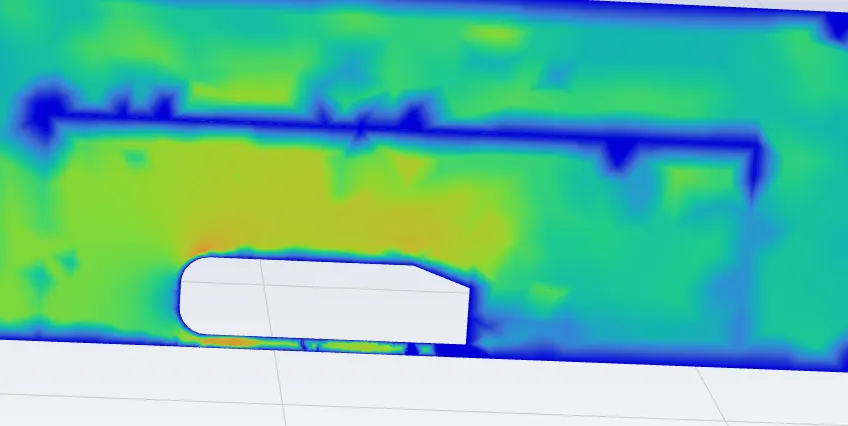
Pressure contour
2. Coarse
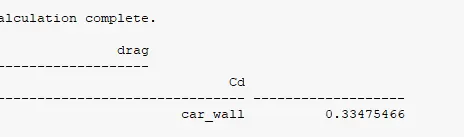
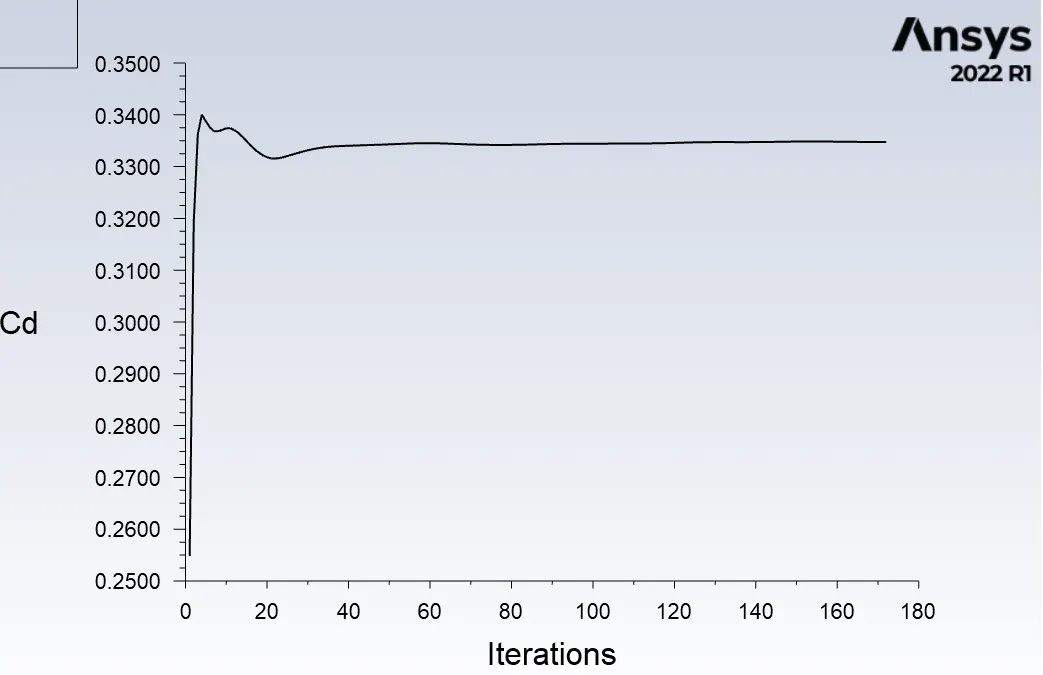
No of elements: 128173
Velocity contour
Pressure contour
3. Medium
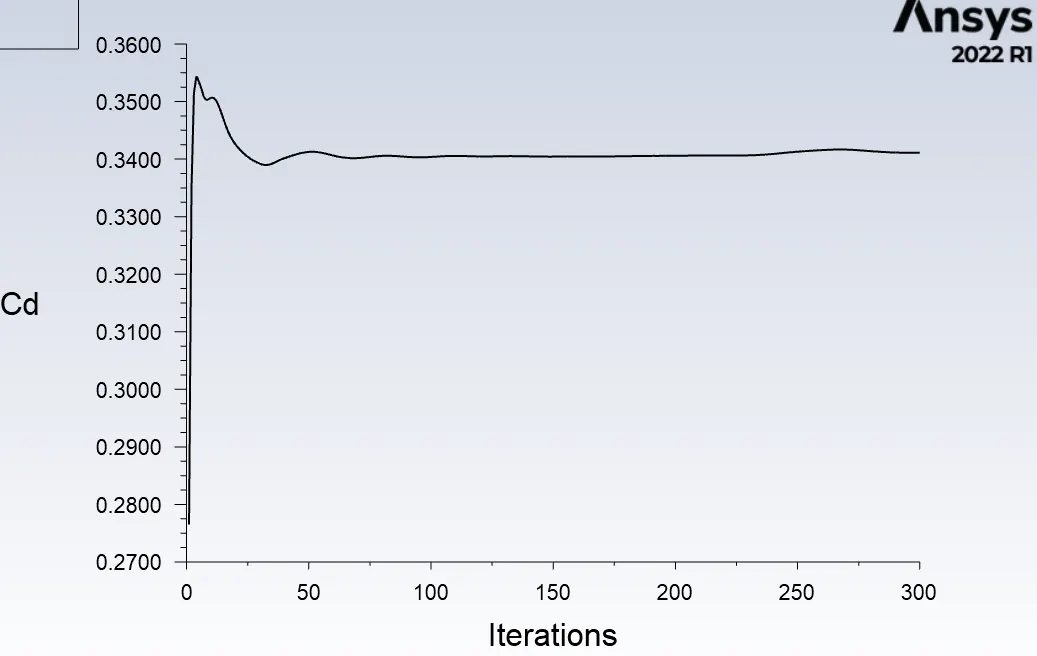
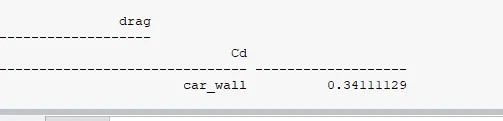
No of elements 299935
Velocity contour
Pressure contour
Comparision table
| no of elements | Coefficient of drag | |
| fine | 412179 | 0.33468053 |
| Extra coarse | 46860 | 0.3528 |
| coarse | 128173 | 0.3347 |
| medium | 299935 | 0.3411 |
Reference

Conclusion:
Coefficient of drag values are calculated for the boundary layer thickness corresponding to 25 m/s. It is observed that the Coefficient of drag values depends upon the meshing quality.
References:
Experiments and numerical simulations on the aerodynamics of the Ahmed body
W. Meile, G. Brenn, A. Reppenhagen, B. Lechner, A. Fuchs CFD Letters Vol. 3 (1) – March 2011